
Rumour, Release, or Something Wild?
Today, we’re going to look at one of the more (or should that be moor?) well-known of Britain’s best-known cryptids. A mystery cat that’s right up my alley. But, before there was a beast, there was a landscape.
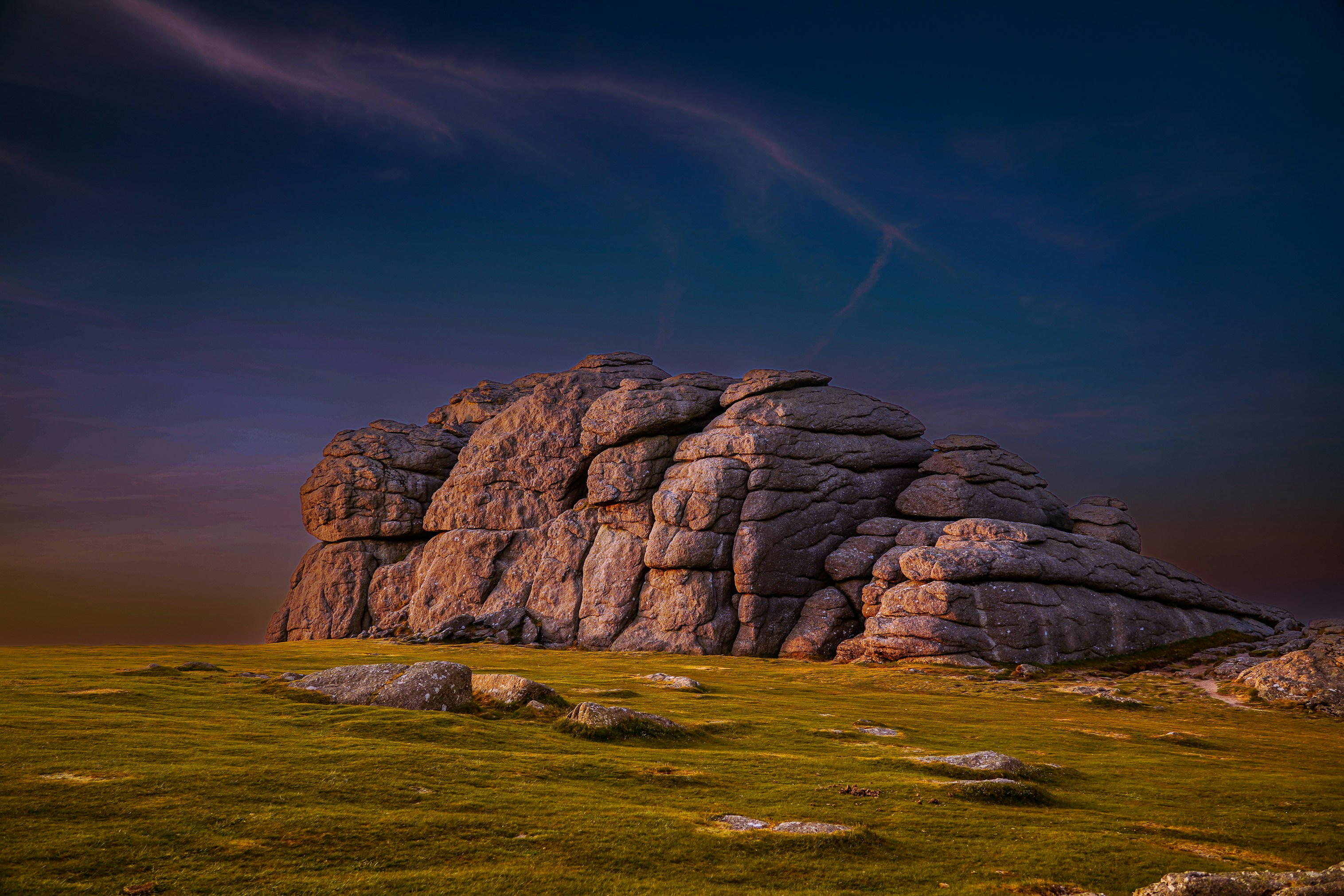
Exmoor is open, wind-cut, and exposed. Sheep move across long lines of sight as they graze, perhaps in a false sense of security that Britain’s predators are long-banished. Granite outcrops and banks of heather hold the last of the day’s light. When something crosses that horizon, it might be seen but just as quickly, it can slip back into the many shadows and hiding places on the moor.
In 1983, Devon farmer Eric Lane began losing young lambs. The predation was both serious and mysterious. Then, larger, full-grown lambs began to be taken. Ultimately, Lane reported losing more than fifty sheep. And across the region, estimates suggested over one hundred full-grown ewes were killed in what the press began calling the Beast’s “rampage”. Carcasses were found with throats torn and little meat consumed. Some reports described clean kills. Others suggested variation. No body was recovered. No animal was conclusively identified.
The police took the matter seriously enough to organise searches and vigils. And then, as the death toll of livestock mounted, they called in the army. At least one patrol involved a former Royal Marine, John Holden, who was later interviewed in the documentary Panthera Britannia: Declassified. Holden described seeing a large cat-like animal during a night patrol. A shot was reportedly taken by another member of the patrol. After that incident, sheep losses diminished. But no carcass, no blood trail, and no confirmed remains were ever found.
Absence became the defining feature of the case.
A Naturalist’s Theory
Among those who treated the killings as a wildlife question rather than a ghost story was Devon-based zoologist, naturalist, and conservationist Trevor Beer (1937-2017), who investigated sightings across the region for decades.
Beer did not dismiss the accounts outright. Nor did he frame them as folklore. Based on reported behaviour and differences in sightings, he suggested that two separate large cats — possibly a puma and a leopard — might explain the variation. It was a practical hypothesis. If attacks differed in method, perhaps more than one animal was involved.
Importantly, this was not a claim of proof. It was an attempt to reconcile inconsistent details with ecological reasoning. And that matters.
Because Britain in the 1970s and early did have privately owned exotic cats. Before the Dangerous Wild Animals Act of 1976, keeping such animals was not uncommon. Archival BFI footage (also from early 1976) exists of a puma being walked in Barnstaple. After the Act tightened licensing requirements, stories began circulating that some owners released animals rather than surrender them, and this has become a fundamental and foundational part of the British big cat phenomenon.
What is documented is patchy. What is alleged is plentiful.
Release Stories and Blurred Memory
Over time, rumours became interwoven with the facts and real investigations.
A Barnstaple butcher who supposedly owned a puma and a leopard and got in trouble with the law was said to have released his pets as he fled the country. A zoo owner alleged to released animals onto Dartmoor rather than face an unknown fate. Stories of circus transfers, licence losses, and midnight liberations threatened to blend fact with fiction.
For instance, I think it’s no coincidence that there is archival BFI footage of a man walking his pet puma in Barnstable and there is a story about the supposed butcher and his ‘guard panthers’. But I think it’s a blurring of memory. In 1976, the population of Barnstable was that of a small country parish, a little over 10,000 people. It’s hard to believe there were two individuals with a pet puma. And there is no documented evidence of a butcher with two big cats – surely that would have made at least one local paper?
Benjamin Mee is the owner of Dartmoor Zoo, which became famous after the film ‘We Bought A Zoo’ put its story in the spotlight. Again, for Panthera Britannia, Mee recounts a sighting of a big cat in the village, shortly after moving to Dartmoor. There is also a reference to the former zoo operator Ellis Daw, who was alleged to have released three pumas onto Dartmoor. But again, does that conflate events and allegations surrounding Mary Chipperfield, who was also said to release three pumas, among her favourite animals, whilst transferring them from Plymouth Zoo after it closed in 1978, which was owned by the Chipperfield family at the time.
The difficulty is not that these names appear. It is that the stories begin to overlap.
Separate incidents, across counties and years, begin to compress into a single narrative mass. Exmoor and Dartmoor become interchangeable in casual retelling. A puma becomes “a black panther”. Two animals become one roaming shadow.
Memory simplifies. Landscape absorbs detail.
Could a Big Cat Survive?
Ecologically, the idea is not impossible. In fact, it’s very probable.
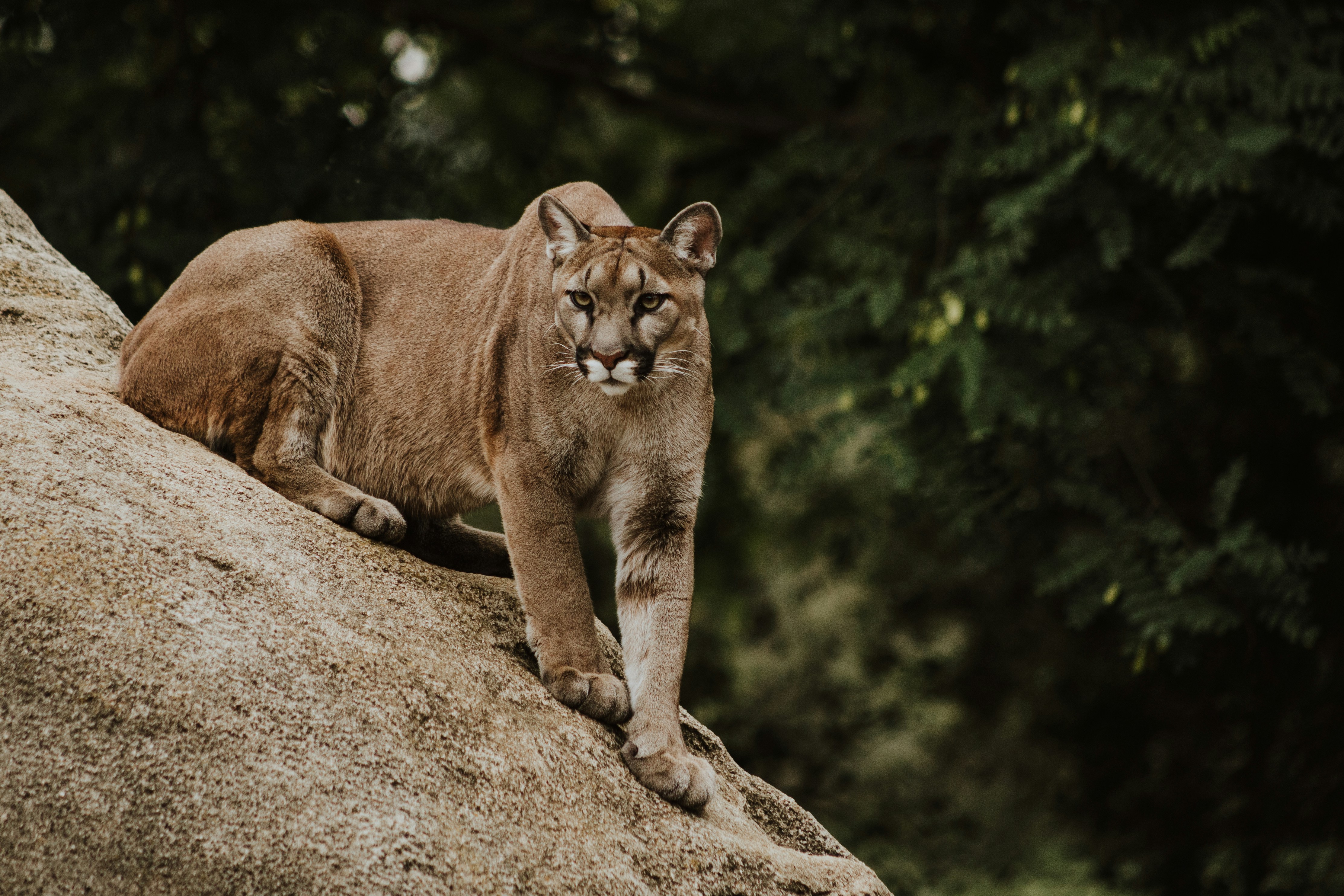
The Cougar is highly adaptable. In North America, it occupies deserts, forests, mountains, and the fringes of cities. It can take deer and livestock. It is solitary, elusive, and capable of travelling large distances. In turn, leopards are found from the desserts of Africa through to the Siberian plateau and are considered one of the most adaptive of the big cats.
A released animal, in theory, could survive, at least for a time. And, the sheep kills are suggestive of a released animal with limited experience taking easy prey. It is widely reported that wild big cats avoid taking sheep, as they find the wool problematic to remove, and don’t like the texture of it in the mouth. However, there is enough of an issue of pumas taking sheep in Chile for there to be a government-backed guardian livestock dog programme, documented by National Geographic’s ‘Up Close with Bertie Gregory’. So, we know sheep are on the menu, at least for some big cats.
But survival is not proof of presence.
And livestock predation patterns are not always straightforward. Dogs, foxes, and even corvids can complicate carcass interpretation once an animal has fallen. Bite placement, caching behaviour, feeding style… these details matter, but they are rarely preserved cleanly in open moorland.
What Remains
What is harder to dismiss is the shift in perception.
Farmers scanned ridgelines differently. Dog walkers reported silhouettes where before there had been none. The moor, already vast, felt less empty.
Whether the Beast of Exmoor was:
- A released exotic
- Multiple animals folded into one legend
- A misidentified large dog
- Or a solitary cat that came and went without leaving a body
…the story altered how people saw their landscape.
That is often how monsters begin.
Not with certainty.
Not with spectacle.
But with a disruption, a suggestion that the familiar ground may not be entirely ours.
In my own fiction, I’m often less interested in proving the beast exists than in exploring what changes in us when we believe it might.
The Beast of Exmoor remains ultimately unproven. But the space it opened, between where we live and wilderness, between rumour and ecology, still lingers across the moor. And sightings still continue, as does the mystery.
 The blog of author Luke Phillips