Movie Monday: Primate, Killer Apes, and the Stories We Tell About Animals

Welcome back to Movie Monday.

This is only the second entry in the series, but the intention is already clear: this isn’t about quick reviews or ranking creature features by body count. It’s about looking at animal-led horror films through a wider lens… asking what they borrow from reality, what they distort, and what impact those stories have beyond the screen.

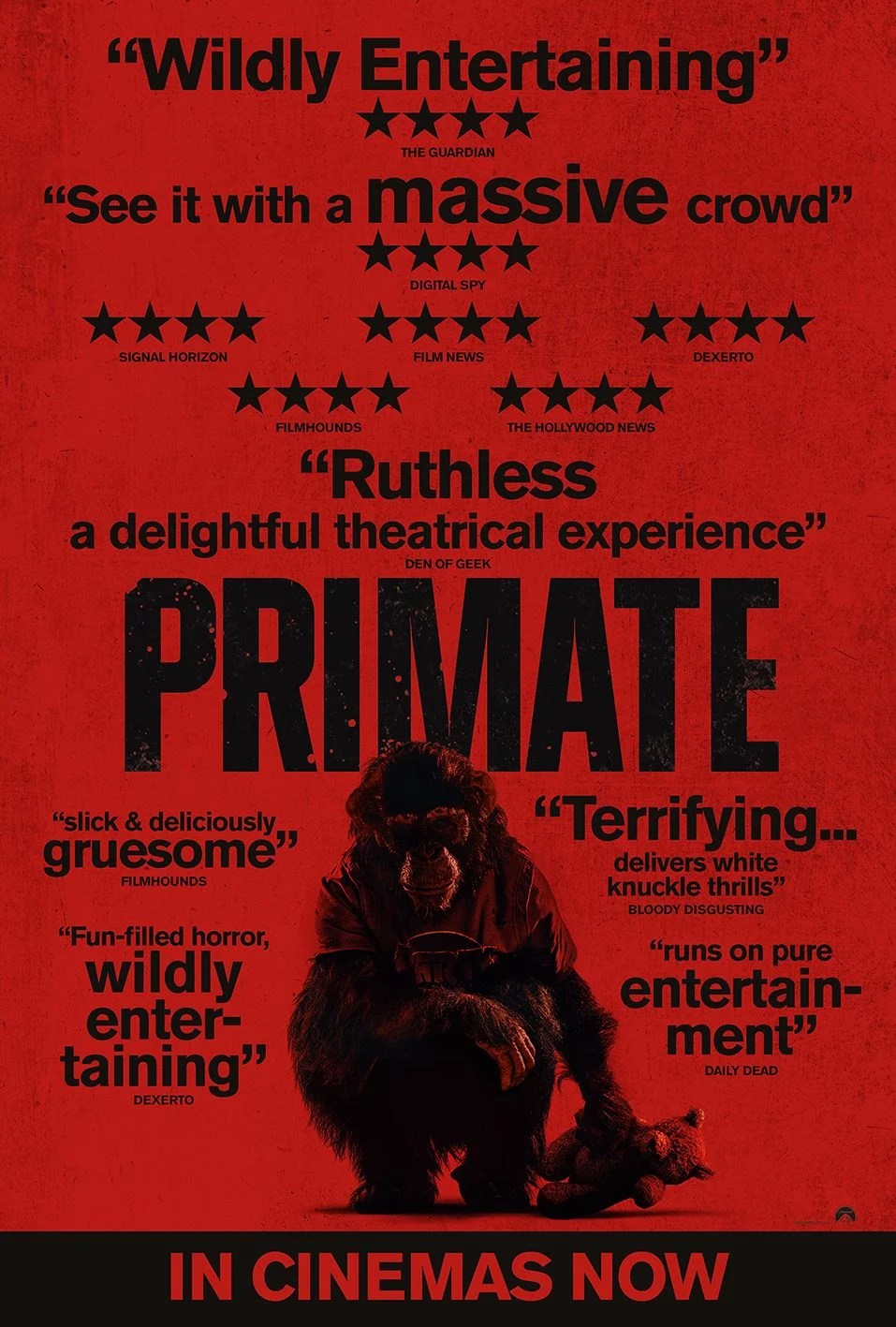
This week, the focus is a brand new film – Primate, directed by Johannes Roberts. It’s a deliberately confrontational piece of horror: graphic, tense, and unflinching in its depiction of violence. On the surface, it fits comfortably within the long tradition of “killer animal” cinema. But beneath that familiar framework, I think Primate is doing something more thoughtful, and more troubling.

Intelligence as Horror, Not Gimmick

There is a particular kind of discomfort that lingers after watching Primate. Not the fleeting unease of jump scares or gore, but something quieter and more persistent. A sense that what you’ve just watched isn’t entirely fictional and that the true horror sits uncomfortably close to reality.

The film centres on a chimpanzee capable of communicating through sign language. When the animal contracts rabies, its behaviour becomes violently unstable. What makes this premise effective is not the novelty of intelligence, but how seriously the film treats it.

The chimp’s cognition is not there to make it sympathetic, nor to humanise it for easy emotional manipulation. Instead, intelligence becomes an amplifier. The violence is more disturbing precisely because the audience understands this is not a mindless creature lashing out, but a thinking being whose perception of the world has been catastrophically altered.

Rabies matters here. The film resists framing the chimp as evil, possessed, or monstrous by nature. This is disease, not malice. Pathology, not punishment. That distinction shifts the moral weight of the story away from the animal and back toward the conditions that made such an outcome possible in the first place.

The Horror Isn’t the Chimp

This is where Primate brushes up against an uncomfortable truth that horror cinema has often avoided.

The horror isn’t the chimp. The horror is the belief that we can safely domesticate something that was never meant to be ours.

Highly intelligent animals do not become safer through proximity to humans. If anything, intelligence increases unpredictability when an animal is denied its natural social structures, environmental cues, and physical autonomy. Familiarity does not override biology.

Viewed through this lens, Primate stops being a simple killer-ape film. It becomes a story about misplaced control and the human tendency to mistake access for understanding.

Real-world cases have already shown how fragile this illusion is. In 2009, Travis the chimp — raised in a domestic setting and long treated as a familiar presence rather than a wild animal, violently attacked a woman in his owner’s home. The incident was not the result of cruelty or neglect in any simple sense, but of a far more uncomfortable truth: a highly intelligent, powerful animal had been placed in an environment it was never designed to navigate. When something went wrong, the consequences were catastrophic.

Love did not cancel instinct. Intelligence did not equal compliance.

Primate fictionalises this reality, but it does not exaggerate it. The film’s horror grows from the same fault line: the human insistence that proximity and affection can neutralise biology.

Killer Apes and Cinematic Inheritance

Cinema has a long, complicated relationship with apes. From the earliest monster films through to modern horror, they occupy an uneasy space: strong enough to threaten us, intelligent enough to unsettle us, and similar enough to us to provoke discomfort.

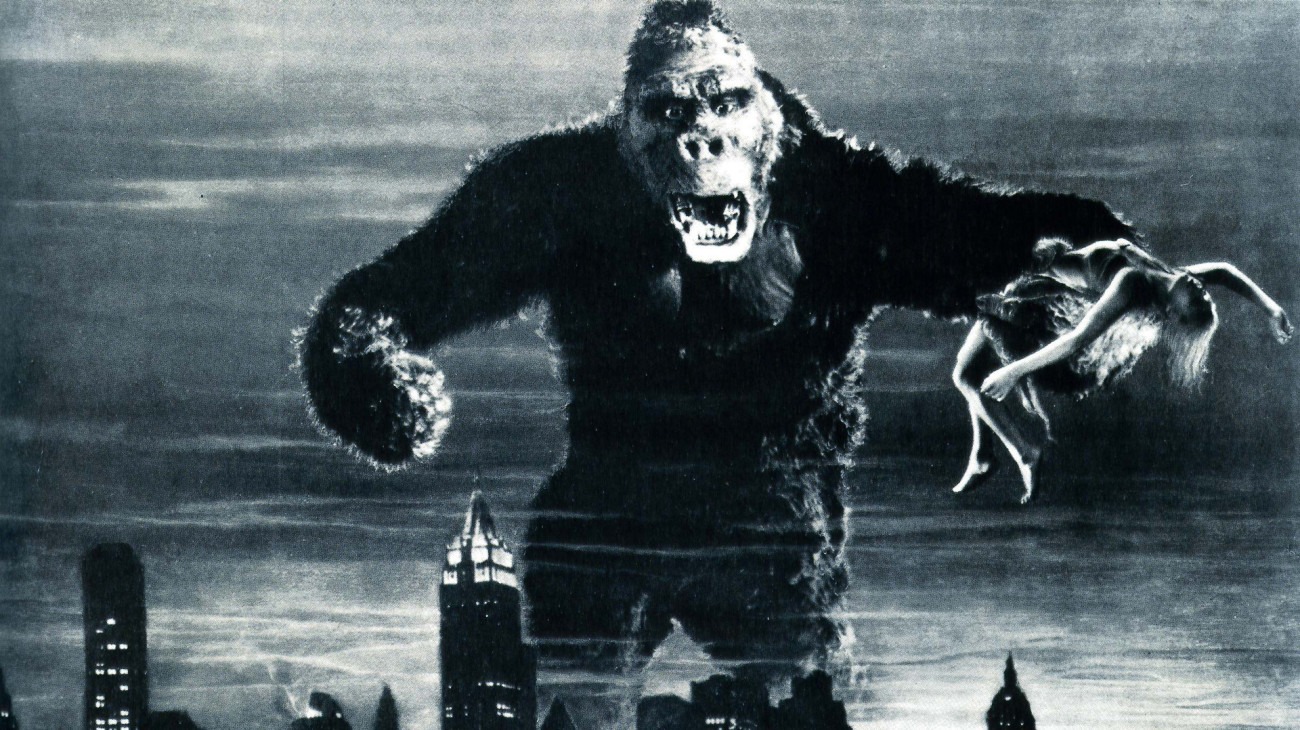
Films like King Kong established a template where apes became symbols of chaos, domination, or fear of the “other”. Too often, those stories leaned on spectacle rather than context, asking audiences to fear the animal without interrogating why it was placed in conflict with humans at all.

Primate inherits that cinematic lineage, but it doesn’t fully repeat its mistakes. The chimp is dangerous, yes, but the film never lets the audience forget that the danger is engineered. Captivity, experimentation, disease, and human arrogance form the backdrop to every violent act.

The animal is not framed as a natural villain. The system surrounding it is.

Misrepresentation, Responsibility, and Modern Horror

This raises a broader question, one that modern creature features can maybe no longer avoid. Can we still make effective animal-led horror without slandering a species?

The answer may lie in perspective rather than restraint. Horror does not lose its power when animals are portrayed honestly; if anything, it becomes more unsettling. When behaviour is grounded in biology, instinct, stress, and environment, violence stops feeling arbitrary and starts feeling inevitable.

Too many older films treated animals as symbols — metaphors for chaos, punishment, or nature “striking back”. In doing so, they often stripped creatures of context, reducing complex species to simple villains. The result was fear without understanding, and spectacle without consequence.

Primate largely avoids that trap. The chimp’s actions are horrifying, but they are never divorced from cause. Captivity, experimentation, disease, and human interference form the framework within which the violence unfolds. The animal is not behaving “out of character”. It is behaving exactly as a compromised, intelligent animal might.

This is an approach I’ve deliberately taken in my own fiction. When I write from the point of view of the creature, it isn’t to humanise or excuse its actions, but to clarify them. To show how instinct, territory, stress, and survival pressures shape behaviour, and how easily human presence destabilises that balance. Horror, in this context, doesn’t come from malice. It comes from collision.

When animals are depicted honestly, the question shifts. The fear is no longer what is the creature capable of? It becomes why did we put it in this position at all?

That, perhaps, is where modern creature-feature horror finds its real responsibility, not in softening its monsters, but in telling the truth about them.

Looking Ahead

Slandering a species has consequences, as Peter Benchley discovered after the unprecedented success of Jaws.

Hot off its 50th anniversary year in 2025, Jaws offers a powerful case study in how fiction can shape fear and how those fears can ripple outward into real-world destruction. In a future Movie Monday, we’ll look at how that film and book sounded a death knell for millions of sharks in the decades that followed, and how Benchley himself later became a vocal champion for their protection.

Because stories about animals don’t end when the credits roll. They linger. And sometimes, they bite far deeper than intended.

Monster Monday: The Yeti — Footprints in the Snow

Footprints are powerful things.

They suggest presence without confrontation — a body that was there, but no longer is. In high mountain places, where weather erases evidence quickly and distances distort scale, a single line of tracks can feel profoundly unsettling. It is no surprise that the Yeti, more than almost any other cryptid, has been defined not by clear sightings, but by impressions left behind.

The Yeti does not announce itself. It lingers at the edge of vision, half-formed in snow, mist, and memory.

The First Western Encounter

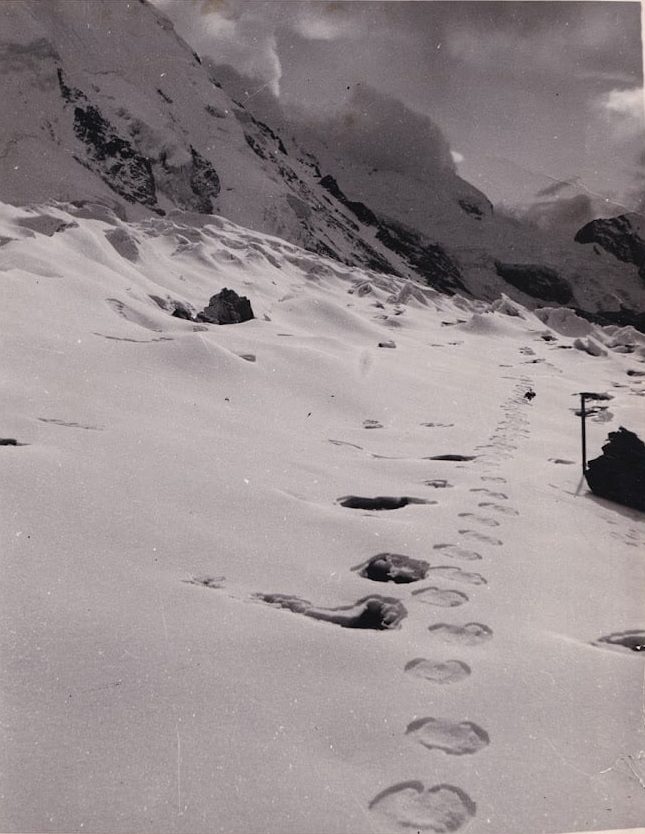
The modern Western story of the Yeti is often traced to 1921, during a British reconnaissance expedition to Mount Everest led by Charles Kenneth Howard-Bury. While crossing the Lhakpa-La pass at around 20,000 feet, members of the party observed dark figures moving across a distant snowfield. They also noted a trail of large footprints, unlike those of any animal they recognised.

Local guides described the tracks as belonging to something known in regional folklore. Through mistranslation and embellishment, this was rendered in Western newspapers as the “Abominable Snowman” — a phrase that would stick, despite being at odds with the more nuanced local descriptions. Some researchers have since suggested that elements of the original terminology may have referred more generally to wild or bear-like creatures, an ambiguity that would echo through later attempts to categorise what was seen.

What is striking about these early reports is how restrained they were. There was no claim of attack, no dramatic encounter. Just distance, scale, and uncertainty. Something large had crossed the snow.

Images are sourced from Unsplash, Pexels, or other royalty-free libraries where possible. Where not, credit is given to the original creator when available. Some images may be used under fair use for commentary or educational purposes. If you are the rights holder and have any concerns, please contact me for prompt credit or removal.

One Name, Many Creatures

One of the enduring problems in Yeti research is the assumption that it refers to a single, clearly defined animal.

Across the Himalayan region, different cultures describe different beings: some tall and upright, others smaller and more animal-like; some solitary, others encountered in pairs; some associated with high snowfields, others with dense forest. Hair colour, gait, and behaviour vary widely between accounts.

Rather than weakening the Yeti legend, this diversity strengthens it.

It suggests that “Yeti” may be a category rather than a creature, a name applied to unfamiliar encounters in extreme environments. In this sense, the Yeti functions much like other global wild-man traditions: a boundary figure, occupying the blurred edge between known animals and imagined ones.

Where the Yeti Really Lives

Popular imagery places the Yeti high on frozen ridgelines, silhouetted against endless snow. In reality, this is one of the least likely places for a large, undiscovered mammal to live year-round.

Modern thinking increasingly suggests that if a Yeti-like animal exists at all, it would spend most of its life below the snowline, in remote forests and rugged valleys where cover, food, and shelter are more reliable. Seasonal crossings of high passes could account for the famous footprints, while keeping the creature largely hidden for the rest of the year.

This reframing does not make the Yeti less mysterious, it makes it more plausible.

Footprints, Photographs, and the Problem of Proof

The most famous Yeti evidence remains the footprint photographs: oversized impressions in snow, often distorted by melt, refreeze, and shadow. These images have been endlessly reproduced, debated, and dismissed.

But footprints are inherently deceptive. Snow stretches, collapses, and reshapes under weight. Familiar animal tracks can appear enormous under the right conditions. Perspective plays tricks in featureless landscapes.

It is also worth noting that some famous Yeti evidence has been questioned long after the fact. In a handful of cases, relatives or associates of expedition members later suggested that footprints may have been exaggerated, staged, or misinterpreted. Claims that emerged decades after the original events, often when those involved were no longer alive to respond.

Whether these retrospective doubts reflect new information, fading memory, or a desire to impose rational order on unresolved stories is difficult to say. What they do illustrate is how cryptid encounters rarely end when the expedition does. They continue to evolve, shaped by cultural pressure, reputation, and our collective discomfort with uncertainty.

The footprints endure not because they are conclusive, but because they resist tidy explanation.

From Mystery to Caricature

Once the phrase “Abominable Snowman” entered Western culture, the Yeti’s fate was largely sealed. It became a creature of novelty and spectacle, sometimes threatening, often comic.

Films and television leaned into this transformation, from light-hearted moments in One of Our Dinosaurs Is Missing, to outright creature features like Abominable, and later family-friendly reimaginings such as Smallfoot.

Entertainment keeps the Yeti visible, but it also flattens it. Complexity gives way to costume. Mystery becomes marketing.

Modern adventure shows, including series like Expedition Unknown, walk a sometimes not-so-careful line between curiosity and spectacle. They undoubtedly keep public interest alive but in doing so, they risk turning genuine mystery into a checklist of expected outcomes.

A Monster That Refuses to Settle

Perhaps the Yeti’s greatest strength is its refusal to be pinned down.

It does not fit neatly into zoology, folklore, or fiction. It shifts between categories depending on who is looking, and from where. In this way, the Yeti mirrors the landscapes it is said to inhabit. Places where maps end, weather dominates, and certainty is a luxury.

The Yeti endures not because it has been proven, but because it remains unresolved. A set of footprints leading out of sight. A shape moving where nothing should be. A reminder that even in the modern world, there are still edges we do not fully understand.

If you enjoy this kind of grounded monster storytelling, my novels explore similar themes of wilderness, fear, and folklore, where the line between the known and the unknown is rarely clear.

Maneater Monday: The Wolves of World War I — When Nature Stopped the War

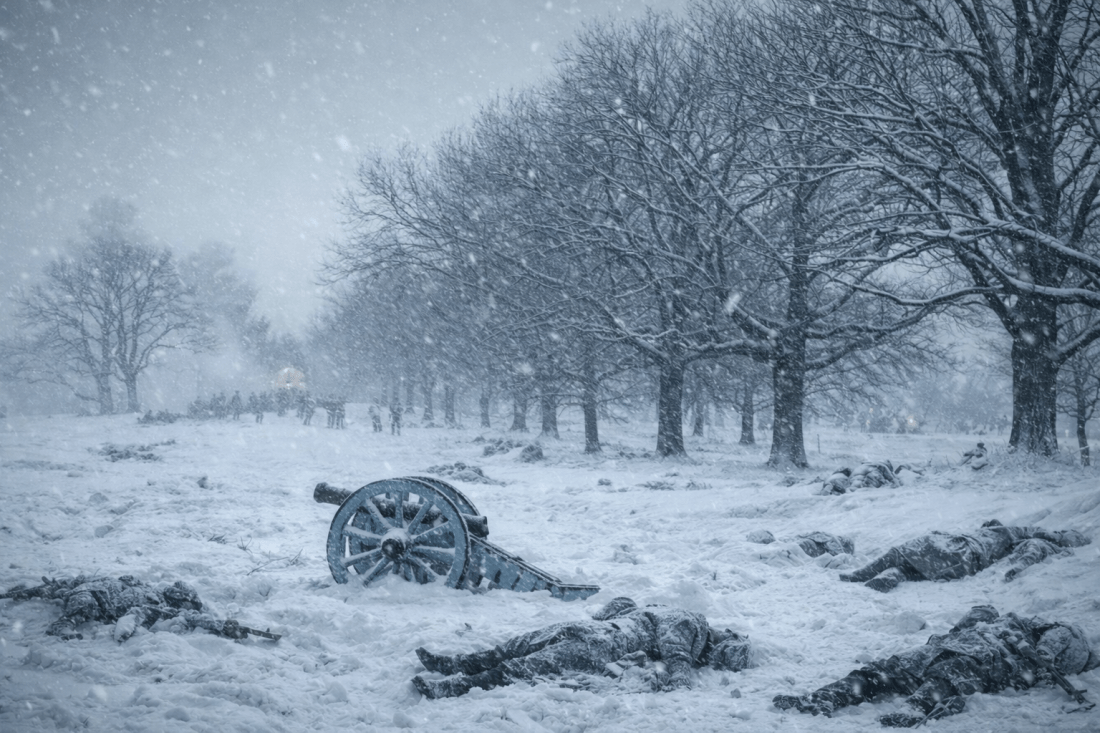
In the winter of 1916, on the frozen Eastern Front, German and Russian soldiers discovered that the greatest danger they faced was no longer each other.

The Howling in No Man’s Land

The snow fell thick and soundless over the forests of Eastern Europe.
It swallowed roads, softened the edges of trenches, and buried the dead where they lay.

Along the front lines separating German and Russian forces, sentries stood in rigid silence, rifles stiff with ice, breath frosting the air in pale clouds. The wind carried the smell of rot from the fields beyond the wire — thousands of bodies left unburied after weeks of fighting, locked in the ground by frost.

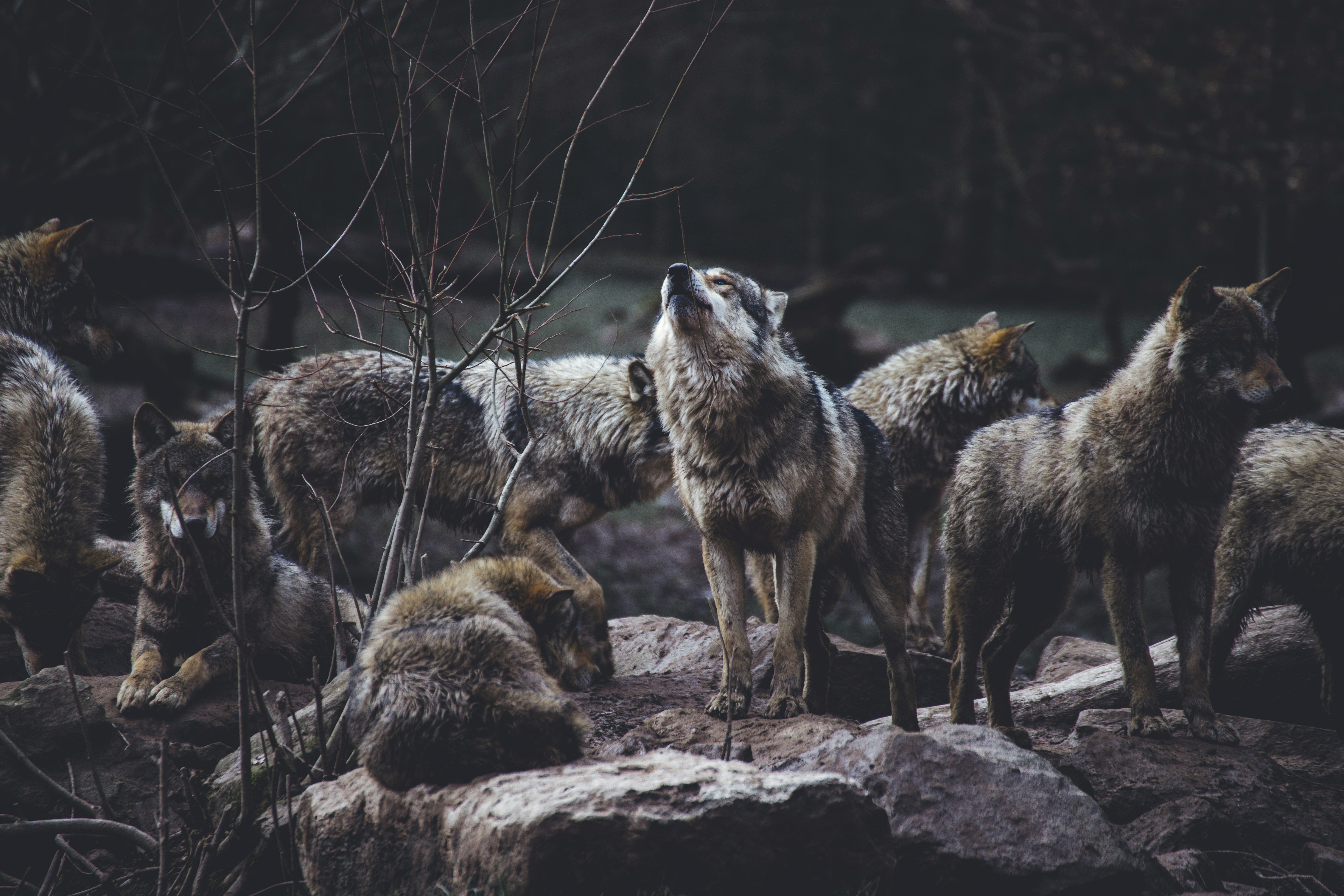
And then, at night, came the howling.

At first it was distant. Mournful. Easy to dismiss as imagination or exhaustion.
But as the weeks passed, it grew closer.

Men began to vanish from the edges of camps. Lone runners failed to return. Wounded soldiers, dragged away from shell holes and shallow graves, left only streaks of dark red in the snow.

The Eastern Front had acquired a new predator.

A Perfect Storm for Wolves

The First World War created conditions unlike anything Europe had seen.

The Eastern Front, stretching across Poland, Belarus, and the Baltic regions, became a landscape of mass death and logistical collapse. Entire villages were abandoned. Supply lines broke down. Corpses lay uncollected for weeks or months at a time.

For wolves, already struggling under centuries of persecution and habitat loss, this was catastrophe and opportunity combined.

Winter drove them out of the deep forests. Starvation pushed them closer to human settlements. And war provided something unprecedented: endless carrion.

Thousands of human bodies lay exposed in fields and forests, frozen solid in the snow. For scavengers, it was a banquet that never ended.

At first, the wolves fed on the dead.

Then they began testing the living.

When the Dead Were No Longer Enough

Contemporary reports and later memoirs describe a shift in behaviour as the winter deepened.

Wolves began approaching camps at night, circling trenches, and following patrols at a distance.

Isolated soldiers were attacked while collecting firewood or running messages between positions. Sentries disappeared from their posts. Wounded men, unable to move, were taken from the margins of the battlefield.

The attacks were not frenzied. They were methodical.

These were not mythical monsters or supernatural beasts. They were animals responding to an extreme ecological shock, losing their fear as hunger and opportunity rewired their instincts.

For soldiers already broken by cold, starvation, and artillery, the effect was devastating. The war had stripped them of shelter, warmth, and food. Now it was stripping them of the illusion that humans were still in control.

The Truth of the “Wolf Truce”

As the attacks increased, something extraordinary happened.

According to multiple historical accounts, both German and Russian units found themselves under such sustained pressure from wolves that hostilities between the two sides were temporarily suspended.

Joint patrols were formed. Coordinated hunts were organised. Weapons that had been aimed at enemy soldiers were turned outward, into the forests.

For a brief moment, the front line dissolved. The enemy was no longer the man in the opposite trench. It was the unseen presence moving through the trees.

The episode became known later, and somewhat romantically, as the “wolf truce.”

https://historica.fandom.com/wiki/Wolf_truce

https://www.military.com/military-life/soldiers-world-war-eastern-front-fought-common-enemy-wolves.html

https://historyandthings.com/2021/09/28/the-wolf-truce-1917/?utm_source=chatgpt.com

Fact, Folklore, and Embellishment

As with many stories that sit at the boundary of history and horror, the details are tangled.

There is credible evidence that wolf attacks did occur on the Eastern Front during the winters of 1916–1917. Military records and memoirs reference problems with wolves and describe organised culls.

There is also evidence of temporary cooperation between opposing forces to deal with shared threats. Not just wolves, but disease, flooding, and other environmental hazards.

But the scale of the attacks has almost certainly been exaggerated in later retellings. The idea of thousands of wolves overwhelming entire regiments is almost certainly folklore.

What remains clear is this:

The wolves were real. The attacks were real. And for a brief winter, nature forced a pause in a human war.

Why This Story Endures

The wolves of World War I were not evil. They were not monsters. They were opportunists in a broken ecosystem.

War dismantled the structures that kept humans safe; shelter, food, burial, borders, order. In that vacuum, predators did what predators have always done. They filled the gap.

What terrified soldiers was not just the physical danger. It was what the wolves represented. They were proof that civilisation had collapsed far enough for humans to become prey again.

Fear is rarely about death alone. It is about the loss of control.

When Humans Stop Being the Apex Predator

The label “maneater” has always said more about us than about the animal.

Wolves have hunted people before. So have tigers, lions, leopards, bears, and sharks.

But they only become legends when they cross an invisible line, when they stop behaving like background wildlife and start behaving like participants in human history.

On the Eastern Front, the wolves did exactly that. They stepped into a war zone and claimed their share of it.

After the Snow Melted

Eventually, the wolves were driven back. Hundreds were shot, trapped, or poisoned.

As spring came, the snow thawed, and the bodies were buried. The carrion vanished. The front stabilised.

The wolves retreated into the forests. And the armies resumed killing each other. The moment passed, almost forgotten.

But for a brief winter, the war remembered something it had tried to deny: It was not the only deadly force shaping that front.

Closing Reflection

The wolves of World War I were not supernatural. They were not sent by fate or divine punishment. They were simply animals responding to human catastrophe.

And in doing so, they exposed a truth that sits beneath every maneater story: When the structures of civilisation collapse, the food chain rearranges itself.

And humans are not always at the top.

Executioner Elephants and the Machinery of Power

There are moments in history that feel almost implausible. Not because they are exaggerated, but because they are so deliberately cruel.

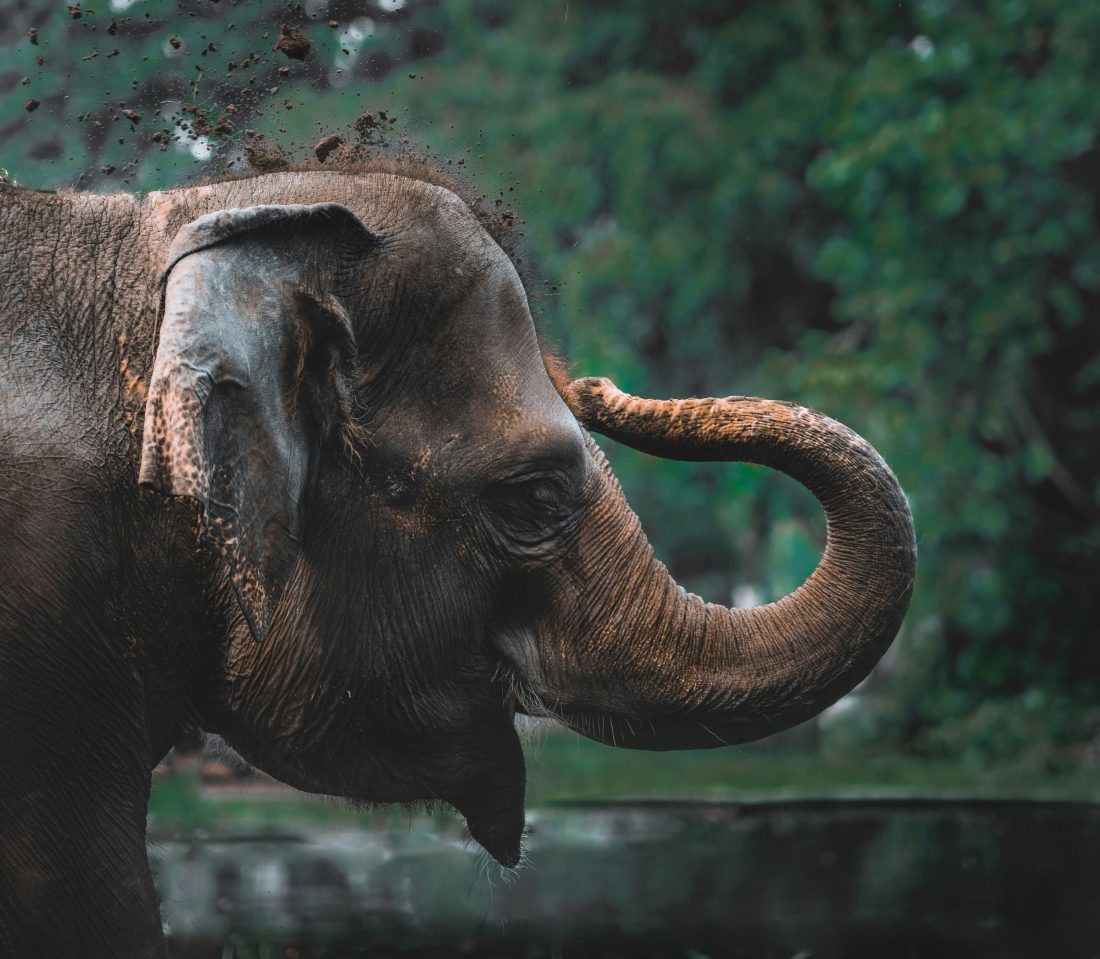
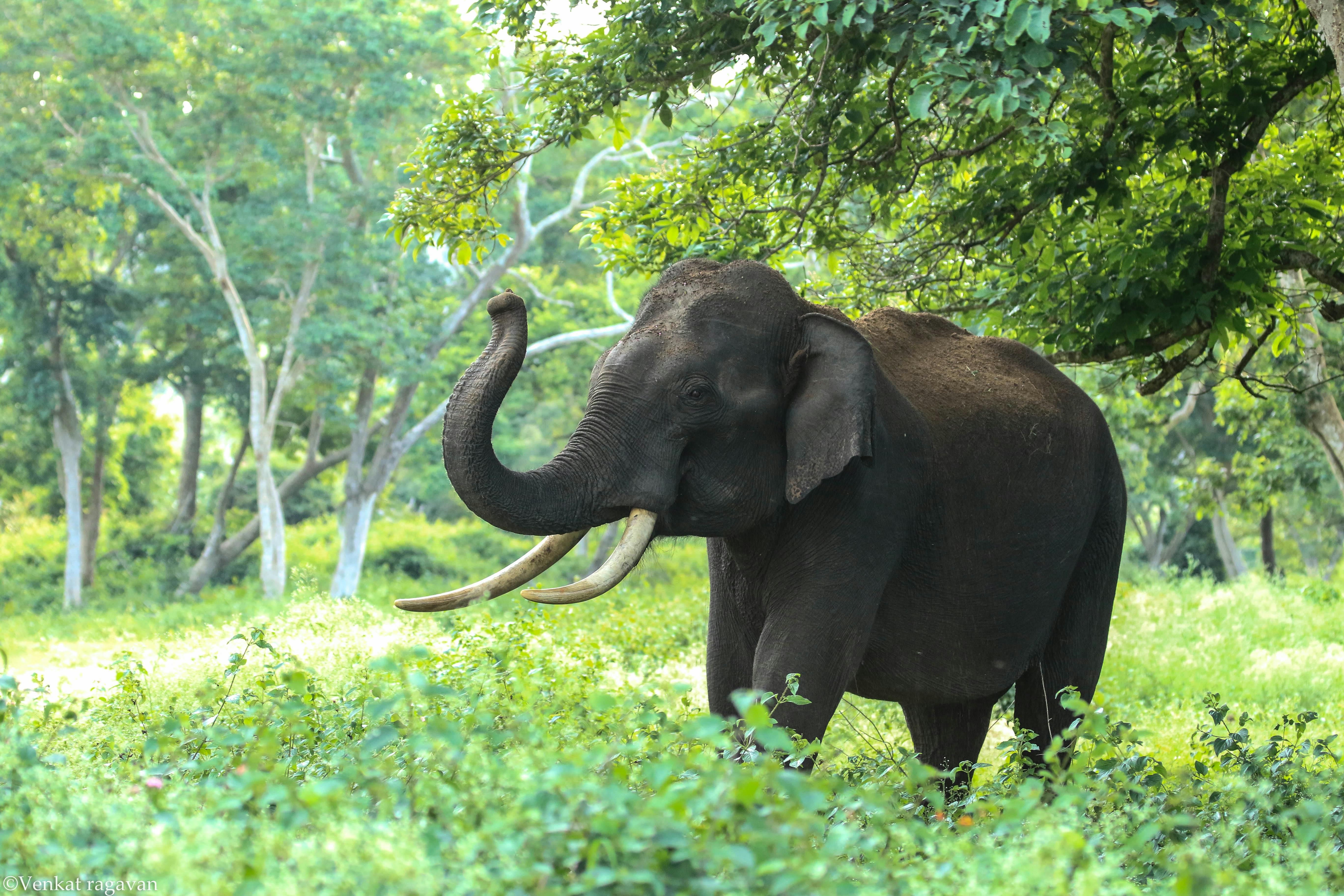
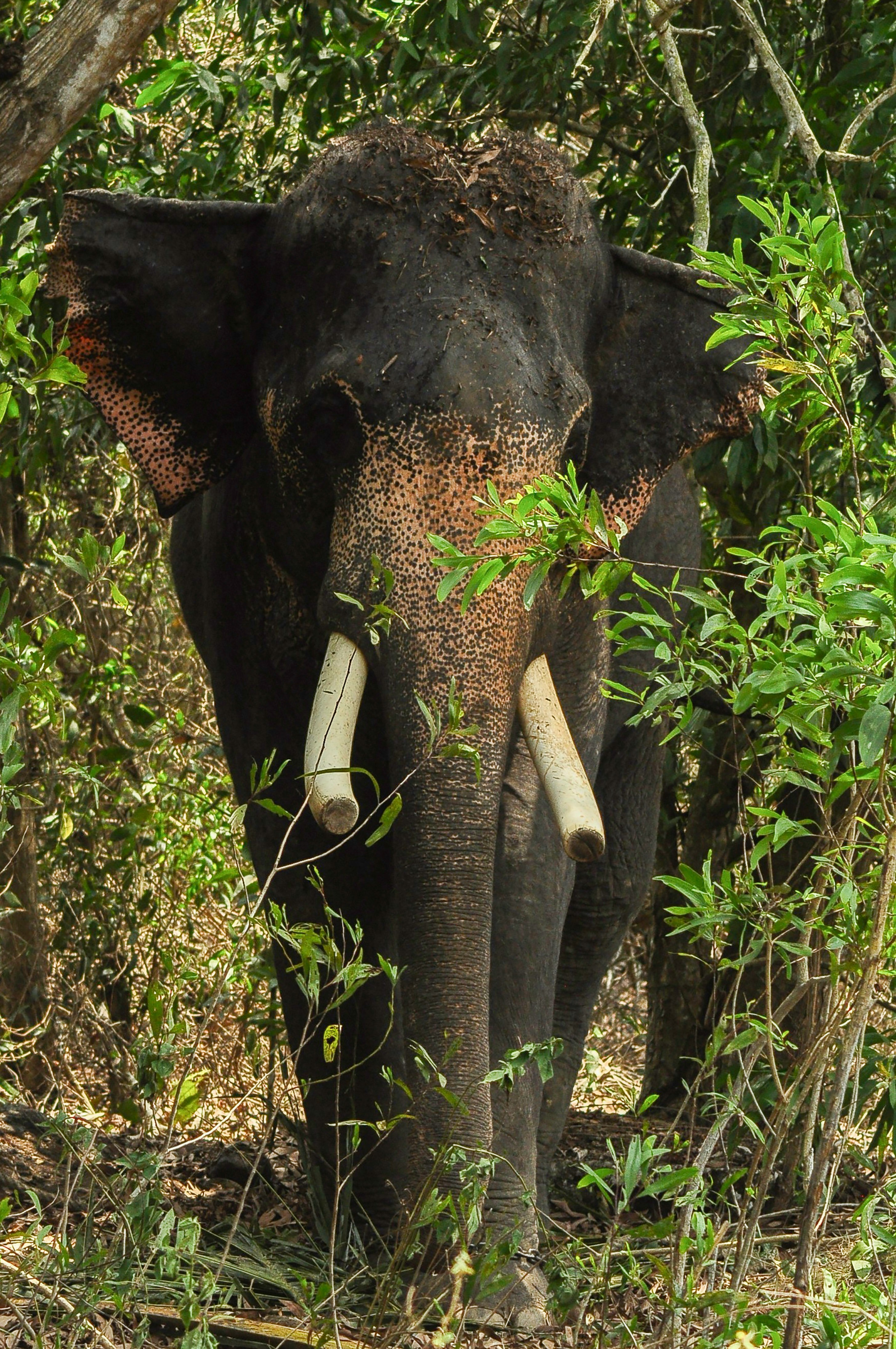
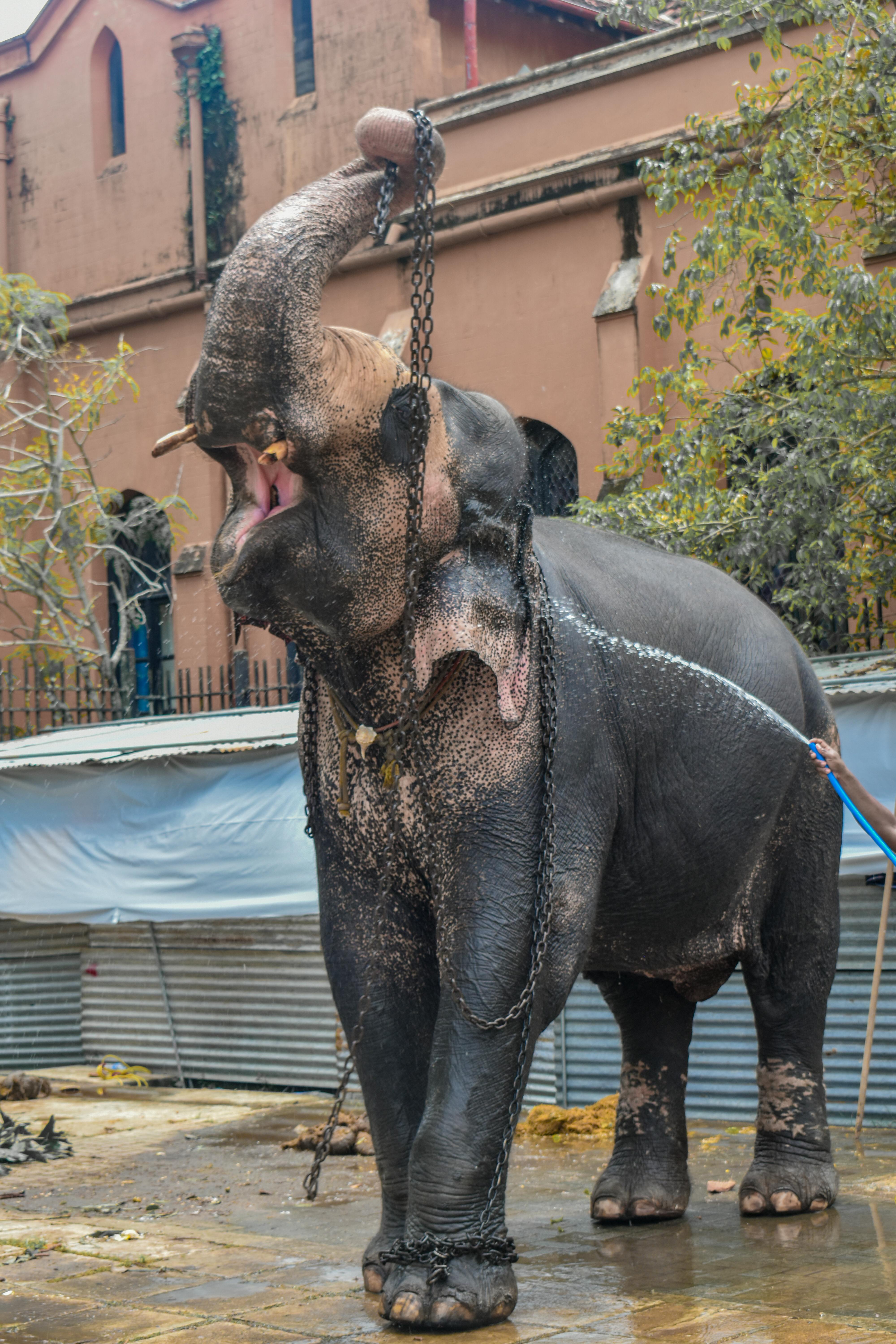
For centuries, across parts of South and Southeast Asia, elephants were used as executioners (known as Gunga Rao in India). Not in myth or allegory, but as instruments of state punishment: trained, directed, and deployed to kill human beings in public displays of authority.

This was not a curiosity or an isolated practice. It was a system, and one that relied on the intelligence and obedience of an animal capable of learning complex commands, and on the psychological impact of seeing power made flesh.

What makes this history unsettling is not simply what happened, but how intentional it was. Elephants were not acting on instinct. They were taught. And they were used.

Where and why executioner elephants were used

The use of elephants as instruments of execution was most prevalent across parts of South and Southeast Asia, particularly in regions where elephants already occupied a central role in warfare, labour, and royal symbolism. Historical accounts describe the practice in areas including the Indian subcontinent, Sri Lanka, Burma, Siam, and parts of what is now Vietnam and Indonesia, spanning several centuries and multiple ruling dynasties.

This was not an improvisation born of cruelty alone. Elephants were already embedded within the infrastructure of power. They hauled timber, carried kings into battle, and featured prominently in court ceremony and spectacle. Their size, intelligence, and visibility made them ideal symbols of authority; living embodiments of the state’s reach and control.

Public punishment in these societies was rarely private. Executions were designed to be seen and remembered as spectacles. They functioned as warnings as much as penalties, reinforcing social order through fear and inevitability. An elephant, towering over a crowd, calm and obedient, communicated something more potent than a blade or a rope: that resistance was futile not only because the state was powerful, but because it appeared absolute.

Beyond fear, the elephant also carried a deeper symbolic weight. It represented the futility of resistance itself. If the state could command and subdue one of the largest and most powerful animals on Earth, a creature capable of tearing apart structures and killing with ease, then the control of people was rendered almost trivial by comparison. Authority was not merely enforced; it was naturalised.

In this context, the elephant became part of a broader political language. Its presence transformed punishment into theatre, merging justice, domination, and spectacle into a single event. The animal itself did not represent chaos or savagery, but discipline… an impression carefully cultivated by those who wielded it.

How the system worked

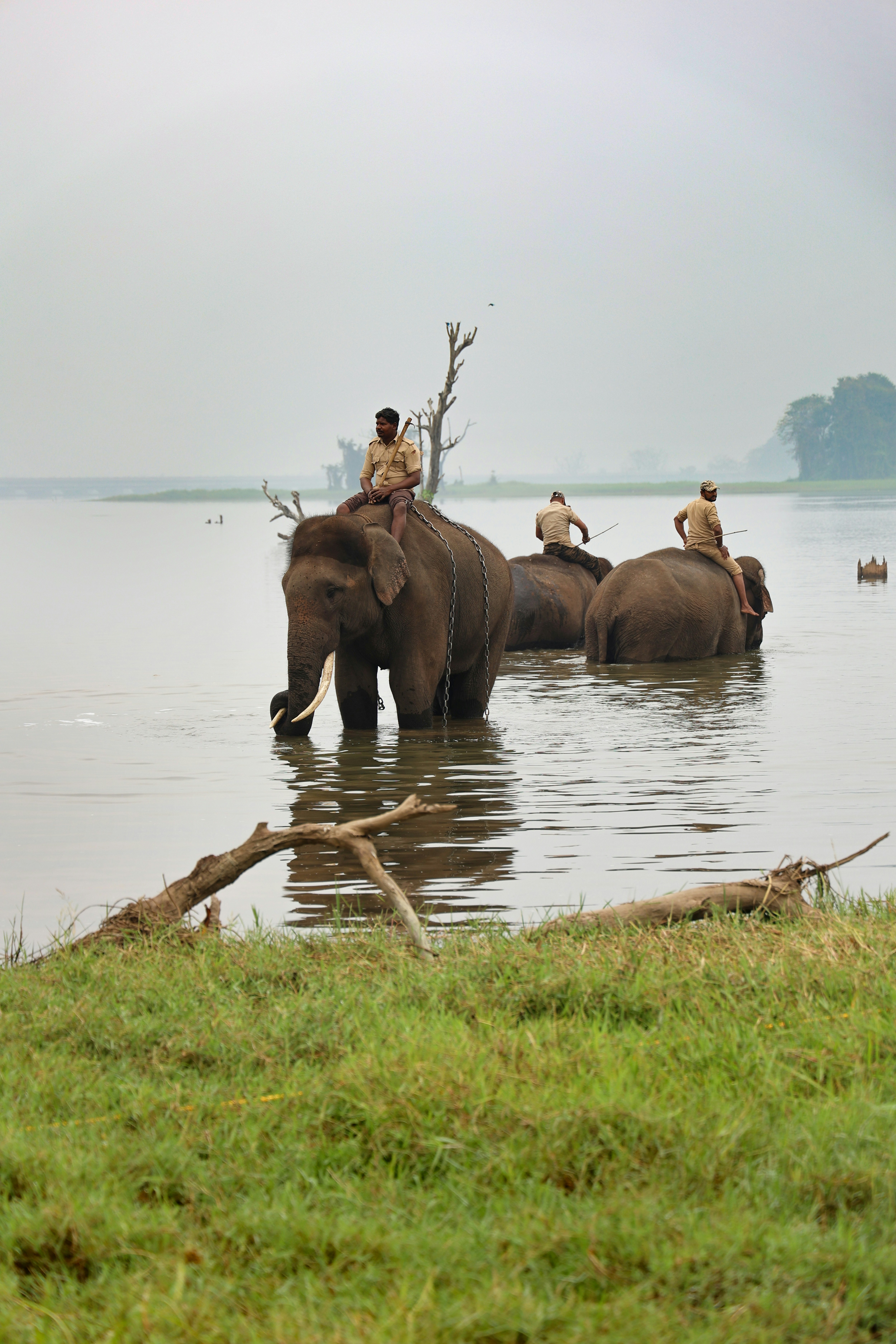
Elephants were not used as executioners through instinct or provocation. They were trained deliberately, responding to commands issued by a mahout who controlled the animal throughout the process. Contemporary accounts describe elephants being taught a range of actions, from restraining a condemned person to killing them outright, depending on the sentence imposed.

The methods varied by region and period. In some cases, executions were swift. In others, they were prolonged, calibrated to heighten public impact rather than efficiency. What united these practices was control. The elephant did not act independently. It waited, received instruction, and carried out the act as trained, sometimes stopping short, sometimes proceeding fully, all according to command.

This distinction matters. The violence was not the result of an enraged animal, nor of a moment slipping beyond human control. It was structured, rehearsed, and repeatable. The elephant functioned as an extension of the judicial system, its immense physical force made precise through obedience.

That precision was itself part of the message. The spectacle lay not only in the act of killing, but in the demonstration that such a powerful animal could be rendered compliant, predictable, and exact. Authority was displayed not through chaos, but through order.

Power, punishment, and political messaging

Public execution has always been as much about those who watch as those who die. In societies that employed executioner elephants, punishment functioned as a form of political communication, a demonstration of authority designed to be remembered long after the event itself had passed.

The elephant’s role intensified that message. Unlike mechanical devices or edged weapons, the animal was visibly alive, responsive, and controlled. Its obedience transformed violence into a display of governance rather than brutality. Order was not imposed through chaos, but through precision. The state did not merely kill; it commanded.

By outsourcing the act of execution to a trained animal, rulers distanced themselves from the physical act of violence while simultaneously magnifying its psychological impact. The elephant became a proxy through which power could be exercised without appearing impulsive or uncontrolled. Responsibility was diffused, even as authority was reinforced.

There was also an element of humiliation embedded in the practice. To be killed by an elephant, an animal associated with royal processions, warfare, and ceremony, inverted the natural order of dignity. The condemned were rendered small, powerless, and publicly subordinate, their fate enacted by a creature that symbolised the state itself.

In this way, executioner elephants functioned not simply as tools of punishment, but as instruments of political theatre. They collapsed justice, domination, and symbolism into a single act, reinforcing a hierarchy in which resistance appeared not only dangerous, but futile.

Methods of punishment and execution

Historical accounts make clear that executioner elephants were not employed in a single, uniform way. Methods varied by region, period, and political intent, and the elephant’s role could be adjusted accordingly. This flexibility was part of the practice’s power.

In some instances, elephants were trained to kill quickly. A single, forceful action, often involving the animal’s foot (the crushing of a victim’s head against a stone or wooden block was typical), was enough to end a life almost immediately. In others, the process was deliberately staged. The elephant might restrain a condemned person first, holding them in place while commands were issued, before carrying out the final act. The presence of choice and delay was itself a form of intimidation, reinforcing the idea that punishment was not only inevitable, but controlled.

More elaborate methods are recorded in certain historical sources. Elephants could be trained to tear apart bodies using their tusks, or to crush limbs before delivering a fatal blow. In some regions, blades or spikes were affixed to tusks to increase lethality. These were not improvisations, but planned variations and evidence of a system refined over time.

What distinguishes these accounts is not brutality alone, but intentionality. The elephant did not act unpredictably. Each movement followed instruction. Each execution demonstrated not rage, but discipline. Violence was administered as a process, not an outburst.

For spectators, this mattered. The horror lay not only in the outcome, but in the calmness with which it was achieved. The animal’s obedience underscored the message that punishment was procedural, sanctioned, and absolute, making it a function of governance rather than cruelty in the abstract.

The animal caught in the system

Elephants are not indifferent instruments. They are highly intelligent, social animals, capable of learning complex behaviours, forming long-term bonds, and responding to subtle cues from those they trust. That capacity and the very trait that made them so valuable to human societies, is what allowed them to be absorbed into systems of punishment in the first place.

The elephant did not choose its role. It did not understand the politics of justice, crime, or authority. It responded to training, repetition, and command. Responsibility for the violence enacted through it does not sit with the animal, but with the structures that shaped its behaviour and put it to use.

This distinction matters, because it forces the focus back where it belongs. Executioner elephants were not expressions of nature’s savagery, nor examples of animals turned monstrous. They were evidence of human ingenuity applied without restraint, of power seeking spectacle, obedience, and inevitability, regardless of the cost.

In many historical accounts, the elephant’s calmness is remarked upon as much as its strength. That calmness was not natural. It was cultivated. And in that cultivation lies the deeper unease of the practice: the transformation of a sentient being into a mechanism, valued not for what it was, but for what it could be made to do.

That this history still unsettles is not surprising. It sits at the intersection of dominance and delegation, where violence is made orderly and responsibility is diffused. The elephant becomes a mirror, reflecting not animal brutality, but human willingness to externalise cruelty, to embed it within systems until it feels inevitable, even justifiable.

With what is now known about elephant intelligence, it is difficult not to wonder what such roles may have cost the animals themselves. Elephants are capable of recognising individuals, remembering past events, and responding to distress in others. They are not unthinking tools, but sentient beings with emotional and social complexity.

Whether executioner elephants experienced fear, confusion, or psychological harm as a result of these acts cannot be known with certainty. Historical records do not concern themselves with the inner lives of animals. Yet the very qualities that made elephants so effective within these systems; memory, responsiveness, trust in human handlers, are the same qualities that, today, are recognised as leaving animals vulnerable to long-term stress and trauma.

If nothing else, this absence is telling. The suffering of the animal was neither recorded nor considered relevant. The elephant’s role ended when its usefulness did. That silence, viewed through a modern understanding of animal cognition, is itself a form of indictment.

This research surfaced while working on a piece of fiction, but it refused to remain there. Some histories resist containment. They linger, precisely because they reveal how thin the line can be between authority and abuse, and how readily intelligence (animal or human) can be bent to serve power.

🎬 Movie Monday: When Real Animals Became Movie Monsters

Stories have always borrowed from the natural world, sometimes consciously, sometimes not.

Movie Monday is a new, occasional series exploring where cinema, wildlife, and myth overlap: the real animals, behaviours, and biological truths hiding behind some of our most enduring screen monsters.

It sits alongside Monster Monday and Maneater Monday — different lenses on the same question: why certain creatures, real or imagined, refuse to loosen their grip on us.

We like to believe that cinema monsters are born from imagination alone… nightmares made flesh, conjured by writers staring into the dark.

But again and again, the truth is stranger.

Some of the most iconic creatures in film and fiction didn’t come from myth at all. They came from nature, from animals whose behaviours were already so efficient, alien, or unsettling that they barely needed exaggeration.

Filmmakers didn’t invent these monsters.
They recognised them.

👹 Predator: insects, instinct, and a moment at 30,000 feet

The creature in Predator is often remembered for its technology: cloaking devices, shoulder cannons, thermal vision, ritualised hunting codes.

But strip all of that away and you’re left with something far older.

During early development, legendary creature designer Stan Winston was struggling to finalise the Predator’s look. While flying with James Cameron, he talked through the problem, and it was Cameron who suggested a simple, unsettling solution: give it mandibles.

That single idea changed everything.

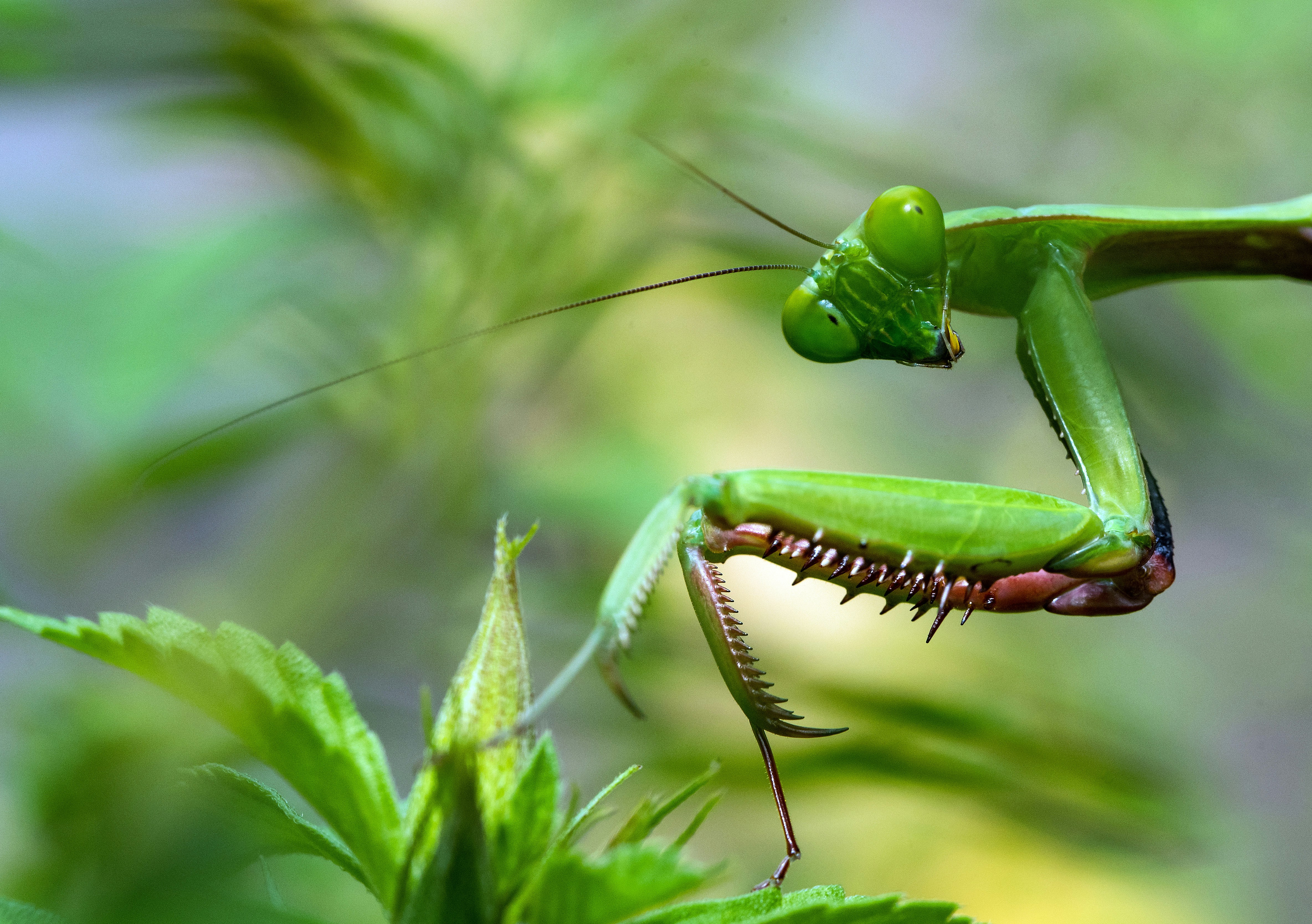
Designers have since acknowledged the influence of insects, particularly praying mantises, in the Predator’s face and posture. Forward-facing eyes. Mandible-like jaws. A head shaped for tracking and striking rather than expression or empathy.

Mantises already look extraterrestrial to us. They rotate their heads. They calculate distance. They dismember prey with methodical calm.

Even the creature’s voice reinforces this lineage. The distinctive clicking and chittering sounds were created by Peter Cullen, deliberately leaning into insect-like vocalisations rather than anything recognisably mammalian or humanoid.

The Predator doesn’t invent that fear.
It scales it up, arms it, and releases it into a jungle.

What remains, beneath the tech, is an apex ambush hunter — something we instinctively recognise, even if we can’t quite place why.

👽 Alien: nature’s most efficient horror machine

The creature in Alien remains one of cinema’s most disturbing designs because it feels biological. Every stage of its life cycle obeys a logic — parasitic, efficient, and utterly indifferent.

That’s because it draws from multiple real-world inspirations.

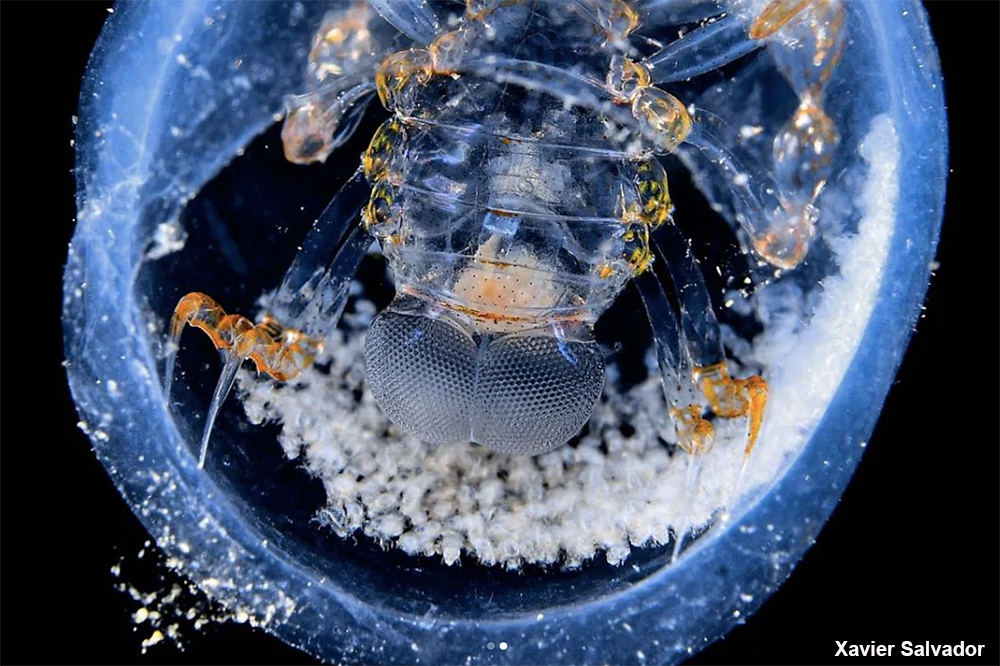
One is the deep-sea amphipod Phronima sedentaria, sometimes called the “monster in a barrel.” This tiny crustacean hollows out gelatinous animals, lives inside their emptied bodies, and uses them as both shelter and nursery. It’s parasitism turned architectura.

Image Credit: Xavier Salvador

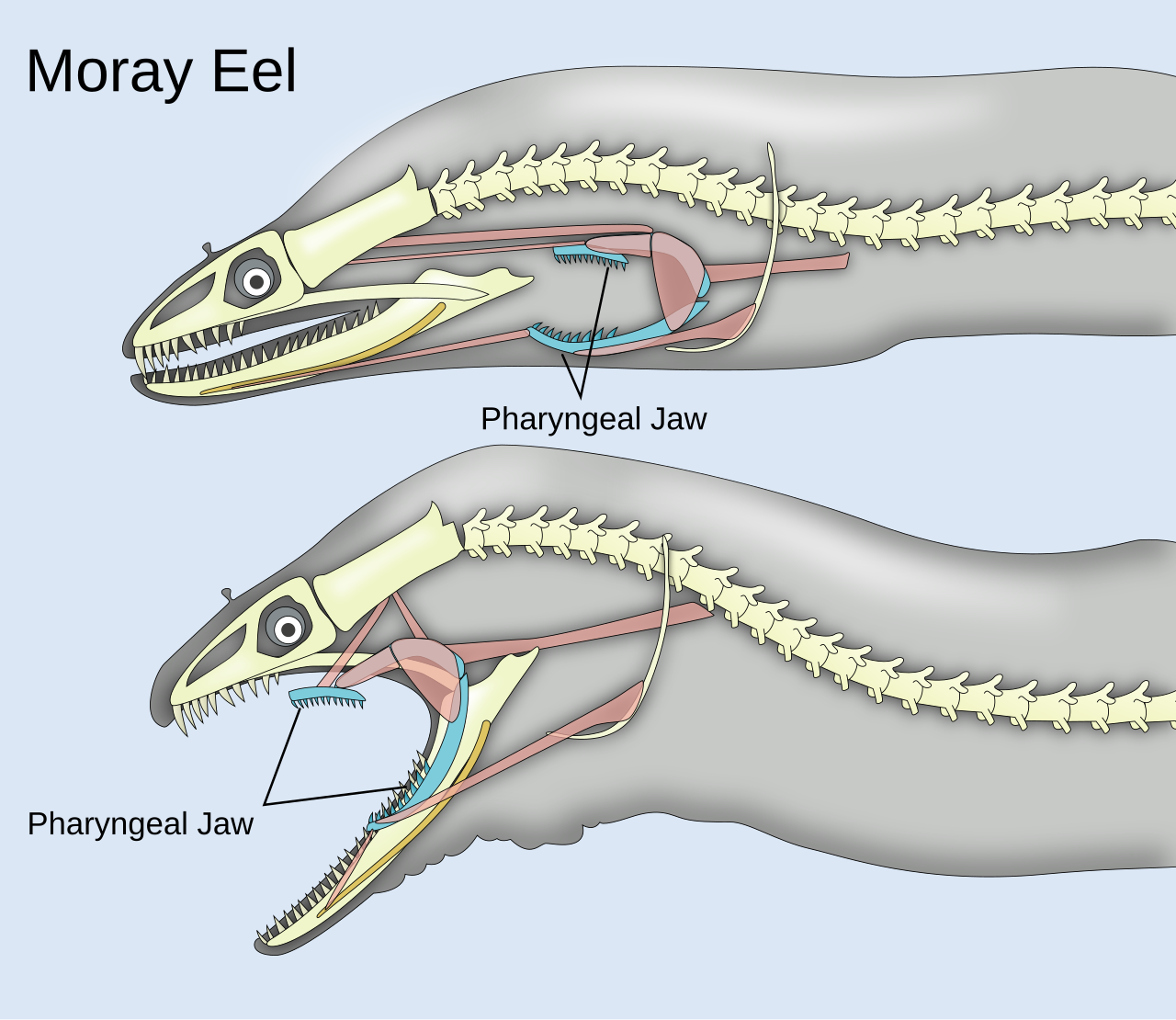
Then there’s the Alien’s inner jaw, eerily similar to the pharyngeal jaws of moray eels, a second set of jaws that shoot forward from the throat to drag prey deeper inside the body. Watching one in action feels like watching a design error, until you realise how brutally effective it is.

Image Credit: Wikipedia.

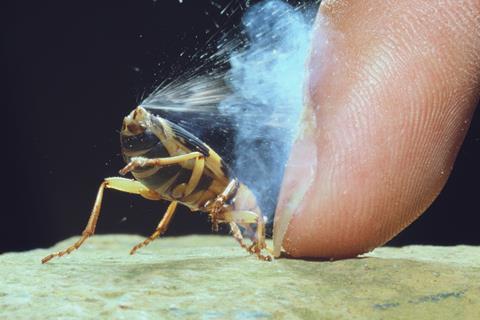
The acid blood? That has uncomfortable echoes of the bombardier beetle, which stores volatile chemicals in separate chambers and mixes them only when threatened, releasing a boiling, corrosive spray with startling precision.

Even the facehugger carries a lineage. Its spidery grip, tail wrap, and underside anatomy closely resemble the ancient horseshoe crab, a creature so old it predates dinosaurs, and so alien it barely seems terrestrial at all.

Alien isn’t fantasy biology.
It’s biology… refined.

🧛 Dracula: when bats became monsters

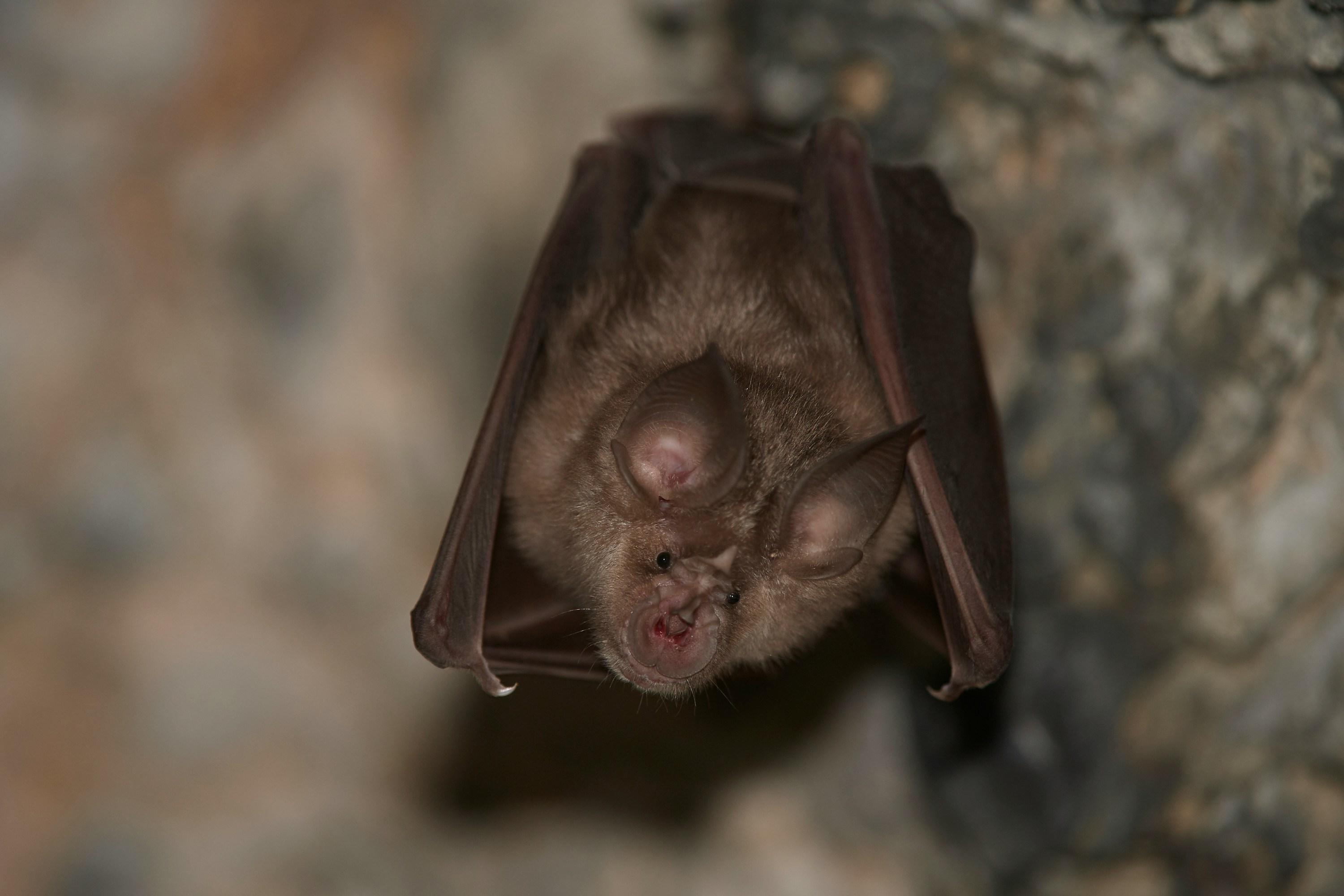
While working on Dracula, Bram Stoker encountered a New York newspaper clipping describing vampire bats – small, blood-feeding mammals that had been newly “discovered” by Western science and already framed as unnatural horrors.

They didn’t drain victims dry, as legend claimed. But they did feed silently, painlessly, and in the dark. They made small incisions, returned night after night, and relied on anticoagulants to keep blood flowing.

That was enough.

Stoker fused this real behaviour with Eastern European folklore, and suddenly vampirism became biological as well as supernatural. Dracula wasn’t just cursed — he fed, adapted, survived.

Once again, fear took root because it had a foothold in reality.

🦈 Jaws: the predator we misunderstood

Jaws didn’t invent the fear of sharks, but it magnified it catastrophically.

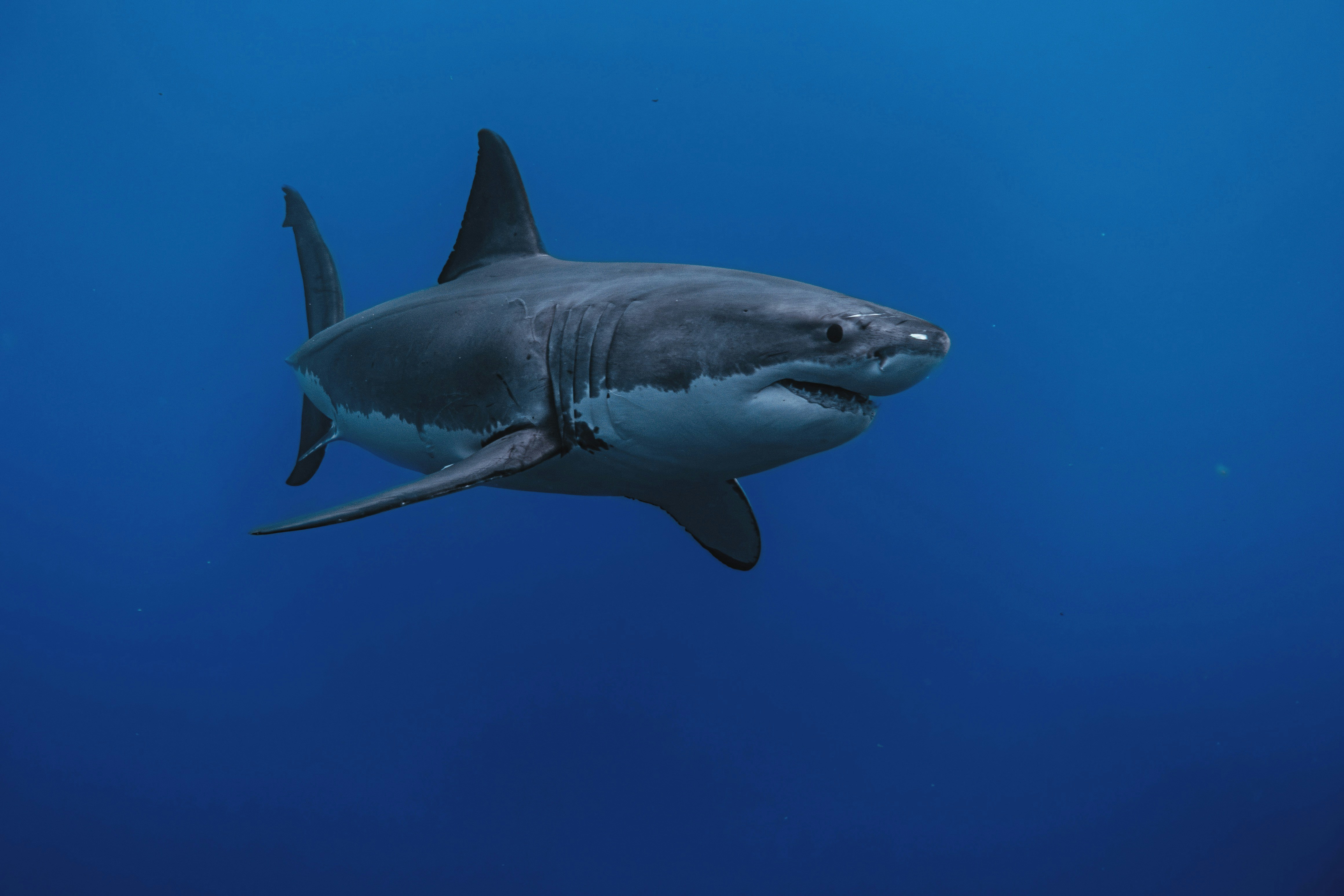
The great white shark is a powerful apex predator, yes. But it is also cautious, energy-efficient, and rarely interested in humans. Most bites are investigative, unfortunate cases of mistaken identity.

In Jaws, however, the shark becomes something else entirely: territorial, vengeful, strategic. It stalks specific individuals. It understands fear.

The exaggeration worked, all too well. The film permanently altered public perception of sharks, contributing to fear-driven culls and a legacy of misunderstanding that conservationists are still trying to undo.

It’s a reminder that when cinema borrows from nature, it doesn’t always give back responsibly. I am working on my own shark-based story, and will have to try and be as respectful as I can with the subject matter.

🍄 The Last of Us and the zombie ant fungus

The monsters of The Last of Us, from the video game and then brought chillingly to life in the HBO series, feel plausible because they already exist.

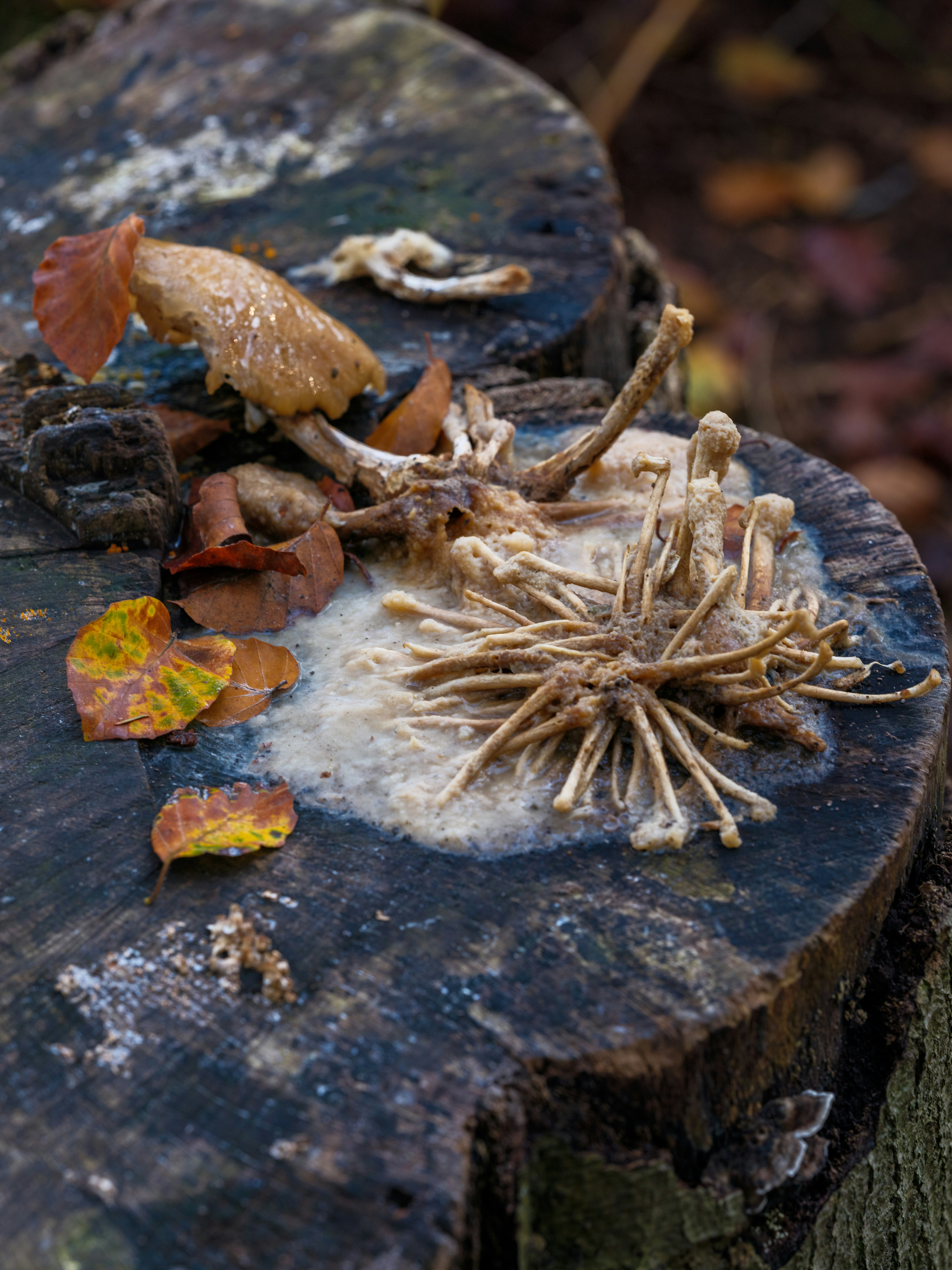
Ophiocordyceps unilateralis infects carpenter ants across tropical forests. Once inside, the fungus alters the ant’s behaviour, compelling it to climb vegetation and clamp down with its mandibles.

Then it kills the host.

A fungal stalk erupts from the ant’s head, releasing spores onto the forest floor below, perfectly positioned to infect the next generation.

There’s no rage. No hunger. No malice.

Just control.

The horror of The Last of Us lies not in the fantasy of zombies, but in the quiet realisation that free will is not as secure as we think.

🪱 Tremors: ambush predators beneath our feet

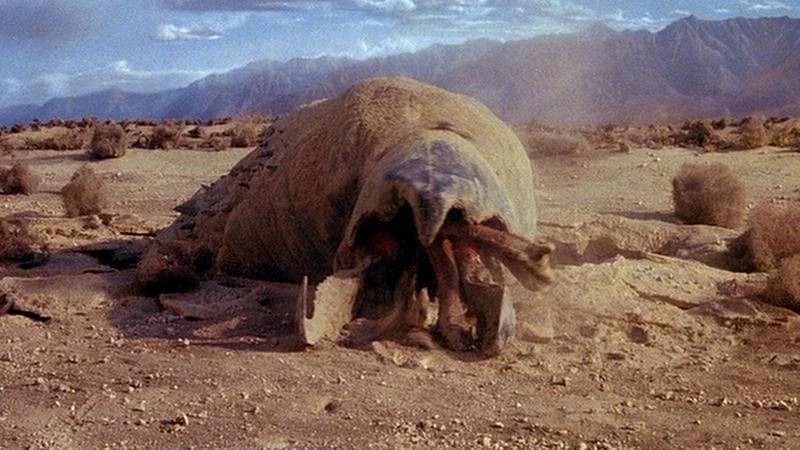
The graboids in Tremors feel absurd, until you consider how many real animals hunt exactly this way.

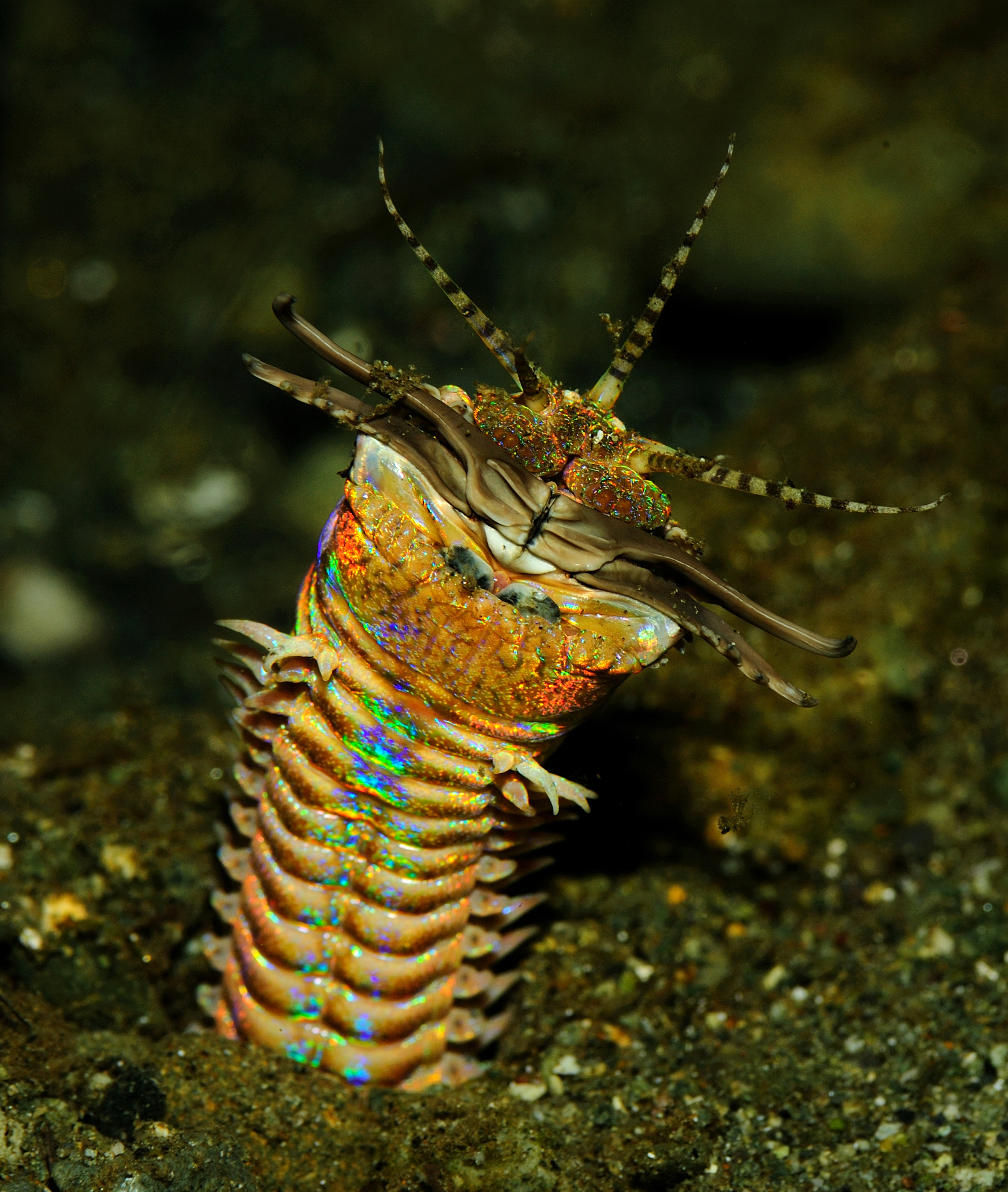
Trapdoor spiders wait motionless beneath the soil, sensing vibrations before exploding upward to seize prey. Bobbit worms bury themselves in sand, striking with astonishing speed, sometimes slicing fish clean in half.

Image Credit: Wikipedia.

Both rely on:

  • Vibration detection
  • Ambush rather than pursuit
  • Minimal exposure

The genius of Tremors is that it makes the ground itself hostile. The monsters don’t chase — they wait.

Which, biologically speaking, is often far more efficient.

🟢 Slime moulds and The Blob

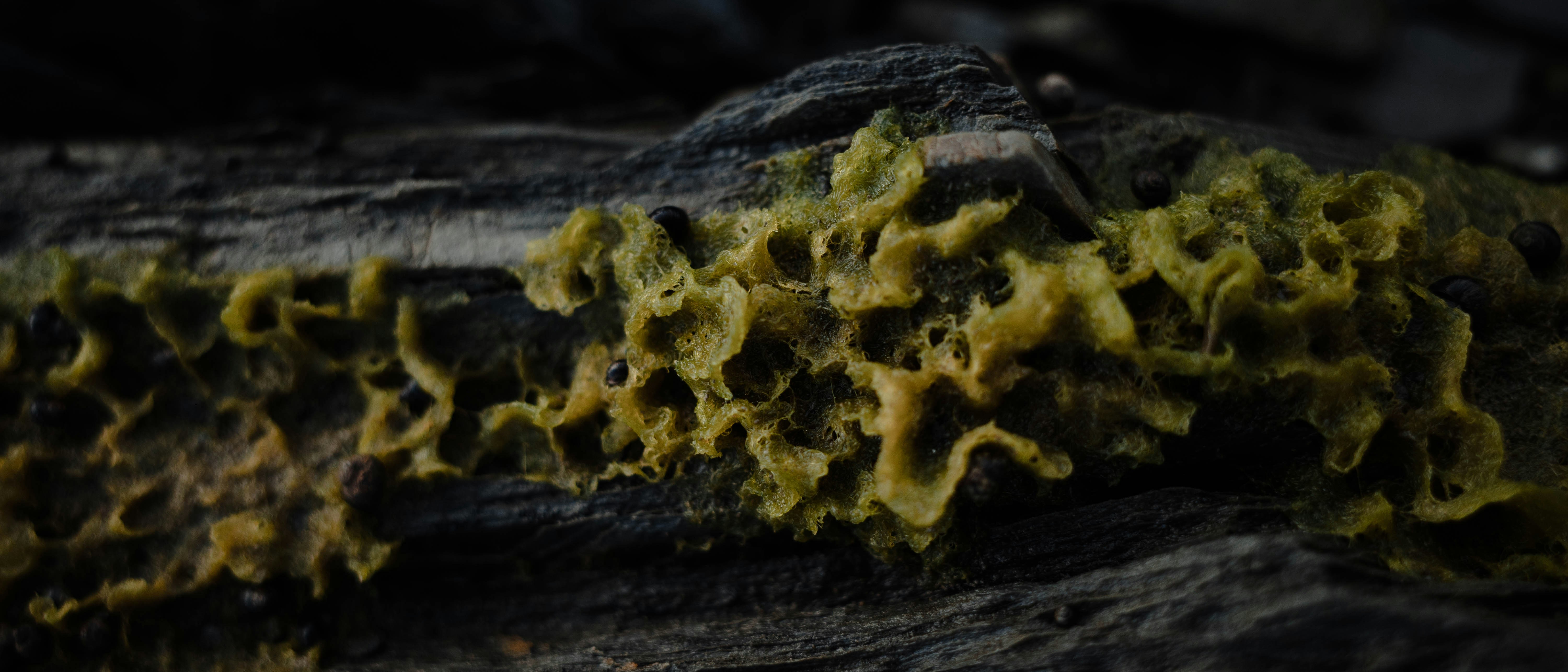
Slime moulds aren’t fungi. They aren’t animals. They’re something else entirely, capable of learning, problem-solving, and forming efficient networks without a brain.

They flow. They engulf. They adapt.

The creature in The Blob exaggerates this into apocalyptic form, but the unease is justified. Slime moulds already challenge our definitions of intelligence and individuality.

They don’t hunt.
They spread.

Why these monsters endure

The most effective movie monsters don’t break the rules of nature.

They obey them too well.

They feed, reproduce, adapt, and survive. They don’t hate us, they don’t even notice us! And that’s what makes them frightening.

Nature doesn’t need motivation.
Only opportunity.

Wherever possible, I use freely available images sourced from platforms such as Unsplash and Pexels, or other royalty-free image libraries, in accordance with their respective licences. In cases where images are not sourced from these platforms, I make every effort to credit the original photographer, artist, or rights holder where attribution information is available. Some imagery may be used under fair use principles for the purposes of commentary, critique, education, or illustration, particularly in relation to wildlife, history, film, folklore, or cultural discussion. No copyright infringement is intended. If you are the rights holder of an image used on this site and have any concerns, or would like an image to be credited differently or removed, please get in touch and I will address the issue promptly.

Why Black Beast Books Exists

There are places where stories refuse to die.

Forests that remember what passed through them.
Landscapes shaped as much by fear and folklore as by history.
Animals that slip between fact and myth, never fully explained, never fully forgotten.

Black Beast Books exists in that space.

This blog, and the work behind it, has always been about the meeting point between wildlife, folklore, fear, and storytelling. About the creatures we fear, the ones we misunderstand, and the ones we invent to make sense of the world around us. Sometimes those creatures are real. Sometimes they’re not. Often, they’re something in between.

As I move into 2026, I wanted to pause — not to reinvent this space, but to recommit to it.

Going forward, Black Beast Books will be a home for regular, thoughtful writing and storytelling, built around a few recurring threads:

  • Long-form essays exploring beasts, monsters, and man-eaters
  • Reflections on horror, folklore, and creature cinema
  • Monthly deep dives into UK big cat sightings
  • Behind-the-scenes insight into research, writing, and place
  • Occasional updates on my novels — because these stories feed directly into the fiction I write

This isn’t about chasing trends or shouting into the void. It’s about building something slowly, consistently, and honestly, creating a body of work that grows over time, shaped by curiosity rather than urgency.

If you’re drawn to strange animals, half-remembered legends, the uneasy relationship between humans and the wild, or stories that linger longer than they should — you’re in the right place.

Thank you for being here.
The beasts aren’t going anywhere.

Unseen Shadows: Big-Cat Sightings in Britain – Autumn 2025 Round-Up

From Suffolk harvest fields to moorland mist in North Wales, a fresh wave of “panthers,” pumas and dark-coated felids stirred Britain’s rural imagination through October and November.

As dusk creeps ever earlier, as hedgerows thin and fields lie fallow, the old hush seems to awaken once more. Reports of something alien abroad: black silhouettes crossing lanes, long tails vanishing between trees, sheep spooked under moonlight, and “pointed-ear” shapes in the gloom. Over the last few months, places like Anglesey, the Llŷn Peninsula, Suffolk and more felt alight with the possibility of something wild and unaccounted for.

Below is a deeper dive into British big cat sightings from the last two months: what was claimed, where and when, what evidence (if any) supports it, and what it tells us about why, in 2025, the British big-cat mystery refuses to go away.

Autumn’s Quiet Fields and the Whisper of Something Else

There’s something about late autumn in rural Britain: the harvest is over, fields lie bare, evenings draw in, and the countryside takes on a soft, half-remembered quality.

For decades, that seasonal quiet has offered fertile ground for whispers of something aloof in the landscape. Could it be wind in the trees, a deer moving in shadow, or something else? For many rural dwellers and folklore-hunters, it has always been the right time for mystery big cats to wander across a lane, disappear into a copse, or vanish beyond the hedge.

In October and November 2025, those whispers, as always seems to be the case in Autumn, became a little louder.

October 2025: When the Reports Began to Coalesce

Scattered reports: South-East and West-Midlands chatter

Throughout October, a series of smaller, loosely connected reports emerged, from “panther-like” silhouettes glimpsed in the treeline, to late-evening growls heard by dog walkers, and paw prints in soft, damp ground after rain. Most came from local Facebook groups, community forums or specialist blogs, with genuine sparks of intent (some people setting up trail-cameras), but little follow-up.

The background: police logs and a five-year string of reports

Behind the anecdotal noise, there’s an institutional record: between 2021 and 2025, based on keyword searches for “big cat,” “puma,” “panther” and “lynx,” official incident-record logs from parts of southern England (notably Devon & Cornwall Police) list more than a dozen reports of large cats, described variously as “black panther,” “puma-like,” or “lion-sized.” LBC

Many of these reports describe animals jumping hedges, stalking rural tracks, or vanishing after being glimpsed in a vehicle’s headlights. In a few cases, officers attended the scene; in others the sightings remain unverified.

These official records, which are commonplace across the UK, add weight to public claims.

November 2025: A New Wave in North Wales, Anglesey, and the Llŷn Peninsula

Just as October’s reports began to settle, November brought a fresh uptick, this time centred on North Wales, Anglesey, and the Llŷn Peninsula. A different landscape, a different weather-tone, and for many, a compelling shift in pattern.

Anglesey: Fields, sheep, and pointy-eared cats (10 November onward)

A report on 12 November 2025 from a well known UK cryptozoology site, detailed multiple sightings across Anglesey including black cats with “long thick tails” and “pointy ears,” which were spotted roaming fields, skulking near sheep, or seen slipping along woodland margins at dusk. The Centre for Fortean Zoology

A post shared on social media described a “large black cat” near Newborough, walking through open land near the coast, with prominent pointed ears, a low slung tail and a long body. Locals, spooked, spoke quietly of sheep losses and nervous dogs. Facebook

The repeated descriptions (sometimes by more than one witness) helped give these reports weight. That said: “pointy ears” is a common reason sceptics dismiss big-cat claims, because in many big cats ear shapes differ, and “pointy” can be misleading in poor light or low resolution, and for many, suggests a dog and mistaken identity.

Pwllheli, Llŷn Peninsula: “Puma spotted at caravan site” (28 November)

On 28 November 2025, a local watchdog group for big-cat sightings, Puma Watch North Wales, published a report of a “large dark-coloured” animal, believed by a holiday-maker to be a puma, seen within a caravan-park perimeter near the town of Pwllheli, on the Llŷn Peninsula. Puma Watch North Wales

According to the witness, the animal was large, low-slung, and moved in a smooth, stealthy manner between caravans and hedgerows, so unlike a typical stray dog or cat. Given the rural coastline, sheep fields nearby, and limited light at dusk, the report sparked concern for local farmers and dog-walkers.

Further sightings in Wales were reported earlier in the month by the same site.

Where the wild things might be… or might not be

What stands out from both months isn’t a shift in geography so much as the familiar randomness that has always characterised Britain’s big-cat reports. Sightings scatter across counties and coastlines without forming any obvious pattern, a point often used by sceptics to argue against the idea of established or breeding populations. Yet for mystery-hunters, that same unpredictability is part of the allure – the sense of roaming predators that refuse to be pinned down, drifting through valleys, farmland and forest edges, appearing where least expected.

If nothing else, November’s reports show one thing clearly: the conversation lives on and people are still looking, watching, and waiting for a confirmation.

Patterns of Evidence: What We Know, What We Don’t

📌 What counts as good evidence

  • Clear video or photo, ideally with scale, timestamp, and context.
  • Multiple independent eyewitnesses describing similar features (size, tail, coat, gait, ears, behaviour).
  • Physical traces like hair, scat, paw-prints, kills… submitted for professional forensic analysis.
  • Consistent follow-up through camera traps, field-investigations, naturalist or police presence.

📉 Where the 2025 autumn wave falls short

  • Most reports (even the ones above) are from single witnesses, uncorroborated by photos or prints (I know how hard it it is to think about taking a photo in the moment, or how difficult it is to actually photograph and film genuine wild animals on a phone).
  • Descriptions vary (black panther, puma, “pointy-eared black cat”) which may reflect different species, or more likely, different interpretations of light, distance, stress or fear.
  • No public forensic confirmations this month: no DNA swabs, no carcasses, no verified predator-kill evidence.

That isn’t a rejection of the sightings by any means, but it does mean: as of November 2025, there is still no conclusive scientific proof of a sustainable non-native big-cat population roaming the British countryside, despite the very strong likelihood they are here.

Why the Autumn Spike Happens: Season, Psychology, and Landscape

Autumn has always been a season of shifting boundaries in the British countryside. As the days shorten and dusk arrives earlier, everything seems to take on a different shape. Shadows stretch longer than expected, hedgerows thin, and once-dense foliage gives way to bare branches and open visibility. This simple change in light and landscape can transform the most ordinary movement, be it a fox slipping between field margins, a dog cresting a hill, even a cat prowling along a fence line, into something uncanny.

The conclusion of the harvest season amplifies this effect. With crops cut back and fields lying open, the countryside becomes a stage with fewer props; anything crossing the land becomes more noticeable against the bare ground. At the same time, human presence in these spaces increases. Dog walkers, cyclists, farmers, hikers, and foragers tend to be out more in the late afternoon or early evening, right when the light begins to fail. Encounters therefore become more likely at a time when visibility is often at its best due to a lack of blooming foliage and leaves.

There’s also a psychological undercurrent to this seasonal shift. Autumn signals the approach of winter, a time when the countryside feels both more exposed and more remote. Folklore thrives in such in-between spaces. As mists gather and the temperature drops, we become more attuned to the uncanny possibilities at the edge of vision. For those already primed to wonder, whether through experience, curiosity, or the stories that circulate online, a shape in the half-light can ignite the imagination.

Together, these elements create the conditions in which big-cat sightings often cluster: a landscape laid bare, a watchful public moving through it, and just enough atmospheric tension to make the ordinary feel extraordinary.

Why These Stories Still Matter: Myth, Mystery and Wild Britain

art of the enduring appeal of Britain’s big-cat sightings lies in the country’s deep-rooted relationship with wildlife folklore. This is, after all, a landscape shaped by centuries of myths — from black dogs on moors to spectral deer in forests — and the idea of a hidden predator wandering the countryside resonates strongly with that cultural inheritance. Big cats, whether truly present or not, feel like a modern iteration of the same ancient impulse: to believe that something wild still moves out there, beyond the reach of fences and footpaths.

There is also a historical foundation to the fascination. The Dangerous Wild Animals Act of 1976, which curtailed the private ownership of exotic predators, triggered a generation of rumours that owners had secretly released pumas, leopards or lynx into the wild rather than surrender them. This legacy, more than any single sighting, fuels the belief in escapees or small, scattered populations that might have survived in remote pockets. It’s not proof — but it’s plausible enough to keep the theory alive.

For rural communities, the possibility of having such an animal nearby carries a mix of fear, irritation and reluctant awe. Livestock losses, nervous dogs, or strange prints in soft ground can lend weight to speculation. And for those who walk the land at dawn or dusk, the idea of sharing space with a creature that shouldn’t be here adds a quiet thrill.

But beyond the practical and historical, these stories matter because they remind us that mystery still exists in a world that often feels over-mapped, over-explained and over-connected. The silhouette on a hillside, the rustle in a hedge, the long tail disappearing into the dark — they hint at a Britain where the wild isn’t yet gone, only hidden. And whether or not big cats truly roam our countryside, the belief in them offers something rare: a reminder that the world still holds room for wonder.

How This Round-Up Was Compiled

  • I surveyed specialist websites, community-watch blogs (notably Puma Watch North Wales), and cryptozoology-oriented platforms. Puma Watch North Wales and The Centre for Fortean Zoology
  • I checked police-disclosure logs from forces who publish big-cat incident records (e.g. Devon & Cornwall). Devon and Cornwall Police
  • I referenced background research and historical context on British big-cat folklore, escapee theory, and prior documented sightings/escapes based on my own knowledge.

Caveat: I have no access to private camera-trap data, forensic lab results, or police log details beyond publicly disclosed summaries. The piece remains a synthesis of publicly available reports and claims, filtered for interest and plausibility.

The Mystery Lives On — For Now

As November 2025 draws to a close, the tally of big-cat reports has grown. From Suffolk to Anglesey, from fields to caravan parks, from hushed farm corners to public Facebook groups.

We are left with a mosaic made up of handfuls of sightings forming patterns, trending northwards, clustering in rural and coastal zones, surfacing at dusk.

For those who love the wild-edge of the British countryside and for readers of eco-thrillers, wildlife-watchers, or just the curious, those patterns matter. They remind us that beneath the tame green fields lies uncertainty. That despite fences and lights and human ink and paperwork, nature, or at least the idea of the wild, is still slipping through.

Walk the hedgerows at twilight. Keep a torch handy. A sharp eye. A steady hand on a camera. Because sometimes, the most compelling truths hide in plain sight, as a silhouette on a November road, or a long tail slinking behind a hedge, might just prove to you.

If nothing else, the mystery remains alive and hopefully well, and left alone.

Luke Phillips is the author of the eco-thriller Shadow Beastwhich explores the myth and mystery of Britain’s big cats.

What Might Come Next — For Readers, Watchers, The Curious

If you see something:

  • Use a phone or camera to get photos, video if you can (and safely).
  • Try to note scale; are there hedges, gates, known objects in frame that can help judge size?
  • Record time, date, weather, location (village, nearest road/farm), direction of movement, behaviour (walking, stalking, fleeing).
  • Share with groups like Puma Watch North Wales (if in Wales), Rick Minter at Big Cat Conversations or local wildlife / community pages. Even if nothing comes of it, each data point adds to the bigger picture.
  • Stay safe, especially if livestock are nearby. But also aware: many “big cats” reported in the UK probably remain domestic or feral cats mis-measured in light and distance.

🎁 The Ultimate Christmas Gift Guide: Which Luke Phillips Book to Give (and to Whom)

There’s something undeniably magical about giving a book at Christmas. A wrapped story is more than paper and ink, it’s an invitation. A doorway. A promise of cold nights, cosy lighting, and long stretches of quiet where the imagination is allowed to run truly wild.

And if you’re here, you’re probably searching for the perfect book to give to the creature-feature fan, the folklore-obsessive, the horror lover, or simply the reader in your life who enjoys stories a little off the beaten path.

My novels all sit at the crossroads of thriller, horror, myth and wild nature, blending cryptozoology with real-world conservation themes, the uncanny with the grounded, the monstrous with the deeply human. But each book scratches a slightly different itch…

So here’s my Christmas gift guide, pairing each book with the type of person who will enjoy unwrapping it most.

📚 Shadow Beast — For the New Horror Explorer

Perfect for:

  • Someone dipping a toe into horror or cryptozoology
  • A reader who loves a slow build and creeping dread
  • Fans of folklore, rewilding, or deep-woods atmosphere

Why it’s the ideal gift:
Shadow Beast is the best entry point into my world. It begins with unsettling glimpses, unanswered questions, whispers in the dark… before escalating into a full-blown nightmare. It’s intentionally atmospheric – the kind of book you can read by a fireplace while the wind rattles outside… if you dare!

If the person you’re gifting loves the idea of mystery, night forests, and the “what if?” of British big-cat legends, this is the perfect starting place.

📚 The Daughters of the Darkness — For the Reader Who Wants Something Darker

Perfect for:

  • Fans of true horror
  • Readers who enjoy expanding mythologies
  • Someone who wants the stakes (and fear) dialled up

Why it’s the ideal gift:
This is the sequel to Shadow Beast, but it stands tall on its own terms. The tension is sharper, the threat more immediate, the world bigger and more dangerous. If someone you know is a fan of darker, more intense horror, or perhaps has an interest in historical man-eaters, then slide this under their tree.

Daughters is also a great pick for the person who loves folklore that mutates, legends with teeth, and stories that delve deeper into the shadowed corners of the natural world.

📚 Phantom Beast — For the Reader Who Loves Creature Thrillers with Depth

Perfect for:

  • Anyone who loves cryptids, wildlife thrillers, or remote-landscape horror
  • Readers who enjoy stories that sit between realism and myth
  • Fans of atmospheric, ecology-rooted creature features

Why it’s the ideal gift:
Although Phantom Beast is the third book in the wider Beast universe, it works just like a Reacher or Jack Ryan novel — a complete, self-contained story that can be read entirely on its own.

This book leans into the atmospheric landscapes of Wyoming, folklore-tinged tension and a creeping sense of the uncanny. It also introduces key characters (including Nina Lee) who appear in Rogue, but you don’t need to have read anything beforehand to enjoy it.

If you’re gifting someone who loves:

  • western-style adventures like Yellowstone, but with a twist
  • creature mysteries
  • survival stakes
  • or the “speculative but could-it-exist?” type of thriller

…then Phantom Beast is an excellent pick. It’s rich, eerie, and adventurous — perfect for a winter’s night escape into the unknown.

📚 Rogue — For the Cryptid Enthusiast, Bigfoot Believer, and Creature-Feature Diehard

Perfect for:

  • Fans of Bigfoot lore and cryptozoology
  • Readers obsessed with Bigfoot, lake monsters, or animal-myth lore
  • Anyone who loves nature-driven horror
  • Readers who love mysterious wilderness creatures
  • Anyone obsessed with speculative biology and animal myths

Why it’s the ideal gift:
Rogue is your dedicated Bigfoot-horror novel — the most direct dive into a classic North American cryptid myth. It champions everything people love about Sasquatch stories: the isolation, the danger, the uneasy feeling that something colossal is watching from the treeline.

If you know someone who spends too much time on Bigfoot Reddit threads, watches every creature documentary they can find, or always roots for the animal in horror movies — this is the one.

Although it links to the wider Beast universe (with Nina now leading the way), Rogue is still completely approachable as a standalone, and makes a perfect first step for readers who want to jump straight into a pure cryptid nightmare without needing any prior series knowledge.

If you know someone who devours documentaries, listens to Bigfoot podcasts, or would happily spend Christmas lost in a forest surrounded by legends — Rogue will hit all the right nerves. “safe but exciting” choice — a solid pick that appeals broadly without losing the creature-thriller edge.

🎯 Quick Guide — Who Gets What?

  • For someone new to cryptid horror? → Shadow Beast
  • For a horror lover who wants the intensity turned up? → The Daughters of the Darkness
  • For the wildlife nerd or folklore fan? → Phantom Beast
  • For a real creature-feature and conspiracy theory fan? → Rogue
  • For someone who loves anything weird, eerie, or atmospheric at Christmas? → Truly, any of them.

🎄 Wrap It Well, Gift It Right

If you really want to make the gift feel special, here are some ideas:

  • Pair the book with a cosy blanket and label it “For atmospheric winter reading.”
  • Add a notecard referencing the creature or theme of the book.
  • Include a bookmark, maybe something rustic, wild, or forest-themed.
  • Slip the book into a stocking with hot chocolate sachets or spiced tea.
  • Or, in the case of Rogue, maybe something from the Dr Squatch range! (not gifted or affiliated, just an idea!)

Books make personal gifts, but creature-thrillers at Christmas? They’re unforgettable.

If you want to browse all titles in one place:
👉 Luke Phillips Author Page on Amazon

Shadow Beast – The School Attack (Chapter Tuesdays)

I recently picked up a 50th anniversary copy of James Herbert’s ‘The Rats’ – a series of books I was borderline obsessed with when I discovered them in my early teens. Despite being slightly alarmed at the inappropriate content that I somehow missed as a kid, and wouldn’t get past an editor’s desk these days (a teacher thinking of 14-year old girls as crumpet!), it still has me gripped no matter how many times I’ve read it.

In ‘The Rats’, the first of the trilogy, there is a harrowing scene of a school under siege – something I wanted to pay homage to in my own first novel, Shadow Beast.

If you’ve yet to read Shadow Beast, there are some mild spoilers hinted at in this chapter, but not completely given away.

I’ve always had a vision that if the book were ever made into a movie or a series, at least one of the scenes from this chapter would feature ‘Bless the Beasts and the Children’ by The Carpenters playing over the muted action – perhaps as the beast stalks past the classroom windows in slow motion, it’s gruesome prize carried in its jaws.

So, here, in a hopefully to become relatively regular feature I’m naming ‘Chapter Tuesdays’ – here is my homage to classic British horror.

Chapter Twelve

Louise Walsh looked out over the playground from her classroom window. The afternoon play break was nearly over, and she watched as the children finished up their games of chase and hopscotch. A small group of them huddled in one corner, no doubt playing on their portable games machines. At least they’re out in the fresh air, she thought. The small primary school in Cannich was a beautiful stone building that had originally been a church. The traditional layout had been put to good use, with the three rooms that came off the main hall now serving as the classrooms for the different age groups the children were separated into.

Louise had the eldest group – the nine to eleven year olds. Her elder colleagues, Mrs. Jones and Mrs. Henderson, took the younger groups of the fives and the sevens. Amongst other things, Louise was also the acting Headmistress. With such a low intake of children and small classes anyway, there was no need to appoint someone separately in a permanent position. They had run the school like this for two years and it worked well enough.

Being the youngest of the three women, Louise had at first encountered a great deal of subversive hostility, and a two-faced attitude from the older women she found herself working with. The fresh ideas she had brought with her from the London inner-city schools had received a warm welcome on the surface, but had been constantly stalled when she had tried to put them into action. On more than one occasion, she had returned from a difficult day to her small, one-bedroomed cottage and burst into tears with thoughts of returning home to the south. But sticking to her guns on her good days had seen her through, and she now wouldn’t change Cannich for anywhere else in the world.

She picked up her whistle, and walked out of the classroom through the big double doors of the empty hall into the playground. It was a crisp winter’s afternoon and the sun was beginning to burst through a cloudbank. She looked up onto the mountains surrounding the village. If the weather holds, I’ll go for a walk and clear my head, she thought. There was only another forty-five minutes of school left. The overdue marking and reports on her desk could wait. She had all weekend after all. She looked up again to the ridge of the nearest mountain, lifting her hand to shield the glare of the sun from her eyes. She could now see that there was a lot of activity up on the mountainside, and whole parts of the forest seemed to be moving although she couldn’t make out any individual people. I wonder what’s going on, she thought as she heard the buzzing of a helicopter in the distance.

~

Thomas opened up the back of the Overfinch and helped Meg jump down onto the ground. The forest car park, which had been empty yesterday, was now almost full with Army and police cars, some of which sported large radio antennas. The Jaguar saloon had also rolled in behind them. No one had got out of the car though. The Major-General came over to Thomas. 

“I’ve asked some of the Army dog handlers to follow in behind you,” he said. “They’ll follow your lead, and will be under your command. This is new territory for them, so we’re all looking to you really.” 

Great, thought Thomas with some concern, although he managed a weak smile anyway. He could see four men with German shepherd dogs standing near one of the trucks. A young soldier in a beret ran up to them and saluted the Major-General.

“Major-General Sir, we’ve finished the first sweep and found nothing so far. The snipers are on hold and it’s safe for the dog team to move in.”

“Thank you Corporal,” replied the Major-General. “So Mr. Walker, it looks like you have your leave. I’ll introduce you to the dog team.”

Thomas followed the Major-General across the car park. The dog-handlers were all wearing the red berets of the British Military Police. As he looked around, he noticed the green berets of the Royal Marine Commandos gathered around a Land Rover with a large radio mast. The other soldiers were from the 3rd Battalion Royal Regiment of Scotland, based at Fort George. It didn’t escape Thomas that they had been well known for their involvement in operation PANTHER’S CLAW in Afghanistan. He wasn’t sure if it was irony, fate or just some marketing officer who was laughing at him right now. 

Major-General Fitzwilliam returned the salutes he received as they neared. 

“Sergeant Brodie, this is Thomas Walker. He’ll be leading your team and giving you some insight into your quarry. He has experience with this kind of dangerous animal, so take his advice seriously.”

“Yes sir.” Brodie answered.

The sergeant’s smile seemed genuine, and there didn’t seem to be any question or mistrust in his expression. He looked down to see Meg earnestly leaning in to the sergeant’s German shepherd dog, her tail wagging as she licked at its nose in an exuberant fashion. The big dog looked to his handler in confusion, completely unsure how to react to the friendly newcomer. 

“Meg has been trained to follow trails and has plenty of experience tracking cats. She’ll let us know if she’s onto something. Keep your dogs on the lead. We know it’s a dog killer and it’s not my intention to put any of them, or us for that matter, in harm’s way. We’ve just got to find it,” Thomas explained to the group of soldiers. He noticed the rifles slung over their shoulders and winced as he realised his was still in the car. 

“Sergeant Brodie, do you mind holding Meg for a second. I’ve been given permission to bring my rifle and I need to get it from the car.”

The sergeant nodded, his smile suggesting he recognised Thomas’s nervousness. Thomas trotted back to the Overfinch, trying to stifle his urge to run. He felt like he was back at school, trying to impress the older boys on the rugby field. When he returned, he found Sergeant Brodie down on one knee, both he and the big German shepherd making a fuss over Meg. He smiled and felt his walk slow a little as he relaxed. She had always been better with people than him, cutting through any formalities with a confident wag of the tail. 

“Nice gun,” nodded the sergeant. 

“Thanks,” replied Thomas with a little pride. “Let’s hope I won’t need it.”

~

The creature had dozed lazily for some time in the sunlight. It had found a fallen tree that had become hollow, offering warm, dry shelter after it had fed, as well as a comfortable place to sleep. It licked its muzzle as it raised its head. It stood up, arching its back and stretching its stiff muscles as it spread its paws against the ground. It turned its attention to the log and left deep, long scratch marks in the damp, dead bark. As it exerted a little more pressure, part of it splintered and broke away. The creature swatted playfully at the log now, rolling it back and forth with its paws and smashing it carelessly with its own weight as it clambered on top. The soft shards of rotten bark would still make a comfortable bed. The creature rubbed the ground with the sides of its face. As it trotted forward, it lifted its tail and squatted, spraying the area with a potent blend of urine and a secretion from its scent glands. 

Satisfied the new extension to its territory had been marked, it became aware of its thirst and disappeared into the bracken. Its tail flicked casually above the greenery as its head emerged through a hole in the brush to drink from the mountain stream. It drank steadily and enjoyed the rejuvenating taste of the fresh water. It suddenly lifted its head, completely alert. Its ears pricked forward and it scanned the ridge and tree line behind it. Strange sounds echoed through the woods, the same noises that had driven it to this side of the mountain earlier. As it picked up the barks of the dogs, it slunk back into the bracken. It bounded with silent ease out of the trees and foliage. It looked towards Glen Cannich, the loch and nearest of all, the village itself. It listened intently to the sounds floating up the hillside. Having slaked its thirst, it began to heed its body’s next need and padded forward, heading towards the farms and buildings below.

~

Meg was enjoying herself. She strained on the lead and was pulling Thomas along like a locomotive. Her occasional yelps of excitement were met with the same response from the army dogs behind. Thomas and the soldiers encouraged them further into bouts of barking, and he was glad they understood their role as both noise makers and trackers. He hoped to drive the cat from cover, especially if it was lying up, as most of its kind would during the day. They had left the pathways of the forest behind, and were now working their way up a steep ridgeline with a thick cover of bracken and overhanging trees that formed a narrow, natural track to the west. Meg stopped at the crest of the ridge and barked in triumph at the edge of the bracken. Thomas had suspected she’d had something on the nose as they steamed up the hill, and now he was certain of it. A dog searching for a scent would have zigzagged to find it.

Meg stared intently over the bracken. She stood, balancing precariously as she stretched her muzzle out over the brush. Her ears lifted and she let out a whine of unease. Thomas knew she couldn’t see over the bracken and was less sure of herself now. She flattened herself against the ground and looked up at him. He knew this meant that she wanted to be carried and was afraid of something. Slightly more alert, Thomas carefully peered down the mountainside. Nothing stirred or seemed out of place. He tugged at Meg’s lead gently and she took the hint, getting to her feet again. After a quick glance behind her to check the German shepherds were still close, she trotted forward, this time sticking to Thomas’s side on a slack lead as they headed down the ridge.

~

Louise blew hard on the whistle and slowly the sounds echoing around the playground began to soften and fade. Games drew to a halt and the children began to look in her direction.

“Okay children,” she shouted, “form three lines please.”

They separated into their three classes, some slowly packing away their things with exaggerated displeasure that playtime had ended so soon. Out of the corner of her eye, Louise could see Mrs. Jones and Mrs. Henderson making their way across the playground. Hurry up she thought, it’s cold.

~

The creature had edged its way down the mountain, drawing closer to the warm sounds coming from the village. It slunk along the verge and crept up to the stone river that separated Cannich from the mountainside. It paused, hesitating to enter the new environment. It watched and waited, making sure there was no danger here. Its unease lifting, the creature bounded effortlessly across the warm dry surface and over a wall on the other side. It found that the hard ground naturally silenced its footfalls, and it slipped from shadow to shadow as it followed a tree-lined hedgerow. It heard the two female animals chattering on the other side of the hedge and stalked closer. It could sense their frailty in their laboured breathing and padded nearer. They were sitting on a flat piece of dead wood, and had not heard the creature’s approach. Just as it began to flank them, its nostrils were stung by the strong opium scent that hung about them like a cloud. Its lips wrinkled in distaste and it changed course back along the hedgerow. As it rounded a bend, it picked up the sounds that had first roused its curiosity. It padded silently between two stone columns and froze as it saw movement ahead. It had found its prey.

~

Thomas worked his way down the ridge with the Army dog team close behind. As they dipped below the tree line, they found themselves on a gentle slope covered with bracken. Snowdrops and wood crocus had begun to break free from the earth but were not quite yet in flower. It was beautiful and silent, except for the babble of a stream farther down. Meg gave three short barks. Her attention was focused on the other side of the bracken and Thomas knew she had found something. He turned and signalled to the soldiers. They all raised their rifles in readiness and began to creep forward. 

~

Aaron Meeks had taken his rucksack off and was putting his games machine into it, when a movement near the gate made him look up. He started to tremble as he watched the hulking creature strut into the playground. He began to shake with fear as he looked around to see if anyone else was watching. He went to call out but found his voice frozen in his throat. He glanced back again to the creature. It had stopped, and was looking straight at him. Its green eyes were fixed on his. As Aaron stared back, he realised the only thing it could be was a monster. He dropped his rucksack and began to stumble backwards towards the other children. The monster lurched forward with a terrible roar that almost knocked Aaron over. This time, the scream came freely as he ran in terror towards his teacher, Miss Walsh. 

~

Thomas and the soldiers spread out over the area where they’d found the smashed trunk and flattened bracken. Thomas could see the clear outline of the bed the creature had used. It reminded him of the grass nests he had seen tigers make in the Sundarbans of India. Meg and the other dogs would not walk onto the bracken or approach the trunk shards, whining uneasily in the presence of the strong territory marking they all could smell. Meg pulled gently on the lead, her nose pointing down the slope. 

“Let’s not waste any time,” Thomas declared, “call the helicopter and let them know where we are, and that it might be heading towards more open terrain to the west.”

Their position was relayed to the camp at the car park to pass on to the helicopter, and they began their descent. The village lay below them as the forest swept to the north over the mountainside and into Glen Cannich towards the loch. He paused for a second as he tried to anticipate the route the cat would take. The forest path seemed the most likely. He was about to tug Meg back that way, when what sounded like a scream floated thinly up the mountainside. As a second wail met them, the real route the cat had taken became painfully clear to him. 

“Oh my God,” exclaimed Thomas in disbelief as the reality struck him. 

He slipped Meg’s leash as did the soldiers with the German shepherds behind. They all began to run down the slope towards the screams.

~

The creature was startled by the sound and movement that suddenly erupted around it. It roared in angry warning as the young animals bolted back towards the older females and the stone dwelling behind them. It pounced instinctively towards the movement in front of it, cuffing the small thing with a swipe of its paw.

Louise watched in horror as something from a nightmare played out before her. She watched as the gruesome, rippling shape sent little Aaron Meeks flying across the playground. He landed in a heap and did not move once he had crumpled to the floor. Before she had time to think, she found herself running, screaming as she streaked towards the boy. Crying out in terror as tears formed in her eyes, she gasped for air and checked Aaron for signs of life. He was still breathing but looked incredibly pale. She turned his head carefully and as she went to pick him up, felt the blood under his clothes. She glanced towards the open doors of the hall, but instinct spun her back round. She stopped dead as she came face to face with something monstrous, and stared into the green flashing eyes of the creature as it stepped towards her, its face distorting into an angry snarl. 

Louise and the creature stared at each other. She felt rooted to the spot, as if she couldn’t move. Instinct tried to pull her away from the hypnotic gaze of the monster. Somewhere in her subconscious, genetic memory of something sinister stirred. It triggered her body, resuscitating movement to her limbs as she took a step backwards and glanced again at the doors behind. Mrs. Henderson ushered in the last of the children, sobbing as they went. She looked desperately towards Louise, but she too was frozen in fear. Louise looked back to the creature. It snarled. The implied menace was clear and guttural this time. It had not come across an open challenge to a meal before, and the snarl was meant as a warning. Louise instinctively knew this, and could see the creature’s intent in its eyes. It wasn’t going to let them leave the playground alive. 

Holding the boy tightly with one arm, she fumbled with the whistle that hung around her neck. Taking a deep intake of breath, she blew as hard as she could on it. It had the effect she was hoping for. The creature leapt back in surprise, roaring again at the unwelcome sound, but putting a little distance between them. She began to edge backwards, the whistle still in her mouth. The creature flattened its ears and lowered its body to the ground as it began to creep towards her. She blew the whistle again as hard as she could. The beast shook its shaggy head in displeasure, spitting a roar at her as she edged back farther. Its anger seemed to seep from it and threatened to root her to the spot again. She felt nauseous and dizzy, but fought her fear as she continued to step back. She blew on the whistle again, but this time the creature closed the distance between them, coming within several feet. It now knew the sound wasn’t going to hurt it. Shaking with fear, she almost tripped when her heel hit the concrete step of the entrance. She blew the whistle one more time, the sound lost to the answering roar of the creature as she turned and fell through the door. Mrs. Henderson slammed it shut instantly from inside. 

“Take him!” Louise screamed as the older teacher scooped up the unconscious boy in her arms.

She picked herself up and flattened herself against the full width of the double doors. The hall was now empty, and she was sure that Mrs. Jones and Mrs. Henderson had closed the outer doors on the other side of the hall. She hoped they had made it to the classrooms. She wanted as many doors closed between them and the thing in the playground. Even now, she couldn’t quite place what it was. All she could think of was the deep green eyes, and the intelligence and emotion she had read in them. Only then did she notice the sudden silence. She had time for one sharp intake of breath before she was knocked to the floor in a violent explosion of wood and metal, as the creature forced its way through the doors.

The wood beneath the creature broke into shards just like the log had done, and it raked its claws down and through. Louise screamed in agony as if red hot pokers had been steadily drawn across her back. The creature yowled with pleasure as it discovered the soft, wriggling flesh beneath it. It nosed through the shards and bit down. Louise felt the hot breath of the thing and cried out as teeth sliced through her ribs and the top of her shoulder. She sobbed, paralysed and helpless as it dragged her out from beneath what remained of the door. It paused momentarily as it bit down again for better purchase. She choked as blood flooded into her throat from her punctured liver and lung. She used the last of her strength to kick out with her arms and legs, her hands scraping against the right eye and nose of the beast. The creature ignored the mild scratch and calmly lifted its head, carrying her forward in its jaws. It stepped proudly through the smashed doorframe and walked the length of the playground with deliberate caution, never taking its eyes from the far wall as it ignored the screams and cries that met is macabre parade past the windows of the classrooms. When it reached the wall, it hesitated only for a second before leaping. Louise never felt the impact as they hit the ground on the other side.

Now within the darkness of the forest trees again, the creature dropped Louise to the floor. It towered over her. She knew all her strength was gone and that life was leaving her. A last breath moved to her lips. The creature bit down into her skull, killing her momentarily before her body gave up naturally. Satisfied that its kill would resist no more, the creature picked up Louise’s corpse in its jaws and began making its way through the thick cover of the trees.

~

Less than a minute passed before Thomas and Meg entered the playground. He had been pointed in the direction of the school by two terrified old women at a bus stop on the edge of the village. Thomas looked over the empty playground. He saw the fearful and tear stained faces looking out at him from the windows. But it was the blood trail leading away from the smashed remains of the heavy oak double doors that he couldn’t take his eyes away from. He read the scene like a map, from the bashed and broken doorframe, to the shredded door parts, twisted bolts and battered hinges littered over the ground. Finally, his eyes were drawn to the trail of crimson dotted blobs that led to the wall, where they stopped. He had no doubt they would continue the other side and on into the dark shade of the forest. He heard the buzz of the Army lynx helicopter as it rumbled into view and began to circle overhead. He looked up and saw the faces of the soldiers as they returned his gaze, the barrel of the 7.62mm general purpose machine gun silhouetted in outline against the sky. But Thomas already knew they were all too late. 

~

You can get your copy of Shadow Beast on Kindle, Amazon, Audible, and iTunes. Find it here: https://a.co/d/7WUVP0j

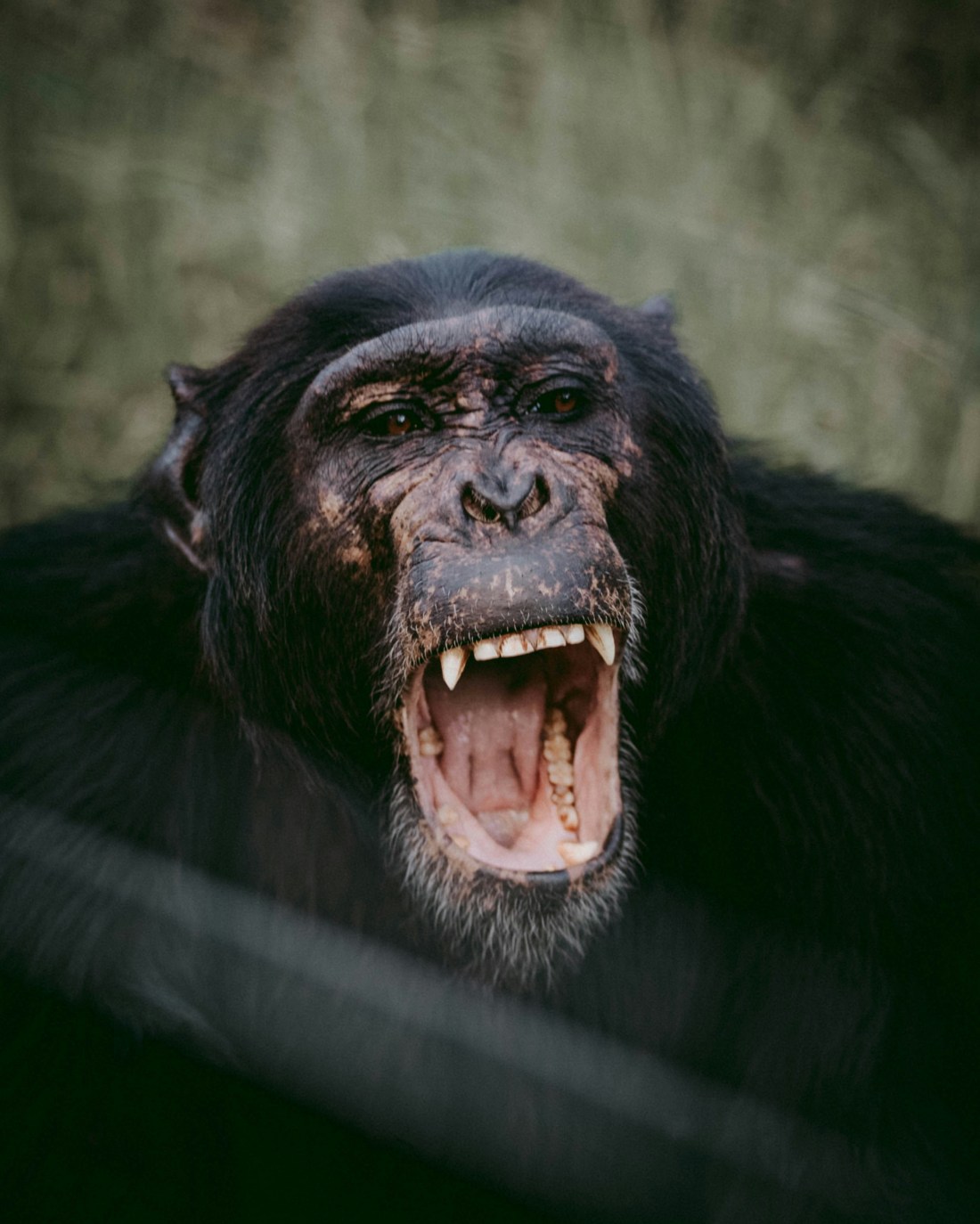
The Lions of Njombe: Africa’s Deadliest Man-Eaters

Fear stalked the land, searching out its prey with a single working eye. A scarred beast that prowled the maize fields of southern Tanzania, its remaining eye glowing in the firelight like an ember from the underworld. Wherever it appeared, someone vanished.

By the time the terror ended in the mid-1940s, villagers whispered that as many as 1,500 people had been taken. Some dismissed the figure as impossible; others swore it was true, pointing to empty huts, abandoned farms, and the silence that hung over Njombe for more than a decade.

This is the story of the Njombe man-eaters: a pride of lions whose reign of fear has no equal in recorded history.

A land in crisis

The Njombe District in the 1930s was an isolated plateau of rolling grasslands and scattered farms in what was then Tanganyika. For centuries, lions and people had co-existed uneasily there: lions taking cattle now and then, villagers spearing lions in retaliation. But the balance was about to tip.

At the turn of the 20th century, rinderpest, a cattle plague introduced by imported livestock, tore through East Africa. It killed not only cows but also wild ungulates including buffalo, wildebeest, eland, and kudu. In short, the very animals lions depended on. At the same time, colonial authorities, desperate to protect settler farms and commercial livestock, sanctioned widespread shooting of wildlife herds.

By the early 1930s, the great prey herds had vanished from much of Njombe. For a pride of lions, starvation loomed.

And then the killings began.

The first attacks

Accounts vary on who the first victims were. Some say it was a group of women cutting grass at the edge of the bush. Others tell of a child herding goats. What is certain is that the attacks were relentless.

Unlike the famous Tsavo man-eaters of 1898, which were just two lions, the Njombe killers operated as a full pride, one perhaps 15 strong. They hunted both day and night, stalking footpaths, raiding fields, and dragging victims from huts in the dark. Witnesses described their tactics as disturbingly coordinated: one lion would chase a fleeing villager toward others lying in ambush, while still more lions waited to carry the body off into the bush.

The result was psychological as well as physical devastation. Farmers abandoned their crops. Markets emptied. Whole families refused to travel. A rural economy, already fragile, teetered on collapse.

Folklore takes hold

As the death toll mounted, explanations turned supernatural.

Villagers spoke of Matamula Mangera, a witch doctor said to have cursed the land, sending spirit lions to punish those who had wronged him. Some claimed they saw lions melt into the shape of men; others swore that no ordinary rifle could kill the beasts.

Central to the lore was the pride’s supposed leader: a huge, one-eyed male called Kipanga. Was he real? Many hunters, including those who later fought the lions, believed so. Others argue Kipanga was more myth than flesh. Either way, the stories gave form to a terror that felt inhuman.

Even colonial officers recorded the atmosphere of dread. In their reports, villagers were described as “so paralysed by fear that they would not leave their huts even to tend their cattle.”

The scale of the slaughter

Could the lions truly have killed 1,500 people?

The figure comes up repeatedly, cited by hunters, missionaries, and later by storytellers such as Peter Hathaway Capstick. But hard evidence is scarce. Colonial records were patchy, and many deaths occurred deep in the bush, where no official ever ventured.

Sceptical historians suggest the real toll may have been in the hundreds, easily still enough to mark Njombe as the worst man-eater outbreak on record. But even if exaggerated, the number reflects the lived truth of the time: that whole communities were emptied, and that people felt they were at war with an enemy that could not be seen until it was too late.

Enter George Rushby

In 1947, after years of unchecked slaughter, the colonial government sent in a man who had made a career of battling Africa’s deadliest creatures: George Gilman Rushby.

Rushby was a former ivory hunter turned game ranger, a wiry, hard-driving man used to solitude and risk. He was already known for his encounters with elephants, leopards, and rogue buffalo. But the lions of Njombe would be his greatest test.

When Rushby arrived, he found villages half-deserted, fields lying fallow, and families so terrified they refused to leave their huts even by day. “The district had come to a standstill,” he later wrote. “The people were simply too frightened to live.”

The hunt

Rushby knew killing one or two lions would not be enough. The whole pride had to be vanquished. He organised local scouts, set baited traps, and began a grim campaign through thorn thickets and tangled river valleys.

The lions proved cunning. They avoided obvious bait, circled ambush sites, and sometimes attacked in the middle of Rushby’s own camp. Several times he narrowly escaped, his rifle raised only moments before a lion charged.

But slowly, methodically, the pride was whittled down. Rushby shot some himself, his trackers accounted for others, and poisoned bait claimed a few more. The turning point, Rushby believed, came when he killed the one-eyed male said to be Kipanga. Without their leader, the pride’s coordination faltered.

By the end of his campaign, Rushby claimed to have destroyed the entire man-eating pride. And just as suddenly as they had begun, the killings stopped.

Myth, memory, and reality

The story of Njombe sits at the uneasy intersection of fact and folklore.

  • Fact: A pride of lions really did terrorise the region, killing an unknown but horrifying number of people.
  • Folklore: A one-eyed demon lion, spirit beasts conjured by witchcraft, an exact death toll of 1,500.
  • Reality: Ecological collapse drove predators into desperate behaviour, and human fear magnified their legend until they became almost supernatural.

In this way, the Njombe lions became more than animals. They became symbols of a world out of balance.

Echoes today

Such mass outbreaks of man-eating lions are virtually unheard of now. Conservation measures, better livestock protection, and changing landscapes mean lions rarely, if ever, target humans in large numbers. But the underlying lesson remains: when ecosystems are broken, predators adapt in ways dangerous to us.

Human-wildlife conflict still exists across Africa, from elephants raiding crops to leopards taking goats. The Njombe lions are simply the most extreme and unforgettable example of what can happen when that balance tips too far.

A legacy of fear and fascination

Today, the hills of Njombe are quiet. Farmers tend their maize, children herd goats, and lions are seldom seen. But the memory lingers. Around campfires, elders still tell of the years when lions ruled the night, when entire villages hid indoors, and when the roar of a one-eyed beast froze the blood in men’s veins.

Were they spirit lions? A cursed pride? Or simply predators pushed beyond the edge of hunger? Perhaps all of these at once.

What is certain is that for more than a decade, fear itself had teeth and claws in Njombe. And its story remains one of the most chilling chapters in the long, tangled history between people and lions.

If you’d like to read a fictional story which shares the same elements, then check out The Daughters of the Darkness on Amazon, Kindle, and Audible.

https://www.amazon.com/The-Daughters-of-the-Darkness/dp/B081DNT6N3