Monster Monday: Emela-Ntouka — Killer of Elephants

There are names that snag in the imagination and refuse to let go. “Killer of elephants” is one of them.

I can still remember the first time I encountered the Emela-Ntouka. I was deep in a rabbit hole of cryptozoology — the kind of reading that starts at one creature and spirals outward through footnotes and cross-references until it’s suddenly 2am and you’re not entirely sure the world is as well-mapped as you thought. The Emela-Ntouka arrived alongside its more famous neighbour in mystery, the Mokele-mbembe — another alleged giant of the Congo river basin, whose name is said to mean “one who stops the flow of rivers.” Both creatures seized something in me. But it was the Emela-Ntouka, the killer of elephants, that truly lodged itself in the back of my mind, as it would any young budding wannabe monster hunter. Even now, if that name doesn’t make you lean forward slightly in your chair, I’m not sure what will.

This is one of the ones that got me into cryptozoology in the first place. So let’s do it justice.

Into the Likouala

The Republic of Congo contains one of the most extraordinary and least-explored ecosystems on the planet: the Likouala swamp region. Covering an area roughly the size of England, this vast labyrinth of rivers, lakes, dense rainforest, and waterlogged terrain in the north of the country is among the most remote and inaccessible places on Earth. Roads are scarce. The terrain swallows expeditions whole. Entire communities live along its waterways having had minimal contact with the outside world for generations.

It is here, in this green, dripping cathedral of the unknown that the Emela-Ntouka is said to live.

The name itself comes from Lingala, one of the major languages of the Congo basin, and it translates with memorable bluntness: killer of elephants. It is also known by several other regional names — aseka-mokegamba-namae, and emit-ntouka among them — and has been referred to in some accounts as the “water elephant,” though what it does to elephants is anything but gentle.

The First Written Account

Cryptozoology — the study of hidden, unverified, or folkloric animals — has its founding father in the Belgian-French zoologist Bernard Heuvelmans, whose 1955 book On the Track of Unknown Animals is the genre’s cornerstone text. The man who first gave Heuvelmans that title — who called him, in print, the “Father of Cryptozoology” — was a French colonial official named Lucien Blancou, who served as senior game inspector in the Likouala region of what was then French Equatorial Africa.

In December 1954, Blancou published an article in the scientific journal Mammalia that gave the Emela-Ntouka its first formal written description. He reported that local people knew the creature well. It was feared, respected, and given a wide berth, as it was known to disembowel elephants with a single horn on the front of its head. More strikingly still, Blancou noted that an Emela-Ntouka had reportedly been killed in the region around 1934, though no specimen was ever scientifically examined or preserved.

That last detail is both tantalising and frustrating in equal measure. A semi-credible story of a body, also known as a type specimen. But nothing more. If you’re even vaguely interested in cryptozoology, you’ll know this is practically a tradition, and certainly a trope.

What Does It Look Like?

The physical description of the Emela-Ntouka is remarkably consistent across accounts gathered from different sources and communities over the decades. And consistency is something that serious researchers always note as a point in favour of something real underlying the reports.

The creature is described as being the size of an elephant, or perhaps larger. Its skin is hairless, and coloured somewhere between brown and grey, not unlike a large pachyderm or a rhinoceros. The body is heavy and powerfully built, supported by thick legs that bear the weight from directly beneath the body, in the manner of an elephant or a large mammal rather than the sprawling posture of a crocodile or lizard.

The tail is one of the more distinctive elements of the description: it is heavy and muscular, compared by witnesses to the tail of a crocodile. This is not a small, unremarkable appendage, it is reportedly a significant structural feature of the animal.

But the most distinctive feature of all — the one that lodges in the imagination and sparks the most debate — is the single horn on the front of the head. Witnesses describe it as resembling the ivory tusk of an elephant in appearance: forward-pointing, prominent, and apparently devastating in use. It is with this horn that the Emela-Ntouka is said to gore and disembowel elephants, water buffaloes, and other animals unfortunate enough to provoke its legendarily short temper.

Its footprints are elephant-sized, and reportedly show three toes or claw marks. This detail has generated significant discussion, as we’ll see shortly. The sounds it produces have been described variously as a growl, a rumble, a howl, or a roar. Its diet, meanwhile, is described as entirely herbivorous: it feeds on malombo plants and other leafy vegetation, which makes its aggression towards other animals purely territorial rather than predatory. It doesn’t eat elephants. It simply kills them, when provoked. The name is apt.

The Dinosaur Hypothesis

Here is where things get genuinely exciting and genuinely controversial.

Several prominent cryptozoologists have proposed that the Emela-Ntouka may be, in essence, a living dinosaur: specifically, a surviving ceratopsian, the group of horned, frilled herbivorous dinosaurs that includes the famous Triceratops, and also the somewhat less famous Monoclonius and Centrosaurus, both of which bore a single horn above the nose rather than Triceratops‘s three.

The case for this identification, made by researchers including Roy Mackal, Karl Shuker, and Scott Norman, rests on a striking convergence of features. Ceratopsians were large, heavily built herbivores. They walked on legs positioned directly beneath the body; not sprawling, but upright and column-like. They possessed single or multiple prominent horns. They left three-toed footprints. And they were, by all palaeontological accounts, capable of formidable defence when threatened.

Tick, tick, tick, tick, tick.

The emotional pull of this hypothesis is undeniable. A living ceratopsian, hidden in the Congo basin swamps is undoubtedly one of the great romantic possibilities of natural history, the kind of discovery that would rewrite everything. I remember watching the 1985 film Baby: Secret of the Lost Legend, and being absolutely spellbound by the idea of a living dinosaur in our time. I think I was pretty spellbound by Sean Young at the time too (think I was 11 or 12 when I first saw it).

And it’s not as though the idea of large, prehistoric-seeming animals surviving in isolated ecosystems is entirely without precedent: the coelacanth, a fish believed extinct for 65 million years, was found alive in 1938, and its discovery remains one of science’s most astonishing moments.

But intellectual honesty demands that we also sit with the difficulties here.

No fossil evidence of ceratopsian dinosaurs has ever been found in Africa. Not one bone. The ceratopsians were a primarily North American and Asian group, and the continent of Africa shows no trace of them in the geological record. For a surviving ceratopsian to exist in the Congo, we would need to explain not just how it survived the mass extinction event 66 million years ago (when every other non-avian dinosaur perished) but also why it left absolutely no trace in tens of millions of years of African fossil deposits. The Likouala swamps are remote and underexplored, but remoteness does not erase deep time.

And then there is the crocodilian tail. Ceratopsians, as far as the fossil record shows us, did not have heavy, crocodile-like tails. Their tails were relatively unremarkable and not the muscular, laterally-flattened appendages described by witnesses. It is, unfortunately, an awkward fit.

Does this mean the ceratopsian hypothesis is wrong? Not definitively. But the bar for “living dinosaur” is extraordinarily high, and the current evidence does not clear it.

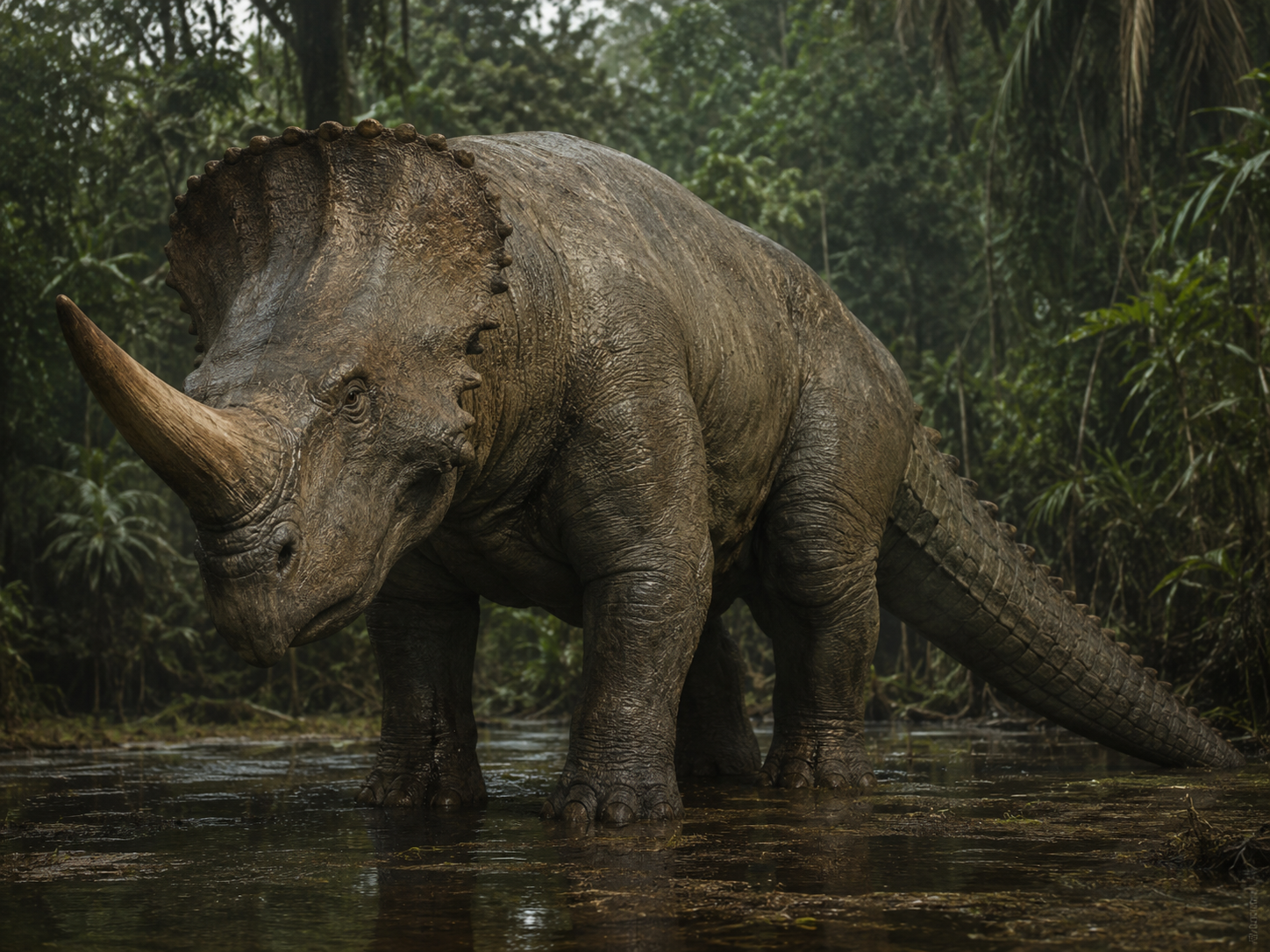
A possible depiction of Emela-Ntouka based on the Centrosaurus theory.

The Rhinoceros Hypothesis

The more scientifically conservative proposal, championed by Loren Coleman and others, is that the Emela-Ntouka may represent an unknown or relic species of semiaquatic rhinoceros.

This is, on balance, a more plausible candidate, and deserves to be taken seriously.

Africa has a rich prehistory of rhinoceros relatives. Extinct rhino-adjacent megafauna roamed the continent well into the Pleistocene epoch (which ended only around 11,700 years ago, a blink in geological time). The continent still supports two living rhinoceros species. And the known behaviour, biology, and physiology of rhinos maps onto the Emela-Ntouka description with remarkable tidiness.

Rhinos are large, hairless, and grey-to-brown in colouration. They are herbivores – grazers and browsers of vegetation. They are famously aggressive, extraordinarily territorial, and possessed of a well-documented tendency to charge and gore other animals, including elephants, with their horns. They walk on legs positioned directly beneath their bodies. Their horns (single in some species) are prominent, forward-projecting features used in combat.

A semiaquatic rhino species, adapted to the swamp environment of the Likouala, could plausibly account for much of what witnesses describe. The Congo basin’s waterways and wetlands could sustain a large, plant-eating megafaunal species if it had remained sufficiently hidden from the outside world.

The main sticking point, again, is the tail. Rhinoceroses have short, unremarkable tails, nothing like the heavy, crocodile-esque appendage described in Emela-Ntouka accounts. This either suggests the tail description is exaggerated or mistaken, or it points to an animal genuinely distinct from any known rhino and perhaps something more archaic.

There is also the three-toed footprint to consider. Modern rhinos are three-toed, which is a point in the rhino hypothesis’s favour, but it is also one of the details that keeps the ceratopsian camp interested.

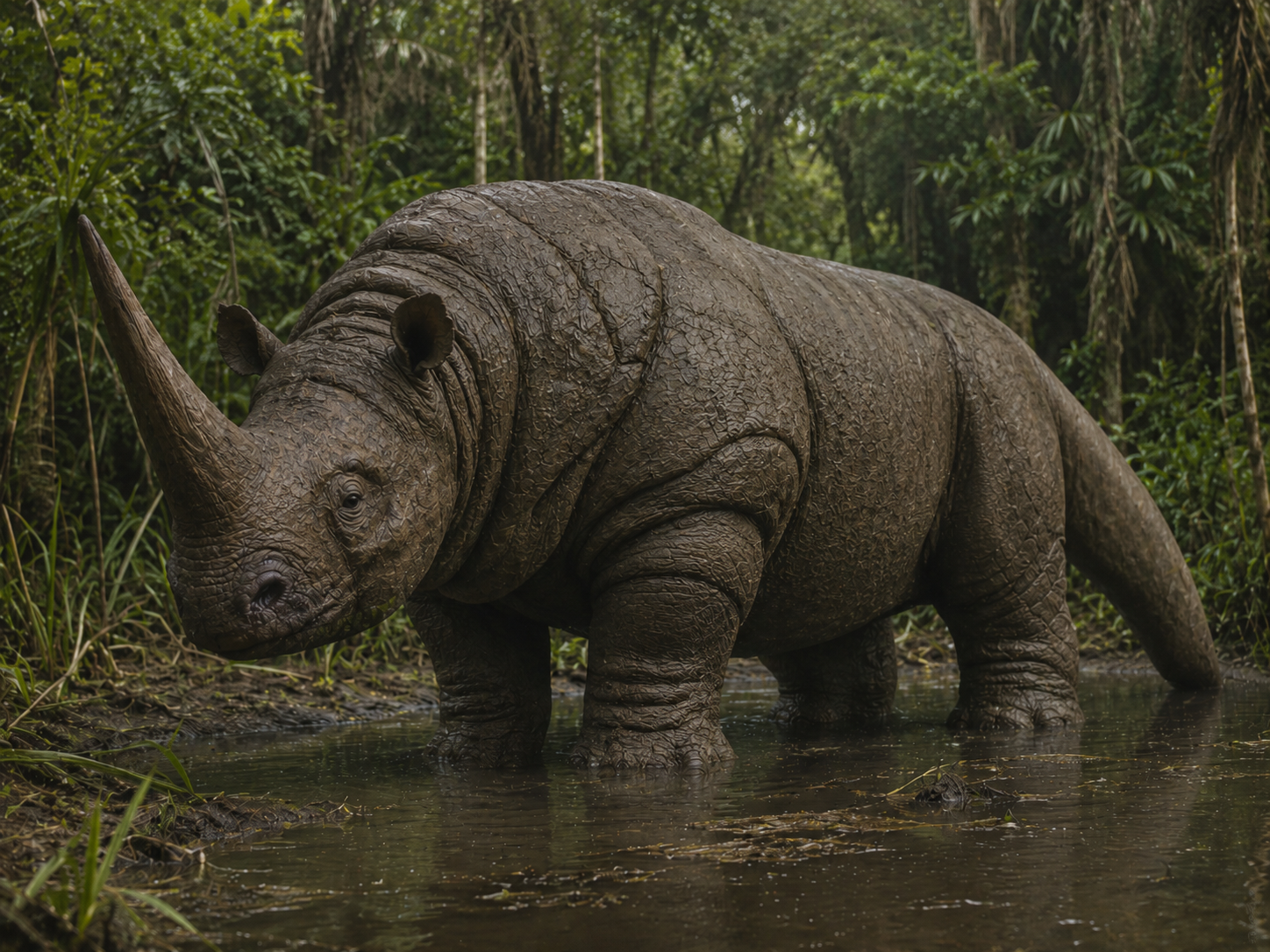
Could Emela-Ntouka be an undiscovered semiaquatic species of rhino?

What Are We Actually Dealing With?

The honest answer is: we don’t know. And that is not a failure, it’s an invitation and an open door.

The Likouala swamp region remains one of the few places on Earth where a large, undescribed animal could conceivably remain unknown to western science. The region has never been comprehensively surveyed. Expeditions into its interior are logistically gruelling, and the terrain actively resists investigation. New, large animal species continue to be formally described by science with some regularity. The saola, a large bovine discovered in Vietnam in 1992, is perhaps the most famous recent example, and Africa’s rainforest and swamp systems have historically held surprises.

The indigenous testimony is persistent, consistent across communities, and spans generations. Lucien Blancou was not a fabulist, he was a trained, colonial official writing in a peer-reviewed scientific journal. The description of a kill in 1934, frustrating as it is without physical evidence, suggests something more than pure folklore.

And yet: no photograph, no specimen, no bones, and no confirmed tracks. No expedition has returned with anything definitive. The Emela-Ntouka remains stubbornly, infuriatingly, magnificently uncaptured.

The Killer of Elephants

There are plenty of cryptids whose appeal is primarily aesthetic — strange shapes glimpsed in water or fog, shadows at the edge of headlights, shapes that resist definition. The Emela-Ntouka is something different. Its appeal is almost confrontational. Killer of elephants. The elephant is the largest land animal on Earth, the great grey unmovable titan of the African continent, an animal that carries its own mythology of power and memory and grief. To name a creature by its capacity to kill an elephant is to say something extraordinary about it.

Whatever the Emela-Ntouka is — unknown rhinoceros, surviving dinosaur, regional legend grown vivid through generations of retelling, or something else entirely that we haven’t yet thought to propose — it represents everything that draws us to cryptozoology in the first place. The world is not finished. The map is not complete. There are still edges.

We are drawn to the unknown because the unknown suggests that reality is larger than we’ve been told. The Likouala swamps are out there, right now, dark and vast and dripping, and somewhere in them – maybe – something that has no name in any scientific catalogue is moving through the water, eating leaves, and occasionally, with tremendous force and very little patience, reminding the local elephants who the real authority of the swamp is.

I find that extraordinarily hard to let go of. I suspect you might too.

Further Reading:

  • Lucien Blancou, Mammalia, December 1954
  • Roy Mackal, A Living Dinosaur? In Search of Mokele-Mbembe (1987)
  • Karl Shuker, In Search of Prehistoric Survivors (1995)
  • Loren Coleman & Jerome Clark, Cryptozoology A to Z (1999)
  • Bernard Heuvelmans, On the Track of Unknown Animals (1955)

Unseen Shadows: UK Big Cat Sightings – Spring 2026 Update

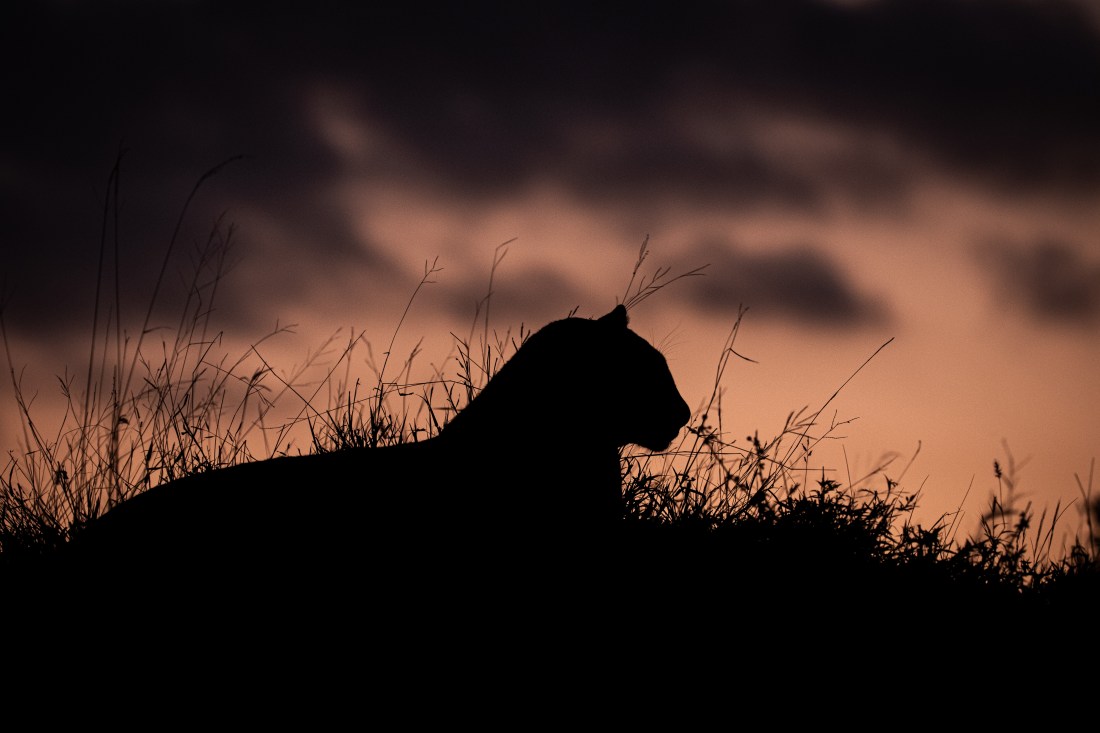
A big cat lays silhouetted against a dusk sky.

From the hills of Wales to the heathlands of Dorset, reports of large, unidentified cats continue to surface across the British countryside.

Most are brief encounters. A shape crossing a field. A dark animal slipping through woodland. A dog walker forced to stop mid-stride as something far larger than a domestic cat disappears into the hedgerow.

These reports are rarely treated seriously in the national press. Often they appear in the odd-news columns or alongside stories about mythical creatures and folklore.

Yet they refuse to disappear into the shadows alongside their subjects. And over the past few months, several new sightings have once again brought Britain’s big cats back into the open.

Do big cats stalk Britain’s Bodmin Moor?

A Panther Prowl’s Ed Sheeran’s Estate.

One of the most widely circulated reports recently came from Suffolk, where a large black cat was seen near the £37 million country estate of musician Ed Sheeran.

Witnesses described a large dark animal moving across farmland close to the property. The sighting prompted speculation that a so-called “panther” might be roaming the countryside and the story travelled quickly through national and international media, largely because of the celebrity connection.

But aside from the location, the details themselves were familiar to anyone who has followed the phenomenon for long. A large, dark cat moving with fluid, purposeful motion, low to the ground. Exactly the sort of description that appears again and again in regional sightings.

Cats Across the Countryside

All over Britain, similar reports continue to surface.

In Dorset, a sighting on Canford Heath near Poole described what a witness believed to be a black panther moving through open heathland.

In Wiltshire, a dog walker near Chippenham reported encountering a large cat on a popular countryside footpath. The witness described an animal significantly larger than a domestic cat, with a long tail and dark colouring.

Further west, a report from Newquay in Cornwall described a large cat seen at distance moving across farmland. Cornwall has long been one of the regions most frequently associated with Britain’s “phantom cats”, often linked with the legend of the Beast of Bodmin Moor.

In North Wales, motorists and walkers have also reported large feline shapes crossing rural roads or moving along field margins. One witness claimed the animal they saw was nearly the height of a car bonnet as it passed through the roadside vegetation.

These accounts vary in detail, but the core descriptions tend to be remarkably consistent.

A powerful, long-tailed cat – often dark in colour, but tan and other hued cats are also reported, seen briefly before disappearing into woodland, scrub, or across farmland.

Britain offers significant habitat that could harbour unseen predators.

A Long History of Sightings

Reports of large cats in Britain are of course, nothing new.

Newspaper archives contain sightings dating back decades, particularly from the late twentieth century when stories of “phantom panthers” became a recurring feature of rural folklore.

Many researchers have suggested these reports may trace back to the Dangerous Wild Animals Act of 1976, which introduced licensing requirements for keeping exotic animals. The persistent theory is that a number of privately owned big cats may have been released into the countryside when the law came into force. Since then, further releases and escapes have contributed to more recent sightings.

We might not have direct hard proof or evidence. But, given the scale of the exotic animal trade – both legal and illegal, and the lack of funding to check on many privately-owned animals and licensing both back then and even more so today, it’s not without merit.

And sightings have never stopped.

From Exmoor and Dartmoor to the Surrey Hills, the Welsh countryside, and parts of Scotland – reports of large cats have popped up year in, year out, and continue.

Missed by the Media

Despite the number of sightings over the years and the many reliable witnesses, which include respected journalists and presenters like Clare Balding, the subject is rarely treated with much seriousness in mainstream media.

Often it appears in the same category as folklore creatures or mythical monsters.

The BBC’s Countryfile, for example, recently included Britain’s phantom cats in a list of “mythical beasts”, placing them alongside legendary creatures rather than unexplained wildlife reports. This framing shapes how the subject is perceived.

Instead of examining witness testimony, ecological plausibility, or historical context, the discussion often becomes a curiosity piece – something to be lightly dismissed rather than investigated.

Yet eyewitness testimony remains one of the primary ways wildlife is documented in many parts of the world.

The same observational accounts that guide conservation surveys in remote landscapes are often treated very differently when they occur in the British countryside.

Panther or Puma?

Another recurring problem is species confusion.

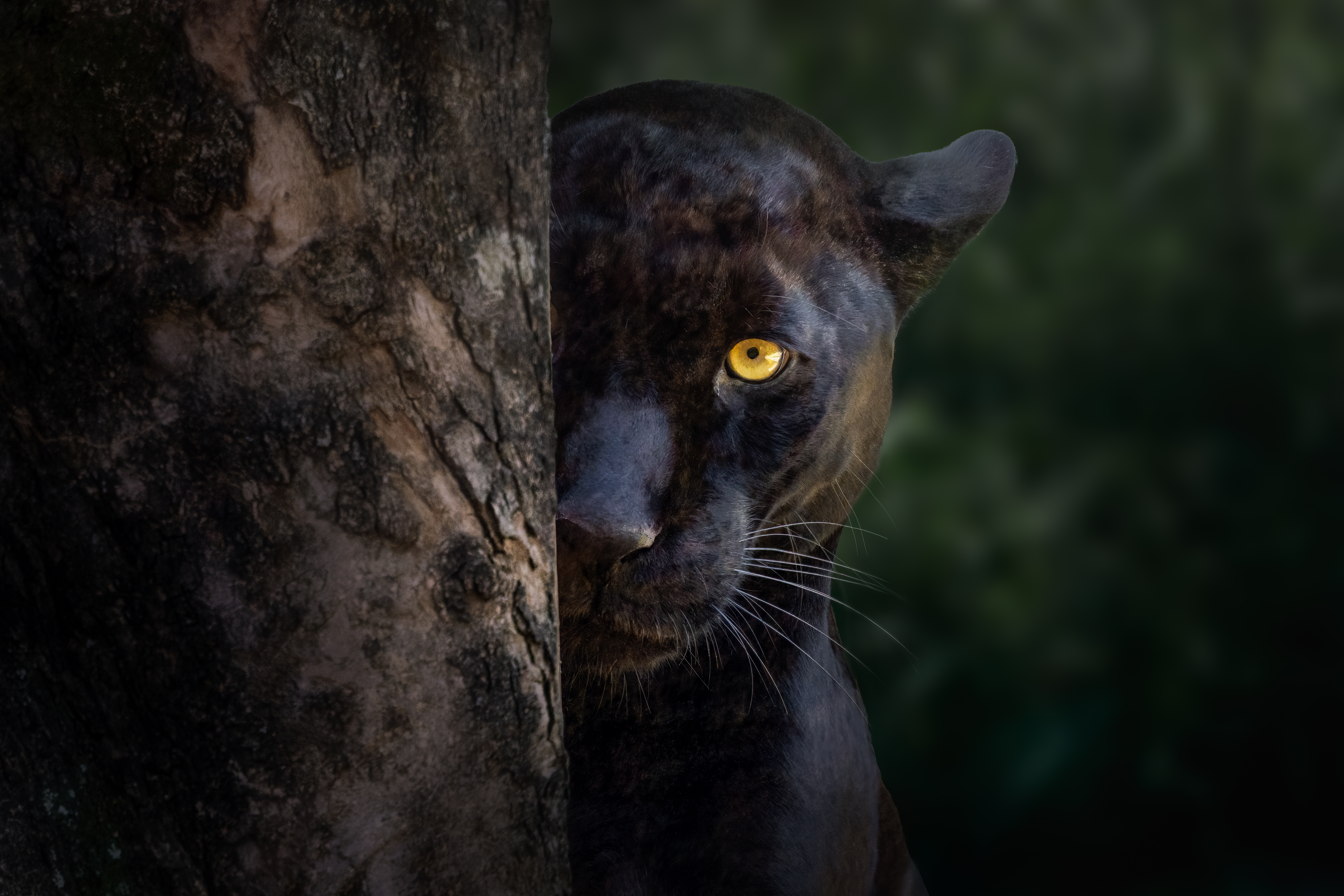
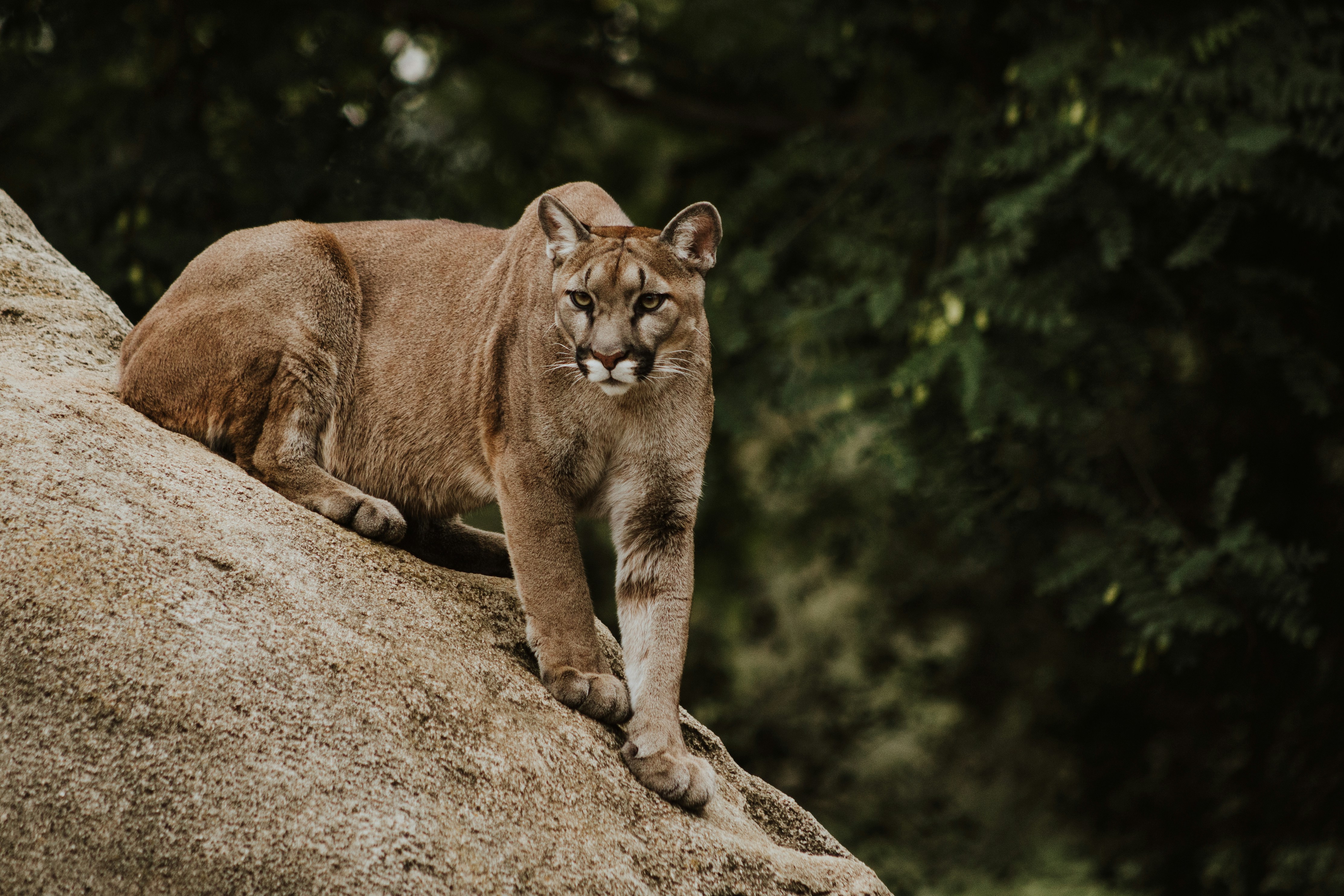
Many reports describe a black big cat. But media coverage frequently labels these animals as pumas. The issue with that identification is simple: pumas do not occur in black form. There are no verified melanistic pumas anywhere in the world.

Black big cats, commonly called “black panthers” – are usually one of two animals: leopards or jaguars. In Britain, the most plausible identification would be melanistic leopards.

Leopards are adaptable animals capable of surviving in a wide range of habitats, from rainforest to semi-arid environments and mountainous regions. They are also far more likely than most big cats to survive undetected in fragmented landscapes.

Pumas too, also known as mountain lions and a myriad of other names, are some of the most adaptable cat species, found from the Florida everglades to the high plains of Chile and the deserts of Arizona.

Why Some Researchers Look to Malaysia

If Britain does host a small surviving population of melanistic leopards, one intriguing possibility involves the Malayan leopard.

In the rainforests of the Malay Peninsula, south of the Isthmus of Kra, melanism is extremely common. In fact, the majority of leopards in this region are black.

Interestingly, this detail surfaced while researching my current novel Predatory Nature, where the history of exotic big cats imported into Europe during the twentieth century led me down a rabbit hole into the unusual genetics of Malayan leopards.

These cats are also smaller than many other leopard subspecies, which historically made them attractive to exotic animal collectors and the trade supplying them.

During the mid-twentieth century, when keeping exotic animals became fashionable in parts of Europe and especially the United Kingdom, animals described as “black panthers” were imported from Southeast Asia, to the point that the population was significantly impacted. And today, the population is dominated by those sporting the melanism gene.

The smaller size of the Malaysian sub-species helped fuel the mistaken belief they would be easier to manage. In reality, of course, a leopard is never a domestic animal.

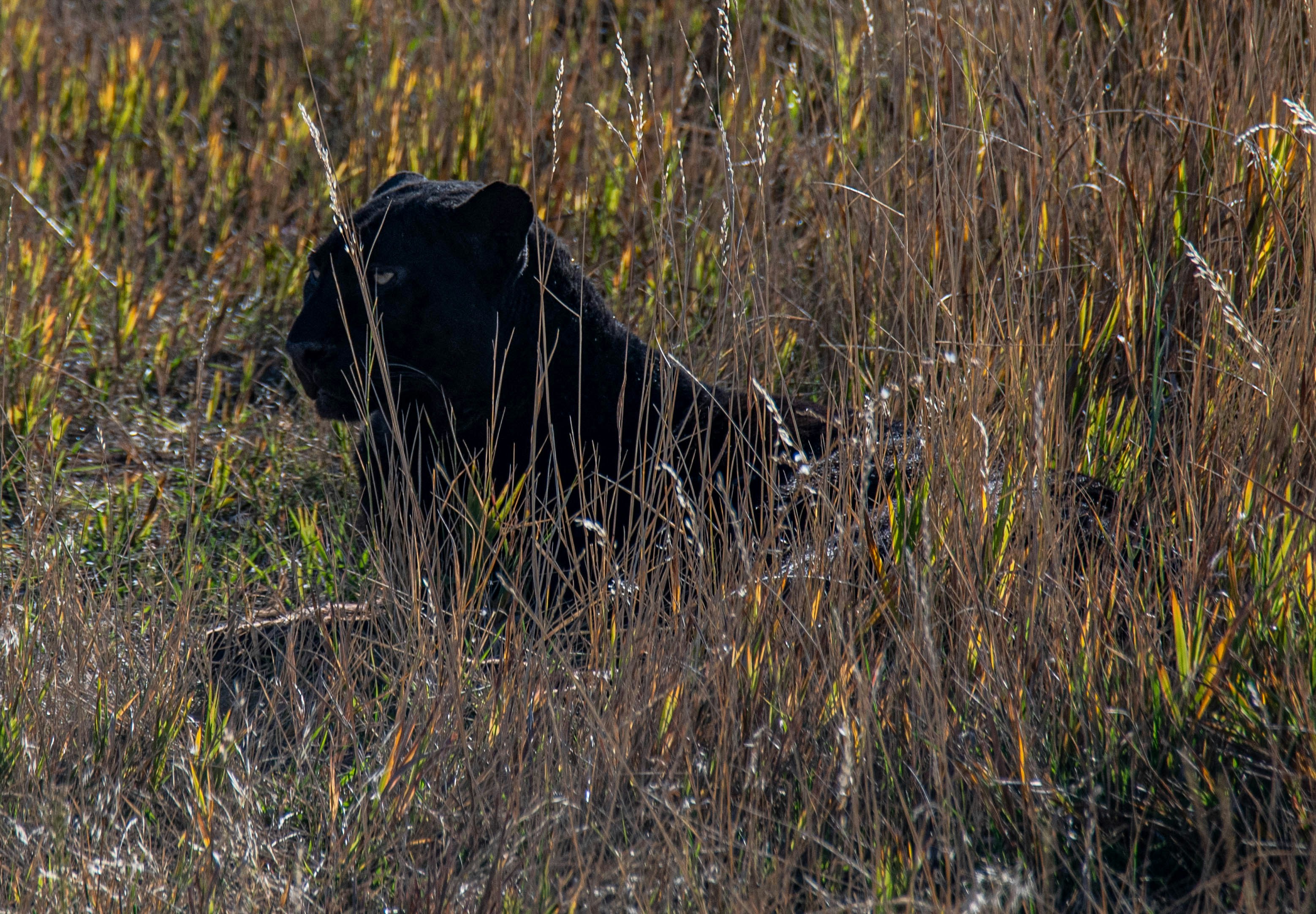
But if any such cats were released or escaped decades ago, their melanistic coats would have offered a natural advantage in Britain’s woodland landscapes, particularly in low light, where their rosette markings are almost invisible – which is a factor that should be taken into account when witnesses describe cats as “jet black”.

Mystery in the Hedgerows

None of this proves definitively that Britain currently hosts a breeding population of large cats.

Most sightings could still have more mundane explanations: misidentified dogs, escaped exotic pets, or fleeting glimpses of ordinary wildlife seen in poor conditions.

Everyday domestic cats are also likely culprits. The recent Devon sighting is a possible example. Despite gaining significant coverage in the press, and comparisons to the Beast of Bodmin in neighbouring Cornwall – the animal in this video moves like a domestic cat, and has the head shape and movement in line with this. However, the published video quality is very poor and it is very difficult to make any kind of certain identification. A feral cat, which can grow to larger sizes, is also a likely possibility.

But the persistence of the reports and the consistency of many descriptions keeps the question alive and shouldn’t be dismissed or derided.

There’s a good chance the truth lies somewhere between folklore and biology. It’s not just possible, but likely, that there are a small number of big cats of more than one species surviving quietly in remote pockets of the British countryside.

Combined with the enduring human instinct to see shadows move at the edge of the woods and wonder what might be watching back, it’s unlikely reports are going to disappear.

Either way, Britain’s phantom cats remain one of the country’s most enduring wildlife mysteries. And every now and then, someone sees something crossing a field that refuses to fit neatly into the explanations we already have.

The Killers of Eden

When Orcas Hunted With Whalers

The name sounds like something from folklore.

The Killers of Eden.

But these weren’t pirates. Nor outlaws. Not even a forgotten cult. They were orcas.

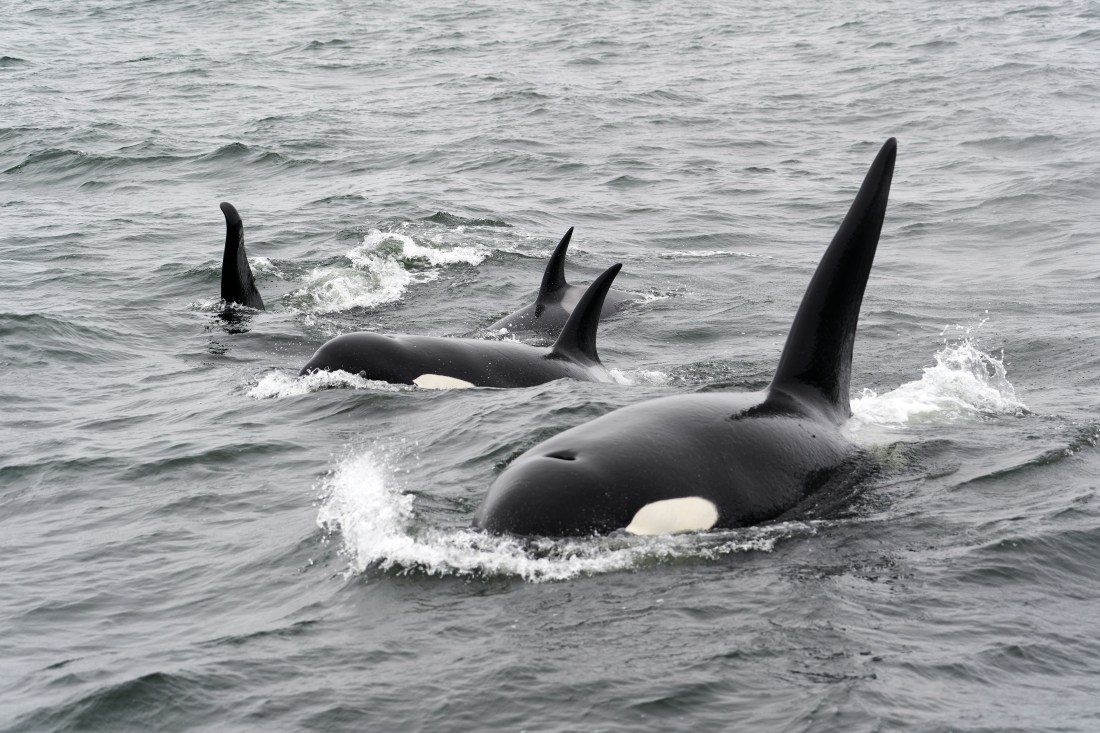
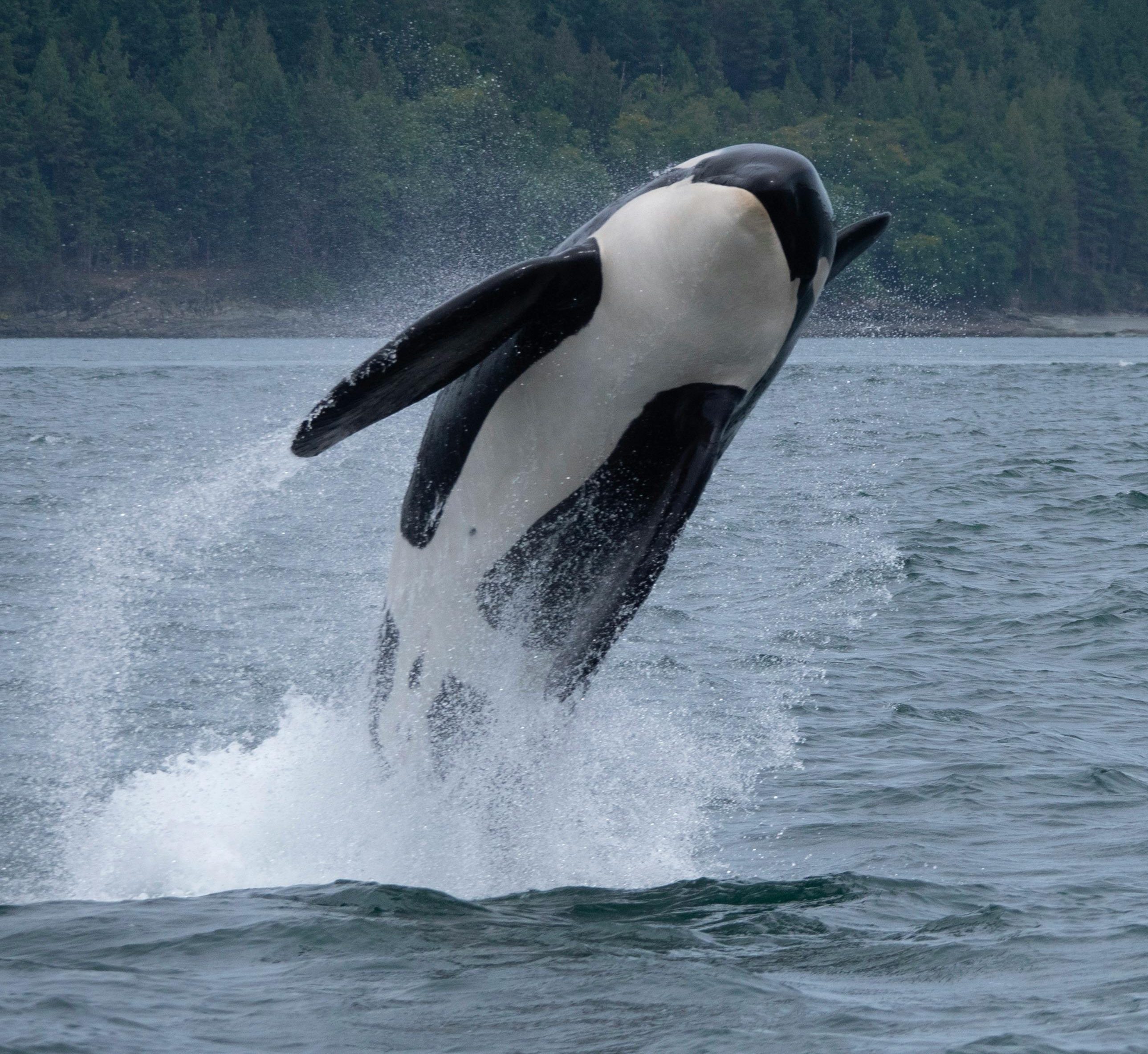
For decades in the nineteenth century, along the southern coast of Australia, a pod of killer whales worked in co-operation with human whalers in Twofold Bay.

They didn’t merely follow the boats or scavenge from discarded carcasses. They signalled. They herded. They hunted alongside the men. And at the centre of the story was one specific individual, a male that became known as Old Tom.

The Signal in the Bay

From the 1860s until the early twentieth century, shore-based whaling was integral to the small town of Eden.

Unlike the vast industrial fleets that would later dominate the Southern Ocean, Eden’s operations were small, open-boat enterprises run, at least to start, by a single family – the Davidsons. What made their station remarkable was not its size, but its partnership.

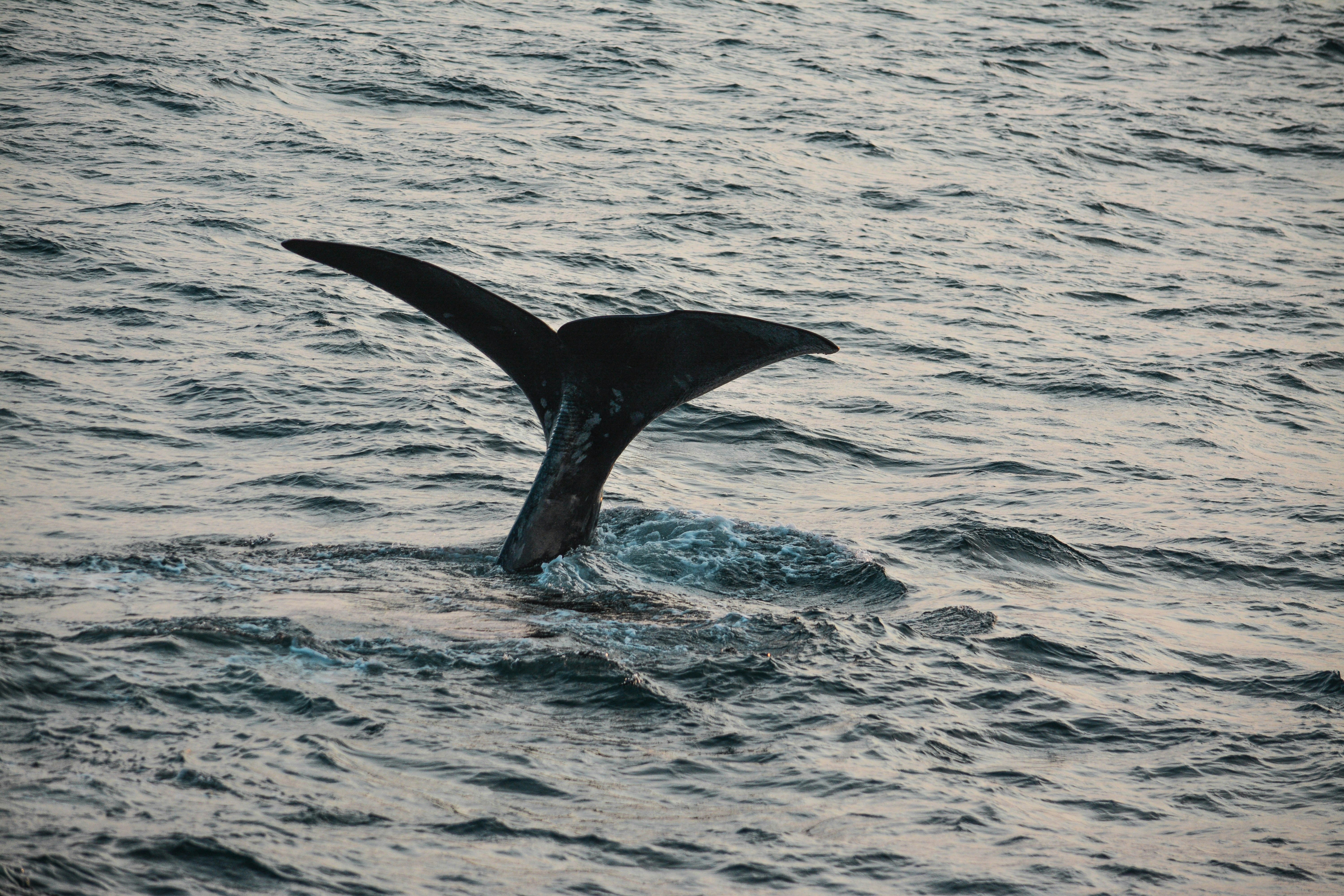
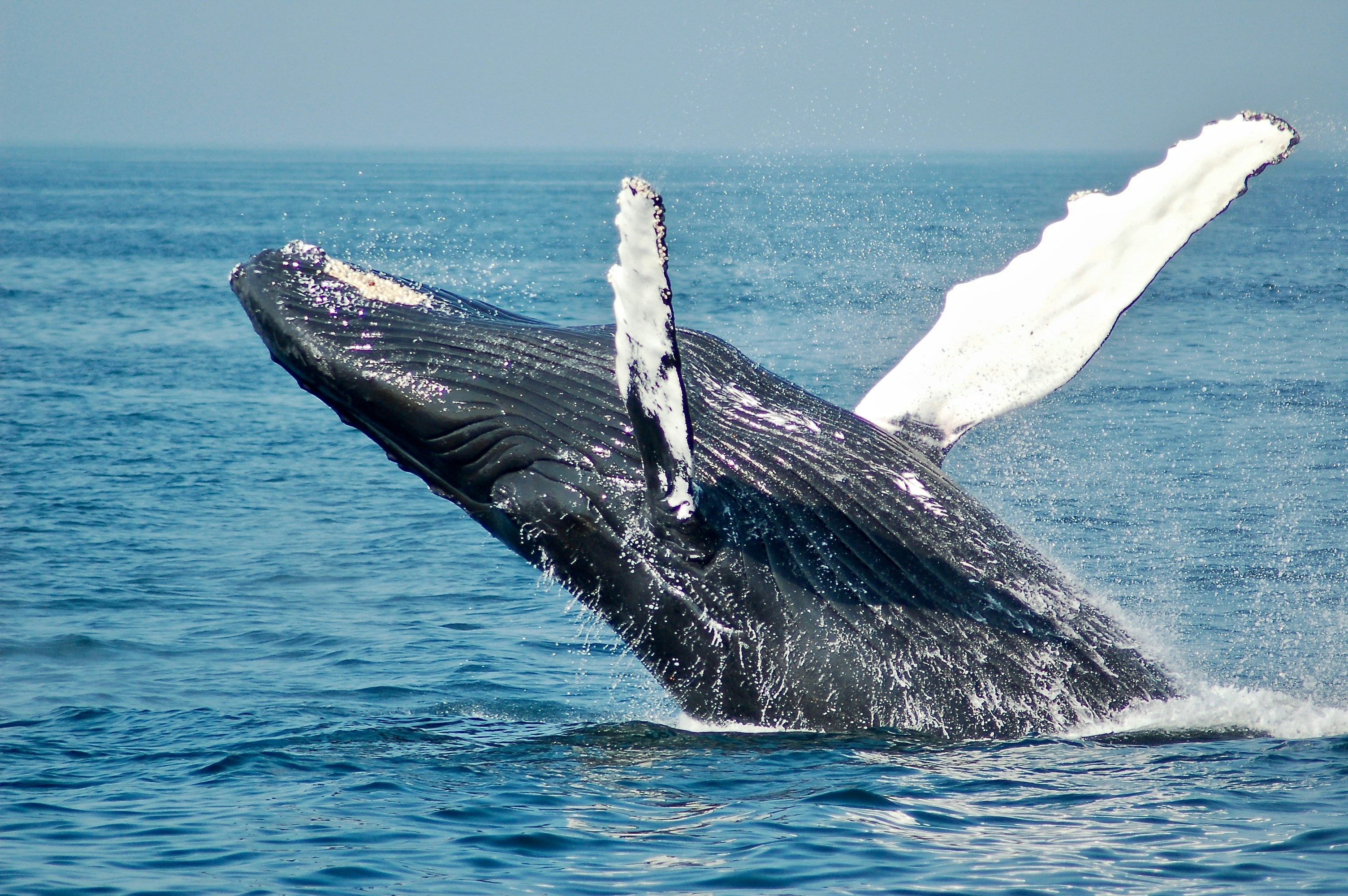
When migrating humpback or southern right whales entered Twofold Bay, the orcas would drive them toward shore. Old Tom, recognised by his tall dorsal fin, was known to swim to the mouth of the Kiah River and slap his tail against the surface — a deliberate “flop-tail” that alerted whalers to the presence of a whale.

Men would heed this signal and scramble into their boats. The chase would begin. And a significant ritual became an anchor to the partnership.

The arrangement became known as the “Law of the Tongue.” Once a whale was harpooned and secured, the carcass would be anchored overnight. The whalers would leave the lips and tongue, which are rich in blubber, for the orcas. The rest would be processed at the try-works.

This is important, as it clarifies the partnership as not one based on sentiment. It was mutual advantage.

Old Tom

Old Tom measured around 22 feet (6.7 metres) and weighed an estimated six tons. Distinctive wear on his lower teeth suggests he frequently gripped tow ropes during hunts. This behaviour was allegedly recorded by whalers who claimed he would sometimes take the line in his mouth and help pull the boats.

At other times, he reportedly clamped onto the rope fastened to a harpooned whale and allowed himself to be dragged through the water, an act the crews described with something like affection. Yet, a later incident of what seemed like a playful tug of war notably loosened his teeth.

He also notably returned season after season.

The documented co-operative hunts largely ceased by 1901, following a series of disruptions. One member of the pod, known as Typee, was shot by a local after becoming beached in the shallows. In the aftermath, Indigenous Australian whalers who had worked with Davidson’s crew withdrew from Kiah Inlet. At the same time, global industrial whaling expanded dramatically, and baleen whale numbers began to decline.

The ecological and economic balance that had sustained the alliance fractured.

No baleen whales were recorded in Eden after 1926.

Old Tom, however, continued to return. Often alone.

On 17 September 1930, his body was found floating in the bay. His skeleton now hangs in the Eden Killer Whale Museum, suspended in quiet testimony to a strange chapter of maritime history.

The Solitary Return

Orcas are deeply social animals. They travel in stable, matrilineal pods, maintaining lifelong bonds and passing hunting traditions across generations. Despite the folklore surrounding Old Tom, males do not lead pods. Solitary individuals are rare.

The image of Old Tom returning alone to Twofold Bay has unsettled observers for decades.

Local belief holds that the rest of his pod may have been killed further north, possibly in Jervis Bay, by Norwegian whalers unaware of the cooperative history in Eden. Elsewhere along the coast, fishermen and whalers often regarded orcas as competitors and retaliated with bullets and harpoons.

The “Killers of Eden” were never universally protected. They were tolerated, while useful.

When shore-based whaling declined after 1901 and industrial fleets reduced whale populations further offshore, the ecological conditions that had enabled the cooperation disappeared. And the behaviour vanished with them.

Cooperation or Strategy?

It is tempting to romanticise the story. Man and predator working side by side. An interspecies pact honoured through ritual.

But modern research offers a quieter explanation.

We now know that orcas exhibit:

  • Cultural transmission of behaviour
  • Specialised hunting techniques within pods
  • Long memory and social learning
  • Adaptive exploitation of predictable food sources

The Eden pod was not acting out of loyalty in a human sense. Nor were they mythic collaborators. They were intelligent apex predators exploiting a reliable opportunity.

Orcas are the largest members of the dolphin family, which is significant because bottle-nosed dolphins in Laguna, Brazil, have developed a similar, near century-old partnership with local fishermen. They signal with tail slaps and head nods when the men should cast their nets, as the pod herds the fish towards shore.
The “Law of the Tongue” was not a moral contract. It was strategy.

When overhunting reduced baleen whale numbers, and when industrialisation changed the rhythm of the bay, the strategy no longer worked. And so it ended.

The Name That Lingers

“The Killers of Eden” remains a provocative phrase. We can’t but help associate the name Eden with a place of original innocence. And killer is the name we give all deliberate predators.
Yet the title reveals as much about us as it does about them. We were the ones that christened them killers, whilst we were killing too.

Perhaps what unsettles us is not that orcas hunted alongside humans but that they adapted so fluidly to our violence. That they folded themselves, briefly, into our industry.

And when that industry collapsed, they did not mourn the contract. They adapted or vanished.

There is something more grounded in that. This story isn’t about myths, monsters, or miracles. It’s just two apex species intersecting, for a moment, in a fragile ecological alignment.

And when the balance broke, the sea closed over it.

If you enjoy reflective explorations of the uneasy boundary between humans and the wild, my novels explore similar terrain, where co-operation, fear, and instinct are rarely as simple as they seem.

Man-Eater Monday: The Sankebetsu Brown Bear Incident

In the winter of 1915, the settlement of Sankebetsu, in northern Japan, was already under strain.

Snow lay deep across Hokkaido. Food stores were thin. Travel was difficult, sometimes impossible. For the people living at the margins of cultivated land, winter was not simply a season — it was a test of endurance.

What went largely unconsidered was that the same conditions applied to everything beyond the settlement’s boundaries.

The forests were locked in ice. Natural forage was scarce. Prey animals were weakened, dispersed, or absent altogether. The winter that pressed hardest on human communities was doing the same to the wildlife around them. But at the time, this was not a connection people were trained to make.

Ecology, as a way of thinking, had not yet entered the conversation. Hardship was viewed as a human problem, unfolding against a largely static natural backdrop. The idea that animals might also be responding — adapting, learning, and changing behaviour under pressure, was rarely entertained.

It was in this context that the Sankebetsu incident began.

A first encounter and a dangerous assumption

The bear’s first appearance was not dramatic in scale, but it was decisive in consequence. In December 1915, a large brown bear entered the settlement and attacked a woman working near her home. The encounter was sudden and close-quarters. She was killed before any effective intervention could be made.

The bear did not linger. After the attack, it retreated back into the surrounding forest.

That withdrawal shaped how the incident was understood.

Within the settlement, the prevailing belief was that the animal had been startled — that the violence was reactive, not intentional, and that the danger had passed with the bear’s departure. The incident was treated as an isolated tragedy rather than the opening stage of a larger threat.

No co-ordinated hunt followed. No sustained effort was made to track the animal’s movements or assess whether it might return.

This response was not careless so much as culturally conditioned. At the time, apex predators were often viewed as opportunistic but fundamentally avoidant of humans. An animal that fled was assumed to have learned fear.

But this assumption rested on a misunderstanding of how predators learn.

An animal that kills and escapes unharmed has not seen that behaviour punished. It has been reinforced. The boundary between human and prey does not harden, it weakens.

In retrospect, the bear’s retreat was not a conclusion. It was a pause.

Escalation isn’t chaos, it’s pattern

When the bear returned, it did not behave erratically.

It came back into the settlement repeatedly, moving with increasing confidence through spaces that had already been shaped by human presence. Homes were entered. People were taken from places that should have been safe.

One of the most disturbing moments came shortly after the initial attack, when the bear returned during a funeral held for the first victim. Drawn by human activity and the presence of food, it entered the area and killed mourners gathered there.

The violence was no longer confined to a single encounter. Over the course of one night, multiple people were killed in separate attacks. By the time the bear was finally stopped, five lives had been lost, several of them within hours of one another.

What is striking, in retrospect, is not the scale of the violence, but its consistency.

The bear did not flee after these encounters. It did not act randomly. It returned to the same settlement, exploited moments of vulnerability, and withdrew only when challenged. Each successful attack reinforced the same lesson: humans were accessible, and resistance was minimal.

This is the point at which many retellings introduce the language of madness or bloodlust. But escalation, in cases like this, is rarely chaotic. It is patterned.

Under conditions of prolonged scarcity, the bear’s behaviour reflected learning rather than frenzy. What appeared to the community as senseless violence followed a grim internal logic shaped by hunger, opportunity, and success.

Human hesitation, and a belated resolution

As fear spread through the settlement, so did uncertainty.

There was disagreement over whether the same bear was responsible for each attack. Some believed the animal would eventually move on. Others feared that a co-ordinated response might provoke further violence. Time was lost to debate, hesitation, and the difficulty of acting decisively in extreme winter conditions.

When a concerted effort was finally made to track the bear, it revealed just how unprepared the community was for such a task. Weather obscured trails. Knowledge of bear behaviour was inconsistent, drawn from folklore, fragments of experience, and assumption rather than strategy.

Eventually, a group of hunters succeeded in locating and killing the animal. The bear was identified as a large male brown bear, in poor physical condition. Its body showed signs consistent with prolonged scarcity. With its death, the attacks stopped.

The immediate danger to Sankebetsu was over.

But the resolution came only after multiple lives had been lost, and only once the cost of inaction had become undeniable. The bear’s death did not mark the defeat of a monster, but the delayed recognition of a threat that had been misunderstood from the outset.

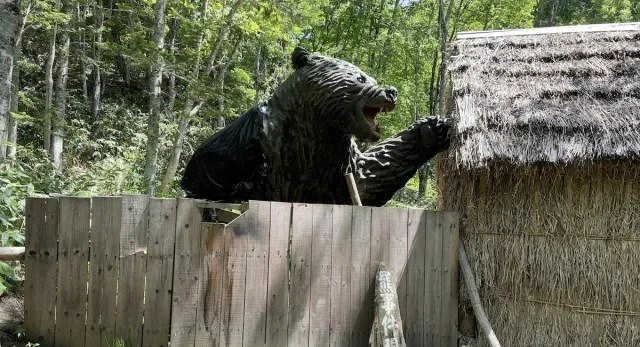
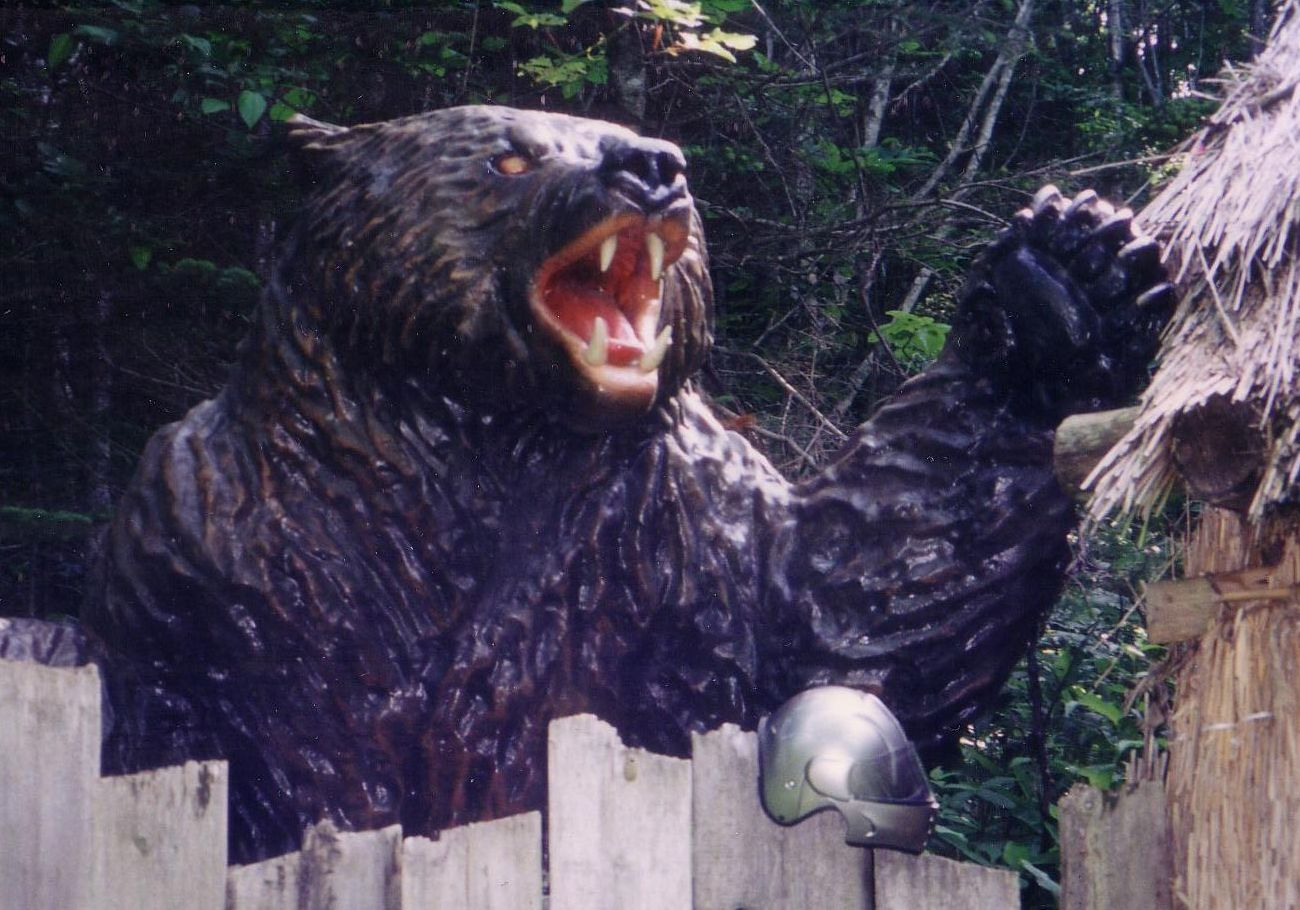
The Sankebetsu statue and tourist site.

Then, and now

More than a century after the Sankebetsu incident, it is tempting to look for repetition — to imagine the same landscape quietly replaying its past.

That is not what the evidence suggests.

Brown bears still inhabit Hokkaido today. The species persists across much of the island’s forests and mountain ranges, and in some areas populations are thought to be stable or recovering after decades of decline. The region where Sankebetsu once stood is no longer a permanent settlement, and there is no indication that it has become a modern centre for serious bear attacks.

History, in this sense, is not repeating itself geographically.

What has changed is the broader context in which people and bears now coexist.

In 2025, Japan recorded 13 human fatalities and more than 100 injuries resulting from bear encounters, involving both Asiatic brown bears and Asiatic black bears. These incidents were spread across multiple prefectures and environments — from rural settlements to the edges of towns — rather than concentrated in any single location.

The pressures behind them are familiar: reduced natural food availability, changing land use, and expanding human presence in areas once less frequently occupied. Bears range more widely when resources are scarce, and humans now occupy landscapes that were once seasonal or marginal.

The relevance of Sankebetsu, then, is not that it is happening again in the same place. It is that the same ecological forces – scarcity, overlap, and hesitation, all continue to shape encounters between people and large predators, wherever clear boundaries erode.

The quieter truth of man-eater stories

The Sankebetsu bear was not a creature of myth, nor a symbol of evil. It was an animal responding to scarcity, learning from success, and moving through a landscape that no longer offered clear separation between forest and home.

Man-eater stories endure not because they reveal something monstrous about animals, but because they expose a recurring human blind spot: the tendency to see nature as static, until it reacts.

When prey disappears, boundaries blur. When boundaries blur, conflict follows.

The question is not whether such stories will happen again, but whether we recognise the conditions early enough to change the outcome.

Executioner Elephants and the Machinery of Power

There are moments in history that feel almost implausible. Not because they are exaggerated, but because they are so deliberately cruel.

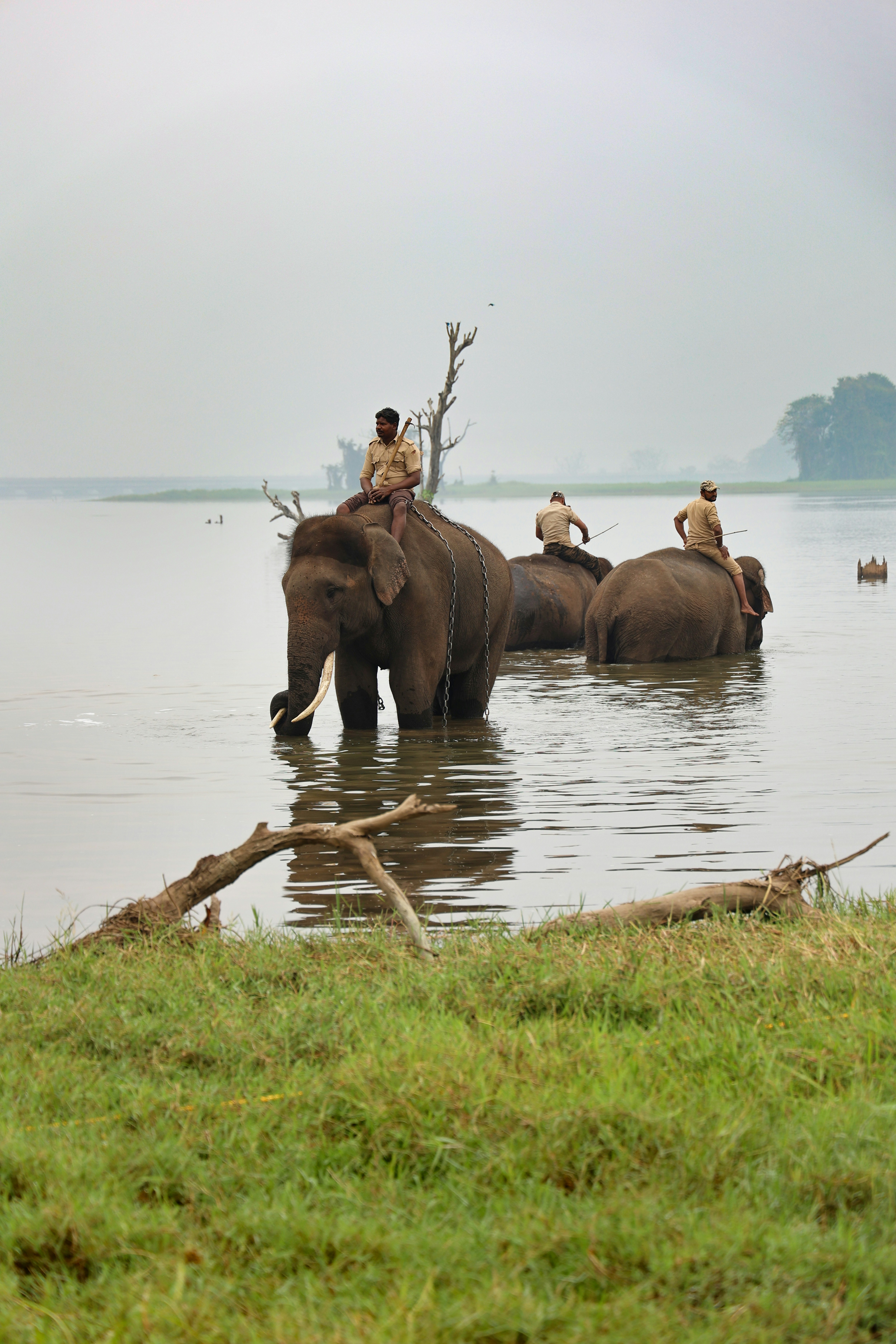
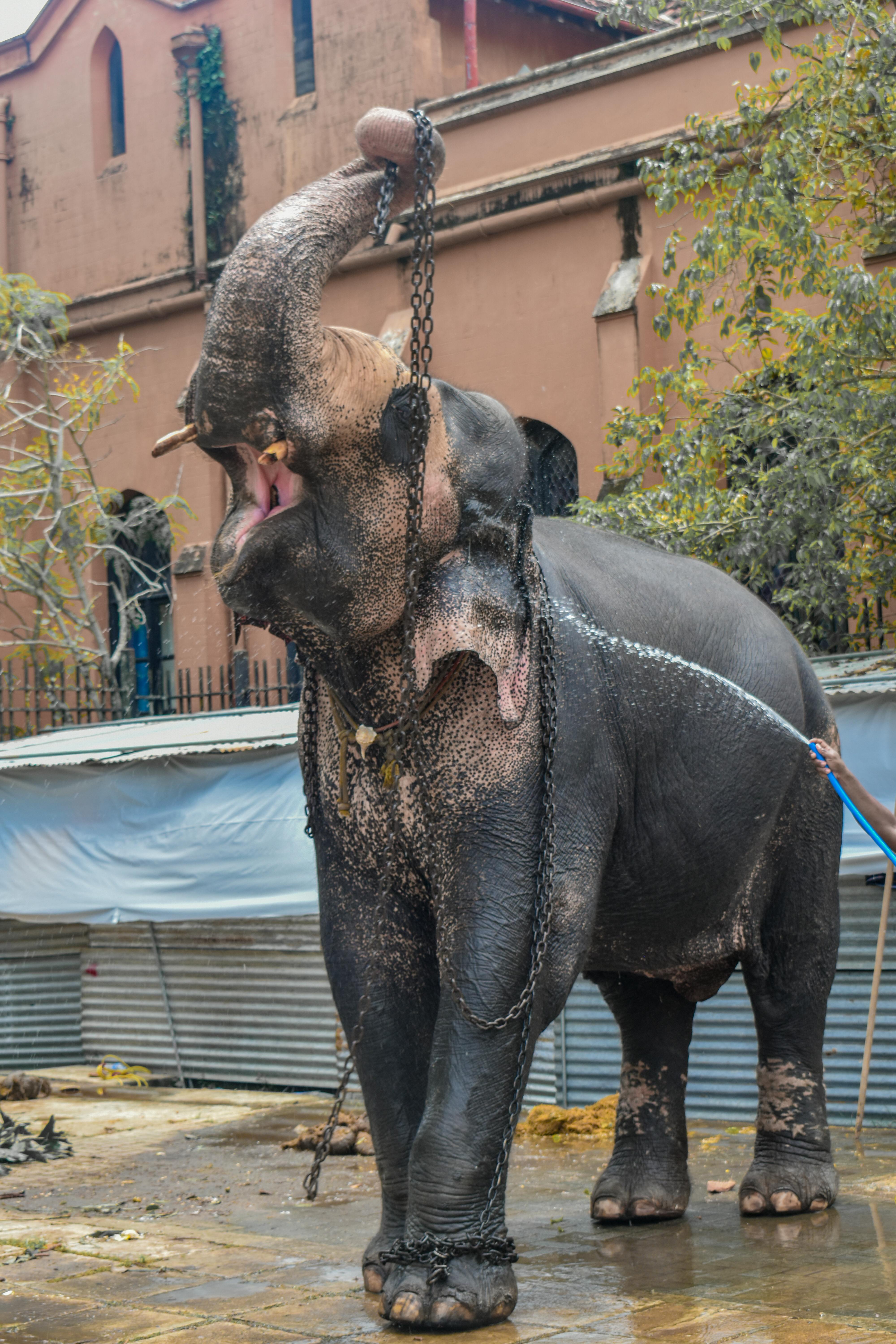
For centuries, across parts of South and Southeast Asia, elephants were used as executioners (known as Gunga Rao in India). Not in myth or allegory, but as instruments of state punishment: trained, directed, and deployed to kill human beings in public displays of authority.

This was not a curiosity or an isolated practice. It was a system, and one that relied on the intelligence and obedience of an animal capable of learning complex commands, and on the psychological impact of seeing power made flesh.

What makes this history unsettling is not simply what happened, but how intentional it was. Elephants were not acting on instinct. They were taught. And they were used.

Where and why executioner elephants were used

The use of elephants as instruments of execution was most prevalent across parts of South and Southeast Asia, particularly in regions where elephants already occupied a central role in warfare, labour, and royal symbolism. Historical accounts describe the practice in areas including the Indian subcontinent, Sri Lanka, Burma, Siam, and parts of what is now Vietnam and Indonesia, spanning several centuries and multiple ruling dynasties.

This was not an improvisation born of cruelty alone. Elephants were already embedded within the infrastructure of power. They hauled timber, carried kings into battle, and featured prominently in court ceremony and spectacle. Their size, intelligence, and visibility made them ideal symbols of authority; living embodiments of the state’s reach and control.

Public punishment in these societies was rarely private. Executions were designed to be seen and remembered as spectacles. They functioned as warnings as much as penalties, reinforcing social order through fear and inevitability. An elephant, towering over a crowd, calm and obedient, communicated something more potent than a blade or a rope: that resistance was futile not only because the state was powerful, but because it appeared absolute.

Beyond fear, the elephant also carried a deeper symbolic weight. It represented the futility of resistance itself. If the state could command and subdue one of the largest and most powerful animals on Earth, a creature capable of tearing apart structures and killing with ease, then the control of people was rendered almost trivial by comparison. Authority was not merely enforced; it was naturalised.

In this context, the elephant became part of a broader political language. Its presence transformed punishment into theatre, merging justice, domination, and spectacle into a single event. The animal itself did not represent chaos or savagery, but discipline… an impression carefully cultivated by those who wielded it.

How the system worked

Elephants were not used as executioners through instinct or provocation. They were trained deliberately, responding to commands issued by a mahout who controlled the animal throughout the process. Contemporary accounts describe elephants being taught a range of actions, from restraining a condemned person to killing them outright, depending on the sentence imposed.

The methods varied by region and period. In some cases, executions were swift. In others, they were prolonged, calibrated to heighten public impact rather than efficiency. What united these practices was control. The elephant did not act independently. It waited, received instruction, and carried out the act as trained, sometimes stopping short, sometimes proceeding fully, all according to command.

This distinction matters. The violence was not the result of an enraged animal, nor of a moment slipping beyond human control. It was structured, rehearsed, and repeatable. The elephant functioned as an extension of the judicial system, its immense physical force made precise through obedience.

That precision was itself part of the message. The spectacle lay not only in the act of killing, but in the demonstration that such a powerful animal could be rendered compliant, predictable, and exact. Authority was displayed not through chaos, but through order.

Power, punishment, and political messaging

Public execution has always been as much about those who watch as those who die. In societies that employed executioner elephants, punishment functioned as a form of political communication, a demonstration of authority designed to be remembered long after the event itself had passed.

The elephant’s role intensified that message. Unlike mechanical devices or edged weapons, the animal was visibly alive, responsive, and controlled. Its obedience transformed violence into a display of governance rather than brutality. Order was not imposed through chaos, but through precision. The state did not merely kill; it commanded.

By outsourcing the act of execution to a trained animal, rulers distanced themselves from the physical act of violence while simultaneously magnifying its psychological impact. The elephant became a proxy through which power could be exercised without appearing impulsive or uncontrolled. Responsibility was diffused, even as authority was reinforced.

There was also an element of humiliation embedded in the practice. To be killed by an elephant, an animal associated with royal processions, warfare, and ceremony, inverted the natural order of dignity. The condemned were rendered small, powerless, and publicly subordinate, their fate enacted by a creature that symbolised the state itself.

In this way, executioner elephants functioned not simply as tools of punishment, but as instruments of political theatre. They collapsed justice, domination, and symbolism into a single act, reinforcing a hierarchy in which resistance appeared not only dangerous, but futile.

Methods of punishment and execution

Historical accounts make clear that executioner elephants were not employed in a single, uniform way. Methods varied by region, period, and political intent, and the elephant’s role could be adjusted accordingly. This flexibility was part of the practice’s power.

In some instances, elephants were trained to kill quickly. A single, forceful action, often involving the animal’s foot (the crushing of a victim’s head against a stone or wooden block was typical), was enough to end a life almost immediately. In others, the process was deliberately staged. The elephant might restrain a condemned person first, holding them in place while commands were issued, before carrying out the final act. The presence of choice and delay was itself a form of intimidation, reinforcing the idea that punishment was not only inevitable, but controlled.

More elaborate methods are recorded in certain historical sources. Elephants could be trained to tear apart bodies using their tusks, or to crush limbs before delivering a fatal blow. In some regions, blades or spikes were affixed to tusks to increase lethality. These were not improvisations, but planned variations and evidence of a system refined over time.

What distinguishes these accounts is not brutality alone, but intentionality. The elephant did not act unpredictably. Each movement followed instruction. Each execution demonstrated not rage, but discipline. Violence was administered as a process, not an outburst.

For spectators, this mattered. The horror lay not only in the outcome, but in the calmness with which it was achieved. The animal’s obedience underscored the message that punishment was procedural, sanctioned, and absolute, making it a function of governance rather than cruelty in the abstract.

The animal caught in the system

Elephants are not indifferent instruments. They are highly intelligent, social animals, capable of learning complex behaviours, forming long-term bonds, and responding to subtle cues from those they trust. That capacity and the very trait that made them so valuable to human societies, is what allowed them to be absorbed into systems of punishment in the first place.

The elephant did not choose its role. It did not understand the politics of justice, crime, or authority. It responded to training, repetition, and command. Responsibility for the violence enacted through it does not sit with the animal, but with the structures that shaped its behaviour and put it to use.

This distinction matters, because it forces the focus back where it belongs. Executioner elephants were not expressions of nature’s savagery, nor examples of animals turned monstrous. They were evidence of human ingenuity applied without restraint, of power seeking spectacle, obedience, and inevitability, regardless of the cost.

In many historical accounts, the elephant’s calmness is remarked upon as much as its strength. That calmness was not natural. It was cultivated. And in that cultivation lies the deeper unease of the practice: the transformation of a sentient being into a mechanism, valued not for what it was, but for what it could be made to do.

That this history still unsettles is not surprising. It sits at the intersection of dominance and delegation, where violence is made orderly and responsibility is diffused. The elephant becomes a mirror, reflecting not animal brutality, but human willingness to externalise cruelty, to embed it within systems until it feels inevitable, even justifiable.

With what is now known about elephant intelligence, it is difficult not to wonder what such roles may have cost the animals themselves. Elephants are capable of recognising individuals, remembering past events, and responding to distress in others. They are not unthinking tools, but sentient beings with emotional and social complexity.

Whether executioner elephants experienced fear, confusion, or psychological harm as a result of these acts cannot be known with certainty. Historical records do not concern themselves with the inner lives of animals. Yet the very qualities that made elephants so effective within these systems; memory, responsiveness, trust in human handlers, are the same qualities that, today, are recognised as leaving animals vulnerable to long-term stress and trauma.

If nothing else, this absence is telling. The suffering of the animal was neither recorded nor considered relevant. The elephant’s role ended when its usefulness did. That silence, viewed through a modern understanding of animal cognition, is itself a form of indictment.

This research surfaced while working on a piece of fiction, but it refused to remain there. Some histories resist containment. They linger, precisely because they reveal how thin the line can be between authority and abuse, and how readily intelligence (animal or human) can be bent to serve power.

🎬 Movie Monday: When Real Animals Became Movie Monsters

Stories have always borrowed from the natural world, sometimes consciously, sometimes not.

Movie Monday is a new, occasional series exploring where cinema, wildlife, and myth overlap: the real animals, behaviours, and biological truths hiding behind some of our most enduring screen monsters.

It sits alongside Monster Monday and Maneater Monday — different lenses on the same question: why certain creatures, real or imagined, refuse to loosen their grip on us.

We like to believe that cinema monsters are born from imagination alone… nightmares made flesh, conjured by writers staring into the dark.

But again and again, the truth is stranger.

Some of the most iconic creatures in film and fiction didn’t come from myth at all. They came from nature, from animals whose behaviours were already so efficient, alien, or unsettling that they barely needed exaggeration.

Filmmakers didn’t invent these monsters.
They recognised them.

👹 Predator: insects, instinct, and a moment at 30,000 feet

The creature in Predator is often remembered for its technology: cloaking devices, shoulder cannons, thermal vision, ritualised hunting codes.

But strip all of that away and you’re left with something far older.

During early development, legendary creature designer Stan Winston was struggling to finalise the Predator’s look. While flying with James Cameron, he talked through the problem, and it was Cameron who suggested a simple, unsettling solution: give it mandibles.

That single idea changed everything.

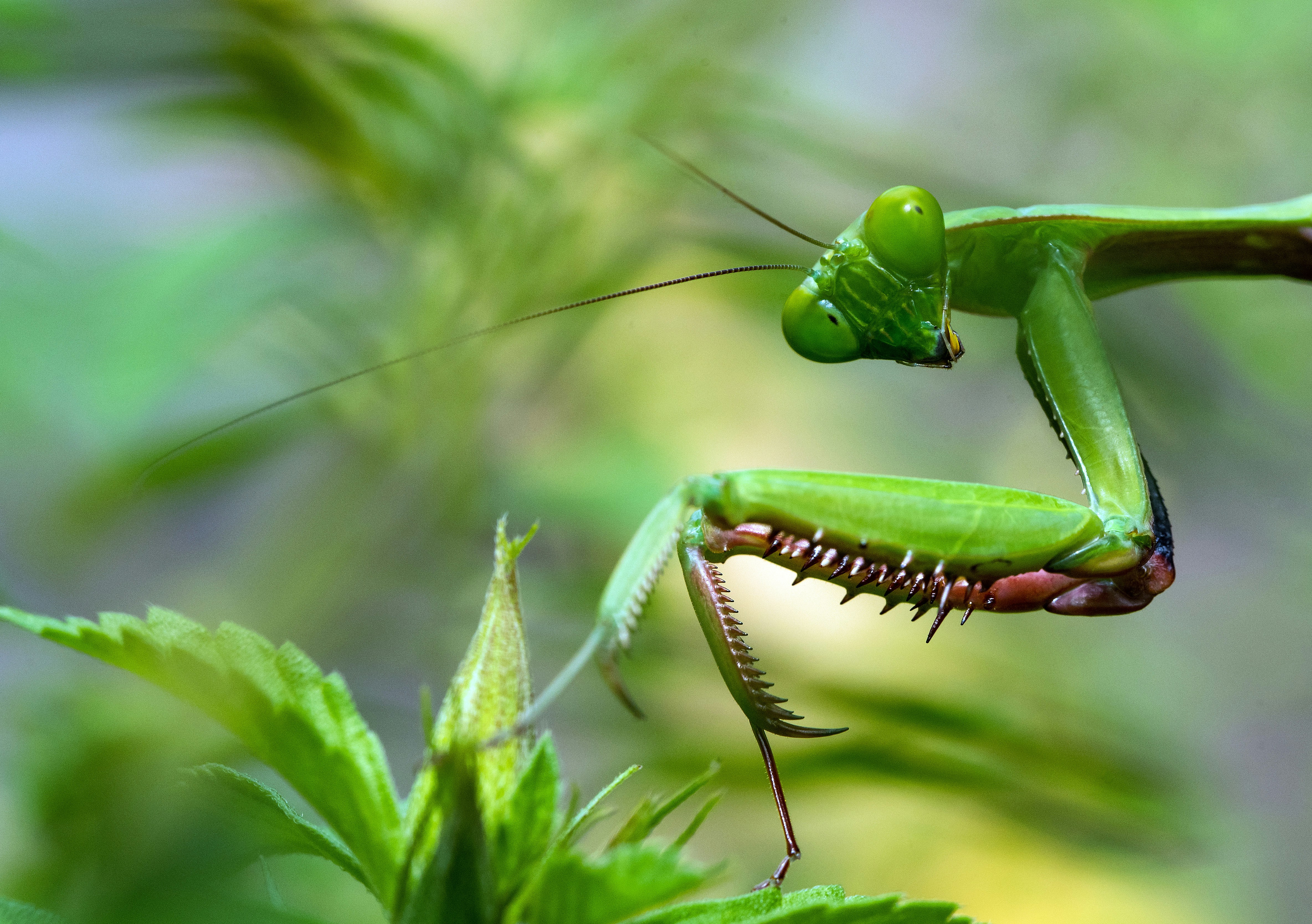
Designers have since acknowledged the influence of insects, particularly praying mantises, in the Predator’s face and posture. Forward-facing eyes. Mandible-like jaws. A head shaped for tracking and striking rather than expression or empathy.

Mantises already look extraterrestrial to us. They rotate their heads. They calculate distance. They dismember prey with methodical calm.

Even the creature’s voice reinforces this lineage. The distinctive clicking and chittering sounds were created by Peter Cullen, deliberately leaning into insect-like vocalisations rather than anything recognisably mammalian or humanoid.

The Predator doesn’t invent that fear.
It scales it up, arms it, and releases it into a jungle.

What remains, beneath the tech, is an apex ambush hunter — something we instinctively recognise, even if we can’t quite place why.

👽 Alien: nature’s most efficient horror machine

The creature in Alien remains one of cinema’s most disturbing designs because it feels biological. Every stage of its life cycle obeys a logic — parasitic, efficient, and utterly indifferent.

That’s because it draws from multiple real-world inspirations.

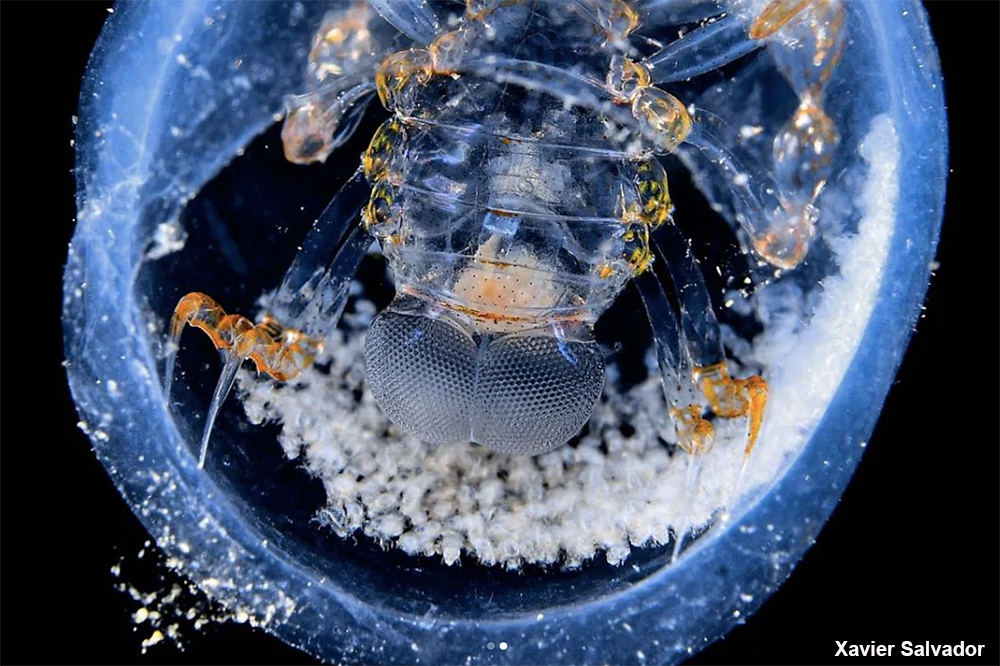
One is the deep-sea amphipod Phronima sedentaria, sometimes called the “monster in a barrel.” This tiny crustacean hollows out gelatinous animals, lives inside their emptied bodies, and uses them as both shelter and nursery. It’s parasitism turned architectura.

Image Credit: Xavier Salvador

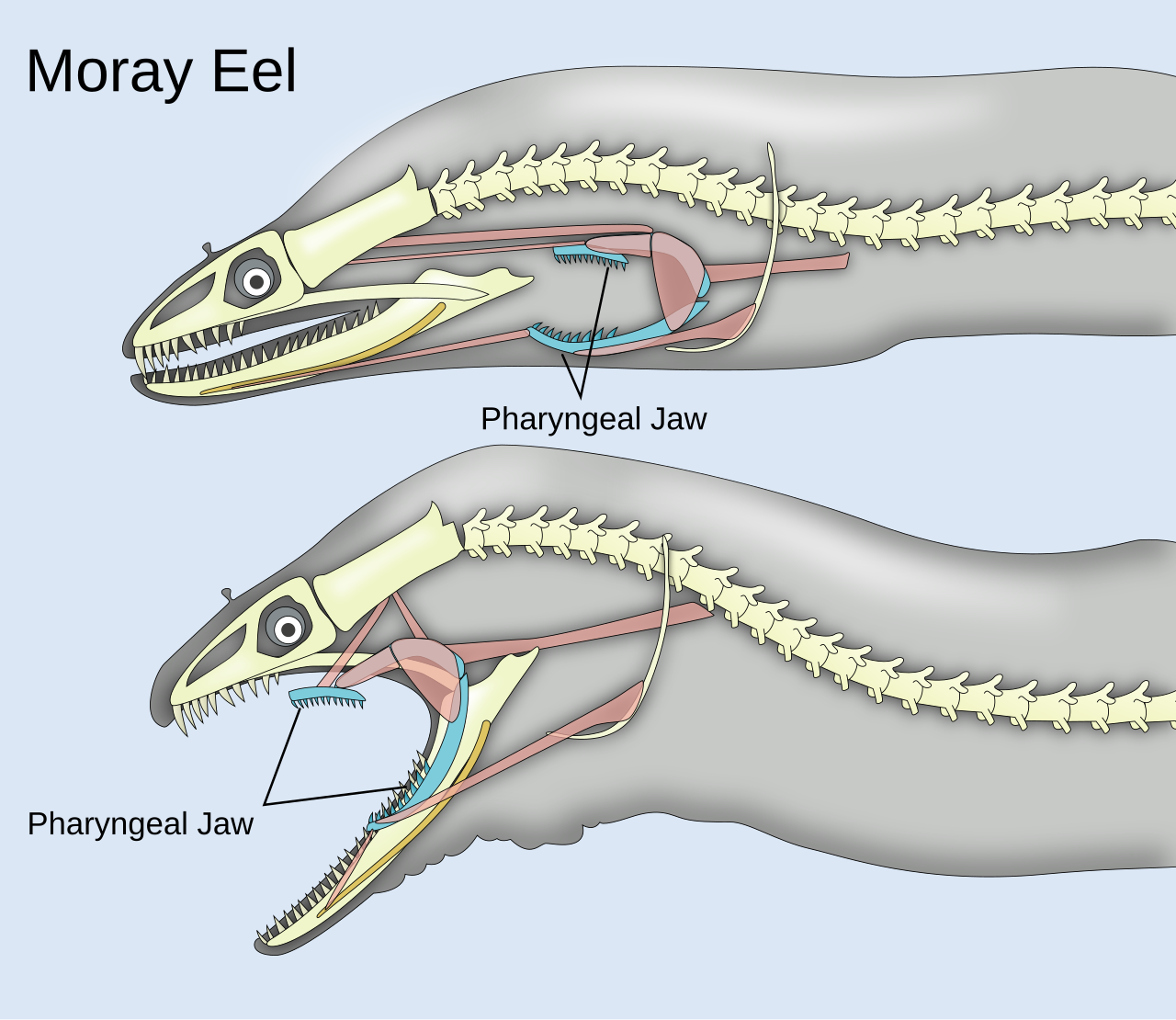
Then there’s the Alien’s inner jaw, eerily similar to the pharyngeal jaws of moray eels, a second set of jaws that shoot forward from the throat to drag prey deeper inside the body. Watching one in action feels like watching a design error, until you realise how brutally effective it is.

Image Credit: Wikipedia.

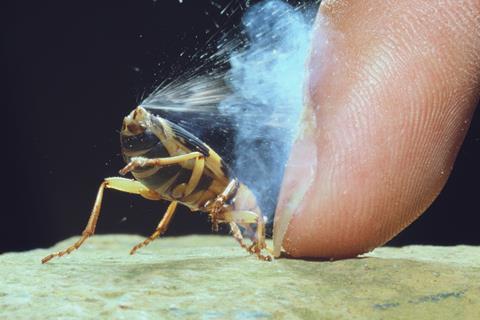
The acid blood? That has uncomfortable echoes of the bombardier beetle, which stores volatile chemicals in separate chambers and mixes them only when threatened, releasing a boiling, corrosive spray with startling precision.

Even the facehugger carries a lineage. Its spidery grip, tail wrap, and underside anatomy closely resemble the ancient horseshoe crab, a creature so old it predates dinosaurs, and so alien it barely seems terrestrial at all.

Alien isn’t fantasy biology.
It’s biology… refined.

🧛 Dracula: when bats became monsters

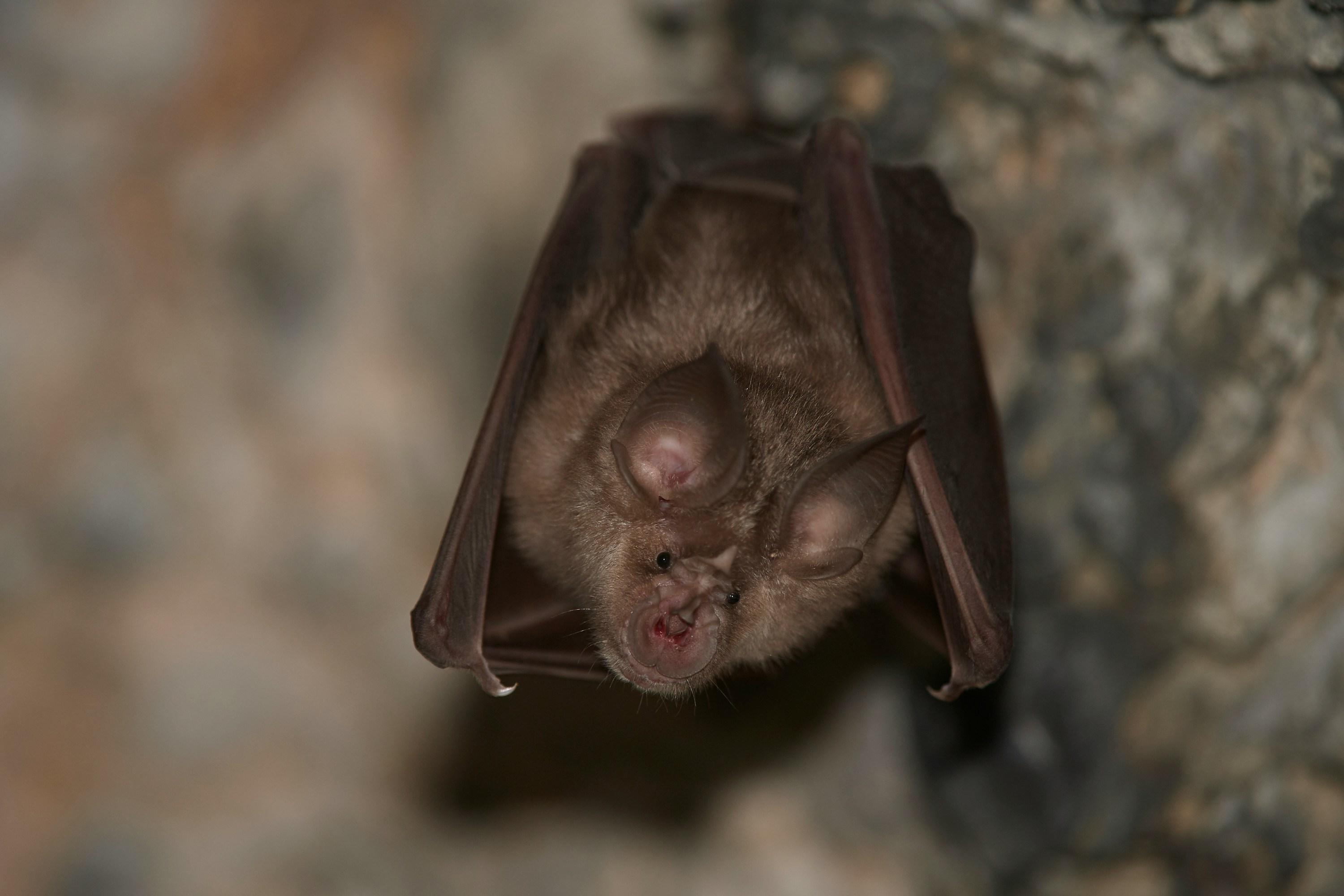
While working on Dracula, Bram Stoker encountered a New York newspaper clipping describing vampire bats – small, blood-feeding mammals that had been newly “discovered” by Western science and already framed as unnatural horrors.

They didn’t drain victims dry, as legend claimed. But they did feed silently, painlessly, and in the dark. They made small incisions, returned night after night, and relied on anticoagulants to keep blood flowing.

That was enough.

Stoker fused this real behaviour with Eastern European folklore, and suddenly vampirism became biological as well as supernatural. Dracula wasn’t just cursed — he fed, adapted, survived.

Once again, fear took root because it had a foothold in reality.

🦈 Jaws: the predator we misunderstood

Jaws didn’t invent the fear of sharks, but it magnified it catastrophically.

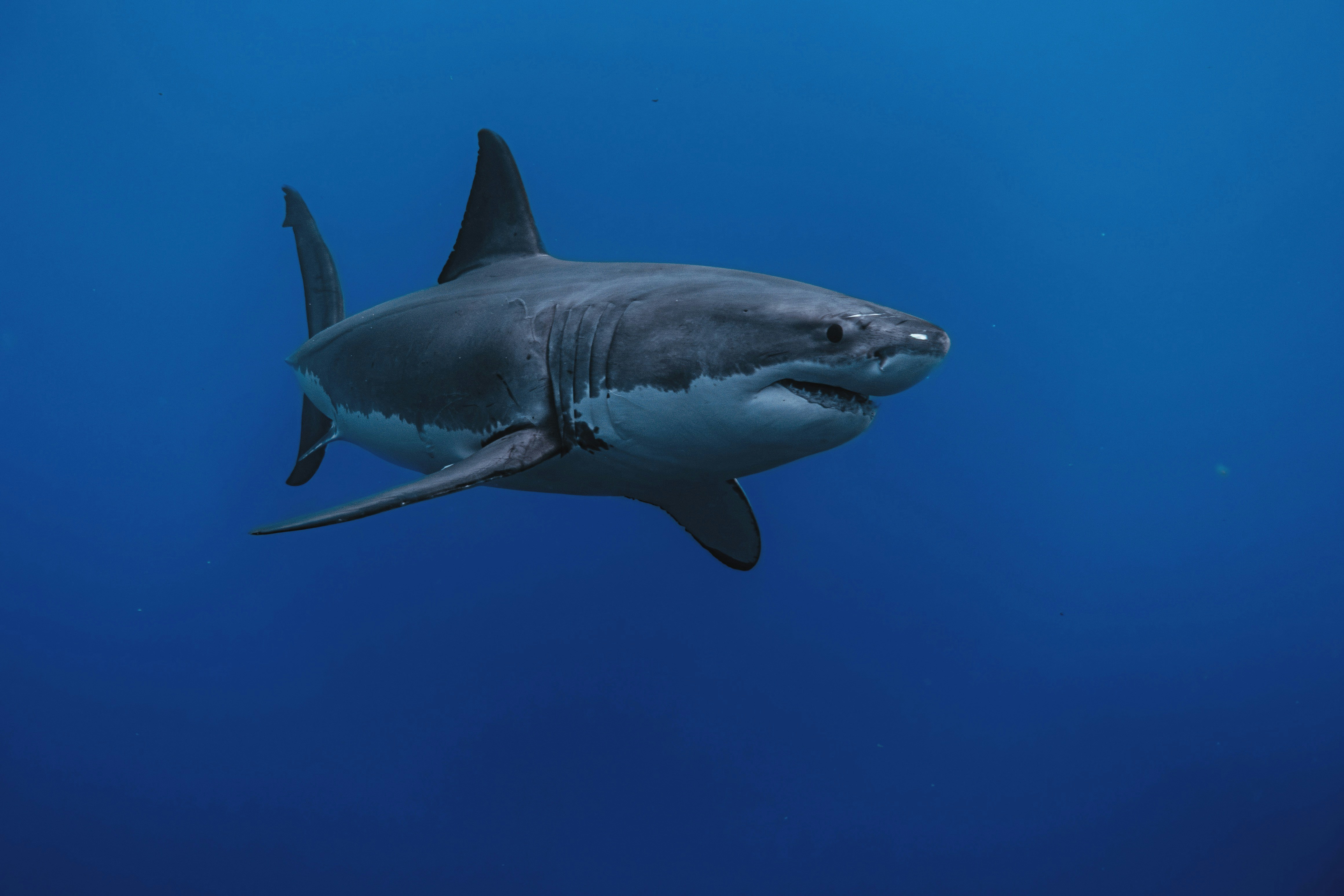
The great white shark is a powerful apex predator, yes. But it is also cautious, energy-efficient, and rarely interested in humans. Most bites are investigative, unfortunate cases of mistaken identity.

In Jaws, however, the shark becomes something else entirely: territorial, vengeful, strategic. It stalks specific individuals. It understands fear.

The exaggeration worked, all too well. The film permanently altered public perception of sharks, contributing to fear-driven culls and a legacy of misunderstanding that conservationists are still trying to undo.

It’s a reminder that when cinema borrows from nature, it doesn’t always give back responsibly. I am working on my own shark-based story, and will have to try and be as respectful as I can with the subject matter.

🍄 The Last of Us and the zombie ant fungus

The monsters of The Last of Us, from the video game and then brought chillingly to life in the HBO series, feel plausible because they already exist.

Ophiocordyceps unilateralis infects carpenter ants across tropical forests. Once inside, the fungus alters the ant’s behaviour, compelling it to climb vegetation and clamp down with its mandibles.

Then it kills the host.

A fungal stalk erupts from the ant’s head, releasing spores onto the forest floor below, perfectly positioned to infect the next generation.

There’s no rage. No hunger. No malice.

Just control.

The horror of The Last of Us lies not in the fantasy of zombies, but in the quiet realisation that free will is not as secure as we think.

🪱 Tremors: ambush predators beneath our feet

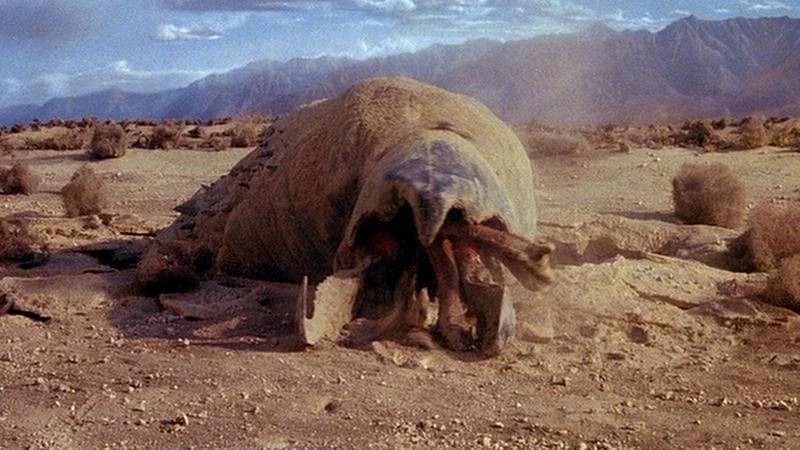
The graboids in Tremors feel absurd, until you consider how many real animals hunt exactly this way.

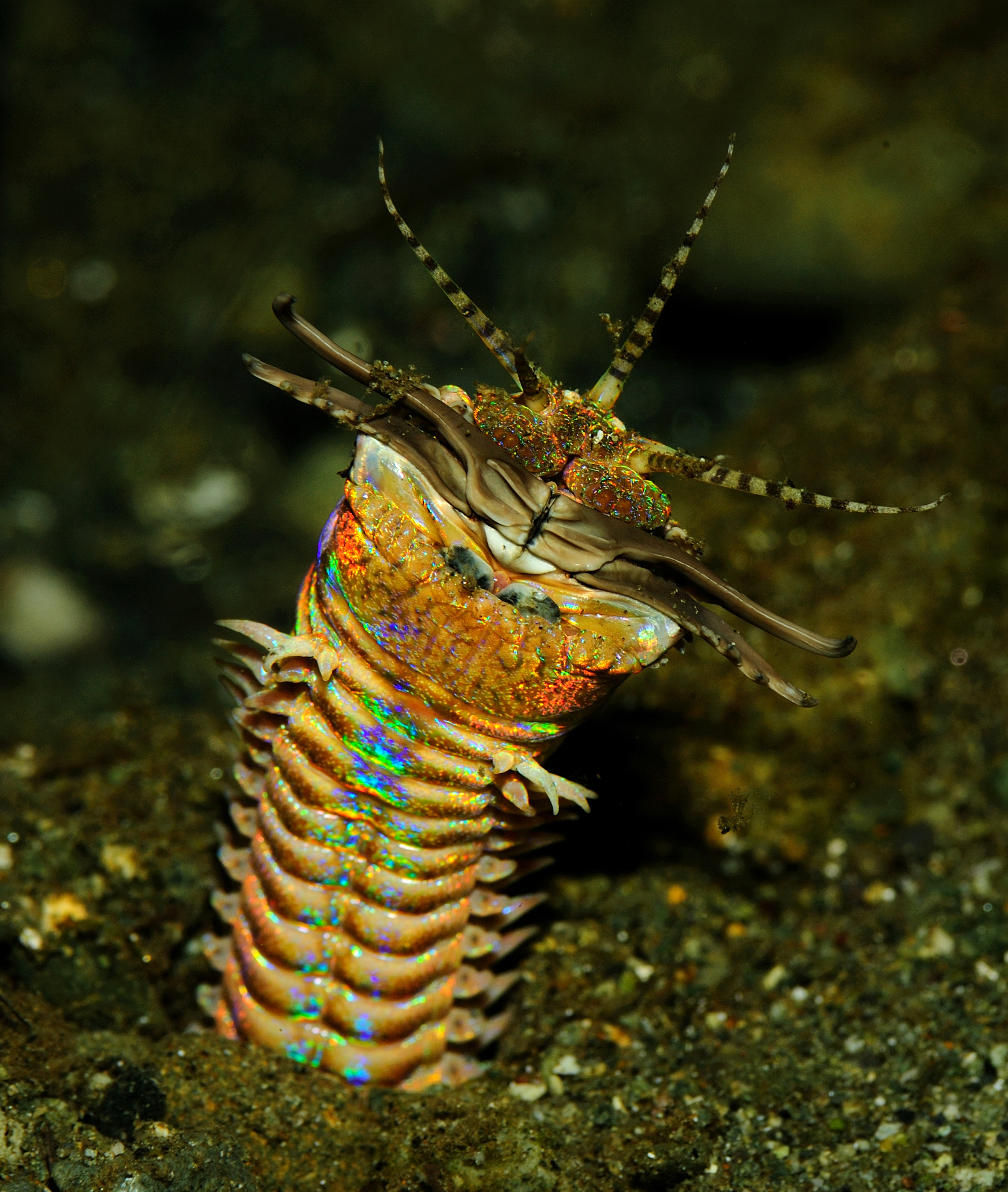
Trapdoor spiders wait motionless beneath the soil, sensing vibrations before exploding upward to seize prey. Bobbit worms bury themselves in sand, striking with astonishing speed, sometimes slicing fish clean in half.

Image Credit: Wikipedia.

Both rely on:

  • Vibration detection
  • Ambush rather than pursuit
  • Minimal exposure

The genius of Tremors is that it makes the ground itself hostile. The monsters don’t chase — they wait.

Which, biologically speaking, is often far more efficient.

🟢 Slime moulds and The Blob

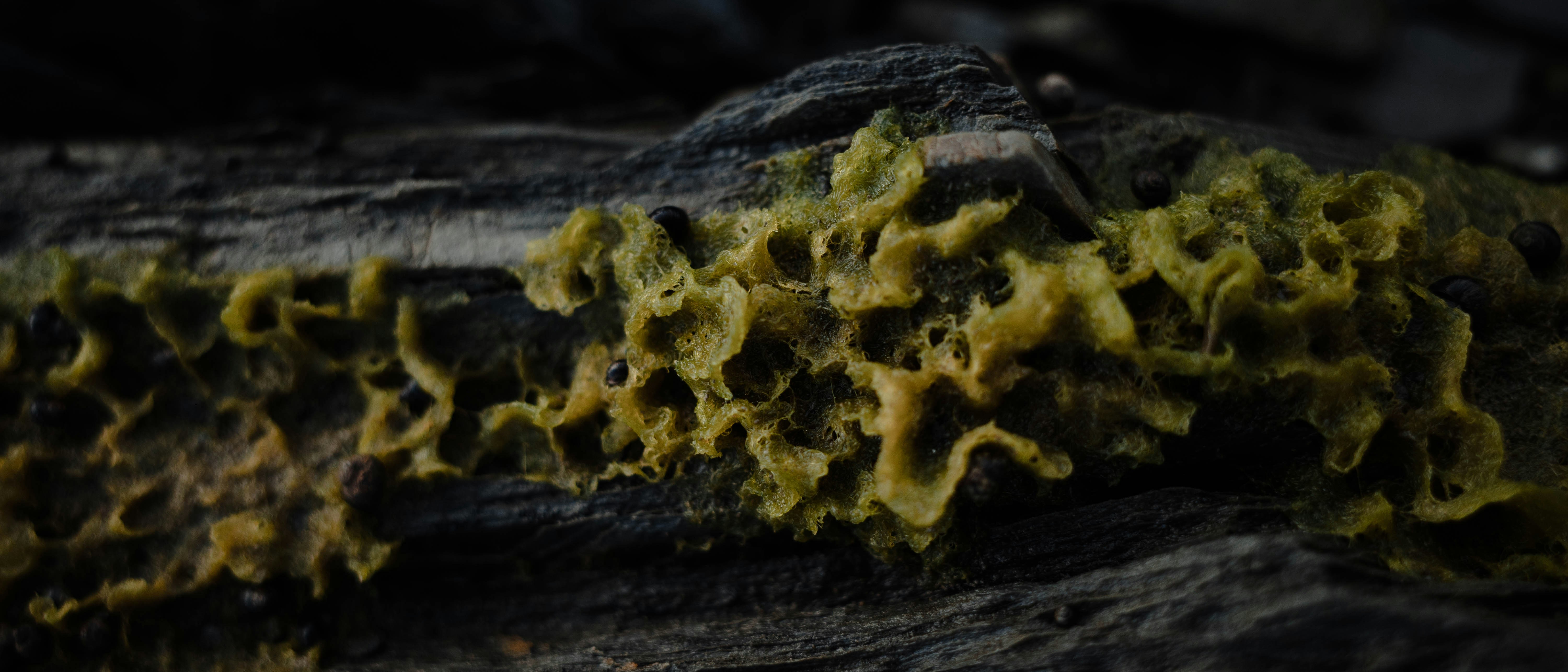
Slime moulds aren’t fungi. They aren’t animals. They’re something else entirely, capable of learning, problem-solving, and forming efficient networks without a brain.

They flow. They engulf. They adapt.

The creature in The Blob exaggerates this into apocalyptic form, but the unease is justified. Slime moulds already challenge our definitions of intelligence and individuality.

They don’t hunt.
They spread.

Why these monsters endure

The most effective movie monsters don’t break the rules of nature.

They obey them too well.

They feed, reproduce, adapt, and survive. They don’t hate us, they don’t even notice us! And that’s what makes them frightening.

Nature doesn’t need motivation.
Only opportunity.

Wherever possible, I use freely available images sourced from platforms such as Unsplash and Pexels, or other royalty-free image libraries, in accordance with their respective licences. In cases where images are not sourced from these platforms, I make every effort to credit the original photographer, artist, or rights holder where attribution information is available. Some imagery may be used under fair use principles for the purposes of commentary, critique, education, or illustration, particularly in relation to wildlife, history, film, folklore, or cultural discussion. No copyright infringement is intended. If you are the rights holder of an image used on this site and have any concerns, or would like an image to be credited differently or removed, please get in touch and I will address the issue promptly.

Unseen Shadows: Big-Cat Sightings in Britain – Autumn 2025 Round-Up

From Suffolk harvest fields to moorland mist in North Wales, a fresh wave of “panthers,” pumas and dark-coated felids stirred Britain’s rural imagination through October and November.

As dusk creeps ever earlier, as hedgerows thin and fields lie fallow, the old hush seems to awaken once more. Reports of something alien abroad: black silhouettes crossing lanes, long tails vanishing between trees, sheep spooked under moonlight, and “pointed-ear” shapes in the gloom. Over the last few months, places like Anglesey, the Llŷn Peninsula, Suffolk and more felt alight with the possibility of something wild and unaccounted for.

Below is a deeper dive into British big cat sightings from the last two months: what was claimed, where and when, what evidence (if any) supports it, and what it tells us about why, in 2025, the British big-cat mystery refuses to go away.

Autumn’s Quiet Fields and the Whisper of Something Else

There’s something about late autumn in rural Britain: the harvest is over, fields lie bare, evenings draw in, and the countryside takes on a soft, half-remembered quality.

For decades, that seasonal quiet has offered fertile ground for whispers of something aloof in the landscape. Could it be wind in the trees, a deer moving in shadow, or something else? For many rural dwellers and folklore-hunters, it has always been the right time for mystery big cats to wander across a lane, disappear into a copse, or vanish beyond the hedge.

In October and November 2025, those whispers, as always seems to be the case in Autumn, became a little louder.

October 2025: When the Reports Began to Coalesce

Scattered reports: South-East and West-Midlands chatter

Throughout October, a series of smaller, loosely connected reports emerged, from “panther-like” silhouettes glimpsed in the treeline, to late-evening growls heard by dog walkers, and paw prints in soft, damp ground after rain. Most came from local Facebook groups, community forums or specialist blogs, with genuine sparks of intent (some people setting up trail-cameras), but little follow-up.

The background: police logs and a five-year string of reports

Behind the anecdotal noise, there’s an institutional record: between 2021 and 2025, based on keyword searches for “big cat,” “puma,” “panther” and “lynx,” official incident-record logs from parts of southern England (notably Devon & Cornwall Police) list more than a dozen reports of large cats, described variously as “black panther,” “puma-like,” or “lion-sized.” LBC

Many of these reports describe animals jumping hedges, stalking rural tracks, or vanishing after being glimpsed in a vehicle’s headlights. In a few cases, officers attended the scene; in others the sightings remain unverified.

These official records, which are commonplace across the UK, add weight to public claims.

November 2025: A New Wave in North Wales, Anglesey, and the Llŷn Peninsula

Just as October’s reports began to settle, November brought a fresh uptick, this time centred on North Wales, Anglesey, and the Llŷn Peninsula. A different landscape, a different weather-tone, and for many, a compelling shift in pattern.

Anglesey: Fields, sheep, and pointy-eared cats (10 November onward)

A report on 12 November 2025 from a well known UK cryptozoology site, detailed multiple sightings across Anglesey including black cats with “long thick tails” and “pointy ears,” which were spotted roaming fields, skulking near sheep, or seen slipping along woodland margins at dusk. The Centre for Fortean Zoology

A post shared on social media described a “large black cat” near Newborough, walking through open land near the coast, with prominent pointed ears, a low slung tail and a long body. Locals, spooked, spoke quietly of sheep losses and nervous dogs. Facebook

The repeated descriptions (sometimes by more than one witness) helped give these reports weight. That said: “pointy ears” is a common reason sceptics dismiss big-cat claims, because in many big cats ear shapes differ, and “pointy” can be misleading in poor light or low resolution, and for many, suggests a dog and mistaken identity.

Pwllheli, Llŷn Peninsula: “Puma spotted at caravan site” (28 November)

On 28 November 2025, a local watchdog group for big-cat sightings, Puma Watch North Wales, published a report of a “large dark-coloured” animal, believed by a holiday-maker to be a puma, seen within a caravan-park perimeter near the town of Pwllheli, on the Llŷn Peninsula. Puma Watch North Wales

According to the witness, the animal was large, low-slung, and moved in a smooth, stealthy manner between caravans and hedgerows, so unlike a typical stray dog or cat. Given the rural coastline, sheep fields nearby, and limited light at dusk, the report sparked concern for local farmers and dog-walkers.

Further sightings in Wales were reported earlier in the month by the same site.

Where the wild things might be… or might not be

What stands out from both months isn’t a shift in geography so much as the familiar randomness that has always characterised Britain’s big-cat reports. Sightings scatter across counties and coastlines without forming any obvious pattern, a point often used by sceptics to argue against the idea of established or breeding populations. Yet for mystery-hunters, that same unpredictability is part of the allure – the sense of roaming predators that refuse to be pinned down, drifting through valleys, farmland and forest edges, appearing where least expected.

If nothing else, November’s reports show one thing clearly: the conversation lives on and people are still looking, watching, and waiting for a confirmation.

Patterns of Evidence: What We Know, What We Don’t

📌 What counts as good evidence

  • Clear video or photo, ideally with scale, timestamp, and context.
  • Multiple independent eyewitnesses describing similar features (size, tail, coat, gait, ears, behaviour).
  • Physical traces like hair, scat, paw-prints, kills… submitted for professional forensic analysis.
  • Consistent follow-up through camera traps, field-investigations, naturalist or police presence.

📉 Where the 2025 autumn wave falls short

  • Most reports (even the ones above) are from single witnesses, uncorroborated by photos or prints (I know how hard it it is to think about taking a photo in the moment, or how difficult it is to actually photograph and film genuine wild animals on a phone).
  • Descriptions vary (black panther, puma, “pointy-eared black cat”) which may reflect different species, or more likely, different interpretations of light, distance, stress or fear.
  • No public forensic confirmations this month: no DNA swabs, no carcasses, no verified predator-kill evidence.

That isn’t a rejection of the sightings by any means, but it does mean: as of November 2025, there is still no conclusive scientific proof of a sustainable non-native big-cat population roaming the British countryside, despite the very strong likelihood they are here.

Why the Autumn Spike Happens: Season, Psychology, and Landscape

Autumn has always been a season of shifting boundaries in the British countryside. As the days shorten and dusk arrives earlier, everything seems to take on a different shape. Shadows stretch longer than expected, hedgerows thin, and once-dense foliage gives way to bare branches and open visibility. This simple change in light and landscape can transform the most ordinary movement, be it a fox slipping between field margins, a dog cresting a hill, even a cat prowling along a fence line, into something uncanny.

The conclusion of the harvest season amplifies this effect. With crops cut back and fields lying open, the countryside becomes a stage with fewer props; anything crossing the land becomes more noticeable against the bare ground. At the same time, human presence in these spaces increases. Dog walkers, cyclists, farmers, hikers, and foragers tend to be out more in the late afternoon or early evening, right when the light begins to fail. Encounters therefore become more likely at a time when visibility is often at its best due to a lack of blooming foliage and leaves.

There’s also a psychological undercurrent to this seasonal shift. Autumn signals the approach of winter, a time when the countryside feels both more exposed and more remote. Folklore thrives in such in-between spaces. As mists gather and the temperature drops, we become more attuned to the uncanny possibilities at the edge of vision. For those already primed to wonder, whether through experience, curiosity, or the stories that circulate online, a shape in the half-light can ignite the imagination.

Together, these elements create the conditions in which big-cat sightings often cluster: a landscape laid bare, a watchful public moving through it, and just enough atmospheric tension to make the ordinary feel extraordinary.

Why These Stories Still Matter: Myth, Mystery and Wild Britain

art of the enduring appeal of Britain’s big-cat sightings lies in the country’s deep-rooted relationship with wildlife folklore. This is, after all, a landscape shaped by centuries of myths — from black dogs on moors to spectral deer in forests — and the idea of a hidden predator wandering the countryside resonates strongly with that cultural inheritance. Big cats, whether truly present or not, feel like a modern iteration of the same ancient impulse: to believe that something wild still moves out there, beyond the reach of fences and footpaths.

There is also a historical foundation to the fascination. The Dangerous Wild Animals Act of 1976, which curtailed the private ownership of exotic predators, triggered a generation of rumours that owners had secretly released pumas, leopards or lynx into the wild rather than surrender them. This legacy, more than any single sighting, fuels the belief in escapees or small, scattered populations that might have survived in remote pockets. It’s not proof — but it’s plausible enough to keep the theory alive.

For rural communities, the possibility of having such an animal nearby carries a mix of fear, irritation and reluctant awe. Livestock losses, nervous dogs, or strange prints in soft ground can lend weight to speculation. And for those who walk the land at dawn or dusk, the idea of sharing space with a creature that shouldn’t be here adds a quiet thrill.

But beyond the practical and historical, these stories matter because they remind us that mystery still exists in a world that often feels over-mapped, over-explained and over-connected. The silhouette on a hillside, the rustle in a hedge, the long tail disappearing into the dark — they hint at a Britain where the wild isn’t yet gone, only hidden. And whether or not big cats truly roam our countryside, the belief in them offers something rare: a reminder that the world still holds room for wonder.

How This Round-Up Was Compiled

  • I surveyed specialist websites, community-watch blogs (notably Puma Watch North Wales), and cryptozoology-oriented platforms. Puma Watch North Wales and The Centre for Fortean Zoology
  • I checked police-disclosure logs from forces who publish big-cat incident records (e.g. Devon & Cornwall). Devon and Cornwall Police
  • I referenced background research and historical context on British big-cat folklore, escapee theory, and prior documented sightings/escapes based on my own knowledge.

Caveat: I have no access to private camera-trap data, forensic lab results, or police log details beyond publicly disclosed summaries. The piece remains a synthesis of publicly available reports and claims, filtered for interest and plausibility.

The Mystery Lives On — For Now

As November 2025 draws to a close, the tally of big-cat reports has grown. From Suffolk to Anglesey, from fields to caravan parks, from hushed farm corners to public Facebook groups.

We are left with a mosaic made up of handfuls of sightings forming patterns, trending northwards, clustering in rural and coastal zones, surfacing at dusk.

For those who love the wild-edge of the British countryside and for readers of eco-thrillers, wildlife-watchers, or just the curious, those patterns matter. They remind us that beneath the tame green fields lies uncertainty. That despite fences and lights and human ink and paperwork, nature, or at least the idea of the wild, is still slipping through.

Walk the hedgerows at twilight. Keep a torch handy. A sharp eye. A steady hand on a camera. Because sometimes, the most compelling truths hide in plain sight, as a silhouette on a November road, or a long tail slinking behind a hedge, might just prove to you.

If nothing else, the mystery remains alive and hopefully well, and left alone.

Luke Phillips is the author of the eco-thriller Shadow Beastwhich explores the myth and mystery of Britain’s big cats.

What Might Come Next — For Readers, Watchers, The Curious

If you see something:

  • Use a phone or camera to get photos, video if you can (and safely).
  • Try to note scale; are there hedges, gates, known objects in frame that can help judge size?
  • Record time, date, weather, location (village, nearest road/farm), direction of movement, behaviour (walking, stalking, fleeing).
  • Share with groups like Puma Watch North Wales (if in Wales), Rick Minter at Big Cat Conversations or local wildlife / community pages. Even if nothing comes of it, each data point adds to the bigger picture.
  • Stay safe, especially if livestock are nearby. But also aware: many “big cats” reported in the UK probably remain domestic or feral cats mis-measured in light and distance.

An Ape-tley Named Legend: 99 Years of Ape Canyon

Ape Canyon is a gorge near Mount Saint Helens, Washington, USA. And if you’re wondering how it got such an intriguing name, on a continent with a distinct lack of apes (at least officially), then you’re in the right place.

This blog marks the 99th anniversary of the Ape Canyon attack, which either took place on 16th July 1924, or was reported on that date via an issue of The Oregonian, depending on the source.

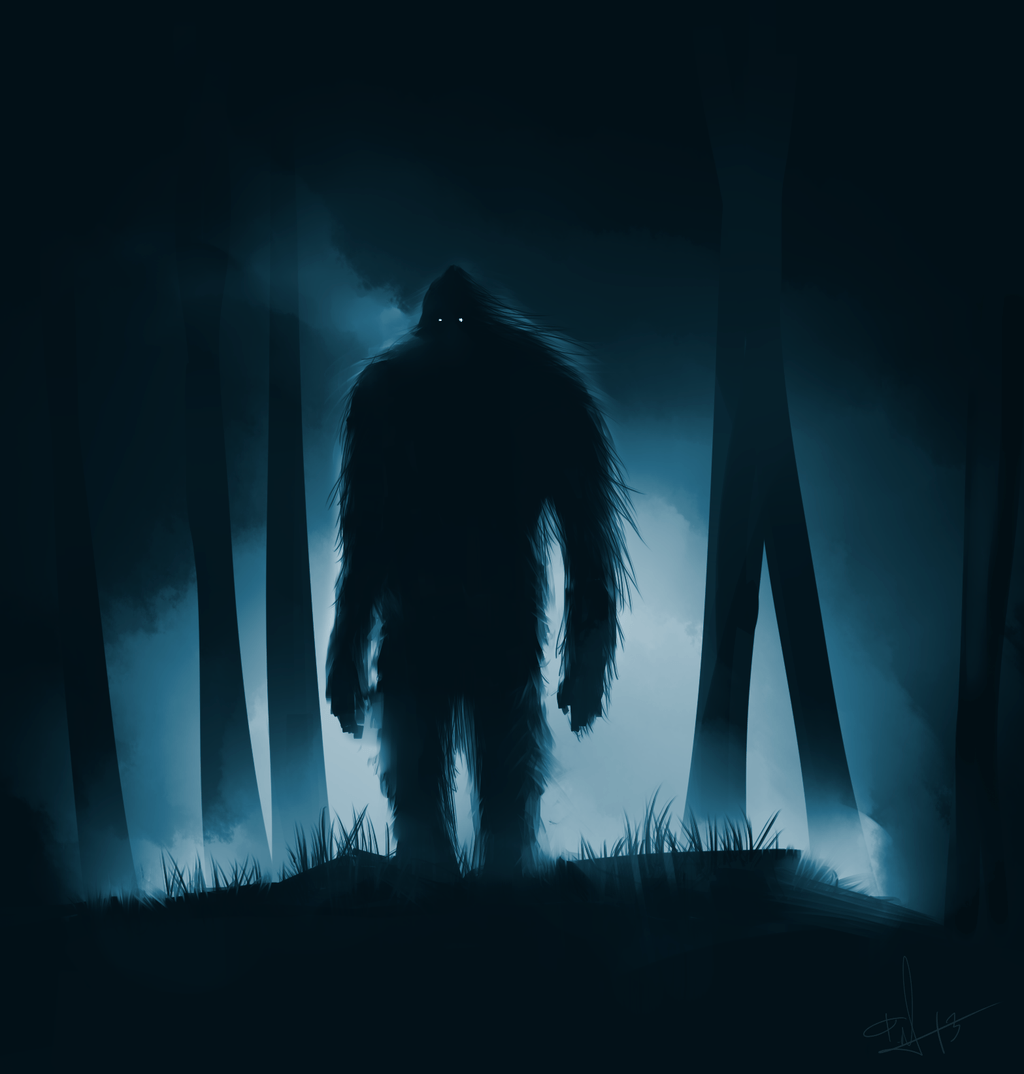
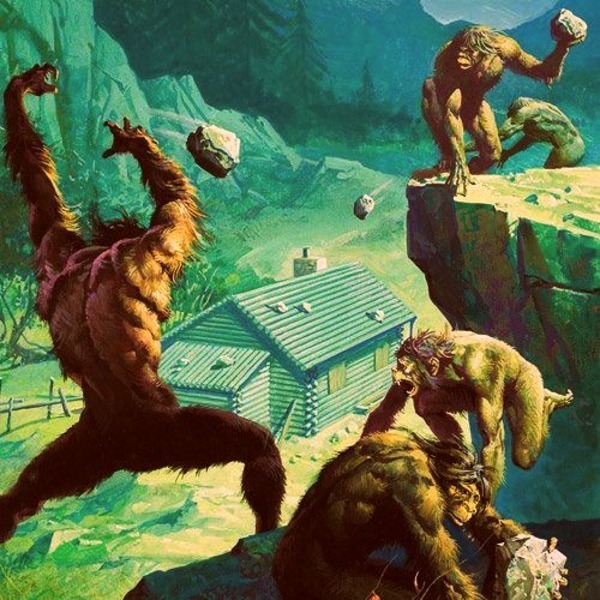
Either way, in July 1924, a group of five miners were taking overnight shelter in their hand-built cabin deep within the canyon. As they settled down for a meal and coffee, and perhaps something stronger, the cabin began to be pelted by sizeable stones and rocks. The miners described their attackers as ‘mountain devils’, and it didn’t take long for the band of men to realise they were surrounded.

Image Credit: Unknown – please contact, as various sources found.

Being hardy folk, and well used to the everyday threats they faced working in the wilderness, the men were armed – and they returned the rock showers with volleys of rifle fire. Each time they did, the sasquatch-like creatures would slink away into the treeline, only to resume their attacks minutes later. They also must have been very close to the makeshift cabin, as it is detailed one of the creatures reached through a hole in the wall and tried to steal an axe, only to be stymied before it could retrieve the weapon fully.

The attacks continued relentlessly until daybreak when the men finally felt able to leave the cabin. Fred Beck, one of the prospectors taking shelter, described seeing one of the creatures in the distance, at the edge of what is now Ape Canyon, and fired at it. His aim is apparently true, as he describes watching it tumble back into the gorge.

Beck would later write a book, titled ‘I Fought the Apemen of Mount St. Helens’. This was published in 1967, amidst the bigfoot furore of that period. 

Sceptics, including William Halliday, Director of the Western Speleological Survey, claim that the assailants were in fact local youths. A fireside story, shared by generations of counsellors at the nearby YMCA Camp Meehan on Spirit Lake, was that it was young campers absentmindedly throwing pumice stones into the canyon, not realising there were miners camped in its bottom. He suggests that looking up, the miners would have only seen moonlit figures throwing stones at them, and the narrow walls of the canyon (as little as 8 feet/2.5m at one point) would have distorted voices into something unrecognisable and frightening. 

Mount St. Helens Today.

However, this does not take into consideration the eyewitness accounts, including the shooting of a creature, and that hairy hand coming into the cabin. 

Perhaps the more sinister alleged encounter involves the disappearance of Jim Carter in 1950. An accomplished skier and mountaineer, Carter was part of a group of 20. The story appeared in an August 1963 issue of the Longview Times by Marge Davenport, titled ‘Ape Canyon Holds Unsolved Mystery’. It was then also included in Roger Patterson’s (yes, that Roger Patterson) 1966 book ‘Do Abominable Snowmen of America Really Exist?’. 

An abridged version of the story is below.

‘Carter’s complete disappearance is an unsolved mystery to this day,’ declared Bob Lee, a well-known Portland mountaineer… ‘Dr. Otto Trott, Lee Stark, and I finally came to the conclusion that the apes got him,’ said Lee seriously… On the way down the mountain, he [Carter] left the other climbers at a landmark called Dog’s Head, at the 8000-foot (2400 m) level. He told them he would ski around to the left and take a picture of the group as they skied down to timberline. That was the last anyone saw of Carter. The next morning searchers found a discarded film box at the point where he had taken a picture. From here, Carter evidently took off down the mountain a wild, death-defying dash, ‘taking chances that no skier of his calibre would take unless something was terribly wrong, or he was being pursued… He jumped over two or three large crevasses and evidently was going like the devil.’ When Carter’s tracks reached the precipitous sides of Ape Canyon, the searchers were amazed to see that Carter had been in such a hurry that he went right down the steep canyon walls. But they did not find him at the bottom… ‘We combed the canyon, one end to the other, for five days. Sometimes there were as many as 75 people in the search party ….’ After two weeks the search was called off.

However, again, there is some debate over the exact facts. The Madera Tribune edition of 23rd May 1950, features a small column, announcing a search for a Joe Carter, aged 18. Whereas the 25th May edition of the San Bernardino Sun of the same year (see below), seems to confirm both that Carter’s first name is Joe and ages him at 32. It is in this article Carter is described as an experienced mountaineer, but also suggests he is diabetic. It’s also where we find the link to the original Ape Canyon legend. 

The San Bernardino Sun, May 25th 1950 describes the search for Joe Carter.

You can see there are discrepancies in the details and even the location reported some 13 years after the event.

It is well known that an employee based in a ranger station enjoyed leaving fake tracks along the shore of the aforementioned Spirit Lake. Patterson too has also been long-suspected of pulling off perhaps the best executed hoax in bigfoot lore – and at the very least, I don’t think it’s unfair to suggest he wouldn’t let the facts get in the way of a good story, as here with Carter. 

Therefore, it’s difficult to lift the facts from the legendary lore of Ape Canyon. I cannot find any reliable reference as to what Ape Canyon was known as before, or when exactly it took that name – but it joins countless others across the USA associated with bigfoot legends. Today, ever changed since the eruption of Mount St. Helens in 1980, there is a popular hiking and mountain bike trail making the area much more accessible, and a local scout brigade use the Ape Caves as a hangout. But maybe, just maybe, a more sinister troop of unknown creatures still lurks down in the canyon that takes their name. 

The Selkie – Preview

The sun began to melt into the ocean and the sand on the beach slowly changed colour from pale gold to a washed-out pink, as if it were soaking up blood. The weathered dune grass swayed in the swells of wind that blew in from the cold Atlantic and rustled constantly, sounding out a symphony of wildness. Coll watched from the window of the cabin and felt the stirring of something deep within him. It didn’t show physically. He didn’t smile or relax his shoulders. He simply let out a long-harboured sigh that echoed the sadness that enveloped him. He had come here looking for hope, but now, as the light slowly died, it seemed intangible and gone from him.

Coll had holidayed on the Isle of Mull as a boy. In his youth he had fallen in love with the magical scenery, the wildlife and the people of the island. Now, he had returned to it, the last glimmer of love in his life. He had sought it out as a refuge, daring to hope he could feel love again, even if it was for a place rather than a person. The small rundown croft he had acquired sat on the cliffs above Calgary bay, two miles from the small village of the same name. An overgrown coastal path led up to the croft, where it split into a fork down onto the beach. It was as remote and as westerly as it was possible to be on Mull. Even the islanders referred to it as the wilderness. 

He had taken a tiny salary to watch over the rare salt meadows that lay behind the dunes of the beach. He hadn’t been able to put a word to a page for over a year and he knew his readers, not to mention his publishers, were growing anxious. They would have to wait. As he watched the final glimmer of light retreat beyond the horizon, he gave up on the idea of writing again and settled for the pleasure of reading the words of others. Reading had become his second refuge. As he buried himself in the worlds he encountered within the pages, the hurts of his own were numbed. Tonight, he sat with his favourite, White Fang by Jack London. The light blue cloth of the first edition glinted in the first silvery rays of the newly-emerged moon as he settled down on the leather chair, its weathered golden hide and softened, torn arms taking him in as if an old friend. He brought the paraffin lamp closer to the chair and turned slightly towards the wood burning stove, where two logs crackled together as the room grew dark. He looked out through the window across the bay. The light of a ship far out to sea flickered in the distance. As he lowered his eyes to the first page, the howl of the winter wind helped transport him to the Alaskan wilderness of London’s story. 

Many hours later, he turned the last page over and set the book down on the table next to the lamp. The table was a beautiful old cast iron sewing table with a wooden top. The table, the chair and the oak framed bed in one corner represented the sum total of the furniture in the croft. The stove sat inside a wide and tall chimney breast, above which hung a collection of heavy iron pans. The stove not only served as the heat source for the croft, but also fed into the hot water system, and for that modern touch, Coll was grateful. The claw-footed bath that sat in the only other room of the croft, along with a basin and plumbed in toilet, were necessary luxuries. The croft also had electricity, but he had yet to buy light bulbs or lights for that matter. The main town on Mull, Tobermory, had an ironmongers and general shop that he planned to visit in the morning. It would be his first venture out since his arrival two days ago and he needed fresh supplies to start the work on the croft. He would also stock up on food whilst he was there. He padded across the stone clad floor and sat down on the bed, stripping socks and shoes and snuggling into the blankets in the remainder of his clothes. He waited for the lamp to burn itself out as he fixed his gaze on the ceiling above him, listening to the night and waiting for morning to come. 

He slept as he had come to do so in the past year, a little at a time as exhaustion took him. At first he thought the mournful cry he heard was in his dreams, but as he watched the ceiling come back into focus, he realised that the sound rose up from the beach below the croft. As he lay there, he tried to place the sound. He first considered it to be the moaning of a whale out to sea, but as he awakened further, he realised the sound was close by. It eventually came to him what it was. Somewhere on the beach, a seal was crying. As the voice rose up over the wind that rattled the windows and the rain that spat against the glass, Lucas became agitated. He sat up on the bed, looking out towards the beach, where he could make out the white of the surf. The cry came again and he could not help but feel the sorrow it spoke of in his heart. The sadness it invoked gripped him, as if threatening the fragile peace he clung to in the croft. He knew then that he would have to go to it. He stuffed his sockless feet into his shoes and picked his coat up off the peg on the door. He bent down to his duffle bag and grabbed his torch before opening the door and stepping out into the night. 

The cry stopped as soon as he stepped outside and as it did, the storm ebbed and moonlight broke from behind the clouds. The sand sparkled in the light as Lucas walked down the path to the beach. As he neared the first dunes the crying started again, more insistently than before and he began to sweep the dunes with his torchlight. Each step took him closer until he noticed a dark form lying between two dunes a little way up the beach. As he approached, the crying became almost riotous then suddenly, it stopped. He then heard great sniffs coming from the animal. He took another step and as he did so, the sniffs became quieter. They seemed almost humanlike to him, as if a woman were trying not to cry. As he rounded the next dune his torch beam fell upon two large and magnificent eyes peering up at him from a pale, mottled, dog-like face. It was a female grey seal and it did indeed seem that she had been crying, as great watery tears ran down her cheeks. She made no sound as Lucas approached, but watched him intently. When he was a few feet away, he saw the cause of her torment. A strange harpoon-shaped hook had imbedded itself in one of her hind limbs and had dragged with it a tangle of netting that had wrapped itself around her hind quarters, making it very difficult for her to swim. Lucas imagined her struggling onto the beach from sheer exhaustion and he pitied the animal. He knelt down and considered how he could free her. 

The seal was about five and a half feet long and he was familiar enough with them to know that they had impressive teeth and strength. He didn’t want to approach the seal as he feared she would attack him, but as he looked into the eyes of the animal he felt even more urged to help it. The dark, moist eyes looked back into his and for a moment he thought he recognised something of a pleading look. As if to press this, the seal whined weakly and let its head fall to the sand. Lucas sighed. Then he spoke to her in a gentle voice.

“It’s okay girl. I promise I won’t hurt you. I’m going to help you if you’ll let me. And I’d really appreciate it if you didn’t bite me”. 

Staying crouched, he crept around the seal to her tail end, where the hook and net were. The seal raised her head and twisted round to look at him. Lucas could see that the hook had gone right through and was caught by its barb on the other side of the seal’s hind flipper. He looked back at the seal, knowing what he had to do and how she would probably react. His eyes met hers again and he spoke in the same gentle tone.

“I’m going to break the barb so I can pull the hook out. You’re not going to like it, but I don’t know what else to do”.

The seal whined again but didn’t look away. Lucas bent down and took the barb in his hand. He noticed it was made from some kind of bone, and where he had first thought that it had become entangled in the net, he now saw that it was attached to it. The net itself was strange too and felt like tough, dry seaweed. As he pulled it up and away from the flesh, the seal yelped and snapped round. She moved too quickly for him and before Lucas could let go and move back, her jaws clamped round his wrist. Lucas had closed his eyes, not wanting to see his hand mauled, but although he felt the pressure on his wrist, he felt no further pain. Slowly, he opened his eyes. 

Once more, he was met with the beautiful unblinking eyes of the seal. She held his wrist tight within her jaws but she had not broken the skin. As he knelt beside her, his body touching her own and their gaze unbroken, he seemed to realise her meaning. 

“You’re not taking any chances are you? If I hurt you, you’ll hurt me?”

There seemed to be a flicker in the seals eyes. For a second he felt as if she had smiled at him. Lucas slowly and deliberately took the barb in his free hand and brought the point up and gripped it between the thumb and forefinger of the hand that rested within the seals jaws. With one quick movement he snapped it in half and threw the barbed end away. He then pulled at the rod of bone that was left with his free hand, sliding it back through the flesh until it fell out on the other side. The seal whimpered once as he did this and exerted a little more pressure on his wrist as if in reflex, but still did not break the skin. As Lucas pulled the netting away from her flank, he did not break his gaze with the seal. As soon as she was free, she released his wrist and reared up on her stomach. Again, their eyes met and Lucas took an involuntary breath as he revelled in her expressive eyes. She dropped her face close to his and let out a gentle salty breath from her nostrils, so close that he felt the warm air on his own. Then she fell to the sand again and lumbered awkwardly back towards the sea. She slid effortlessly into the water and disappeared beneath the inky surface. Lucas stood up and watched her head reappear a little further out. Her moist eyes met his, and this time he was sure he saw the warm joy of a smile in them. He didn’t know why, but he held up his hand as if to wave at the seal as he walked back up the path. As his head hit the pillow for the second time that night, he drifted off into deep and comfortable sleep for the first time in months. 

A Shadow in the Mirror – Preview

CHAPTER ONE

Inky blackness consumed the night sky. Indigo streaks and green flares broke up the smog-clad clouds, reminding Jordan Knight of swamp gas. She knew it was pollution from the near six and a half million vehicles that trudged along Los Angeles streets and highways every day, but she still thought it looked pretty. But, just like the soft yellow light of the flickering streetlamps, the illumination was unnatural. The downtown street she was walking along, and the city itself, never saw a pitch-black night. From up in the Hollywood hills or the Santa Monica mountains, the fragmented L.A skyline gave off a ghostly pale glow that seeped into everything surrounding it. 

Like any city though, there was darkness here. It waited in the alleyways and parking lots. It stalked the city parks and roadsides. And it always found prey. On average, three hundred people were murdered every year within city limits. Another two and a half thousand were victims of rape. Eight thousand citizens would be robbed in the coming twelve months, and sixteen thousand would be assaulted. The statistics, which Jordan knew off by heart, made her habit of walking the streets of her downtown neighbourhood in the early hours look unwise. Strangely, it was the veiled threat and uncertainty that made Jordan enjoy it. Confidence also came in the form of a neatly holstered Sig Sauer P320 XCOMPACT pistol, and a bronze-plated badge in her jacket pocket with the numbers 8306 and letters L A P D stamped into it. 

She crossed the street, taking a left as she passed under a streetlight. It was habit by now, a good place to see if she had picked up any unwanted interest. But no shadows were catching up with her own, and the only footsteps she could hear were hers, as the soft echo of her sneakers sounded out on the hard concrete of the sidewalk. At the end of the street she could see lights, and she wondered if Lorenzo’s would still be open. It was unlikely, being the wrong side of 3am, but Anthony – or “Little Tony” as everyone seemed to call him, often let the hours slide by if everyone was having a good time. She was glad to have found a decent jazz club only a few blocks away from her apartment. Especially one where they didn’t water down the drinks and served decent food. 

She slowed as she approached, trying to gauge if the lights were indeed coming from Lorenzo’s. As she got closer, she heard the lonely notes of a piano seemingly chiming along with the rhythm of her heartbeat. She paused by the steps that led down to the entrance. It was dark. Officially closed. She decided to try her luck. She stepped as heavily as she could on the stone stairway, as if to give Tony warning of her arrival. She pushed down on the handle of the dark red door and smiled as it swung open. Instantly, the piano music stopped. 

“Had a feeling you’d be coming around. Why is it always when I don’t see you, I know I’m going to see you?” came a smooth, deep and booming voice out of the darkness. 

“Come on Tony, you know I can’t sit in here when you’re open. Otherwise, I’d have to pay,” Jordan replied, walking forwards.

“And?” the voice challenged. 

“And… I wouldn’t get private performances from LA’s most underrated pianist. You don’t take to the stage unless you’re closed.”

Tony responded with an amused grunt. As she walked forwards, she could see his huge form sat at the piano. The instrument itself was one of the things that had first indicated that Lorenzo’s was a special place. It was a Stuart & Sons grand, of which there were only about eighty in the world. It boasted an extended keyboard, which meant a musician with enough talent could play things on it that would be impossible on other pianos. It was also eye-catchingly finished in blackheart sassafras timber, with long strips of dark brown set against pale yellow grain. 

For a man that must have weighed well over 300lbs, Little Tony was light on his feet. The heavyset African-American wore a tailored charcoal pinstripe suit and a blood-red shirt, the colour of which she caught as he walked underneath one of the few spotlights still turned on. He was headed to the bar. She smiled. 

Tony picked out a cocktail glass and placed it on the counter. Now nearer, Jordan could hear the strain of the air as is battled past his stuffy, partially-closed nostrils. A generous pouring of vodka went into an ice-stuffed stainless-steel shaker, followed by Cointreau and cranberry juice. Jordan watched as his large left hand roughly squeezed a ripe lime until it burst, allowing the juice to join the rest of the contents. He slapped the lid on without ceremony, then, using both hands, he shook the container violently. He poured the cosmopolitan expertly into the spotlessly clean glass and stood back. 

“What would I do without you, Tony?” Jordan laughed.

“You’d god-damn go someplace else and flutter your eyelids at them until you got what you wanted,” Tony challenged. 

“I don’t do that to you,” she huffed. “And I can’t get what I want anywhere else, they’re all closed,” she said softly.

“Imagine,” Tony replied with mock surprise. “You know I only do this because you told me it helps you sleep.”

“It does, but not as much as…”

Tony let out a sigh and turned his back to Jordan and took a key out of his right suit pocket. He unlocked a cabinet at the rear of the bar and reached in. Jordan couldn’t see past his mass, but she could hear him at work. When he returned, he was carrying a small plate. On it, thinly-sliced Ibérico bellota ham sat beside Cornish Kern cheese. 

“You have New York taste and L.A. attitude Ms Knight. That’s a dangerous combination,” Tony scoffed. “And cheese before bedtime is meant to give you nightmares”. 

“Don’t forget my English education,” Jordan replied, upgrading her colloquial British accent to something more aristocratic. “But nothing gives me nightmares,” she added, much more softly. 

An hour later, Jordan slipped back into her apartment. She silently walked past the kitchen, quickly checking on the sleeping white and tan pit-bull terrier stretched out in front of the refrigerator. World’s greatest guard dog she thought, smiling. She walked into the bedroom and took off her sneakers. She placed the pair of black Bottega Veneta shoes in their empty slot inside the wardrobe, then lay down on the bed. She closed her eyes.

~

Three hours and thirty-seven minutes later, the ringing of her cell phone dragged her from the recesses of sleep. She studied the lit-up screen for a second, seeing it was her partner, Lucas Christian. 

“You awake boss?” came his tentative query.

“Who on Earth do you think’s answering the phone, genius,” she replied, trying to vail the croak in her voice. 

“I honestly don’t know sometimes, but whoever she is, she’s needed at the launderette on East 3rd Street, you know, the one opposite the Korean BBQ?”

“What have we got?” 

“It’s best you just come see for yourself. Let’s just say if you weren’t you, they’d be thinking about calling the Feds.”

Jordan put down the phone and sat up, swinging her legs out of the bed. She stripped off the sweat pants and T-Shirt she’d been wearing as she headed for the shower. Three minutes later, she finished towelling herself down in front of the wardrobe. She picked out a charcoal coloured suit and a white shirt as she refreshed her underwear. Dressing quickly, she slid the gun holster back on, covering it with the suit jacket, which in turn covered her slim frame, bulking it out slightly. After grabbing a pre-packed blue leather wallet bag that would fit into the suit’s inner pocket, she popped her feet back into the black designer sneakers and checked herself in the mirror. The gun and the bag equalled out the pull on the jacket as she’d hoped. She pulled her long dark hair up into a ponytail. Her green eyes flashed in the darkness of the bedroom, where she hadn’t bothered to turn on the lights. She felt tired, but she knew she looked better than she felt, and that was all that would matter. Her male colleagues, although their own grooming habits were questionable and nowhere near as fine-tuned as hers, would see weakness instead of the toll of the job they all suffered from. 

Lucas’ comment about the Feds had sparked her interest. Something significant had happened. As she walked out, she passed the framed doctorate in Criminal Psychology from Stanford that hung above a small bookshelf. Beside the collector’s edition of Sherlock Holmes stories, were three books she herself had written. One put the spotlight on unsolved murder cases, three of which no longer fit that category, thanks to her. The second focused on the social motives behind violent crime. The third was by far her “best-seller”, giving a blow-by-blow account of her part in taking down a cunning and sadistic serial killer known as “The Fox”.

A further nod to her obsession and career trotted up to greet her in the hall. “Watson” was a handsome dog, mainly white, with a tan eye patch and saddle. She had rescued him from a dog-fighting ring discovered in the 7th precinct. As a homicide detective, she hadn’t been involved directly, but she had seen the pups brought in. His brothers and sisters had gone to the shelter. Watson came home with her, and she had named him after the famous companion of Sherlock Holmes. So far, it was the only long-term relationship she’d had in L.A. She made a fuss of the dog and kissed him on top of his muzzle.

~

Lucas looked up as he heard the distinct rumble of Jordan’s car. The black 1977 Jaguar XJC coupé had a V12 engine and he could only imagine it was hell to drive in L.A. traffic. With lowered suspension and a custom set up, it wasn’t quite as out of place in the city as it seemed, but it was still an unusual sight. He watched, bemused, as the comparatively small Jordan appeared beside the enormous car. She wandered over to him. He reached inside the unmarked Dodge he had driven from the precinct and took the reinforced cardboard cup from the holder. He handed her the black tea as soon as she crossed the street to join him.

“Do you know how hard it is to find a coffee shop that serves tea you approve of, in a recyclable cup?” he complained.

“You wanted to be my partner, partner,” she chastised. “I work better alone.”

“You’re about to get your chance,” Lucas hinted, nodding towards the door of the launderette, crowded with uniformed officers. “Shall we?”

Jordan walked through the door and stopped. Her eyes scanned the shop front. Everything looked normal. Nothing broken, upturned, or out of place. A residual layer of dust suggested the floor hadn’t been cleaned in a couple of days. She noticed the imprints of the heavy-footed officers leading beyond the counter and followed them. 

“Forensics are on their way, but you’ve got the place to yourself until then,” Lucas added.

Jordan knew that was unusual. Captain Ramirez would have had to make the call to break protocol. It was a rare privilege for detectives to access the crime scene before forensics. She sipped her tea as she made her way further back into the store. She froze as what was waiting for her came into view. The round, glass-fronted door to one of the stainless-steel industrial dry-cleaning machines was open, and she could see smears of pink smudged across it. She took a sip of her tea and walked forward. Inside the machine was the crumpled body of a man. The corpse sagged to its left. Jordan guessed part of the shoulder was crushed, and the collar bone and sternum were both certainly broken. Apart from a pair of shredded boxer shorts, he was naked. His skin had turned the colour of a boiled lobster. Bluish purple bruises and ruptured contusions covered the body, and what remained of his skin looked like it had been through a cheese grater. The left eye was missing completely. The thumb of his left hand was also gone. The rest of his fingers were grotesquely twisted backwards, all broken. But despite the mess the body was in, she already knew exactly who she was looking at.

Vincent Bianchi – known in certain circles as the Great White. A known money mover for a syndicate based on the West Coast, he was a big hitter. Or at least, he had been. Her eyes had swept the floor as she walked in. Blessed with an eidetic, or “photographic” memory as it was popularly and incorrectly known as, she retraced her steps in her mind and knew the crime scene was spotless. Yet somehow, a heavyset, six-foot three-inch man had been stuffed into a dry-cleaning machine. Presumably against his will. As a lover of Italian food, it had always been a gripe of Jordan’s that Bianchi owned three of the best restaurants in the area, and a decent nightclub. She never visited them out of principle. She looked at the dials of the machine. They were still on. 

“Someone has a well-developed sense of irony,” she stated, looking closer. 

“What’s that boss?” Lucas asked. 

“A well-known money launderer who’s been laundered? I can imagine the headlines already. See the froth around the mouth and nostrils? He drowned in the solvent. His skin is bleached from the heat of the drying process, and he’s been torn and busted up pretty badly by the sieve. But he was already dead by then, so the blood is only on the surface, see?”

“Guess we don’t need forensics after all,” Lucas shrugged.

“Oh, we do.” 

Lucas looked at her for an explanation. 

“Look around, Detective,” Jordan prompted. “No signs of a struggle. Nothing out of place. But there is something missing, at least from our vic. Two things actually.”

“Okay, so, I saw his eye was out. Wasn’t that just the machine?” 

“Far too neat. As was whatever took his thumb off.”

“Oh yeah,” declared Lucas, peering closer.

“Some detective,” Jordan smirked. “The point is. Vincent Bianchi was subject to extreme violence, and his substantial frame was loaded into that machine whilst he was still alive. But this place looks like it’s business as usual. That’s anything but usual, and I’d gander too subtle for his syndicate friends. I’d like to take a look at the office.”

“Back there, to the left,” Lucas indicated. 

Jordan walked to the office, sure of what she would find. She pushed open the door and saw it straight away. The electronic safe, which she guessed required a thumb print and iris scan, was open and empty. Except it wasn’t. Inside was a single hundred-dollar bill, weighted down at both ends by Bianchi’s missing body parts. The eye in particular seemed to have been turned slightly upward, as if to meet the gaze of anyone looking in. As she peered closer, she noticed something else. A series of small, printed letters across the top of the bill. 

“Rinsed the laundry. Will keep an eye on you J. X.”

CHAPTER TWO

The big Jaguar’s engine growled as it worked its way through the downtown traffic. Bianchi owned a condo on the 20th floor of “The Quillon”, one of the newer high rises on the north side of Wilshire Boulevard, at the far west of what was known as the Wilshire Corridor. The drive wasn’t going to be quick. Lucas had ditched the pool car, and they had both left the launderette as it was being processed by the forensics team. Lucas sat in uncomfortable silence in the passenger seat, finally bringing up what had been on his mind all morning. 

“So…other than the guy’s thumb, what did I miss back there?” Lucas asked.

“Meaning?” Jordan shot back sharply. 

“The note. Kind of seemed that might have been meant for you?”

“That’s quite a leap,” Jordan dismissed, not taking her eyes from the traffic ahead. “You can’t make those kinds of assumptions if you want to solve cases Lucas. The significance of the letter J could mean anything – we don’t have enough to go on yet. We need more parameters to establish any kind of link or motive, based on evidence. And we don’t have a lot of that yet.”

 “Sorry Doc, my bad,” Lucas nodded, amused. “So, what’s your take so far?”

“Break it down for me, what are the facts – you’re meant to be a detective too remember,” she teased, shaking her head. 

Lucas sensed he’d gotten off lightly. 

“The crime scene was clean. For all intents and purposes, indications are that Bianchi entered the machine whilst alive, without force. It’s also indicated that the thumb and eye were removed post-mortem. Robbery appears to be the motive, and whoever did it, knows Bianchi’s connection to the syndicates. That’s why we think only Bianchi’s personal money was taken. The business holdings were untouched, and in a separate safe.”

“Good, glad you were listening when I was talking to forensics,” Jordan mused. “What can you conclude about our suspect?”

“They’re clearly persuasive – and don’t rely on brute force to get the job done. They also know what they’re doing – no trace evidence, fingerprints, or otherwise immediately identifiable. So, this is unlikely to be their first rodeo. And, the note, the sense of humour – suggests intelligence and a need to be in the spotlight.”

“Not bad Lucas,” Jordan replied genuinely. “You’re dangerously close to crossing the line from a rookie gumshoe to some fairly decent behavioural analysis there.”

“Learnt from the best, boss,” Lucas chuffed. 

“Now all I need to do is get you to work on your dress sense,” Jordan laughed, noting his sand-coloured suit and off-white shirt that was noticeably missing a tie.

Lucas was literally head and shoulders taller than Jordan, much to the amusement of their precinct colleagues. It had often been said that they looked like a father and daughter when they walked down a corridor together, at least height wise. Lucas looked every bit the Californian stereotype. Blonde hair, blue eyes, tan skin. He even surfed. It was a stark contrast to Jordan’s slimline stature, straight dark hair and pinkish white skin, often reminding Lucas of the stereotypical English rose. 

It was another thirty minutes before they pulled into the underground parking levels of The Quillon. As they walked towards the private elevator that would lead them to the 20th floor and Bianchi’s condo, Jordan noted the three reserved parking spaces for the apartment. Two were occupied by expensive looking Cadillacs – an enormous black SUV, and an equally large black sedan. The third space was empty, but a small oil stain on the floor and a narrow tyre track showed it had maybe only recently been vacated. Jordan pressed the intercom button for the elevator. It was answered immediately.

“Bianchi residence,” came a deep, but well-spoken voice. 

“Detectives Knight and Christian, L.A.P.D, we’re investigating the murder of Vincent Bianchi. I believe you were made aware of our request to see Mr. Bianchi’s home and personal affects?”

“Why do you think we’re here, sweetheart,” the voice replied. Jordan caught the muffled laughter from whoever else was already upstairs. “Hit the button for the 20th floor, it’s the only stop on that level.”

Jordan and Lucas stepped into the elevator. When the doors opened, it was onto a wide, white-painted corridor. More doors on each side led off to what Jordan presumed were bedrooms and bathrooms. She could see the corridor culminated in a living area. A well-built man in a turtle-neck and blazer greeted them. Jordan noted two more men stepped into view from either side of the doors opening onto the lounge. One, wearing a dark brown leather jacket narrowed his eyes as she approached. 

“You’re a cop?” he barked as he approached. 

“That’s right, they even let us girls join the force now,” Jordan replied, pulling her badge. Lucas was still showing his to the guy in the turtleneck. “Wow, looks like we already have a detective here, could have saved us the drive over,” she quipped. 

“You look familiar. You investigated Bianchi before?” the man questioned. 

“He might have crossed my path, why, how many’d he kill?” Jordan shot back. 

There was no reply, but the man seemed to continue to scrutinise her. 

“Okay boys,” Jordan declared, as if tired. “Let’s cut to the chase. My name is Detective Knight. This is my partner, Detective Lucas. You don’t want us to be here and you want this to all go away. So, show us some ID and answer our questions, and we’ll leave quicker and quieter than if you don’t. I take it you are all employees of Mr. Bianchi?” 

“We work together, put it that way,” the man in the turtleneck replied, opening his wallet to show them a California driving license. The name printed on it was Ivan Miller. 

“In what capacity?” Lucas demanded, stepping forward to check the second man’s ID, revealing him to be a Levi Jones. 

“Protection mostly,” the big guy in the leather jacket stated, holding his ground at the end of the corridor and still staring hard at Jordan. 

“Might want to update those resumés,” Lucas whispered under his breath. 

“We’re more about protecting certain assets Mr. Bianchi has in play. And they ain’t been affected, in fact…” Ivan replied, only to be cut off by a murderous look from the man in the leather jacket. 

Jordan walked up the corridor, ignoring Bianchi’s muscle as she made her way across the room to a large, glass-topped desk that sat in a corner of the expansive lounge. His gaze followed her. Wall-to-wall windows flanked the desk on both sides, giving breath-taking views from the city skyscrapers to the ocean. 

“Go ahead Ivan, finish that sentence, unless you’re chicken?” Jordan taunted.

“It’s nothing,” the heavy in the leather jacket cut in. “Syndicate business. As we said, we ain’t here as Mr. Bianchi’s protection.”

“You think he had his hand in the till?” Jordan enquired, looking over the desk and not meeting his gaze, although she caught the inflection that indicated she was right. “How’d you find out?”

“Something you cops like, an anonymous tip. Complete with returned monies,” the heavy replied.

Jordan flicked through the papers that were on the desk, checking the drawers. Nothing seemed out of the ordinary, then her eye caught the indent on a pad she had brushed aside. It was extremely faint – made from the press of a pen or pencil on the sheet above, which was now missing. Jordan reached into her suit jacket, retrieving the pink leather wallet bag and unfastening the silver skull catch.

“Being a cop must pay well,” the leather-jacketed goon huffed. “That’s designer. My girlfriend has the same one, but black. I bought it, so I know what it cost lady.”

“Alexander McQueen,” Jordan remarked, as she fished out a sophisticated looking eyebrow pen and gently began to sweep it back and forth across the paper pad. “And, I imagine legitimately-obtained gains are something you’re less of an expert on.”

Jordan stared down at the paper. The imprint and lettering were much clearer now.

Meet her at the shop. Midnight.

“Do you know who he was meeting at the shop?” Jordan asked, looking up at the room. “I presume the shop is the dry-cleaning business?”

“Yep, that’s what he called it,” Ivan replied. 

Jordan decided to focus on him, as he seemed to be more amenable and inclined to talk.

“Who was she?”

“We don’t know, he told us it was a date. We presumed it was a girl, you know, a…”

“Hooker?” Jordan answered for him, recognising his discomfort. 

The man nodded.

“Tell me what you know,” Jordan chirped, confidently. 

“Not much to tell. We’re not permanently attached to Mr. Bianchi. We only know he had a date, because he called Joey to tell him,” he nodded towards the man in the leather jacket. 

“I thought Mr. Bianchi was married?” Jordan declared with mock surprise.

‘Yeah, well, he’s also Italian,” Joey laughed, heartlessly. 

“Okay gents, a couple of things, then we’ll be out of your hair. First, I need to know what the Great White was wearing yesterday, and I need to know where the other car is.”

“How did you know a car was missing?” Joey challenged.

“Because I can read, and I can count,” Jordan sighed. Despite her flippancy, her hand tensed, ready to break to the holster hidden underneath her suit jacket. She could feel the tension, and her every instinct was reading the room. Even though the hostility seemed to only come from Joey, it was beginning to infect the other two. She could sense the agitation growing in all of them. 

“Err, boss, I think I might know what he was wearing yesterday,” Lucas stated, looking through a door into the nearest bedroom. 

Jordan crossed the lounge and peered in. A dark-coloured suit, a powder blue shirt, and pink and blue polka dot tie were laid out on the bed, sheathed in plastic. The white logo for Bianchi Dry Cleaning stood out against the clothing. As she took a step closer, she spotted the fine cotton pink socks neatly folded into the breast pocket of the suit. 

“This is what he was wearing?” Jordan asked Ivan. 

“We think so,” he nodded. 

“The suspect dry-cleaned his clothes, then brought them back here?” Lucas asked out loud. 

“As well as the syndicate stuff?” Jordan added. “This all happened this morning?”

The silence that met the question confirmed it. 

“Sorry boys, we’re not getting out of here as quickly as you thought,” Jordan remarked. “Lucas, we’ll need forensics, and security logs for the building, camera footage from every store, hotel, and apartment block that has a view of the building entrance or parking level.” 

“So, Joey, how much do you think they took altogether? I’m guessing anyone who took the time to come back here perhaps gave the place a once-over to make it worth their while?”

“We were trying to figure that out when you got here,” Joey shrugged. 

“You mean someone beat you to the loot?” Jordan challenged. 

“Want my help or not lady?” Joey grunted. 

“My apologies, what do you know was taken, as you carefully and meticulously tried to account for Mr. Bianchi’s personal affects?” 

“We figure about $4 million in cash,” Joey replied. “About a mill from here, and there would have been two to three at the office, easy. His watches are missing too, and some jewellery. They left the small stuff but took anything with big stones. Most of it isn’t traceable, except that car you mentioned.”

“Everything they took is easy collateral – they can shift it and sell it with little or no trouble,” Jordan mused. “So, the car?”

“A 1963, light blue Jaguar E-Type convertible with a red leather interior. Guy thought he was James Bond or something.” 

“Know the license number?” 

“I’m surprised you don’t yourself. Now I seen you up close, I got a feeling I know where I seen you befores,” Joey grinned. 

“Oh really?” Jordan challenged. 

“Couple of days ago, we were driving in. I only caught a glimpse, but you were stood by that very car, like you’d been looking at it. You walked to the lobby elevator, and you were wearing sunglasses, but it sure looked like you now I think about it.” 

“I can assure you, unless Mr. Bianchi was upgrading from low-level money movement, he wouldn’t have been on my radar,” Jordan rebutted.

Jordan and Lucas waited until the forensics team and uniformed officers arrived to take over. As they left, they saw Joey and the other two confiding together. Even as the elevator doors closed, Joey didn’t take his eyes from Jordan, still talking to the others until they were blocked from sight. 

“So, you been looking into Bianchi?” Lucas asked, quietly, as they walked back to the car. “Best I know now, or this gets ugly fast.”

“I don’t even eat in his restaurants, which is more devastating than it sounds,” Jordan replied. “That enforcer, Joey, he didn’t see me. But he definitely saw someone we need to talk to. I think we can safely say our leading suspect is currently female.”

“And looks like you,” Lucas grinned, regretting the remark instantly as he met Jordan’s angered stare.