Man-eater Monday: Here be Dragons

In July 1974 an elderly Swiss baron walked into the hills of Komodo and did not come out. What we chose to believe about his death says more about us than about the dragons.

High on a ridge on the island of Komodo there stands a small cross. The inscription is plain enough — he loved Nature throughout his life — and it marks the last known whereabouts of Baron Rudolf Reding von Biberegg, a Swiss aristocrat in his seventies who, on a July morning in 1974, went walking among the largest lizards on Earth and was never seen again.
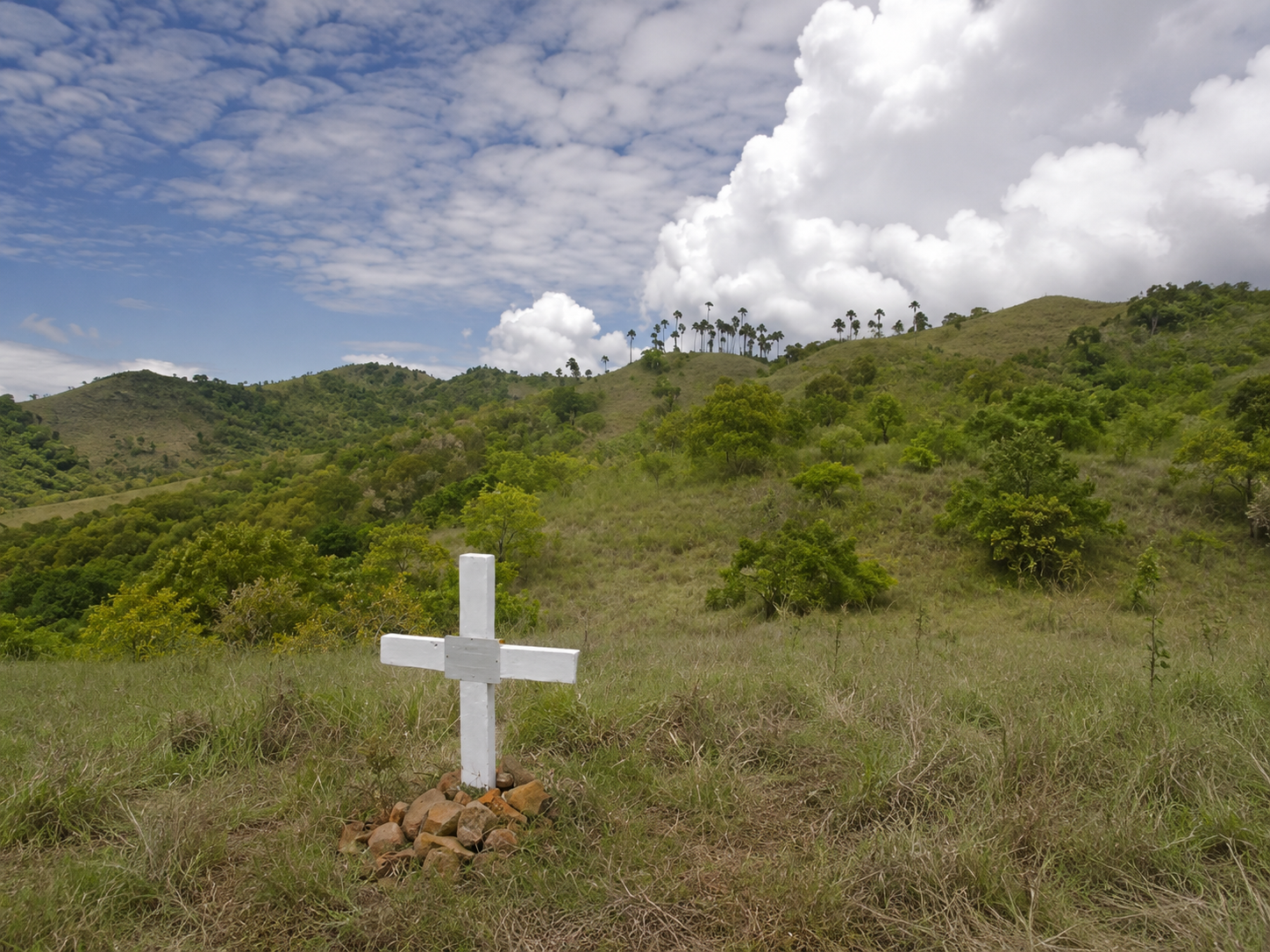
The bones of the story are these. Von Reding was part of a small tourist party that had sailed across from Flores to see the dragons in the flesh. By one account the group had spent the morning enticing the animals with a goat carcass, the better to watch them feed, before the baron peeled away to make his own way back to the boat. By another, he stumbled and hurt his knee on the trail, and his guide left him where he sat to go and fetch help. The two versions agree on what mattered. When the party returned, the baron was gone. More than a hundred people combed the island over the following day. Miles from the path, high in the hills, they found his glasses and his smashed camera. Nothing else — no baron, no body, not a scrap. He is remembered as the first European ever devoured by a Komodo dragon.

It’s that word European that ought to catch in the throat.

The counted and the uncounted

Von Reding was not the first person taken by a dragon on Komodo. He could not possibly have been. People have lived alongside these animals for as long as there have been people on these islands, and the accommodations they make tell you everything. Villagers on Komodo and Rinca do not wander into the grasslands alone. For generations they threw the old, toothless dragons the heads and hides of butchered deer — a kind of tribute, a peace kept by feeding the very thing that might otherwise feed on them. You do not build those habits around an animal you consider harmless. You build them around one that has, within living memory and long before it, killed people you knew.

None of those people got a cross on a ridge. None of them got a line in the Washington Post. They died, if they died, uncounted and unrecorded, and the tally that Western readers know — the handful of tourist-era deaths and maulings logged since 1974 — begins precisely at the moment a titled European joined the list. Von Reding is famous not because his death was the worst or the first, but because his was the death that got written down. The dragons had been man-eaters all along. We simply hadn’t been paying attention to the funerals that came before, and most of the ones that came after.

We thought we could pet them

To understand how a whole hemisphere managed to overlook this, you have to go back to a photograph.

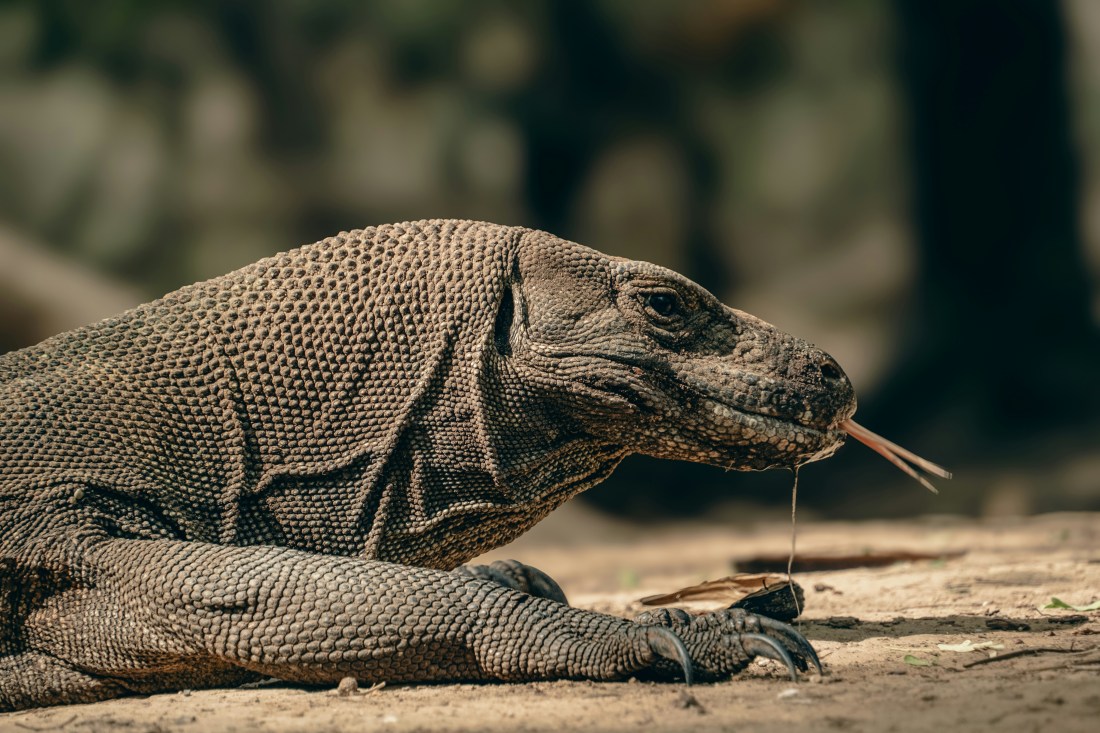
In 1927 the first two live Komodo dragons in Europe arrived at London Zoo, into a purpose-built Reptile House designed by Joan Beauchamp Procter — the zoo’s first female Curator of Reptiles, a woman of formidable talent and fragile health who would be dead within four years, at thirty-four. Procter took one of the dragons, Sumbawa, entirely to heart. She walked it around the grounds like a dog, occasionally steering the two-metre lizard by its tail, and in 1928 she scandalised a Scientific Meeting by bringing it along to eat chicken and eggs from her hand while she stroked its head, all to prove the beast was no monster. There is a photograph, published in one of her own papers, of Sumbawa beside a small child who is patting it on the head as one might a Labrador.
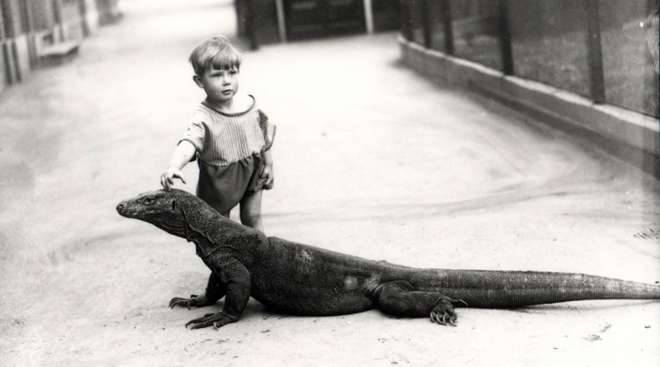
This was the settled Western picture of the Komodo dragon for the better part of the twentieth century: a torpid, obliging curiosity, slow and rather lazy, safely behind glass or, if you were Joan Procter, on the end of a lead. It was a picture built almost entirely from captives — sick, sluggish, half the size they reach in the wild — and from the theatrical mythmaking that had named them in the first place. The very phrase “Komodo dragon” was a piece of showmanship coined by an American expedition in the twenties whose specimens helped inspire King Kong. We invented a dragon for the cinema and then, having got a good look at the real thing dozing in a zoo, decided it wasn’t so fearsome after all. Both pictures were wrong. Neither had much to do with the animal that hunted the hills of Komodo.

Everything we didn’t know we didn’t know

Here is the genuinely humbling part. The most basic facts about how this animal makes more of itself, and how it kills, are more recent than most of the people reading this.
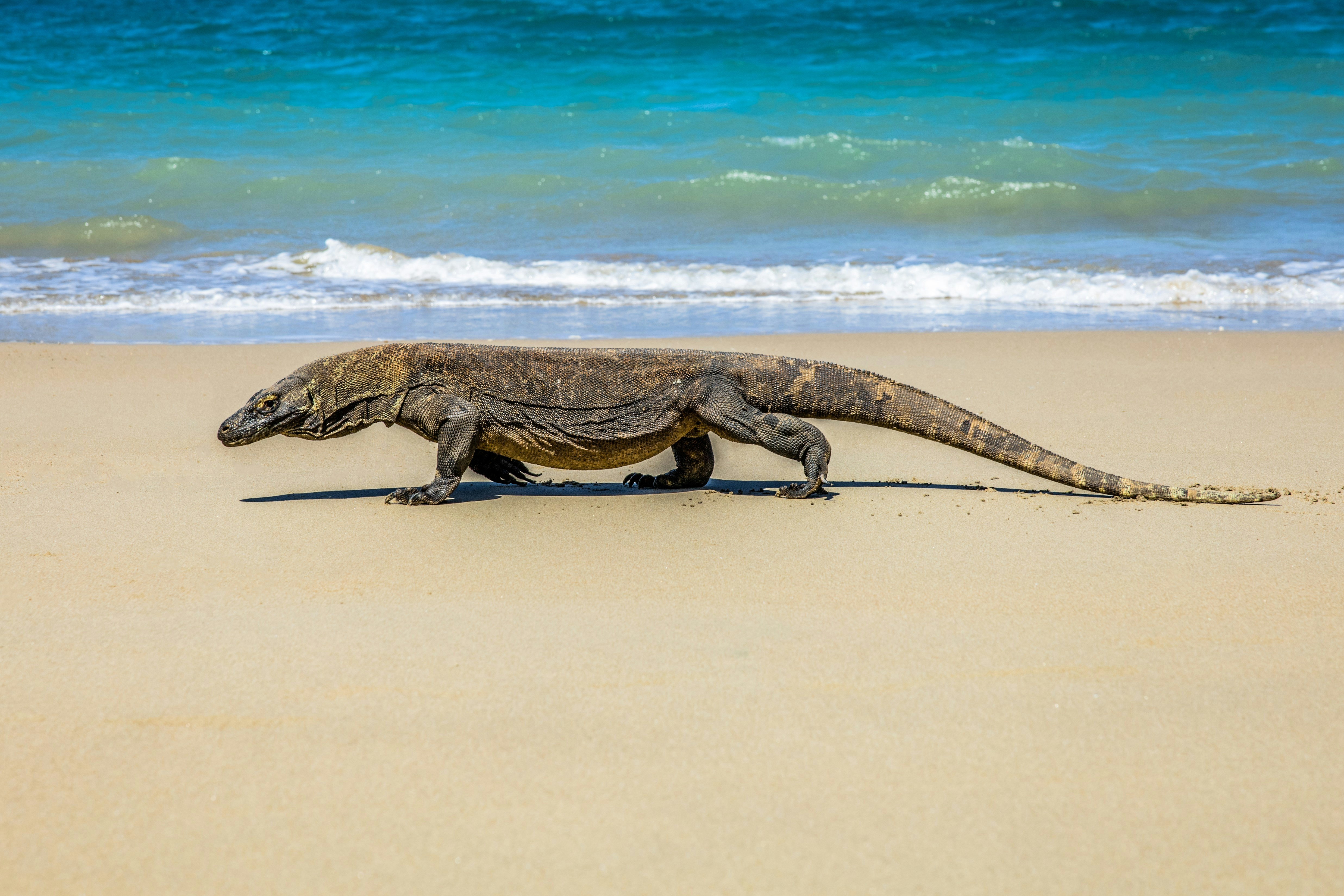
Take reproduction. In 2006 keepers at Chester Zoo watched a female called Flora — who had never so much as met a male — lay a clutch of fertile eggs. The same year, a London dragon named Sungai did the same, and the two cases were written up together in Nature. Female Komodo dragons, it turns out, can reproduce alone, through parthenogenesis, and the offspring they produce this way are all male, which means a single female washed up on an empty island could in principle lay eggs, raise mates from her own hatchlings, and found a whole population from scratch. Chester’s Kevin Buley reached, almost word for word, for the line Ian Malcolm delivers in Jurassic Park: it is, he said, nature finding a way. A film about resurrected reptiles breeding when they were never supposed to had beaten reality to the punch by thirteen years.

Then there’s the bite. For decades the received wisdom held that a Komodo dragon’s mouth was simply so thick with septic bacteria that a single bite doomed its victim to die of blood poisoning days later, the dragon ambling along behind to collect the body. It’s a wonderfully grim story, and it’s largely wrong. In 2009 a team led by Bryan Fry identified genuine venom glands in the lower jaw — the toxins drop blood pressure and prevent clotting, so the prey bleeds and slides toward shock. Later work went further and questioned whether the mouth was even especially dirty to begin with. So the science of how this animal actually reproduces, and how it actually kills, is younger than a blockbuster from 1993. We were letting toddlers pat them on the head decades before we had the first clue what we were looking at.

And we did not even know, until relatively recently, that they can swim — strongly, between islands, diving several metres down.

Back to the ridge

Which brings us back to the baron, and to the theory, still politely offered, that no dragon was involved at all. He was old, the argument runs, and unwell; perhaps he simply died out there, or met with more ordinary human misfortune, and the reptiles are merely convenient.
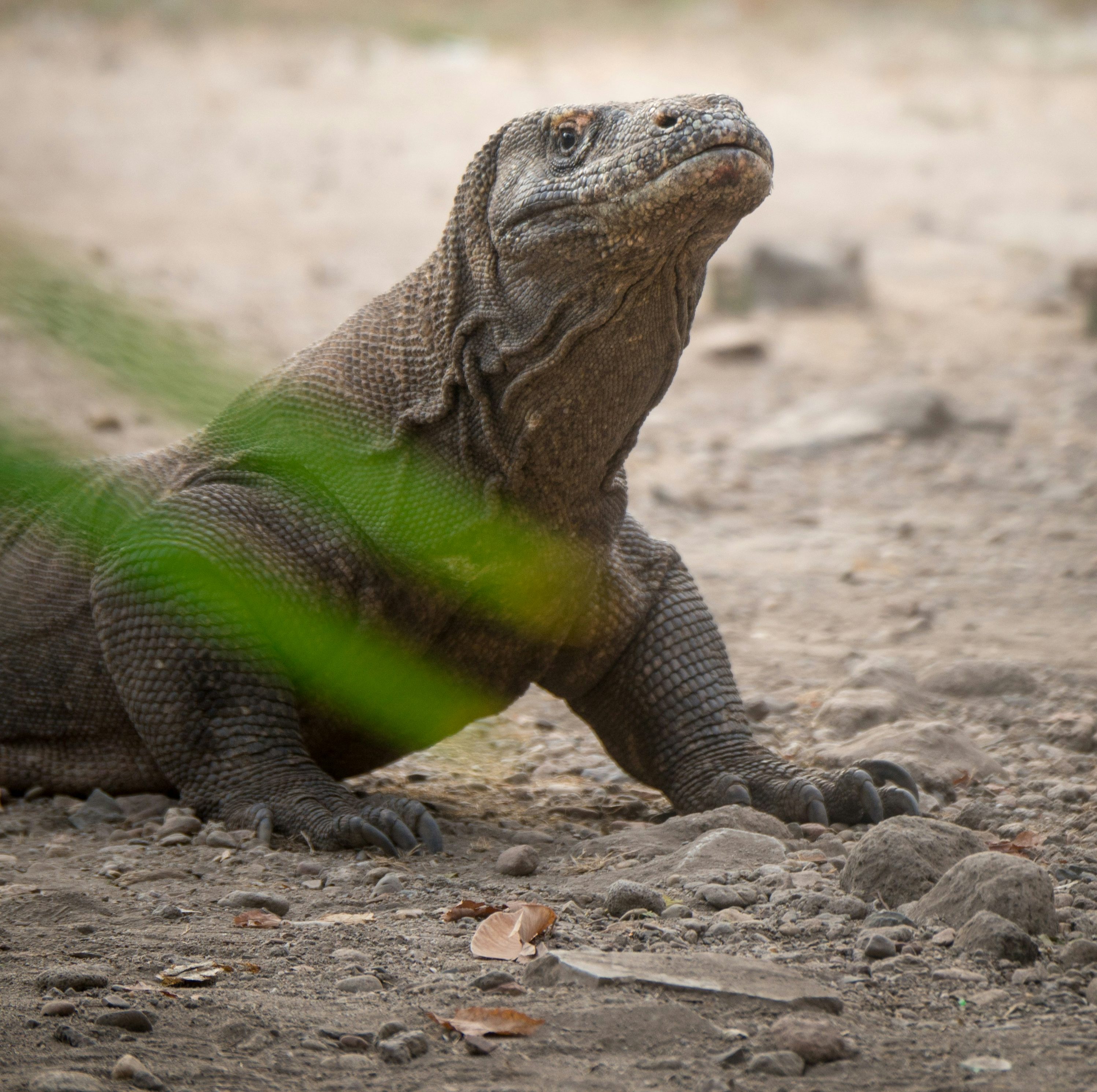
I don’t buy it, and I don’t think the evidence asks us to. That theory is a fossil of 1974 — a relic of exactly the misjudgement this whole story is about. It comes from a decade that thought these animals were slow, lazy zoo-pieces; that had never heard of their venom; that did not know a startled clutch of tree-dwelling juveniles, bolting for the branches to avoid being eaten by their own elders, might send a nervous old man stumbling off the path and straight into the territory of the larger, patient, opportunistic adults; that did not even credit the beasts with the ability to swim. Set the dismissal against what we now know, and it is the dismissal, not the dragon, that looks like the wild assumption.

An elderly man, injured or frightened, alone and immobile in the hills — that is not a puzzle to a Komodo dragon. That is an invitation. His glasses and his broken camera, and nothing else at all, is not the scene of a quiet natural death. It is the signature of an animal that eats bone, hide and hoof and leaves almost nothing behind. We will never be certain, because there was nothing left to be certain with. But on the balance of everything we have learned in the fifty years since — most of which the men who shrugged at his disappearance did not know — the baron who loved Nature throughout his life was very likely taken by it.

The cross on the ridge gets that much right. It just doesn’t say by what.
Man-eater Monday: Avni the Tigress

Every man-eater this blog has covered so far has arrived with an explanation. The Champawat tigress had her canines shattered and could no longer take her natural prey. The lions of Njombe, the Leopard of Panar, Gustave brooding in his stretch of river — each was a creature bent by circumstance into something that fed on us, and the horror always came braided with a thread of pity. You could follow the line from cause to consequence and, if not forgive the animal, at least understand it.

Avni breaks the pattern. Not because she was more monstrous than the rest — if anything the reverse — but because by the time her story ends, the tiger is only part of the story.

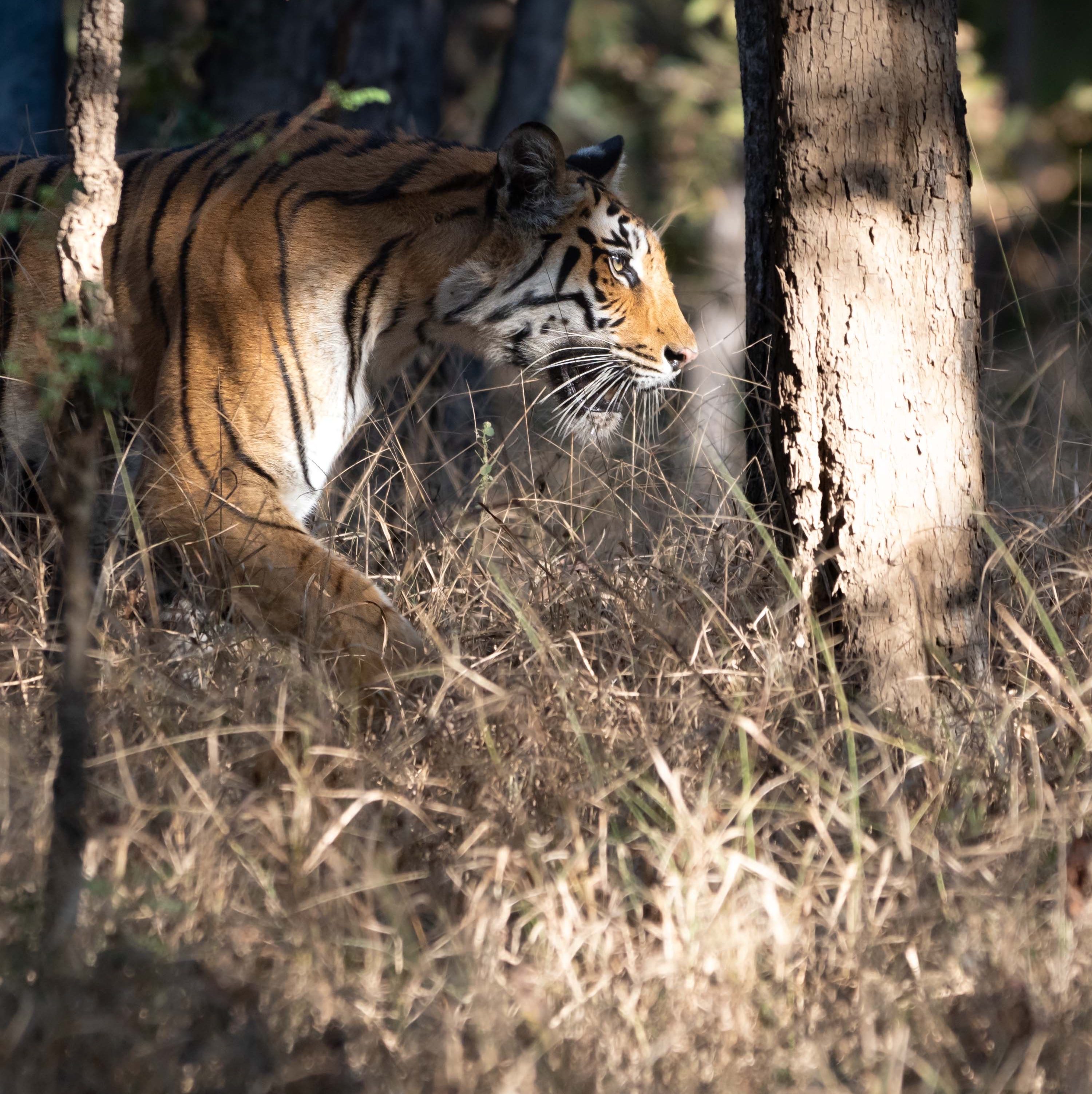
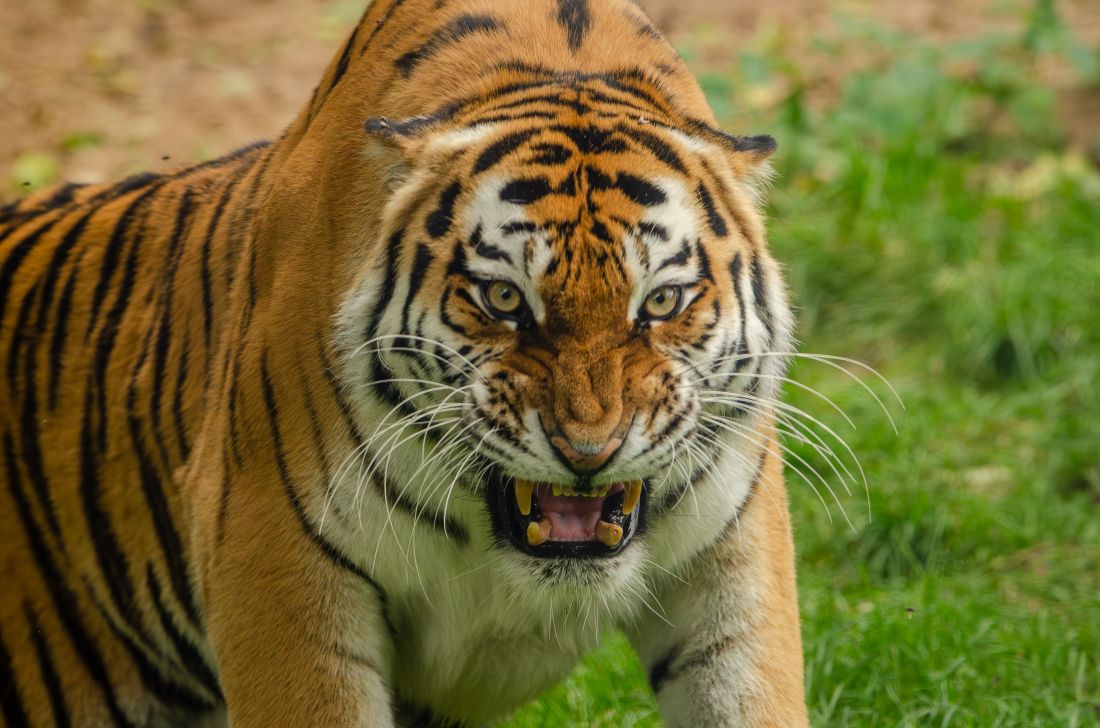
She was officially labelled T-1, a six-year-old tigress in the Pandharkawada forests of Maharashtra’s Yavatmal district, and she was given the name Avni, meaning “Earth”, by the conservationists who would later fight to keep her breathing. She had two cubs, roughly ten months old, still dependent on her. From 2016 and across two years, she was linked to thirteen human deaths, a figure that hardened into received fact and was repeated in every headline. It should be stated that the forensic case was thinner than the number suggests: thermal-camera evidence and tests on the recovered bodies put the toll closer to six. Either way, the fear was real and the cost was real. Some twenty villages lived under advisories to come in early and never walk alone as fields went untended, and daily life buckled. People had died horribly. None of what follows is meant to pretend otherwise.

What happened was a mangled and corrupted series of events. And it is these, not the predator, that should keep you up at night.

The legal machinery did its work first. In September 2018 the Nagpur bench of the Bombay High Court sanctioned an order to tranquillise or, failing that, shoot her; days later the Supreme Court declined to interfere. But the permission came fenced with conditions. Killing was to be a last resort, attempted only if capture failed. The cubs were to be darted and moved to a rescue centre. On paper, this was a state behaving responsibly toward a protected national animal it had decided, reluctantly, it might have to destroy.

But there’s significant detail the official narrative preferred to walk past. Avni was young, and she was healthy. The textbook man-eating tiger is usually a broken animal — old, injured, or starved of its proper prey, like the Champawat tigress and her ruined teeth. Avni had no such alibi, and that is precisely the point. A fit young tigress turning to human prey is not a freak of nature; she is a symptom of something we built. Shrinking forest, advancing settlement, prey squeezed out, predator and people pressed into the same narrowing ground. She was not the disease. She was the fever telling you the disease was beginning to show physical symtoms.

Enter the hunter. The forest department engaged Nawab Shafath Ali Khan, a Hyderabad-based marksman with a long and contested record — a man the Union minister Maneka Gandhi would publicly brand a criminal. The gun, when it finally went off, was not even fired by him. It was fired by his son, Asghar Ali Khan, who had no authorisation to kill anything.

Before that, though, came the circus, and I use the word advisedly. To draw Avni in, the team deployed a live goat, the urine of another tigress, and — this is not a joke — bottles of Calvin Klein’s Obsession for Men, on the strength of a Bronx Zoo experiment suggesting its civetone pheromone attracted big cats. There were Italian Cane Corso sniffer dogs sourced from a champion golfer. There were drones, too noisy to be useful, and paragliders, defeated by the terrain. And there was the elephant, brought in from Tadoba to track her, which one night tore free of its chains and trampled two villagers to death. In tragic irony, a hunt mounted to stop a killer had begun manufacturing its own corpses.

Then, on the night of 2 November 2018, they found her. The department’s account was clean and self-justifying: a dart was fired, the tigress charged the open vehicle, and Asghar shot her in self-defence from eight to ten metres. It is a tidy story. The postmortem tore it apart, line by line.

Avni was facing away from the shooter. A charging animal does not present its back. The fatal round was a textbook lung-and-shoulder shot, the kind a trained hunter delivers with intent, and there were no signs of a struggle on the body — no thrashing, no scramble, nothing to suggest a frightened animal fighting for its life. As for the tranquilliser dart that was supposed to have come first: it appeared to have been pushed into her flank after she was already dead, with no haematoma around the wound, no bruising, none of the bleeding a living body produces when struck. It had been staged. Someone knelt beside a dead tigress and inserted a dart into cold muscle to make a killing look like a mercy that failed.

The rest only deepens it. The rifle was widely alleged to be a .458 Winchester Magnum, heavier than the calibre floor the National Tiger Conservation Authority required, and it was never surrendered for verification. No veterinarian was present, in breach of protocol. The shooting happened at night, also in breach. The team took over an hour to reach the body, from a base camp fifteen kilometres away. A later authority inquiry noted the dart had been prepared days earlier and would have been all but useless — the kind of detail that again suggests the darting was theatre from the start.

So, the question that organises this whole squalid affair is not whether Avni was a man-eater. It is whether anyone holding authority over her ever intended to find out. A Supreme Court ruling, a national protocol, a last-resort clause, an order signed and countersigned — the entire apparatus of a modern conservation state appears to have arranged itself neatly around a foregone bullet, and then dressed the result to pass inspection. We also can’t rule out that some very frightened villagers urged or possibly paid Khan to kill Avni regardless. Or, that he perhaps acted in what he thought was their best interests, regardless of the authorities.

Maneka Gandhi called it a ghastly murder, a straight case of crime. The forest minister called it self-defence and a last resort. Out in the villages, where the dead had been real, some people set off firecrackers. All of that is true at once, and a story this graceless does not resolve into a side. But again, corruption, conflict, and conservation often go hand in hand in the field, and especially across modern India and Africa.

And then there are the cubs. The press release announcing Avni’s death did not mention them. In the hours afterward they were simply gone — orphaned, somewhere out in the forest she had hunted, the same forest the order had promised would deliver them safely to a rescue centre. Whether that promise was honoured any more faithfully than the one about taking their mother alive is a question the dart in her flank had probably already answered.

Man-eater Monday: Gustave the Crocodile

Last week, I happened to be in Oxford on a rainy day, and so, found myself at the UK’s only crocodile zoo – Crocodiles of the World, near Brize Norton. And one of the showpiece spectacles is their feeding of the 26 Nile crocodiles they have in the collection.

It was quite something to behold. But despite the many snapping jaws, and many being over two metres or more in length, they were still diminutive compared to a certain legendary Nile.

One named Gustave.

The Animal

Gustave is — or was — a Nile crocodile of extraordinary size. Estimates put him at somewhere between five and a half and six metres in length, making him one of the largest crocodiles ever reliably documented. His weight has been guessed at over nine hundred kilograms. These figures carry the usual caveats: he was never captured and therefore never officially measured. But even accounting for a little over estimation, Gustave appears to have been a genuinely massive animal, an outlier among outliers, operating in the Ruzizi River delta and along the northern shores of Lake Tanganyika near Bujumbura.

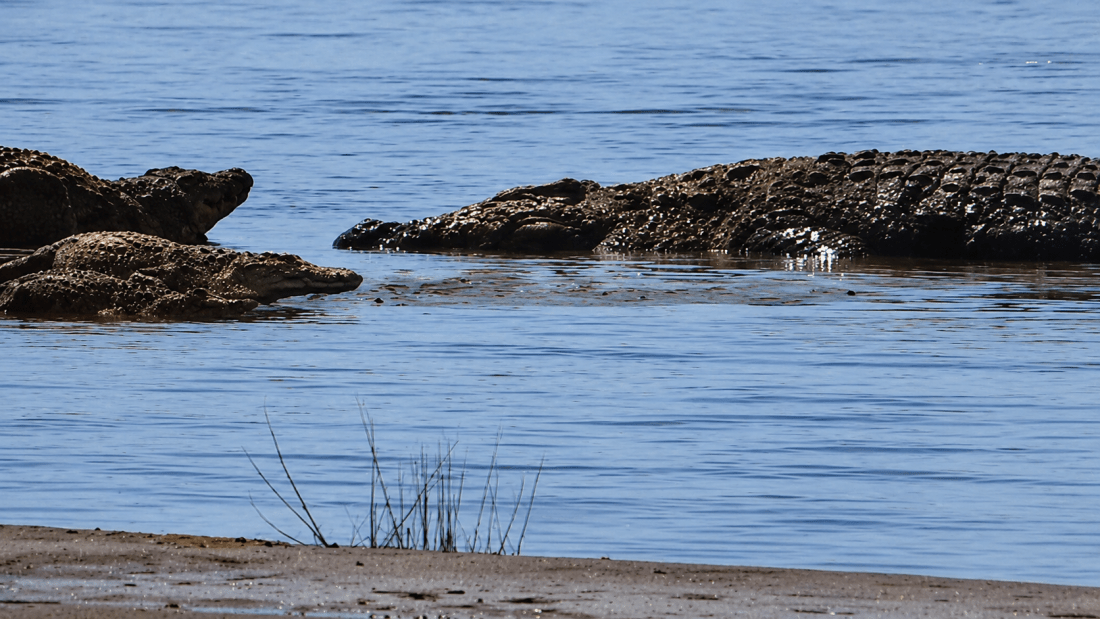
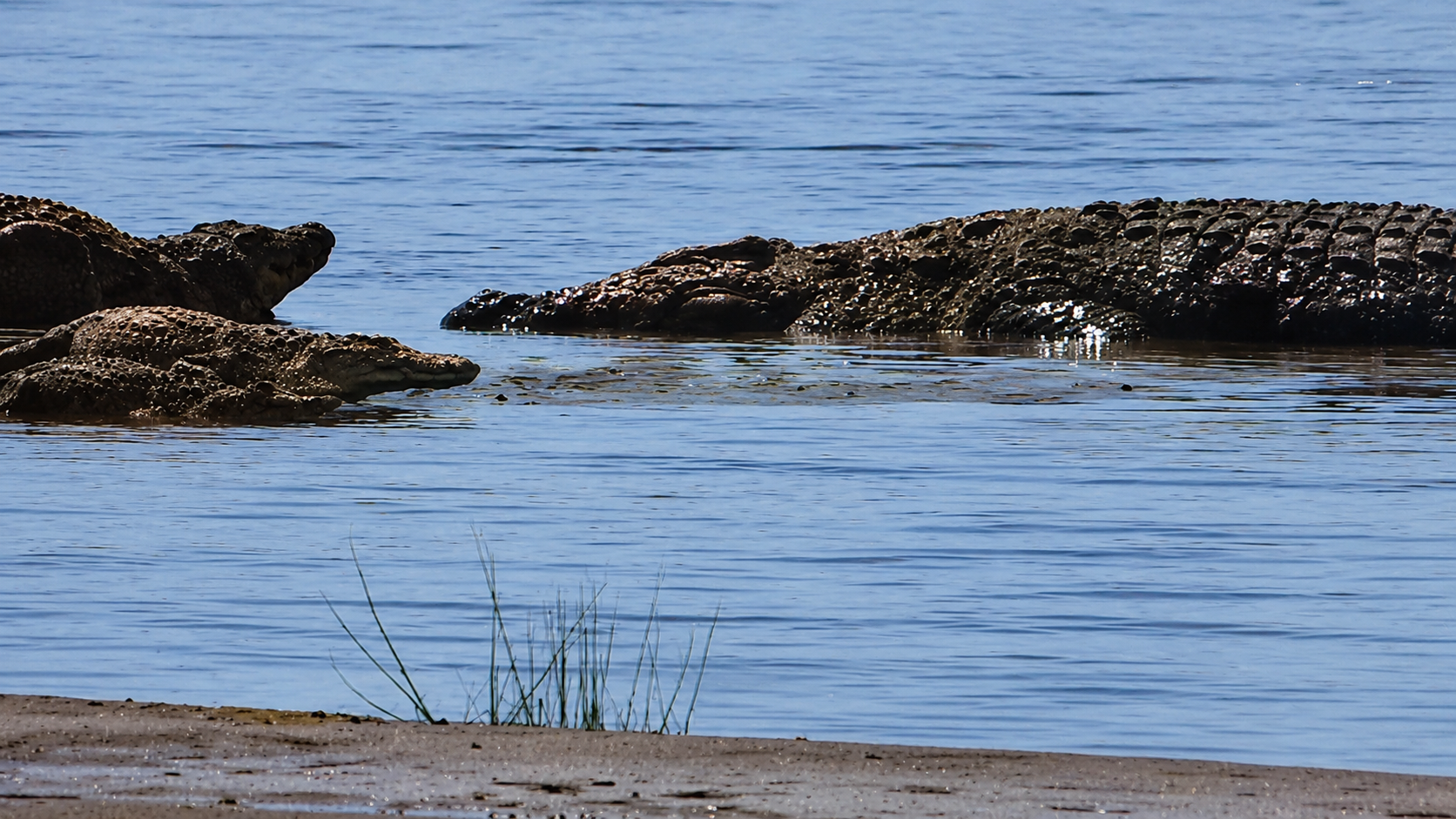
Gustave next to some smaller, more typical-sized Nile crocodiles.

It wasn’t just Gustave’s size that made him easy to identify at a distance. He had a grouping of scars along his right rear flank put there by machine gun fire and another visible patch of pink scarring on his right shoulder from either a spear or homemade harpoon. These and other marks were accumulated through decades of encounters he walked, swam, or slithered away from.

He also had two large bony projections on top of his head that seemed to have fused at the rear, something noticed and commented on in the 2004 documentary Capturing the Killer Croc.

And he was old. Dr Alison Leslie, who observed Gustave in the early 2000s first thought he was maybe 100 years old due to his size. But his excellent and full set of dentition meant he was more likely around the age of 60, and still growing. Niles have a typical optimal lifespan of around 70 years in the wild.

Either way, his size and age, if reliably estimated, combined to produce an animal that operated by slightly different rules. For instance, in 2003, a park ranger observed Gustave stalk, kill, and devour an adult hippopotamus – something unheard of.

Another of those differences was something that researchers and locals often observed about his kills. Crocodiles, like all predators, typically don’t kill more than they can eat, or close to it. Yet Gustave appeared to kill well beyond that threshold with reports of multiple victims in a single event, before disappearing for periods. One theory holds that his sheer size made conventional feeding mechanics difficult: he was perhaps too large to roll prey underwater efficiently. 

Another possibility, darker and less comfortable, is that the behaviour was simply something akin to personality – Gustave killed because he could. As the dominant animal in whatever patch of river he claimed, his age and size combined with highly territorial instincts would make his mere presence a threat. Whatever the mechanism, the pattern meant that the kill estimates grew, and kept growing, and eventually became uncountable.

The number of alleged human fatalities, between 60 and 300, tells you everything about the problem of documenting Gustave’s victims. Attacks along the Ruzizi and the Tanganyika shore were rarely reported to any central authority. Many victims were fishermen, or people collecting water, in communities with limited access to formal record-keeping. The lower figure probably reflects confirmed attributions; the upper figure is folk accounting and accumulation, the number that feels true even if it can’t be proven. The real figure is somewhere in there, which is its own kind of horror.

My own observation is that Gustave was clearly capable of taking large prey, having been documented attacking the hippopotamus mentioned earlier, other crocodiles, and a mature cow – which was caught on camera. Many of his human victims were found drowned and not devoured (but not all by any means). I think its likely that these kills were either territorial or perhaps those discovered before Gustave could return to them: although the idea of crocodiles storing meat underwater to tenderise the meat is something of a myth (they prefer fresh meat almost always), they have been observed caching larger prey and leftovers in places where the carcass won’t be swept away by strong currents. However, the kills may have also been instinctual: the riverbanks that Gustave called home were often popular with fishermen and their presence may have been too tempting. But perhaps afterwards, Gustave decided they didn’t meet his calorific requirements.

The Ruzizi River delta.

The Man

Patrice Faye arrived in Burundi as a French expatriate and became a long-term resident, which given his interest in herpetology, isn’t surprising. Burundi is an exceptional destination for herpetologists because it sits at a unique biogeographical crossroads. Bridging the Congo River Basin, the Great Rift Valley, and the East African savanna, its isolated, high-elevation montane forests, pristine rivers, and protected nature reserves are a goldmine for discovering endemic and rediscovered reptiles and amphibians. And due to decades of political turmoil, much of the country remains under-surveyed compared to neighbouring East African nations. This offers huge potential for modern field researchers and taxonomists to uncover rare or presumed-extinct taxa.

However, by the 1990s, Patrice had become the foremost chronicler of one reptile in particular – Gustave — not as a scientist exactly, but something between a naturalist, a documentarian, and an obsessive. He photographed the crocodile. He collected accounts of attacks. And eventually he decided to catch Gustave alive.

Faye constructed a large trap. It was a massive, 10-metre steel device designed to hold a crocodile of Gustave’s dimensions. Deployed in the animal’s territory, the plan was to lure him in, secure him, and then keep him in an especially built enclosure, some 60 by 90 feet for study and I’m sure as a potential attraction.

We’ll never know, as after the trap was deployed. Gustave ignored it. He showed some curiosity once live bait was introduced, but never ventured into it.

The 2004 National Geographic/PBS documentary Capturing the Killer Croc followed Faye’s expedition, and what it captured — unintentionally — was the peculiar comedy and pathos of human expertise confronting an animal that didn’t know it was supposed to be catchable. The crew waited. Gustave circled. On several occasions he came close enough to raise heart rates, then turned away. By the end of the documentary he had not been caught and ultimately. never has been.

There is something almost classical in the shape of this. The monster that keeps proving itself uncatchable is a very old story. What’s unusual here is that it’s a true one, documented on film, with a specific man standing at the centre of it — wading into a Burundian river, looking for something he couldn’t quite reach.

The Legend

Here is the moment Gustave crossed from animal into myth: sometime in the mid-2000s, while confirmed attacks were still being reported, communities around the lake began to speak about him less as a crocodile and more as a presence. A territorial entity. Something that had claimed the water and established terms. Fishermen avoided certain areas not merely out of caution but out of something closer to acknowledgement that they were operating in Gustave’s space, and that he might enforce that.

His own skin was a pockmarked testimony of his un-killable nature. And his intelligence was almost supernatural. Faye and other scientists often felt outwitted and out manoeuvred by Gustave – that he was always somehow one step ahead. Even the trap intended for his capture was somehow dislodged. Some say it was by heavy rains. But others say Gustave walked around the cage, took the goat, and dislodged it that way.

This is how living legends get made. Not through any single dramatic act, but through the accumulation of attacks that defy logic, combined with evasions and failed attempts at capture, until the animal stops being an animal and becomes an idea. Gustave’s unusual size also certainly added to his legendary status.

But here is something Burundi’s killer croc has probably never been told: he is very probably now dead.

The rumours have circulated since around 2019 — that Gustave, the most feared predator in Burundi, the Nile crocodile estimated to have killed somewhere between sixty and three hundred people, died quietly somewhere in the reed beds along Lake Tanganyika. No body. No confirmed sighting in years. Just the slow absence of a presence.

The probable death, if the 2019 rumours are true, is interesting precisely because of how little it has settled. There was no body. No confirmed final sighting. No Faye standing over something conclusive. The absence of evidence is indistinguishable, at this distance, from a six-metre crocodile lying low in deep water. And so Gustave continues to circulate — in articles, in forums, in conversations. Here, now, in this one.

It should be noted that Faye was arrested and imprisoned in Burundi in 2011, on five charges of rape, serving a 25-year sentence. Although the case must be taken seriously for obvious reasons, it is marred by possible corruption and questionable proceedings. However, the point is that since 2011, Gustave’s main documenter has been out of the game. So maybe, just maybe, Gustave still stalks the riverbanks of the Ruzizi River delta and the northern shores of Lake Tanganyika

The Honest Admission

There is something worth acknowledging about the fact that the people most fascinated by Gustave — researchers, filmmakers, writers, readers of blogs like this one — are, on some level, rooting for him. Not for the attacks. Not for the deaths, which were real and brutal and happened mostly to people living modest lives beside a beautiful lake. But for the persistence of the animal itself.

It is difficult to explain this without sounding callous, so let’s try to be precise: what people are rooting for is the idea that something this large, this old, this impervious, is still out there. That the world is still a place where a creature can operate entirely on its own terms, evading every trap, outlasting every pursuit, accumulating a toll that becomes legend — and then disappearing, silently, on its own schedule.

We built our categories — man-eater, monster, legend — and Gustave filled them all without ever being asked.

And ultimately, we must consider the part humans played in creating the circumstances that enabled or even drove Gustave towards becoming a man-eater. In the 1950s, when Gustave was less than two metres long and barely ten years old, Burundi’s deltas were home to buffalo, elephant, warthog, and wild herds of numerous antelope. But each was made geographically extinct in a few short years. The only wild large mammal to survive was the hippo.

It’s not hard to imagine as livestock were introduced and brought to the water’s edge that Gustave became acclimated to the presence of humans. And then, one day, after growing used to taking the cows, he missed or opportunistically targeted their human companion. And a legend was born – perhaps one that will never truly die.