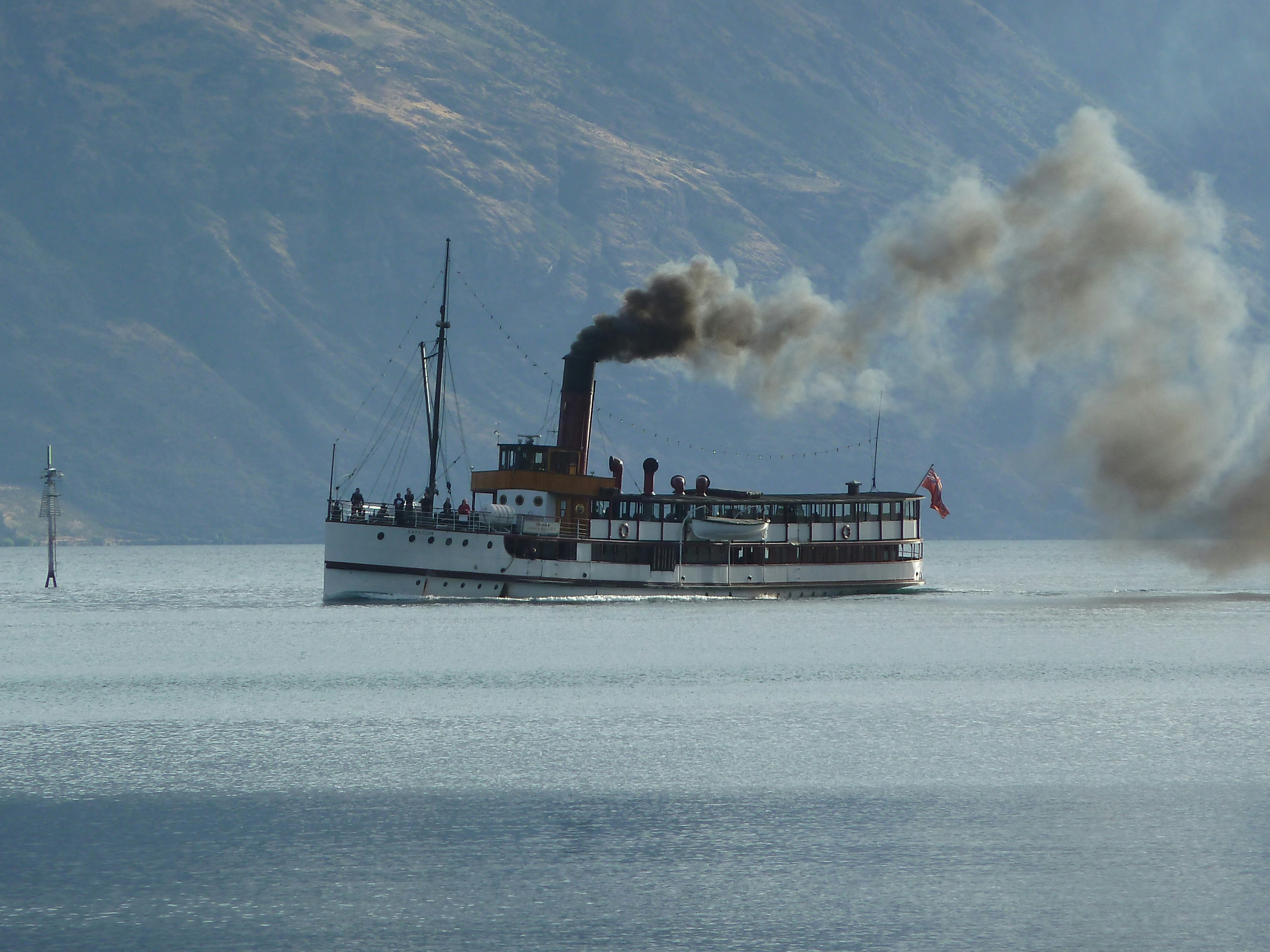
In 1889, the year Montana became a state, a steamboat called the U.S. Grant was working its way down Flathead Lake with something over a hundred passengers aboard. Her captain, James C. Kerr, saw a log in the water ahead.
Then the log started moving.
What Kerr and his passengers reported was an object of perhaps twenty feet, whale-like, coming towards the boat. One passenger — and here the nineteenth century announces itself — produced a rifle and fired at it. The thing went down. Everybody got home. And the Flathead Lake Monster, in the form we still argue about, was born on that afternoon.
It has been argued about ever since. More than a hundred sightings have been logged in the years since Kerr, most of them between April and September, which is either evidence of a creature’s seasonal habits or evidence of when people are on the water with a drink in their hand. Locals call it Flessie, in tribute to a more famous Scottish resident. Two explanations dominate: a sturgeon, or a giant eel.
Both of those explanations are worth taking seriously. Neither of them, it turns out, came from the lake.
The lake’s case for itself
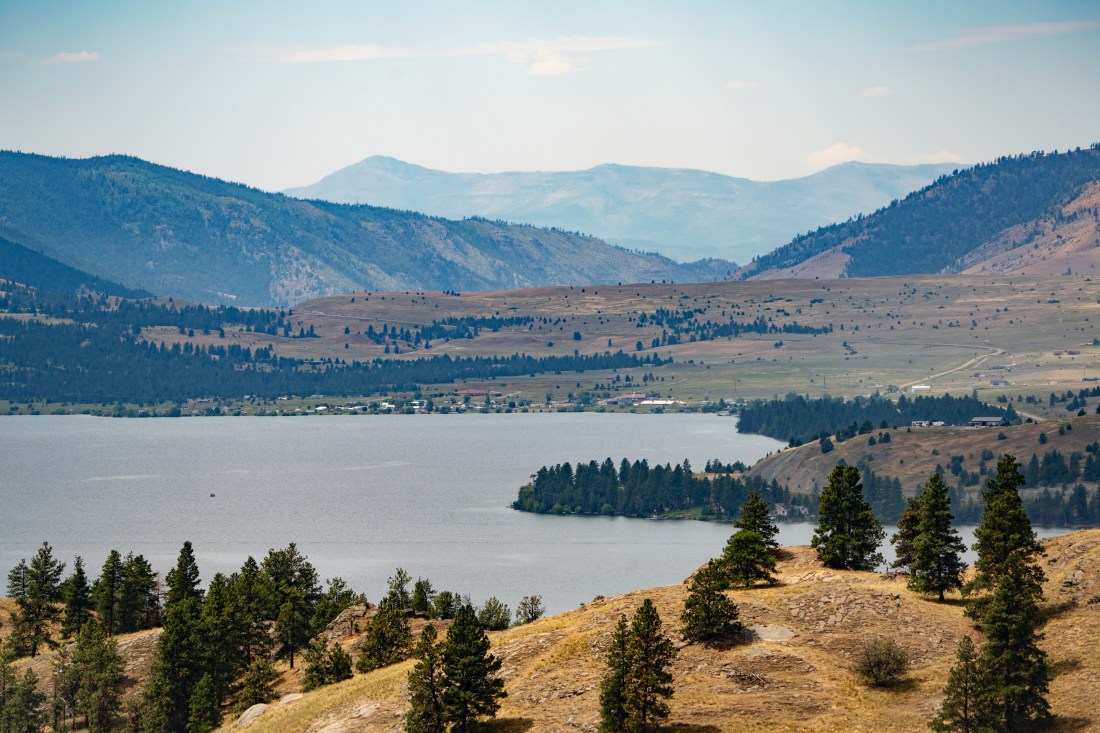
Flathead is not a pond. It covers close to two hundred square miles, runs to a maximum depth of 370 feet, and is the largest natural freshwater lake west of the Mississippi. Tom Bansak of the Flathead Lake Biological Station describes it as a geological remnant of Glacial Lake Missoula, that vast ice-dammed body whose repeated collapses scoured the Pacific Northwest.
So the concealment argument has legs. There is genuinely a great deal of cold, dark water here, and a fish with any sense would spend most of its life at the bottom of it.
The sturgeon, taken seriously
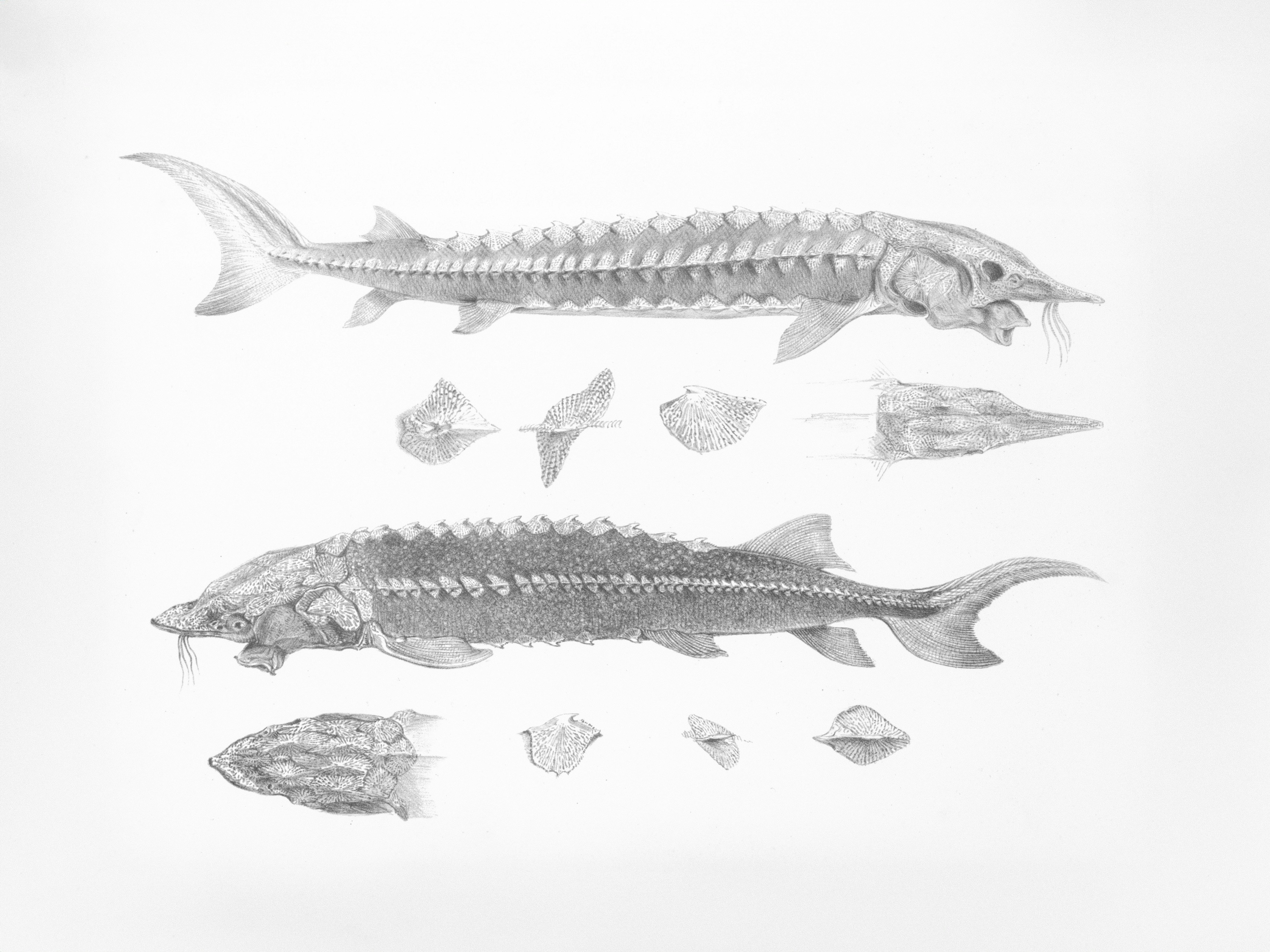
The white sturgeon is the largest freshwater fish in North America, can live the better part of a century, and looks — with its ridged back and long tapering snout — convincingly prehistoric. It is not a mad suggestion. Flathead drains into the Clark Fork, the Clark Fork into the Pend Oreille, and onwards into the Columbia system, so we are at least in the right plumbing.
Bansak is admirably straight about it: he thinks it highly likely that sturgeon lived in Flathead Lake or its predecessors, and says the real question is whether they persist and whether anyone can prove it. That is the honest scientific position, which I have little ability or interest in discrediting.
The difficulty is everything after that. The nearest white sturgeon are in a different drainage — the Kootenai River below Kootenai Falls, and Kootenay Lake up in British Columbia — and biologists cite waterfalls, and later dams, are precisely what fixed those limits. Flathead has been netted, electro-shocked, and visited by small submarines. Nothing out of the ordinary or monstrous has been officially recorded. Brian Marotz, then of Montana Fish, Wildlife and Parks, made the point that with a popular deep-water lake trout fishery operating year after year, somebody should long ago have pulled up at least a small or juvenile monster by accident.
And there is an arithmetic problem nobody likes to dwell on. The creature of the sighting record is thirty to forty feet long, undulates like a snake, and has black eyes. Even the most magnificent of sturgeons does not match that description.
The sturgeon, and where it actually came from
Here is the part that reframes the whole business.
In the 1950s, a group of Polson residents formed an organisation called Big Fish Unlimited. Its stated purpose was not zoological. It existed to generate publicity of the economically beneficial kind for the town at the south end of the lake. To that end it offered money: five hundred dollars for a sturgeon over nine feet, a thousand for one over fourteen.
Enter C. Leslie Griffith, aged sixty-three, described as a freelance fisherman, and who had reportedly taken a 300-pound white sturgeon out of Idaho’s Snake River. He moved to the lakeshore near Dayton and fished for the best part of three months. On a Friday evening in late May 1955, off Cromwell Island, something took his line and — by his account — towed his sixteen-foot cedar boat around the lake for five hours before he gaffed it.
The fish was seven feet six inches long and weighed 181 pounds. Within hours it was on ice in the Salish Hotel building and views could be had at twenty-five cents a look, ten cents for children, with a competition to guess its weight thrown in. Promotional posters billed it as “our baby monster”. Some seven thousand people came. The Great Falls Tribune put it on the front page under a headline about a fisherman hooking the Flathead Lake Monster, while noting, drily, that nobody had ever caught a sturgeon in that lake before or produced good evidence there were any. The Tribune also observed that the fish subsequently swelled to 350 pounds in newsprint.
When people began asking the obvious question — had it actually come out of the lake — the promoters responded with a masterpiece of logic. They offered a thousand dollars to anyone who could prove it hadn’t. Griffith and the group’s leading light both signed notarised statements swearing it had. Two university zoologists opened the fish up and found the situation no clearer, though one of them noted a fish backbone inside it that didn’t appear to belong to anything known to live in Flathead.
Then, as these things do, it went to law. Griffith sued over ownership and money. It took until late 1959 for the Montana Supreme Court to settle it, and the court offered no opinion whatsoever on where the fish had come from.
And the fish is not in the state records. Not then, not now.
That absence deserves emphasis, because it cannot be explained away as paperwork nobody filed. The official Montana record for white sturgeon is a 96-pound fish caught in the Kootenai River in 1968. Griffith’s was 181 pounds. Had it been accepted, it would have taken the state record by nearly double and held it comfortably for the next sixty years. Fish of that size do not slip quietly past the record-keepers.
To be scrupulous: record books have eligibility rules about method of capture, witnesses and certified scales, and a man who gaffs a fish alone after a five-hour fight may simply fall outside them. Absence from the books is not proof of fraud. But it is not an oversight either, and the state of Montana has now spent seventy years declining to write down the most famous fish ever taken from its most famous lake.
The sturgeon theory, in other words, does not rest on a fish. It rests on a bounty.
The eel, and the map
The eel is the other favourite, and it dies faster.
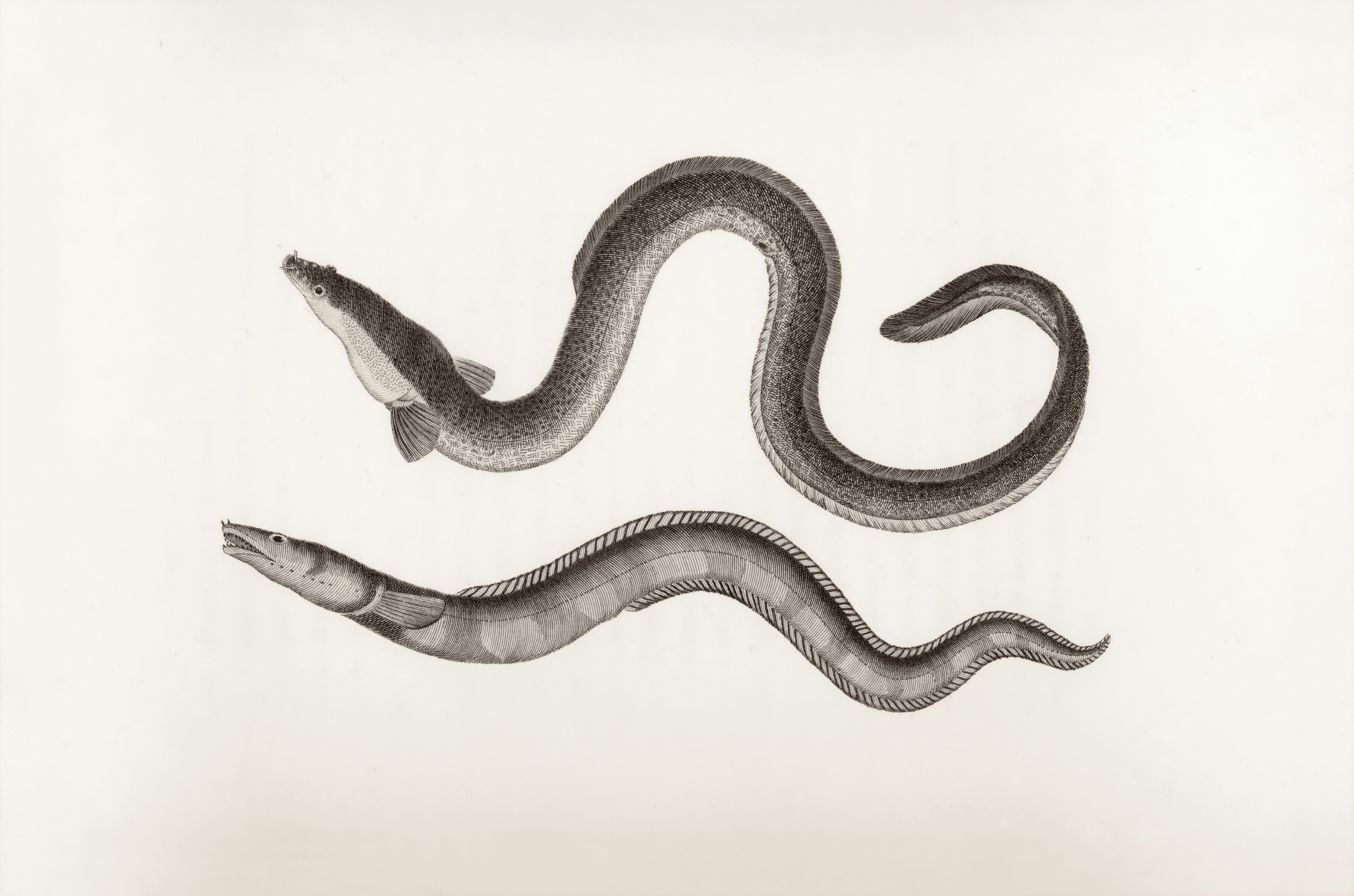
There are no freshwater eels in any Pacific drainage of North America. None. The American eel is an Atlantic animal that spawns in the Sargasso Sea, and there is no route from there to a lake in western Montana that does not involve a lorry, or truck in American parlance. The nearest eel-shaped candidate is the burbot — a freshwater cod, elongate, nocturnal, deep-dwelling — and even the burbot is native to the Kootenai drainage rather than the Flathead, turning up in the lower Clark Fork only as an introduction. Wrong system, wrong size, wrong animal.
Which tells us what “eel” is doing in these accounts. It isn’t a taxonomic proposal. It is a word people reach for when they have seen something long moving through water, because English does not offer them a better one. Well, other than monster.
The thing under the ice
Long before any of this, the Ktunaxa told a story about the lake.
In the version recorded by Ella E. Clark in Indian Legends from the Northern Rockies, the people once lived on an island in the middle of Flathead. Crossing the frozen lake one winter, two girls found antlers about two feet long standing up through the ice. Taking them for a dead animal’s, the girls set about cutting them free with sharp stones. The antlers began to shake. The ice split open, and a head came up through it. The girls escaped by transforming themselves, but half the people drowned — which is why, the story holds, there are so few Ktunaxa, and why afterwards they did not stray far from the shore.
Modern write-ups routinely cite this as proof that the monster has been seen for centuries. It is worth noticing how badly that fails.
The creature in the story is antlered. It is not a sturgeon and it is not an eel. And the story is not a sighting report — it explains why the world is as it is and warns against a particular kind of greed. Conscripting it as corroboration for Flessie is precisely the move Big Fish Unlimited made with the sturgeon: taking something that existed on its own terms and repurposing it as evidence for a claim it never made.
There is a further point, and it matters. Sturgeon fishing was part of Ktunaxa life in the Kootenay basin, where the fish genuinely occur. These were people who knew what a sturgeon was, caught them and ate them. When their tradition describes an antlered thing shaking apart the ice, it is not a confused account of a big fish. It is a different kind of statement about the world, and it earns the right to be read as one.
And no, it isn’t a wendigo
Some of you got to “antlered creature” and thought it. Or, at least I did. So, let’s deal with it, because the answer is more interesting than a connection would have been.
The wendigo belongs to Algonquian-speaking peoples of the Great Lakes and the subarctic — Cree, Ojibwe, Saulteaux, Innu. Flathead’s peoples are Salishan and Ktunaxa, the latter speaking an isolated language with no accepted relation to Algonquian or anything else. Different culture area, different language family, and a very great distance between them.
More to the point, the traditional wendigo has no antlers. It is a gaunt, ash-skinned figure with sunken eyes and a heart of ice, whose hunger grows with everything it eats, and its horror is that it still looks like a person. The antlered deer-skull creature is a twentieth-century invention, assembled out of horror fiction and finished off by video games and internet art.
So the wendigo acquired its antlers exactly the way Flessie acquired its sturgeon. Retrofitted from outside, by people telling the story for their own purposes, until the new version buried the old one. If like me you made that connection a moment ago, you weren’t making a mistake. You were demonstrating the thesis.
The trade in monsters
None of this was new in 1889, and Kerr’s generation had form.
In July 1855, fishermen on Silver Lake in western New York saw a floating log that turned out to move. The local paper reported it. More sightings followed. Visitors poured into the town of Perry, watchtowers went up, vigilance committees patrolled the water, and the Walker Hotel filled up well outside the season. In 1857 the hotel burned down, and in the wreckage somebody found a wire-and-canvas serpent with a set of bellows. The hotelier had built his monster on the bones of a Seneca story about a creature in the lake. Out-of-town papers had called it nonsense from the start, and had been right.
A log that turns out to move was, by 1889, very nearly a genre convention.
Nobody has found bellows in Flathead, and I am not accusing Captain Kerr of anything. But a lake steamer full of paying passengers in a brand-new state on the edge of a tourist boom is a particular kind of setting, and the local paper, the Flathead Courier at Polson, spent decades as the monster’s newspaper of record.
Its long-serving editor, Paul Fugleberg, kept an inventory of what sightings turned out to be. Wave action, shadows, odd light, logs. Bears, horses, deer, elk, and even dogs. There was also a dead monkey, an escaped buffalo, and a circus seal that had gotten loose. There is a whole social history of Montana in that list.
The part that should give us pause
It would be easy to finish there, and it would be too easy.
Fugleberg himself never dismissed the possibility outright. In 1962 the writer Dorothy M. Johnson, then secretary of the Montana Press Association, wrote to warn him against treating the reports with his tongue in his cheek: the witnesses had been frightened, and hadn’t found it funny. She added that she had heard of something in Flathead Lake forty years earlier, so the Polson Chamber of Commerce could not claim the credit.
Then there is Laney Hanzel, who worked the lake as a fisheries biologist for Montana Fish, Wildlife and Parks from 1960 until 1993 and became the closest thing the phenomenon had to a scholar. He compiled the sightings, interviewed the witnesses, mapped them all. He disliked the word monster and refused to use it. He called it a creature, and by every account he told the stories in a way that left you genuinely unsure what he thought, and free to decide for yourself.
Thirty years on the water, night and day, and Hanzel never saw a thing himself.
What is actually in the lake
In truth? Probably nothing out of place. A very large lake trout, a floating log at the wrong angle, an elk swimming a bay, a wind seam running across still water at dusk. The occasional person telling a story, and rather more people believing one.
But the more revealing question isn’t what’s down there. It’s what each generation put there. The Ktunaxa placed an antlered being beneath the ice and drew a hard warning from it. A steamboat captain in statehood year saw a whale. A chamber of commerce saw a sturgeon, and priced it at twenty-five cents a look. The twentieth century, once Loch Ness supplied the template, saw a long neck and an undulating body.
Flathead is 370 feet deep and takes three and a half years to change its water. It is very good at holding things. It just tends to give back exactly what was brought to it.