
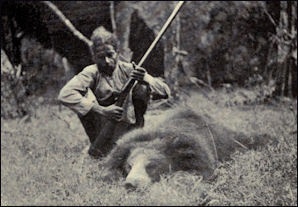
Today, we’re yet again diverting into the sub-category of Man-eater Monday to look at another species that took a deadly interest in people, but not for the reasons we usually expect.
In the long history of human–wildlife conflict on the Indian subcontinent, certain names endure. The Champawat tigress. The leopards of Rudraprayag and Panar. Creatures that crossed that invisible threshold from predator to something more mythical.
The Bear of Mysore belongs, uneasily, in that same conversation.
Not because it was a man-eater in the strict sense. It was not known to consume its victims. But it killed. Repeatedly. And, to those who encountered it, with an apparent intent that felt disturbingly close to dedicated purpose.
A Different Kind of Killer
The animal at the centre of this account was a sloth bear, a species widely distributed across India and Sri Lanka.
Under normal circumstances, sloth bears are not predators of humans or anything else, unless you’re an insect. They are insectivores by design, feeding primarily on termites, ants, and fruit. Their long claws are for tearing open mounds, not flesh. Their shaggy coats and shambling gait lend them an almost awkward, comical appearance.
But they are also among the most unpredictable large mammals in India.
Unlike tigers or leopards, which often signal their presence and may avoid humans unless driven by injury or necessity, sloth bears react quickly and sometimes very violently when surprised. Many attacks attributed to the species are defensive: a sudden encounter on a forest path, a startled animal with cubs – moment of proximity that escalate in seconds.
What makes the Bear of Mysore different is not simply that it attacked, but that it often did so unprovoked and actually appeared to seek out confrontation.
Kenneth Anderson’s Account
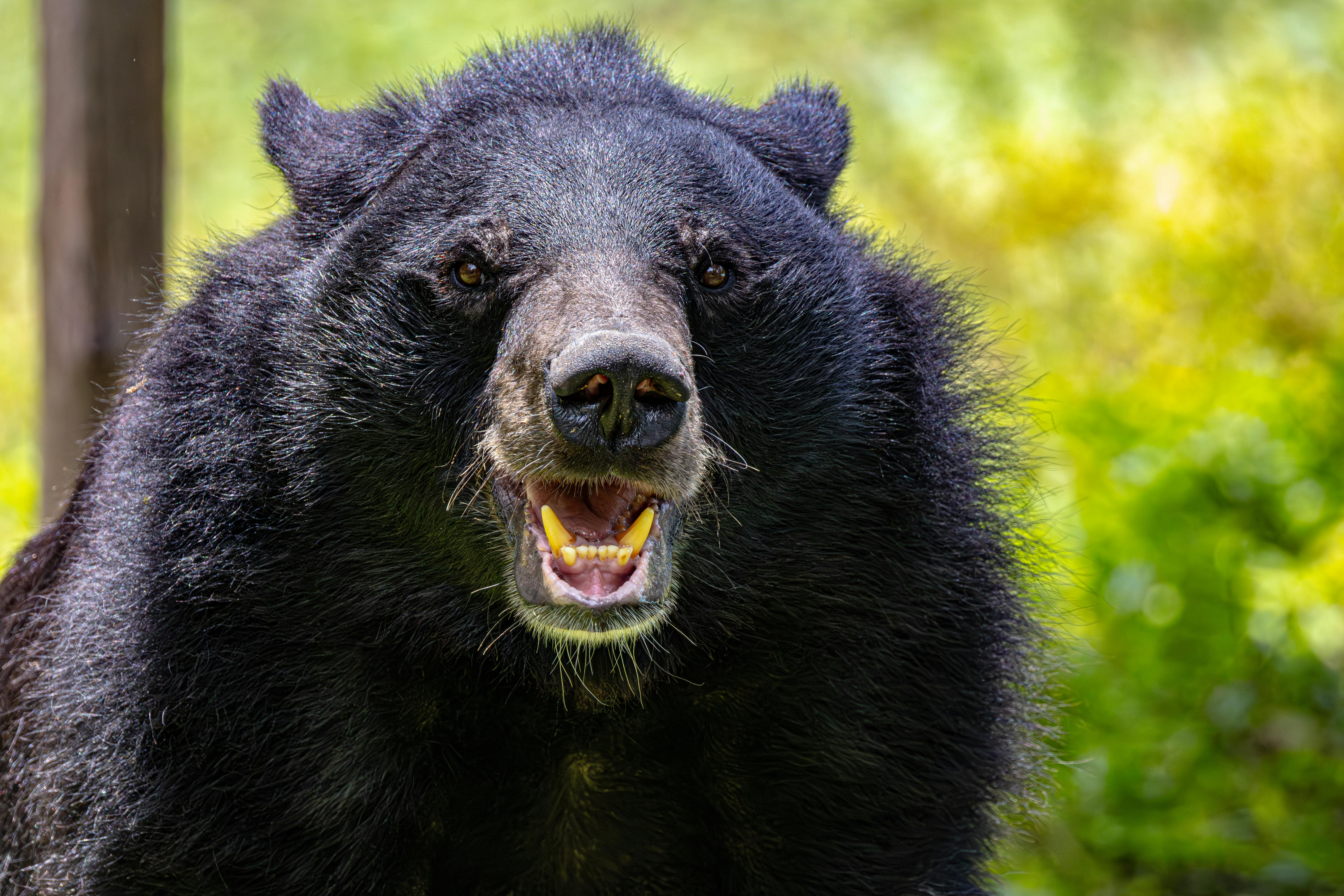
The primary record of the Bear of Mysore comes from Kenneth Anderson, whose writing, though shaped by the attitudes of his time, often reveals a careful observer of animal behaviour.
In his 1957 work Man-Eaters and Jungle Killers, he describes the animal in stark terms:
Sloth] Bears, as a rule, are excitable but generally harmless creatures. This particular bear carried the mark of Cain, in that he had become the wanton and deliberate murderer of several men, whom he had done to death in most terrible fashion, without provocation.
— “The Black Bear of Mysore”, Kenneth Anderson (1957)
It is a striking passage not just for its language, but for what it seemingly implies.
Anderson was not prone to exaggerating animal malice. His accounts of tigers and leopards often emphasise injury, scarcity, or circumstance as drivers of behaviour. Yet here, he frames the bear in almost moral terms – “the mark of Cain” as though it had crossed into something beyond instinct.
The Nature of the Attacks
Reports surrounding the Bear of Mysore share certain characteristics:
- Victims were not always encroaching or provoking the animal
- Attacks occurred in areas where human presence was routine
- The violence inflicted was severe, often targeting the face and head
This last detail is consistent with known sloth bear behaviour. When they attack, they tend to rise onto their hind legs and strike with powerful forelimbs, using long, curved claws. Survivors of such encounters are frequently left with life-altering injuries.
But frequency matters in this case.
Where most sloth bear attacks are isolated incidents, tied to chance encounters, this animal’s behaviour appeared patterned. It did not simply defend itself once or twice. It became associated with multiple killings.
And crucially, it did not feed on its victims. The primary motivation did indeed seem to be pure rage at times.
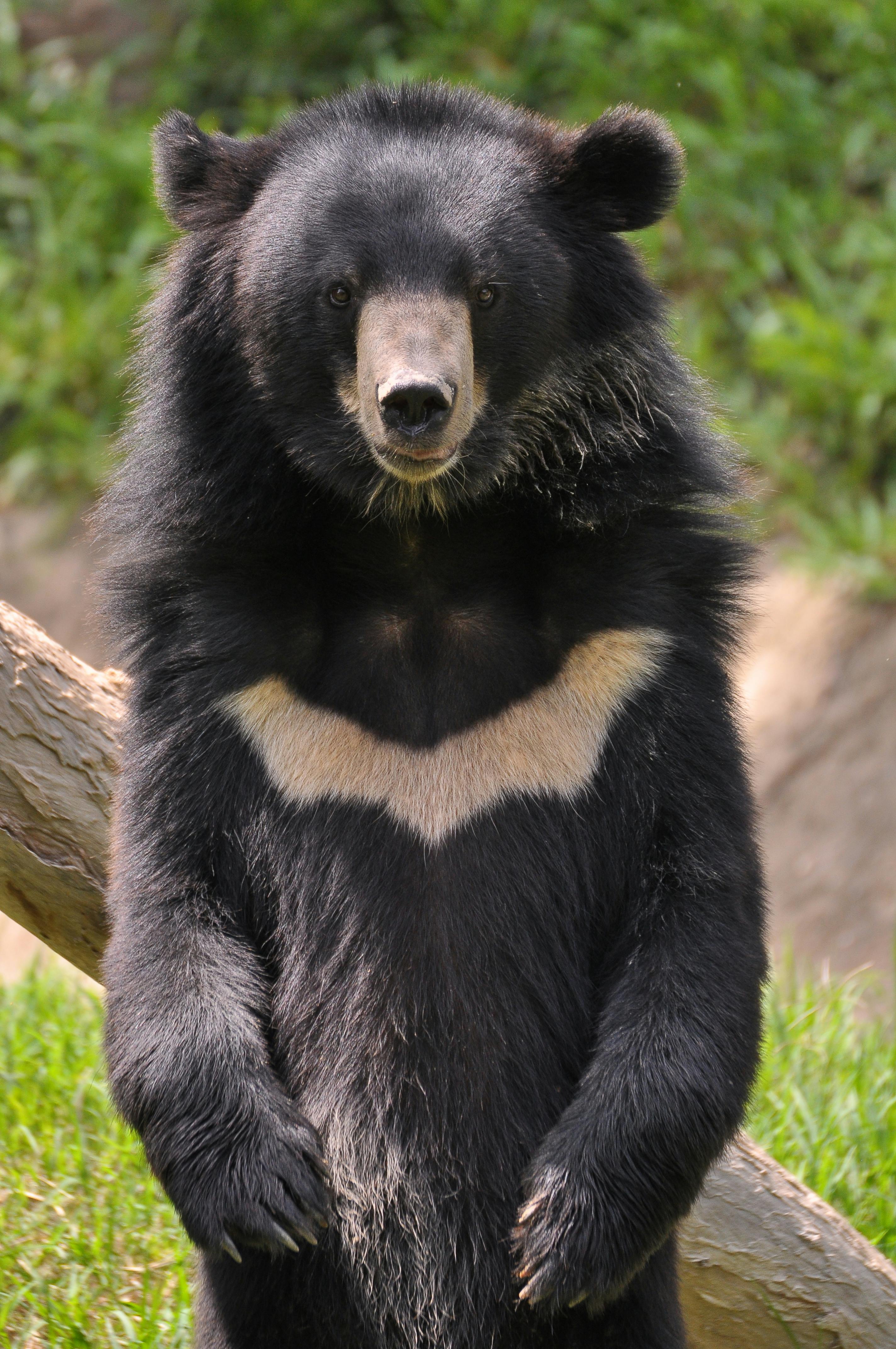
Not a Man-Eater, But Something Close
This distinction is important.
Traditional “man-eaters” like tigers, usually turn to humans out of necessity. Injury, age, or environmental pressure reduces their ability to hunt natural prey. Humans, slow and often unarmed, become an alternative.
The Bear of Mysore does not fit this model.
There is no evidence it was driven by hunger. Nor that it consumed human flesh. Its killings seem instead to fall into a more ambiguous category – aggression without consumption.
This raises difficult questions.
Was the bear unusually territorial? Had it experienced repeated negative encounters with humans? Was it injured or neurologically impaired in a way that altered its behaviour?
Or… and this is where Anderson’s language lingers, did it simply begin to associate humans with something worth confronting?
The Landscape of Fear
To understand the impact of such an animal, it is important to consider the setting.
Rural Mysore, like much of India, has long been a shared landscape: Fields, scrub, and forest edges where people and wildlife overlap daily. Encounters are inevitable. Most pass without incident.
But when an animal begins to kill without clear pattern or provocation, it changes more than behaviour. It changes perception.
Paths once taken at dusk are avoided. Woodcutters move in groups. Villages adjust their routines around something unseen.
This is not just fear of an animal.
It is fear of uncertainty.
A Bear Out of Context
From a modern perspective, it is tempting to reinterpret such accounts through ecology alone. Today, we would ask about habitat pressure, food availability, human encroachment, and stress responses.
And those factors may well have played a role.
But there is also value in recognising how unusual this case appears, even within the broader record of human–sloth bear conflict.
Most sloth bears do not behave this way. Most encounters do not escalate to repeated killings.
The Bear of Mysore stands out precisely because it does not fit comfortably within known patterns.
Between Animal and Story
There is a tendency, in stories like this, to drift toward extremes.
Either the animal becomes a monster – an embodiment of violence and intent. Or it is reduced entirely to circumstance, nothing more than a product of ecological pressure.
The truth, as ever, sits somewhere between.
The Bear of Mysore was still a bear. One driven by instinct, shaped by environment, and reacting to the world around it.
But it was also, undeniably, an outlier.
An animal whose behaviour disrupted expectations. Whose presence altered human movement and perception. And whose story lingers, not because it was supernatural but because it was difficult to explain.
A Quiet Line Between Worlds
Cases like this remind us how thin the boundary can be between familiarity and fear.
A species we understand, at least in broad terms, can still produce individuals that defy that understanding. Not mythical. Not impossible. But unsettling in their deviation.
The Bear of Mysore does not need embellishment.
It is enough, simply, to acknowledge that sometimes the natural world produces behaviour that feels, if only for a moment, like something else entirely.
And that is often where the most enduring stories begin.
If you enjoy this kind of grounded, atmospheric exploration of animals and the thin boundary between reality and something darker, my novels explore similar territory, where wildlife, myth, and human perception begin to blur.
 The blog of author Luke Phillips