

Footprints are powerful things.
They suggest presence without confrontation — a body that was there, but no longer is. In high mountain places, where weather erases evidence quickly and distances distort scale, a single line of tracks can feel profoundly unsettling. It is no surprise that the Yeti, more than almost any other cryptid, has been defined not by clear sightings, but by impressions left behind.
The Yeti does not announce itself. It lingers at the edge of vision, half-formed in snow, mist, and memory.
The First Western Encounter
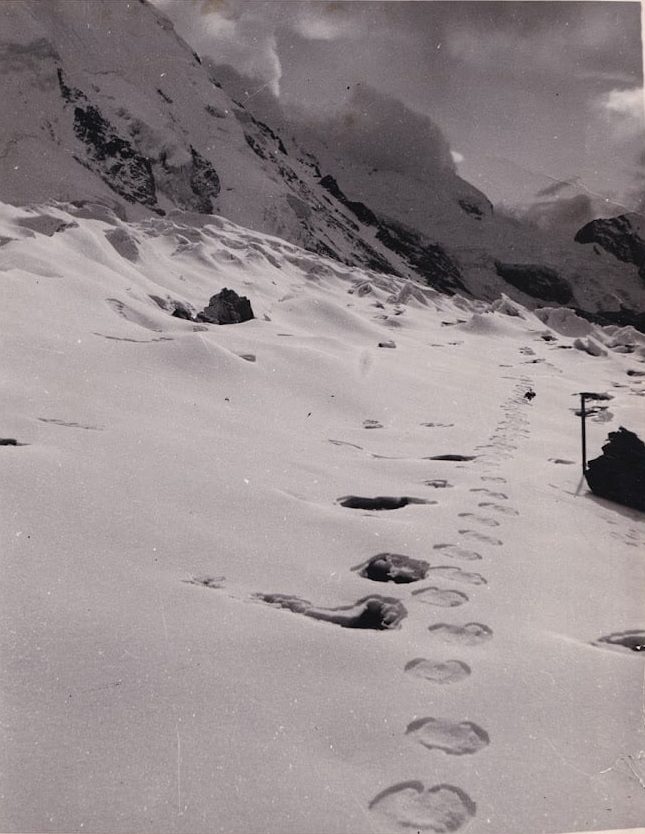
The modern Western story of the Yeti is often traced to 1921, during a British reconnaissance expedition to Mount Everest led by Charles Kenneth Howard-Bury. While crossing the Lhakpa-La pass at around 20,000 feet, members of the party observed dark figures moving across a distant snowfield. They also noted a trail of large footprints, unlike those of any animal they recognised.
Local guides described the tracks as belonging to something known in regional folklore. Through mistranslation and embellishment, this was rendered in Western newspapers as the “Abominable Snowman” — a phrase that would stick, despite being at odds with the more nuanced local descriptions. Some researchers have since suggested that elements of the original terminology may have referred more generally to wild or bear-like creatures, an ambiguity that would echo through later attempts to categorise what was seen.
What is striking about these early reports is how restrained they were. There was no claim of attack, no dramatic encounter. Just distance, scale, and uncertainty. Something large had crossed the snow.

Images are sourced from Unsplash, Pexels, or other royalty-free libraries where possible. Where not, credit is given to the original creator when available. Some images may be used under fair use for commentary or educational purposes. If you are the rights holder and have any concerns, please contact me for prompt credit or removal.
One Name, Many Creatures
One of the enduring problems in Yeti research is the assumption that it refers to a single, clearly defined animal.
Across the Himalayan region, different cultures describe different beings: some tall and upright, others smaller and more animal-like; some solitary, others encountered in pairs; some associated with high snowfields, others with dense forest. Hair colour, gait, and behaviour vary widely between accounts.
Rather than weakening the Yeti legend, this diversity strengthens it.
It suggests that “Yeti” may be a category rather than a creature, a name applied to unfamiliar encounters in extreme environments. In this sense, the Yeti functions much like other global wild-man traditions: a boundary figure, occupying the blurred edge between known animals and imagined ones.

Where the Yeti Really Lives
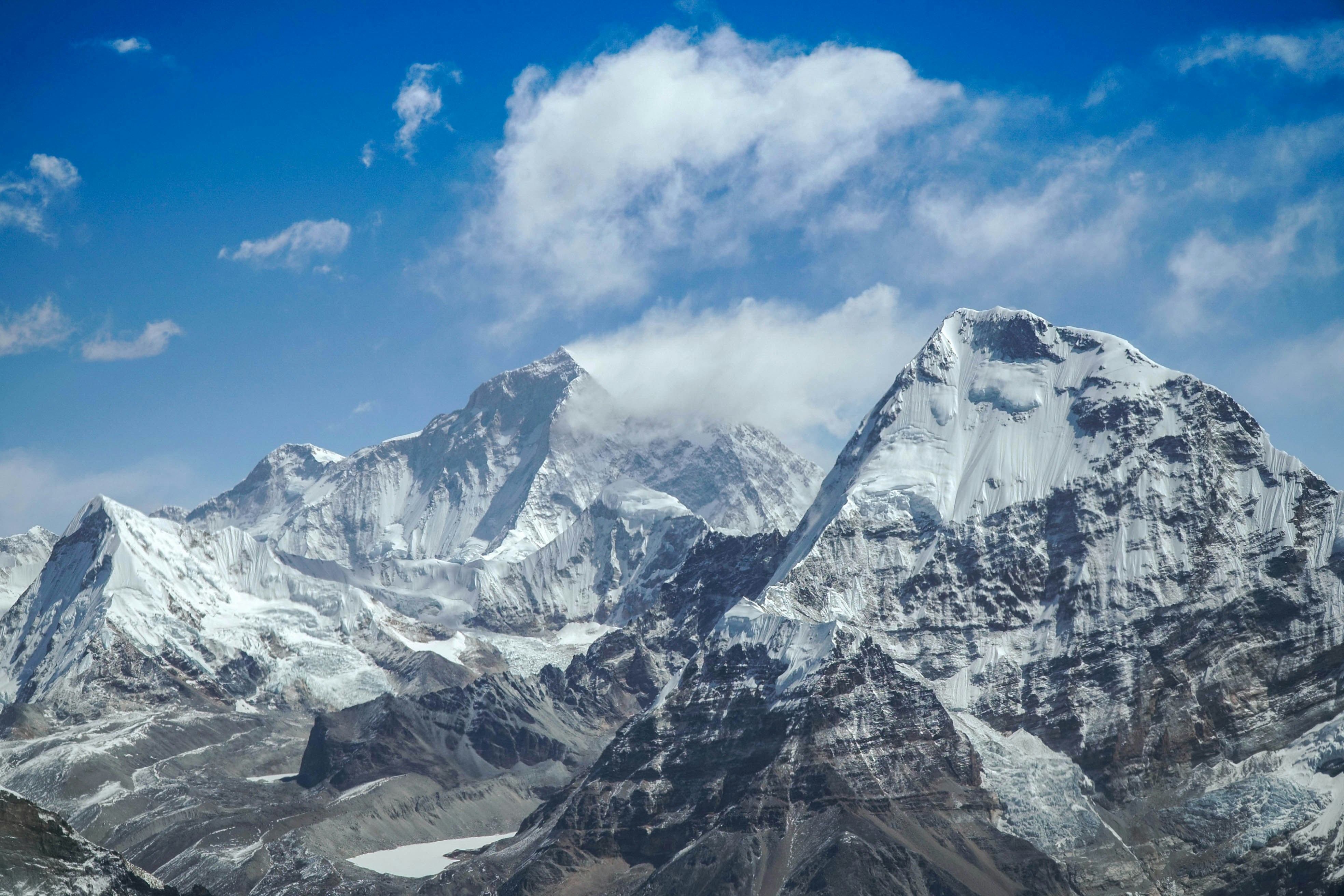
Popular imagery places the Yeti high on frozen ridgelines, silhouetted against endless snow. In reality, this is one of the least likely places for a large, undiscovered mammal to live year-round.
Modern thinking increasingly suggests that if a Yeti-like animal exists at all, it would spend most of its life below the snowline, in remote forests and rugged valleys where cover, food, and shelter are more reliable. Seasonal crossings of high passes could account for the famous footprints, while keeping the creature largely hidden for the rest of the year.
This reframing does not make the Yeti less mysterious, it makes it more plausible.
Footprints, Photographs, and the Problem of Proof
The most famous Yeti evidence remains the footprint photographs: oversized impressions in snow, often distorted by melt, refreeze, and shadow. These images have been endlessly reproduced, debated, and dismissed.
But footprints are inherently deceptive. Snow stretches, collapses, and reshapes under weight. Familiar animal tracks can appear enormous under the right conditions. Perspective plays tricks in featureless landscapes.
It is also worth noting that some famous Yeti evidence has been questioned long after the fact. In a handful of cases, relatives or associates of expedition members later suggested that footprints may have been exaggerated, staged, or misinterpreted. Claims that emerged decades after the original events, often when those involved were no longer alive to respond.
Whether these retrospective doubts reflect new information, fading memory, or a desire to impose rational order on unresolved stories is difficult to say. What they do illustrate is how cryptid encounters rarely end when the expedition does. They continue to evolve, shaped by cultural pressure, reputation, and our collective discomfort with uncertainty.
The footprints endure not because they are conclusive, but because they resist tidy explanation.
From Mystery to Caricature
Once the phrase “Abominable Snowman” entered Western culture, the Yeti’s fate was largely sealed. It became a creature of novelty and spectacle, sometimes threatening, often comic.
Films and television leaned into this transformation, from light-hearted moments in One of Our Dinosaurs Is Missing, to outright creature features like Abominable, and later family-friendly reimaginings such as Smallfoot.
Entertainment keeps the Yeti visible, but it also flattens it. Complexity gives way to costume. Mystery becomes marketing.
Modern adventure shows, including series like Expedition Unknown, walk a sometimes not-so-careful line between curiosity and spectacle. They undoubtedly keep public interest alive but in doing so, they risk turning genuine mystery into a checklist of expected outcomes.

A Monster That Refuses to Settle
Perhaps the Yeti’s greatest strength is its refusal to be pinned down.
It does not fit neatly into zoology, folklore, or fiction. It shifts between categories depending on who is looking, and from where. In this way, the Yeti mirrors the landscapes it is said to inhabit. Places where maps end, weather dominates, and certainty is a luxury.
The Yeti endures not because it has been proven, but because it remains unresolved. A set of footprints leading out of sight. A shape moving where nothing should be. A reminder that even in the modern world, there are still edges we do not fully understand.
If you enjoy this kind of grounded monster storytelling, my novels explore similar themes of wilderness, fear, and folklore, where the line between the known and the unknown is rarely clear.
 The blog of author Luke Phillips