
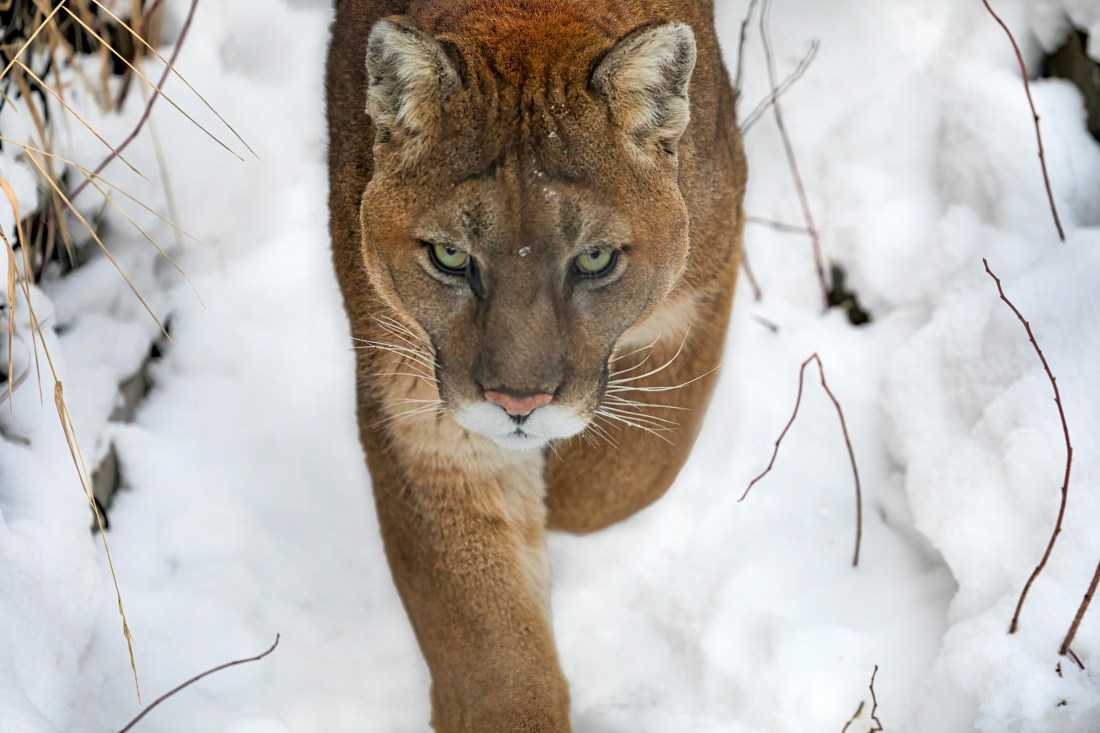
Sharks have Jaws. Bears got Backcountry, Grizzly, and The Edge. The wolf played the villain in The Grey. The killer whale has Orca. Crocodiles claimed Black Water, Lake Placid, and Crawl. There are snake movies. Scary spiders from the silver screen. There’s even a film where Bruce Dern is menaced by a sentient bee swarm. And of course, we can never forget Sharknado, despite some of us trying to (don’t fret, I have a soft spot for it really).
Yet the mountain lion has practically nothing.
This is strange enough on its own. The cougar — also called puma, panther, catamount, and mountain lion depending on which state you happen to be in — is the most widely distributed wild land mammal in the western hemisphere. It is the apex predator of three continents. It has killed people across at least eleven of the United States. The 1991 attack on Scott Lancaster, which I wrote about a few weeks ago, was only the most ‘photogenic’ in a long line. And yet Hollywood, which has built entire subgenres out of much less, has produced no Jaws for the mountains. The few films that feature a cougar at all keep it offscreen, reframe it as a misunderstood Disney protagonist, or bury it inside an ensemble cast. The absence is so total that it starts to look intentional.
And I think it is. Or rather, I think it’s the product of several things working at once, with none of them about cinema and all of them about us.
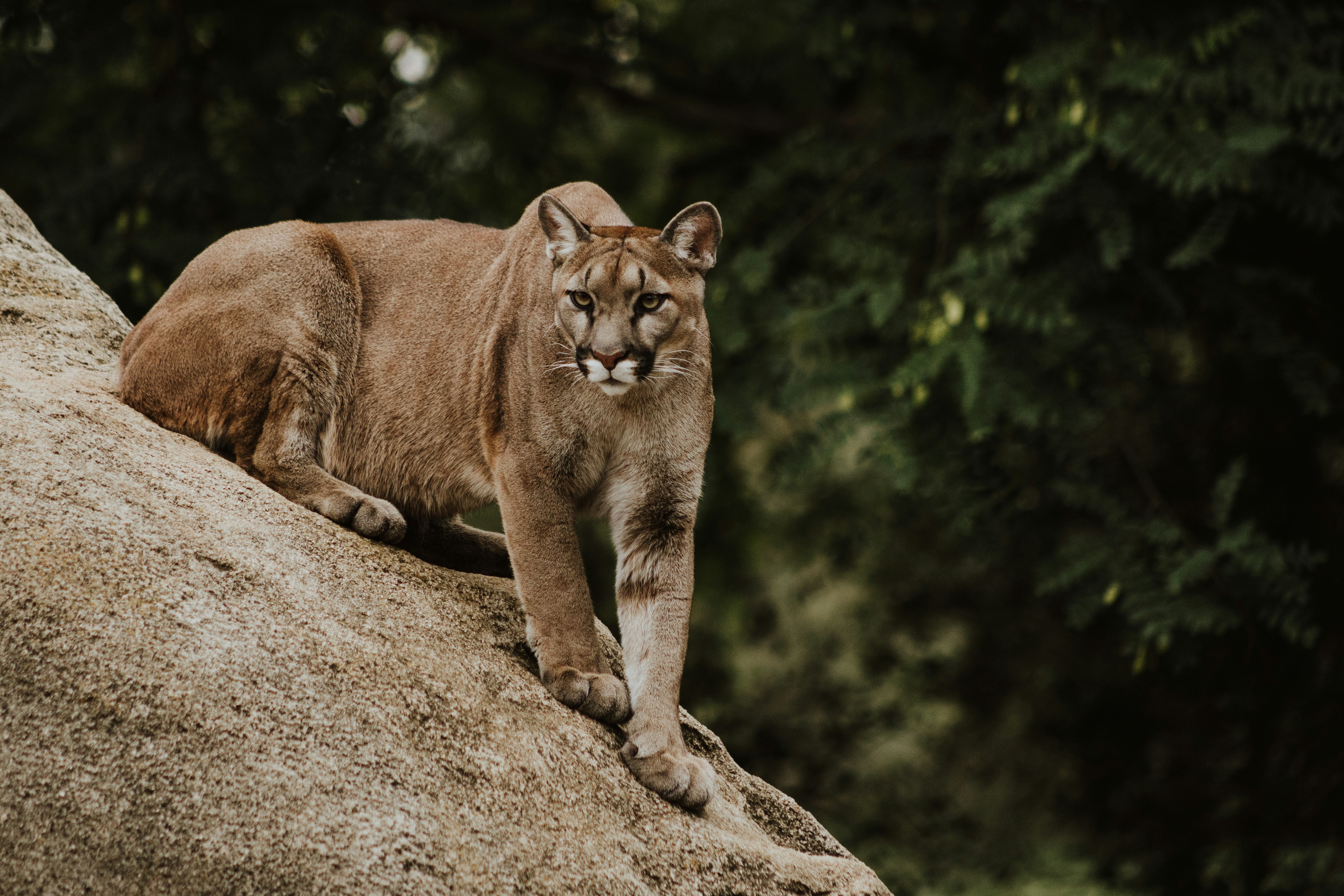
The exceptions that confirm the absence
The closest the studio era got to a mountain lion movie was William Wellman’s Track of the Cat (1954), starring Robert Mitchum as a rancher hunting a cougar that’s been killing his livestock. The cat is barely shown. It functions as a Moby-Dick stand-in and a symbol of the family’s rotting psyche rather than a creature with claws. The mountain lion exists offscreen as metaphor. It is the absence around which the film is built.
Twenty-three years later, Day of the Animals (1977) gave the cougar a screen credit in an ensemble of murderous wildlife. Hawks, dogs, snakes, bears, and a cougar all turn on a group of hikers above five thousand feet, driven mad by ozone-depletion-induced psychosis. The premise tells you everything. To make a mountain lion dangerous enough for a horror film in 1977, it required a sci-fi scenario for it to be dangerous at all.
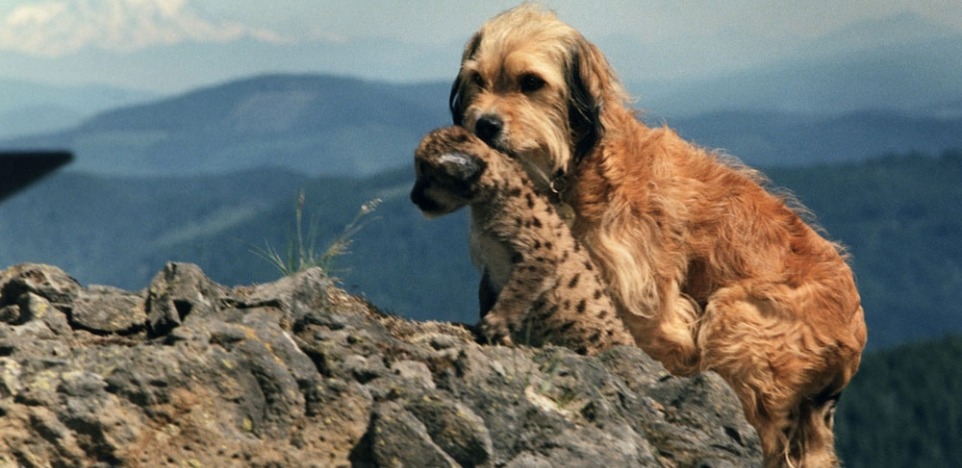
Then there is Benji the Hunted (1987 – all together now, awwww), in which a cougar menaces a small dog and a litter of orphaned cubs. This is the most telling of the three, because it captures the prevailing pre-1991 view of cougars perfectly. The mountain lion was a threat to small mammals and unattended children. It was not, in the popular imagination, a serious threat to a grown adult. The hunting and ranching culture of the American West had been calling cougars “scaredy cats” for the better part of a century, and the films of the era took the description at its word. The Disney filmography, meanwhile, is full of cougar protagonists such as in Sequoia (1934), Charlie, the Lonesome Cougar (1967), and Run, Cougar, Run (1972). All are sympathetic, soft-focused, and almost domesticated. Not one is a killer mountain lion movie.
The statistics, and a death in 1991
The pre-Lancaster view that cougars were essentially harmless had statistical cover. In California, there were two fatal mountain lion attacks in 1890 and 1909, and then none for seventy-seven years. Hollywood was not declining to make a mountain lion movie. There just wasn’t, in any meaningful sense, a mountain lion to make a movie about.
Then January 1991 happened. Scott Lancaster, eighteen, was killed and partially consumed while jogging near Idaho Springs, Colorado. Barbara Schoener was killed jogging in Auburn, California, in 1994. Mark Reynolds was killed mountain biking near Mission Viejo in 2004. In March 2024, brothers Taylen and Wyatt Brooks were attacked while looking for shed deer antlers in El Dorado County; Taylen, twenty-one, was killed.
These are real deaths. They also remain extraordinarily rare. The Mountain Lion Foundation puts the lifetime tally at twenty-nine fatal attacks in North America since 1868, which is roughly 0.18 a year. Yale Environment 360, working with more recent figures, has it at thirty-two fatalities and more than 170 non-fatal attacks since 1890. Either way: vanishingly rare. Every year in the United States, around 777 people die from mosquito-borne illnesses, twenty-eight are struck by lightning, eighty-six die from animal venom, and somewhere between 35,000 and 45,000 die in motor vehicle accidents. In California alone, two mountain lions die from car strikes every week.
Even the lethality is overstated. When mountain lion attacks do happen, around 15% are fatal. The corresponding figure for African lions is 62%. For tigers, 78%. For leopards, 32%. The cougar is, by a generous margin, the least dangerous big cat to encounter, yet the one Americans are by far the most afraid of (and yes, I realise there is a distinct lack of the others to worry about in the US – but my argument is that the fear is out of proportion to the threat).
That gap is what this piece is interested in. The attacks since 1991 are real. But, the fear they generate is wildly disproportionate to them. And in all that fear, in all that disproportion, Hollywood still hasn’t made the movie.
The fear is older than the species
Some of the reason for that fear is in our bones. Literally.
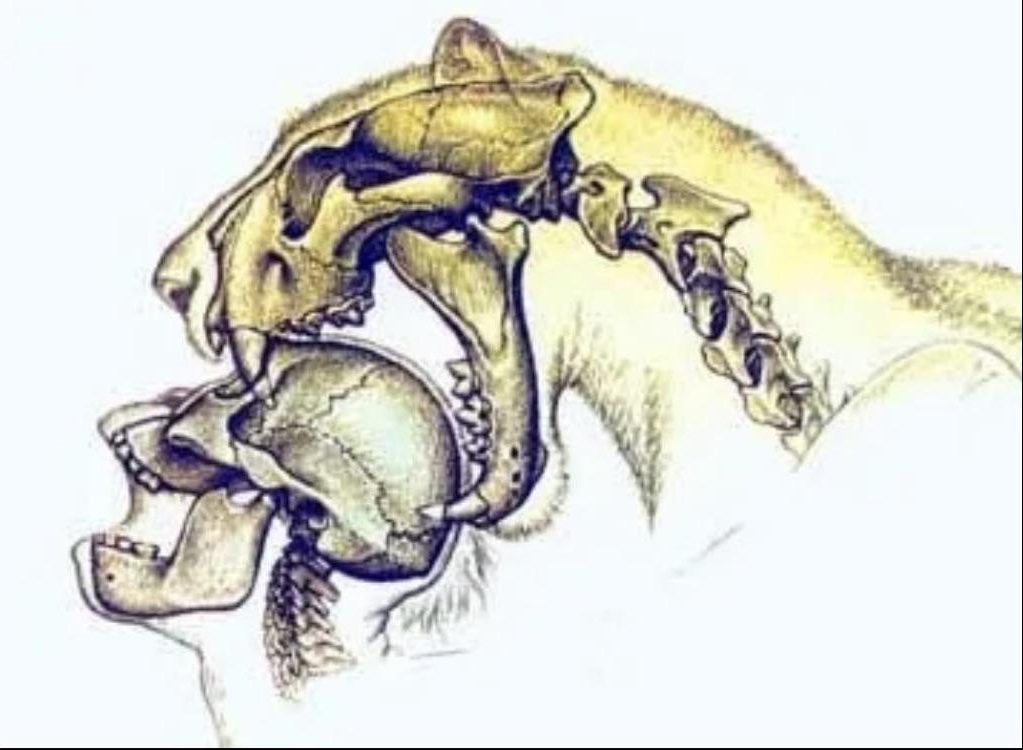
In the 1970s, the South African palaeontologist C.K. “Bob” Brain examined an Australopithecus robustus skull from Swartkrans Cave and found two clean canine punctures on the parietal bone, spaced exactly to match a leopard’s lower jaw. The leopard had killed the hominin and dragged the corpse by the head (the same way modern leopards still carry kills into trees today). Brain’s wider analysis of the Swartkrans assemblages overturned the old “Killer Ape” hypothesis that early hominins were the dominant predators of their landscape. For most of our deep history, it was the other way around. We were the prey.
The big cats of that period included Dinofelis, a false sabre-toothed cat that Brain identified as something close to a specialist primate killer that selected hominins and baboons as prey, and dragging them to its lair. A predator whose ecological niche was eating things that looked like our ancestors. The pattern persisted for an extraordinarily long time. A study published in 2025 used AI bite-mark analysis on the OH 7 fossil – the juvenile Homo habilis specimen that defined the species in 1964 – and concluded with high confidence that a leopard had killed it, two million years ago. Even as our brains were enlarging, we were on the menu. In modern African rainforests, leopards still kill primates: in one study of the Tai Forest in Côte d’Ivoire, primate remains turned up in sixty-four separate scat samples.
The point is not that mountain lions are leopards. The point is that the primate fear of stealth cats is one of the oldest things about us. We’ve shared territory with bears for tens of thousands of years. Cats though, have hunted us for millions. The cougar arrives in the American imagination dragging a tail of evolutionary memory it had nothing to do with earning.
The political cougar
The other reason, and the more interesting one, I think, is that the mountain lion is too useful as a symbol to be retired into fiction.
In November 2024, Colorado voters defeated Proposition 127, which would have banned trophy hunting of mountain lions, bobcats, and lynx. The campaign against the proposition, bankrolled in part by hunting and ranching interests, ran television ads claiming that unchecked mountain lions would “continue to decimate Colorado’s deer population, killing more than 200,000 deer each year.” CBS Colorado, fact-checking the ad, generously called the claim speculation. Colorado Parks and Wildlife’s own 2020 management plan notes that the impact of lion predation on deer populations is, in its own words, “poorly understood.” The state has recorded twenty-five lion attacks on humans since 1990 and four fatalities ever. Meanwhile, hunters had been taking around 500 mountain lions and 880 bobcats a year. The animal is hunted more than it is the hunter by several orders of magnitude.
In California, Senate Bill 818 — “Taylen and Wyatt’s Law” — was introduced in 2025 after the El Dorado County attack. The bill originally sought to legalise the use of hounds to haze mountain lions away from populated areas. The Senate Natural Resources Committee gutted the hounding provision via amendments and rerouted the bill toward a broader “conflict reduction program.” One real tragedy, immediately translated into legislative pressure for predator-control infrastructure. Whatever your view on the policy, the cultural move is unmistakeable. One cougar is being used as the avatar of every cougar in the state.
The horror-film cougar, if you made one, would have to die at the end of the third act. The political cougar can’t. It needs to remain out there, prowling the wildland-urban interface, justifying hunting tags and ballot measures and house bills, year after year. The deep evolutionary fear keeps the audience primed. The rural-political machinery keeps the threat permanent. Hollywood didn’t decline to make the mountain lion movie. The mountain lion movie is being run, on a continuous loop, in the legislatures of the American West.
The image problem
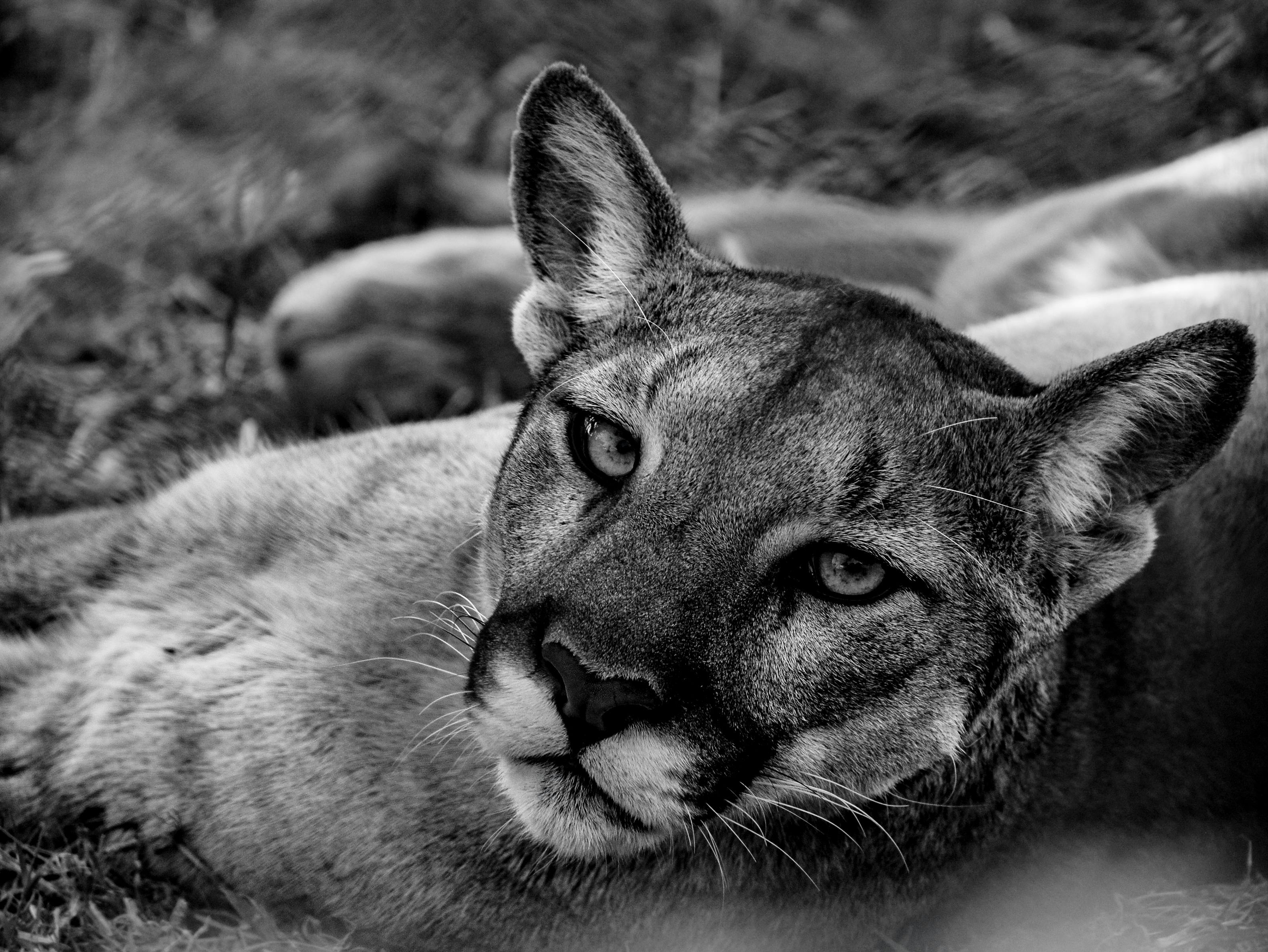
Even if you tried to make the film, you’d run into something more practical. The mountain lion has an image problem.
The African lion arrives at any production with a cinematic toolkit that’s been millennia in the making. The mane is the most efficient piece of visual shorthand in the animal kingdom, that silhouette alone tells the audience everything. The roar is recognised on every continent and runs under the MGM logo. Prides give you ensemble drama, defended cubs, and the Ghost and the Darkness premise of the man-eaters working as a pair. The savanna gives you wide-open golden-hour cinematography. And underneath all of that, you have heraldic and scriptural weight in the form of Aslan, the Lion of Judah, Daniel in the den, and the lion on a hundred national flags. Beast, Prey and The Ghost and the Darkness just have to deliver on a promise the culture made centuries earlier.
The mountain lion has almost none of this. No mane, no silhouette, just a blank tawny body (its latin name translates as ‘cat of one colour’ – and yes, I know that’s not really accurate) with a long tail. And no roar. Cougars physically can’t; the larynx isn’t built for it. What they do instead is scream, and the scream sounds like a woman being murdered, which is genuinely terrifying but in a folkloric, uncanny register, not a majestic-predator one. You can’t score a film with that. You can score a horror film with that, which makes the absence even stranger.
No pride: the cougar is solitary, and two cougars on screen is already a stretch – although we now know related females often spend time together and the species is probably a little more sociable than we thought. No mythic name: the same animal is called mountain lion, cougar, puma, panther, and catamount depending on which county you’re in. Mountain lions have rich significance in Puebloan and Cherokee cosmology, but Hollywood has never learned to speak that language fluently, and the suburban-Western imagination they grew out of treated cougars as vermin to be bountied, not symbols to be revered. No exoticism, either: African lions allow the safari-horror frame, with out-of-their-element Westerners and dramatic geography. Mountain lions live in Cupertino. They eat the joggers of Mission Viejo and the children of Lakewood.
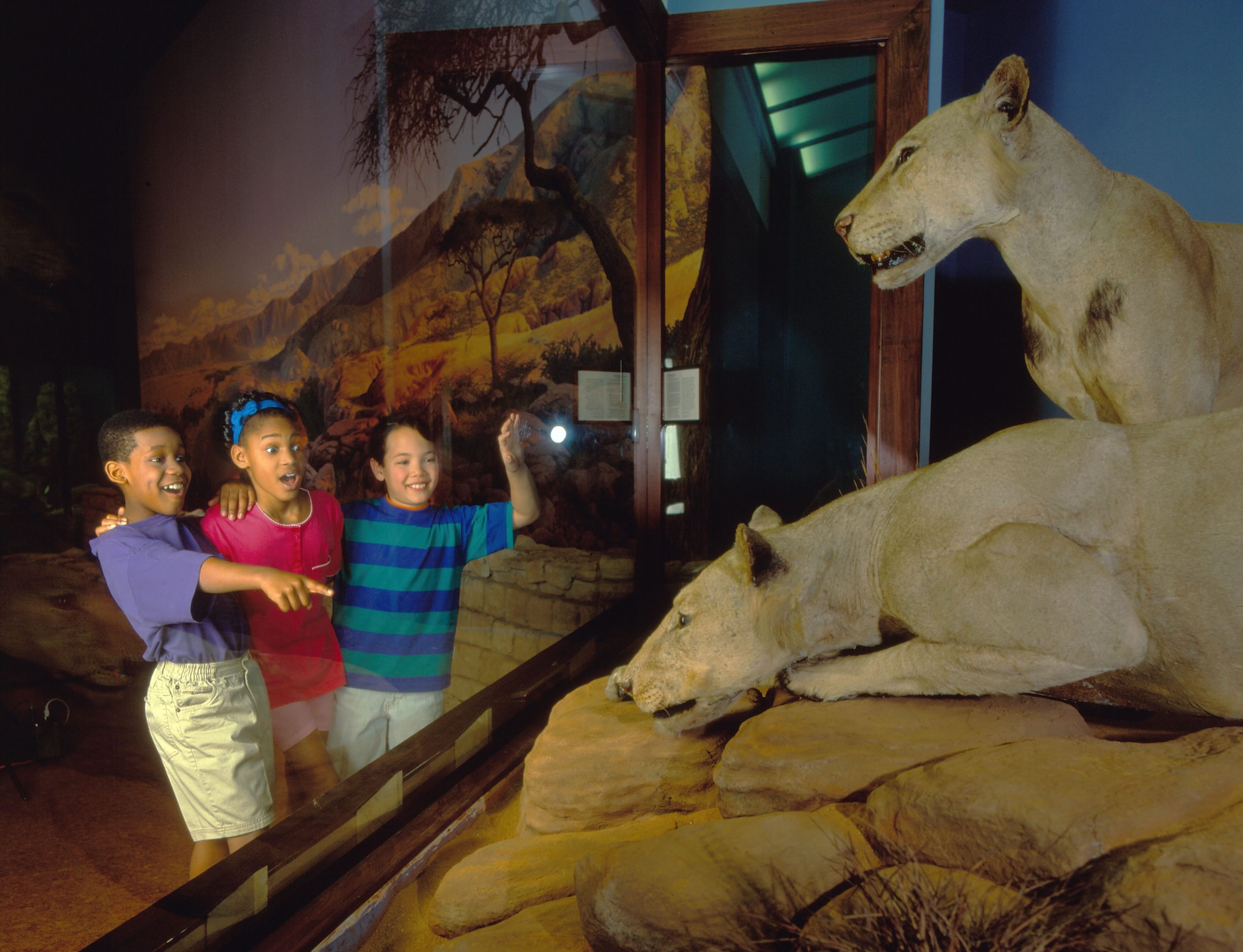
And the macho problem cuts both ways. The African lion gets respect even when it’s killing people. The Tsavo man-eaters are mythologised and taxidermied and on display at the Field Museum in Chicago, alongside the Lion of Mfuwe. Travis Kauffman, the Colorado runner who strangled a juvenile cougar to death with his bare hands when it attacked him, became a punchline meme. Guy strangles housecat. Same act of survival, totally different cultural register. The mountain lion isn’t macho enough to lose to.
The cat we can’t film
So the absence isn’t aesthetic, and it isn’t accidental. The mountain lion is feared too primally to ignore with the evolutionary memory of millions of years of leopard predation doing the priming work for free, yet pictured too plainly to film. The bear can be filmed. Even sharks can be filmed. The African lion arrives pre-styled. The cougar slips into the frame with no mane, no roar, no pride, no exotic geography, no flag, no constellation, and no Aslan, and Hollywood, for ninety years, has not known what to do with it.
What it does instead is something stranger. The mountain lion is being run, in real time, as the antagonist of a different kind of horror story — the one Colorado watched on television in October 2024, the one the California legislature is rehearsing right now. The American predator without a movie has a much bigger role than that. It is the predator we can’t stop thinking about and can’t figure out how to look at.

