
There are some animals that become legendary stories of the hunt. And then there are those that become shadows for unknown reasons. For this week’s Man-Eater Monday, we’re looking at one of Jim Corbett’s lesser discussed hunts despite how close Corbett came to falling victim to it, and the staggering number of victims the man-eater claimed: that of the Leopard of Panar.
In the hills of northern India, people began to disappear quietly. No struggle. No sound. Sometimes just a doorway left open, a cooking fire still burning, and a space where someone had been.
The leopard that moved through those villages was rarely seen. But its presence was felt. And it was always there.
A Remote Fear
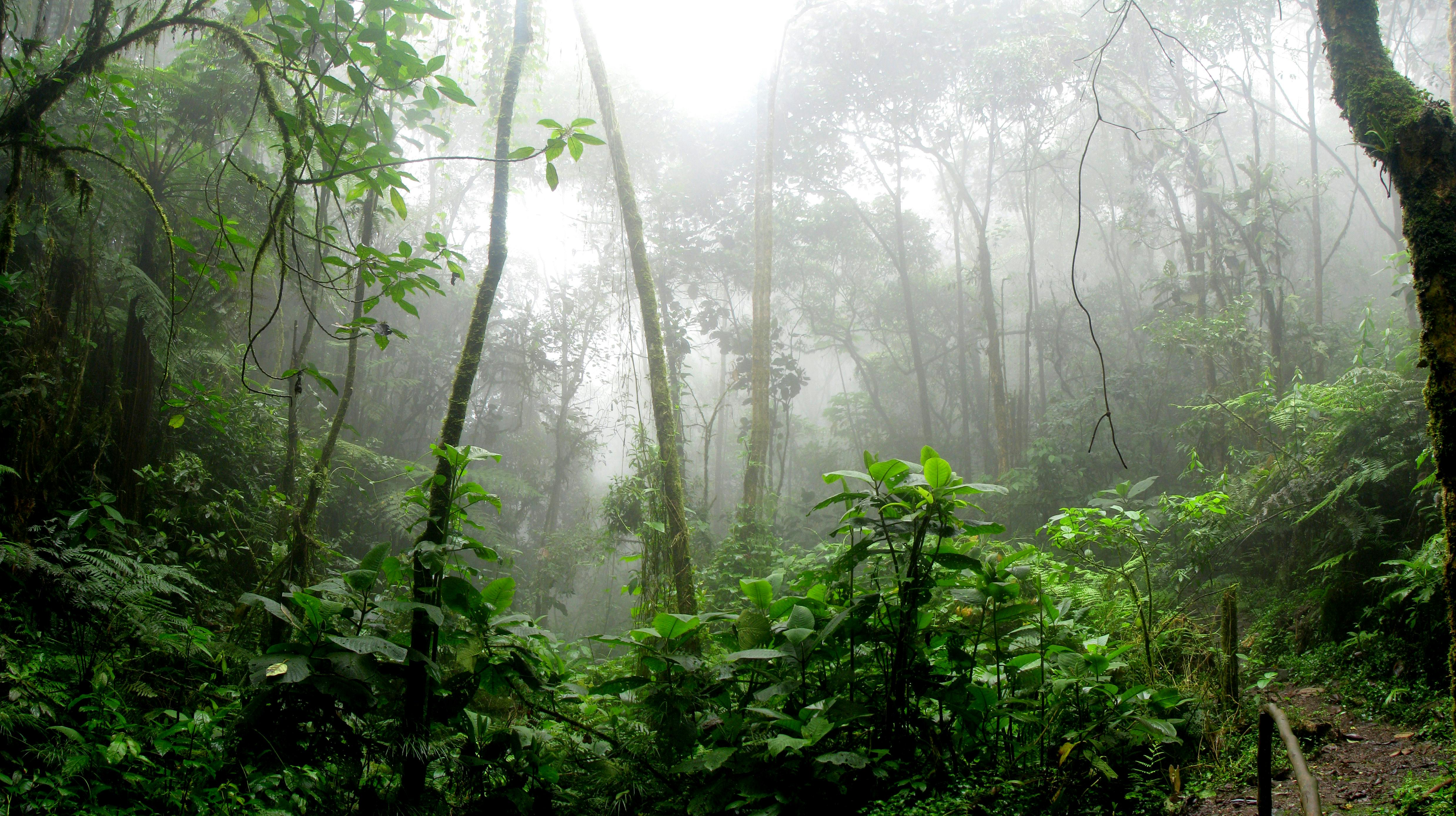
The attacks that would come to define the Leopard of Panar took place in the Garhwal hills, a location remote even by the standards of early 20th century India. A place where huts were often miles apart and few roads existed. News, if it travelled at all, did not travel fast.
This mattered. Because while the leopard would go on to kill well over 400 people (more than three times the toll of the better-known Leopard of Rudraprayag), it never entered the public imagination in quite the same way.
Rudraprayag sat on a pilgrimage route. Its dead were counted, recorded, and spoken of. Help was requested at the highest levels.
Panar did not enjoy the same spotlight. Its victims disappeared into a quieter landscape, in poorer villages, far from the attention of officials or press. The scale of the tragedy was no less, but its story travelled less far. When Corbett was first contacted, the man-eater of Panar had just five months to live and had already claimed the majority of its victims.
A Hunter Between Lives
Jim Corbett first heard of the Panar leopard while engaged in his first official hunt for a man-eater, that of the Champawat tigress.
At the time, he was not yet the figure we now remember. Corbett worked for the railway. In fact, he recalls how he and his men set a record at Mokameh Ghat by handling, without any mechanical means, over 5,500 tonnes of goods in a single working day, just a few months before being granted enough time off to hunt the leopard of Panar.
His life did not revolve around hunting man-eaters, but intersected with it when needed.
The remote nature of the district the leopard of Panar called home is aptly illustrated by the long, 28-mile long march Corbett and his men had to endure just to reach it.
At the end of this gruelling hike, they were met with accommodation that was locked. But ever the optimist, Corbett instructed camp and fires to be set in the courtyard. He records, watching in amused fascinating, how the head of a leopard (not the one he was after, whose territory was still several miles away) appeared in the darkness and took the leg of mutton his servant had been preparing for Corbett’s dinner. Corbett chose to see the funny side, unlike his servant, who had to create a meal from scratch and without the prized leg of mutton.
But it was an apt reminder, perhaps, that in these hills, he was already being watched.
The Invisible Method
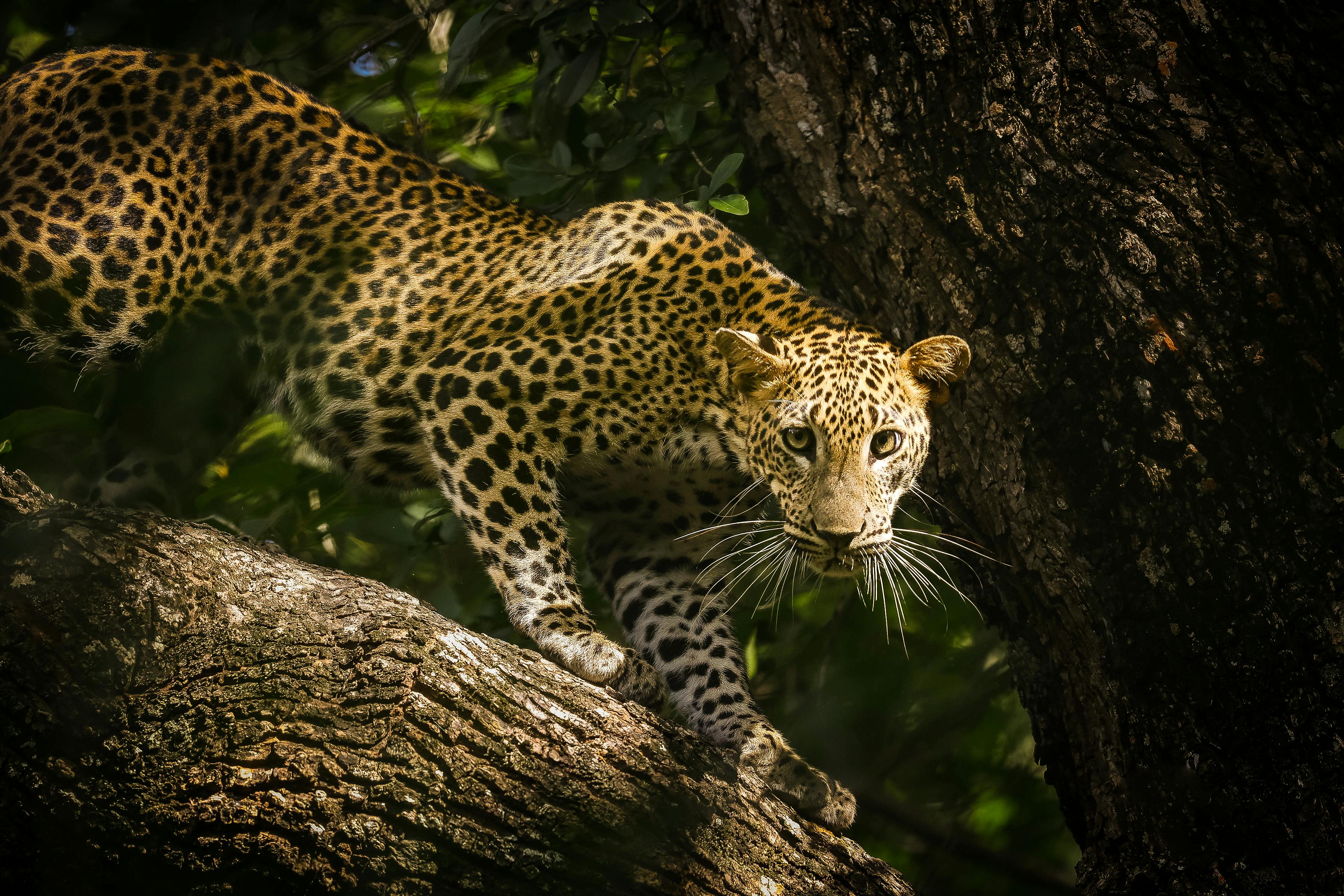
What made the Leopard of Panar so feared was not simply the number of people it killed, but how it did so.
It did not announce itself. It entered villages without sound. It became expert at taking people from inside their homes, taking advantage of those who might leave a door or window open on the hot jungle nights. One man was awoken in horror to find the leopard hauling his wife out by the throat. If she hadn’t tried to grab him, he may never have known.
The wife, like many of the leopard’s victims, died when her wounds turned septic and no medical aid could be sought in time. Her panicked husband could not risk leaving the hut during the night to seek help, and was forced to barricade the door whilst listening to the angry leopard attempt to reclaim its prey again and again.
And as this example shows, when it did attack, the leopard did so confidently. It dd not retreat when confronted. We do not know precisely how long the leopard of Panar held the region in fear, but it was likely years. The impact that must have had on those living in its presence is hard to imagine.
When Corbett arrived, he encountered merchants scared of travelling alone and villages in heightened states of panic. There is a particular kind of fear that comes from something that does not need to overpower you, only outthink you.
Corbett also found widespread leprosy in the region. In the case of the leopard of Rudraprayag, we know that outbreaks of disease led to it adapting to human prey. And although Corbett doesn’t say this in his account of the leopard of Panar, it is widely believed and accepted it learnt its trade the same way.
Fieldcraft and Silence
One of the things that stands out in Corbett’s account is his excellent natural field craft. He had an ability to read the forest that seems unique, even today – perhaps due to his love of the natural world that later made him a committed conservationist.
When Corbett discovers a goat he intended as bait has been taken by the leopard during the cover of rain and darkness, he turns to the only reliable witnesses around. Birds.
He listens to the alarm calls of bulbuls, drongos, and especially the scimitar warblers and white-throated laughing thrushes, who in his own words, he describes as “the most dependable informants in the hills”.
Corbett uses them to track the leopard’s movement through disturbance and the direction of calls. In a landscape where the leopard left almost no trace, the jungle itself became the map.
After tracking the leopard back to its kill, he refreshes the bait with another tethered goat, and settles in with his back to a tree, an upturned collar to protect his neck, and a tightly bound perimeter of blackthorn shoots collaring the tree – his only protection and warning should the man-eater approach.
A Night Without Light
This is India, 1910. There were no electric torches or lights that hunters would use later in Corbett’s time.
When Corbett sat out that night, waiting in a tree, his only aid for shooting was a strip of white cloth tied to the barrels of his shotgun—something faint enough to guide his aim in darkness.
It is difficult, now, to fully grasp that level of exposure. And Corbett chose a shotgun, as he was expected a close-quarters encounter. He wanted the certainty of eight shotgun slugs over one rifle bullet.
And then it became a waiting game. Visibility was at a minimum. The attack could come from any direction. And from a master of stealth.
A Confident Predator
When the leopard finally came for him, it did not do so cautiously. The first Corbett knew of the leopard’s arrival was the frantic bleats of the goat. All he could make out was its white hue, 30 yards away. Then it went quiet and looked directly towards Corbett in his tree.
Next, Corbett felt the rustle and tightening of the blackthorn shoots as the leopard tried to shape them loose or manoeuvre around them to get at him.
Each time it was denied, it let out a growl of frustration.
This was the action of a predator that was sure of itself. One happy to give away its position. One that had learned, over time, that it could overcome the fear it likely once had of humans and make them its prey without consequence.
This was not simply a man-eater. It was a confident one. And confidence, in a predator, changes everything.
Tea Hits the Spot
Frustrated, the leopard dropped to the jungle floor and charged the goat, which it embraced with a roar. Now, the only guide Corbett had was what remained of the ungulate’s white coat. He guessed where the leopard was based on this alone and let off a blast of the shotgun. Answered by the angry grunt of the leopard, he knew he’d at least hit it.
From nearby, his men and anxious villagers called out, all to eager to declare the nightmare over.
Perhaps tired, perhaps a little over confident, Corbett calls back to them and tells them it is safe to approach him, as long as they lit torches and walked in single file, close to one another.
When the group reached him, they demanded he follow up on the wounded leopard. Even in his own account, Corbett is not sure why he agreed to such a thing – but he does.
Most harrowingly, he describes the effect of hearing the bellow of a changing leopard. He states having seen herds of elephant and buffalo stand resolute against the roar of a tiger, but scatter at the angry chant of a leopard with its blood up.
But ultimately, another blast from the shotgun brings the leopard of Panar’s reign of terror to an end.
And the quintessentially British reward after days of hunger, sweat, blood, and anguish Corbett demanded? A hot drink of tea back at the village.
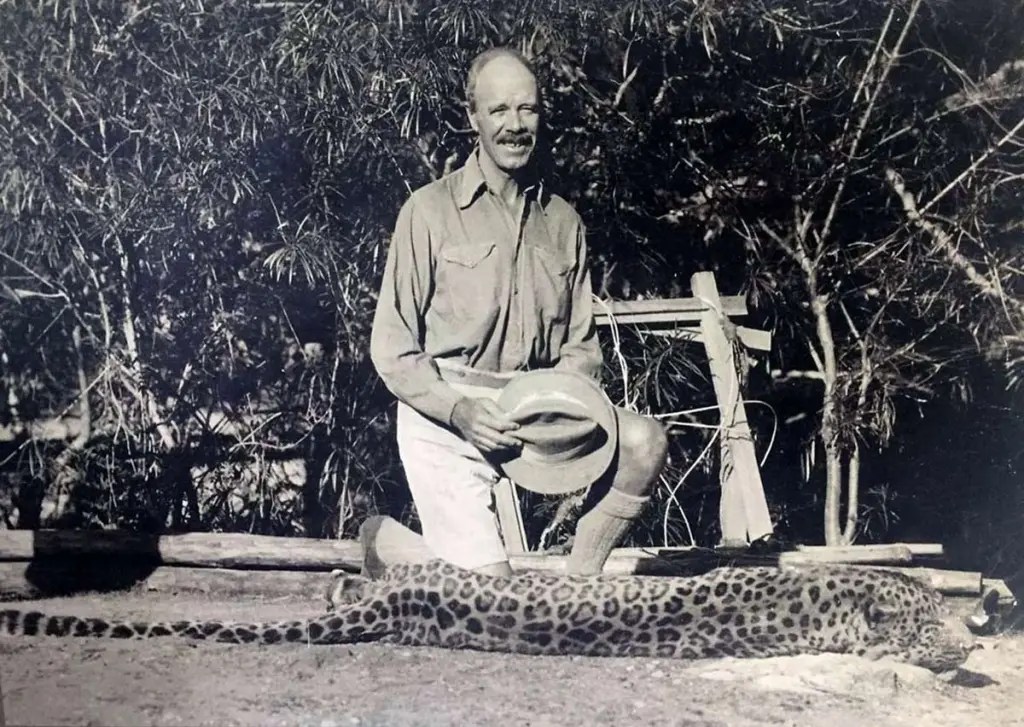
The Shape of the Story
The Leopard of Panar is not remembered in the same way as some other man-eaters. There are fewer retellings. Less myth. But in some ways, it is the more revealing story.
It shows how conflict can grow in places that are rarely seen. How predators adapt not through force, but through learning. And how fear settles most deeply when it is allowed to fester.
Closing Reflection
There is a tendency to treat these animals as aberrations – exceptions to the natural order. But they are often reflections instead.
Of pressure. Of proximity. Of the ways in which human and wild lives overlap, sometimes too closely.
The leopard was killed. But the conditions that produced it did not disappear. I strongly recommend the book ‘No Beast So Fierce‘ by Dane Huckelbridge if you want more insight into what made India a breeding ground for man-eaters at the turn of the 20th century.
And if you’re drawn to stories where tension builds slowly, where landscapes feel alive, and predators are shaped as much by circumstance as instinct – my novels explore similar ground.
 The blog of author Luke Phillips