Movie Monday: ‘Killer’ Whales

“A fish tougher and more terrible.”

At a quarter past twelve on 9 March 1976, some 560 miles north of the equator and a very long way from anyone, something hit the bow of the yacht Guia III hard enough to shift it three metres sideways.

Claudio Cuoghi was at the helm and had felt nothing coming. By the time Giorgio Di Mola got below, the forward compartment was already full. The breach was well beneath the waterline and far too large to plug; two spinnaker bags stuffed into it were sucked straight back out, taking a crewman’s arm most of the way with them. Sails passed under the hull were torn away. The batteries went under before a proper mayday could get out. Jérôme Poncet, skippering that leg of the Atlantic Triangle, said afterwards that not even God could have saved her.

She sank bow-first. The crew got into an inflatable with fourteen litres of water between them and were picked up around midnight the following day, having fired flares at a passing ship. Within the week they were at the Waldorf Astoria as guests of Whitbread, which was rather the point of the race in the first place.

There were five orcas around the boat while she went down. One of them lay against the hull, entirely still, in a posture that Francesco Longanesi Cattani could only describe as the animal trying to work out what sort of creature Guia was. On deck, another crewman was shouting that the whale had come to murder them. When the yacht finally went under, the orcas left.

Two readings of the same animal, in the same four minutes, from men standing five feet apart. One of them describes an intelligent predator investigating an unfamiliar object. The other describes a monster. Fifty years on we are still choosing between them, and the record of which one we picked, and when, and why, is largely a record of what was showing at the cinema.


The killer, dismissed

Before the orca could be a monster, it had to be worth noticing, and for most of the written record it was not.

The sixteenth-century naturalists were happy enough with sea monsters in the abstract — Konrad von Gesner and Ulisse Aldrovandi both produced cetaceans of extravagant proportions, ship-devouring things with fountains erupting from their skulls — but these were whales in general, monstrous by category rather than by species. The orca had no particular billing.

Melville, three centuries later, gives it a paragraph and a shrug. In the Cetology chapter of Moby-Dick, Ishmael admits that the Nantucketer knows little of this whale and the naturalist nothing at all. He allows that it is savage, that it will fasten onto the lip of a larger whale and hang there like a leech until the bigger animal is worried to death. Then he loses interest. The killer is never hunted, he notes, and he has no idea what sort of oil it yields. He objects to the name on grounds of imprecision, and delivers the line that has outlived the rest of the passage by a comfortable margin: For we are all killers, on land and on sea; Bonapartes and sharks included.

There is something almost funny about this. The monster slot in the greatest whaling novel ever written goes to the sperm whale — an animal that mostly wants to be left alone in the dark eating squid — while the actual apex predator of the world ocean gets four sentences and a note that nobody bothers with it.

What did exist was testimony, and the testimony has always been more interesting than the fiction.

Two Inuit elders in the Foxe Basin passed on an account of a young man in 1955 who ignored advice about the thinness of the ice over Grand Suttie Bay, walked out over a polynya where orcas were trapped, and was taken when the whales deliberately broke the ice beneath him. It is oral history, it cannot be verified, and it is entirely possible that it is a cautionary tale about listening to your elders wearing a whale as a costume. But it should not be waved away either. It comes from people who lived and hunted alongside these animals in conditions no marine biologist has ever worked in, and it describes something behaviourally coherent — orcas breaking ice from below is documented hunting behaviour, not invention.

We have a photograph of very nearly the same thing. In the early 1910s, during the Terra Nova expedition, a pod of Antarctic pack-ice orcas made a determined attempt to wave-wash a photographer and a team of sledge dogs off an ice floe. Pack-ice orcas specialise in washing seals off floes. The dogs were barking. Nobody was hurt, and the modern reading is that the whales were doing exactly what they always do, to what they reasonably believed were seals.

And then, in the space of four months in 1972, the two incidents that ought to have given anyone writing a killer whale film all the material they needed.

In June, Dougal Robertson’s forty-three-foot schooner Lucette was struck by orcas 200 miles west of the Galápagos and sank in about a minute, putting his family into a raft and a dinghy for thirty-seven days before a Japanese fishing boat found them. In September, an eighteen-year-old surfer named Hans Kretschmer was bitten on the leg at Point Sur in California, taking something close to a hundred stitches. His doctor reportedly said it looked as though somebody had gone at his thigh with an axe.

Kretschmer’s case is the only documented instance of a wild orca injuring a human being. It is also, on inspection, the case for the defence. There were sea lions in the water. He punched the animal’s head, and it let go. He then bodysurfed to shore expecting a second strike that never came. The pattern — a single investigative bite followed by immediate release — is far more legible now than it was in 1972. The one time an orca ever laid teeth on a human in the wild, it appears to have realised its mistake and spat him out.

That is the whole evidentiary record, more or less, as it stood in the mid-1970s. A sunken schooner. A bitten surfer. Some Edwardians on an ice floe. An unverifiable story from the Canadian Arctic. Against it: an animal that had, by then, been netted, sold, towed, penned and taught to jump through hoops for the better part of a decade, and had done almost nothing about it.

Hollywood was about to fix that.


The gentle giant, and what he built
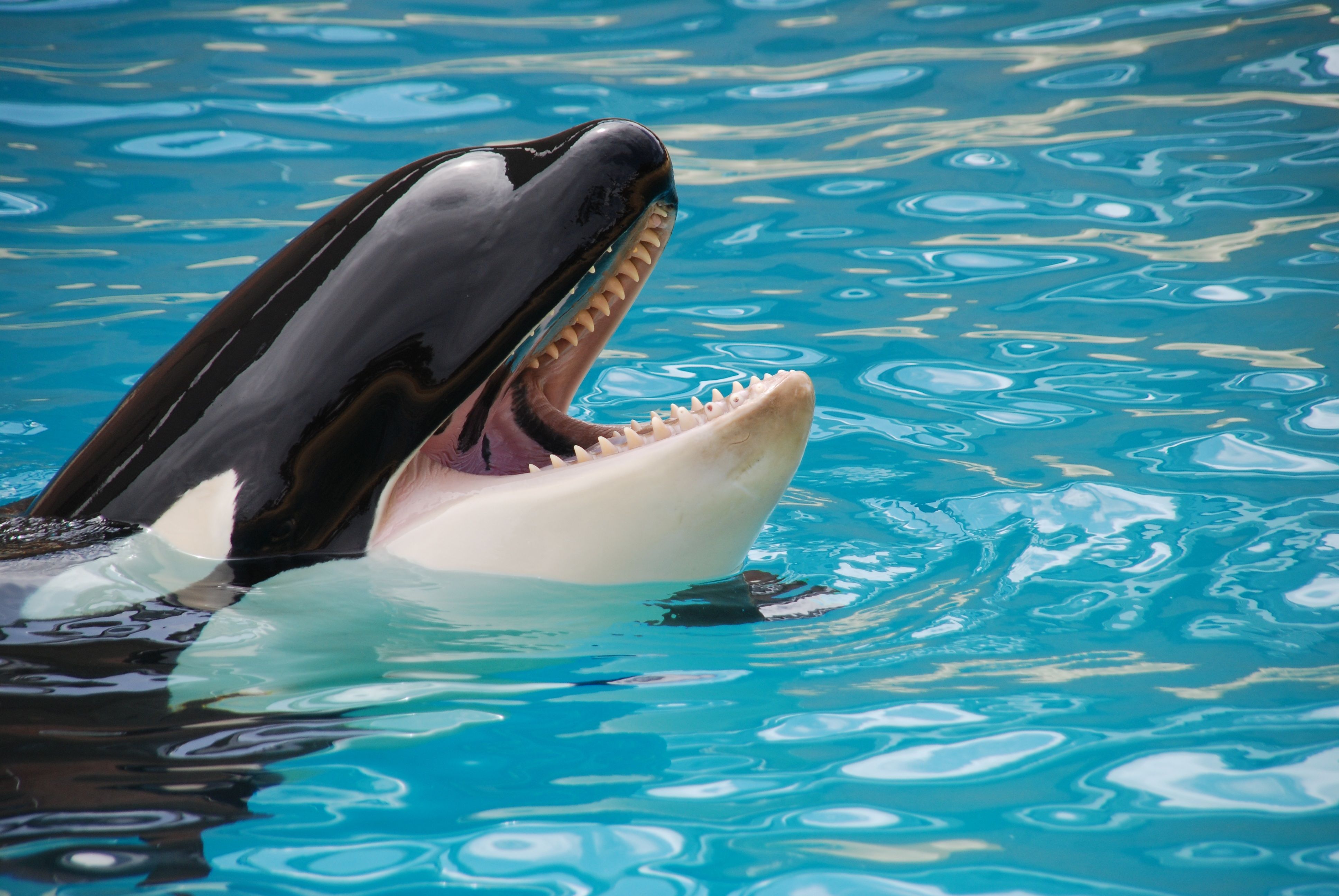
In June 1965, a young male orca drifted into a salmon net near the village of Namu in British Columbia. The fisherman who found him rang Ted Griffin, who owned the Seattle Marine Aquarium, and Griffin bought the whale for eight thousand dollars, which turned out to be the cheapest part of the exercise. Namu was towed 450 miles south in a floating pen. Crowds lined the Seattle waterfront. Aircraft circled.

Namu became the first captive orca to perform in the water with a person, and Griffin — riding him in front of paying audiences — became a local hero. There was a film, Namu, the Killer Whale, made by United Artists in 1966, in which a marine biologist befriends a misunderstood whale and must persuade frightened fishermen that the animal is gentle. There was a theme song. There was, in the space of about eighteen months, a wholesale reversal of the killer whale’s public reputation from oceanic vermin to enormous friendly dog.

Namu died on 9 July 1966, having survived just over a year. He had picked up a bacterial infection from the polluted water of his pen; weakened, he became entangled in the cables of his enclosure and drowned. Griffin later said he wished the whale had succeeded in what he chose to describe as a break for freedom.

Here is the fact around which everything else in this essay orbits. The film that taught the world to love orcas is the film that built the industry that killed them. Demand for a Namu of one’s own was immediate and enormous. Griffin founded a whale-catching company to supply the marine parks; his best customer was SeaWorld. He took the calf who became the original Shamu, having harpooned her mother. By 1970 the Penn Cove captures were using boats, aircraft and explosives to round up young whales in Puget Sound, and four calves drowned in the nets. The bodies were weighted and sunk. They were found the next day.

None of this was a betrayal of the gentle-giant story. It was the direct commercial consequence of it. You cannot sell tickets to see a monster up close. You can sell an enormous number of tickets to see a friend.


Find me a fish

In the middle of the night in 1975, Dino De Laurentiis telephoned the screenwriter Luciano Vincenzoni. Vincenzoni admitted to having seen Jaws. De Laurentiis instructed him to go and find a fish tougher and more terrible than the great white.

Vincenzoni, by his own account, had no interest in marine life whatsoever. His brother Adriano, who did, pointed him towards killer whales. The orca is not a fish, but that has never been the sort of objection that slows a producer down.

What emerged was Orca, directed by Michael Anderson, shot largely around Petty Harbour in Newfoundland, released by Paramount in July 1977 on a budget of six or seven and a half million dollars, depending on whose accounting you trust, and taking $14.7 million. Ennio Morricone wrote the score, which is far better than the film deserves. Richard Harris plays the fisherman with the full-throated commitment of a man who has decided that if he is going to be in this, he is going to be in this. Charlotte Rampling is the marine biologist. Will Sampson, two years on from One Flew Over the Cuckoo’s Nest, is the Indigenous man who understands what the whale is doing. Bo Derek loses a leg, in case anyone had failed to spot which film was being remade.

The plot: Harris’s character harpoons a pregnant female orca. She miscarries on his deck, in a sequence still capable of clearing a room. Her mate then works through his boat, his livelihood and his town until the two of them can settle it on open water.

It is, of course, Moby-Dick turned inside out. Melville’s whale is a blank onto which Ahab projects everything; the horror is that we cannot know whether there is anything behind it. Vincenzoni’s whale has motive, grief, a plan, and something close to a legal case. The animal Melville could not be bothered to describe has become the only character in the film with a coherent inner life.


The phone call

Which brings us back to Guia III, and to the strangest document in this whole story.

In the weeks after the sinking, Giorgio Falck received a telephone call from Los Angeles. The caller introduced himself as a friend of Falck’s brother-in-law. He gave his name as Vincenzoni. He said he had been studying killer whales for three years and was writing a book about them.

He then told Falck a story. In New Zealand, a fishing boat had injured a female orca with its propeller. The male had sunk the boat — and he was careful with the detail, noting the vessel’s seventy-millimetre planking against Guia‘s thirty-five. A month later, in the same place, the same animal had killed a crew of six.

That is the plot of Orca, related as established fact, to a man who had just lost his boat, sixteen months before Paramount put it in cinemas.

I cannot prove that this was Luciano Vincenzoni, and I am not going to pretend otherwise. The claim of three years’ study sits awkwardly against a brief handed down in 1975, and it is at least possible that the caller was his brother Adriano, the one with the zoological interest. But the call came from Los Angeles. The surname is not common. The timing lands precisely inside the film’s development. And the anecdote is not merely similar to Orca‘s premise; it is Orca‘s premise, with the numbers filed off. On the balance of everything we know, this is the film being written, out loud, down a transatlantic line, to a survivor.

It is worth pausing on what that story actually asserts. Six people killed by a single orca would be, by a wide margin, the worst loss of human life to a killer whale ever recorded anywhere. It appears in no register, no report, no scientific literature. Somebody in Los Angeles in 1976 was collecting atrocity stories about killer whales, and either could not tell or did not care which of them were true.

And then Falck — who had every reason on earth to want a monster, who had just watched a boat he loved go down and who describes the orca as a hateful animal — refuses the story flat. He tells the caller he is perfectly aware sea monsters are in vogue since Jaws. He is aware that Guia‘s sinking is of interest chiefly because it happens to involve a topical one. But he is interested in boats and in racing, not in orcas and not in violence.

The man with the strongest possible claim on the revenge narrative would not take it. It was offered to him by a screenwriter, and he handed it back.


Yaka, Nepo, and the whales in the lorries

Orca was made with real whales, and this is where the film stops being merely silly and becomes something closer to evidence.

The two animals identified as the film’s leads are Yaka and Nepo. They were captured together on 11 December 1969 at Pender Harbour in British Columbia, when a group of twelve orcas — Northern Residents, a fish-eating population — was surrounded in a storm and six young animals taken. Yaka was around a year old. Nepo was around two. They were podmates. They were sold together, moved to Marine World in California on 28 December, and put in a tank with an older female called Kianu.

For a few years the three of them did well enough. Kianu grew possessive of Nepo and aggressive towards Yaka, and was sold to Japan in April 1978, which left the two survivors of the Pender Harbour capture alone together. The park hoped Yaka would breed. She never did.

Nepo died on 10 July 1980, of acute bronchopneumonia and kidney disease, at roughly twelve or thirteen years old. Yaka was beside his body and reportedly would not leave it, and afterwards stopped eating and stopped engaging with her trainers. A companion was brought in, an Icelandic female called Vigga, and the two of them performed together for over a decade. Yaka died on 29 October 1997 of a respiratory infection, having spent nearly twenty-eight years in tanks. She had been taken from the sea before she was old enough to have learned to hunt in it.

Marineland of the Pacific also supplied whales to the production, and the likeliest candidate there is Corky II, taken in the same 1969 round-up, though the crediting on this has been muddled for decades and I would not swear to the detail.

They are, by any reasonable measure, wonderful in the film. They are also, by any reasonable measure, giving away the entire game, because their dorsal fins have collapsed. It is a condition essentially unknown in wild males and rare in wild females, and near-universal in animals held long-term in tanks. It is on screen. In a film about a wild orca’s stolen family. In 1977. Nobody in the production appears to have thought it worth a comment.

Because the whales could obviously not be made to bite off Bo Derek’s leg or carry a corpse across a harbour, the effects team also built animatronic orcas out of rubber. These were good. They were good enough that when they were driven to set, animal rights activists blocked the lorries, believing there were live whales inside.

Sit with the shape of that for a moment. Protestors on a road in the mid-seventies, correctly identifying the crime, correctly identifying that whales were being trucked about for entertainment, and stopping entirely the wrong vehicle. The animals they were trying to save were not in the lorries. They were already at the park, already performing twice a day, and had been for six years. They would go on doing it for another twenty.


The door closes

Free Willy arrived in 1993 with a plot about a boy liberating a captive orca, and had the singular distinction of generating a real liberation campaign for its own star. Keiko had been captured off Iceland and was living in a small tank in Mexico City. Public pressure moved him to Oregon, then to Iceland, then to a sea pen; he eventually swam to Norway, where he died in 2003. Whether it worked depends entirely on what you thought it was for. He never rejoined a pod. He also spent his last years in the sea.

Then 2013, and Blackfish, and the argument was effectively over. What the film did was not reveal that captivity was cruel — people had been saying so since Namu — but connect the cruelty to the deaths of specific named human beings, and make the connection impossible to un-see. Every human being ever killed by an orca has been killed by a captive one. There is no confirmed fatal attack by a wild killer whale anywhere in the record, ever. The animal only becomes a man-killer inside a tank.

That is a devastating fact for a monster movie. It means the horror cannot be located in the animal. It can only be located in us.


The film that argues itself out of existence

Killer Whale arrived in January 2026, directed by Jo-Anne Brechin and co-written with Katharine E. McPhee, distributed by Lionsgate. Ceto is an orca held in a Thai marine park; after she kills a janitor, the management dumps her into the open sea. Two friends on holiday end up trapped in a lagoon with her.

On paper this should work. The premise carries genuine moral charge, the animal has a real grievance, and the audience arrives pre-loaded with everything Blackfish taught them. The film reviewed catastrophically — twenty per cent on the Tomatometer, and, more tellingly, twenty-one per cent with audiences.

The reviews are unusually consistent about why. Screen Rant found it succeeded as a sombre meditation on captivity and failed as a survival film, and concluded that the director was less interested in making something vicious than in condemning what had been done to the whale. Rue Morgue put its finger on the structural problem: the film cannot decide whether Ceto is an object of fear or of sympathy, and so makes the woman who cares most about her into her principal victim. The film even puts the argument for the defence into its own dialogue, noting that the only recorded fatalities have involved captive animals — a point one reviewer observed, drily, that nobody watching was going to care about.

So the received wisdom is that the captivity angle should have given the film an edge, and the evidence is that it did precisely the opposite. It disarmed it. You cannot frighten an audience with an animal they have already acquitted. The moment you explain why she is angry, you have converted your monster into a plaintiff, and the remaining eighty minutes become a courtroom drama in which everybody has already agreed on the verdict.

The orca is, I think, the only screen monster we have successfully talked ourselves out of. We know perfectly well that sharks are misrepresented and ecologically vital, and The Meg still took a billion dollars. We know bears are not malevolent and we still watch films about them eating people. But the orca’s rehabilitation was so recent, so total, and so specifically bound up in the story of its captivity that the monster no longer fits inside the animal. There is nowhere left to put it.


The revenge was always ours
And then, in May 2020, the whales started sinking boats.

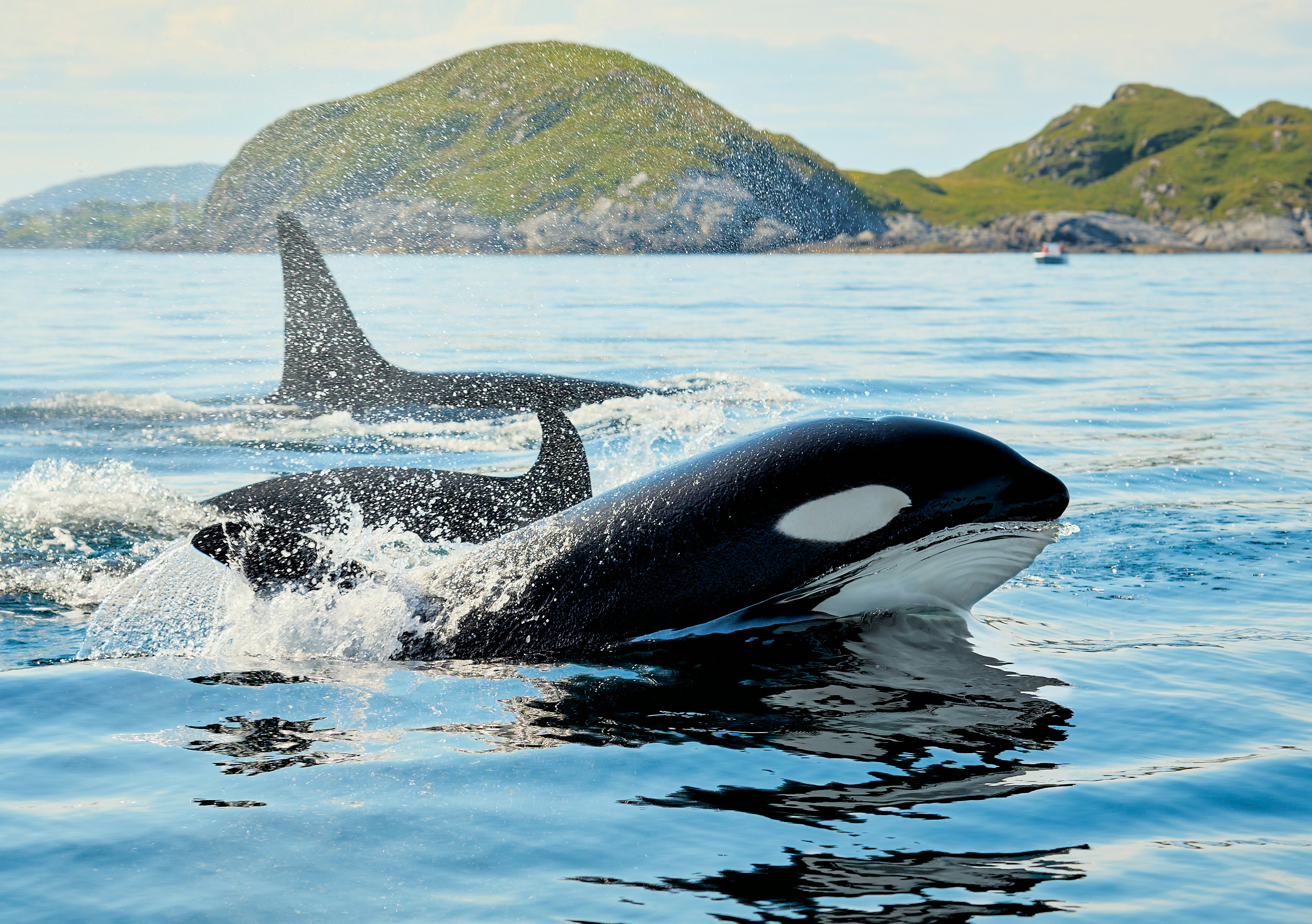
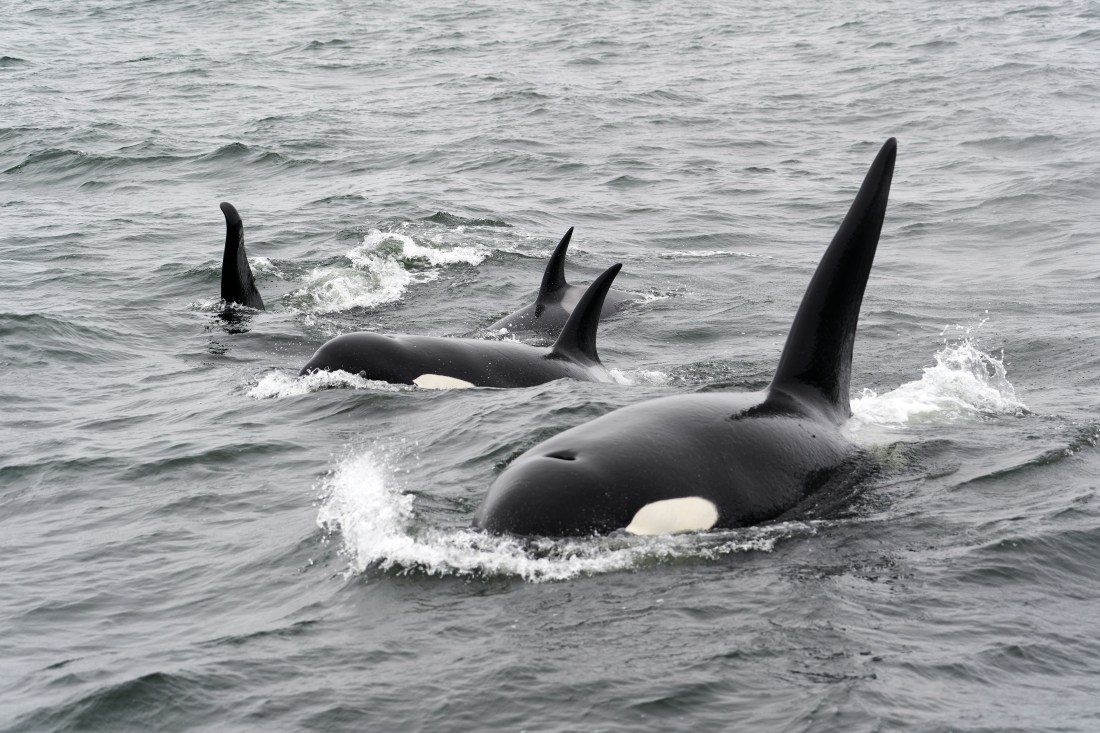
Off the Iberian Peninsula, orcas began ramming vessels and biting the rudders off sailing yachts. By the middle of 2025 there had been more than 750 recorded encounters, over 250 boats damaged, and at least six sunk. The behaviour spread. The press adored it. The animals were assigned the collective designation “Gladis”, after Orcinus gladiator — whale-fighter — and the internet did what the internet does. They were called comrades by a labour organiser and by a newspaper columnist. Merriam-Webster announced that it welcomed its new Delphinidae overlords. A revenge fantasy that Paramount could not sell in 1977 was, in 2023, the most popular story in the world.

Except that it is not a revenge fantasy. It is fifteen animals.

The Iberian orcas are a genetically and culturally distinct subpopulation, listed by the IUCN as Critically Endangered since 2019, numbering fewer than forty individuals in total, and dependent on Atlantic bluefin tuna, which has its own problems. Around fifteen of them have taken part in the boat interactions: eleven juveniles and four adult females, with no identifiable ringleader. The rate is falling — 207 interactions in 2023, 136 in 2024, 125 the year after. Nobody has been hurt. Not once, in over 750 encounters. As GTOA’s Alfredo López has pointed out, they do not come in hard and sink the boat, which they could do easily if that were the objective.

Fifteen adolescent whales from a population smaller than a decent pub quiz turnout, most of them apparently playing, against which we have constructed an international narrative of maritime vengeance.

And here is the fact that ought to end the argument. Through the 1960s and 1970s, while Pacific orcas were being chased by aircraft, herded with explosives, netted, and stripped of their young — while Yaka and Nepo were being taken, sold, and put to work — those whales did not attack boats. Not one. There is almost no evidence that wild killer whales seek revenge at all. A chimpanzee robbed of food will retaliate. An aggrieved macaque will settle the score, sometimes against a relative of the offender. Orcas do not do this. The trainers killed in the parks were killed by animals that researchers believe were psychologically wrecked by the conditions they were kept in, which is not revenge either. It is something worse and much sadder.

The revenge was never theirs. We wrote it. We filmed it, using the actual victims as extras, in a park, for money. And half a century later, when a handful of bored teenagers off Cádiz started snapping rudders for reasons no one can establish, we recognised our own script and gave it a standing ovation.

The coda is uglier. Sailors are now carrying illegal firecrackers to throw at a critically endangered species. Some play death metal through speakers. Others bang steel bars against the hull. Marine mammal biologists are openly braced for someone to shoot one. The single population that has ever cost us anything is the one we are arming against, while the whales who genuinely had cause never lifted a fluke.


One of the six young orcas taken at Pender Harbour on that December night in 1969 is still alive. Corky II went to Marineland of the Pacific rather than Marine World, and to SeaWorld San Diego in 1987 when Marineland was bought and closed. She is around sixty-one. She has been in tanks for fifty-six years, longer than any orca in history. She was pregnant seven times and none of her calves lived past seven weeks. She has cataracts. She still performs.

Her siblings are alive in the water off British Columbia. When researchers played her family’s calls to her in 1993, after twenty-four years of captivity, she reacted so strongly that she was seen to shudder.

Melville thought the killer whale was hardly worth the ink. Namu made it loveable, and the loveliness built the tanks. De Laurentiis wanted a fish tougher and more terrible than the great white, and got a mammal that has never knowingly killed anybody. Killer Whale discovered in 2026 that you cannot run a monster movie on an animal the audience has already forgiven.

And a whale who is very probably in Orca is still swimming in circles in San Diego, forty-nine years after the film came out, having been cast as the monster in a story about her own abduction, and having never in fifty-six years done a single thing to deserve the part.

Monster Monday: The Mahamba

The Congo’s fifty-foot crocodile

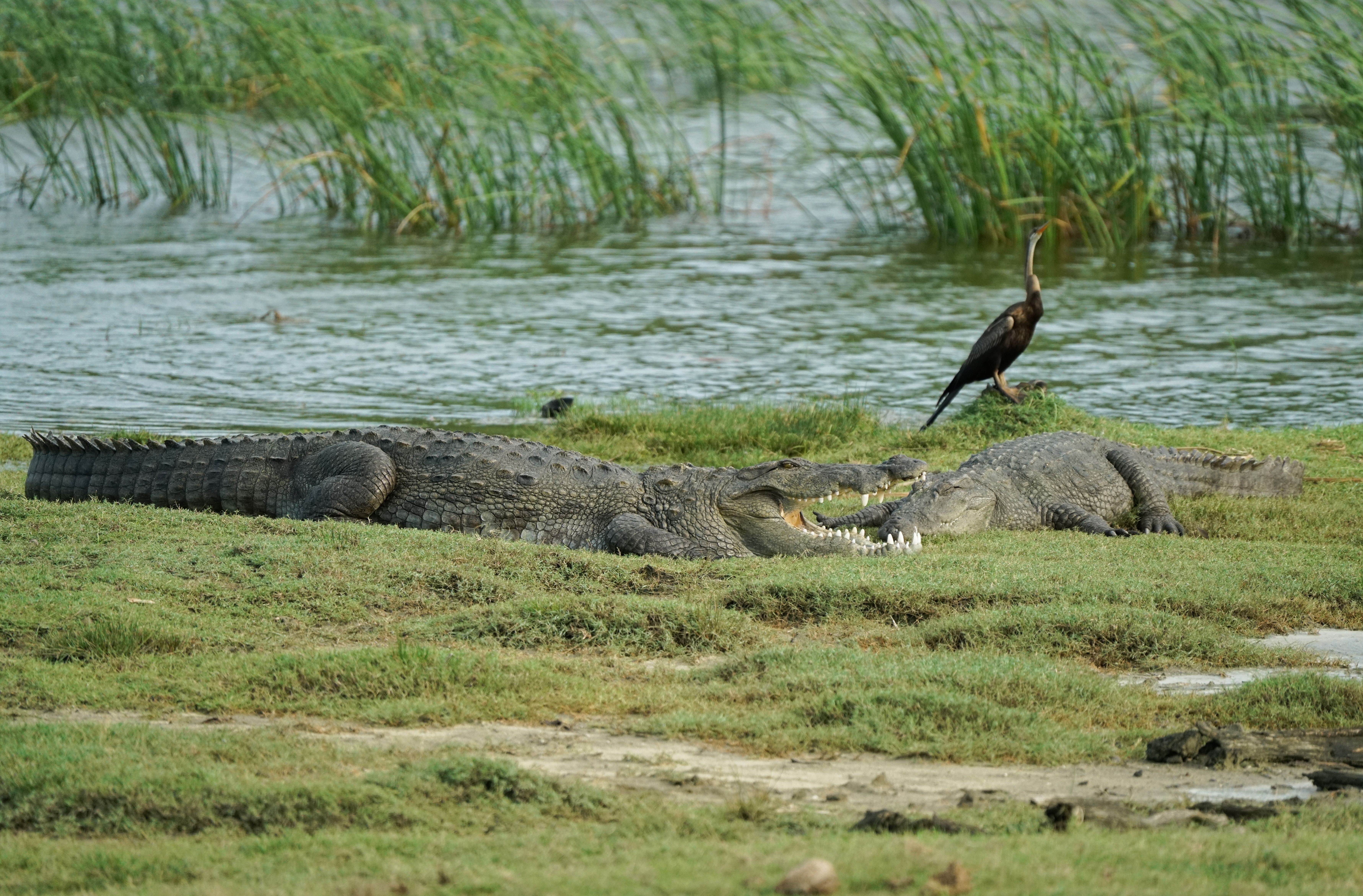
Sometime in early 1888, a small government steamer was making four miles an hour up the Congo River when she ran aground. There’s nothing remarkable in that — Africa’s second longest river and the world’s deepest is a maze of shifting sandbanks, and any pilot expects to feel his hull kiss the bottom now and again. What was remarkable was that this sandbank began to heave. The water around the bow churned in a way no sandbank has any business doing, and the steamer’s engineer, leaning over to find the cause, watched the bank itself detach from the riverbed and bolt. It was a crocodile. One longer, he was certain, than his forty-two-foot boat, and it crossed the bar and tumbled into deep water before he could reach for a rifle. They had run the steamer clean into a living animal at speed, jammed it into the sand, and it had shrugged them off and left without a mark on it.

The engineer was John Reinhardt Werner, and the animal, if the Congo’s rivermen were to be believed, was the Mahamba.

A witness in the wrong century

Werner is an unusually good witness for a monster, which is precisely what makes him a problem. He was not a folklorist collecting tales around a fire, nor a Victorian showman selling a story. He was a working engineer keeping the boilers running on a colonial waterway, and he wrote his account up plainly in A Visit to Stanley’s Rear-Guard (Blackwood, 1889) as one observation among many practical ones. His steamer, the A.I.A., took her name from the Association Internationale Africaine — the “philanthropic” society, dedicated on paper to lighting the darkness of Africa and ending the slave trade, that served as Leopold II’s cover story while he assembled the private empire that would become one of the most murderous colonial regimes in history. I wanted to make that clear, because the romance of the Victorian riverboat curdles the moment you remember what the riverboat was for. Werner was part of the apparatus. His crocodile sightings come to us stamped with the flag of a project built on forced labour and mass death.

That grim provenance aside, Werner’s testimony is specific. He described these giant crocodiles as almost common on the river, and he did not hedge on size. On a low sand-spit beyond the grasses, he wrote, one might see a monster of perhaps fifty feet; he claimed to have seen several considerably longer than the A.I.A. On one occasion, stalking ducks across a sandbank with only a shotgun, he found the largest crocodile he had ever seen lying between him and his supper. Measuring it by eye against the steamer moored three hundred yards off, he reckoned it a full fifty feet long, with the ridged crest of its back standing four feet clear of the sand. He sent a boy for his rifle, thought better of the whole enterprise, and in retreating spooked the ducks — whereupon he took a shot at them, missed, and startled the crocodile into the water. It is a very funny, very human anecdote, and it has the ring of a man reporting exactly what he saw rather than embroidering a legend.

The scale problem

The Nile crocodile, the largest predator these waters officially hold, is a genuinely formidable animal that tops out at roughly twenty feet. A big saltwater crocodile — the largest living reptile on Earth — reaches perhaps twenty-one. Werner was describing something more than twice that length: a creature outside the entire range of any crocodile known to science, living or dead.

And that last phrase is where the Mahamba does something most cryptids cannot. It out-measures the fossil record.

The usual yardstick reached for here is Sarcosuchus imperator, the Cretaceous giant nicknamed the “SuperCroc.” When Paul Sereno’s team described it for a rapt public in 2001, the headline figure was around forty feet — a crocodile-shaped monster that shared the rivers of what is now Niger with dinosaurs and, on the strength of a five-and-a-half-foot skull, may occasionally have eaten them. Forty feet. Even by that generous early estimate, Werner’s fifty-foot animal is the larger beast.

But the comparison has sharpened since. A 2019 reassessment pulled Sarcosuchus back to a more conservative maximum of about thirty-one feet — and the other contenders for largest-ever crocodilian, Deinosuchus and the giant caiman Purussaurus, cluster in the same thirty-three-to-forty-foot bracket, all of them reconstructed from fragmentary bone. In other words, the best-supported estimate for the largest crocodyliforms that ever lived now sits comfortably below what Werner claimed to have watched sunbathing on a sandbar. The Mahamba is not merely bigger than any living crocodile. It is bigger than the biggest crocodile the earth has ever produced a fossil of.

That should give even a sympathetic and optimistic reader pause.

The second stream

The easy move would be to file Werner under Victorian exaggeration and close the book. What complicates that is a second, entirely independent line of testimony arriving nearly a century later.

In the 1980s the biologist Roy Mackal travelled the Congo basin chasing Mokele-mbembe, the region’s more famous “living dinosaur.” Along the way he collected the vocabulary the Bobangi people used for the animals of their river, and it was more precise than an outsider might expect. There was the ordinary crocodile. There was the Nguma-monene, a long, ridge-backed thing that was something else again. And then there was the Mahamba: not a separate kind of animal but a crocodile in every way that matters — same shape, same habits — only monstrously, impossibly large, forty to fifty feet and more, said to lie up in long tunnels dug into the riverbanks. The people describing it were not confusing it with anything. They were insisting, from direct familiarity with the real crocodiles all around them, that this was one of those and simply far too big.

So we have two witnesses who never met, separated by a hundred years and by every difference of language, purpose and worldview, describing the same specific impossibility in the same specific water. That is a genuinely uncomfortable coincidence, and it is the strongest thing the Mahamba has going for it.

What could it be?

The serious hypothesis is a relic: a surviving or simply undescribed giant crocodilian, a lineage that kept the old Cretaceous dimensions going in the vastness of the Congo swamps where no one has ever managed a proper survey. It is not absurd on its face — the region is enormous, poorly mapped, and has surrendered new large vertebrates within living memory.

The less serious end of the shelf holds the idea, which surfaces now and then in the cryptid literature, that the Mahamba is no crocodile at all but some freshwater relative of the mosasaurs. A 1954 sighting in the Maika marshes is sometimes pressed into service here — a large reptile that reportedly lifted an abnormally long neck from the water before diving. But that long neck pulls in the opposite direction from everything else on record; it describes a different animal from Werner’s flat-backed, short-legged, unmistakably crocodilian giant, and folding the two together muddies rather than strengthens the case.

Then there is the explanation that requires nothing new at all. A single, genuinely enormous Nile crocodile — an old, exceptional individual pushing the upper limit of its kind — glimpsed across open water, with no fixed reference for scale and a rifle conspicuously absent, is exactly the raw material from which fifty-foot estimates are honestly made. Water flatters length. Distance deceives. Fear does the rest. Werner measured his monster against a steamer three hundred yards away, and even a careful man measuring by eye across that gap can be handsomely wrong.

I remember being on the banks of the Chobe River in Botswana, and just happening to look up. At some distance – my estimation was not dissimilar to Werner’s three hundred yard steamer – I saw what I thought was a large tree floating in the centre of the river. It took me a few moments to realised it was of course, a huge crocodile. The size really threw me off and at that distance, I almost certainly over estimated it. But I did think it was every inch of twenty feet, if not more. And I made the comparison to what was in front of me – a tour boat.

So, I have some sympathy for anyone matching boat sizes to unusually large crocodilians. But I think we can accept it’s not an exact science.

Where are the bones?

Sarcosuchus skull at the Museum d’Histoire Naturelle. No children were harmed in the taking of this photo 🙂

Which brings us to the question that closes the file on the Mahamba, as it closes the file on most of its kind.

We know Sarcosuchus was real because it left us a skull the length of a man and enough skeleton to argue over. We know the outer limits of crocodilian size because the fossil record, patchy as it is, has physically produced the animals. The Mahamba has produced witnesses — good ones, independent ones, a century apart — and not one confirmed bone. No skull, no skeleton, no shed tooth the size of a hand, nothing hauled from a bank or found bleaching on a sandbar. For an animal supposedly common enough that a working engineer saw several in the course of doing his job, that absence is very loud.

Sarcosuchus outgrew the living world and left us its remains. The Mahamba outgrew even Sarcosuchus, and left us only the water it disappeared into.

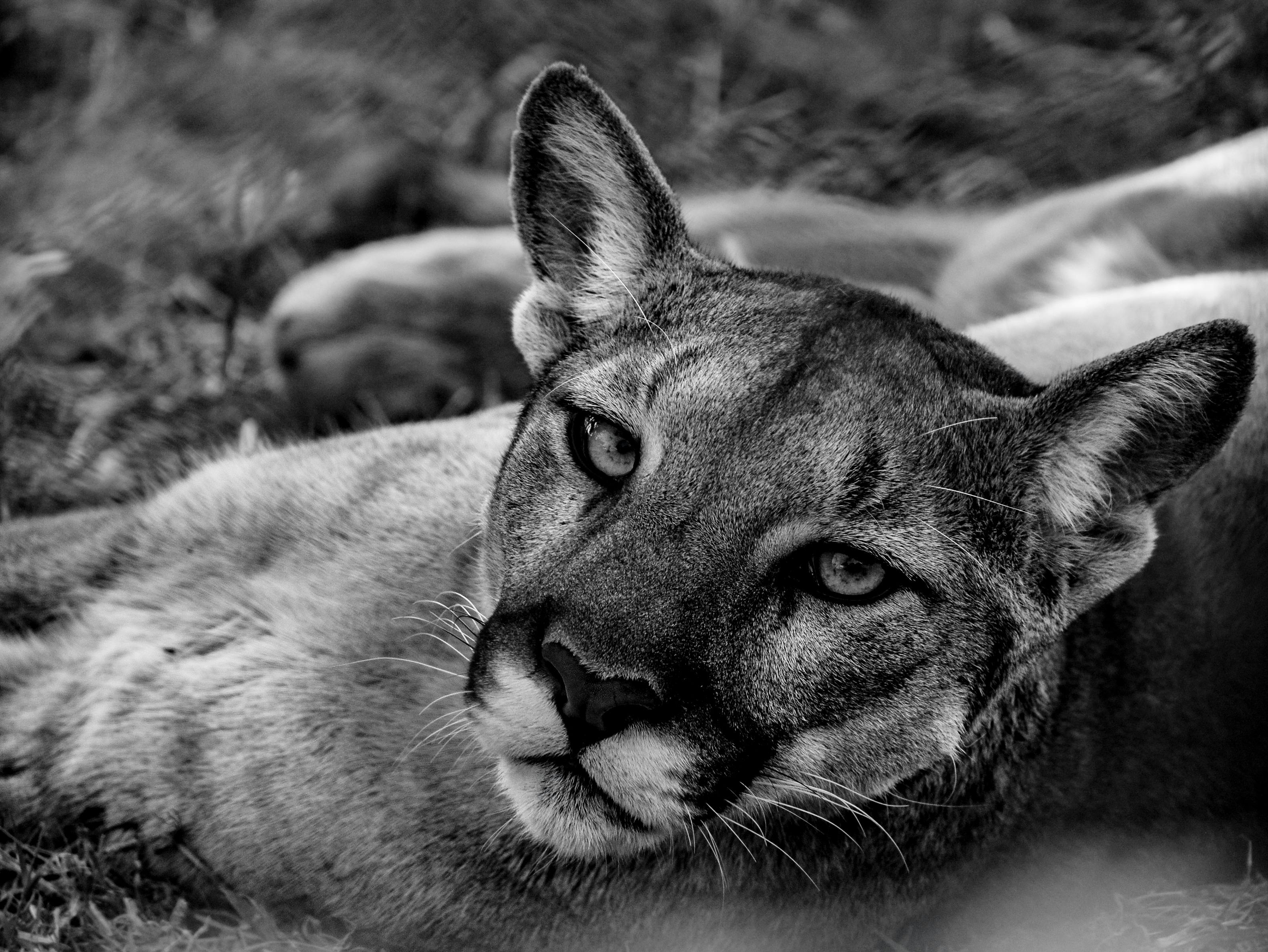
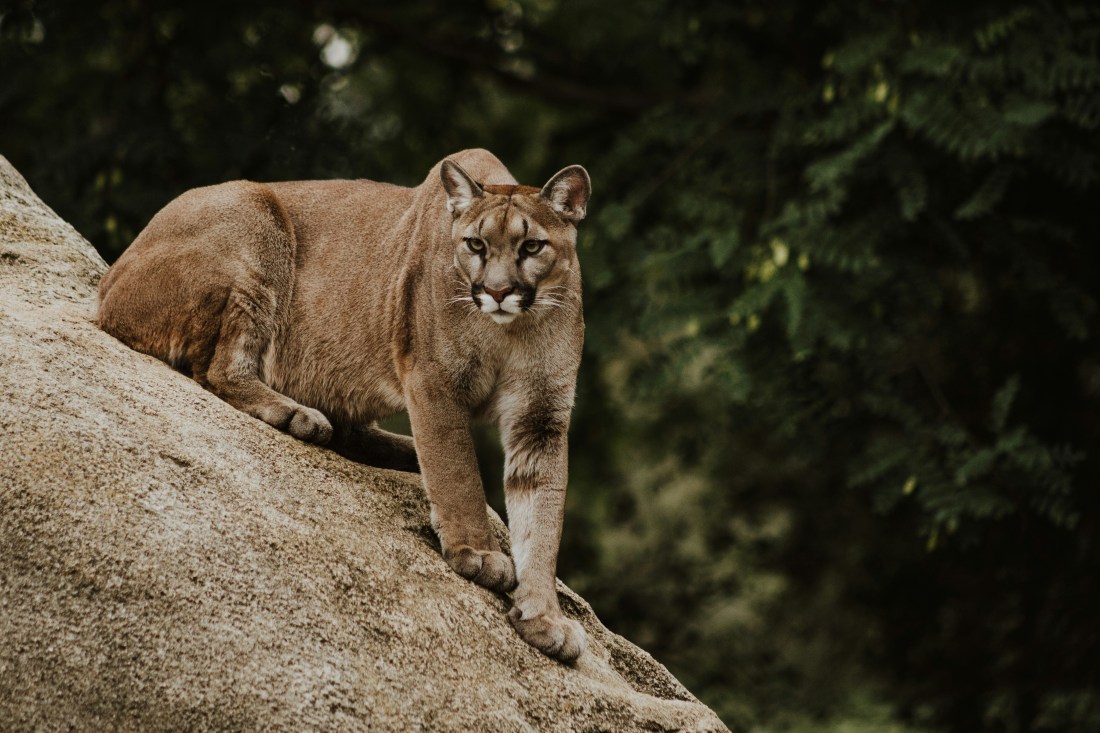
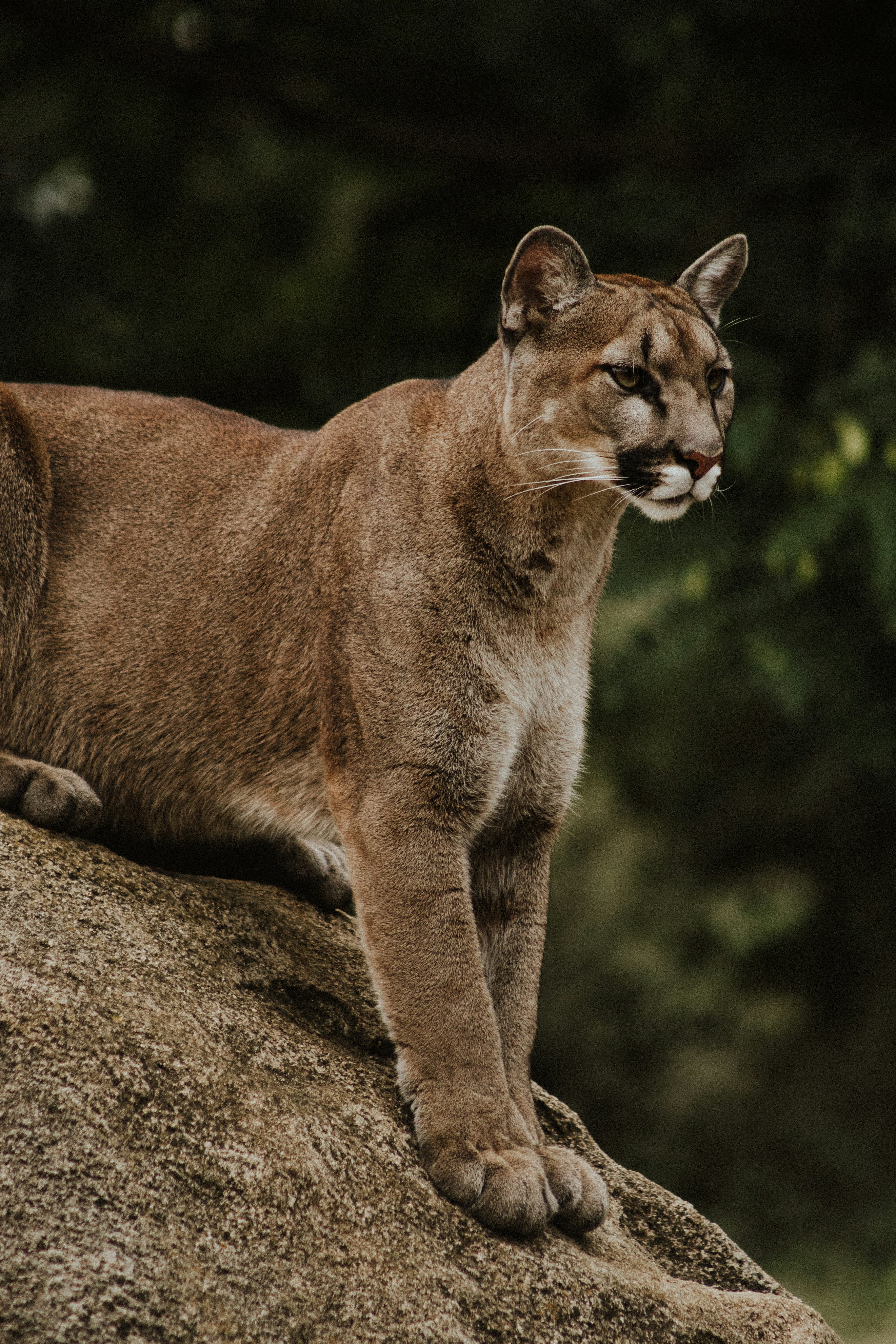
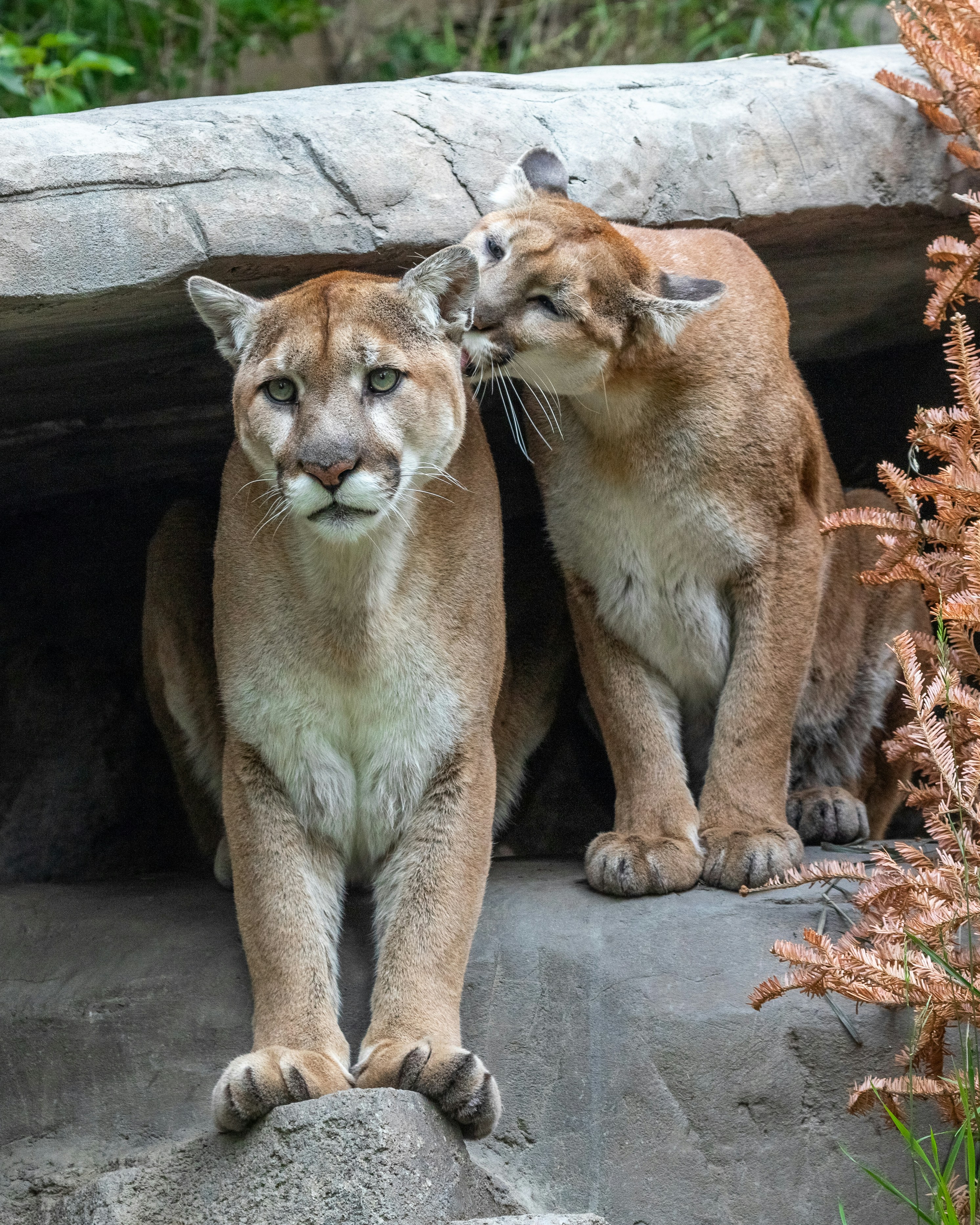
Movie Monday: Why Hollywood Has Never Made a Mountain Lion Movie

Sharks have Jaws. Bears got BackcountryGrizzly, and The Edge. The wolf played the villain in The Grey. The killer whale has Orca. Crocodiles claimed Black WaterLake Placid, and Crawl. There are snake movies. Scary spiders from the silver screen. There’s even a film where Bruce Dern is menaced by a sentient bee swarm. And of course, we can never forget Sharknado, despite some of us trying to (don’t fret, I have a soft spot for it really).

Yet the mountain lion has practically nothing.

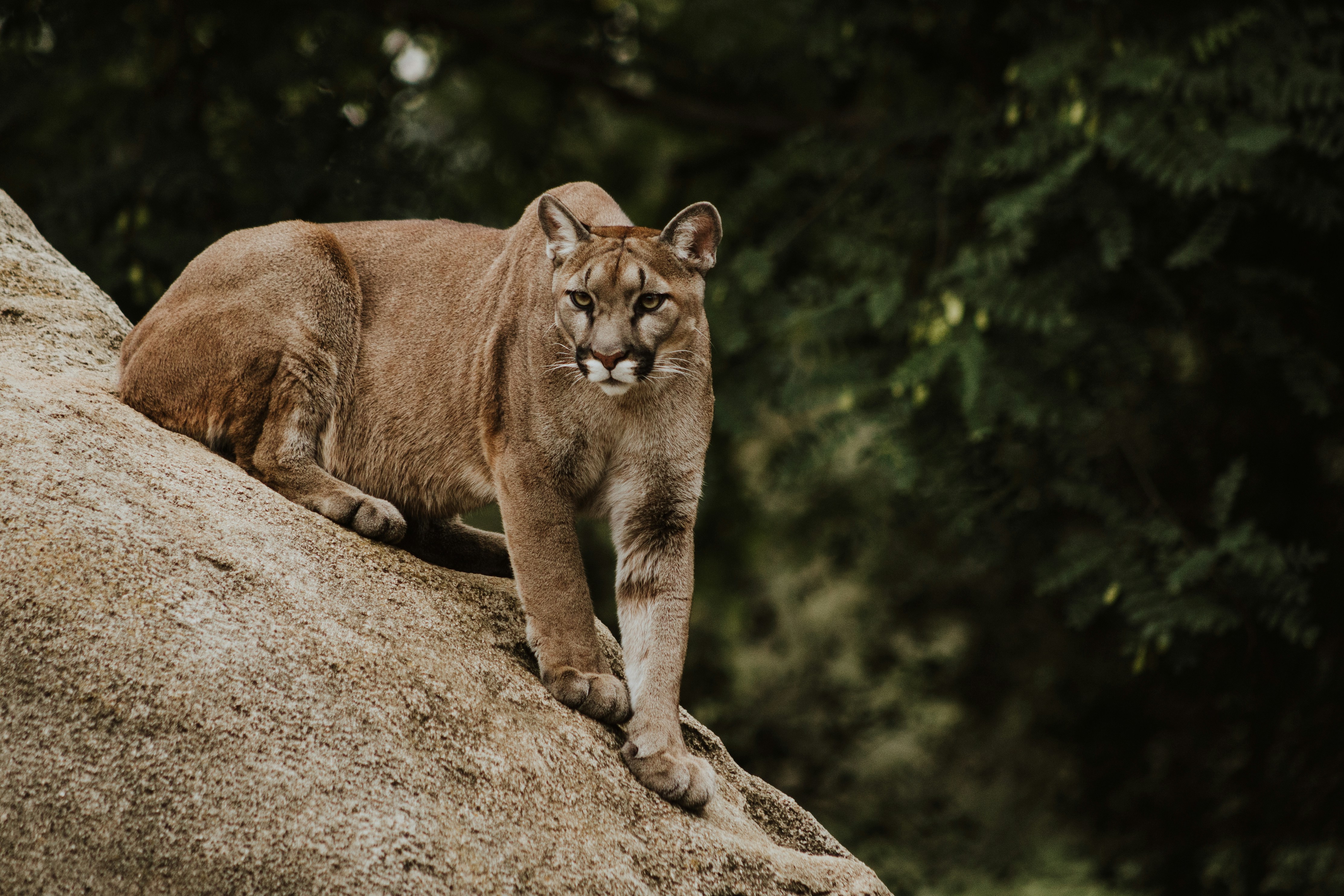
This is strange enough on its own. The cougar — also called puma, panther, catamount, and mountain lion depending on which state you happen to be in — is the most widely distributed wild land mammal in the western hemisphere. It is the apex predator of three continents. It has killed people across at least eleven of the United States. The 1991 attack on Scott Lancaster, which I wrote about a few weeks ago, was only the most ‘photogenic’ in a long line. And yet Hollywood, which has built entire subgenres out of much less, has produced no Jaws for the mountains. The few films that feature a cougar at all keep it offscreen, reframe it as a misunderstood Disney protagonist, or bury it inside an ensemble cast. The absence is so total that it starts to look intentional.

And I think it is. Or rather, I think it’s the product of several things working at once, with none of them about cinema and all of them about us.

The exceptions that confirm the absence

The closest the studio era got to a mountain lion movie was William Wellman’s Track of the Cat (1954), starring Robert Mitchum as a rancher hunting a cougar that’s been killing his livestock. The cat is barely shown. It functions as a Moby-Dick stand-in and a symbol of the family’s rotting psyche rather than a creature with claws. The mountain lion exists offscreen as metaphor. It is the absence around which the film is built.

Twenty-three years later, Day of the Animals (1977) gave the cougar a screen credit in an ensemble of murderous wildlife. Hawks, dogs, snakes, bears, and a cougar all turn on a group of hikers above five thousand feet, driven mad by ozone-depletion-induced psychosis. The premise tells you everything. To make a mountain lion dangerous enough for a horror film in 1977, it required a sci-fi scenario for it to be dangerous at all.

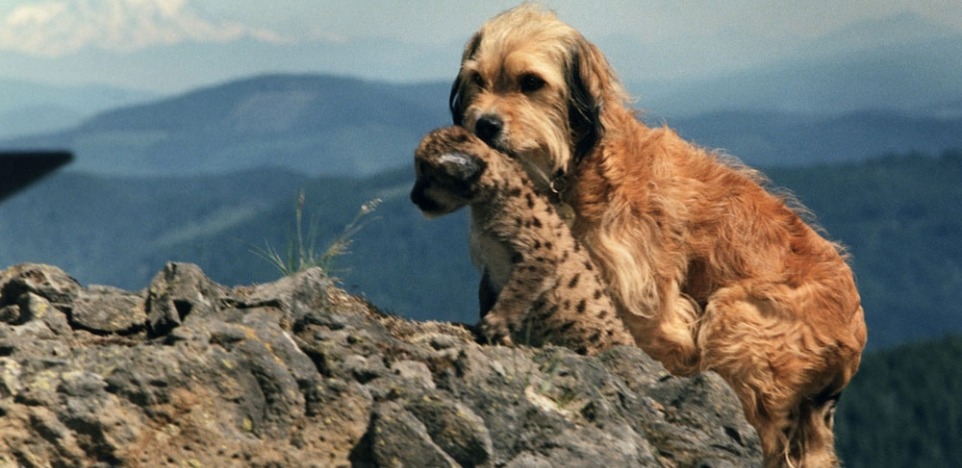
Then there is Benji the Hunted (1987 – all together now, awwww), in which a cougar menaces a small dog and a litter of orphaned cubs. This is the most telling of the three, because it captures the prevailing pre-1991 view of cougars perfectly. The mountain lion was a threat to small mammals and unattended children. It was not, in the popular imagination, a serious threat to a grown adult. The hunting and ranching culture of the American West had been calling cougars “scaredy cats” for the better part of a century, and the films of the era took the description at its word. The Disney filmography, meanwhile, is full of cougar protagonists such as in Sequoia (1934), Charlie, the Lonesome Cougar (1967), and Run, Cougar, Run (1972). All are sympathetic, soft-focused, and almost domesticated. Not one is a killer mountain lion movie.

The statistics, and a death in 1991

The pre-Lancaster view that cougars were essentially harmless had statistical cover. In California, there were two fatal mountain lion attacks in 1890 and 1909, and then none for seventy-seven years. Hollywood was not declining to make a mountain lion movie. There just wasn’t, in any meaningful sense, a mountain lion to make a movie about.

Then January 1991 happened. Scott Lancaster, eighteen, was killed and partially consumed while jogging near Idaho Springs, Colorado. Barbara Schoener was killed jogging in Auburn, California, in 1994. Mark Reynolds was killed mountain biking near Mission Viejo in 2004. In March 2024, brothers Taylen and Wyatt Brooks were attacked while looking for shed deer antlers in El Dorado County; Taylen, twenty-one, was killed.

These are real deaths. They also remain extraordinarily rare. The Mountain Lion Foundation puts the lifetime tally at twenty-nine fatal attacks in North America since 1868, which is roughly 0.18 a year. Yale Environment 360, working with more recent figures, has it at thirty-two fatalities and more than 170 non-fatal attacks since 1890. Either way: vanishingly rare. Every year in the United States, around 777 people die from mosquito-borne illnesses, twenty-eight are struck by lightning, eighty-six die from animal venom, and somewhere between 35,000 and 45,000 die in motor vehicle accidents. In California alone, two mountain lions die from car strikes every week.

Even the lethality is overstated. When mountain lion attacks do happen, around 15% are fatal. The corresponding figure for African lions is 62%. For tigers, 78%. For leopards, 32%. The cougar is, by a generous margin, the least dangerous big cat to encounter, yet the one Americans are by far the most afraid of (and yes, I realise there is a distinct lack of the others to worry about in the US – but my argument is that the fear is out of proportion to the threat).

That gap is what this piece is interested in. The attacks since 1991 are real. But, the fear they generate is wildly disproportionate to them. And in all that fear, in all that disproportion, Hollywood still hasn’t made the movie.

The fear is older than the species

Some of the reason for that fear is in our bones. Literally.

In the 1970s, the South African palaeontologist C.K. “Bob” Brain examined an Australopithecus robustus skull from Swartkrans Cave and found two clean canine punctures on the parietal bone, spaced exactly to match a leopard’s lower jaw. The leopard had killed the hominin and dragged the corpse by the head (the same way modern leopards still carry kills into trees today). Brain’s wider analysis of the Swartkrans assemblages overturned the old “Killer Ape” hypothesis that early hominins were the dominant predators of their landscape. For most of our deep history, it was the other way around. We were the prey.

The big cats of that period included Dinofelis, a false sabre-toothed cat that Brain identified as something close to a specialist primate killer that selected hominins and baboons as prey, and dragging them to its lair. A predator whose ecological niche was eating things that looked like our ancestors. The pattern persisted for an extraordinarily long time. A study published in 2025 used AI bite-mark analysis on the OH 7 fossil – the juvenile Homo habilis specimen that defined the species in 1964 – and concluded with high confidence that a leopard had killed it, two million years ago. Even as our brains were enlarging, we were on the menu. In modern African rainforests, leopards still kill primates: in one study of the Tai Forest in Côte d’Ivoire, primate remains turned up in sixty-four separate scat samples.

The point is not that mountain lions are leopards. The point is that the primate fear of stealth cats is one of the oldest things about us. We’ve shared territory with bears for tens of thousands of years. Cats though, have hunted us for millions. The cougar arrives in the American imagination dragging a tail of evolutionary memory it had nothing to do with earning.

The political cougar

The other reason, and the more interesting one, I think, is that the mountain lion is too useful as a symbol to be retired into fiction.

In November 2024, Colorado voters defeated Proposition 127, which would have banned trophy hunting of mountain lions, bobcats, and lynx. The campaign against the proposition, bankrolled in part by hunting and ranching interests, ran television ads claiming that unchecked mountain lions would “continue to decimate Colorado’s deer population, killing more than 200,000 deer each year.” CBS Colorado, fact-checking the ad, generously called the claim speculation. Colorado Parks and Wildlife’s own 2020 management plan notes that the impact of lion predation on deer populations is, in its own words, “poorly understood.” The state has recorded twenty-five lion attacks on humans since 1990 and four fatalities ever. Meanwhile, hunters had been taking around 500 mountain lions and 880 bobcats a year. The animal is hunted more than it is the hunter by several orders of magnitude.

In California, Senate Bill 818 — “Taylen and Wyatt’s Law” — was introduced in 2025 after the El Dorado County attack. The bill originally sought to legalise the use of hounds to haze mountain lions away from populated areas. The Senate Natural Resources Committee gutted the hounding provision via amendments and rerouted the bill toward a broader “conflict reduction program.” One real tragedy, immediately translated into legislative pressure for predator-control infrastructure. Whatever your view on the policy, the cultural move is unmistakeable. One cougar is being used as the avatar of every cougar in the state.

The horror-film cougar, if you made one, would have to die at the end of the third act. The political cougar can’t. It needs to remain out there, prowling the wildland-urban interface, justifying hunting tags and ballot measures and house bills, year after year. The deep evolutionary fear keeps the audience primed. The rural-political machinery keeps the threat permanent. Hollywood didn’t decline to make the mountain lion movie. The mountain lion movie is being run, on a continuous loop, in the legislatures of the American West.

The image problem

Even if you tried to make the film, you’d run into something more practical. The mountain lion has an image problem.

The African lion arrives at any production with a cinematic toolkit that’s been millennia in the making. The mane is the most efficient piece of visual shorthand in the animal kingdom, that silhouette alone tells the audience everything. The roar is recognised on every continent and runs under the MGM logo. Prides give you ensemble drama, defended cubs, and the Ghost and the Darkness premise of the man-eaters working as a pair. The savanna gives you wide-open golden-hour cinematography. And underneath all of that, you have heraldic and scriptural weight in the form of Aslan, the Lion of Judah, Daniel in the den, and the lion on a hundred national flags. Beast, Prey and The Ghost and the Darkness just have to deliver on a promise the culture made centuries earlier.

The mountain lion has almost none of this. No mane, no silhouette, just a blank tawny body (its latin name translates as ‘cat of one colour’ – and yes, I know that’s not really accurate) with a long tail. And no roar. Cougars physically can’t; the larynx isn’t built for it. What they do instead is scream, and the scream sounds like a woman being murdered, which is genuinely terrifying but in a folkloric, uncanny register, not a majestic-predator one. You can’t score a film with that. You can score a horror film with that, which makes the absence even stranger.

No pride: the cougar is solitary, and two cougars on screen is already a stretch – although we now know related females often spend time together and the species is probably a little more sociable than we thought. No mythic name: the same animal is called mountain lion, cougar, puma, panther, and catamount depending on which county you’re in. Mountain lions have rich significance in Puebloan and Cherokee cosmology, but Hollywood has never learned to speak that language fluently, and the suburban-Western imagination they grew out of treated cougars as vermin to be bountied, not symbols to be revered. No exoticism, either: African lions allow the safari-horror frame, with out-of-their-element Westerners and dramatic geography. Mountain lions live in Cupertino. They eat the joggers of Mission Viejo and the children of Lakewood.

And the macho problem cuts both ways. The African lion gets respect even when it’s killing people. The Tsavo man-eaters are mythologised and taxidermied and on display at the Field Museum in Chicago, alongside the Lion of Mfuwe. Travis Kauffman, the Colorado runner who strangled a juvenile cougar to death with his bare hands when it attacked him, became a punchline meme. Guy strangles housecat. Same act of survival, totally different cultural register. The mountain lion isn’t macho enough to lose to.

The cat we can’t film

So the absence isn’t aesthetic, and it isn’t accidental. The mountain lion is feared too primally to ignore with the evolutionary memory of millions of years of leopard predation doing the priming work for free, yet pictured too plainly to film. The bear can be filmed. Even sharks can be filmed. The African lion arrives pre-styled. The cougar slips into the frame with no mane, no roar, no pride, no exotic geography, no flag, no constellation, and no Aslan, and Hollywood, for ninety years, has not known what to do with it.

What it does instead is something stranger. The mountain lion is being run, in real time, as the antagonist of a different kind of horror story — the one Colorado watched on television in October 2024, the one the California legislature is rehearsing right now. The American predator without a movie has a much bigger role than that. It is the predator we can’t stop thinking about and can’t figure out how to look at.

Man-eater Monday: The Beast at the School Gate

On January 14th, 1991, near a High School in Boulder, Colorado, Scott Lancaster went for a run and didn’t come back. He was 18. It was the first recorded fatal mountain lion attack on an adult in the United States in over a century, and the first ever recorded fatality in Colorado. Yet, everything that preceded it meant it should never have been a surprise.

A Town That Loved Its Lions

Boulder, Colorado, sits at the foot of the Rocky Mountains. It has earned a reputation as a liberal, outdoorsy, environmentally conscious city that had, by the late 1980s, cultivated a particular relationship with the wilderness on its doorstep. Nature was not something to be feared or managed. It was something to be celebrated, protected, and welcomed. Its herd of deer were prolific and welcomed by many, even when they strayed into gardens.

When mountain lions began reappearing in the foothills and open spaces around the city, rebounding after decades of persecution and bounty hunting, many residents greeted the news with similar delight. These were apex predators, returned to their ancestral range. It was, surely, a conservation success story. Perhaps at the time, the link to the significant and incredibly tame deer on their doorstep, had not been made.

What it was, in reality, was a slow-motion disaster that David Baron would later document with forensic clarity in his book The Beast in the Garden — a narrative that traces the paved-with-good-intentions road from Boulder’s love affair with its lions to the death of a teenage boy behind his high school.

Less than Subtle Warning Signs

The escalation began quietly. On February 8th, 1989, a mountain lion snatched a cock-a-poo named Fifi from the porch of the McCain family home. Bernice McCain hit the lion with a broom, twice, but it didn’t flinch. It backed up, took the dog over the fence, and was gone.

Wildlife specialist Michael Sanders considered this among the first true escalations in lion behaviour in the area. The lion had not fled from a human. It had simply ignored her.

That same year, Rob Altschuler, a member of the Boulder Emergency Squad, was monitoring an area in the aftermath of a wildfire, when a mountain lion approached him with unsettling confidence. He retreated to his Chevy Blazer — a vehicle with orange flashing lights running, the kind of presence that should, in theory, have sent any wild animal in the opposite direction. The lion was unmoved.

The dogs kept dying. On November 30th, 1989, a Highland Terrier was attacked despite sharing a pen with a much larger Great Dane. The lion had already visited the pen earlier and left a small wound on the terrier, one the owners had assumed was caused by the other dog. It came back to finish the job. The Great Dane was not a deterrent. Nine days later, an 85-pound Doberman was mauled so severely that the veterinarian who treated it described the dog as a pin cushion, owing to the number of puncture wounds. A German Shepherd followed. A black lab. Then others.

By February 1990, there had been enough incidents that the Division of Wildlife sponsored a public meeting in Coal Creek Canyon. The intention was practical: advise residents on how to safeguard their pets and property. What happened instead was a glimpse into the fatal blind spot at the heart of Boulder’s relationship with its lions.

Those who had lost animals found themselves on the receiving end of hostility from their neighbours. The message from a vocal portion of the room was clear: people needed to adapt to the presence of mountain lions, not the other way around. There was a strong anti-kill sentiment, as one might expect. But beneath it lay something more troubling — a failure to reckon with what these animals actually were. Not symbols. Not neighbours. Apex predators that were running out of reasons to be afraid of people.

Be Careful What You Wish For

Lynda Walters expressed frustration and jealousy when her father, Bill, spotted a mountain lion, from his car. “I wish I could see one”, she had said,

She got her wish on June 2nd, 1990. Lynda was a medical student and studying hard. She gave herself one daily reward – a 5pm run. She was jogging through Dry Gulch, near Canyon Drive, when she encountered not one, but two mountain lions.

The first she spotted on a bank, just fifteen feet from her. She raised her arms and yelled, intending to drive the cat away. It didn’t budge. Then she noticed the movement in her peripheral vision. A second cat was moving in behind her.

She threw rocks. She stood her ground. Eventually, the only option left was a tree, and she climbed it.

One of the lions climbed after her and clawed her leg. She stomped on its head.

Lynda eventually broke a branch and fashioned a makeshift spear, using it to keep the cats at bay while, below her, they waited. She was in that tree long enough for the light to die. In the darkening canyon, above two mountain lions that showed no inclination to leave, she listened to the not-distant sounds of civilisation – of cars passing on the road, a dog barking and children playing in a nearby sub-division.

Lynda later said she imagined her own death many times over, expecting at any moment that the animals would come up and take her.

What saved her was a deer. It appeared across the creek, making its way through the brush. The cats caught its scent, abandoned their interest in Walters, and slipped away into the dark to stalk it. She climbed down and ran.

The lions that stalked Lynda Walters were not aberrations. They were the product of years of habituation: a generation of animals that had grown up in and around human settlement, learning that people did not pose a threat. Boulder’s open spaces had become, in effect, a nursery for large predators with no fear of the species they lived alongside.

Scott Lancaster’s Final Run

On January 14th, 1991, Scott Lancaster, 18 years old, went out for a training run around the trail circuit at Clear Creek High School. Scott was a keen athlete and cyclist, training hard. With a free period to burn late in the day, Scott took advantage.

He borrowed the gym kit of his locker share, James Valdez, and the running shoes of another friend, Eric Simonich. He headed out into a beautiful winters’ afternoon. As he began his run, he waved at a teacher before veering off onto the hillside, following a route carved out by him and his ski-team buddies.

His route took him past the windows of a fifth-period English class, and the students inside watched him go by. He put on a show for them, making like he was out of control with wobbly legs and arms. His friends cheered and laughed, anticipating his next run past. They knew he usually ran several laps of around fifteen minutes each.

Scott didn’t come round again.

At some point in the next few minutes, within a few hundred yards of his friends in the classroom, Scott was knocked to the ground and killed. It was a cold, calculated, brutal, and efficient attack. It is thought the loss of blood from the wounds made it relatively quick and painless.

When Scott failed to return, initial suspicion, albeit briefly, fell on the idea that he might have simply left. Absconded. But Scott’s family knew better. He would never leave his beloved custom bicycle behind. His friend James Valdez opened their shared locker and found his own gym clothes gone and Scott’s street clothes still inside. He had gone out, and he had not come back.

Sheriff’s deputies searched. Volunteers combed the area. Dogs scoured the hillside. For nearly two days, there was no trace of him. It was Steve Shelafo, a 28-year-old emergency medical technician, who found him.

The mountain lion was still there, guarding the body, when Shelafo arrived. It was shot dead at the scene after a short and hectic chase. The animal was a young, adult male, approximately 100 pounds. An autopsy revealed fragments of human heart in its stomach.

Scott Lancaster was the first adult killed by a mountain lion in the United States in over a century. He was not though, as Baron’s account makes searingly clear, an unforeseeable victim of a random wild encounter. He was the end point of a trajectory that had been visible for years, to anyone willing to see it.

The Myth of Wilderness

Baron closes his account with an argument that has only grown more relevant in the decades since: that what killed Scott Lancaster was not simply a lion, but a myth: the idea that wilderness is a pristine, self-regulating thing that humans can live alongside without active management, without accepting the responsibilities that come with sharing space with large predators.

Boulder had created something that looked like a wild landscape but functioned like nothing that had existed before: a place where apex predators learned that humans were harmless, where the social structures that once governed the boundary between human settlement and wild land had quietly dissolved, and where the consequences of that dissolution were still, somehow, a shock when they arrived.

The lion that killed Scott Lancaster had likely never learned to fear people. Why would it? Nobody had ever given it a reason to.

In the 35 years since, there have been eleven more recorded fatal attacks. The lesson Boulder failed to learn in 1991, that coexistence with apex predators requires honesty about what they are, has not notably improved with time. We are still, by and large, a culture more comfortable with the idea of wilderness than with its reality.

Man-Killer Monday: The Bear of Mysore

Today, we’re yet again diverting into the sub-category of Man-eater Monday to look at another species that took a deadly interest in people, but not for the reasons we usually expect.

In the long history of human–wildlife conflict on the Indian subcontinent, certain names endure. The Champawat tigress. The leopards of Rudraprayag and Panar. Creatures that crossed that invisible threshold from predator to something more mythical.

The Bear of Mysore belongs, uneasily, in that same conversation.

Not because it was a man-eater in the strict sense. It was not known to consume its victims. But it killed. Repeatedly. And, to those who encountered it, with an apparent intent that felt disturbingly close to dedicated purpose.

A Different Kind of Killer

The animal at the centre of this account was a sloth bear, a species widely distributed across India and Sri Lanka.

Under normal circumstances, sloth bears are not predators of humans or anything else, unless you’re an insect. They are insectivores by design, feeding primarily on termites, ants, and fruit. Their long claws are for tearing open mounds, not flesh. Their shaggy coats and shambling gait lend them an almost awkward, comical appearance.

But they are also among the most unpredictable large mammals in India.

Unlike tigers or leopards, which often signal their presence and may avoid humans unless driven by injury or necessity, sloth bears react quickly and sometimes very violently when surprised. Many attacks attributed to the species are defensive: a sudden encounter on a forest path, a startled animal with cubs – moment of proximity that escalate in seconds.

What makes the Bear of Mysore different is not simply that it attacked, but that it often did so unprovoked and actually appeared to seek out confrontation.

Kenneth Anderson’s Account

The primary record of the Bear of Mysore comes from Kenneth Anderson, whose writing, though shaped by the attitudes of his time, often reveals a careful observer of animal behaviour.

In his 1957 work Man-Eaters and Jungle Killers, he describes the animal in stark terms:

Sloth] Bears, as a rule, are excitable but generally harmless creatures. This particular bear carried the mark of Cain, in that he had become the wanton and deliberate murderer of several men, whom he had done to death in most terrible fashion, without provocation.
— “The Black Bear of Mysore”, Kenneth Anderson (1957)

It is a striking passage not just for its language, but for what it seemingly implies.

Anderson was not prone to exaggerating animal malice. His accounts of tigers and leopards often emphasise injury, scarcity, or circumstance as drivers of behaviour. Yet here, he frames the bear in almost moral terms – “the mark of Cain” as though it had crossed into something beyond instinct.

The Nature of the Attacks

Reports surrounding the Bear of Mysore share certain characteristics:

  • Victims were not always encroaching or provoking the animal
  • Attacks occurred in areas where human presence was routine
  • The violence inflicted was severe, often targeting the face and head

This last detail is consistent with known sloth bear behaviour. When they attack, they tend to rise onto their hind legs and strike with powerful forelimbs, using long, curved claws. Survivors of such encounters are frequently left with life-altering injuries.

But frequency matters in this case.

Where most sloth bear attacks are isolated incidents, tied to chance encounters, this animal’s behaviour appeared patterned. It did not simply defend itself once or twice. It became associated with multiple killings.

And crucially, it did not feed on its victims. The primary motivation did indeed seem to be pure rage at times.

Not a Man-Eater, But Something Close

This distinction is important.

Traditional “man-eaters” like tigers, usually turn to humans out of necessity. Injury, age, or environmental pressure reduces their ability to hunt natural prey. Humans, slow and often unarmed, become an alternative.

The Bear of Mysore does not fit this model.

There is no evidence it was driven by hunger. Nor that it consumed human flesh. Its killings seem instead to fall into a more ambiguous category – aggression without consumption.

This raises difficult questions.

Was the bear unusually territorial? Had it experienced repeated negative encounters with humans? Was it injured or neurologically impaired in a way that altered its behaviour?

Or… and this is where Anderson’s language lingers, did it simply begin to associate humans with something worth confronting?

The Landscape of Fear

To understand the impact of such an animal, it is important to consider the setting.

Rural Mysore, like much of India, has long been a shared landscape: Fields, scrub, and forest edges where people and wildlife overlap daily. Encounters are inevitable. Most pass without incident.

But when an animal begins to kill without clear pattern or provocation, it changes more than behaviour. It changes perception.

Paths once taken at dusk are avoided. Woodcutters move in groups. Villages adjust their routines around something unseen.

This is not just fear of an animal.

It is fear of uncertainty.

A Bear Out of Context

From a modern perspective, it is tempting to reinterpret such accounts through ecology alone. Today, we would ask about habitat pressure, food availability, human encroachment, and stress responses.

And those factors may well have played a role.

But there is also value in recognising how unusual this case appears, even within the broader record of human–sloth bear conflict.

Most sloth bears do not behave this way. Most encounters do not escalate to repeated killings.

The Bear of Mysore stands out precisely because it does not fit comfortably within known patterns.

Between Animal and Story

There is a tendency, in stories like this, to drift toward extremes.

Either the animal becomes a monster – an embodiment of violence and intent. Or it is reduced entirely to circumstance, nothing more than a product of ecological pressure.

The truth, as ever, sits somewhere between.

The Bear of Mysore was still a bear. One driven by instinct, shaped by environment, and reacting to the world around it.

But it was also, undeniably, an outlier.

An animal whose behaviour disrupted expectations. Whose presence altered human movement and perception. And whose story lingers, not because it was supernatural but because it was difficult to explain.

A Quiet Line Between Worlds

Cases like this remind us how thin the boundary can be between familiarity and fear.

A species we understand, at least in broad terms, can still produce individuals that defy that understanding. Not mythical. Not impossible. But unsettling in their deviation.

The Bear of Mysore does not need embellishment.

It is enough, simply, to acknowledge that sometimes the natural world produces behaviour that feels, if only for a moment, like something else entirely.

And that is often where the most enduring stories begin.

If you enjoy this kind of grounded, atmospheric exploration of animals and the thin boundary between reality and something darker, my novels explore similar territory, where wildlife, myth, and human perception begin to blur.

Monster Monday: The Nandi Bear

In the highlands of western Kenya, the land rises gently into long grass and scattered woodland. At dusk, the horizon softens. Shapes lose their edges. And in that space, between what is seen and what is assumed, something has been described for over a century.

Not a lion. Not a hyena. And not an ape. It’s not anything that fits comfortably into the known catalogue of African predators.

It has been called the Nandi Bear.

The name is misleading. There are no bears in Africa. In prehistory, the Atlas bear – a subspecies of the European brown bear, ranged from Morocco to Libya, but disappeared around 1,200 years ago. In sub-Saharan Africa, the only bear species to have ever been recorded was Agriotherium, which became extinct approximately two million years ago.

And yet, again and again, witnesses reached for that word, not because it was accurate, but because nothing else quite worked.

The Land and its People

The Nandi region is not wilderness in the romantic sense. It is lived-in land. Grazed, walked, and worked. Livestock are part of daily life, and with them comes a long, inherited awareness of predators.

In such landscapes, animals are not abstract. They are known through behaviour, through what they take, how they move, and what they leave behind.

Yet sometimes, something appears that does not behave or look as expected.

In Nandi accounts, this animal was described not just by its shape, but by its manner. It was said to move with a heavy, deliberate gait. To favour the head of its prey. To appear suddenly at the edges of habitation, then vanish just as quickly.

These are not the details of myth alone. They are the details of observation. Filtered through fear, yes, but clearly still rooted in experience.

What Is the Nandi Bear?

Descriptions of the Nandi Bear vary, but certain features repeat with striking consistency. The powerful, front-heavy build is something almost all witnesses have described. Similarly, the long, shaggy hair is inextricably linked to what we think of as the Nandi Bear.

Behaviour wise, a low, almost lumbering gait and a tendency towards being nocturnal all hint at something out-of-the-ordinary for the region.

It was also often said to attack livestock, and occasionally people, focusing on the head, and capable of crushing bone with immense force.

To European observers in the early 20th century, this was baffling. The closest comparison they could find was a bear. But what they were likely seeing, or trying to describe, was possibly something far more familiar, and yet somehow not quite right.

William Hichens and the East African Unknown

One of the most intriguing threads in the story of the Nandi Bear runs through William Hichens.

Hichens was not a passing observer. He lived and worked across Kenya and Tanzania in the early 20th century as a Colonial Administrator. Reporting accurately and subjectively was part of his everyday work, yet he took a sustained interest in reports of unusual animals. He is unusual in that he did not limit himself to a single mystery.

He investigated numerous animals now known as cryptids, and was said to have encountered three during his time in Kenya and Tanzania. These include the Agogwe (a so far undiscovered potential hominid not unlike the Orang Pendek – think in terms of a small Bigfoot), the Mngwa (a mystery big cat), and the Nandi Bear.

Of these, the Nandi Bear and the Mngwa share a particularly interesting overlap.

The Mngwa, the Nunda, and a Shared Language of Fear

Further south, in Tanzania, reports emerged of another animal: the Mngwa.

Described as a large, elusive, cat-like predator, the Mngwa was associated with sudden, violent attacks and a reputation that extended beyond any known species. Like the Nandi Bear, it existed in that uneasy space between recognition and uncertainty.

It was also known by another name: Nunda (or Nunda).

Translated loosely, this has been interpreted as meaning “fierce animal.”

The linguistic overlap is striking. Not because it proves the two creatures are the same but because it suggests a shared framework. A way of describing something dangerous that does not need to be taxonomically precise.

Hichens moved through both regions. He heard these accounts not as isolated stories, but as part of a broader pattern – a recurring idea of an animal that sits just outside the known.

During his time, Hichens also wrote articles on ‘lion men’, ‘lizard men’, and even a book on Africa’s mystery beasts. In context, he also wrote about the cultural tribal dances and their meanings, and the behaviour of leopards. Despite the sensationalism of some of his subjects, his approach was broad and open-minded in all cases.

Furthermore, the Nandi Bear is known as Chemosit by the Kalenjin of the Rift Valley, although some argue this is a slightly different animal. The same goes for the more baboon-like Koddoelo of the Pokomo people, and the Shivuverre – also from Kalenjin folklore, the Mubende Beast, and Nyangau (Swahili), all of which at some time have come under the broad description of the Nandi Bear.

Sightings, Patterns, and Silence

Accounts of the Nandi Bear persisted through the early and mid-20th century. Colonial records, settler reports, and local testimony all contributed to a body of descriptions that, while varied, retained a core consistency.

And then, gradually, they stopped. The last widely cited sighting dates to 1998. Since then, there has been silence.

This absence is often treated as evidence against the animal’s existence. But it can also be read another way. If something did exist, something rare, elusive, and already under pressure from expanding human presence, its disappearance would not be surprising.

Unfortunately, in this day and age, its extinction would be all but guaranteed.

Explanations: Known Animals, Unknown Edges

The Nandi Bear sits at an intersection where explanation becomes interpretation.

The Hyena Hypothesis

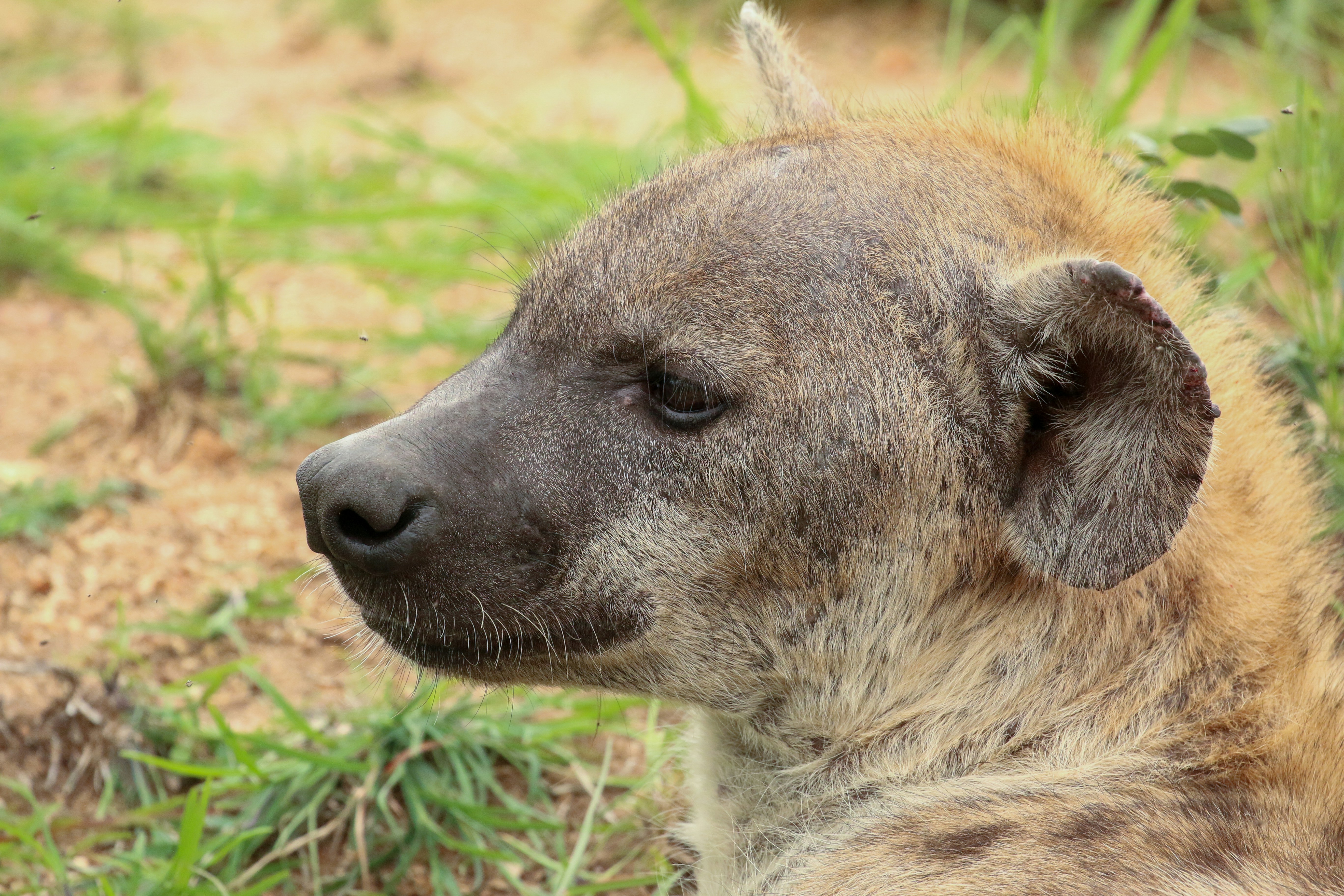
The most widely accepted explanation is the spotted hyena. Its sloping back, powerful jaws, and bone-crushing behaviour align closely with many of the descriptions.

And yet, there are discrepancies. The size. The posture. The sense, repeated in multiple accounts, that this was something heavier, more deliberate.

I’m also loathe to believe that those living among the animals of the region would make this mistake. The spotted hyena is well known, and locally called Fisi.

That said, I have seen for myself how local people can be isolated from the wildlife around them. Poverty and lifestyle can mean they simply don’t encounter them every day. But still, taking this to the point of such a major misidentification is hard to believe.

A Larger Hyena, Out of Time

Here, the thinking of Bernard Heuvelmans becomes relevant.

Heuvelmans proposed that some cryptid reports may reflect relict populations of animals thought to be extinct. In this case, that has led to speculation about larger, prehistoric hyena species surviving longer than expected in isolated regions.

There is no direct evidence for this. But the idea persists because it offers a middle ground: not myth, not fantasy, but something biologically plausible that has simply slipped through the net of formal recognition.

A similar argument could be made for the likes of Agriotherium. Agriotherium was a large, heavy-built carnivore that is considered to be the only bear to have ever colonised sub-Saharan Africa. Its fossil remains have been found throughout South Africa and Ethiopia, dating from 11 million years ago to just two million years.

Misidentification and Memory

Equally, the Nandi Bear may be an accumulation of misidentified encounters with hyenas seen under poor conditions, their features exaggerated by fear and retelling.

But this does not diminish the phenomenon. It explains how it forms, in some cases. But not necessarily all.

Why the Nandi Bear Remains

What is striking is not just that the Nandi Bear was reported but how consistently it was described, across time and by different witnesses who had no reason to align their stories.

And what is perhaps more striking still is how quietly it has faded.

No dramatic conclusion. No definitive identification. Just a gradual absence.

In that way, it resembles many of the animals that sit at the edge of human awareness. Occasionally seen, never fully understood, and eventually, perhaps, gone.

The Animal We Don’t Quite See

The Nandi Bear may never have been a single, identifiable species.

It may have been a hyena, seen differently. A memory, shaped collectively. Or, as Bernard Heuvelmans might suggest, the last trace of something that once moved more widely across the landscape.

But whatever its origin, it tells us something consistent.

That even in places we think we understand, the places mapped, named, and studied, there still remain gaps. Not just in knowledge, but in interpretation.

And sometimes, those gaps take on a formidable shape. Not fully seen. Not fully known. But still, waiting in the darkness for us to remember.

It’s an idea I’ve returned to often in my own writing—particularly in The Daughters of the Darkness, where the boundary between predator and myth can feel especially thin. Landscapes like these don’t just hold animals. They hold memory, interpretation, and the quiet suggestion that something may once have moved there that no longer does.

Or perhaps still does, just beyond the edge of certainty.

Man-Eater Monday: The Leopard of Panar

There are some animals that become legendary stories of the hunt. And then there are those that become shadows for unknown reasons. For this week’s Man-Eater Monday, we’re looking at one of Jim Corbett’s lesser discussed hunts despite how close Corbett came to falling victim to it, and the staggering number of victims the man-eater claimed: that of the Leopard of Panar.

In the hills of northern India, people began to disappear quietly. No struggle. No sound. Sometimes just a doorway left open, a cooking fire still burning, and a space where someone had been.

The leopard that moved through those villages was rarely seen. But its presence was felt. And it was always there.

A Remote Fear

The attacks that would come to define the Leopard of Panar took place in the Garhwal hills, a location remote even by the standards of early 20th century India. A place where huts were often miles apart and few roads existed. News, if it travelled at all, did not travel fast.

This mattered. Because while the leopard would go on to kill well over 400 people (more than three times the toll of the better-known Leopard of Rudraprayag), it never entered the public imagination in quite the same way.

Rudraprayag sat on a pilgrimage route. Its dead were counted, recorded, and spoken of. Help was requested at the highest levels.

Panar did not enjoy the same spotlight. Its victims disappeared into a quieter landscape, in poorer villages, far from the attention of officials or press. The scale of the tragedy was no less, but its story travelled less far. When Corbett was first contacted, the man-eater of Panar had just five months to live and had already claimed the majority of its victims.

A Hunter Between Lives

Jim Corbett first heard of the Panar leopard while engaged in his first official hunt for a man-eater, that of the Champawat tigress.

At the time, he was not yet the figure we now remember. Corbett worked for the railway. In fact, he recalls how he and his men set a record at Mokameh Ghat by handling, without any mechanical means, over 5,500 tonnes of goods in a single working day, just a few months before being granted enough time off to hunt the leopard of Panar.

His life did not revolve around hunting man-eaters, but intersected with it when needed.

The remote nature of the district the leopard of Panar called home is aptly illustrated by the long, 28-mile long march Corbett and his men had to endure just to reach it.

At the end of this gruelling hike, they were met with accommodation that was locked. But ever the optimist, Corbett instructed camp and fires to be set in the courtyard. He records, watching in amused fascinating, how the head of a leopard (not the one he was after, whose territory was still several miles away) appeared in the darkness and took the leg of mutton his servant had been preparing for Corbett’s dinner. Corbett chose to see the funny side, unlike his servant, who had to create a meal from scratch and without the prized leg of mutton.

But it was an apt reminder, perhaps, that in these hills, he was already being watched.

The Invisible Method

What made the Leopard of Panar so feared was not simply the number of people it killed, but how it did so.

It did not announce itself. It entered villages without sound. It became expert at taking people from inside their homes, taking advantage of those who might leave a door or window open on the hot jungle nights. One man was awoken in horror to find the leopard hauling his wife out by the throat. If she hadn’t tried to grab him, he may never have known.

The wife, like many of the leopard’s victims, died when her wounds turned septic and no medical aid could be sought in time. Her panicked husband could not risk leaving the hut during the night to seek help, and was forced to barricade the door whilst listening to the angry leopard attempt to reclaim its prey again and again.

And as this example shows, when it did attack, the leopard did so confidently. It dd not retreat when confronted. We do not know precisely how long the leopard of Panar held the region in fear, but it was likely years. The impact that must have had on those living in its presence is hard to imagine.

When Corbett arrived, he encountered merchants scared of travelling alone and villages in heightened states of panic. There is a particular kind of fear that comes from something that does not need to overpower you, only outthink you.

Corbett also found widespread leprosy in the region. In the case of the leopard of Rudraprayag, we know that outbreaks of disease led to it adapting to human prey. And although Corbett doesn’t say this in his account of the leopard of Panar, it is widely believed and accepted it learnt its trade the same way.

Fieldcraft and Silence

One of the things that stands out in Corbett’s account is his excellent natural field craft. He had an ability to read the forest that seems unique, even today – perhaps due to his love of the natural world that later made him a committed conservationist.

When Corbett discovers a goat he intended as bait has been taken by the leopard during the cover of rain and darkness, he turns to the only reliable witnesses around. Birds.

He listens to the alarm calls of bulbuls, drongos, and especially the scimitar warblers and white-throated laughing thrushes, who in his own words, he describes as “the most dependable informants in the hills”.

Corbett uses them to track the leopard’s movement through disturbance and the direction of calls. In a landscape where the leopard left almost no trace, the jungle itself became the map.

After tracking the leopard back to its kill, he refreshes the bait with another tethered goat, and settles in with his back to a tree, an upturned collar to protect his neck, and a tightly bound perimeter of blackthorn shoots collaring the tree – his only protection and warning should the man-eater approach.

A Night Without Light

This is India, 1910. There were no electric torches or lights that hunters would use later in Corbett’s time.

When Corbett sat out that night, waiting in a tree, his only aid for shooting was a strip of white cloth tied to the barrels of his shotgun—something faint enough to guide his aim in darkness.

It is difficult, now, to fully grasp that level of exposure. And Corbett chose a shotgun, as he was expected a close-quarters encounter. He wanted the certainty of eight shotgun slugs over one rifle bullet.

And then it became a waiting game. Visibility was at a minimum. The attack could come from any direction. And from a master of stealth.

A Confident Predator

When the leopard finally came for him, it did not do so cautiously. The first Corbett knew of the leopard’s arrival was the frantic bleats of the goat. All he could make out was its white hue, 30 yards away. Then it went quiet and looked directly towards Corbett in his tree.

Next, Corbett felt the rustle and tightening of the blackthorn shoots as the leopard tried to shape them loose or manoeuvre around them to get at him.

Each time it was denied, it let out a growl of frustration.

This was the action of a predator that was sure of itself. One happy to give away its position. One that had learned, over time, that it could overcome the fear it likely once had of humans and make them its prey without consequence.

This was not simply a man-eater. It was a confident one. And confidence, in a predator, changes everything.

Tea Hits the Spot

Frustrated, the leopard dropped to the jungle floor and charged the goat, which it embraced with a roar. Now, the only guide Corbett had was what remained of the ungulate’s white coat. He guessed where the leopard was based on this alone and let off a blast of the shotgun. Answered by the angry grunt of the leopard, he knew he’d at least hit it.

From nearby, his men and anxious villagers called out, all to eager to declare the nightmare over.

Perhaps tired, perhaps a little over confident, Corbett calls back to them and tells them it is safe to approach him, as long as they lit torches and walked in single file, close to one another.

When the group reached him, they demanded he follow up on the wounded leopard. Even in his own account, Corbett is not sure why he agreed to such a thing – but he does.

Most harrowingly, he describes the effect of hearing the bellow of a changing leopard. He states having seen herds of elephant and buffalo stand resolute against the roar of a tiger, but scatter at the angry chant of a leopard with its blood up.

But ultimately, another blast from the shotgun brings the leopard of Panar’s reign of terror to an end.

And the quintessentially British reward after days of hunger, sweat, blood, and anguish Corbett demanded? A hot drink of tea back at the village.

The Shape of the Story

The Leopard of Panar is not remembered in the same way as some other man-eaters. There are fewer retellings. Less myth. But in some ways, it is the more revealing story.

It shows how conflict can grow in places that are rarely seen. How predators adapt not through force, but through learning. And how fear settles most deeply when it is allowed to fester.

Closing Reflection

There is a tendency to treat these animals as aberrations – exceptions to the natural order. But they are often reflections instead.

Of pressure. Of proximity. Of the ways in which human and wild lives overlap, sometimes too closely.

The leopard was killed. But the conditions that produced it did not disappear. I strongly recommend the book ‘No Beast So Fierce‘ by Dane Huckelbridge if you want more insight into what made India a breeding ground for man-eaters at the turn of the 20th century.

And if you’re drawn to stories where tension builds slowly, where landscapes feel alive, and predators are shaped as much by circumstance as instinct – my novels explore similar ground.

Unseen Shadows: UK Big Cat Sightings – Spring 2026 Update

A big cat lays silhouetted against a dusk sky.

From the hills of Wales to the heathlands of Dorset, reports of large, unidentified cats continue to surface across the British countryside.

Most are brief encounters. A shape crossing a field. A dark animal slipping through woodland. A dog walker forced to stop mid-stride as something far larger than a domestic cat disappears into the hedgerow.

These reports are rarely treated seriously in the national press. Often they appear in the odd-news columns or alongside stories about mythical creatures and folklore.

Yet they refuse to disappear into the shadows alongside their subjects. And over the past few months, several new sightings have once again brought Britain’s big cats back into the open.

Do big cats stalk Britain’s Bodmin Moor?

A Panther Prowl’s Ed Sheeran’s Estate.

One of the most widely circulated reports recently came from Suffolk, where a large black cat was seen near the £37 million country estate of musician Ed Sheeran.

Witnesses described a large dark animal moving across farmland close to the property. The sighting prompted speculation that a so-called “panther” might be roaming the countryside and the story travelled quickly through national and international media, largely because of the celebrity connection.

But aside from the location, the details themselves were familiar to anyone who has followed the phenomenon for long. A large, dark cat moving with fluid, purposeful motion, low to the ground. Exactly the sort of description that appears again and again in regional sightings.

Cats Across the Countryside

All over Britain, similar reports continue to surface.

In Dorset, a sighting on Canford Heath near Poole described what a witness believed to be a black panther moving through open heathland.

In Wiltshire, a dog walker near Chippenham reported encountering a large cat on a popular countryside footpath. The witness described an animal significantly larger than a domestic cat, with a long tail and dark colouring.

Further west, a report from Newquay in Cornwall described a large cat seen at distance moving across farmland. Cornwall has long been one of the regions most frequently associated with Britain’s “phantom cats”, often linked with the legend of the Beast of Bodmin Moor.

In North Wales, motorists and walkers have also reported large feline shapes crossing rural roads or moving along field margins. One witness claimed the animal they saw was nearly the height of a car bonnet as it passed through the roadside vegetation.

These accounts vary in detail, but the core descriptions tend to be remarkably consistent.

A powerful, long-tailed cat – often dark in colour, but tan and other hued cats are also reported, seen briefly before disappearing into woodland, scrub, or across farmland.

Britain offers significant habitat that could harbour unseen predators.

A Long History of Sightings

Reports of large cats in Britain are of course, nothing new.

Newspaper archives contain sightings dating back decades, particularly from the late twentieth century when stories of “phantom panthers” became a recurring feature of rural folklore.

Many researchers have suggested these reports may trace back to the Dangerous Wild Animals Act of 1976, which introduced licensing requirements for keeping exotic animals. The persistent theory is that a number of privately owned big cats may have been released into the countryside when the law came into force. Since then, further releases and escapes have contributed to more recent sightings.

We might not have direct hard proof or evidence. But, given the scale of the exotic animal trade – both legal and illegal, and the lack of funding to check on many privately-owned animals and licensing both back then and even more so today, it’s not without merit.

And sightings have never stopped.

From Exmoor and Dartmoor to the Surrey Hills, the Welsh countryside, and parts of Scotland – reports of large cats have popped up year in, year out, and continue.

Missed by the Media

Despite the number of sightings over the years and the many reliable witnesses, which include respected journalists and presenters like Clare Balding, the subject is rarely treated with much seriousness in mainstream media.

Often it appears in the same category as folklore creatures or mythical monsters.

The BBC’s Countryfile, for example, recently included Britain’s phantom cats in a list of “mythical beasts”, placing them alongside legendary creatures rather than unexplained wildlife reports. This framing shapes how the subject is perceived.

Instead of examining witness testimony, ecological plausibility, or historical context, the discussion often becomes a curiosity piece – something to be lightly dismissed rather than investigated.

Yet eyewitness testimony remains one of the primary ways wildlife is documented in many parts of the world.

The same observational accounts that guide conservation surveys in remote landscapes are often treated very differently when they occur in the British countryside.

Panther or Puma?

Another recurring problem is species confusion.

Many reports describe a black big cat. But media coverage frequently labels these animals as pumas. The issue with that identification is simple: pumas do not occur in black form. There are no verified melanistic pumas anywhere in the world.

Black big cats, commonly called “black panthers” – are usually one of two animals: leopards or jaguars. In Britain, the most plausible identification would be melanistic leopards.

Leopards are adaptable animals capable of surviving in a wide range of habitats, from rainforest to semi-arid environments and mountainous regions. They are also far more likely than most big cats to survive undetected in fragmented landscapes.

Pumas too, also known as mountain lions and a myriad of other names, are some of the most adaptable cat species, found from the Florida everglades to the high plains of Chile and the deserts of Arizona.

Why Some Researchers Look to Malaysia

If Britain does host a small surviving population of melanistic leopards, one intriguing possibility involves the Malayan leopard.

In the rainforests of the Malay Peninsula, south of the Isthmus of Kra, melanism is extremely common. In fact, the majority of leopards in this region are black.

Interestingly, this detail surfaced while researching my current novel Predatory Nature, where the history of exotic big cats imported into Europe during the twentieth century led me down a rabbit hole into the unusual genetics of Malayan leopards.

These cats are also smaller than many other leopard subspecies, which historically made them attractive to exotic animal collectors and the trade supplying them.

During the mid-twentieth century, when keeping exotic animals became fashionable in parts of Europe and especially the United Kingdom, animals described as “black panthers” were imported from Southeast Asia, to the point that the population was significantly impacted. And today, the population is dominated by those sporting the melanism gene.

The smaller size of the Malaysian sub-species helped fuel the mistaken belief they would be easier to manage. In reality, of course, a leopard is never a domestic animal.

But if any such cats were released or escaped decades ago, their melanistic coats would have offered a natural advantage in Britain’s woodland landscapes, particularly in low light, where their rosette markings are almost invisible – which is a factor that should be taken into account when witnesses describe cats as “jet black”.

Mystery in the Hedgerows

None of this proves definitively that Britain currently hosts a breeding population of large cats.

Most sightings could still have more mundane explanations: misidentified dogs, escaped exotic pets, or fleeting glimpses of ordinary wildlife seen in poor conditions.

Everyday domestic cats are also likely culprits. The recent Devon sighting is a possible example. Despite gaining significant coverage in the press, and comparisons to the Beast of Bodmin in neighbouring Cornwall – the animal in this video moves like a domestic cat, and has the head shape and movement in line with this. However, the published video quality is very poor and it is very difficult to make any kind of certain identification. A feral cat, which can grow to larger sizes, is also a likely possibility.

But the persistence of the reports and the consistency of many descriptions keeps the question alive and shouldn’t be dismissed or derided.

There’s a good chance the truth lies somewhere between folklore and biology. It’s not just possible, but likely, that there are a small number of big cats of more than one species surviving quietly in remote pockets of the British countryside.

Combined with the enduring human instinct to see shadows move at the edge of the woods and wonder what might be watching back, it’s unlikely reports are going to disappear.

Either way, Britain’s phantom cats remain one of the country’s most enduring wildlife mysteries. And every now and then, someone sees something crossing a field that refuses to fit neatly into the explanations we already have.

The Killers of Eden

When Orcas Hunted With Whalers

The name sounds like something from folklore.

The Killers of Eden.

But these weren’t pirates. Nor outlaws. Not even a forgotten cult. They were orcas.

For decades in the nineteenth century, along the southern coast of Australia, a pod of killer whales worked in co-operation with human whalers in Twofold Bay.

They didn’t merely follow the boats or scavenge from discarded carcasses. They signalled. They herded. They hunted alongside the men. And at the centre of the story was one specific individual, a male that became known as Old Tom.

The Signal in the Bay

From the 1860s until the early twentieth century, shore-based whaling was integral to the small town of Eden.

Unlike the vast industrial fleets that would later dominate the Southern Ocean, Eden’s operations were small, open-boat enterprises run, at least to start, by a single family – the Davidsons. What made their station remarkable was not its size, but its partnership.

When migrating humpback or southern right whales entered Twofold Bay, the orcas would drive them toward shore. Old Tom, recognised by his tall dorsal fin, was known to swim to the mouth of the Kiah River and slap his tail against the surface — a deliberate “flop-tail” that alerted whalers to the presence of a whale.

Men would heed this signal and scramble into their boats. The chase would begin. And a significant ritual became an anchor to the partnership.

The arrangement became known as the “Law of the Tongue.” Once a whale was harpooned and secured, the carcass would be anchored overnight. The whalers would leave the lips and tongue, which are rich in blubber, for the orcas. The rest would be processed at the try-works.

This is important, as it clarifies the partnership as not one based on sentiment. It was mutual advantage.

Old Tom

Old Tom measured around 22 feet (6.7 metres) and weighed an estimated six tons. Distinctive wear on his lower teeth suggests he frequently gripped tow ropes during hunts. This behaviour was allegedly recorded by whalers who claimed he would sometimes take the line in his mouth and help pull the boats.

At other times, he reportedly clamped onto the rope fastened to a harpooned whale and allowed himself to be dragged through the water, an act the crews described with something like affection. Yet, a later incident of what seemed like a playful tug of war notably loosened his teeth.

He also notably returned season after season.

The documented co-operative hunts largely ceased by 1901, following a series of disruptions. One member of the pod, known as Typee, was shot by a local after becoming beached in the shallows. In the aftermath, Indigenous Australian whalers who had worked with Davidson’s crew withdrew from Kiah Inlet. At the same time, global industrial whaling expanded dramatically, and baleen whale numbers began to decline.

The ecological and economic balance that had sustained the alliance fractured.

No baleen whales were recorded in Eden after 1926.

Old Tom, however, continued to return. Often alone.

On 17 September 1930, his body was found floating in the bay. His skeleton now hangs in the Eden Killer Whale Museum, suspended in quiet testimony to a strange chapter of maritime history.

The Solitary Return

Orcas are deeply social animals. They travel in stable, matrilineal pods, maintaining lifelong bonds and passing hunting traditions across generations. Despite the folklore surrounding Old Tom, males do not lead pods. Solitary individuals are rare.

The image of Old Tom returning alone to Twofold Bay has unsettled observers for decades.

Local belief holds that the rest of his pod may have been killed further north, possibly in Jervis Bay, by Norwegian whalers unaware of the cooperative history in Eden. Elsewhere along the coast, fishermen and whalers often regarded orcas as competitors and retaliated with bullets and harpoons.

The “Killers of Eden” were never universally protected. They were tolerated, while useful.

When shore-based whaling declined after 1901 and industrial fleets reduced whale populations further offshore, the ecological conditions that had enabled the cooperation disappeared. And the behaviour vanished with them.

Cooperation or Strategy?

It is tempting to romanticise the story. Man and predator working side by side. An interspecies pact honoured through ritual.

But modern research offers a quieter explanation.

We now know that orcas exhibit:

  • Cultural transmission of behaviour
  • Specialised hunting techniques within pods
  • Long memory and social learning
  • Adaptive exploitation of predictable food sources

The Eden pod was not acting out of loyalty in a human sense. Nor were they mythic collaborators. They were intelligent apex predators exploiting a reliable opportunity.

Orcas are the largest members of the dolphin family, which is significant because bottle-nosed dolphins in Laguna, Brazil, have developed a similar, near century-old partnership with local fishermen. They signal with tail slaps and head nods when the men should cast their nets, as the pod herds the fish towards shore.

The “Law of the Tongue” was not a moral contract. It was strategy.

When overhunting reduced baleen whale numbers, and when industrialisation changed the rhythm of the bay, the strategy no longer worked. And so it ended.

The Name That Lingers

“The Killers of Eden” remains a provocative phrase. We can’t but help associate the name Eden with a place of original innocence. And killer is the name we give all deliberate predators.

Yet the title reveals as much about us as it does about them. We were the ones that christened them killers, whilst we were killing too.

Perhaps what unsettles us is not that orcas hunted alongside humans but that they adapted so fluidly to our violence. That they folded themselves, briefly, into our industry.

And when that industry collapsed, they did not mourn the contract. They adapted or vanished.

There is something more grounded in that. This story isn’t about myths, monsters, or miracles. It’s just two apex species intersecting, for a moment, in a fragile ecological alignment.

And when the balance broke, the sea closed over it.

If you enjoy reflective explorations of the uneasy boundary between humans and the wild, my novels explore similar terrain, where co-operation, fear, and instinct are rarely as simple as they seem.

Man-Eater Monday: The Sankebetsu Brown Bear Incident

In the winter of 1915, the settlement of Sankebetsu, in northern Japan, was already under strain.

Snow lay deep across Hokkaido. Food stores were thin. Travel was difficult, sometimes impossible. For the people living at the margins of cultivated land, winter was not simply a season — it was a test of endurance.

What went largely unconsidered was that the same conditions applied to everything beyond the settlement’s boundaries.

The forests were locked in ice. Natural forage was scarce. Prey animals were weakened, dispersed, or absent altogether. The winter that pressed hardest on human communities was doing the same to the wildlife around them. But at the time, this was not a connection people were trained to make.

Ecology, as a way of thinking, had not yet entered the conversation. Hardship was viewed as a human problem, unfolding against a largely static natural backdrop. The idea that animals might also be responding — adapting, learning, and changing behaviour under pressure, was rarely entertained.

It was in this context that the Sankebetsu incident began.

A first encounter and a dangerous assumption

The bear’s first appearance was not dramatic in scale, but it was decisive in consequence. In December 1915, a large brown bear entered the settlement and attacked a woman working near her home. The encounter was sudden and close-quarters. She was killed before any effective intervention could be made.

The bear did not linger. After the attack, it retreated back into the surrounding forest.

That withdrawal shaped how the incident was understood.

Within the settlement, the prevailing belief was that the animal had been startled — that the violence was reactive, not intentional, and that the danger had passed with the bear’s departure. The incident was treated as an isolated tragedy rather than the opening stage of a larger threat.

No co-ordinated hunt followed. No sustained effort was made to track the animal’s movements or assess whether it might return.

This response was not careless so much as culturally conditioned. At the time, apex predators were often viewed as opportunistic but fundamentally avoidant of humans. An animal that fled was assumed to have learned fear.

But this assumption rested on a misunderstanding of how predators learn.

An animal that kills and escapes unharmed has not seen that behaviour punished. It has been reinforced. The boundary between human and prey does not harden, it weakens.

In retrospect, the bear’s retreat was not a conclusion. It was a pause.

Escalation isn’t chaos, it’s pattern

When the bear returned, it did not behave erratically.

It came back into the settlement repeatedly, moving with increasing confidence through spaces that had already been shaped by human presence. Homes were entered. People were taken from places that should have been safe.

One of the most disturbing moments came shortly after the initial attack, when the bear returned during a funeral held for the first victim. Drawn by human activity and the presence of food, it entered the area and killed mourners gathered there.

The violence was no longer confined to a single encounter. Over the course of one night, multiple people were killed in separate attacks. By the time the bear was finally stopped, five lives had been lost, several of them within hours of one another.

What is striking, in retrospect, is not the scale of the violence, but its consistency.

The bear did not flee after these encounters. It did not act randomly. It returned to the same settlement, exploited moments of vulnerability, and withdrew only when challenged. Each successful attack reinforced the same lesson: humans were accessible, and resistance was minimal.

This is the point at which many retellings introduce the language of madness or bloodlust. But escalation, in cases like this, is rarely chaotic. It is patterned.

Under conditions of prolonged scarcity, the bear’s behaviour reflected learning rather than frenzy. What appeared to the community as senseless violence followed a grim internal logic shaped by hunger, opportunity, and success.

Human hesitation, and a belated resolution

As fear spread through the settlement, so did uncertainty.

There was disagreement over whether the same bear was responsible for each attack. Some believed the animal would eventually move on. Others feared that a co-ordinated response might provoke further violence. Time was lost to debate, hesitation, and the difficulty of acting decisively in extreme winter conditions.

When a concerted effort was finally made to track the bear, it revealed just how unprepared the community was for such a task. Weather obscured trails. Knowledge of bear behaviour was inconsistent, drawn from folklore, fragments of experience, and assumption rather than strategy.

Eventually, a group of hunters succeeded in locating and killing the animal. The bear was identified as a large male brown bear, in poor physical condition. Its body showed signs consistent with prolonged scarcity. With its death, the attacks stopped.

The immediate danger to Sankebetsu was over.

But the resolution came only after multiple lives had been lost, and only once the cost of inaction had become undeniable. The bear’s death did not mark the defeat of a monster, but the delayed recognition of a threat that had been misunderstood from the outset.

The Sankebetsu statue and tourist site.

Then, and now

More than a century after the Sankebetsu incident, it is tempting to look for repetition — to imagine the same landscape quietly replaying its past.

That is not what the evidence suggests.

Brown bears still inhabit Hokkaido today. The species persists across much of the island’s forests and mountain ranges, and in some areas populations are thought to be stable or recovering after decades of decline. The region where Sankebetsu once stood is no longer a permanent settlement, and there is no indication that it has become a modern centre for serious bear attacks.

History, in this sense, is not repeating itself geographically.

What has changed is the broader context in which people and bears now coexist.

In 2025, Japan recorded 13 human fatalities and more than 100 injuries resulting from bear encounters, involving both Asiatic brown bears and Asiatic black bears. These incidents were spread across multiple prefectures and environments — from rural settlements to the edges of towns — rather than concentrated in any single location.

The pressures behind them are familiar: reduced natural food availability, changing land use, and expanding human presence in areas once less frequently occupied. Bears range more widely when resources are scarce, and humans now occupy landscapes that were once seasonal or marginal.

The relevance of Sankebetsu, then, is not that it is happening again in the same place. It is that the same ecological forces – scarcity, overlap, and hesitation, all continue to shape encounters between people and large predators, wherever clear boundaries erode.

The quieter truth of man-eater stories

The Sankebetsu bear was not a creature of myth, nor a symbol of evil. It was an animal responding to scarcity, learning from success, and moving through a landscape that no longer offered clear separation between forest and home.

Man-eater stories endure not because they reveal something monstrous about animals, but because they expose a recurring human blind spot: the tendency to see nature as static, until it reacts.

When prey disappears, boundaries blur. When boundaries blur, conflict follows.

The question is not whether such stories will happen again, but whether we recognise the conditions early enough to change the outcome.