
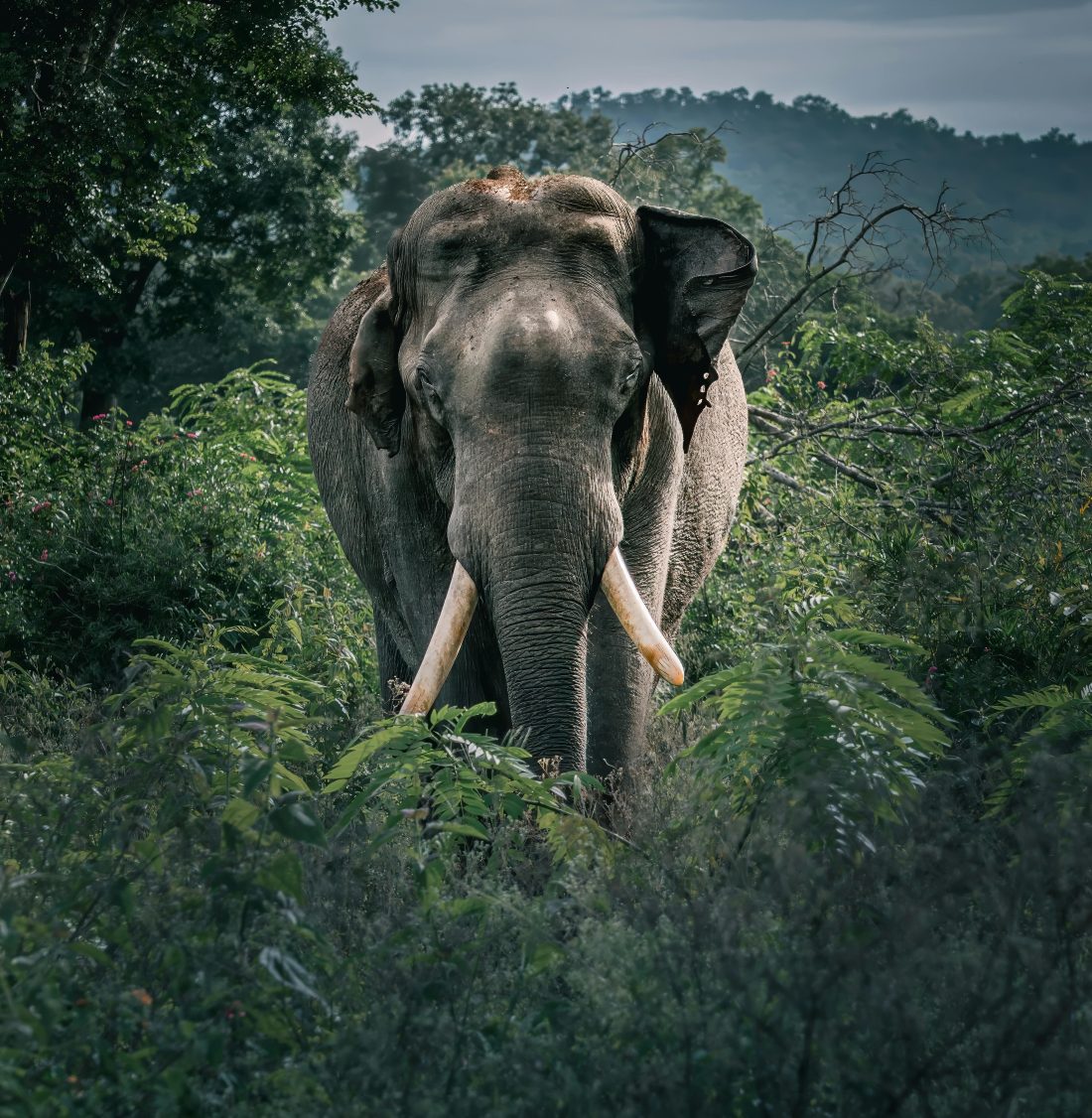
For this week’s Man-eater Monday, we’re deviating slightly into a more niche area – that of individual animals that have killed people, seemingly deliberately and consistently, but not with the intent of consuming them nor necessarily even being a predatory species. Enter a name known around the world, given to an animal usually internationally adored.
Between 2004 and 2006, in the Sonitpur district of Assam, a lone bull elephant was blamed for the deaths of at least twenty-seven people.
He did not start out as a named villain. But his unprecedented reign of terror did begin with unmitigated attacks akin to those of a terrorist.
A labourer killed near a tea garden. A villager trampled close to the forest edge. Someone walking home at dusk who did not return. At first, these were tragedies folded into a region long accustomed to uneasy co-existence with elephants. But the deaths did not remain isolated. They accumulated.
By the time officials concluded that a single tusker was responsible, the pattern was impossible to ignore.
It was then that the elephant was given a name heavy with the politics of the time.
They called him Osama Bin Laden.
The Landscape of Conflict
Sonitpur is not wilderness in the romantic sense. It is a mosaic of tea estates, villages, secondary forest and fractured corridors. The boundary between cultivation and jungle is not a line on a map; it is a living seam where elephants and people move within metres of one another.
Elephants have used these routes for generations. Long before rail lines and plantation grids, herds moved seasonally through what is now farmland. As forest has thinned and been divided, those routes have narrowed but not disappeared.
A solitary bull navigating this terrain does not simply wander into conflict. He encounters it repeatedly.
Adult male elephants are more prone to risk than matriarch-led family groups. They move alone. They raid crops. They approach settlements under cover of darkness. During musth, a periodic hormonal state marked by surging testosterone and heightened aggression, a bull can become more volatile, less tolerant of disturbance, and more forceful in asserting space.
In a compressed landscape, force carries consequences. In this setting, a solitary adult bull can become highly dangerous.

Twenty-Seven Deaths
At least twenty-seven people were killed over roughly two years. That figure appears consistently across regional reporting and official statements from the period.
These were not predatory killings. Elephants obviously do not consume human flesh. The deaths occurred during close-range encounters – trampling, crushing, and sudden aggression in shared ground.
But repetition changes perception.
A single fatal encounter is tragedy. Repeated fatal encounters become something else. Fear shifts from circumstantial to anticipatory. Villages alter routines. Workers hesitate at dusk. Forest paths grow tense.
The elephant was described as large, solitary, and unusually aggressive. Witnesses spoke of sudden appearances and little warning. In rural districts where livelihoods are already precarious, such unpredictability erodes more than confidence. It erodes normality.
By 2006, pressure mounted on authorities to act decisively.
The Hunt
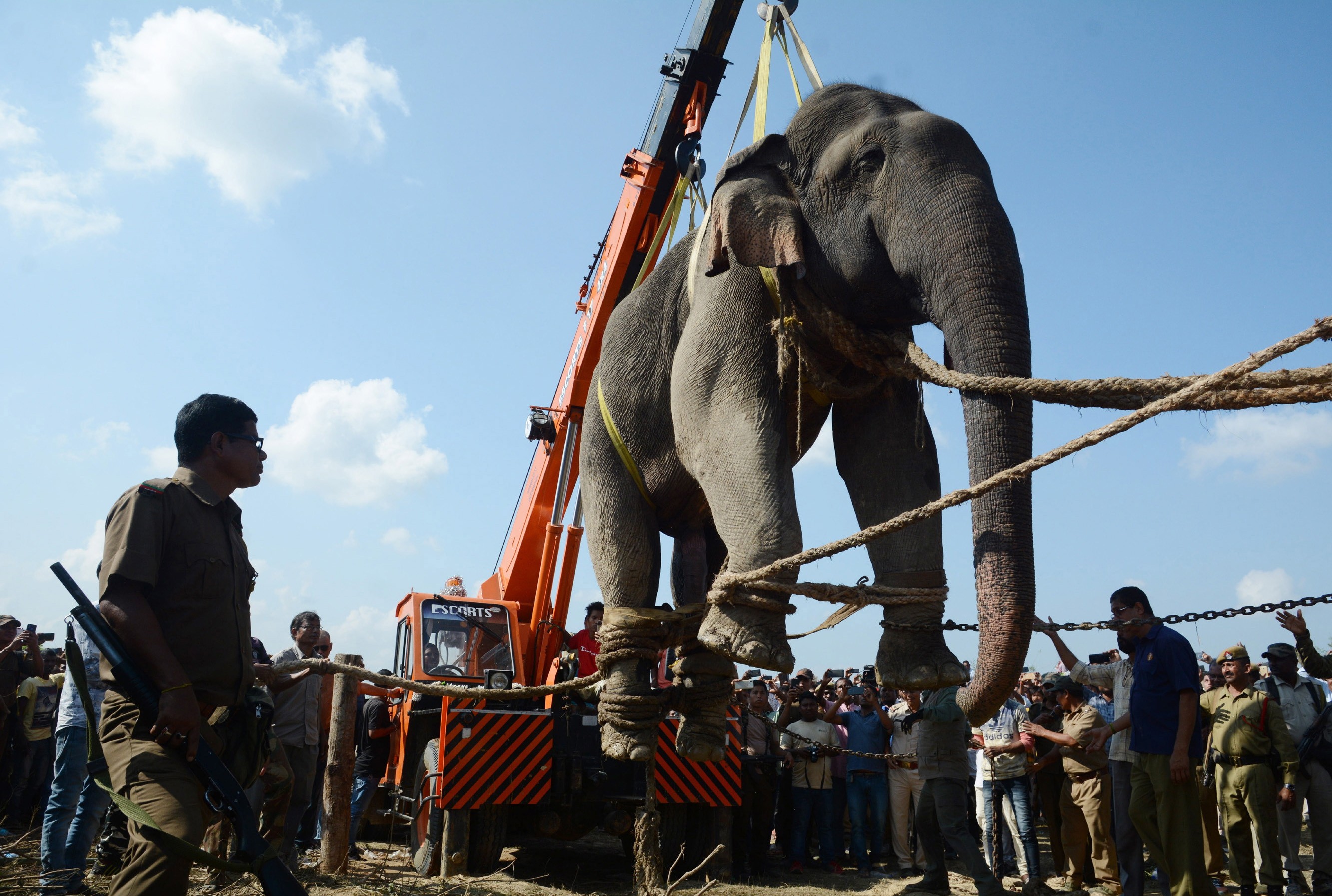
Forest officials identified a specific bull believed responsible and launched operations to track and eliminate him. Public assurances were made that the threat would be addressed. There were reports that the elephant had been located and shot. Other accounts suggested he had retreated into deeper forest.
What is clear is that after 2006, the killings attributed to this individual ceased.
What is less clearly documented in accessible public archives is a definitive, widely cited confirmation of his death. That absence does not negate the official efforts made, nor the likelihood that a targeted animal was killed. It simply reflects the uneven nature of record-keeping in regional conflict cases. If the elephant killed was the animal responsible, he had, for some reason, wandered over fifty miles from where he’d last been encountered.
For the communities of Sonitpur, however, the outcome was measured less in paperwork and more in silence. The attacks stopped. And that distinction matters.
Naming the Enemy
The name “Osama Bin Laden” did more than identify a problem animal. It framed him within a global narrative of terror.
The early 2000s were shaped by anxiety and the language of unpredictable threat. To attach that name to a wild elephant was to translate ecological conflict into something deliberate and ideological. It suggested planning. Malice. Intent.
But elephants do not operate within ideology. They respond to pressure, proximity, memory, and stress. A bull in musth does not wage war. He asserts space in the only language available to him… size and strength.
The name belonged to human fear, not elephant cognition.
Man-Killer
The elephant of Sonitpur sits uneasily within the category of killer animals. He did not shift diet. He did not stalk as a predator does. Yet twenty-seven deaths over two years place him alongside other animals whose repeated fatal encounters alter public memory.
The comparison reveals something important.
In classic predator cases such as the Champawat tiger and the Tsavo lions, it is injury, age or prey scarcity can drive a carnivore toward habitual human predation. With elephants, the mechanism is different. The deaths arise from collision rather than consumption.
But the emotional result for communities is similar. Repetition breeds myth. And myth simplifies cause.
Compression
Human–elephant conflict in Assam did not begin in 2004, and it did not end in 2006. Railway strikes, retaliatory killings, electrocutions and crop destruction continue to shape the region’s uneasy coexistence.
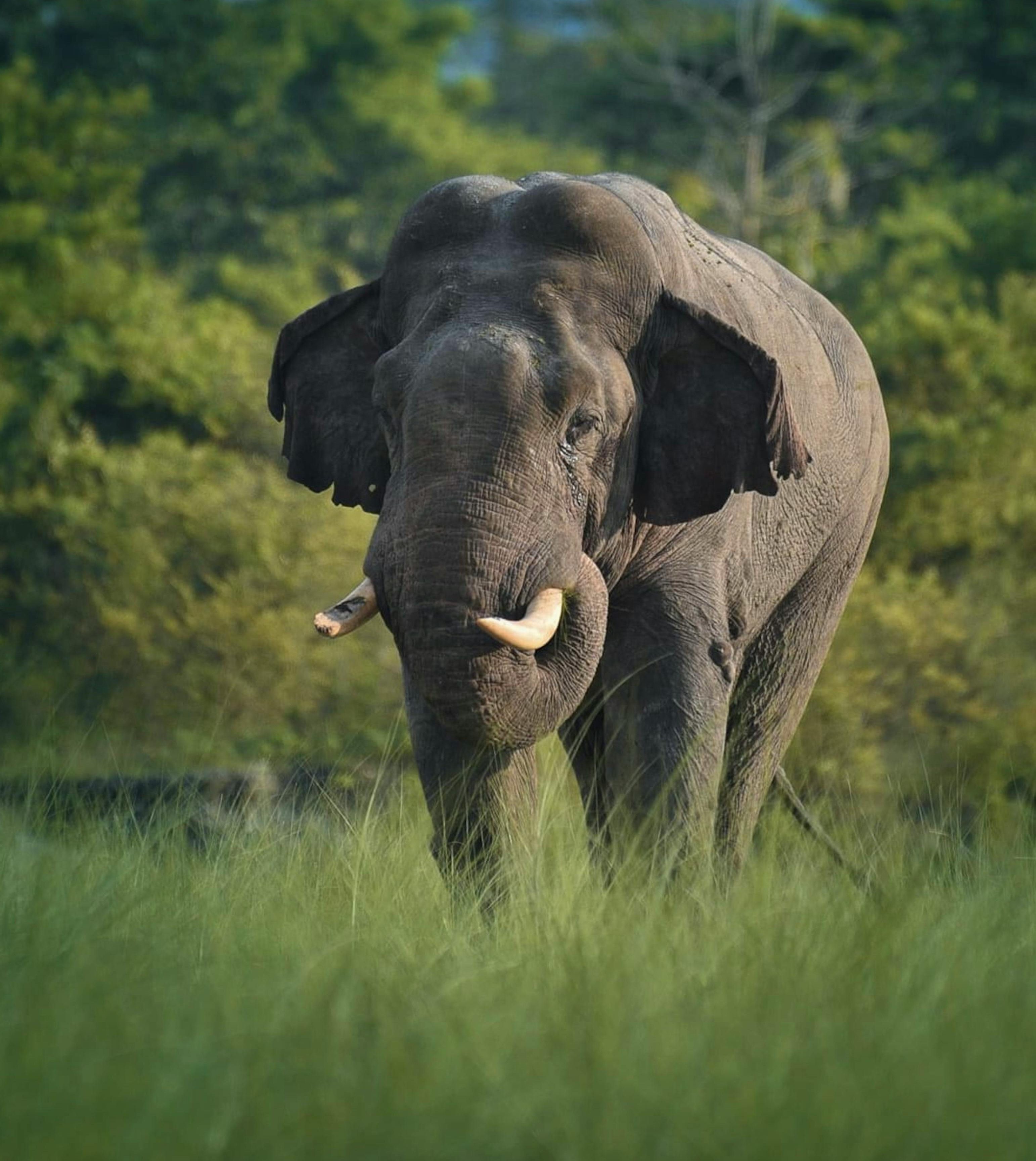
The Sonitpur elephant did not emerge from wilderness untouched by human systems. He moved through a landscape already compressed by agriculture, infrastructure and settlement. Every tea garden and railway line narrowed the margin for avoidance.
Twenty-seven deaths are not a rumour. They are recorded loss. But beneath the number lies a structural tension: one of the largest land mammals on Earth navigating corridors increasingly designed without him in mind.
When that negotiation fails, it fails violently. The elephant known as Osama Bin Laden was not a terrorist. And he was not a monster in the way folklore demands.
He was a bull in a fractured landscape.
And in Sonitpur, between 2004 and 2006, that fracture cost twenty-seven lives.



 The blog of author Luke Phillips