Unseen Shadows: Big-Cat Sightings in Britain – Autumn 2025 Round-Up

From Suffolk harvest fields to moorland mist in North Wales, a fresh wave of “panthers,” pumas and dark-coated felids stirred Britain’s rural imagination through October and November.

As dusk creeps ever earlier, as hedgerows thin and fields lie fallow, the old hush seems to awaken once more. Reports of something alien abroad: black silhouettes crossing lanes, long tails vanishing between trees, sheep spooked under moonlight, and “pointed-ear” shapes in the gloom. Over the last few months, places like Anglesey, the Llŷn Peninsula, Suffolk and more felt alight with the possibility of something wild and unaccounted for.

Below is a deeper dive into British big cat sightings from the last two months: what was claimed, where and when, what evidence (if any) supports it, and what it tells us about why, in 2025, the British big-cat mystery refuses to go away.

Autumn’s Quiet Fields and the Whisper of Something Else

There’s something about late autumn in rural Britain: the harvest is over, fields lie bare, evenings draw in, and the countryside takes on a soft, half-remembered quality.

For decades, that seasonal quiet has offered fertile ground for whispers of something aloof in the landscape. Could it be wind in the trees, a deer moving in shadow, or something else? For many rural dwellers and folklore-hunters, it has always been the right time for mystery big cats to wander across a lane, disappear into a copse, or vanish beyond the hedge.

In October and November 2025, those whispers, as always seems to be the case in Autumn, became a little louder.

October 2025: When the Reports Began to Coalesce

Scattered reports: South-East and West-Midlands chatter

Throughout October, a series of smaller, loosely connected reports emerged, from “panther-like” silhouettes glimpsed in the treeline, to late-evening growls heard by dog walkers, and paw prints in soft, damp ground after rain. Most came from local Facebook groups, community forums or specialist blogs, with genuine sparks of intent (some people setting up trail-cameras), but little follow-up.

The background: police logs and a five-year string of reports

Behind the anecdotal noise, there’s an institutional record: between 2021 and 2025, based on keyword searches for “big cat,” “puma,” “panther” and “lynx,” official incident-record logs from parts of southern England (notably Devon & Cornwall Police) list more than a dozen reports of large cats, described variously as “black panther,” “puma-like,” or “lion-sized.” LBC

Many of these reports describe animals jumping hedges, stalking rural tracks, or vanishing after being glimpsed in a vehicle’s headlights. In a few cases, officers attended the scene; in others the sightings remain unverified.

These official records, which are commonplace across the UK, add weight to public claims.

November 2025: A New Wave in North Wales, Anglesey, and the Llŷn Peninsula

Just as October’s reports began to settle, November brought a fresh uptick, this time centred on North Wales, Anglesey, and the Llŷn Peninsula. A different landscape, a different weather-tone, and for many, a compelling shift in pattern.

Anglesey: Fields, sheep, and pointy-eared cats (10 November onward)

A report on 12 November 2025 from a well known UK cryptozoology site, detailed multiple sightings across Anglesey including black cats with “long thick tails” and “pointy ears,” which were spotted roaming fields, skulking near sheep, or seen slipping along woodland margins at dusk. The Centre for Fortean Zoology

A post shared on social media described a “large black cat” near Newborough, walking through open land near the coast, with prominent pointed ears, a low slung tail and a long body. Locals, spooked, spoke quietly of sheep losses and nervous dogs. Facebook

The repeated descriptions (sometimes by more than one witness) helped give these reports weight. That said: “pointy ears” is a common reason sceptics dismiss big-cat claims, because in many big cats ear shapes differ, and “pointy” can be misleading in poor light or low resolution, and for many, suggests a dog and mistaken identity.

Pwllheli, Llŷn Peninsula: “Puma spotted at caravan site” (28 November)

On 28 November 2025, a local watchdog group for big-cat sightings, Puma Watch North Wales, published a report of a “large dark-coloured” animal, believed by a holiday-maker to be a puma, seen within a caravan-park perimeter near the town of Pwllheli, on the Llŷn Peninsula. Puma Watch North Wales

According to the witness, the animal was large, low-slung, and moved in a smooth, stealthy manner between caravans and hedgerows, so unlike a typical stray dog or cat. Given the rural coastline, sheep fields nearby, and limited light at dusk, the report sparked concern for local farmers and dog-walkers.

Further sightings in Wales were reported earlier in the month by the same site.

Where the wild things might be… or might not be

What stands out from both months isn’t a shift in geography so much as the familiar randomness that has always characterised Britain’s big-cat reports. Sightings scatter across counties and coastlines without forming any obvious pattern, a point often used by sceptics to argue against the idea of established or breeding populations. Yet for mystery-hunters, that same unpredictability is part of the allure – the sense of roaming predators that refuse to be pinned down, drifting through valleys, farmland and forest edges, appearing where least expected.

If nothing else, November’s reports show one thing clearly: the conversation lives on and people are still looking, watching, and waiting for a confirmation.

Patterns of Evidence: What We Know, What We Don’t

📌 What counts as good evidence

  • Clear video or photo, ideally with scale, timestamp, and context.
  • Multiple independent eyewitnesses describing similar features (size, tail, coat, gait, ears, behaviour).
  • Physical traces like hair, scat, paw-prints, kills… submitted for professional forensic analysis.
  • Consistent follow-up through camera traps, field-investigations, naturalist or police presence.

📉 Where the 2025 autumn wave falls short

  • Most reports (even the ones above) are from single witnesses, uncorroborated by photos or prints (I know how hard it it is to think about taking a photo in the moment, or how difficult it is to actually photograph and film genuine wild animals on a phone).
  • Descriptions vary (black panther, puma, “pointy-eared black cat”) which may reflect different species, or more likely, different interpretations of light, distance, stress or fear.
  • No public forensic confirmations this month: no DNA swabs, no carcasses, no verified predator-kill evidence.

That isn’t a rejection of the sightings by any means, but it does mean: as of November 2025, there is still no conclusive scientific proof of a sustainable non-native big-cat population roaming the British countryside, despite the very strong likelihood they are here.

Why the Autumn Spike Happens: Season, Psychology, and Landscape

Autumn has always been a season of shifting boundaries in the British countryside. As the days shorten and dusk arrives earlier, everything seems to take on a different shape. Shadows stretch longer than expected, hedgerows thin, and once-dense foliage gives way to bare branches and open visibility. This simple change in light and landscape can transform the most ordinary movement, be it a fox slipping between field margins, a dog cresting a hill, even a cat prowling along a fence line, into something uncanny.

The conclusion of the harvest season amplifies this effect. With crops cut back and fields lying open, the countryside becomes a stage with fewer props; anything crossing the land becomes more noticeable against the bare ground. At the same time, human presence in these spaces increases. Dog walkers, cyclists, farmers, hikers, and foragers tend to be out more in the late afternoon or early evening, right when the light begins to fail. Encounters therefore become more likely at a time when visibility is often at its best due to a lack of blooming foliage and leaves.

There’s also a psychological undercurrent to this seasonal shift. Autumn signals the approach of winter, a time when the countryside feels both more exposed and more remote. Folklore thrives in such in-between spaces. As mists gather and the temperature drops, we become more attuned to the uncanny possibilities at the edge of vision. For those already primed to wonder, whether through experience, curiosity, or the stories that circulate online, a shape in the half-light can ignite the imagination.

Together, these elements create the conditions in which big-cat sightings often cluster: a landscape laid bare, a watchful public moving through it, and just enough atmospheric tension to make the ordinary feel extraordinary.

Why These Stories Still Matter: Myth, Mystery and Wild Britain

art of the enduring appeal of Britain’s big-cat sightings lies in the country’s deep-rooted relationship with wildlife folklore. This is, after all, a landscape shaped by centuries of myths — from black dogs on moors to spectral deer in forests — and the idea of a hidden predator wandering the countryside resonates strongly with that cultural inheritance. Big cats, whether truly present or not, feel like a modern iteration of the same ancient impulse: to believe that something wild still moves out there, beyond the reach of fences and footpaths.

There is also a historical foundation to the fascination. The Dangerous Wild Animals Act of 1976, which curtailed the private ownership of exotic predators, triggered a generation of rumours that owners had secretly released pumas, leopards or lynx into the wild rather than surrender them. This legacy, more than any single sighting, fuels the belief in escapees or small, scattered populations that might have survived in remote pockets. It’s not proof — but it’s plausible enough to keep the theory alive.

For rural communities, the possibility of having such an animal nearby carries a mix of fear, irritation and reluctant awe. Livestock losses, nervous dogs, or strange prints in soft ground can lend weight to speculation. And for those who walk the land at dawn or dusk, the idea of sharing space with a creature that shouldn’t be here adds a quiet thrill.

But beyond the practical and historical, these stories matter because they remind us that mystery still exists in a world that often feels over-mapped, over-explained and over-connected. The silhouette on a hillside, the rustle in a hedge, the long tail disappearing into the dark — they hint at a Britain where the wild isn’t yet gone, only hidden. And whether or not big cats truly roam our countryside, the belief in them offers something rare: a reminder that the world still holds room for wonder.

How This Round-Up Was Compiled

  • I surveyed specialist websites, community-watch blogs (notably Puma Watch North Wales), and cryptozoology-oriented platforms. Puma Watch North Wales and The Centre for Fortean Zoology
  • I checked police-disclosure logs from forces who publish big-cat incident records (e.g. Devon & Cornwall). Devon and Cornwall Police
  • I referenced background research and historical context on British big-cat folklore, escapee theory, and prior documented sightings/escapes based on my own knowledge.

Caveat: I have no access to private camera-trap data, forensic lab results, or police log details beyond publicly disclosed summaries. The piece remains a synthesis of publicly available reports and claims, filtered for interest and plausibility.

The Mystery Lives On — For Now

As November 2025 draws to a close, the tally of big-cat reports has grown. From Suffolk to Anglesey, from fields to caravan parks, from hushed farm corners to public Facebook groups.

We are left with a mosaic made up of handfuls of sightings forming patterns, trending northwards, clustering in rural and coastal zones, surfacing at dusk.

For those who love the wild-edge of the British countryside and for readers of eco-thrillers, wildlife-watchers, or just the curious, those patterns matter. They remind us that beneath the tame green fields lies uncertainty. That despite fences and lights and human ink and paperwork, nature, or at least the idea of the wild, is still slipping through.

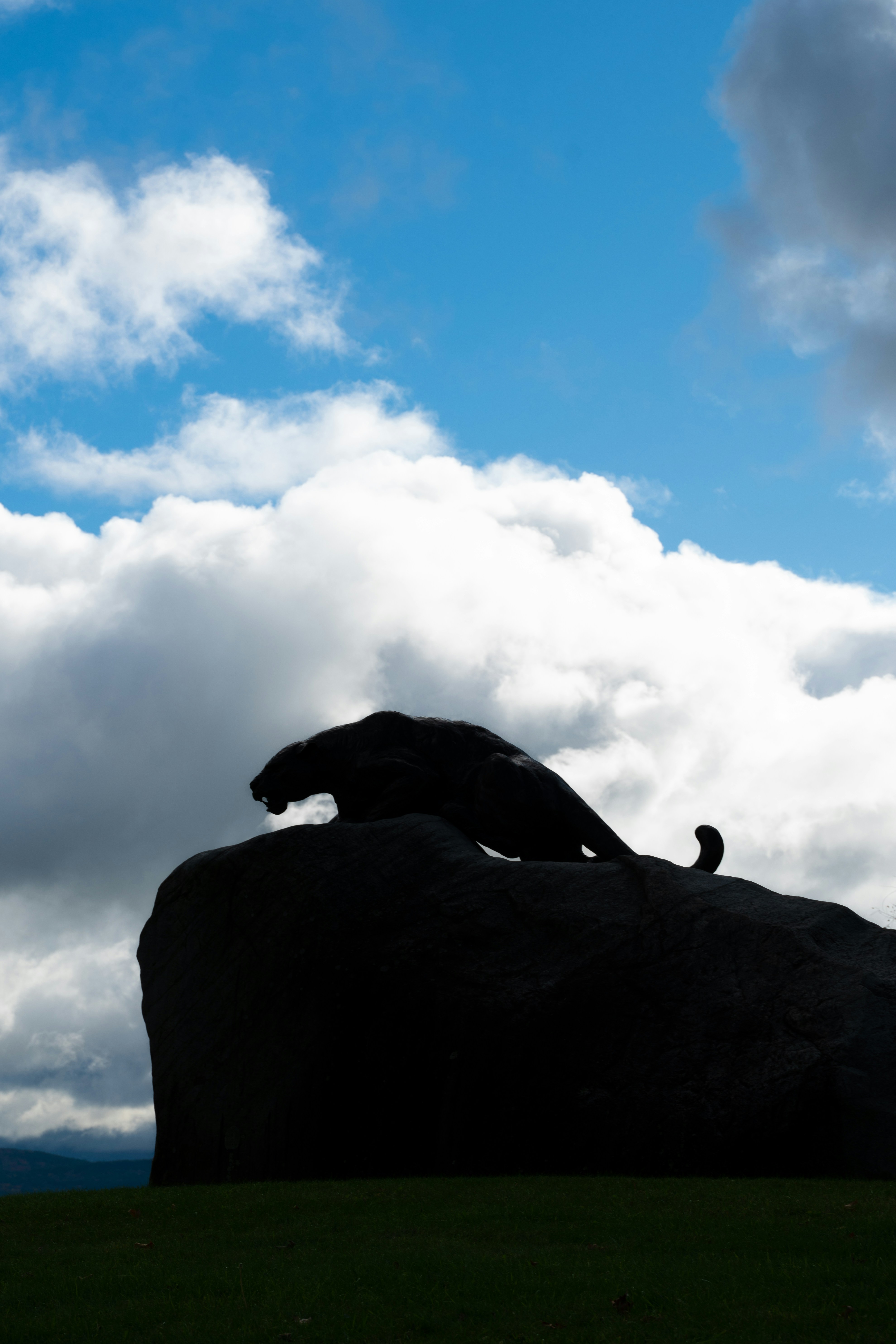
Walk the hedgerows at twilight. Keep a torch handy. A sharp eye. A steady hand on a camera. Because sometimes, the most compelling truths hide in plain sight, as a silhouette on a November road, or a long tail slinking behind a hedge, might just prove to you.

If nothing else, the mystery remains alive and hopefully well, and left alone.

Luke Phillips is the author of the eco-thriller Shadow Beastwhich explores the myth and mystery of Britain’s big cats.

What Might Come Next — For Readers, Watchers, The Curious

If you see something:

  • Use a phone or camera to get photos, video if you can (and safely).
  • Try to note scale; are there hedges, gates, known objects in frame that can help judge size?
  • Record time, date, weather, location (village, nearest road/farm), direction of movement, behaviour (walking, stalking, fleeing).
  • Share with groups like Puma Watch North Wales (if in Wales), Rick Minter at Big Cat Conversations or local wildlife / community pages. Even if nothing comes of it, each data point adds to the bigger picture.
  • Stay safe, especially if livestock are nearby. But also aware: many “big cats” reported in the UK probably remain domestic or feral cats mis-measured in light and distance.

The Converse Carnivore

When we begin to look into the possibility of cryptids, the focus is usually on the available evidence and facts that might substantiate the existence of such creatures. Since I was small, it was always the first hand encounters that gripped me with fear or had me reaching for the light switch.

With that in mind, I’ve decided to take some of my favourite encounters, some historic, some more recent, and fictionalise them. I hope you enjoy them. Our first story is about something hairy and homicidal in the woods of Converse, near San Antonio in Texas. Purported to have happened some time in the 1960’s, the exact date is lost to history, and some accounts suggest an origin in the late 1800’s. But the core always remains the same. A retired military man forces his studious son on a hunt that takes place at Skull Crossing. The boy is frightened by something, but still his father makes him go back…

Rites of passage are about tradition and transition. They usually mark the turning from one phase of life to another for instance. For one young man on his first hunt, the transition would be one of being alive to dead.

~

Major Abraham ‘Bram’ Miller let out a deep and audible sigh. He had waited weeks for this moment, but now it had arrived, the look of confusion and disappointment on Ethan’s face was more than he could bear. The boy was shaking, and the old soldier knew that at any moment the tears would start to flow. Damn it, your first rifle and you act like it’s a turd he thought. As if on cue, Ethan turned to face him, tears streaming down his cheeks.

“I don’t want it,” Ethan sniffed, looking at his feet.

“Son, we talked about this,” Bram said. “We’re going hunting this weekend. You need a gun and I bought this for you.”

“I don’t want a gun, I don’t want to go hunting, and I don’t want to fight,” Ethan replied defiantly and coldly. His gaze returned to his feet. He knew what was coming next.

Bram looked at the Ruger 10/22 rifle sitting on the counter. The stock and barrel had been shortened and the wood grain had been brought out and refinished to his specifications. Frank Merryweather smiled knowingly at the boy and Bram from behind the register.

“It’s a beautiful rifle Ethan,” the shop owner said to the boy kindly. “I’m sure I could find another buyer for it.” He caught Miller’s icy cold stare,  but he knew what he was doing. “Of course though, that would mean another boy strutting through town with what was meant to be your rifle. I’m sure you don’t want that. Why not just try it for size for now?”

Ethan looked up and stopped crying. The calm tone had calmed him. He offered up his hands as Merryweather lifted the gun off the counter and handed it to him gently. He was surprised by how light it was. As he ran his finger along the grain and the barrel, he enjoyed the change in texture from warm wood to cold metal. As he slung it over his shoulder, he noticed its length perfectly matched the inside span of his arm. It was then he realised how personal the gift was. He couldn’t help the warm glow inside that formed into a smile.

“What d’ya say Bram?” Merryweather asked. “Ready for the parade ground I’d say.”

“Well a weekend in the woods at least,” Bram replied, but Ethan still picked up the hint of admiration in his father’s voice. “Look’s like we’re all done here, thanks Frank.”

When they were outside, Bram placed his hand on his son’s shoulder. “I’m real impressed Ethan, and I know this ain’t easy for you. Maybe you don’t have to hunt today, but if we’re in the woods, you need to be armed. After all, I might need you to protect me from your mother if we get back too late.”

Ethan smiled, comforted and reassured as they turned and walked back to the aqua-green Chevy pick-up Bram called the General, gleaming as if it had just come from the showroom, despite being two years old now. More of Bran’s military leanings in evidence. The tires churned the dust on the road as they headed out of the town of Converse.

Bran couldn’t help the sigh of relief once they cleared the town. The trail to the hunting ground was just north of Skull’s Crossing, and there was no turning back as they passed it. Ethan appeared to have accepted his lot for the weekend, occasionally making furtive glances at the rifle case in the back.

“So you’re going to be my spotter today, letting me and the other fellas know when there is game coming our way. If you want to bag something yourself you can, but there’s no pressure,” Bran stated.

“I only want to spot. We should eat what we kill and yours will be enough,” Ethan replied.

Bram was somewhat taken aback. This was the first time Ethan had explained his reluctance to hunt so poignantly, and Bram had to admit he was a little impressed.

“So is it trophy hunting your against?” Bram enquired.

“Yes!” Ethan exclaimed. “I’m not a vegetarian Dad, I just don’t like shooting things for fun. That’s how you identify serial killers you know?”

“Your books tell you that?” Bram exclaimed with a smile.

“No, just watching you and your friends,” Ethan laughed.

“Well I have to admit I’m a little impressed and relieved,” Bram replied. “I think that’s a pretty admirable attitude.”

He sat back and they both enjoyed the mutual silence until they rolled up to the hunting ground. Bram’s usual hunting buddies and their dogs were already there and waiting for them. The hounds barked eagerly as they got out of the truck and walked over. They all walked together a little way into the woods, stopping every now and then to note the deer tracks. The others made admiring glances to Ethan’s new rifle and he showed it off with pride whenever asked. Soon they came to a deer stand at the edge of a clearing that bordered the woods. Bram checked the radio worked whilst Ethan climbed the ladder and got into position, then he followed him up.

“All set Ethan?” Bram asked.

“Yeah Dad. I can’t see the next stand where you guys’ll be though.”

“That’s what the radio’s for. Let us know if anything is heading our way.”

Ethan watched his Dad wave back at him before he and the others disappeared along the trail. He waited for some time before pulling out the book he had smuggled in his bag. ‘Anti-intellectualism in American Life by Richard Hofstadter. It was brand new. He settled into the seat and began to read.

After about an hour, he looked up. He felt cold and tense. He put the book down and pulled out a pair of binoculars from the bag instead. It was then he realised what was making him so uncomfortable. The woods were completely silent. He lifted the binoculars to his eyes and began to scan the tree line. The snap of a twig to his far right made him spin round to find its source. As he adjusted the focus, he found something crouched there. A dark form, with fierce amber eyes. He couldn’t help the shudder he felt as the thing stood up on two legs that curved backwards at the knee like a dog’s. As it took three fast steps towards him and the deer stand, it’s long snout quivered and its lips curled back to reveal gleaming white fangs. Ethan was in no doubt it was looking right at him. He fumbled for the radio in a panic.

“Dad, Dad, come in! It’s Ethan. There’s something here, something horrible. It looks like a wolf, but…”

“Ethan calm down!” came Bram’s booming reply. Ethan could tell immediately his father was embarrassed by his panicked voice. “It’s probably just a coyote. Might explain why it’s been so quiet this morning.”

“No Dad, this isn’t a coyote. I don’t know what it is. Oh God, it’s moving closer. Dad, it’s coming, it’s…”

Bram stared at the radio in his hand, his son’s voice replaced by high pitched static. He was startled by the sound of a gunshot that came from the direction of Ethan’s deer stand. There was another, then another. Then silence. Nothing stirred.

Bram bolted, grabbing his rifle and running down the trail. He only looked back when his companions found their dogs unwilling to follow, digging their heels into the ground and baying mournfully as the angry hunters pulled with all their might on their leashes. He didn’t wait for them.

He came to a sudden halt as he turned the corner. He could see the stand was empty. Ethan’s rifle lay abandoned on the ground close by. The empty brass shell casings were scattered in the leafy brush. He dashed past the stand into the clearing and stopped. Only the heavy thud of his heart sounded in his chest as he met the gaze of the creature in the tree line. It’s wolf-like ears were held high, pricked and pointed in his direction. Fiery eyes watched him with unblinking tenacity. But it was the snout that made him recoil in horror. A wicked, twisted thing that seemed to form a sneer. The creature was semi-crouched, shrouded by the shadow of the trees, but he could still make out what it held in its arms. Ethan, pale and bloodied, eyes closed. The creature took a single step backwards and disappeared into the maze of brush.

The dogs could not be forced back down the trail, and it was only the press of night and the threat of darkness that eventually encouraged them to break for the cars. The men returned with flashlights and searched the forest, but to no avail. Police and forest rangers arrived, but their dogs and horses also refused to enter the trees. Throughout the night, the woods remained silent under the gaze of a full moon.

It was the following day that Bram stumbled upon the creek. The mist of the early morning had not yet lifted, but he still noticed the colour. Blood red. As he knelt down beside the water, he wept, knowing Ethan was lost to him. He jumped to his feet as he heard a whispered message, the voice of his dead son, coming from the creek.

“Eat what you kill,” it said.

~

I hope you liked this little fictionalised adventure into a famous cryptid encounter. If you like unknown creatures and scary stories, and fancy something a little longer, I write novels too. You can find a link to my book Shadow Beast below.

https://t.co/mwC6dyn0Kj

forest-801777_1920