
When Orcas Hunted With Whalers
The name sounds like something from folklore.
The Killers of Eden.
But these weren’t pirates. Nor outlaws. Not even a forgotten cult. They were orcas.
For decades in the nineteenth century, along the southern coast of Australia, a pod of killer whales worked in co-operation with human whalers in Twofold Bay.
They didn’t merely follow the boats or scavenge from discarded carcasses. They signalled. They herded. They hunted alongside the men. And at the centre of the story was one specific individual, a male that became known as Old Tom.

The Signal in the Bay
From the 1860s until the early twentieth century, shore-based whaling was integral to the small town of Eden.
Unlike the vast industrial fleets that would later dominate the Southern Ocean, Eden’s operations were small, open-boat enterprises run, at least to start, by a single family – the Davidsons. What made their station remarkable was not its size, but its partnership.
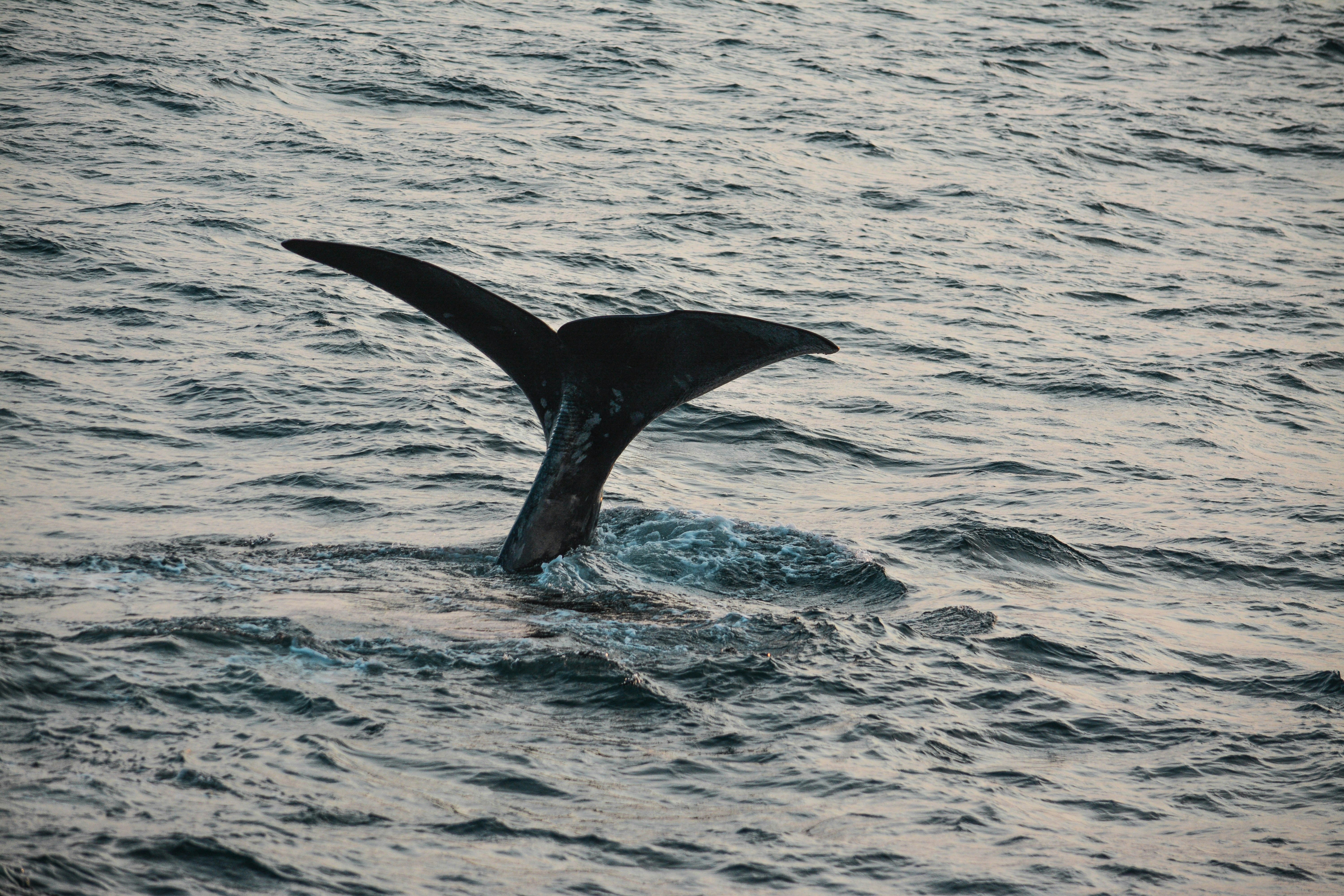
When migrating humpback or southern right whales entered Twofold Bay, the orcas would drive them toward shore. Old Tom, recognised by his tall dorsal fin, was known to swim to the mouth of the Kiah River and slap his tail against the surface — a deliberate “flop-tail” that alerted whalers to the presence of a whale.
Men would heed this signal and scramble into their boats. The chase would begin. And a significant ritual became an anchor to the partnership.
The arrangement became known as the “Law of the Tongue.” Once a whale was harpooned and secured, the carcass would be anchored overnight. The whalers would leave the lips and tongue, which are rich in blubber, for the orcas. The rest would be processed at the try-works.
This is important, as it clarifies the partnership as not one based on sentiment. It was mutual advantage.
Old Tom
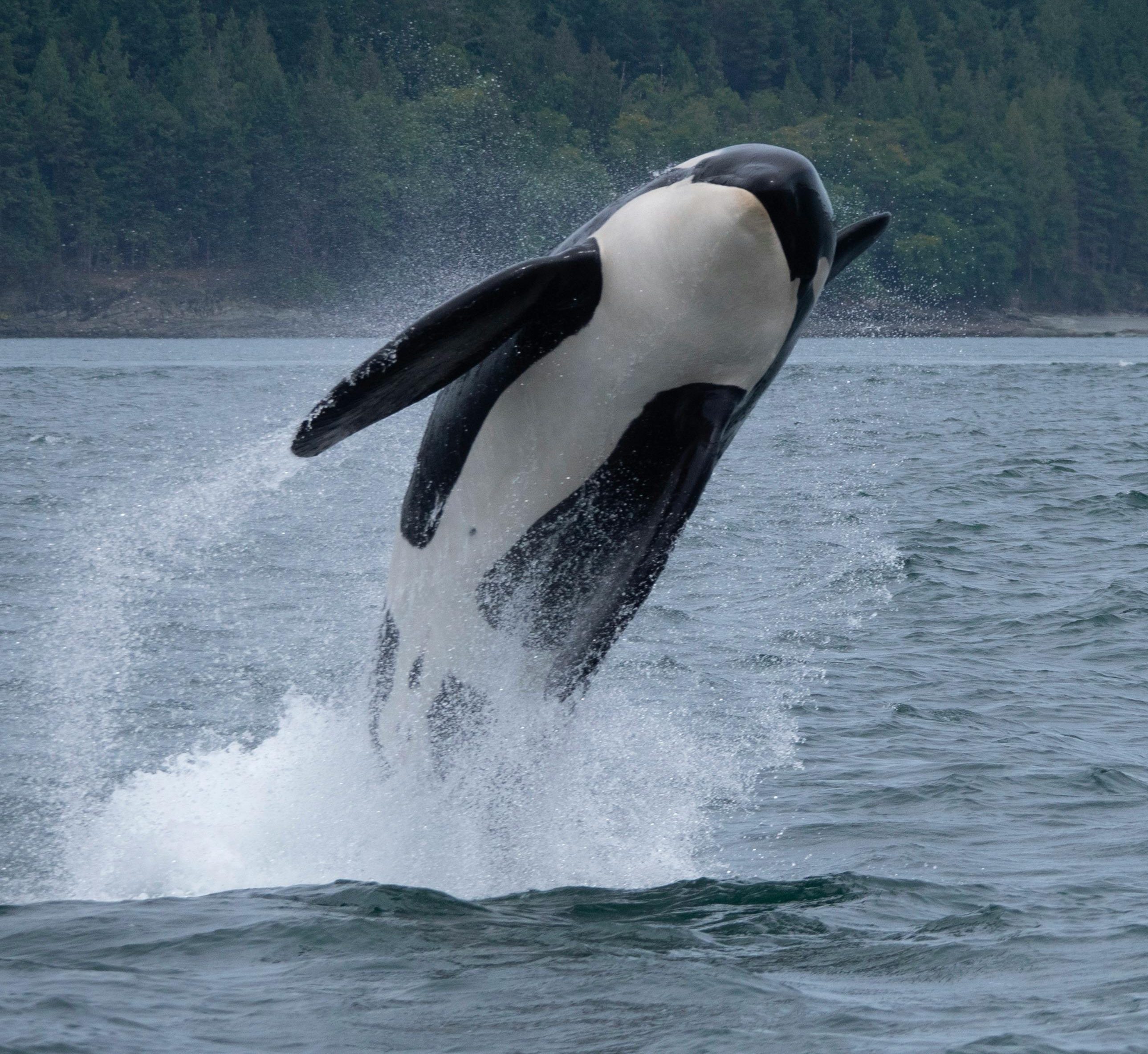
Old Tom measured around 22 feet (6.7 metres) and weighed an estimated six tons. Distinctive wear on his lower teeth suggests he frequently gripped tow ropes during hunts. This behaviour was allegedly recorded by whalers who claimed he would sometimes take the line in his mouth and help pull the boats.
At other times, he reportedly clamped onto the rope fastened to a harpooned whale and allowed himself to be dragged through the water, an act the crews described with something like affection. Yet, a later incident of what seemed like a playful tug of war notably loosened his teeth.
He also notably returned season after season.
The documented co-operative hunts largely ceased by 1901, following a series of disruptions. One member of the pod, known as Typee, was shot by a local after becoming beached in the shallows. In the aftermath, Indigenous Australian whalers who had worked with Davidson’s crew withdrew from Kiah Inlet. At the same time, global industrial whaling expanded dramatically, and baleen whale numbers began to decline.
The ecological and economic balance that had sustained the alliance fractured.
No baleen whales were recorded in Eden after 1926.
Old Tom, however, continued to return. Often alone.
On 17 September 1930, his body was found floating in the bay. His skeleton now hangs in the Eden Killer Whale Museum, suspended in quiet testimony to a strange chapter of maritime history.
The Solitary Return
Orcas are deeply social animals. They travel in stable, matrilineal pods, maintaining lifelong bonds and passing hunting traditions across generations. Despite the folklore surrounding Old Tom, males do not lead pods. Solitary individuals are rare.
The image of Old Tom returning alone to Twofold Bay has unsettled observers for decades.
Local belief holds that the rest of his pod may have been killed further north, possibly in Jervis Bay, by Norwegian whalers unaware of the cooperative history in Eden. Elsewhere along the coast, fishermen and whalers often regarded orcas as competitors and retaliated with bullets and harpoons.
The “Killers of Eden” were never universally protected. They were tolerated, while useful.
When shore-based whaling declined after 1901 and industrial fleets reduced whale populations further offshore, the ecological conditions that had enabled the cooperation disappeared. And the behaviour vanished with them.

Cooperation or Strategy?
It is tempting to romanticise the story. Man and predator working side by side. An interspecies pact honoured through ritual.
But modern research offers a quieter explanation.
We now know that orcas exhibit:
- Cultural transmission of behaviour
- Specialised hunting techniques within pods
- Long memory and social learning
- Adaptive exploitation of predictable food sources
The Eden pod was not acting out of loyalty in a human sense. Nor were they mythic collaborators. They were intelligent apex predators exploiting a reliable opportunity.
Orcas are the largest members of the dolphin family, which is significant because bottle-nosed dolphins in Laguna, Brazil, have developed a similar, near century-old partnership with local fishermen. They signal with tail slaps and head nods when the men should cast their nets, as the pod herds the fish towards shore.
The “Law of the Tongue” was not a moral contract. It was strategy.
When overhunting reduced baleen whale numbers, and when industrialisation changed the rhythm of the bay, the strategy no longer worked. And so it ended.
The Name That Lingers
“The Killers of Eden” remains a provocative phrase. We can’t but help associate the name Eden with a place of original innocence. And killer is the name we give all deliberate predators.
Yet the title reveals as much about us as it does about them. We were the ones that christened them killers, whilst we were killing too.
Perhaps what unsettles us is not that orcas hunted alongside humans but that they adapted so fluidly to our violence. That they folded themselves, briefly, into our industry.
And when that industry collapsed, they did not mourn the contract. They adapted or vanished.
There is something more grounded in that. This story isn’t about myths, monsters, or miracles. It’s just two apex species intersecting, for a moment, in a fragile ecological alignment.
And when the balance broke, the sea closed over it.
If you enjoy reflective explorations of the uneasy boundary between humans and the wild, my novels explore similar terrain, where co-operation, fear, and instinct are rarely as simple as they seem.
 The blog of author Luke Phillips