Movie Monday: When Monsters Reflect the World

How Horror Films Echo War, Disaster, and Cultural Fear

There is a moment in many monster films when the creature first appears. It might be a shadow moving beneath dark water. A shape rising above a skyline. A distant roar that carries across a city.

The details change from film to film, but the feeling is always the same. Something enormous and uncontrollable has entered the world.

For most audiences, it is simply spectacle – the thrill of watching something impossible unfold on screen. But if you look closely at the history of monster cinema, those creatures rarely appear by accident.

Again and again, they emerge at moments when societies are wrestling with fears far larger than any individual villain: war, nuclear technology, environmental collapse, or sudden catastrophe.

The monsters may be fictional. But the anxieties behind them are not. Is it purely coincidental, as we experience some of the most uncertain and unsettling times of the modern age, that horror has risen to a place of both cultural and critical recognition in this year’s awards season?

Monster movies are often dismissed as escapism. It’s easy to understand why as giant creatures, impossible threats, and cinematic spectacle designed purely to entertain battle across the screen.

But look more closely and something interesting begins to emerge. Many of the most enduring monsters in film history appeared at moments when societies were grappling with something far more frightening than fiction: war, technological catastrophe, terrorism, or environmental collapse.

In those moments, monsters become metaphors. They give shape to fears that are otherwise too large, too abstract, or too traumatic to confront directly.

From nuclear destruction to terrorist attacks, monster cinema has often mirrored the anxieties of the era that produced it.

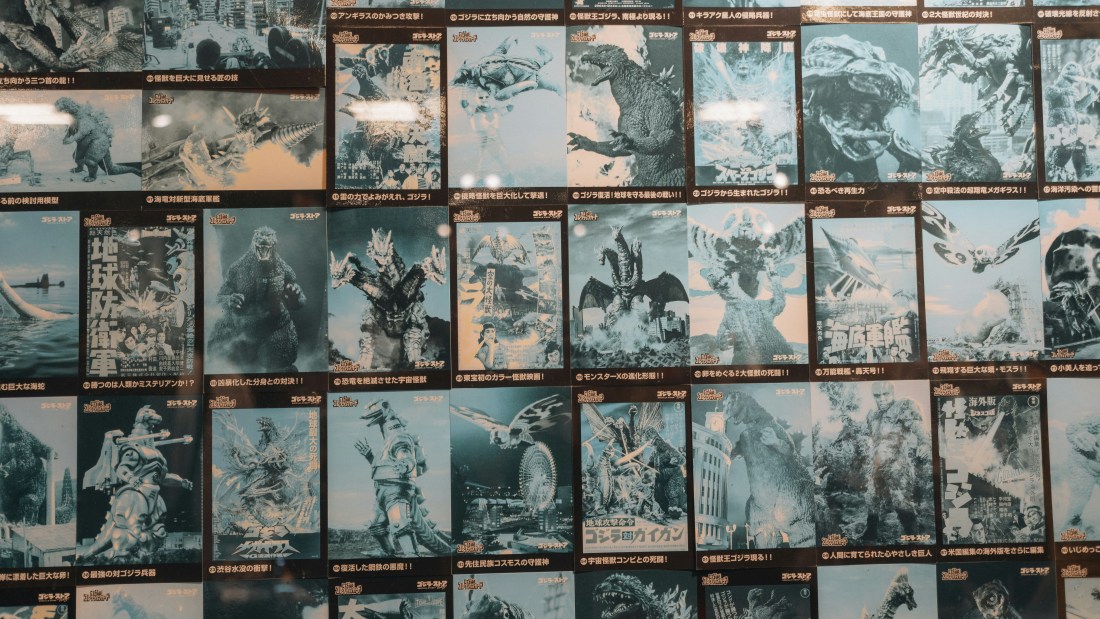
Godzilla and the Shadow of Hiroshima

No example illustrates this better than Godzilla.

The film appeared less than a decade after the atomic bombings of Hiroshima and Nagasaki, and the imagery of nuclear devastation is woven throughout the film.

Godzilla itself is not a dinosaur or an easily recognised entity. It is a creature awakened and directly shaped by nuclear testing.

Tokyo’s destruction in the film deliberately echoes the burned ruins of wartime Japan: flattened cities, fleeing civilians, hospitals overwhelmed with radiation victims.

For Japanese audiences in 1954, this was not distant fantasy. It was collective memory. Godzilla was the embodiment of a new fear, that humanity had created forces capable of destroying the world itself.

Interestingly, this cultural role has never entirely disappeared from the Godzilla franchise. In recent years, Japanese filmmakers have deliberately returned the creature to its darker origins. In Godzilla Minus One, Godzilla once again represents the trauma of post-war Japan, emerging in a country already devastated by defeat and struggling to rebuild.

Rather than a heroic or ambiguous creature, the monster becomes a symbol of national vulnerability and historical memory, something much closer in spirit to the original 1954 film.

At the same time, Western interpretations have begun shifting the metaphor in new directions. The series Monarch: Legacy of Monsters explores the hidden organisations studying giant creatures, gradually suggesting that secrecy, corporate power, and institutional control may be as dangerous as the monsters themselves. In this sense, the Godzilla myth continues to evolve alongside the anxieties of the modern world.

The American Nuclear Monster Era
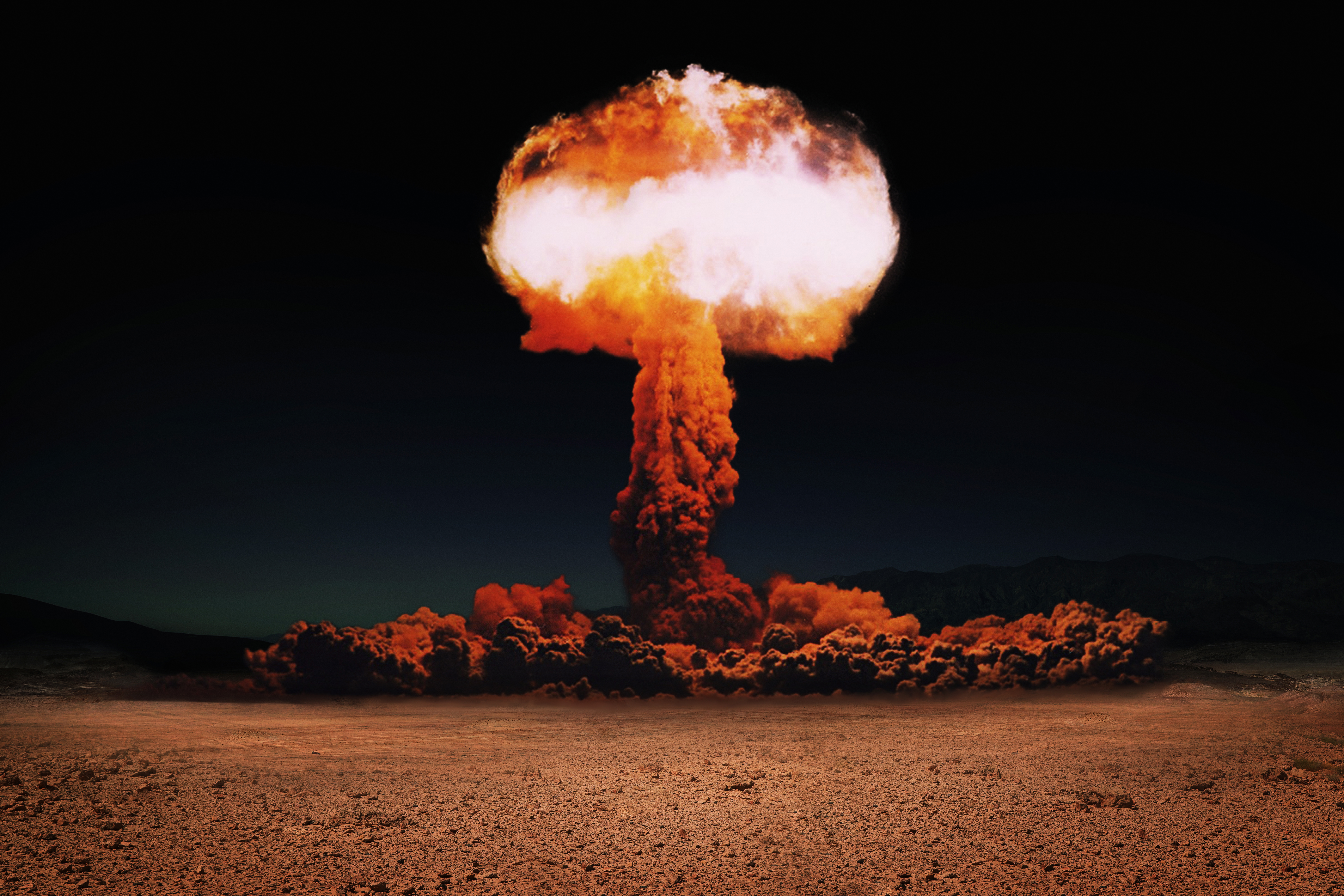
Godzilla was not alone though. During the 1950s, American monster cinema was also being shaped by nuclear anxiety.

Films like Them! featured giant ants created by radiation, and The Beast from 20,000 Fathoms explored the fear that atomic experimentation might unleash uncontrollable consequences.

These monsters were literally products of radiation. The Cold War had turned nuclear annihilation into a daily possibility, and cinema responded by imagining what might emerge from the fallout.

Cloverfield and the Trauma of 9/11
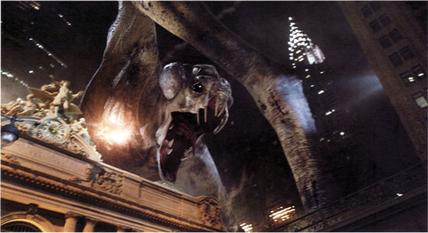
Half a century later, another monster appeared under very different circumstances. Cloverfield arrived in a cultural landscape still shaken by the attacks of September 11th.

The parallels in the film are unmistakable: The sudden attack on New York; Buildings collapsing into clouds of dust; and panicked crowds fleeing through streets filled with the smog of destruction and fear.

The film’s handheld “found footage” style reinforces the feeling of witnessing catastrophe unfold in real time. And unlike traditional monster films, Cloverfield never fully explains the creature.

The story instead focuses on the experience of ordinary people caught in the chaos, which mirrors how many people experienced the real-world attacks.

War of the Worlds and the Language of Terror
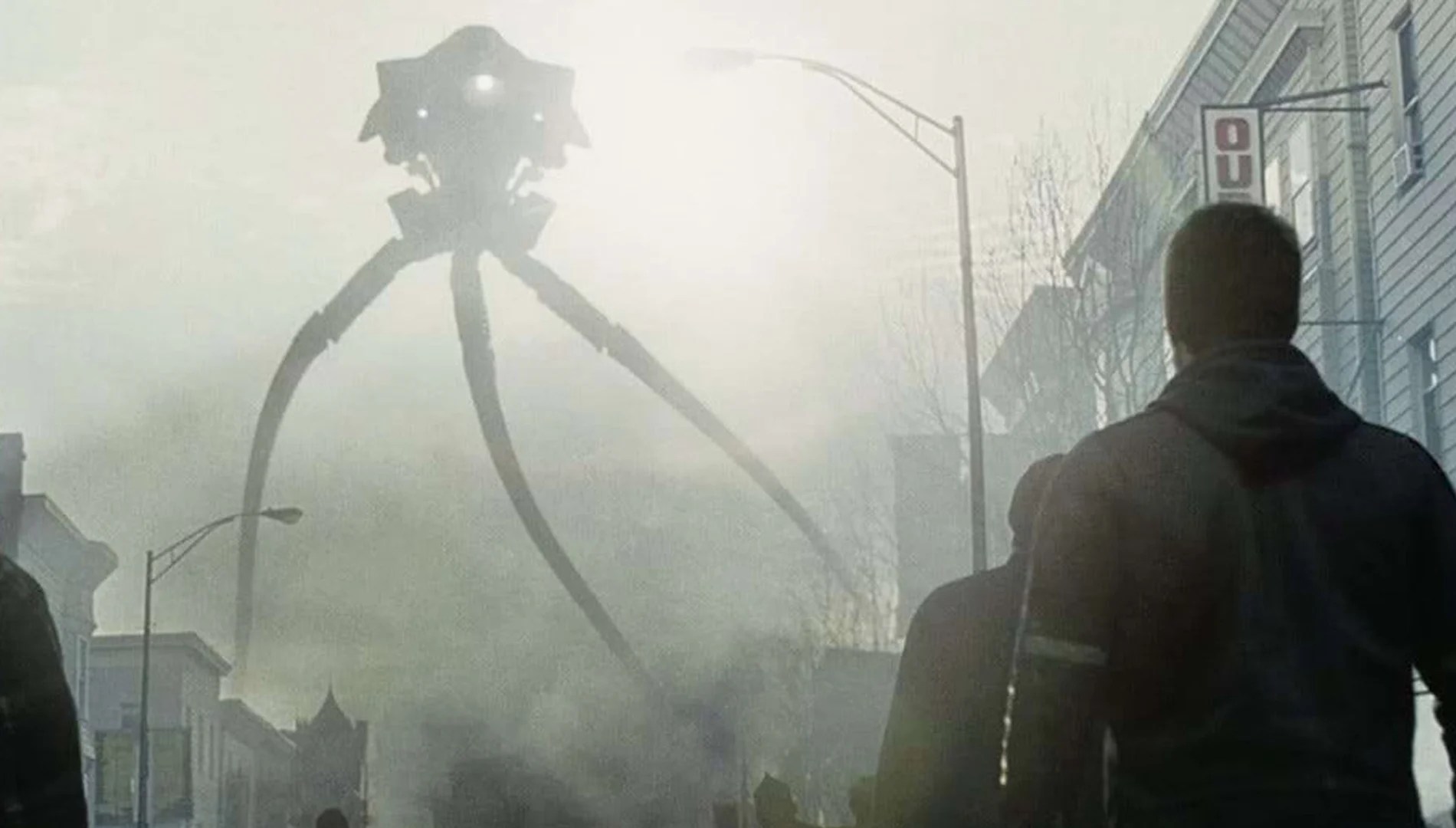
Steven Spielberg’s adaptation of War of the Worlds also carries strong echoes of post-9/11 anxiety. Although based on H. G. Wells’s 1898 novel, the film deliberately mirrors imagery familiar from the early 2000s.

Crowds flee through clouds of dust and stagger through streets covered in ash and sudden attacks destroy familiar landmarks with uncaring brutality.

Even Spielberg himself acknowledged that the film drew inspiration from the emotional atmosphere of the post-9/11 world.

Environmental Monsters and Industrial Anxiety
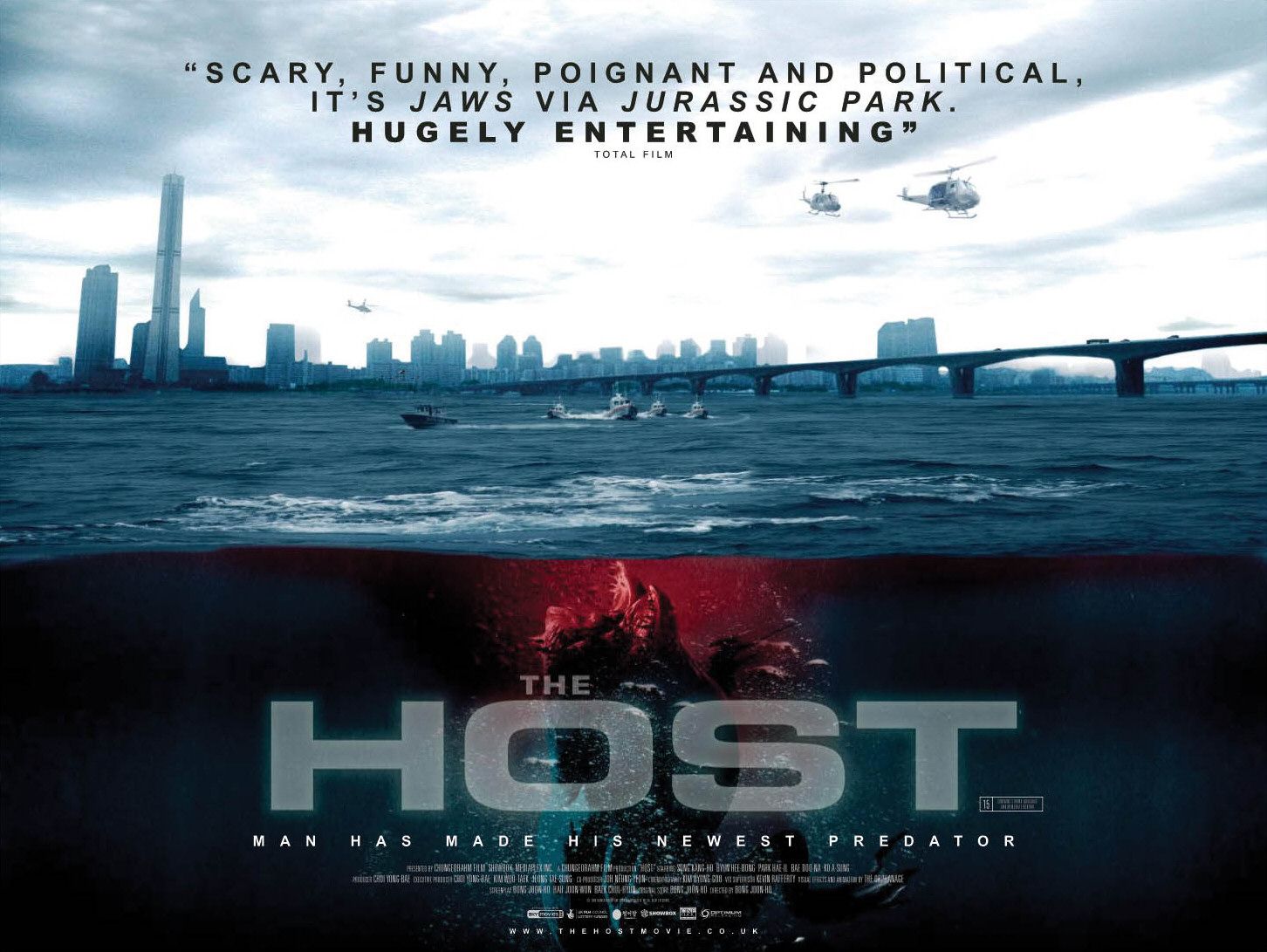
In recent decades, monster films have increasingly reflected environmental fears. A powerful example is The Host, directed by Bong Joon-ho.

The film begins with toxic chemicals being dumped into Seoul’s Han River, eventually creating a mutated amphibious creature that emerges from the water to terrorise the city.

The story was inspired by real environmental controversies involving chemical dumping by the U.S. military in South Korea.

Here the monster is not ancient or mythical, it’s man-made and a direct consequence of pollution and ecological neglect.

Pacific Rim and Disaster in the Age of Global Threats
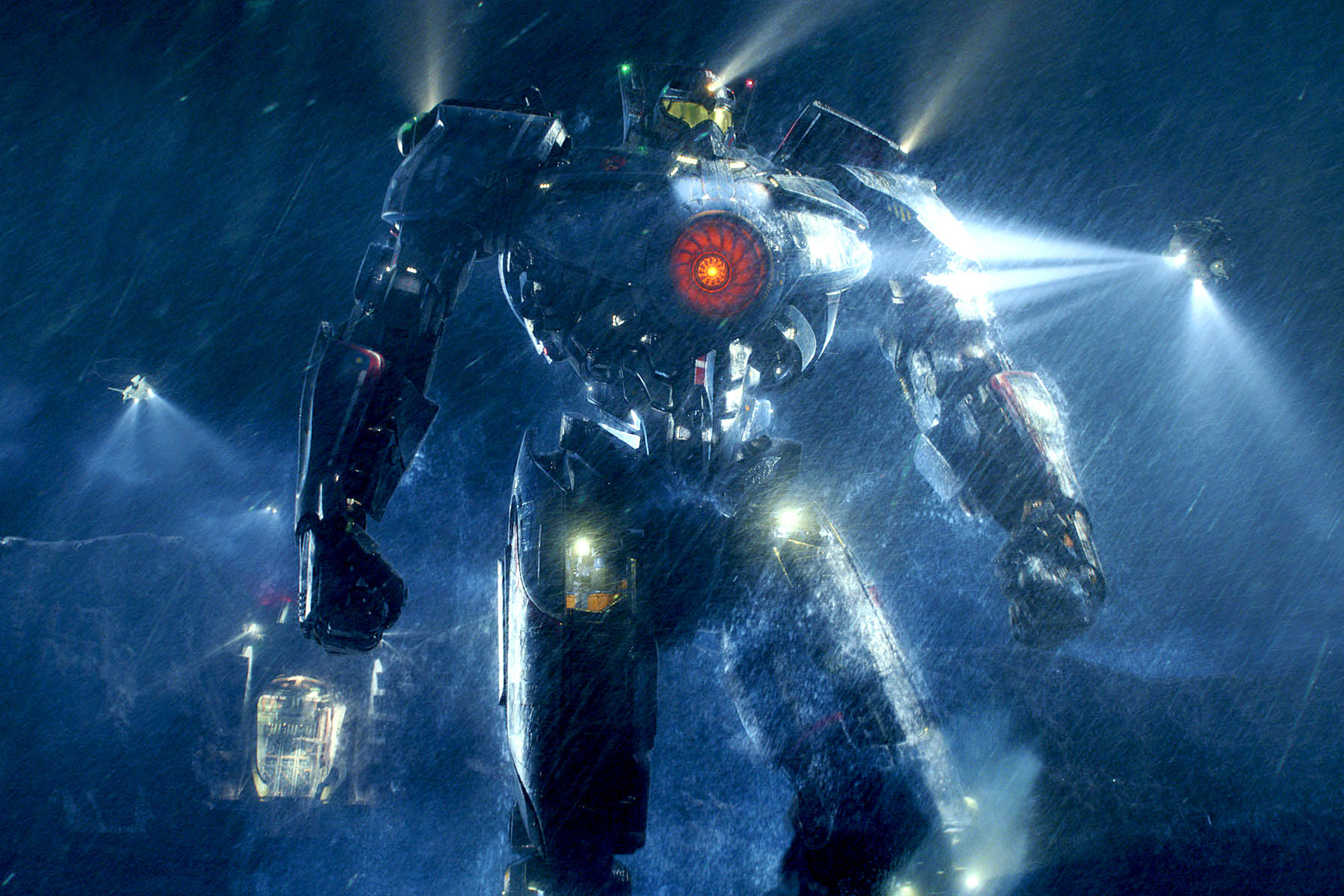
One of the most interesting modern examples is also a favourite. Pacific Rim. At first glance, the film looks like a straightforward homage to classic Japanese kaiju cinema.

But its imagery reflects a very modern world, one shaped by natural disasters, climate anxiety, and global co-operation.

The giant creatures known as Kaiju emerge from the Pacific Ocean and repeatedly destroy coastal cities.The only effective response is an international coalition that builds enormous defensive machines known as Jaegers.

Released only two years after the devastating 2011 Tōhoku earthquake and tsunami, the film echoes a world increasingly aware that catastrophic events, whether natural or man-made, require collective responses.

Unlike Cold War monster films, where nations often acted alone, Pacific Rim presents survival as a shared human effort. The monsters are global. So then, must the response be.

Monsters as Psychological Landscapes

Some modern films explore fear in even more abstract ways. In The Mist, adapted from a story by Stephen King, the monsters outside a supermarket are terrifying, but the real horror unfolds inside.

Fear quickly fractures the small group of survivors as paranoia spreads and authority collapses. The film explores how quickly social order can unravel when people believe they are facing an unknowable threat.

That theme resonated strongly in the years following 9/11, when societies across the world grappled with new fears about security, uncertainty, and public trust.

War, Memory, and Haunted Landscapes

Yet, not all monster stories involve giant creatures. In parts of Southeast Asia, horror cinema often reflects the lingering presence of war through ghosts rather than monsters.

Vietnamese films made after the Vietnam War frequently feature haunted forests, abandoned villages, or restless spirits tied to wartime violence.

In these stories, the land itself remembers. The monster is not a creature emerging from the sea, it is simply history refusing to disappear.
Why Monsters Keep Returning

Monsters are powerful storytelling tools because they externalise fear. War, terrorism, environmental collapse, and nuclear technology are difficult to visualise.

They are vast forces that are political, technological, and systemic. Making them into monsters gives those fears shape. A shape that can be confronted, fought, and sometimes even understood.

These are the reasons why monster films appear again and again at moments of cultural anxiety. They allow societies to process and confront their fears, even the subconscious ones.

The monsters themselves therefore understandable change, from radioactive dinosaurs to mutated sea creatures to inter-dimensional invaders.

Monster films often feel timeless, but they are deeply rooted in the moment that produced them.

Godzilla carried the shadow of nuclear war. Cloverfield echoed the shock of 9/11. And Pacific Rim imagined a world where survival depends on global co-operation against overwhelming threats.

The creatures themselves may be fictional. But the fears behind them are always real. And that is why monster stories never truly disappear.

They evolve alongside us. The monster movies of the next few years may be ones to take note of.

When Monsters Win: Why Prestige Culture Only Rewards Horror on Its Own Terms

The well-behaved monster and the boundaries of respectability.

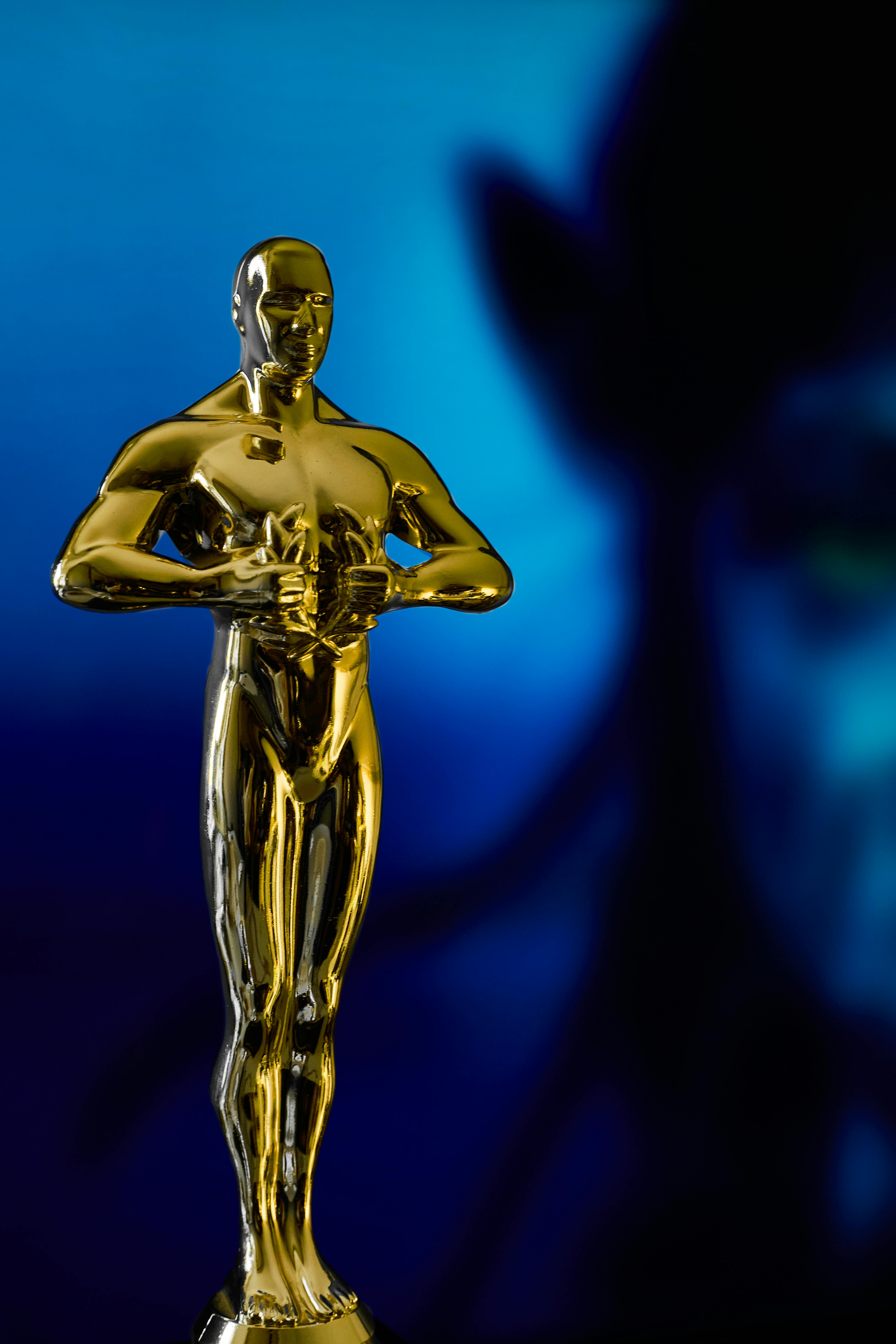
Awards season is upon us and traditionally, has always had its preferences. Historical epics. Biographical drama. Social realism. Stories that feel weighty before they even begin.

Horror, by contrast, has often been treated as something unruly — too visceral, too commercial, too unserious to sit comfortably among prestige cinema. And yet, every so often, a monster slips past the velvet rope.

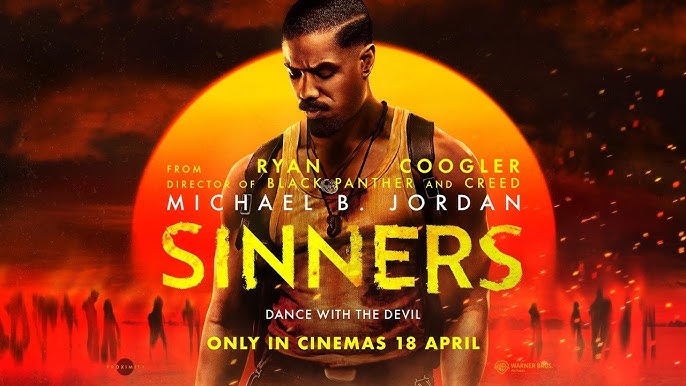
This year, with Sinners dominating Oscar nominations and walking away with major wins at the BAFTAs, that old boundary feels more porous than it once did. Creature cinema is no longer automatically dismissed. It can be celebrated. It can be honoured.

But when monsters win, it is rarely on their own terms.

They are welcomed, carefully, once they have been translated.

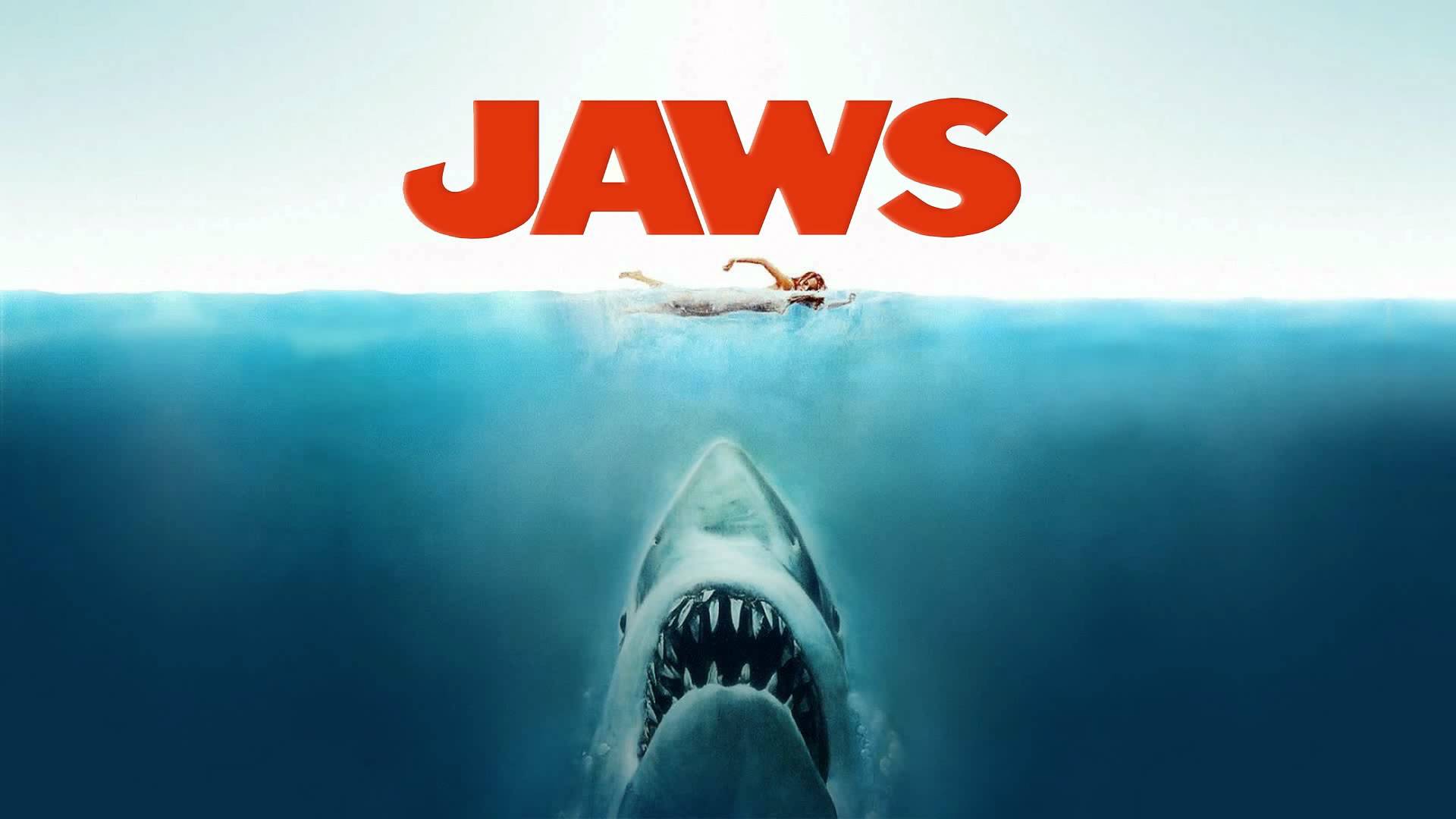
Jaws – The Shark That Wasn’t Just a Shark

When Jaws arrived in 1975, it was a creature feature. A film about a shark hunting swimmers off the coast of a small American town.

It went on to win three Academy Awards — for editing, sound, and John Williams’ now-immortal score.

Not for the shark. The mechanical animal at the centre of the film was never what the Academy formally recognised. Instead, it was the craft that elevated the material: the restraint of the camera, the discipline of the cut, the tension built through absence rather than spectacle.

The shark became something larger than itself. It became:

  • Fear of the unseen.
  • Bureaucratic denial in the face of danger.
  • Economic pressure overriding safety.

In other words, it became metaphor. But beneath that metaphor, the shark remained something more unsettling. It wasn’t malicious. It wasn’t political. It wasn’t traumatised. And it was not misunderstood.

It was simply an animal behaving as animals sometimes do (or in this case, how we thought and imagined they did).

That indifference — that refusal to moralise — is part of what makes Jaws endure. Yet the recognition it received was framed around artistry, not animality. The Academy rewarded how the story was told, not the wildness at its heart.

The creature was tolerated. The craftsmanship was honoured.

The Shape of Water – The Monster Who Became a Mirror

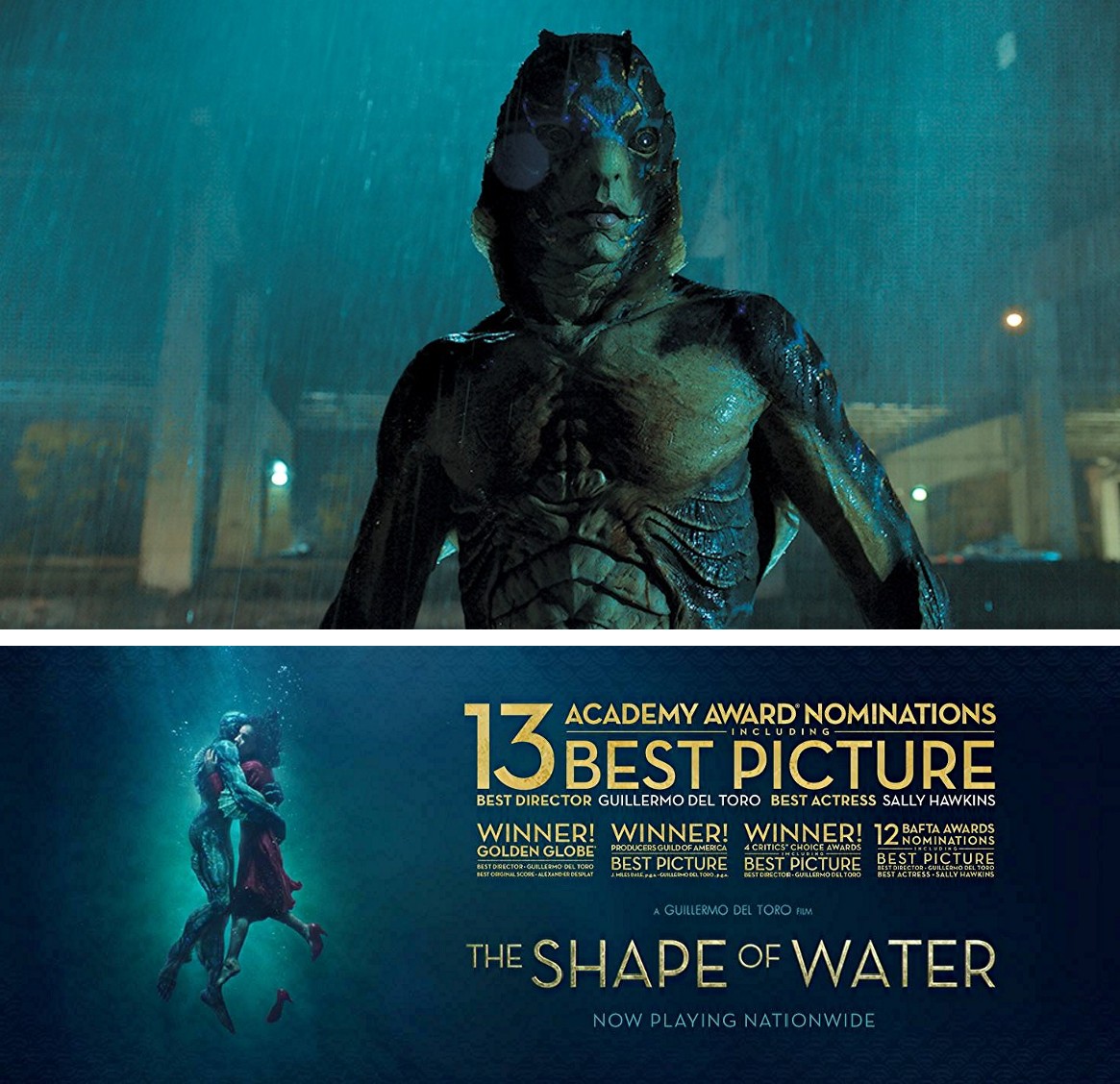
Guillermo del Toro’s The Shape of Water went further. It did not merely win technical awards. It won Best Picture. At its centre is an amphibian creature — clearly inspired by mid-century monster cinema — imprisoned, studied, and ultimately loved.

But this monster does not function as predator. He is not unknowable. He is not ecologically threatening. He is gentle, curious, and capable of tenderness.

He becomes a symbol of otherness — of marginalisation, disability, Cold War paranoia, loneliness. The film invites us not to fear him, but to recognise ourselves in him.

The creature wins because he reflects something human. His monstrosity is aesthetic, not existential. Prestige culture is comfortable with this kind of monster. It can be framed as allegory. It can be moralised. And it can be absorbed into the language of empathy.

The wild edges are softened and the teeth are metaphorical.

When the Creature Becomes Backdrop

A pattern begins to emerge. Horror tends to be embraced by institutions when it performs a certain translation. When the monster is:

  • A political symbol.
  • A social commentary.
  • A psychological metaphor.
  • A vehicle for historical reflection.

In these cases, the creature is not truly the subject. It is a lens through which something recognisably human is examined.

The awards are rarely about the animal itself. They are about what the animal represents. And it’s important to clarify this does not diminish the artistry of these films. Many of them are extraordinary. But it does reveal a preference.

Prestige culture prefers its monsters legible and interpretable. In short, it prefers them to behave.

Horror’s Rehabilitation

In recent years, horror has enjoyed something of a rehabilitation. The line between “genre” and “serious cinema” has blurred. Audiences have matured. Filmmakers have pushed boundaries of tone and form.

Part of this shift is cultural. We live in anxious times. Horror provides a language for uncertainty and a release for it — for systems that feel unstable, for threats that feel diffuse.

But institutions still have conditions.

When horror arrives in formal dress — lyrically shot, carefully scored, layered with symbolism — it is easier to recognise as art. When it aligns with contemporary conversations, it feels urgent rather than lurid.

In other words, horror is welcomed when it demonstrates that it understands the rules of the room. It can be frightening. It can be strange. But it must also be respectable. And the vampires in Sinners are polite, well-spoken, and at the very least, wear respectability as a well-practiced facade as a means to an end.

The Uncomfortable Creature

What remains more difficult to absorb is the creature that resists interpretation. The shark that is simply a shark. The predator that is not secretly a metaphor for capitalism, trauma, or xenophobia. The animal that does not apologise for being non-human.

Ecological horror, the stories that centre real animals behaving according to instinct rather than narrative morality — sits uneasily in prestige culture. There is no catharsis in a force of nature. No redemptive speech. No symbolic resolution.

There is only indifference. And indifference is hard to award. It offers no moral comfort. It does not flatter us by suggesting that even our monsters are secretly about us.

Why This Matters

How we reward monster stories tells us something about how we process fear. We are drawn to creatures, but we often feel compelled to domesticate them. To explain them. To soften them into symbols we can decode.

When a monster film wins, it often does so because it reassures us that the monstrous can be translated into something familiar. But some of the most powerful creature stories resist that translation. They leave the animal wild. They refuse to moralise the teeth.

Those films may not always collect statues. Yet they linger. Because they remind us that not everything in the natural world exists to be understood through human frameworks.

Some things are simply other – the literal force of nature. And perhaps that is what true monster cinema has always been about — not metaphor, not allegory, but the fragile boundary between ourselves and the wild.

Awards season may continue to evolve. Horror may continue to gain recognition. But the monsters that win will likely remain the ones that know how to behave.

The rest — the indifferent, the ecological, the untamed, will likely continue to circle just beyond the light. Popular, but not recognised. Always in the shadows of recognised greatness. And there is something fitting about that.

My novels explore similar boundaries between folklore, wildlife, and fear. The monsters are rarely simple. Find them on Amazon, Kindle, Audible, and iTunes.

Movie Monday: Primate, Killer Apes, and the Stories We Tell About Animals

Welcome back to Movie Monday.

This is only the second entry in the series, but the intention is already clear: this isn’t about quick reviews or ranking creature features by body count. It’s about looking at animal-led horror films through a wider lens… asking what they borrow from reality, what they distort, and what impact those stories have beyond the screen.

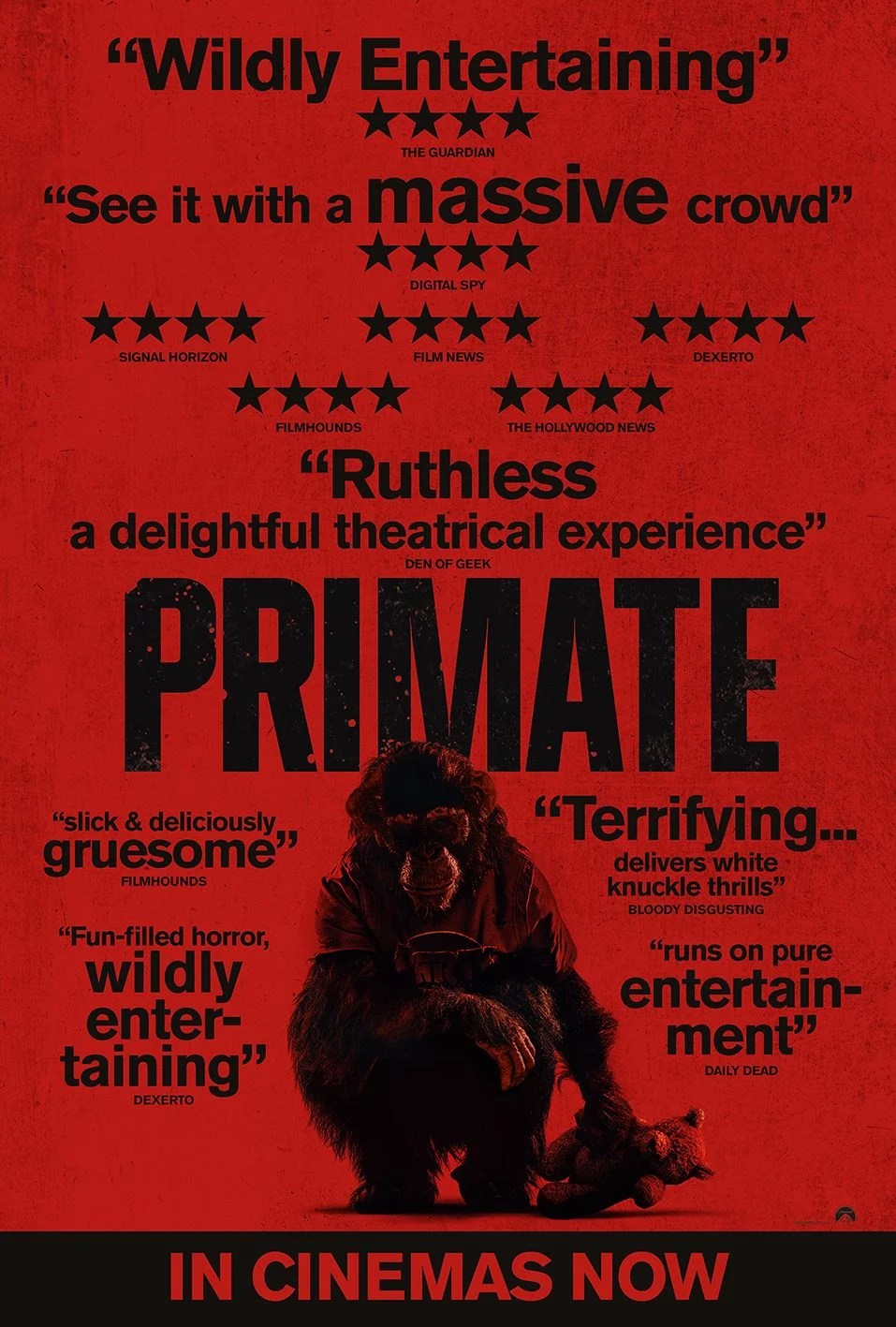
This week, the focus is a brand new film – Primate, directed by Johannes Roberts. It’s a deliberately confrontational piece of horror: graphic, tense, and unflinching in its depiction of violence. On the surface, it fits comfortably within the long tradition of “killer animal” cinema. But beneath that familiar framework, I think Primate is doing something more thoughtful, and more troubling.

Intelligence as Horror, Not Gimmick

There is a particular kind of discomfort that lingers after watching Primate. Not the fleeting unease of jump scares or gore, but something quieter and more persistent. A sense that what you’ve just watched isn’t entirely fictional and that the true horror sits uncomfortably close to reality.

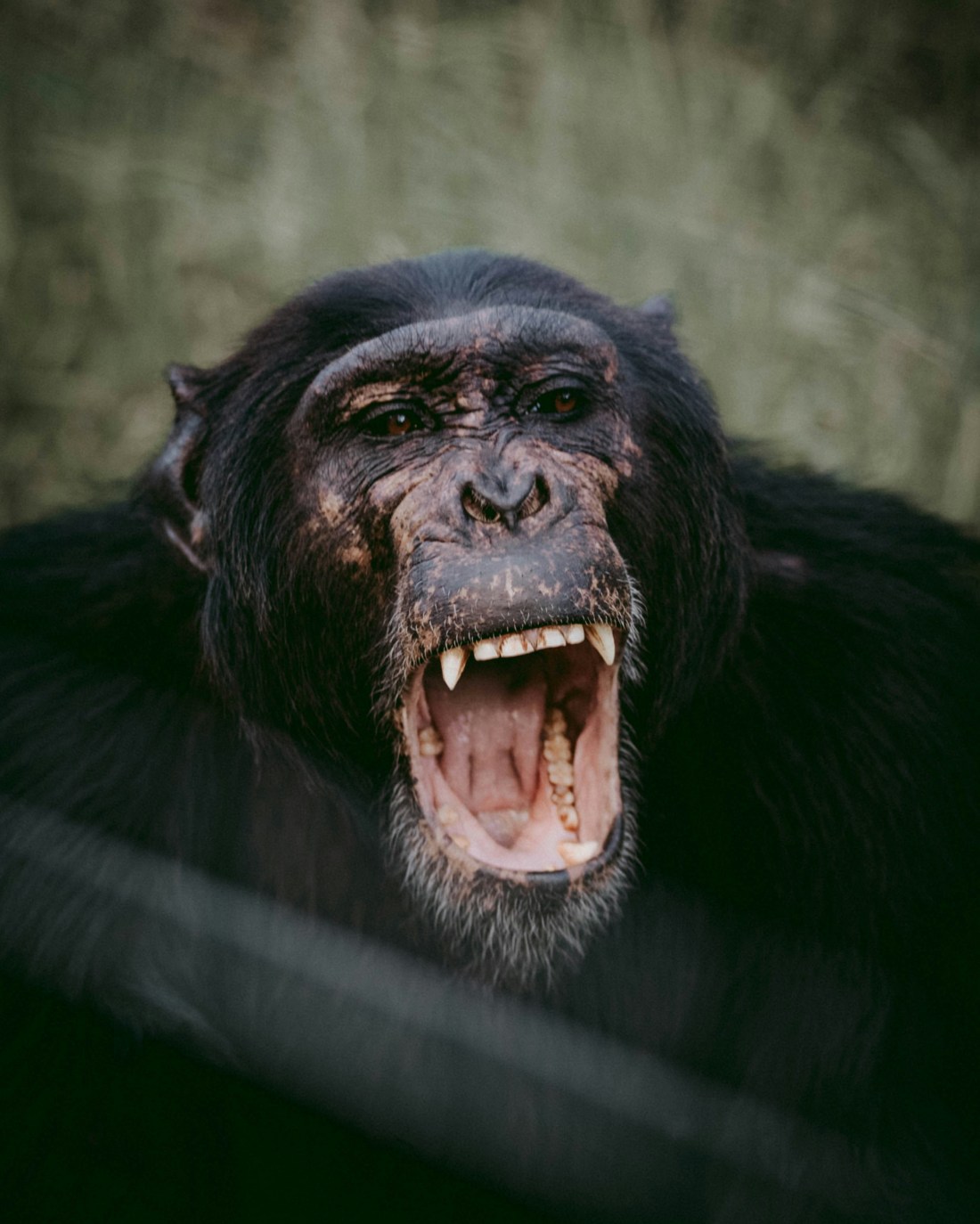
The film centres on a chimpanzee capable of communicating through sign language. When the animal contracts rabies, its behaviour becomes violently unstable. What makes this premise effective is not the novelty of intelligence, but how seriously the film treats it.

The chimp’s cognition is not there to make it sympathetic, nor to humanise it for easy emotional manipulation. Instead, intelligence becomes an amplifier. The violence is more disturbing precisely because the audience understands this is not a mindless creature lashing out, but a thinking being whose perception of the world has been catastrophically altered.

Rabies matters here. The film resists framing the chimp as evil, possessed, or monstrous by nature. This is disease, not malice. Pathology, not punishment. That distinction shifts the moral weight of the story away from the animal and back toward the conditions that made such an outcome possible in the first place.

The Horror Isn’t the Chimp

This is where Primate brushes up against an uncomfortable truth that horror cinema has often avoided.

The horror isn’t the chimp. The horror is the belief that we can safely domesticate something that was never meant to be ours.

Highly intelligent animals do not become safer through proximity to humans. If anything, intelligence increases unpredictability when an animal is denied its natural social structures, environmental cues, and physical autonomy. Familiarity does not override biology.

Viewed through this lens, Primate stops being a simple killer-ape film. It becomes a story about misplaced control and the human tendency to mistake access for understanding.

Real-world cases have already shown how fragile this illusion is. In 2009, Travis the chimp — raised in a domestic setting and long treated as a familiar presence rather than a wild animal, violently attacked a woman in his owner’s home. The incident was not the result of cruelty or neglect in any simple sense, but of a far more uncomfortable truth: a highly intelligent, powerful animal had been placed in an environment it was never designed to navigate. When something went wrong, the consequences were catastrophic.

Love did not cancel instinct. Intelligence did not equal compliance.

Primate fictionalises this reality, but it does not exaggerate it. The film’s horror grows from the same fault line: the human insistence that proximity and affection can neutralise biology.

Killer Apes and Cinematic Inheritance

Cinema has a long, complicated relationship with apes. From the earliest monster films through to modern horror, they occupy an uneasy space: strong enough to threaten us, intelligent enough to unsettle us, and similar enough to us to provoke discomfort.

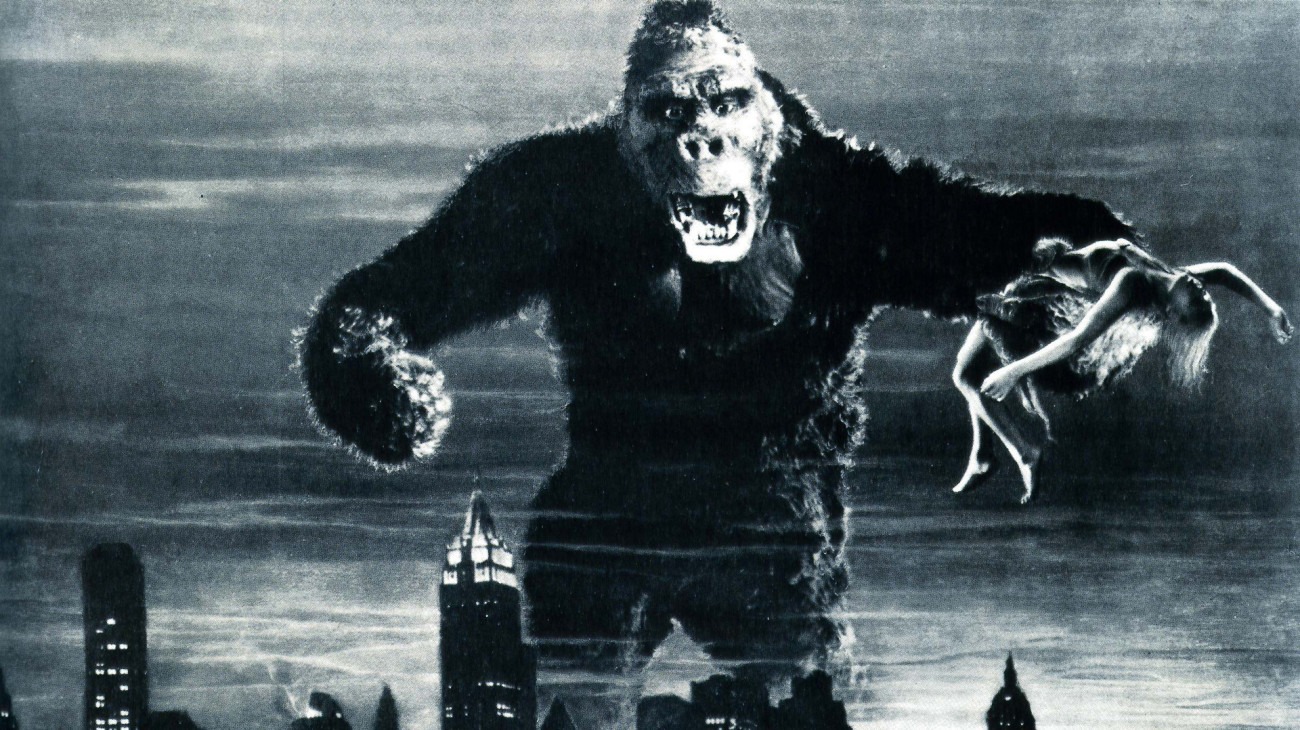
Films like King Kong established a template where apes became symbols of chaos, domination, or fear of the “other”. Too often, those stories leaned on spectacle rather than context, asking audiences to fear the animal without interrogating why it was placed in conflict with humans at all.

Primate inherits that cinematic lineage, but it doesn’t fully repeat its mistakes. The chimp is dangerous, yes, but the film never lets the audience forget that the danger is engineered. Captivity, experimentation, disease, and human arrogance form the backdrop to every violent act.

The animal is not framed as a natural villain. The system surrounding it is.

Misrepresentation, Responsibility, and Modern Horror

This raises a broader question, one that modern creature features can maybe no longer avoid. Can we still make effective animal-led horror without slandering a species?

The answer may lie in perspective rather than restraint. Horror does not lose its power when animals are portrayed honestly; if anything, it becomes more unsettling. When behaviour is grounded in biology, instinct, stress, and environment, violence stops feeling arbitrary and starts feeling inevitable.

Too many older films treated animals as symbols — metaphors for chaos, punishment, or nature “striking back”. In doing so, they often stripped creatures of context, reducing complex species to simple villains. The result was fear without understanding, and spectacle without consequence.

Primate largely avoids that trap. The chimp’s actions are horrifying, but they are never divorced from cause. Captivity, experimentation, disease, and human interference form the framework within which the violence unfolds. The animal is not behaving “out of character”. It is behaving exactly as a compromised, intelligent animal might.

This is an approach I’ve deliberately taken in my own fiction. When I write from the point of view of the creature, it isn’t to humanise or excuse its actions, but to clarify them. To show how instinct, territory, stress, and survival pressures shape behaviour, and how easily human presence destabilises that balance. Horror, in this context, doesn’t come from malice. It comes from collision.

When animals are depicted honestly, the question shifts. The fear is no longer what is the creature capable of? It becomes why did we put it in this position at all?

That, perhaps, is where modern creature-feature horror finds its real responsibility, not in softening its monsters, but in telling the truth about them.

Looking Ahead

Slandering a species has consequences, as Peter Benchley discovered after the unprecedented success of Jaws.

Hot off its 50th anniversary year in 2025, Jaws offers a powerful case study in how fiction can shape fear and how those fears can ripple outward into real-world destruction. In a future Movie Monday, we’ll look at how that film and book sounded a death knell for millions of sharks in the decades that followed, and how Benchley himself later became a vocal champion for their protection.

Because stories about animals don’t end when the credits roll. They linger. And sometimes, they bite far deeper than intended.

🎬 Movie Monday: When Real Animals Became Movie Monsters

Stories have always borrowed from the natural world, sometimes consciously, sometimes not.

Movie Monday is a new, occasional series exploring where cinema, wildlife, and myth overlap: the real animals, behaviours, and biological truths hiding behind some of our most enduring screen monsters.

It sits alongside Monster Monday and Maneater Monday — different lenses on the same question: why certain creatures, real or imagined, refuse to loosen their grip on us.

We like to believe that cinema monsters are born from imagination alone… nightmares made flesh, conjured by writers staring into the dark.

But again and again, the truth is stranger.

Some of the most iconic creatures in film and fiction didn’t come from myth at all. They came from nature, from animals whose behaviours were already so efficient, alien, or unsettling that they barely needed exaggeration.

Filmmakers didn’t invent these monsters.
They recognised them.

👹 Predator: insects, instinct, and a moment at 30,000 feet

The creature in Predator is often remembered for its technology: cloaking devices, shoulder cannons, thermal vision, ritualised hunting codes.

But strip all of that away and you’re left with something far older.

During early development, legendary creature designer Stan Winston was struggling to finalise the Predator’s look. While flying with James Cameron, he talked through the problem, and it was Cameron who suggested a simple, unsettling solution: give it mandibles.

That single idea changed everything.

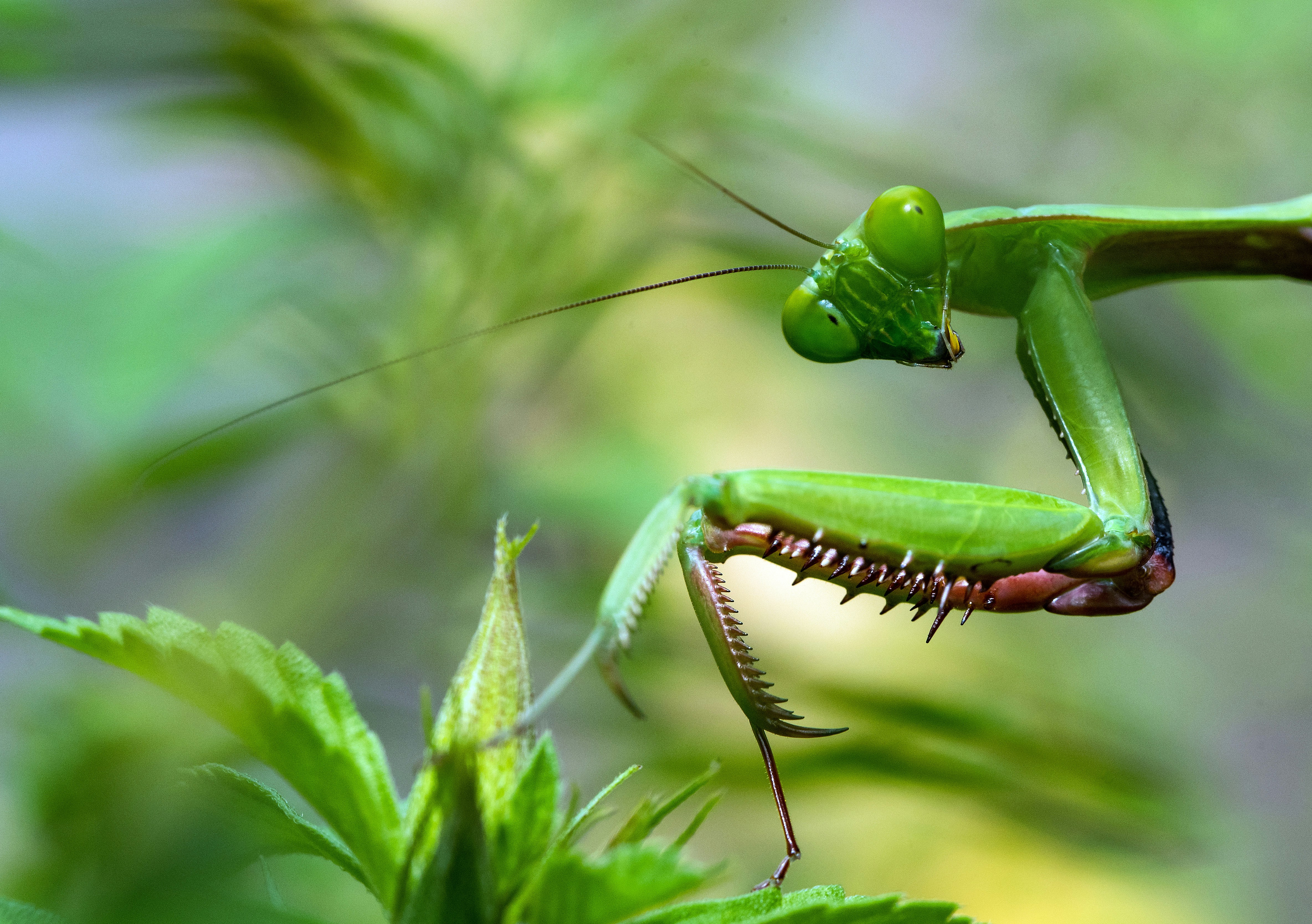
Designers have since acknowledged the influence of insects, particularly praying mantises, in the Predator’s face and posture. Forward-facing eyes. Mandible-like jaws. A head shaped for tracking and striking rather than expression or empathy.

Mantises already look extraterrestrial to us. They rotate their heads. They calculate distance. They dismember prey with methodical calm.

Even the creature’s voice reinforces this lineage. The distinctive clicking and chittering sounds were created by Peter Cullen, deliberately leaning into insect-like vocalisations rather than anything recognisably mammalian or humanoid.

The Predator doesn’t invent that fear.
It scales it up, arms it, and releases it into a jungle.

What remains, beneath the tech, is an apex ambush hunter — something we instinctively recognise, even if we can’t quite place why.

👽 Alien: nature’s most efficient horror machine

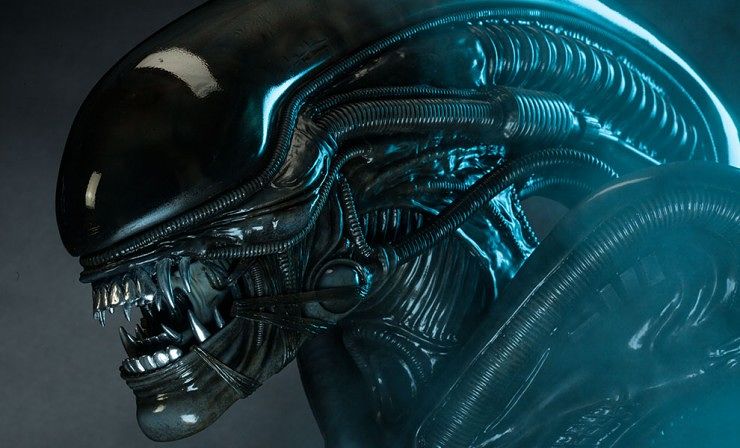
The creature in Alien remains one of cinema’s most disturbing designs because it feels biological. Every stage of its life cycle obeys a logic — parasitic, efficient, and utterly indifferent.

That’s because it draws from multiple real-world inspirations.

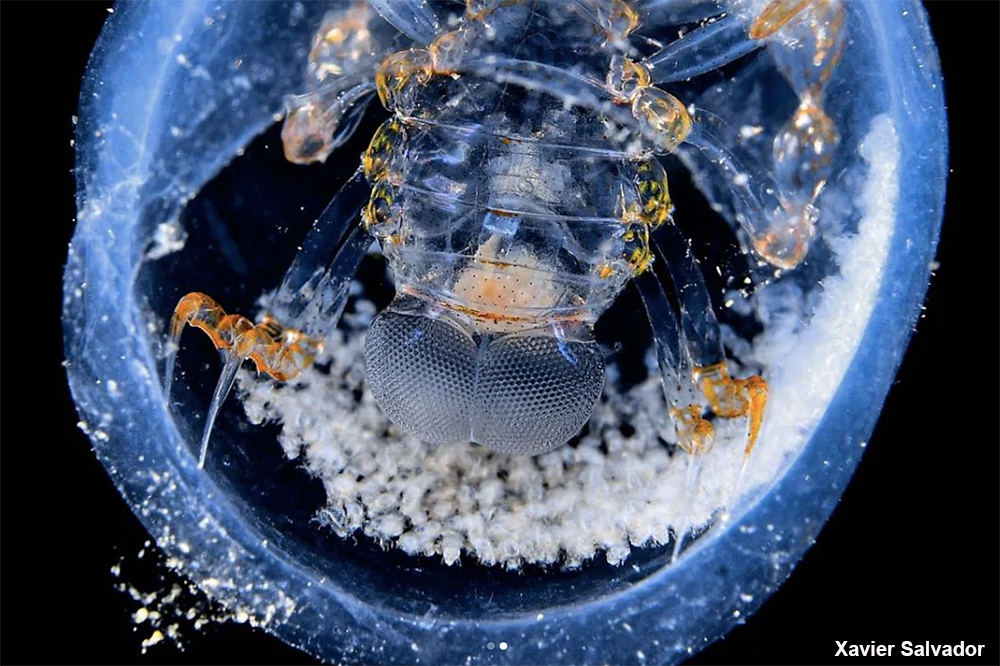
One is the deep-sea amphipod Phronima sedentaria, sometimes called the “monster in a barrel.” This tiny crustacean hollows out gelatinous animals, lives inside their emptied bodies, and uses them as both shelter and nursery. It’s parasitism turned architectura.

Image Credit: Xavier Salvador

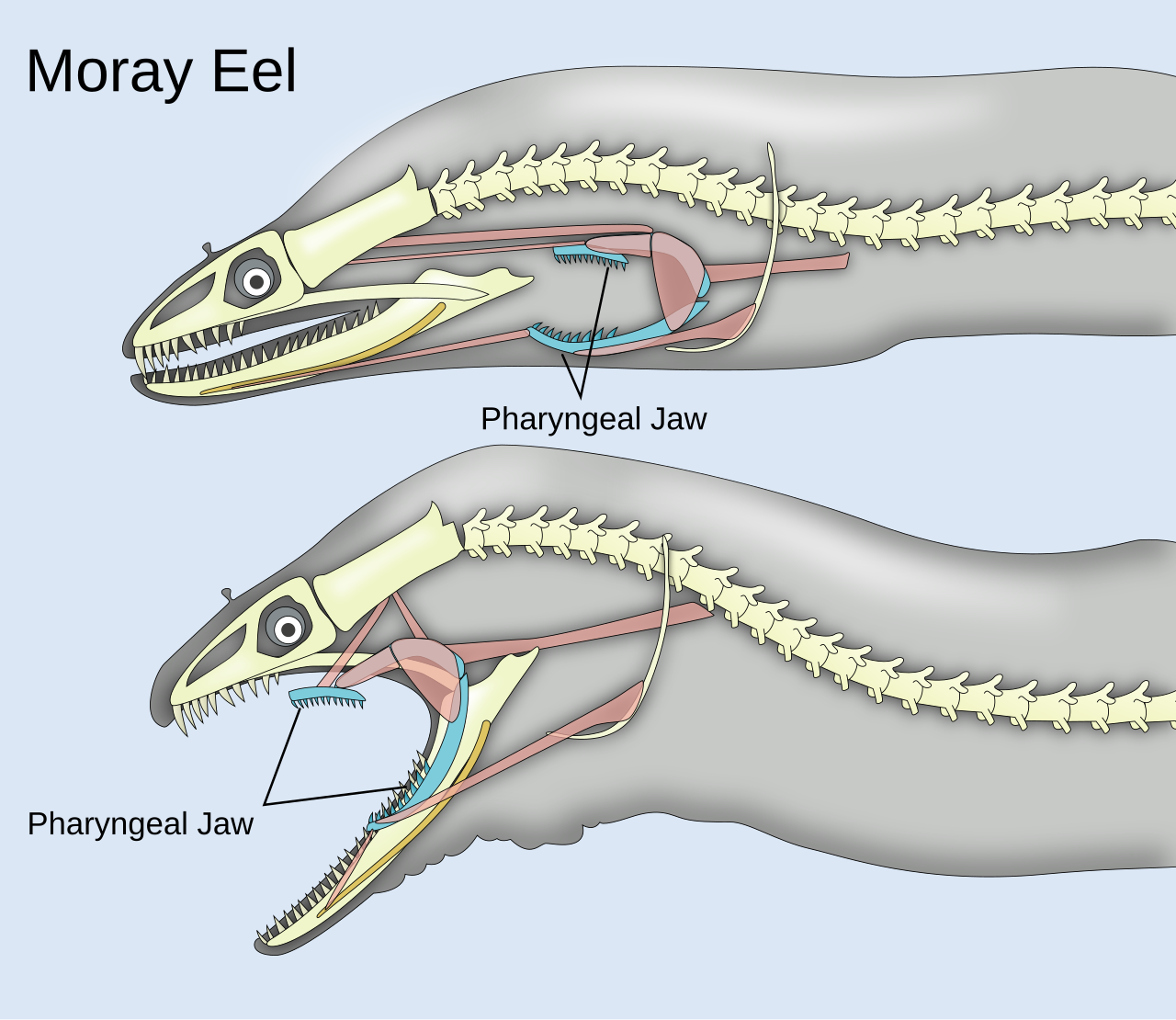
Then there’s the Alien’s inner jaw, eerily similar to the pharyngeal jaws of moray eels, a second set of jaws that shoot forward from the throat to drag prey deeper inside the body. Watching one in action feels like watching a design error, until you realise how brutally effective it is.

Image Credit: Wikipedia.

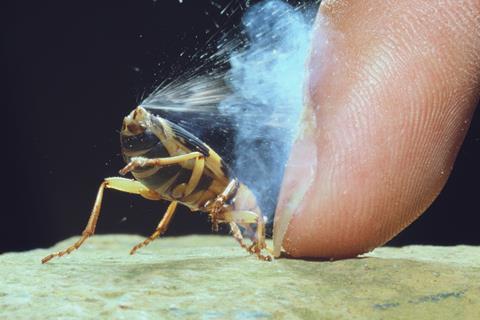
The acid blood? That has uncomfortable echoes of the bombardier beetle, which stores volatile chemicals in separate chambers and mixes them only when threatened, releasing a boiling, corrosive spray with startling precision.

Even the facehugger carries a lineage. Its spidery grip, tail wrap, and underside anatomy closely resemble the ancient horseshoe crab, a creature so old it predates dinosaurs, and so alien it barely seems terrestrial at all.

Alien isn’t fantasy biology.
It’s biology… refined.

🧛 Dracula: when bats became monsters

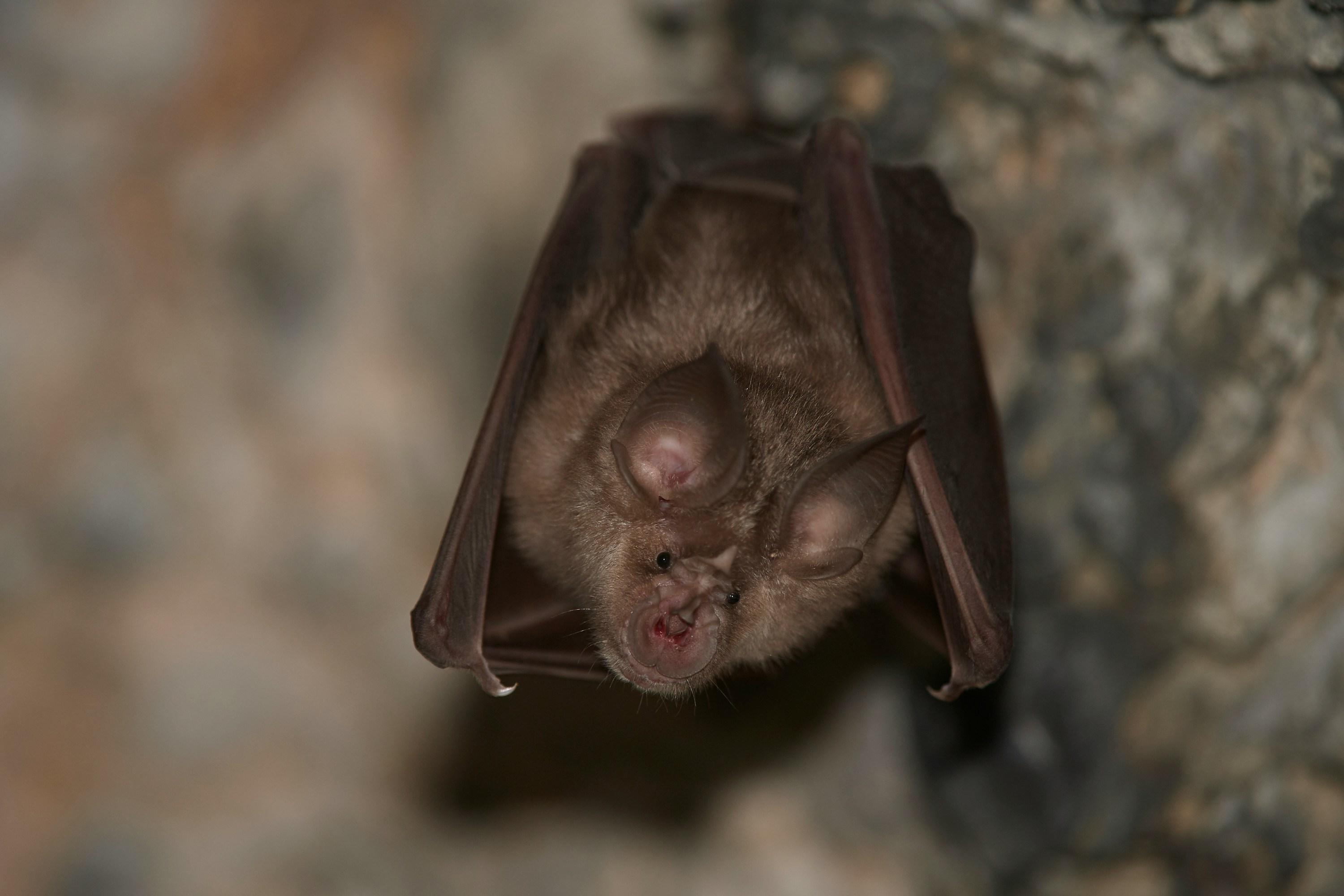
While working on Dracula, Bram Stoker encountered a New York newspaper clipping describing vampire bats – small, blood-feeding mammals that had been newly “discovered” by Western science and already framed as unnatural horrors.

They didn’t drain victims dry, as legend claimed. But they did feed silently, painlessly, and in the dark. They made small incisions, returned night after night, and relied on anticoagulants to keep blood flowing.

That was enough.

Stoker fused this real behaviour with Eastern European folklore, and suddenly vampirism became biological as well as supernatural. Dracula wasn’t just cursed — he fed, adapted, survived.

Once again, fear took root because it had a foothold in reality.

🦈 Jaws: the predator we misunderstood

Jaws didn’t invent the fear of sharks, but it magnified it catastrophically.

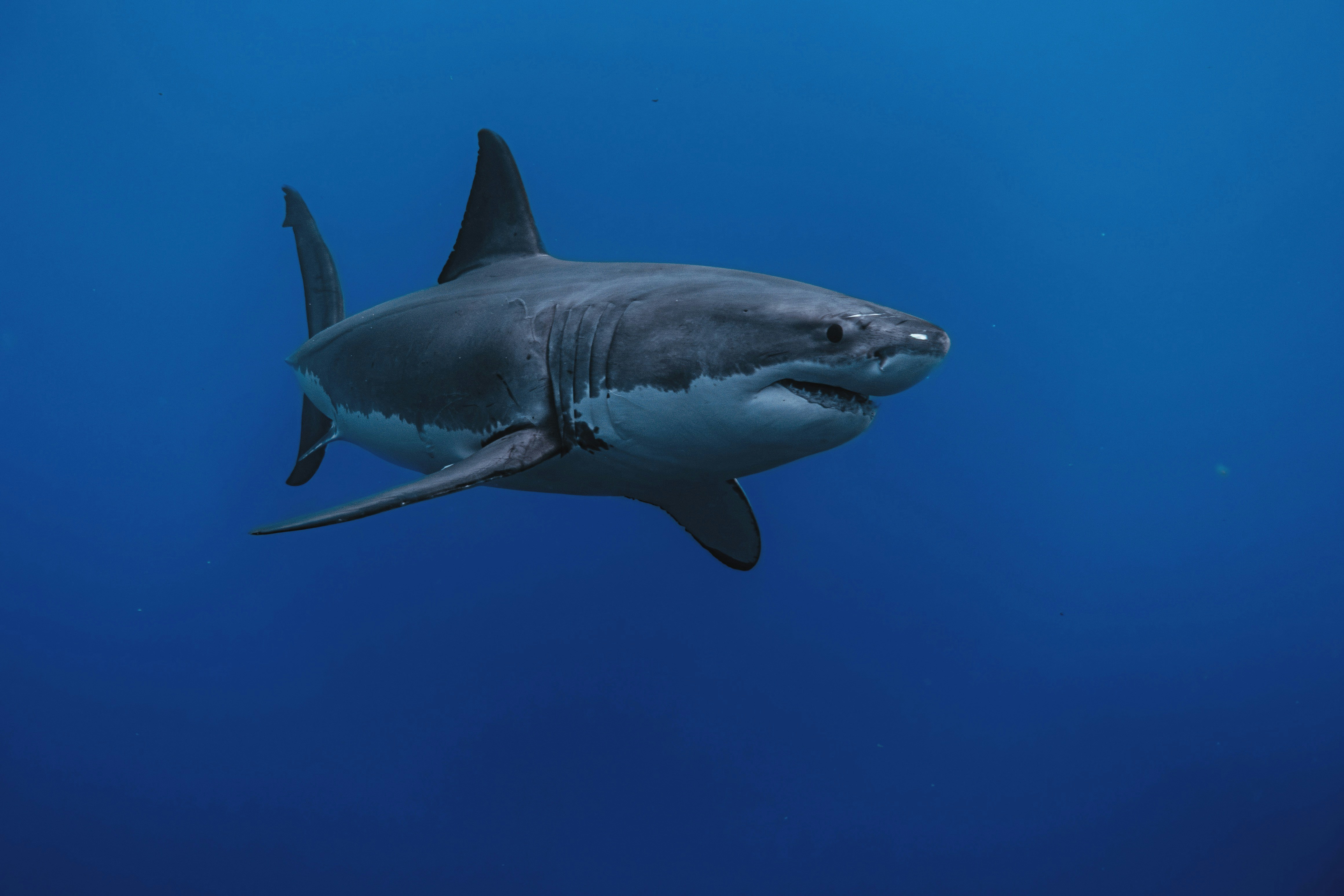
The great white shark is a powerful apex predator, yes. But it is also cautious, energy-efficient, and rarely interested in humans. Most bites are investigative, unfortunate cases of mistaken identity.

In Jaws, however, the shark becomes something else entirely: territorial, vengeful, strategic. It stalks specific individuals. It understands fear.

The exaggeration worked, all too well. The film permanently altered public perception of sharks, contributing to fear-driven culls and a legacy of misunderstanding that conservationists are still trying to undo.

It’s a reminder that when cinema borrows from nature, it doesn’t always give back responsibly. I am working on my own shark-based story, and will have to try and be as respectful as I can with the subject matter.

🍄 The Last of Us and the zombie ant fungus

The monsters of The Last of Us, from the video game and then brought chillingly to life in the HBO series, feel plausible because they already exist.

Ophiocordyceps unilateralis infects carpenter ants across tropical forests. Once inside, the fungus alters the ant’s behaviour, compelling it to climb vegetation and clamp down with its mandibles.

Then it kills the host.

A fungal stalk erupts from the ant’s head, releasing spores onto the forest floor below, perfectly positioned to infect the next generation.

There’s no rage. No hunger. No malice.

Just control.

The horror of The Last of Us lies not in the fantasy of zombies, but in the quiet realisation that free will is not as secure as we think.

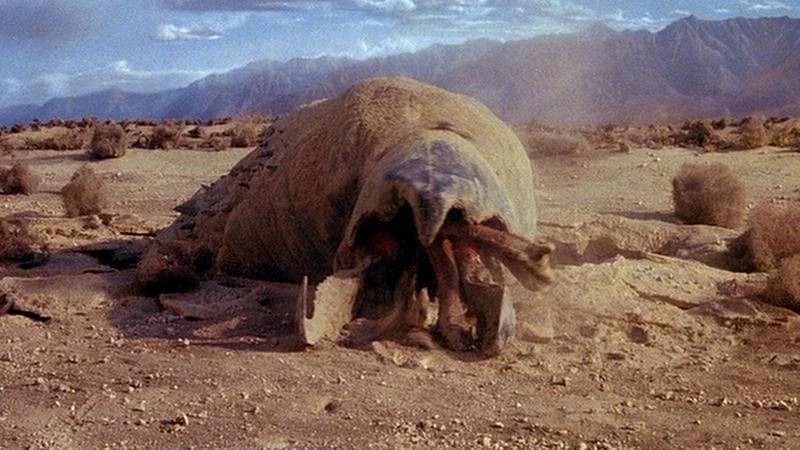
🪱 Tremors: ambush predators beneath our feet

The graboids in Tremors feel absurd, until you consider how many real animals hunt exactly this way.

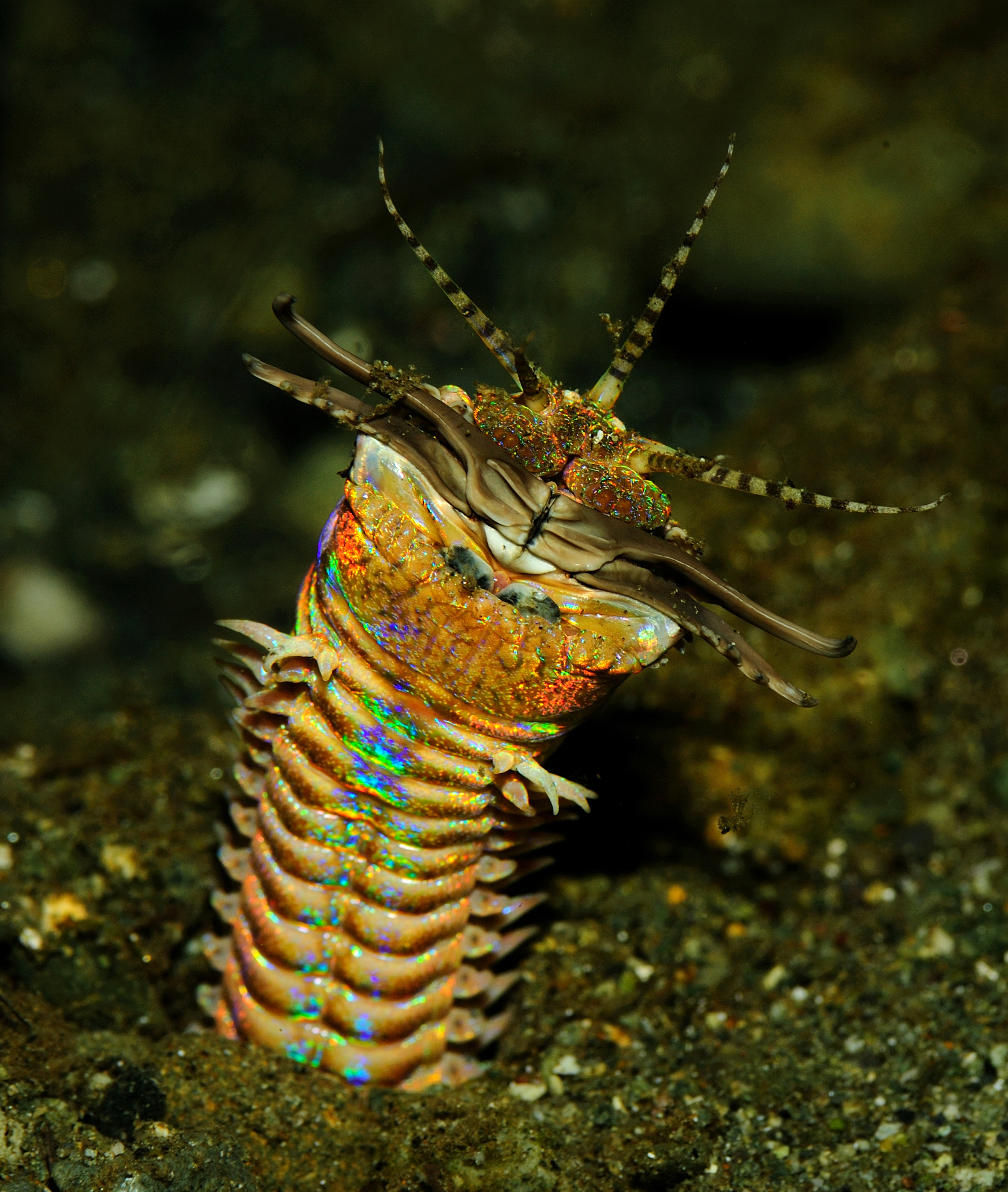
Trapdoor spiders wait motionless beneath the soil, sensing vibrations before exploding upward to seize prey. Bobbit worms bury themselves in sand, striking with astonishing speed, sometimes slicing fish clean in half.

Image Credit: Wikipedia.

Both rely on:

  • Vibration detection
  • Ambush rather than pursuit
  • Minimal exposure

The genius of Tremors is that it makes the ground itself hostile. The monsters don’t chase — they wait.

Which, biologically speaking, is often far more efficient.

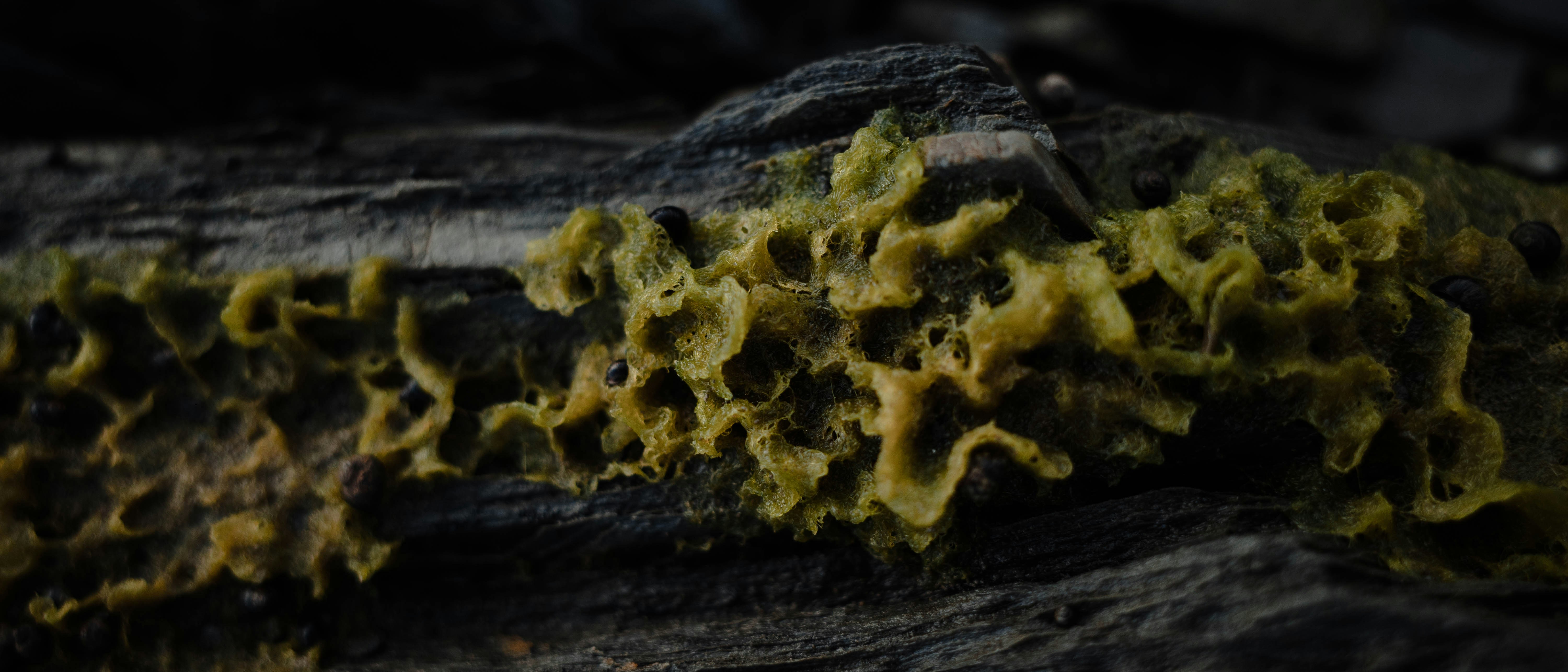
🟢 Slime moulds and The Blob

Slime moulds aren’t fungi. They aren’t animals. They’re something else entirely, capable of learning, problem-solving, and forming efficient networks without a brain.

They flow. They engulf. They adapt.

The creature in The Blob exaggerates this into apocalyptic form, but the unease is justified. Slime moulds already challenge our definitions of intelligence and individuality.

They don’t hunt.
They spread.

Why these monsters endure

The most effective movie monsters don’t break the rules of nature.

They obey them too well.

They feed, reproduce, adapt, and survive. They don’t hate us, they don’t even notice us! And that’s what makes them frightening.

Nature doesn’t need motivation.
Only opportunity.

Wherever possible, I use freely available images sourced from platforms such as Unsplash and Pexels, or other royalty-free image libraries, in accordance with their respective licences. In cases where images are not sourced from these platforms, I make every effort to credit the original photographer, artist, or rights holder where attribution information is available. Some imagery may be used under fair use principles for the purposes of commentary, critique, education, or illustration, particularly in relation to wildlife, history, film, folklore, or cultural discussion. No copyright infringement is intended. If you are the rights holder of an image used on this site and have any concerns, or would like an image to be credited differently or removed, please get in touch and I will address the issue promptly.