Man-eater Monday: Gustave the Crocodile

Last week, I happened to be in Oxford on a rainy day, and so, found myself at the UK’s only crocodile zoo – Crocodiles of the World, near Brize Norton. And one of the showpiece spectacles is their feeding of the 26 Nile crocodiles they have in the collection.

It was quite something to behold. But despite the many snapping jaws, and many being over two metres or more in length, they were still diminutive compared to a certain legendary Nile.

One named Gustave.

The Animal

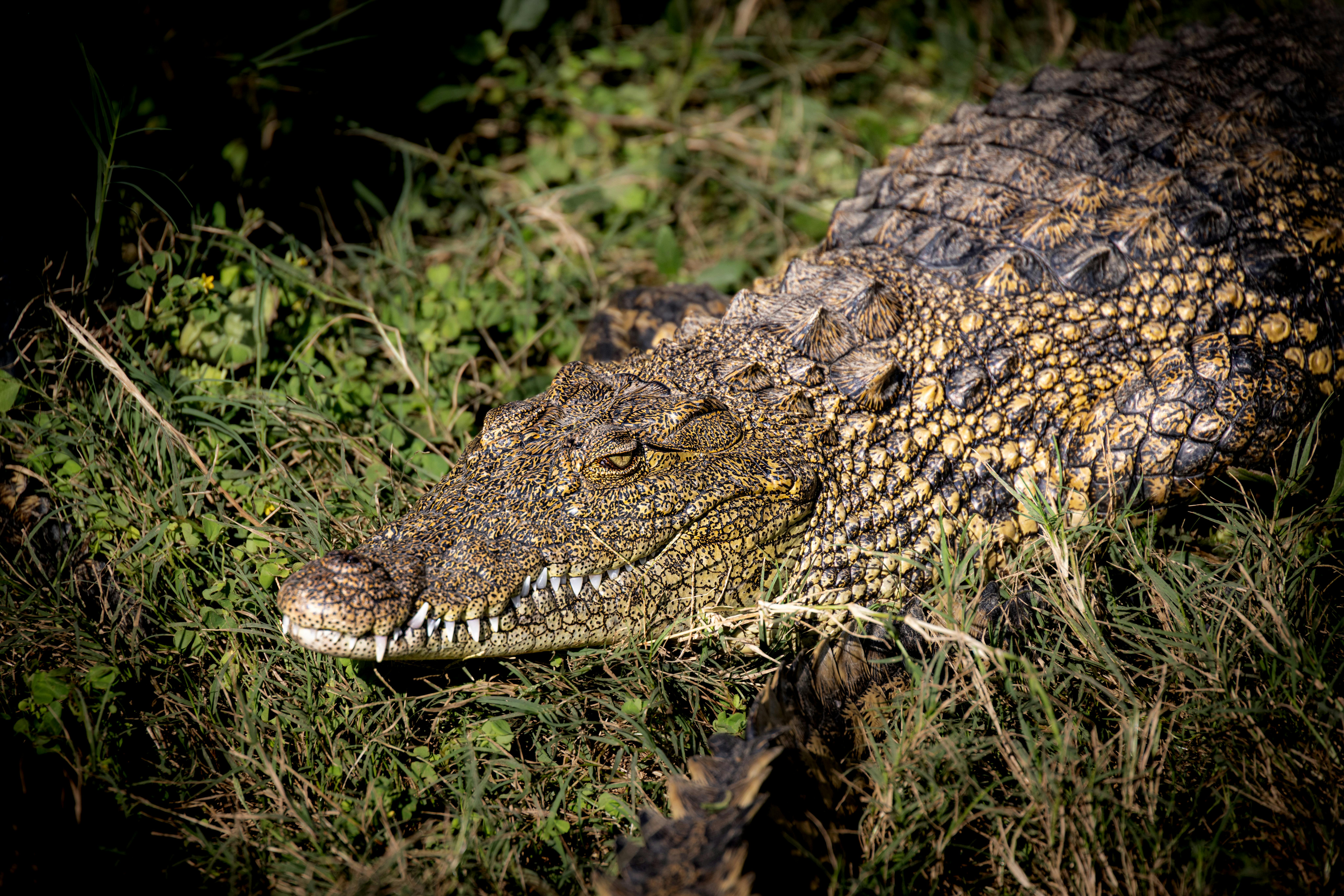
Gustave is — or was — a Nile crocodile of extraordinary size. Estimates put him at somewhere between five and a half and six metres in length, making him one of the largest crocodiles ever reliably documented. His weight has been guessed at over nine hundred kilograms. These figures carry the usual caveats: he was never captured and therefore never officially measured. But even accounting for a little over estimation, Gustave appears to have been a genuinely massive animal, an outlier among outliers, operating in the Ruzizi River delta and along the northern shores of Lake Tanganyika near Bujumbura.

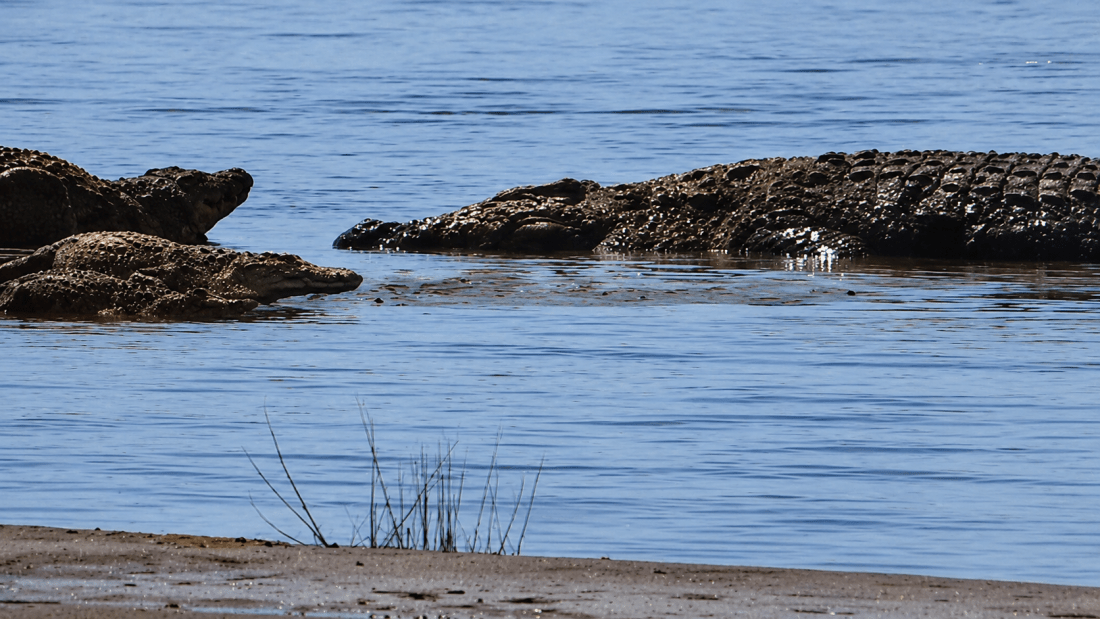
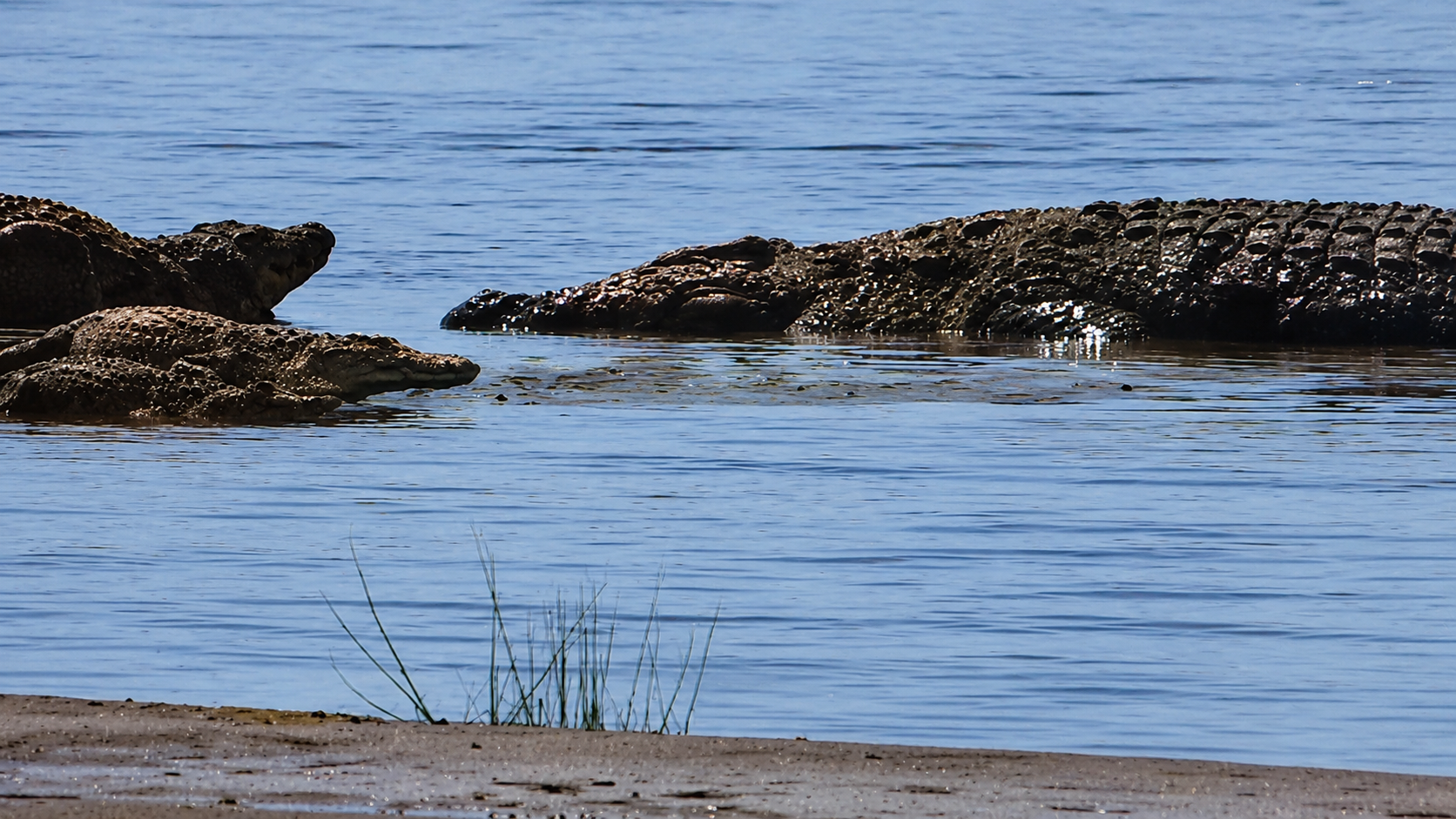
Gustave next to some smaller, more typical-sized Nile crocodiles.

It wasn’t just Gustave’s size that made him easy to identify at a distance. He had a grouping of scars along his right rear flank put there by machine gun fire and another visible patch of pink scarring on his right shoulder from either a spear or homemade harpoon. These and other marks were accumulated through decades of encounters he walked, swam, or slithered away from.

He also had two large bony projections on top of his head that seemed to have fused at the rear, something noticed and commented on in the 2004 documentary Capturing the Killer Croc.

And he was old. Dr Alison Leslie, who observed Gustave in the early 2000s first thought he was maybe 100 years old due to his size. But his excellent and full set of dentition meant he was more likely around the age of 60, and still growing. Niles have a typical optimal lifespan of around 70 years in the wild.

Either way, his size and age, if reliably estimated, combined to produce an animal that operated by slightly different rules. For instance, in 2003, a park ranger observed Gustave stalk, kill, and devour an adult hippopotamus – something unheard of.

Another of those differences was something that researchers and locals often observed about his kills. Crocodiles, like all predators, typically don’t kill more than they can eat, or close to it. Yet Gustave appeared to kill well beyond that threshold with reports of multiple victims in a single event, before disappearing for periods. One theory holds that his sheer size made conventional feeding mechanics difficult: he was perhaps too large to roll prey underwater efficiently. 

Another possibility, darker and less comfortable, is that the behaviour was simply something akin to personality – Gustave killed because he could. As the dominant animal in whatever patch of river he claimed, his age and size combined with highly territorial instincts would make his mere presence a threat. Whatever the mechanism, the pattern meant that the kill estimates grew, and kept growing, and eventually became uncountable.

The number of alleged human fatalities, between 60 and 300, tells you everything about the problem of documenting Gustave’s victims. Attacks along the Ruzizi and the Tanganyika shore were rarely reported to any central authority. Many victims were fishermen, or people collecting water, in communities with limited access to formal record-keeping. The lower figure probably reflects confirmed attributions; the upper figure is folk accounting and accumulation, the number that feels true even if it can’t be proven. The real figure is somewhere in there, which is its own kind of horror.

My own observation is that Gustave was clearly capable of taking large prey, having been documented attacking the hippopotamus mentioned earlier, other crocodiles, and a mature cow – which was caught on camera. Many of his human victims were found drowned and not devoured (but not all by any means). I think its likely that these kills were either territorial or perhaps those discovered before Gustave could return to them: although the idea of crocodiles storing meat underwater to tenderise the meat is something of a myth (they prefer fresh meat almost always), they have been observed caching larger prey and leftovers in places where the carcass won’t be swept away by strong currents. However, the kills may have also been instinctual: the riverbanks that Gustave called home were often popular with fishermen and their presence may have been too tempting. But perhaps afterwards, Gustave decided they didn’t meet his calorific requirements.

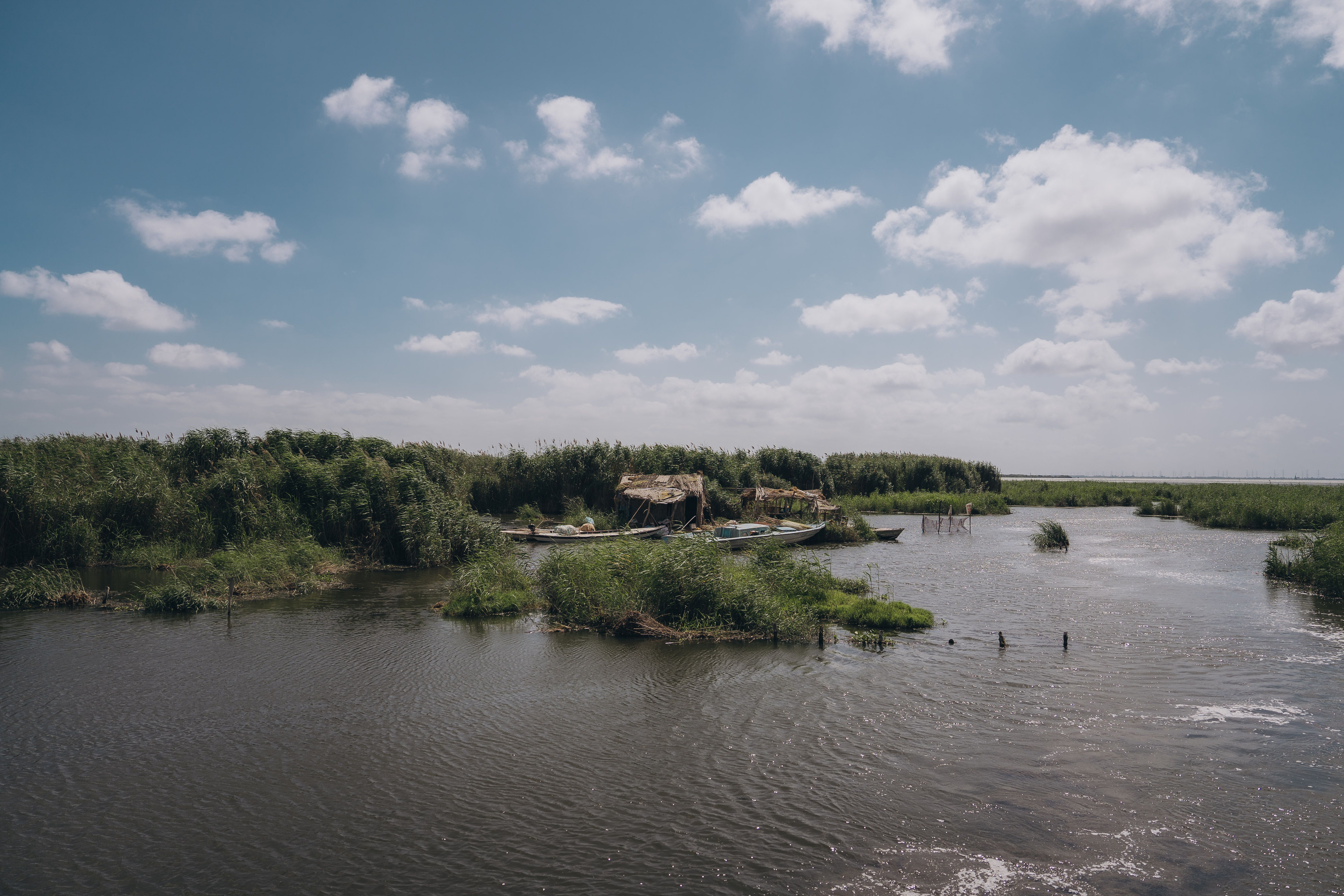
The Ruzizi River delta.

The Man

Patrice Faye arrived in Burundi as a French expatriate and became a long-term resident, which given his interest in herpetology, isn’t surprising. Burundi is an exceptional destination for herpetologists because it sits at a unique biogeographical crossroads. Bridging the Congo River Basin, the Great Rift Valley, and the East African savanna, its isolated, high-elevation montane forests, pristine rivers, and protected nature reserves are a goldmine for discovering endemic and rediscovered reptiles and amphibians. And due to decades of political turmoil, much of the country remains under-surveyed compared to neighbouring East African nations. This offers huge potential for modern field researchers and taxonomists to uncover rare or presumed-extinct taxa.

However, by the 1990s, Patrice had become the foremost chronicler of one reptile in particular – Gustave — not as a scientist exactly, but something between a naturalist, a documentarian, and an obsessive. He photographed the crocodile. He collected accounts of attacks. And eventually he decided to catch Gustave alive.

Faye constructed a large trap. It was a massive, 10-metre steel device designed to hold a crocodile of Gustave’s dimensions. Deployed in the animal’s territory, the plan was to lure him in, secure him, and then keep him in an especially built enclosure, some 60 by 90 feet for study and I’m sure as a potential attraction.

We’ll never know, as after the trap was deployed. Gustave ignored it. He showed some curiosity once live bait was introduced, but never ventured into it.

The 2004 National Geographic/PBS documentary Capturing the Killer Croc followed Faye’s expedition, and what it captured — unintentionally — was the peculiar comedy and pathos of human expertise confronting an animal that didn’t know it was supposed to be catchable. The crew waited. Gustave circled. On several occasions he came close enough to raise heart rates, then turned away. By the end of the documentary he had not been caught and ultimately. never has been.

There is something almost classical in the shape of this. The monster that keeps proving itself uncatchable is a very old story. What’s unusual here is that it’s a true one, documented on film, with a specific man standing at the centre of it — wading into a Burundian river, looking for something he couldn’t quite reach.

The Legend

Here is the moment Gustave crossed from animal into myth: sometime in the mid-2000s, while confirmed attacks were still being reported, communities around the lake began to speak about him less as a crocodile and more as a presence. A territorial entity. Something that had claimed the water and established terms. Fishermen avoided certain areas not merely out of caution but out of something closer to acknowledgement that they were operating in Gustave’s space, and that he might enforce that.

His own skin was a pockmarked testimony of his un-killable nature. And his intelligence was almost supernatural. Faye and other scientists often felt outwitted and out manoeuvred by Gustave – that he was always somehow one step ahead. Even the trap intended for his capture was somehow dislodged. Some say it was by heavy rains. But others say Gustave walked around the cage, took the goat, and dislodged it that way.

This is how living legends get made. Not through any single dramatic act, but through the accumulation of attacks that defy logic, combined with evasions and failed attempts at capture, until the animal stops being an animal and becomes an idea. Gustave’s unusual size also certainly added to his legendary status.

But here is something Burundi’s killer croc has probably never been told: he is very probably now dead.

The rumours have circulated since around 2019 — that Gustave, the most feared predator in Burundi, the Nile crocodile estimated to have killed somewhere between sixty and three hundred people, died quietly somewhere in the reed beds along Lake Tanganyika. No body. No confirmed sighting in years. Just the slow absence of a presence.

The probable death, if the 2019 rumours are true, is interesting precisely because of how little it has settled. There was no body. No confirmed final sighting. No Faye standing over something conclusive. The absence of evidence is indistinguishable, at this distance, from a six-metre crocodile lying low in deep water. And so Gustave continues to circulate — in articles, in forums, in conversations. Here, now, in this one.

It should be noted that Faye was arrested and imprisoned in Burundi in 2011, on five charges of rape, serving a 25-year sentence. Although the case must be taken seriously for obvious reasons, it is marred by possible corruption and questionable proceedings. However, the point is that since 2011, Gustave’s main documenter has been out of the game. So maybe, just maybe, Gustave still stalks the riverbanks of the Ruzizi River delta and the northern shores of Lake Tanganyika

The Honest Admission

There is something worth acknowledging about the fact that the people most fascinated by Gustave — researchers, filmmakers, writers, readers of blogs like this one — are, on some level, rooting for him. Not for the attacks. Not for the deaths, which were real and brutal and happened mostly to people living modest lives beside a beautiful lake. But for the persistence of the animal itself.

It is difficult to explain this without sounding callous, so let’s try to be precise: what people are rooting for is the idea that something this large, this old, this impervious, is still out there. That the world is still a place where a creature can operate entirely on its own terms, evading every trap, outlasting every pursuit, accumulating a toll that becomes legend — and then disappearing, silently, on its own schedule.

We built our categories — man-eater, monster, legend — and Gustave filled them all without ever being asked.

And ultimately, we must consider the part humans played in creating the circumstances that enabled or even drove Gustave towards becoming a man-eater. In the 1950s, when Gustave was less than two metres long and barely ten years old, Burundi’s deltas were home to buffalo, elephant, warthog, and wild herds of numerous antelope. But each was made geographically extinct in a few short years. The only wild large mammal to survive was the hippo.

It’s not hard to imagine as livestock were introduced and brought to the water’s edge that Gustave became acclimated to the presence of humans. And then, one day, after growing used to taking the cows, he missed or opportunistically targeted their human companion. And a legend was born – perhaps one that will never truly die.

Man-Killer Monday: Osama Bin Laden – The Elephant of Sonitpur

For this week’s Man-eater Monday, we’re deviating slightly into a more niche area – that of individual animals that have killed people, seemingly deliberately and consistently, but not with the intent of consuming them nor necessarily even being a predatory species. Enter a name known around the world, given to an animal usually internationally adored.

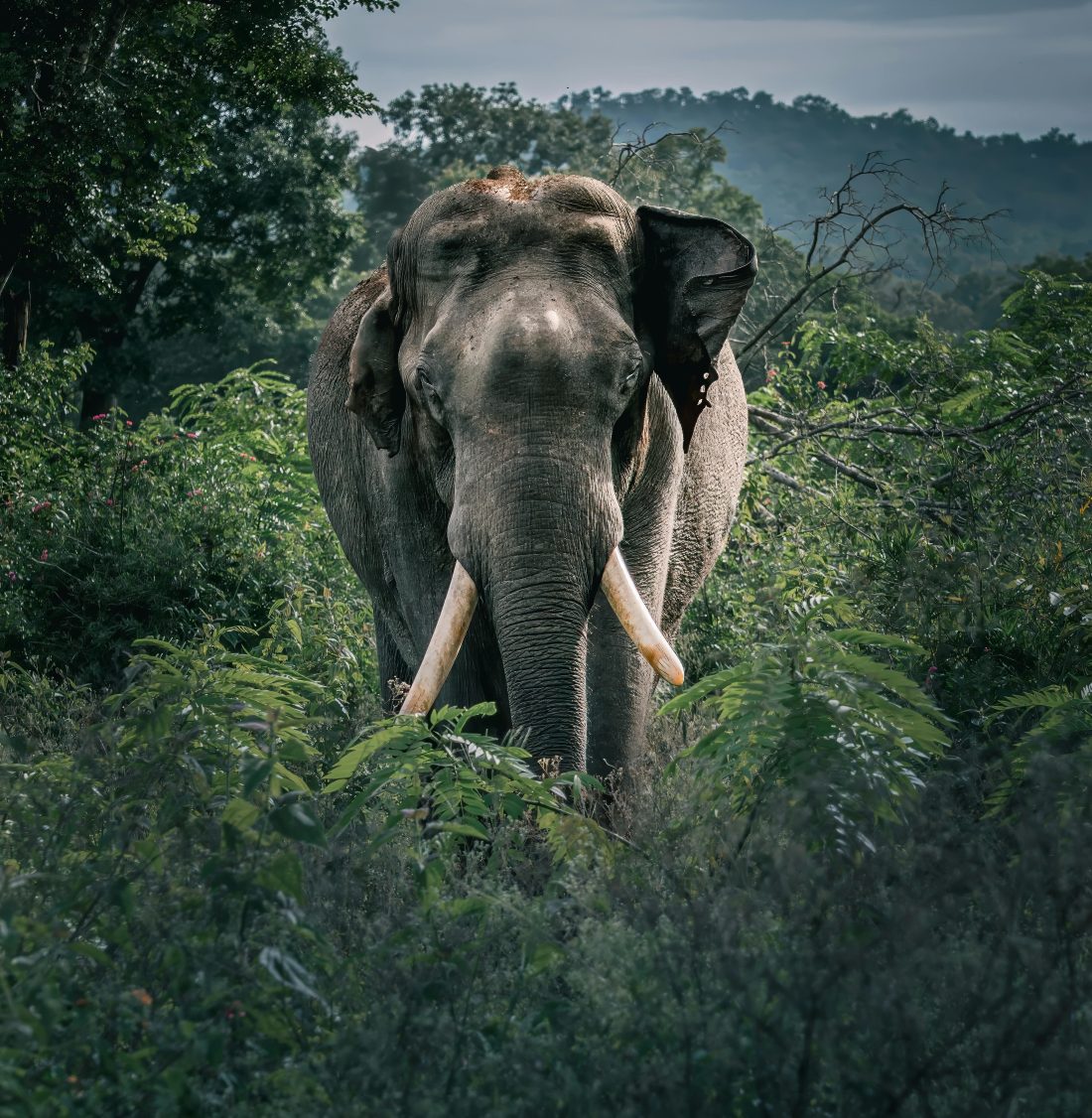
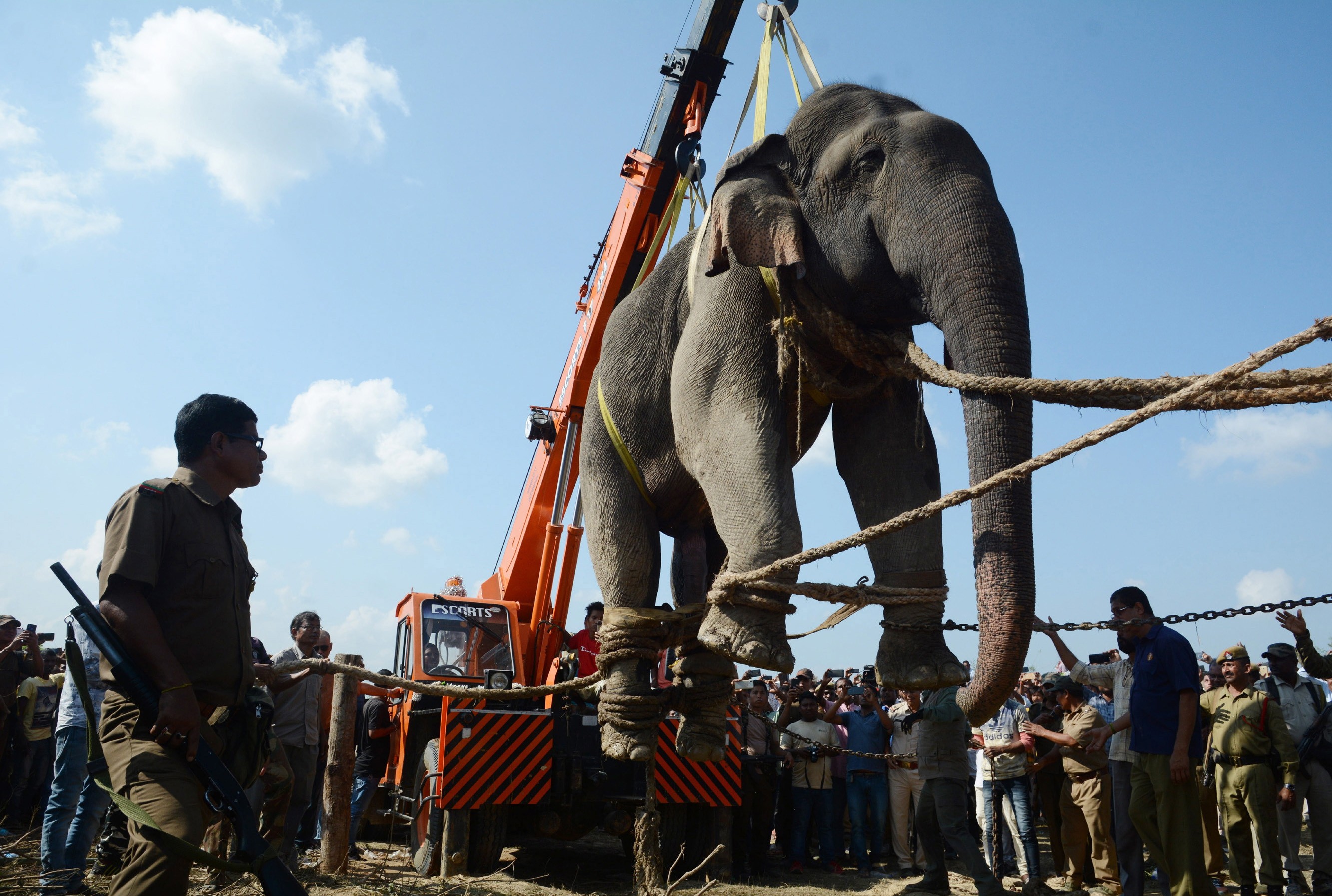
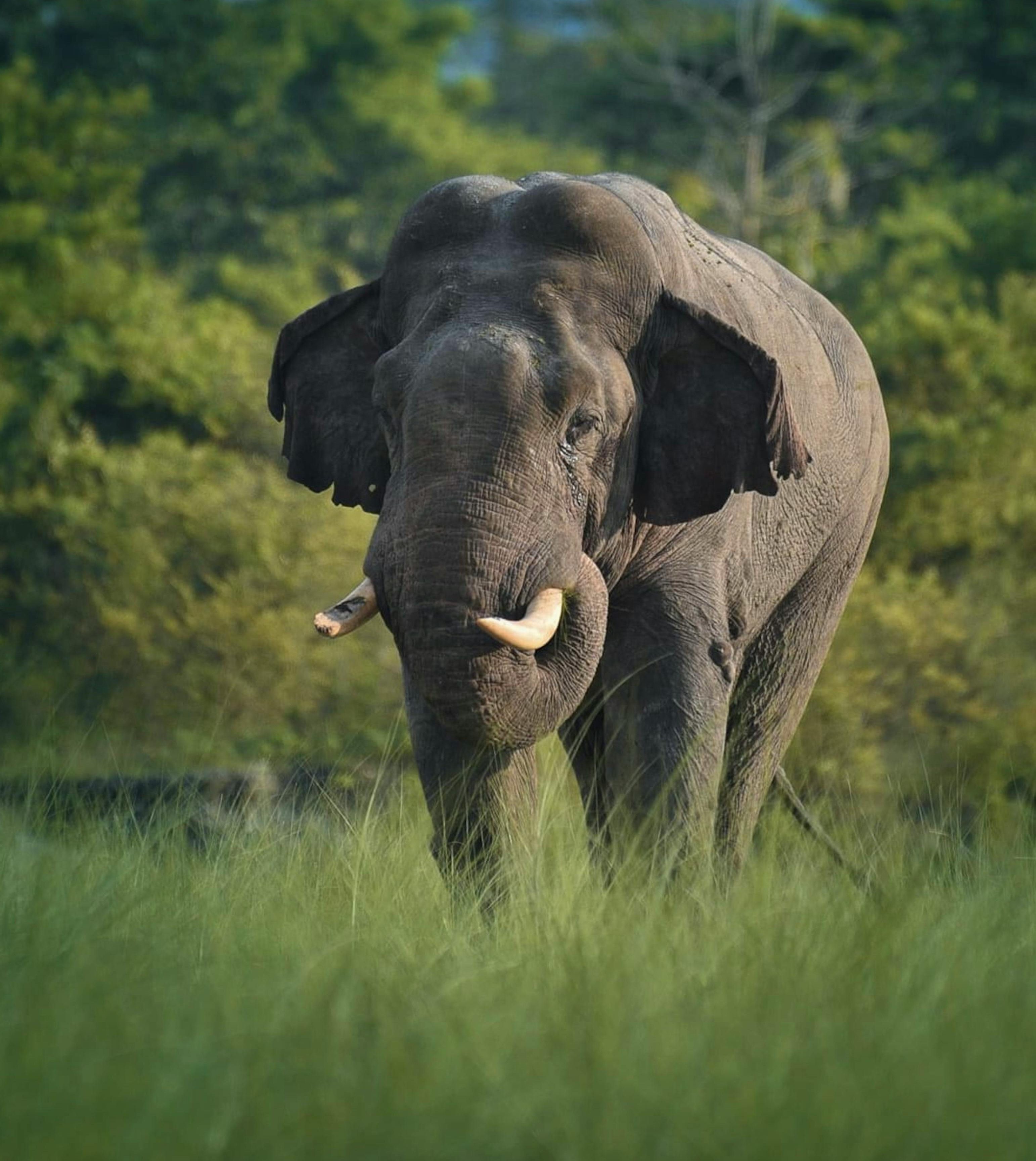
Between 2004 and 2006, in the Sonitpur district of Assam, a lone bull elephant was blamed for the deaths of at least twenty-seven people.

He did not start out as a named villain. But his unprecedented reign of terror did begin with unmitigated attacks akin to those of a terrorist.

A labourer killed near a tea garden. A villager trampled close to the forest edge. Someone walking home at dusk who did not return. At first, these were tragedies folded into a region long accustomed to uneasy co-existence with elephants. But the deaths did not remain isolated. They accumulated.

By the time officials concluded that a single tusker was responsible, the pattern was impossible to ignore.

It was then that the elephant was given a name heavy with the politics of the time.

They called him Osama Bin Laden.

The Landscape of Conflict

Sonitpur is not wilderness in the romantic sense. It is a mosaic of tea estates, villages, secondary forest and fractured corridors. The boundary between cultivation and jungle is not a line on a map; it is a living seam where elephants and people move within metres of one another.

Elephants have used these routes for generations. Long before rail lines and plantation grids, herds moved seasonally through what is now farmland. As forest has thinned and been divided, those routes have narrowed but not disappeared.

A solitary bull navigating this terrain does not simply wander into conflict. He encounters it repeatedly.

Adult male elephants are more prone to risk than matriarch-led family groups. They move alone. They raid crops. They approach settlements under cover of darkness. During musth, a periodic hormonal state marked by surging testosterone and heightened aggression, a bull can become more volatile, less tolerant of disturbance, and more forceful in asserting space.

In a compressed landscape, force carries consequences. In this setting, a solitary adult bull can become highly dangerous.

Twenty-Seven Deaths

At least twenty-seven people were killed over roughly two years. That figure appears consistently across regional reporting and official statements from the period.

These were not predatory killings. Elephants obviously do not consume human flesh. The deaths occurred during close-range encounters – trampling, crushing, and sudden aggression in shared ground.

But repetition changes perception.

A single fatal encounter is tragedy. Repeated fatal encounters become something else. Fear shifts from circumstantial to anticipatory. Villages alter routines. Workers hesitate at dusk. Forest paths grow tense.

The elephant was described as large, solitary, and unusually aggressive. Witnesses spoke of sudden appearances and little warning. In rural districts where livelihoods are already precarious, such unpredictability erodes more than confidence. It erodes normality.

By 2006, pressure mounted on authorities to act decisively.

The Hunt

Forest officials identified a specific bull believed responsible and launched operations to track and eliminate him. Public assurances were made that the threat would be addressed. There were reports that the elephant had been located and shot. Other accounts suggested he had retreated into deeper forest.

What is clear is that after 2006, the killings attributed to this individual ceased.

What is less clearly documented in accessible public archives is a definitive, widely cited confirmation of his death. That absence does not negate the official efforts made, nor the likelihood that a targeted animal was killed. It simply reflects the uneven nature of record-keeping in regional conflict cases. If the elephant killed was the animal responsible, he had, for some reason, wandered over fifty miles from where he’d last been encountered.

For the communities of Sonitpur, however, the outcome was measured less in paperwork and more in silence. The attacks stopped. And that distinction matters.

Naming the Enemy

The name “Osama Bin Laden” did more than identify a problem animal. It framed him within a global narrative of terror.

The early 2000s were shaped by anxiety and the language of unpredictable threat. To attach that name to a wild elephant was to translate ecological conflict into something deliberate and ideological. It suggested planning. Malice. Intent.

But elephants do not operate within ideology. They respond to pressure, proximity, memory, and stress. A bull in musth does not wage war. He asserts space in the only language available to him… size and strength.

The name belonged to human fear, not elephant cognition.

Man-Killer

The elephant of Sonitpur sits uneasily within the category of killer animals. He did not shift diet. He did not stalk as a predator does. Yet twenty-seven deaths over two years place him alongside other animals whose repeated fatal encounters alter public memory.

The comparison reveals something important.

In classic predator cases such as the Champawat tiger and the Tsavo lions, it is injury, age or prey scarcity can drive a carnivore toward habitual human predation. With elephants, the mechanism is different. The deaths arise from collision rather than consumption.

But the emotional result for communities is similar. Repetition breeds myth. And myth simplifies cause.

Compression

Human–elephant conflict in Assam did not begin in 2004, and it did not end in 2006. Railway strikes, retaliatory killings, electrocutions and crop destruction continue to shape the region’s uneasy coexistence.

The Sonitpur elephant did not emerge from wilderness untouched by human systems. He moved through a landscape already compressed by agriculture, infrastructure and settlement. Every tea garden and railway line narrowed the margin for avoidance.

Twenty-seven deaths are not a rumour. They are recorded loss. But beneath the number lies a structural tension: one of the largest land mammals on Earth navigating corridors increasingly designed without him in mind.

When that negotiation fails, it fails violently. The elephant known as Osama Bin Laden was not a terrorist. And he was not a monster in the way folklore demands.

He was a bull in a fractured landscape.

And in Sonitpur, between 2004 and 2006, that fracture cost twenty-seven lives.

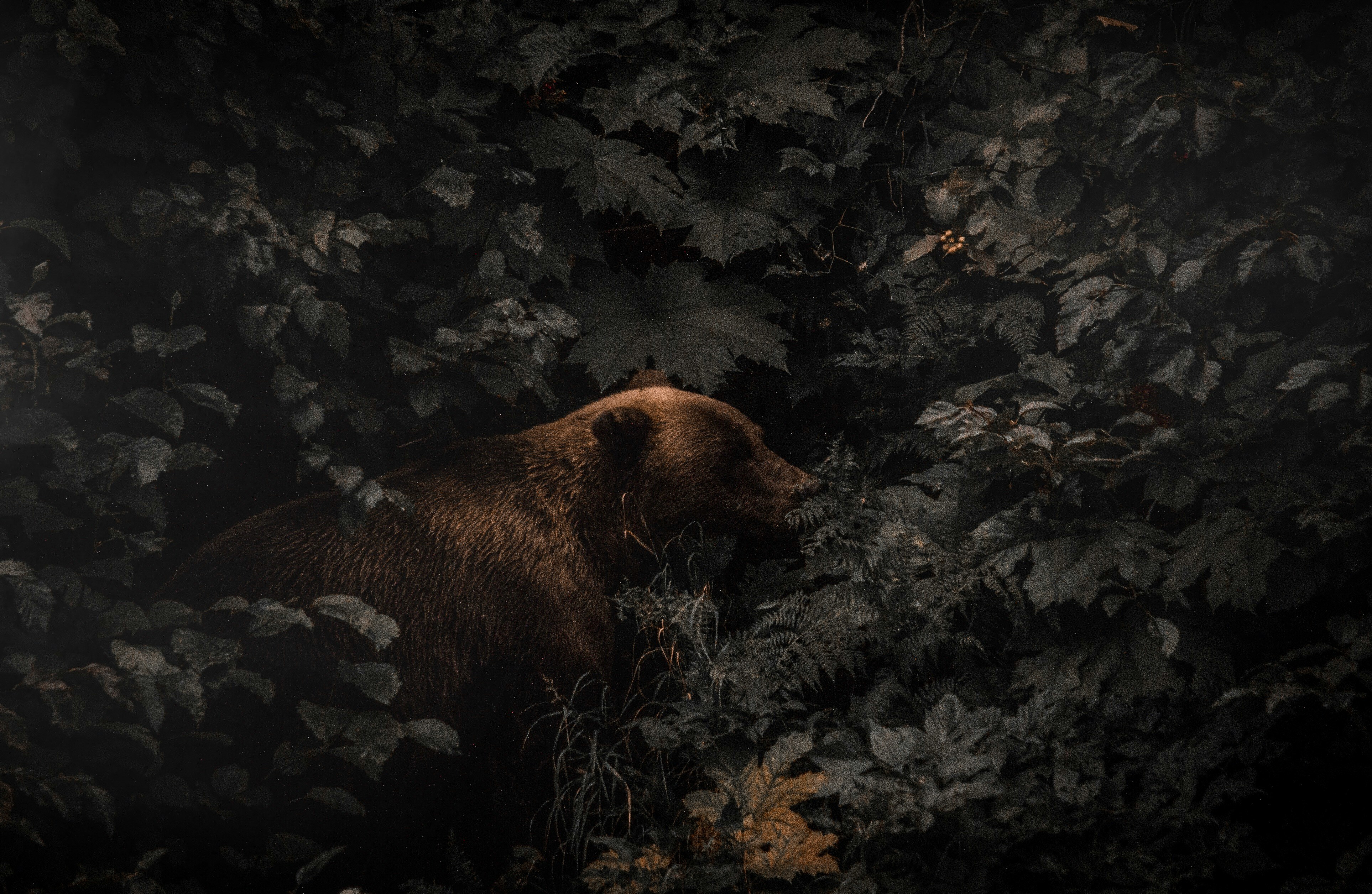
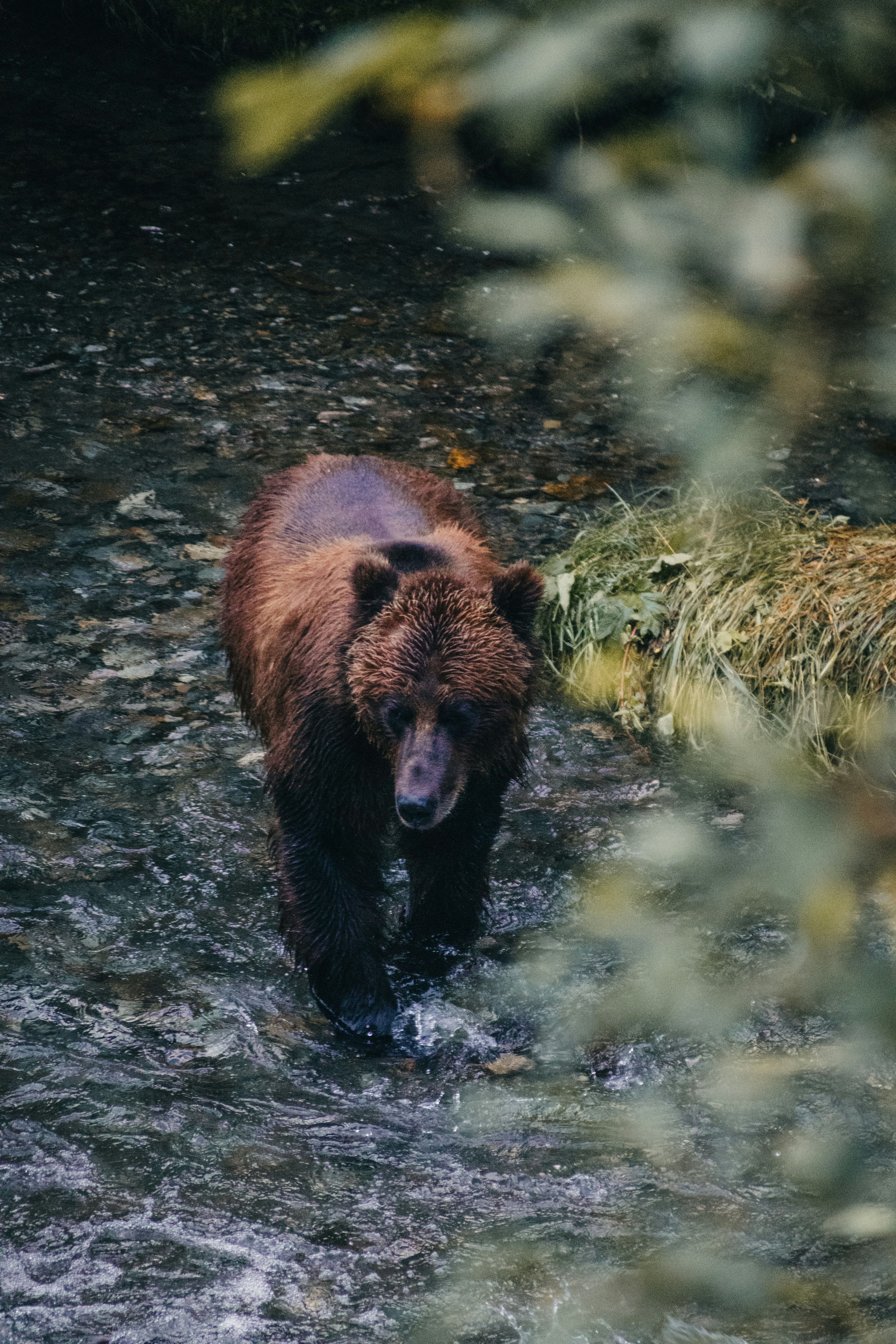
Man-Eater Monday: The Sankebetsu Brown Bear Incident

In the winter of 1915, the settlement of Sankebetsu, in northern Japan, was already under strain.

Snow lay deep across Hokkaido. Food stores were thin. Travel was difficult, sometimes impossible. For the people living at the margins of cultivated land, winter was not simply a season — it was a test of endurance.

What went largely unconsidered was that the same conditions applied to everything beyond the settlement’s boundaries.

The forests were locked in ice. Natural forage was scarce. Prey animals were weakened, dispersed, or absent altogether. The winter that pressed hardest on human communities was doing the same to the wildlife around them. But at the time, this was not a connection people were trained to make.

Ecology, as a way of thinking, had not yet entered the conversation. Hardship was viewed as a human problem, unfolding against a largely static natural backdrop. The idea that animals might also be responding — adapting, learning, and changing behaviour under pressure, was rarely entertained.

It was in this context that the Sankebetsu incident began.

A first encounter and a dangerous assumption

The bear’s first appearance was not dramatic in scale, but it was decisive in consequence. In December 1915, a large brown bear entered the settlement and attacked a woman working near her home. The encounter was sudden and close-quarters. She was killed before any effective intervention could be made.

The bear did not linger. After the attack, it retreated back into the surrounding forest.

That withdrawal shaped how the incident was understood.

Within the settlement, the prevailing belief was that the animal had been startled — that the violence was reactive, not intentional, and that the danger had passed with the bear’s departure. The incident was treated as an isolated tragedy rather than the opening stage of a larger threat.

No co-ordinated hunt followed. No sustained effort was made to track the animal’s movements or assess whether it might return.

This response was not careless so much as culturally conditioned. At the time, apex predators were often viewed as opportunistic but fundamentally avoidant of humans. An animal that fled was assumed to have learned fear.

But this assumption rested on a misunderstanding of how predators learn.

An animal that kills and escapes unharmed has not seen that behaviour punished. It has been reinforced. The boundary between human and prey does not harden, it weakens.

In retrospect, the bear’s retreat was not a conclusion. It was a pause.

Escalation isn’t chaos, it’s pattern

When the bear returned, it did not behave erratically.

It came back into the settlement repeatedly, moving with increasing confidence through spaces that had already been shaped by human presence. Homes were entered. People were taken from places that should have been safe.

One of the most disturbing moments came shortly after the initial attack, when the bear returned during a funeral held for the first victim. Drawn by human activity and the presence of food, it entered the area and killed mourners gathered there.

The violence was no longer confined to a single encounter. Over the course of one night, multiple people were killed in separate attacks. By the time the bear was finally stopped, five lives had been lost, several of them within hours of one another.

What is striking, in retrospect, is not the scale of the violence, but its consistency.

The bear did not flee after these encounters. It did not act randomly. It returned to the same settlement, exploited moments of vulnerability, and withdrew only when challenged. Each successful attack reinforced the same lesson: humans were accessible, and resistance was minimal.

This is the point at which many retellings introduce the language of madness or bloodlust. But escalation, in cases like this, is rarely chaotic. It is patterned.

Under conditions of prolonged scarcity, the bear’s behaviour reflected learning rather than frenzy. What appeared to the community as senseless violence followed a grim internal logic shaped by hunger, opportunity, and success.

Human hesitation, and a belated resolution

As fear spread through the settlement, so did uncertainty.

There was disagreement over whether the same bear was responsible for each attack. Some believed the animal would eventually move on. Others feared that a co-ordinated response might provoke further violence. Time was lost to debate, hesitation, and the difficulty of acting decisively in extreme winter conditions.

When a concerted effort was finally made to track the bear, it revealed just how unprepared the community was for such a task. Weather obscured trails. Knowledge of bear behaviour was inconsistent, drawn from folklore, fragments of experience, and assumption rather than strategy.

Eventually, a group of hunters succeeded in locating and killing the animal. The bear was identified as a large male brown bear, in poor physical condition. Its body showed signs consistent with prolonged scarcity. With its death, the attacks stopped.

The immediate danger to Sankebetsu was over.

But the resolution came only after multiple lives had been lost, and only once the cost of inaction had become undeniable. The bear’s death did not mark the defeat of a monster, but the delayed recognition of a threat that had been misunderstood from the outset.

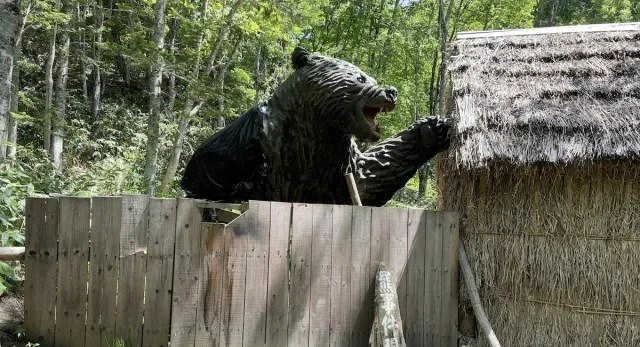
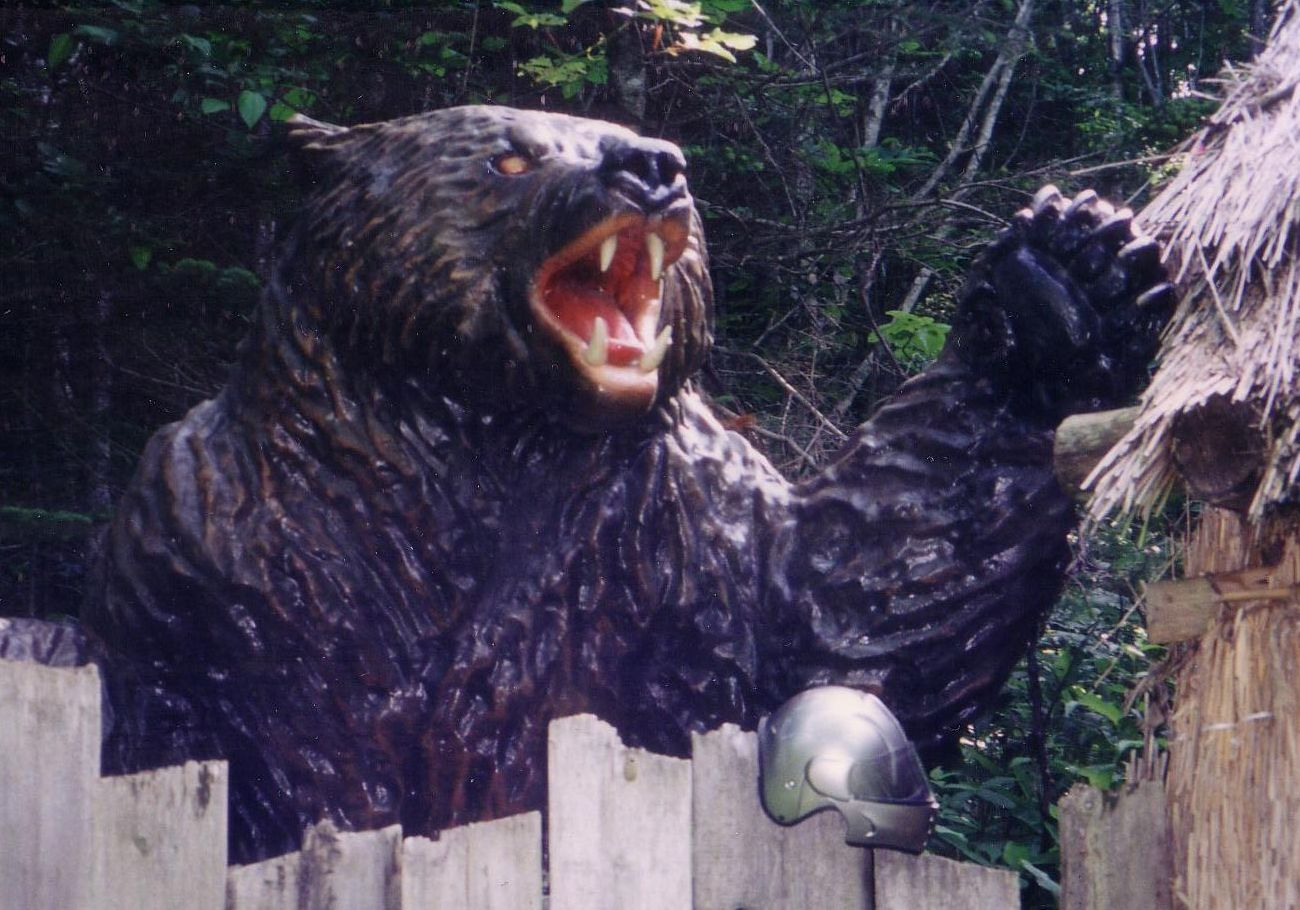
The Sankebetsu statue and tourist site.

Then, and now

More than a century after the Sankebetsu incident, it is tempting to look for repetition — to imagine the same landscape quietly replaying its past.

That is not what the evidence suggests.

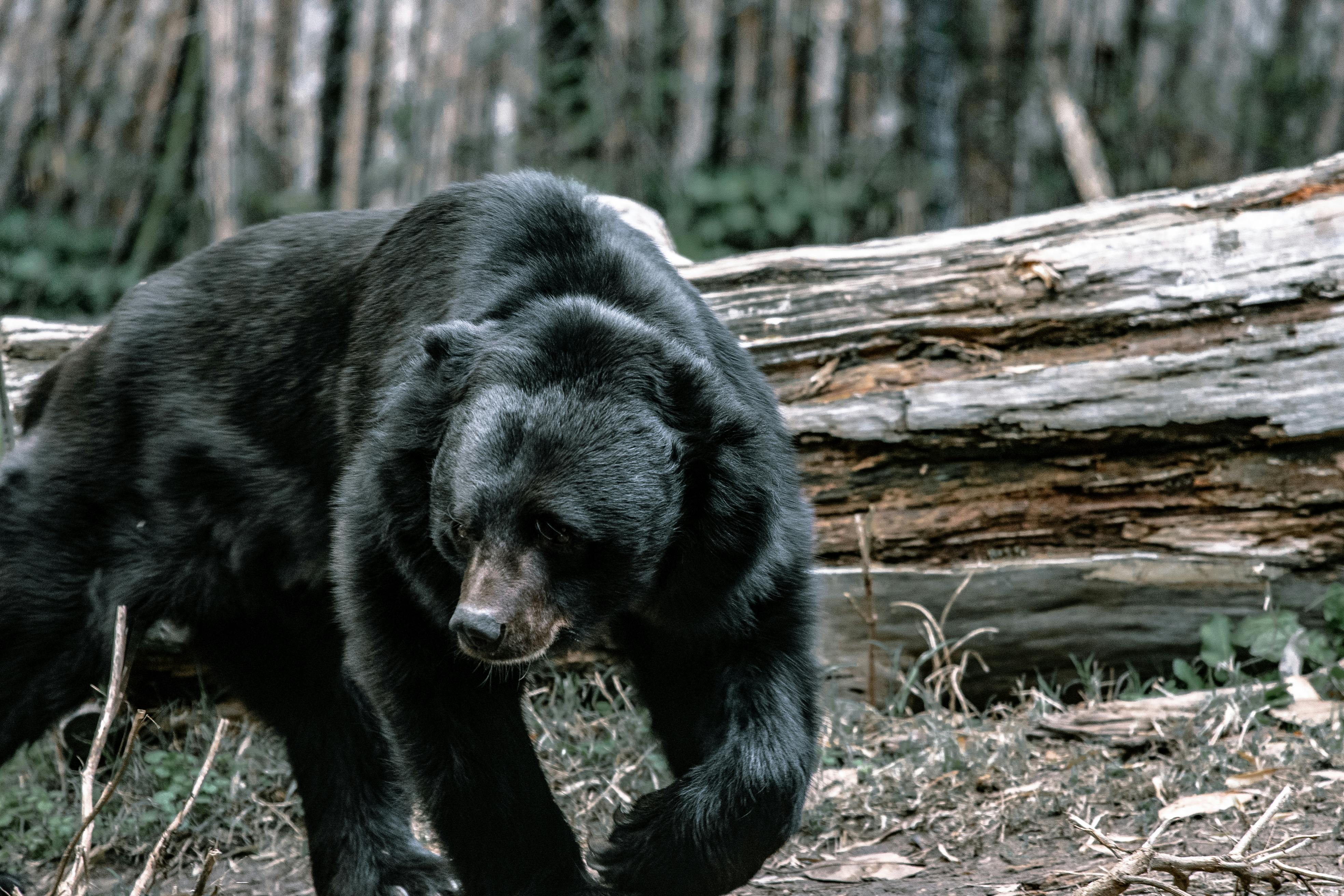
Brown bears still inhabit Hokkaido today. The species persists across much of the island’s forests and mountain ranges, and in some areas populations are thought to be stable or recovering after decades of decline. The region where Sankebetsu once stood is no longer a permanent settlement, and there is no indication that it has become a modern centre for serious bear attacks.

History, in this sense, is not repeating itself geographically.

What has changed is the broader context in which people and bears now coexist.

In 2025, Japan recorded 13 human fatalities and more than 100 injuries resulting from bear encounters, involving both Asiatic brown bears and Asiatic black bears. These incidents were spread across multiple prefectures and environments — from rural settlements to the edges of towns — rather than concentrated in any single location.

The pressures behind them are familiar: reduced natural food availability, changing land use, and expanding human presence in areas once less frequently occupied. Bears range more widely when resources are scarce, and humans now occupy landscapes that were once seasonal or marginal.

The relevance of Sankebetsu, then, is not that it is happening again in the same place. It is that the same ecological forces – scarcity, overlap, and hesitation, all continue to shape encounters between people and large predators, wherever clear boundaries erode.

The quieter truth of man-eater stories

The Sankebetsu bear was not a creature of myth, nor a symbol of evil. It was an animal responding to scarcity, learning from success, and moving through a landscape that no longer offered clear separation between forest and home.

Man-eater stories endure not because they reveal something monstrous about animals, but because they expose a recurring human blind spot: the tendency to see nature as static, until it reacts.

When prey disappears, boundaries blur. When boundaries blur, conflict follows.

The question is not whether such stories will happen again, but whether we recognise the conditions early enough to change the outcome.