
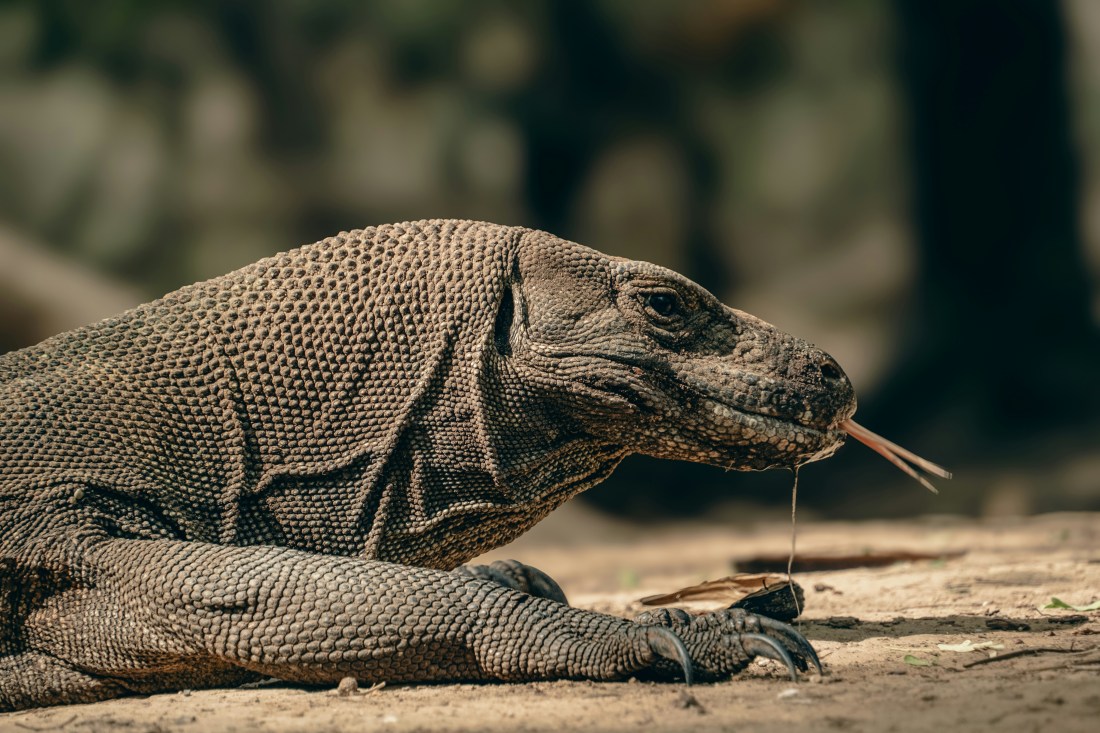
In July 1974 an elderly Swiss baron walked into the hills of Komodo and did not come out. What we chose to believe about his death says more about us than about the dragons.
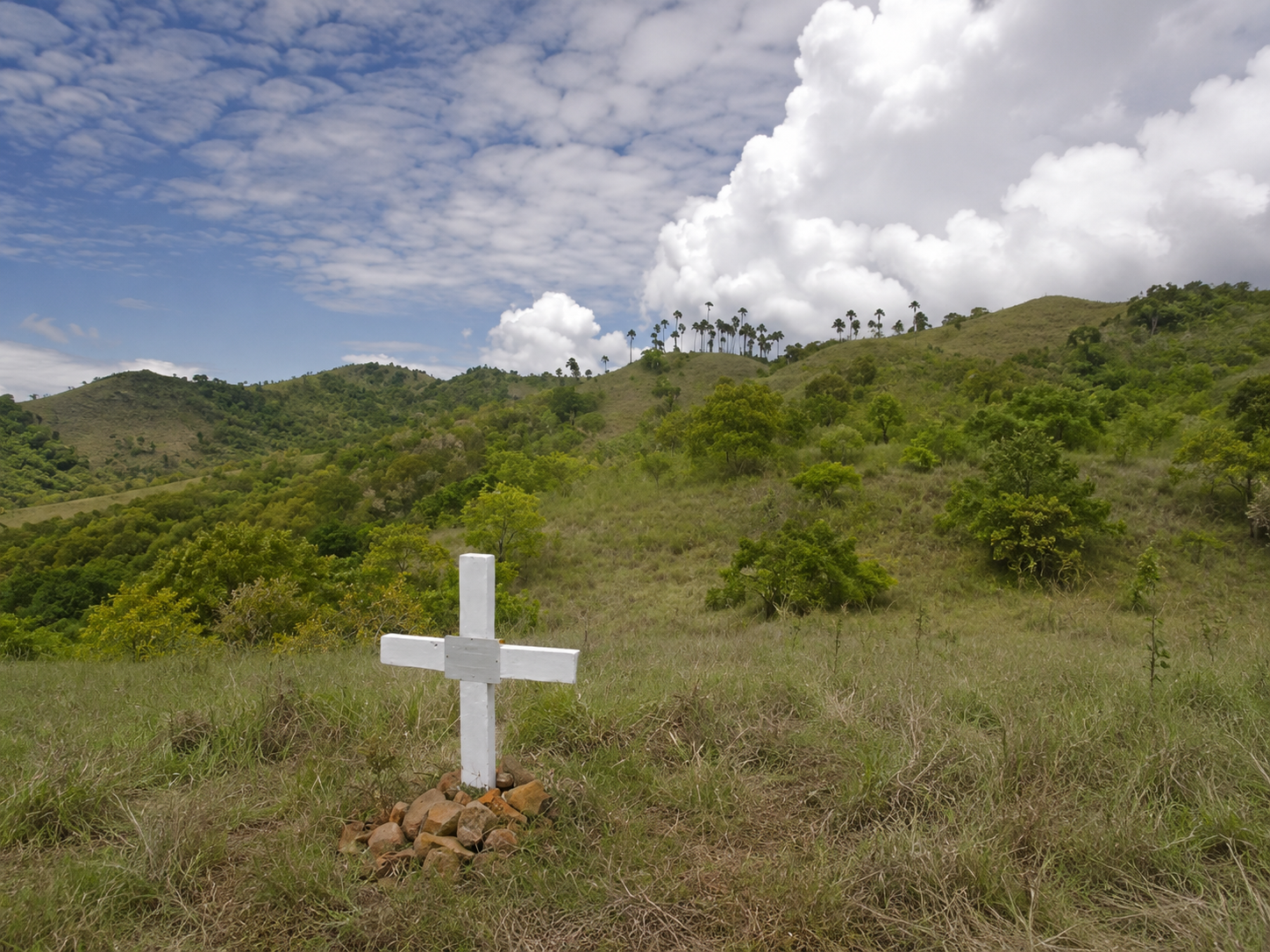
High on a ridge on the island of Komodo there stands a small cross. The inscription is plain enough — he loved Nature throughout his life — and it marks the last known whereabouts of Baron Rudolf Reding von Biberegg, a Swiss aristocrat in his seventies who, on a July morning in 1974, went walking among the largest lizards on Earth and was never seen again.
The bones of the story are these. Von Reding was part of a small tourist party that had sailed across from Flores to see the dragons in the flesh. By one account the group had spent the morning enticing the animals with a goat carcass, the better to watch them feed, before the baron peeled away to make his own way back to the boat. By another, he stumbled and hurt his knee on the trail, and his guide left him where he sat to go and fetch help. The two versions agree on what mattered. When the party returned, the baron was gone. More than a hundred people combed the island over the following day. Miles from the path, high in the hills, they found his glasses and his smashed camera. Nothing else — no baron, no body, not a scrap. He is remembered as the first European ever devoured by a Komodo dragon.
It’s that word European that ought to catch in the throat.
The counted and the uncounted
Von Reding was not the first person taken by a dragon on Komodo. He could not possibly have been. People have lived alongside these animals for as long as there have been people on these islands, and the accommodations they make tell you everything. Villagers on Komodo and Rinca do not wander into the grasslands alone. For generations they threw the old, toothless dragons the heads and hides of butchered deer — a kind of tribute, a peace kept by feeding the very thing that might otherwise feed on them. You do not build those habits around an animal you consider harmless. You build them around one that has, within living memory and long before it, killed people you knew.
None of those people got a cross on a ridge. None of them got a line in the Washington Post. They died, if they died, uncounted and unrecorded, and the tally that Western readers know — the handful of tourist-era deaths and maulings logged since 1974 — begins precisely at the moment a titled European joined the list. Von Reding is famous not because his death was the worst or the first, but because his was the death that got written down. The dragons had been man-eaters all along. We simply hadn’t been paying attention to the funerals that came before, and most of the ones that came after.
We thought we could pet them
To understand how a whole hemisphere managed to overlook this, you have to go back to a photograph.
In 1927 the first two live Komodo dragons in Europe arrived at London Zoo, into a purpose-built Reptile House designed by Joan Beauchamp Procter — the zoo’s first female Curator of Reptiles, a woman of formidable talent and fragile health who would be dead within four years, at thirty-four. Procter took one of the dragons, Sumbawa, entirely to heart. She walked it around the grounds like a dog, occasionally steering the two-metre lizard by its tail, and in 1928 she scandalised a Scientific Meeting by bringing it along to eat chicken and eggs from her hand while she stroked its head, all to prove the beast was no monster. There is a photograph, published in one of her own papers, of Sumbawa beside a small child who is patting it on the head as one might a Labrador.
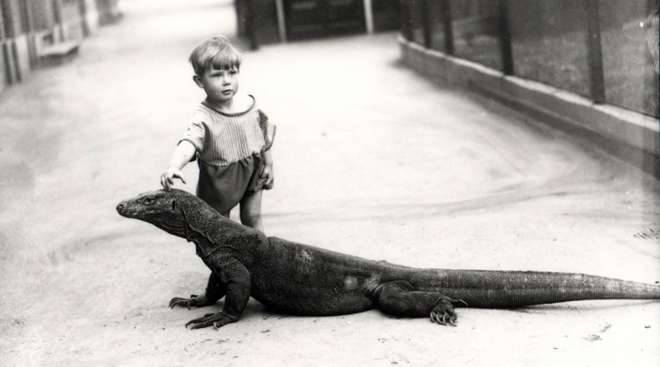
This was the settled Western picture of the Komodo dragon for the better part of the twentieth century: a torpid, obliging curiosity, slow and rather lazy, safely behind glass or, if you were Joan Procter, on the end of a lead. It was a picture built almost entirely from captives — sick, sluggish, half the size they reach in the wild — and from the theatrical mythmaking that had named them in the first place. The very phrase “Komodo dragon” was a piece of showmanship coined by an American expedition in the twenties whose specimens helped inspire King Kong. We invented a dragon for the cinema and then, having got a good look at the real thing dozing in a zoo, decided it wasn’t so fearsome after all. Both pictures were wrong. Neither had much to do with the animal that hunted the hills of Komodo.
Everything we didn’t know we didn’t know
Here is the genuinely humbling part. The most basic facts about how this animal makes more of itself, and how it kills, are more recent than most of the people reading this.
Take reproduction. In 2006 keepers at Chester Zoo watched a female called Flora — who had never so much as met a male — lay a clutch of fertile eggs. The same year, a London dragon named Sungai did the same, and the two cases were written up together in Nature. Female Komodo dragons, it turns out, can reproduce alone, through parthenogenesis, and the offspring they produce this way are all male, which means a single female washed up on an empty island could in principle lay eggs, raise mates from her own hatchlings, and found a whole population from scratch. Chester’s Kevin Buley reached, almost word for word, for the line Ian Malcolm delivers in Jurassic Park: it is, he said, nature finding a way. A film about resurrected reptiles breeding when they were never supposed to had beaten reality to the punch by thirteen years.
Then there’s the bite. For decades the received wisdom held that a Komodo dragon’s mouth was simply so thick with septic bacteria that a single bite doomed its victim to die of blood poisoning days later, the dragon ambling along behind to collect the body. It’s a wonderfully grim story, and it’s largely wrong. In 2009 a team led by Bryan Fry identified genuine venom glands in the lower jaw — the toxins drop blood pressure and prevent clotting, so the prey bleeds and slides toward shock. Later work went further and questioned whether the mouth was even especially dirty to begin with. So the science of how this animal actually reproduces, and how it actually kills, is younger than a blockbuster from 1993. We were letting toddlers pat them on the head decades before we had the first clue what we were looking at.
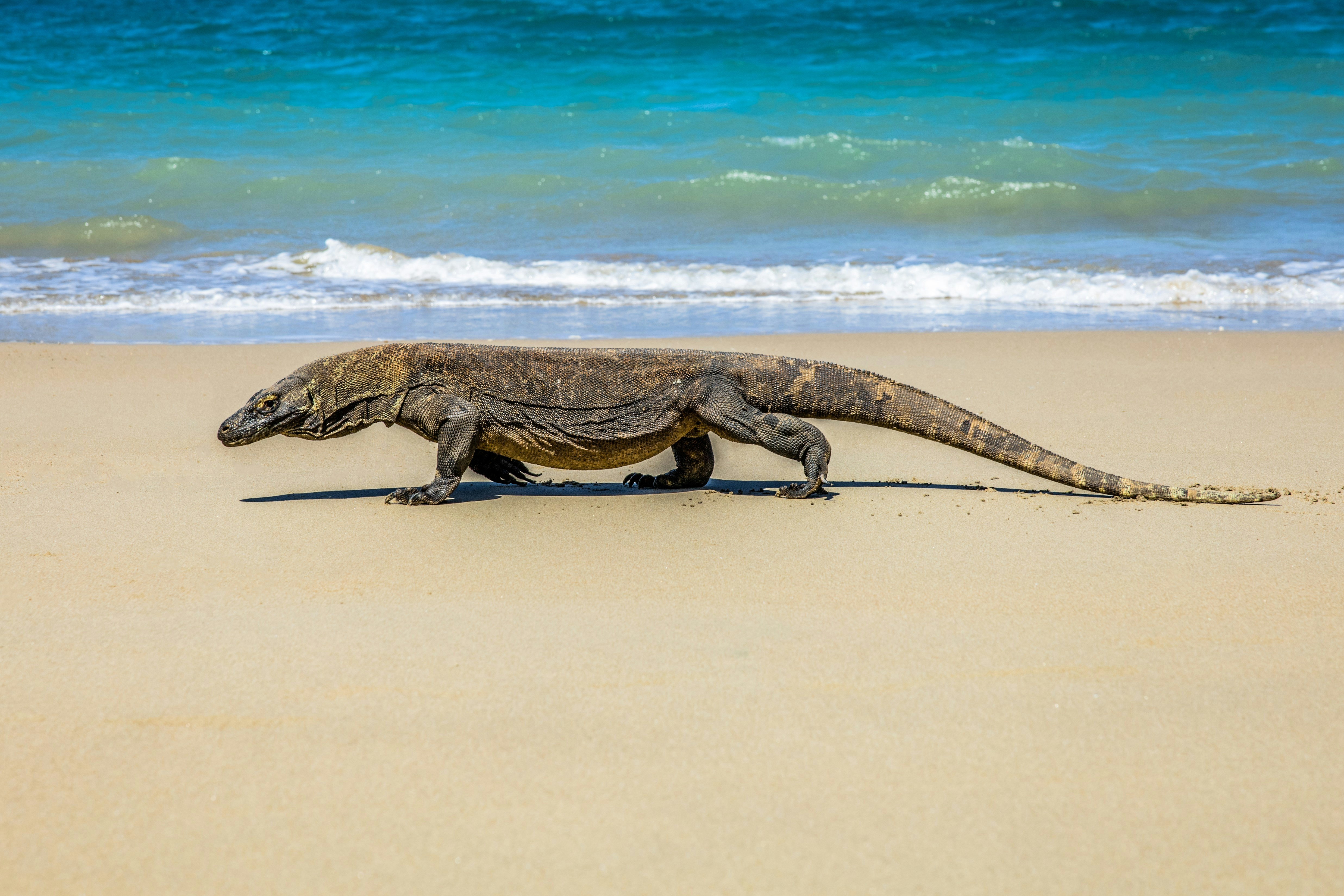
And we did not even know, until relatively recently, that they can swim — strongly, between islands, diving several metres down.
Back to the ridge
Which brings us back to the baron, and to the theory, still politely offered, that no dragon was involved at all. He was old, the argument runs, and unwell; perhaps he simply died out there, or met with more ordinary human misfortune, and the reptiles are merely convenient.
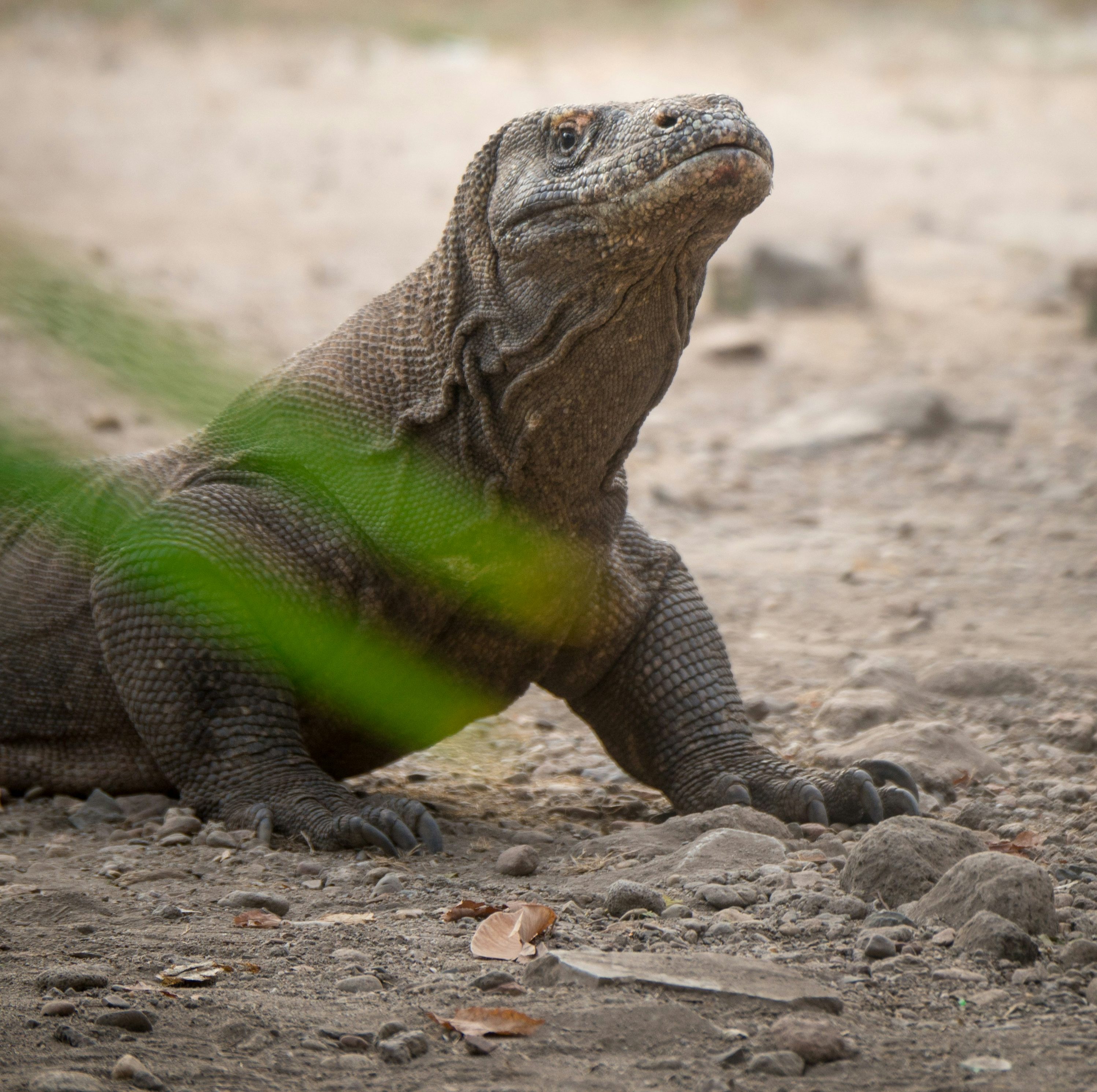
I don’t buy it, and I don’t think the evidence asks us to. That theory is a fossil of 1974 — a relic of exactly the misjudgement this whole story is about. It comes from a decade that thought these animals were slow, lazy zoo-pieces; that had never heard of their venom; that did not know a startled clutch of tree-dwelling juveniles, bolting for the branches to avoid being eaten by their own elders, might send a nervous old man stumbling off the path and straight into the territory of the larger, patient, opportunistic adults; that did not even credit the beasts with the ability to swim. Set the dismissal against what we now know, and it is the dismissal, not the dragon, that looks like the wild assumption.
An elderly man, injured or frightened, alone and immobile in the hills — that is not a puzzle to a Komodo dragon. That is an invitation. His glasses and his broken camera, and nothing else at all, is not the scene of a quiet natural death. It is the signature of an animal that eats bone, hide and hoof and leaves almost nothing behind. We will never be certain, because there was nothing left to be certain with. But on the balance of everything we have learned in the fifty years since — most of which the men who shrugged at his disappearance did not know — the baron who loved Nature throughout his life was very likely taken by it.
The cross on the ridge gets that much right. It just doesn’t say by what.
 The blog of author Luke Phillips