There are moments in history that feel almost implausible. Not because they are exaggerated, but because they are so deliberately cruel.
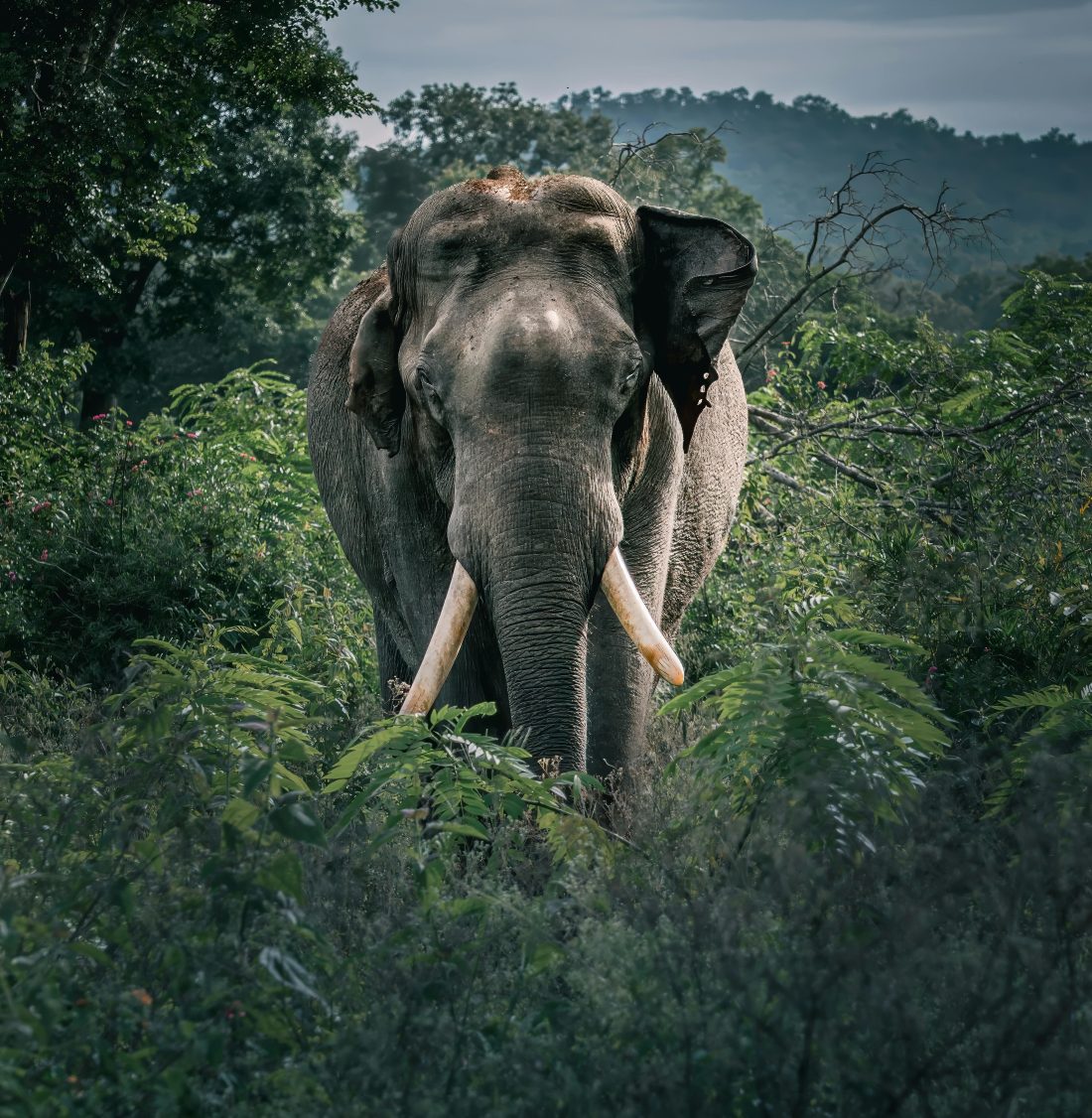
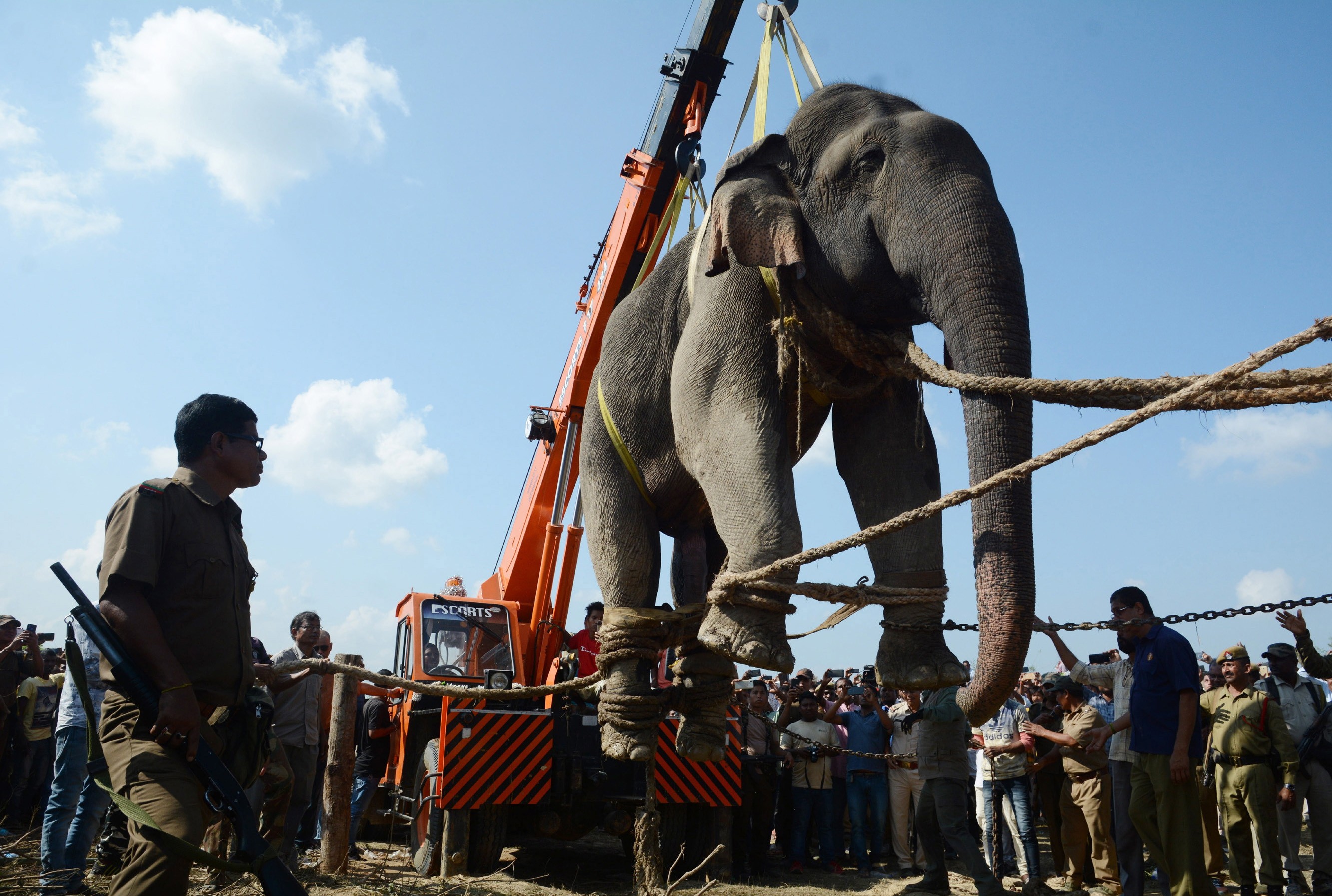
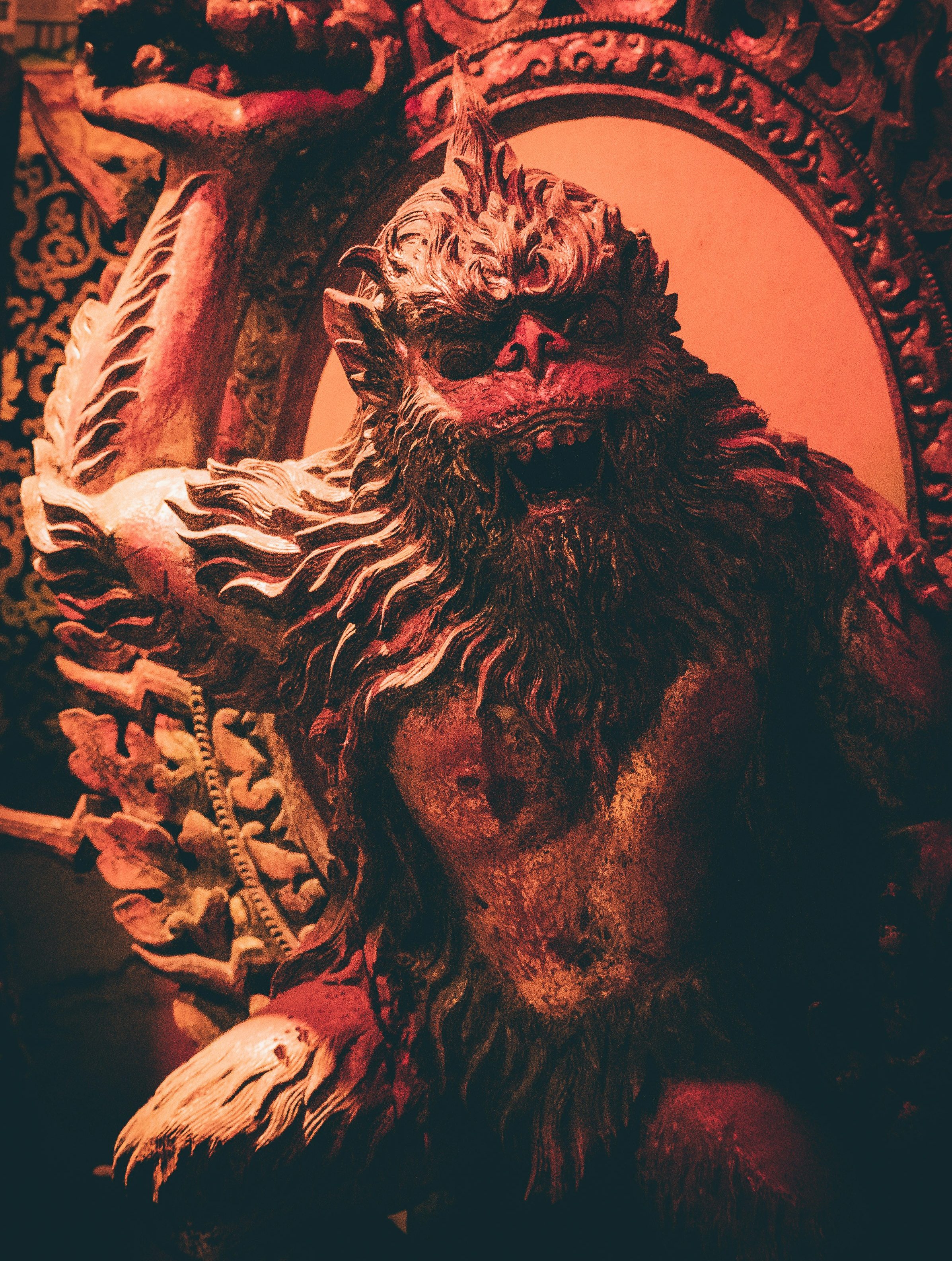
For centuries, across parts of South and Southeast Asia, elephants were used as executioners (known as Gunga Rao in India). Not in myth or allegory, but as instruments of state punishment: trained, directed, and deployed to kill human beings in public displays of authority.
This was not a curiosity or an isolated practice. It was a system, and one that relied on the intelligence and obedience of an animal capable of learning complex commands, and on the psychological impact of seeing power made flesh.
What makes this history unsettling is not simply what happened, but how intentional it was. Elephants were not acting on instinct. They were taught. And they were used.
Where and why executioner elephants were used
The use of elephants as instruments of execution was most prevalent across parts of South and Southeast Asia, particularly in regions where elephants already occupied a central role in warfare, labour, and royal symbolism. Historical accounts describe the practice in areas including the Indian subcontinent, Sri Lanka, Burma, Siam, and parts of what is now Vietnam and Indonesia, spanning several centuries and multiple ruling dynasties.
This was not an improvisation born of cruelty alone. Elephants were already embedded within the infrastructure of power. They hauled timber, carried kings into battle, and featured prominently in court ceremony and spectacle. Their size, intelligence, and visibility made them ideal symbols of authority; living embodiments of the state’s reach and control.
Public punishment in these societies was rarely private. Executions were designed to be seen and remembered as spectacles. They functioned as warnings as much as penalties, reinforcing social order through fear and inevitability. An elephant, towering over a crowd, calm and obedient, communicated something more potent than a blade or a rope: that resistance was futile not only because the state was powerful, but because it appeared absolute.
Beyond fear, the elephant also carried a deeper symbolic weight. It represented the futility of resistance itself. If the state could command and subdue one of the largest and most powerful animals on Earth, a creature capable of tearing apart structures and killing with ease, then the control of people was rendered almost trivial by comparison. Authority was not merely enforced; it was naturalised.
In this context, the elephant became part of a broader political language. Its presence transformed punishment into theatre, merging justice, domination, and spectacle into a single event. The animal itself did not represent chaos or savagery, but discipline… an impression carefully cultivated by those who wielded it.
How the system worked
Elephants were not used as executioners through instinct or provocation. They were trained deliberately, responding to commands issued by a mahout who controlled the animal throughout the process. Contemporary accounts describe elephants being taught a range of actions, from restraining a condemned person to killing them outright, depending on the sentence imposed.
The methods varied by region and period. In some cases, executions were swift. In others, they were prolonged, calibrated to heighten public impact rather than efficiency. What united these practices was control. The elephant did not act independently. It waited, received instruction, and carried out the act as trained, sometimes stopping short, sometimes proceeding fully, all according to command.
This distinction matters. The violence was not the result of an enraged animal, nor of a moment slipping beyond human control. It was structured, rehearsed, and repeatable. The elephant functioned as an extension of the judicial system, its immense physical force made precise through obedience.
That precision was itself part of the message. The spectacle lay not only in the act of killing, but in the demonstration that such a powerful animal could be rendered compliant, predictable, and exact. Authority was displayed not through chaos, but through order.
Power, punishment, and political messaging
Public execution has always been as much about those who watch as those who die. In societies that employed executioner elephants, punishment functioned as a form of political communication, a demonstration of authority designed to be remembered long after the event itself had passed.
The elephant’s role intensified that message. Unlike mechanical devices or edged weapons, the animal was visibly alive, responsive, and controlled. Its obedience transformed violence into a display of governance rather than brutality. Order was not imposed through chaos, but through precision. The state did not merely kill; it commanded.
By outsourcing the act of execution to a trained animal, rulers distanced themselves from the physical act of violence while simultaneously magnifying its psychological impact. The elephant became a proxy through which power could be exercised without appearing impulsive or uncontrolled. Responsibility was diffused, even as authority was reinforced.
There was also an element of humiliation embedded in the practice. To be killed by an elephant, an animal associated with royal processions, warfare, and ceremony, inverted the natural order of dignity. The condemned were rendered small, powerless, and publicly subordinate, their fate enacted by a creature that symbolised the state itself.
In this way, executioner elephants functioned not simply as tools of punishment, but as instruments of political theatre. They collapsed justice, domination, and symbolism into a single act, reinforcing a hierarchy in which resistance appeared not only dangerous, but futile.
Methods of punishment and execution
Historical accounts make clear that executioner elephants were not employed in a single, uniform way. Methods varied by region, period, and political intent, and the elephant’s role could be adjusted accordingly. This flexibility was part of the practice’s power.
In some instances, elephants were trained to kill quickly. A single, forceful action, often involving the animal’s foot (the crushing of a victim’s head against a stone or wooden block was typical), was enough to end a life almost immediately. In others, the process was deliberately staged. The elephant might restrain a condemned person first, holding them in place while commands were issued, before carrying out the final act. The presence of choice and delay was itself a form of intimidation, reinforcing the idea that punishment was not only inevitable, but controlled.
More elaborate methods are recorded in certain historical sources. Elephants could be trained to tear apart bodies using their tusks, or to crush limbs before delivering a fatal blow. In some regions, blades or spikes were affixed to tusks to increase lethality. These were not improvisations, but planned variations and evidence of a system refined over time.
What distinguishes these accounts is not brutality alone, but intentionality. The elephant did not act unpredictably. Each movement followed instruction. Each execution demonstrated not rage, but discipline. Violence was administered as a process, not an outburst.
For spectators, this mattered. The horror lay not only in the outcome, but in the calmness with which it was achieved. The animal’s obedience underscored the message that punishment was procedural, sanctioned, and absolute, making it a function of governance rather than cruelty in the abstract.
The animal caught in the system
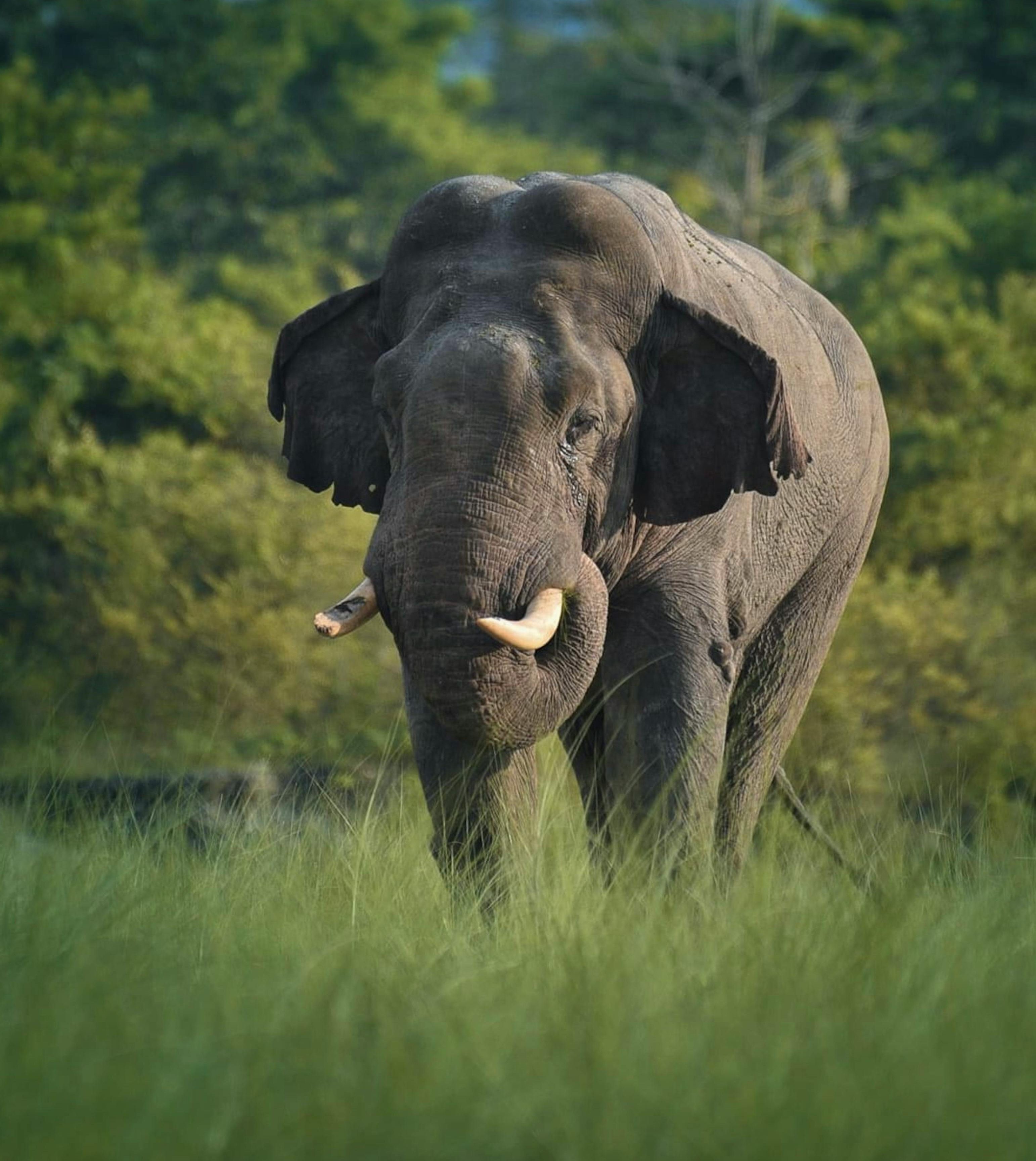
Elephants are not indifferent instruments. They are highly intelligent, social animals, capable of learning complex behaviours, forming long-term bonds, and responding to subtle cues from those they trust. That capacity and the very trait that made them so valuable to human societies, is what allowed them to be absorbed into systems of punishment in the first place.
The elephant did not choose its role. It did not understand the politics of justice, crime, or authority. It responded to training, repetition, and command. Responsibility for the violence enacted through it does not sit with the animal, but with the structures that shaped its behaviour and put it to use.
This distinction matters, because it forces the focus back where it belongs. Executioner elephants were not expressions of nature’s savagery, nor examples of animals turned monstrous. They were evidence of human ingenuity applied without restraint, of power seeking spectacle, obedience, and inevitability, regardless of the cost.
In many historical accounts, the elephant’s calmness is remarked upon as much as its strength. That calmness was not natural. It was cultivated. And in that cultivation lies the deeper unease of the practice: the transformation of a sentient being into a mechanism, valued not for what it was, but for what it could be made to do.
That this history still unsettles is not surprising. It sits at the intersection of dominance and delegation, where violence is made orderly and responsibility is diffused. The elephant becomes a mirror, reflecting not animal brutality, but human willingness to externalise cruelty, to embed it within systems until it feels inevitable, even justifiable.
With what is now known about elephant intelligence, it is difficult not to wonder what such roles may have cost the animals themselves. Elephants are capable of recognising individuals, remembering past events, and responding to distress in others. They are not unthinking tools, but sentient beings with emotional and social complexity.
Whether executioner elephants experienced fear, confusion, or psychological harm as a result of these acts cannot be known with certainty. Historical records do not concern themselves with the inner lives of animals. Yet the very qualities that made elephants so effective within these systems; memory, responsiveness, trust in human handlers, are the same qualities that, today, are recognised as leaving animals vulnerable to long-term stress and trauma.
If nothing else, this absence is telling. The suffering of the animal was neither recorded nor considered relevant. The elephant’s role ended when its usefulness did. That silence, viewed through a modern understanding of animal cognition, is itself a form of indictment.
This research surfaced while working on a piece of fiction, but it refused to remain there. Some histories resist containment. They linger, precisely because they reveal how thin the line can be between authority and abuse, and how readily intelligence (animal or human) can be bent to serve power.
Stories have always borrowed from the natural world, sometimes consciously, sometimes not.
Movie Monday is a new, occasional series exploring where cinema, wildlife, and myth overlap: the real animals, behaviours, and biological truths hiding behind some of our most enduring screen monsters.
It sits alongside Monster Monday and Maneater Monday — different lenses on the same question: why certain creatures, real or imagined, refuse to loosen their grip on us.
We like to believe that cinema monsters are born from imagination alone… nightmares made flesh, conjured by writers staring into the dark.
But again and again, the truth is stranger.
Some of the most iconic creatures in film and fiction didn’t come from myth at all. They came from nature, from animals whose behaviours were already so efficient, alien, or unsettling that they barely needed exaggeration.
Filmmakers didn’t invent these monsters. They recognised them.
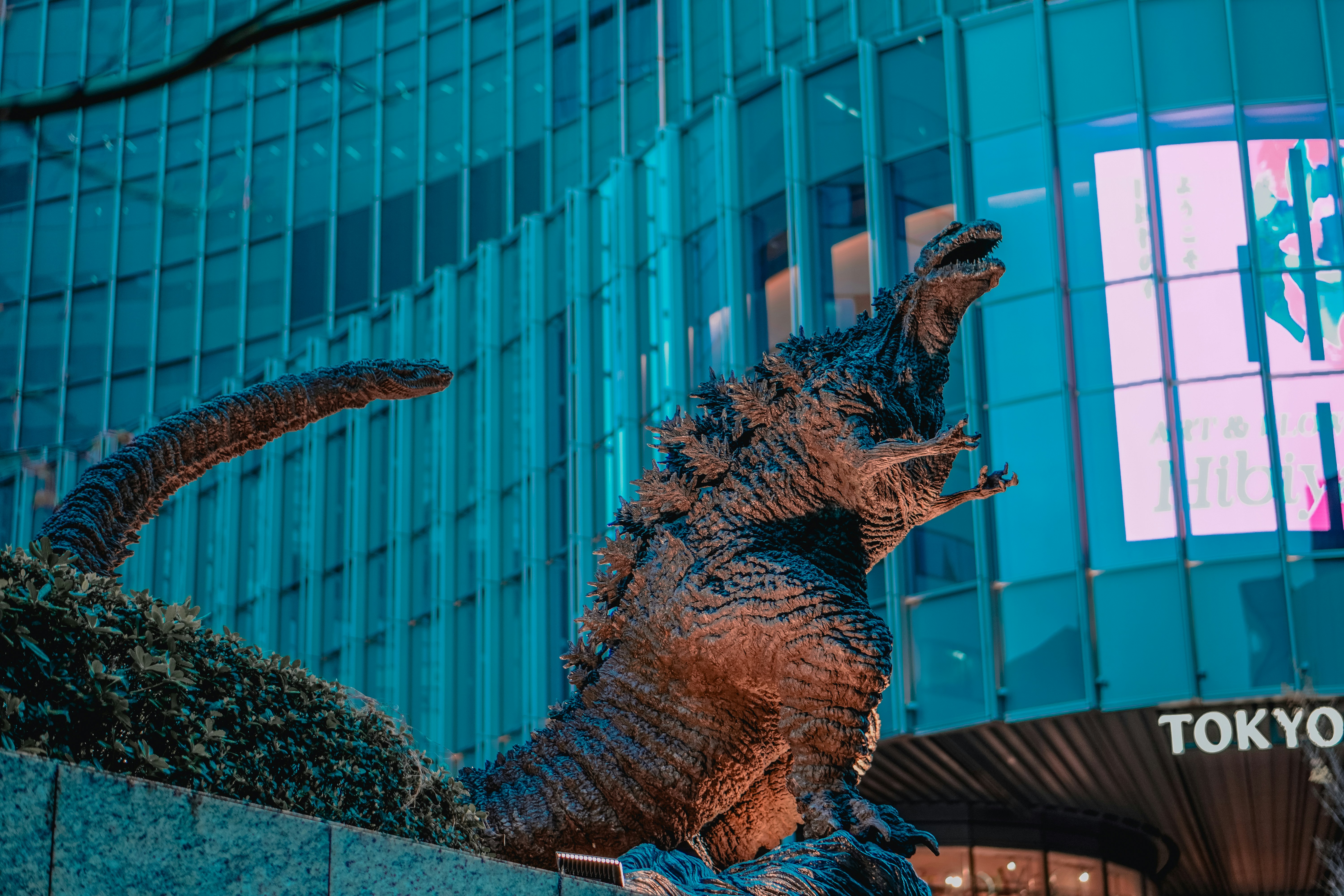
👹 Predator: insects, instinct, and a moment at 30,000 feet
The creature in Predator is often remembered for its technology: cloaking devices, shoulder cannons, thermal vision, ritualised hunting codes.
But strip all of that away and you’re left with something far older.
During early development, legendary creature designer Stan Winston was struggling to finalise the Predator’s look. While flying with James Cameron, he talked through the problem, and it was Cameron who suggested a simple, unsettling solution: give it mandibles.
That single idea changed everything.
Designers have since acknowledged the influence of insects, particularly praying mantises, in the Predator’s face and posture. Forward-facing eyes. Mandible-like jaws. A head shaped for tracking and striking rather than expression or empathy.
Mantises already look extraterrestrial to us. They rotate their heads. They calculate distance. They dismember prey with methodical calm.
Even the creature’s voice reinforces this lineage. The distinctive clicking and chittering sounds were created by Peter Cullen, deliberately leaning into insect-like vocalisations rather than anything recognisably mammalian or humanoid.
The Predator doesn’t invent that fear. It scales it up, arms it, and releases it into a jungle.
What remains, beneath the tech, is an apex ambush hunter — something we instinctively recognise, even if we can’t quite place why.
👽 Alien: nature’s most efficient horror machine
The creature in Alien remains one of cinema’s most disturbing designs because it feels biological. Every stage of its life cycle obeys a logic — parasitic, efficient, and utterly indifferent.
That’s because it draws from multiple real-world inspirations.
One is the deep-sea amphipod Phronima sedentaria, sometimes called the “monster in a barrel.” This tiny crustacean hollows out gelatinous animals, lives inside their emptied bodies, and uses them as both shelter and nursery. It’s parasitism turned architectura.
Image Credit: Xavier Salvador
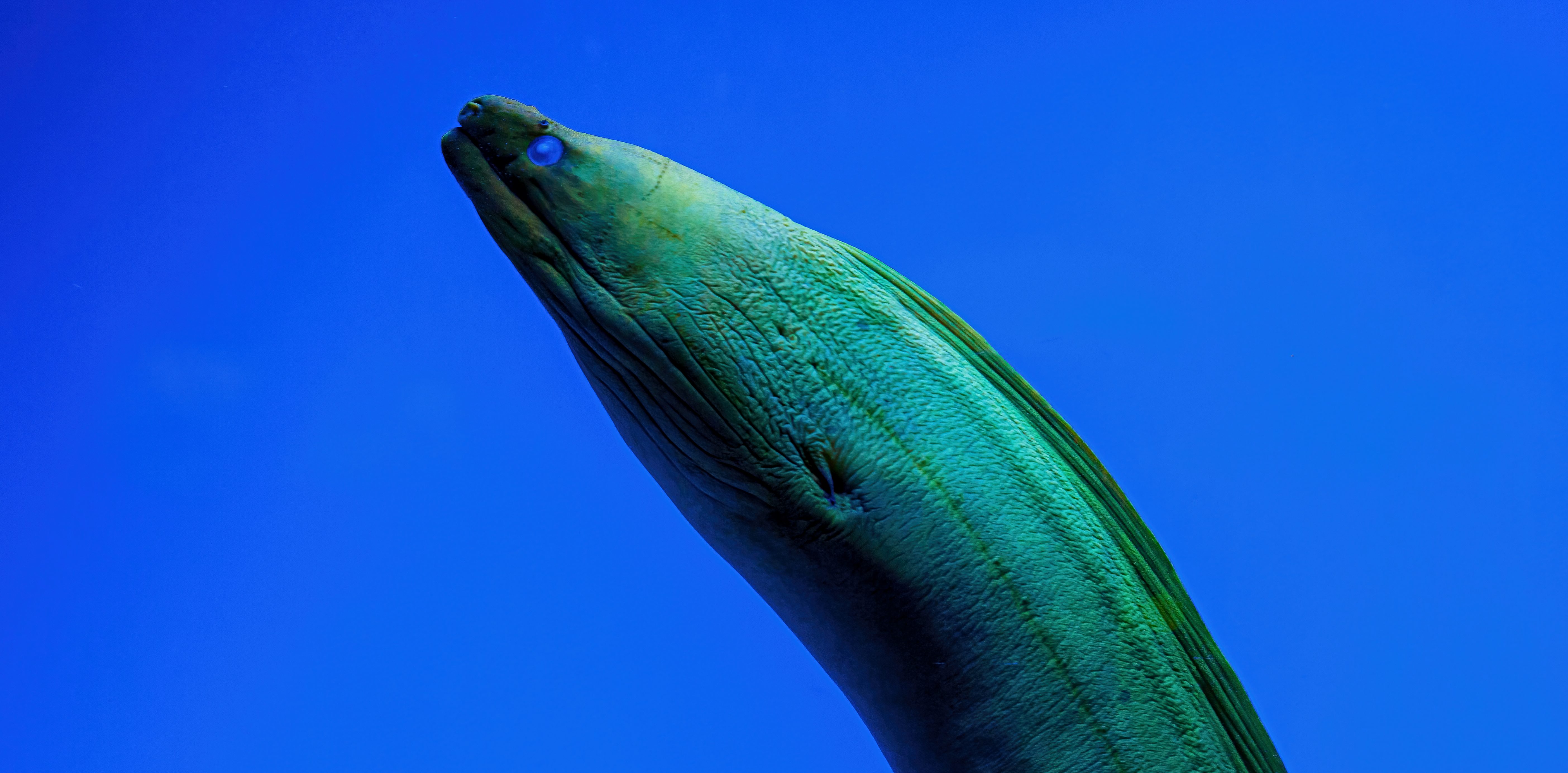
Then there’s the Alien’s inner jaw, eerily similar to the pharyngeal jaws of moray eels, a second set of jaws that shoot forward from the throat to drag prey deeper inside the body. Watching one in action feels like watching a design error, until you realise how brutally effective it is.
Image Credit: Wikipedia.
The acid blood? That has uncomfortable echoes of the bombardier beetle, which stores volatile chemicals in separate chambers and mixes them only when threatened, releasing a boiling, corrosive spray with startling precision.
Even the facehugger carries a lineage. Its spidery grip, tail wrap, and underside anatomy closely resemble the ancient horseshoe crab, a creature so old it predates dinosaurs, and so alien it barely seems terrestrial at all.
Alien isn’t fantasy biology. It’s biology… refined.
🧛 Dracula: when bats became monsters
While working on Dracula, Bram Stoker encountered a New York newspaper clipping describing vampire bats – small, blood-feeding mammals that had been newly “discovered” by Western science and already framed as unnatural horrors.
They didn’t drain victims dry, as legend claimed. But they did feed silently, painlessly, and in the dark. They made small incisions, returned night after night, and relied on anticoagulants to keep blood flowing.
That was enough.
Stoker fused this real behaviour with Eastern European folklore, and suddenly vampirism became biological as well as supernatural. Dracula wasn’t just cursed — he fed, adapted, survived.
Once again, fear took root because it had a foothold in reality.
🦈 Jaws: the predator we misunderstood
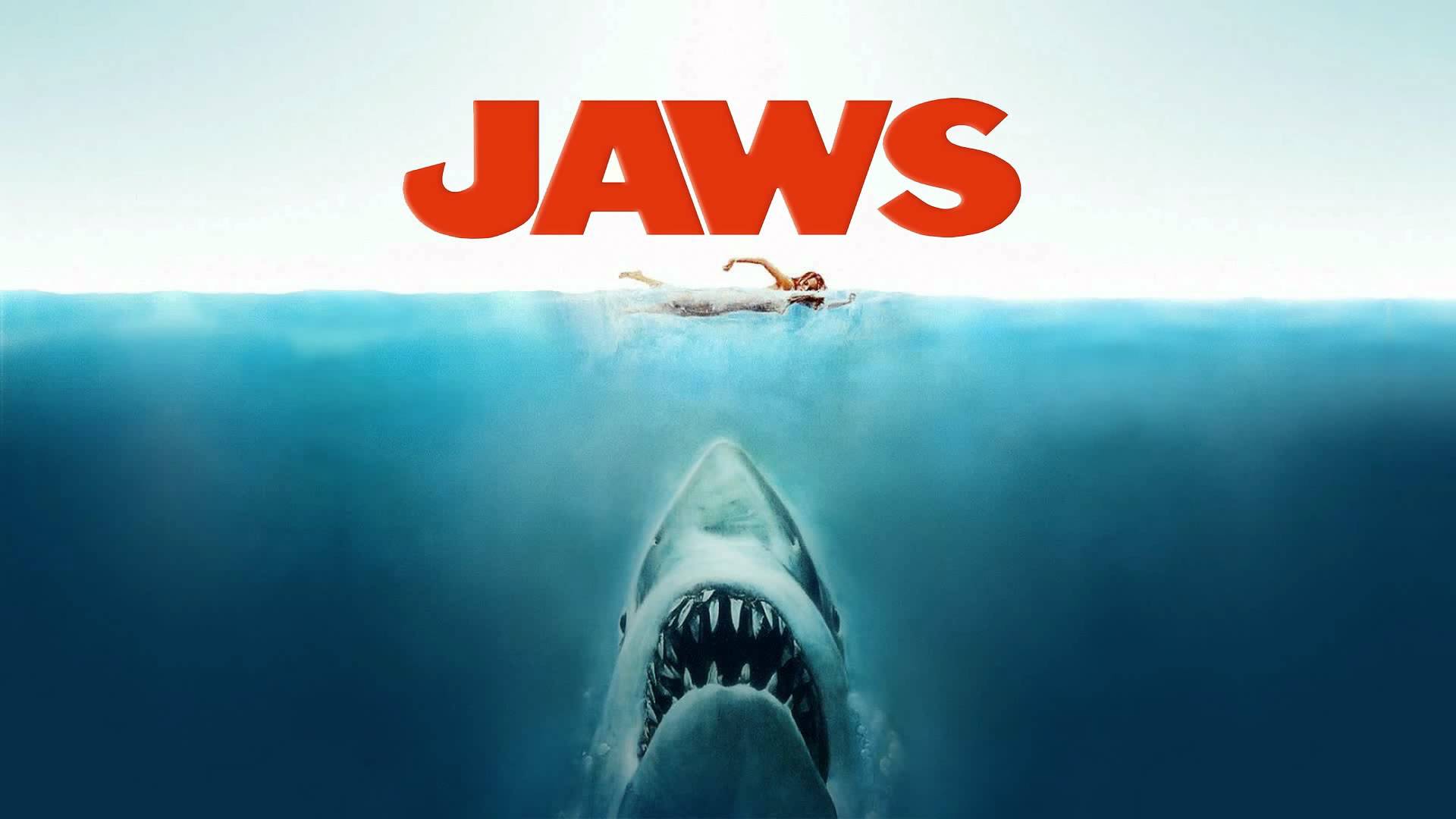
Jaws didn’t invent the fear of sharks, but it magnified it catastrophically.
The great white shark is a powerful apex predator, yes. But it is also cautious, energy-efficient, and rarely interested in humans. Most bites are investigative, unfortunate cases of mistaken identity.
In Jaws, however, the shark becomes something else entirely: territorial, vengeful, strategic. It stalks specific individuals. It understands fear.
The exaggeration worked, all too well. The film permanently altered public perception of sharks, contributing to fear-driven culls and a legacy of misunderstanding that conservationists are still trying to undo.
It’s a reminder that when cinema borrows from nature, it doesn’t always give back responsibly. I am working on my own shark-based story, and will have to try and be as respectful as I can with the subject matter.
🍄 The Last of Us and the zombie ant fungus
The monsters of The Last of Us, from the video game and then brought chillingly to life in the HBO series, feel plausible because they already exist.
Ophiocordyceps unilateralis infects carpenter ants across tropical forests. Once inside, the fungus alters the ant’s behaviour, compelling it to climb vegetation and clamp down with its mandibles.
Then it kills the host.
A fungal stalk erupts from the ant’s head, releasing spores onto the forest floor below, perfectly positioned to infect the next generation.
There’s no rage. No hunger. No malice.
Just control.
The horror of The Last of Us lies not in the fantasy of zombies, but in the quiet realisation that free will is not as secure as we think.
🪱 Tremors: ambush predators beneath our feet
The graboids in Tremors feel absurd, until you consider how many real animals hunt exactly this way.
Trapdoor spiders wait motionless beneath the soil, sensing vibrations before exploding upward to seize prey. Bobbit worms bury themselves in sand, striking with astonishing speed, sometimes slicing fish clean in half.
Image Credit: Wikipedia.
Both rely on:
Vibration detection
Ambush rather than pursuit
Minimal exposure
The genius of Tremors is that it makes the ground itself hostile. The monsters don’t chase — they wait.
Which, biologically speaking, is often far more efficient.
🟢 Slime moulds and The Blob
Slime moulds aren’t fungi. They aren’t animals. They’re something else entirely, capable of learning, problem-solving, and forming efficient networks without a brain.
They flow. They engulf. They adapt.
The creature in The Blob exaggerates this into apocalyptic form, but the unease is justified. Slime moulds already challenge our definitions of intelligence and individuality.
They don’t hunt. They spread.
Why these monsters endure
The most effective movie monsters don’t break the rules of nature.
They obey them too well.
They feed, reproduce, adapt, and survive. They don’t hate us, they don’t even notice us! And that’s what makes them frightening.
Nature doesn’t need motivation. Only opportunity.
Wherever possible, I use freely available images sourced from platforms such as Unsplash and Pexels, or other royalty-free image libraries, in accordance with their respective licences. In cases where images are not sourced from these platforms, I make every effort to credit the original photographer, artist, or rights holder where attribution information is available. Some imagery may be used under fair use principles for the purposes of commentary, critique, education, or illustration, particularly in relation to wildlife, history, film, folklore, or cultural discussion. No copyright infringement is intended. If you are the rights holder of an image used on this site and have any concerns, or would like an image to be credited differently or removed, please get in touch and I will address the issue promptly.
Forests that remember what passed through them. Landscapes shaped as much by fear and folklore as by history. Animals that slip between fact and myth, never fully explained, never fully forgotten.
Black Beast Books exists in that space.
This blog, and the work behind it, has always been about the meeting point between wildlife, folklore, fear, and storytelling. About the creatures we fear, the ones we misunderstand, and the ones we invent to make sense of the world around us. Sometimes those creatures are real. Sometimes they’re not. Often, they’re something in between.
As I move into 2026, I wanted to pause — not to reinvent this space, but to recommit to it.
Going forward, Black Beast Books will be a home for regular, thoughtful writing and storytelling, built around a few recurring threads:
Long-form essays exploring beasts, monsters, and man-eaters
Reflections on horror, folklore, and creature cinema
Monthly deep dives into UK big cat sightings
Behind-the-scenes insight into research, writing, and place
Occasional updates on my novels — because these stories feed directly into the fiction I write
This isn’t about chasing trends or shouting into the void. It’s about building something slowly, consistently, and honestly, creating a body of work that grows over time, shaped by curiosity rather than urgency.
If you’re drawn to strange animals, half-remembered legends, the uneasy relationship between humans and the wild, or stories that linger longer than they should — you’re in the right place.
Thank you for being here. The beasts aren’t going anywhere.
From Suffolk harvest fields to moorland mist in North Wales, a fresh wave of “panthers,” pumas and dark-coated felids stirred Britain’s rural imagination through October and November.
As dusk creeps ever earlier, as hedgerows thin and fields lie fallow, the old hush seems to awaken once more. Reports of something alien abroad: black silhouettes crossing lanes, long tails vanishing between trees, sheep spooked under moonlight, and “pointed-ear” shapes in the gloom. Over the last few months, places like Anglesey, the Llŷn Peninsula, Suffolk and more felt alight with the possibility of something wild and unaccounted for.
Below is a deeper dive into British big cat sightings from the last two months: what was claimed, where and when, what evidence (if any) supports it, and what it tells us about why, in 2025, the British big-cat mystery refuses to go away.
Autumn’s Quiet Fields and the Whisper of Something Else
There’s something about late autumn in rural Britain: the harvest is over, fields lie bare, evenings draw in, and the countryside takes on a soft, half-remembered quality.
For decades, that seasonal quiet has offered fertile ground for whispers of something aloof in the landscape. Could it be wind in the trees, a deer moving in shadow, or something else? For many rural dwellers and folklore-hunters, it has always been the right time for mystery big cats to wander across a lane, disappear into a copse, or vanish beyond the hedge.
In October and November 2025, those whispers, as always seems to be the case in Autumn, became a little louder.
October 2025: When the Reports Began to Coalesce
Scattered reports: South-East and West-Midlands chatter
Throughout October, a series of smaller, loosely connected reports emerged, from “panther-like” silhouettes glimpsed in the treeline, to late-evening growls heard by dog walkers, and paw prints in soft, damp ground after rain. Most came from local Facebook groups, community forums or specialist blogs, with genuine sparks of intent (some people setting up trail-cameras), but little follow-up.
The background: police logs and a five-year string of reports
Behind the anecdotal noise, there’s an institutional record: between 2021 and 2025, based on keyword searches for “big cat,” “puma,” “panther” and “lynx,” official incident-record logs from parts of southern England (notably Devon & Cornwall Police) list more than a dozen reports of large cats, described variously as “black panther,” “puma-like,” or “lion-sized.” LBC
Many of these reports describe animals jumping hedges, stalking rural tracks, or vanishing after being glimpsed in a vehicle’s headlights. In a few cases, officers attended the scene; in others the sightings remain unverified.
These official records, which are commonplace across the UK, add weight to public claims.
November 2025: A New Wave in North Wales, Anglesey, and the Llŷn Peninsula
Just as October’s reports began to settle, November brought a fresh uptick, this time centred on North Wales, Anglesey, and the Llŷn Peninsula. A different landscape, a different weather-tone, and for many, a compelling shift in pattern.
Anglesey: Fields, sheep, and pointy-eared cats (10 November onward)
A report on 12 November 2025 from a well known UK cryptozoology site, detailed multiple sightings across Anglesey including black cats with “long thick tails” and “pointy ears,” which were spotted roaming fields, skulking near sheep, or seen slipping along woodland margins at dusk. The Centre for Fortean Zoology
A post shared on social media described a “large black cat” near Newborough, walking through open land near the coast, with prominent pointed ears, a low slung tail and a long body. Locals, spooked, spoke quietly of sheep losses and nervous dogs. Facebook
The repeated descriptions (sometimes by more than one witness) helped give these reports weight. That said: “pointy ears” is a common reason sceptics dismiss big-cat claims, because in many big cats ear shapes differ, and “pointy” can be misleading in poor light or low resolution, and for many, suggests a dog and mistaken identity.
Pwllheli, Llŷn Peninsula: “Puma spotted at caravan site” (28 November)
On 28 November 2025, a local watchdog group for big-cat sightings, Puma Watch North Wales, published a report of a “large dark-coloured” animal, believed by a holiday-maker to be a puma, seen within a caravan-park perimeter near the town of Pwllheli, on the Llŷn Peninsula. Puma Watch North Wales
According to the witness, the animal was large, low-slung, and moved in a smooth, stealthy manner between caravans and hedgerows, so unlike a typical stray dog or cat. Given the rural coastline, sheep fields nearby, and limited light at dusk, the report sparked concern for local farmers and dog-walkers.
Further sightings in Wales were reported earlier in the month by the same site.
Where the wild things might be… or might not be
What stands out from both months isn’t a shift in geography so much as the familiar randomness that has always characterised Britain’s big-cat reports. Sightings scatter across counties and coastlines without forming any obvious pattern, a point often used by sceptics to argue against the idea of established or breeding populations. Yet for mystery-hunters, that same unpredictability is part of the allure – the sense of roaming predators that refuse to be pinned down, drifting through valleys, farmland and forest edges, appearing where least expected.
If nothing else, November’s reports show one thing clearly: the conversation lives on and people are still looking, watching, and waiting for a confirmation.
Patterns of Evidence: What We Know, What We Don’t
📌 What counts as good evidence
Clear video or photo, ideally with scale, timestamp, and context.
Multiple independent eyewitnesses describing similar features (size, tail, coat, gait, ears, behaviour).
Physical traces like hair, scat, paw-prints, kills… submitted for professional forensic analysis.
Consistent follow-up through camera traps, field-investigations, naturalist or police presence.
📉 Where the 2025 autumn wave falls short
Most reports (even the ones above) are from single witnesses, uncorroborated by photos or prints (I know how hard it it is to think about taking a photo in the moment, or how difficult it is to actually photograph and film genuine wild animals on a phone).
Descriptions vary (black panther, puma, “pointy-eared black cat”) which may reflect different species, or more likely, different interpretations of light, distance, stress or fear.
No public forensic confirmations this month: no DNA swabs, no carcasses, no verified predator-kill evidence.
That isn’t a rejection of the sightings by any means, but it does mean: as of November 2025, there is still no conclusive scientific proof of a sustainable non-native big-cat population roaming the British countryside, despite the very strong likelihood they are here.
Why the Autumn Spike Happens: Season, Psychology, and Landscape
Autumn has always been a season of shifting boundaries in the British countryside. As the days shorten and dusk arrives earlier, everything seems to take on a different shape. Shadows stretch longer than expected, hedgerows thin, and once-dense foliage gives way to bare branches and open visibility. This simple change in light and landscape can transform the most ordinary movement, be it a fox slipping between field margins, a dog cresting a hill, even a cat prowling along a fence line, into something uncanny.
The conclusion of the harvest season amplifies this effect. With crops cut back and fields lying open, the countryside becomes a stage with fewer props; anything crossing the land becomes more noticeable against the bare ground. At the same time, human presence in these spaces increases. Dog walkers, cyclists, farmers, hikers, and foragers tend to be out more in the late afternoon or early evening, right when the light begins to fail. Encounters therefore become more likely at a time when visibility is often at its best due to a lack of blooming foliage and leaves.
There’s also a psychological undercurrent to this seasonal shift. Autumn signals the approach of winter, a time when the countryside feels both more exposed and more remote. Folklore thrives in such in-between spaces. As mists gather and the temperature drops, we become more attuned to the uncanny possibilities at the edge of vision. For those already primed to wonder, whether through experience, curiosity, or the stories that circulate online, a shape in the half-light can ignite the imagination.
Together, these elements create the conditions in which big-cat sightings often cluster: a landscape laid bare, a watchful public moving through it, and just enough atmospheric tension to make the ordinary feel extraordinary.
Why These Stories Still Matter: Myth, Mystery and Wild Britain
art of the enduring appeal of Britain’s big-cat sightings lies in the country’s deep-rooted relationship with wildlife folklore. This is, after all, a landscape shaped by centuries of myths — from black dogs on moors to spectral deer in forests — and the idea of a hidden predator wandering the countryside resonates strongly with that cultural inheritance. Big cats, whether truly present or not, feel like a modern iteration of the same ancient impulse: to believe that something wild still moves out there, beyond the reach of fences and footpaths.
There is also a historical foundation to the fascination. The Dangerous Wild Animals Act of 1976, which curtailed the private ownership of exotic predators, triggered a generation of rumours that owners had secretly released pumas, leopards or lynx into the wild rather than surrender them. This legacy, more than any single sighting, fuels the belief in escapees or small, scattered populations that might have survived in remote pockets. It’s not proof — but it’s plausible enough to keep the theory alive.
For rural communities, the possibility of having such an animal nearby carries a mix of fear, irritation and reluctant awe. Livestock losses, nervous dogs, or strange prints in soft ground can lend weight to speculation. And for those who walk the land at dawn or dusk, the idea of sharing space with a creature that shouldn’t be here adds a quiet thrill.
But beyond the practical and historical, these stories matter because they remind us that mystery still exists in a world that often feels over-mapped, over-explained and over-connected. The silhouette on a hillside, the rustle in a hedge, the long tail disappearing into the dark — they hint at a Britain where the wild isn’t yet gone, only hidden. And whether or not big cats truly roam our countryside, the belief in them offers something rare: a reminder that the world still holds room for wonder.
I checked police-disclosure logs from forces who publish big-cat incident records (e.g. Devon & Cornwall). Devon and Cornwall Police
I referenced background research and historical context on British big-cat folklore, escapee theory, and prior documented sightings/escapes based on my own knowledge.
Caveat: I have no access to private camera-trap data, forensic lab results, or police log details beyond publicly disclosed summaries. The piece remains a synthesis of publicly available reports and claims, filtered for interest and plausibility.
The Mystery Lives On — For Now
As November 2025 draws to a close, the tally of big-cat reports has grown. From Suffolk to Anglesey, from fields to caravan parks, from hushed farm corners to public Facebook groups.
We are left with a mosaic made up of handfuls of sightings forming patterns, trending northwards, clustering in rural and coastal zones, surfacing at dusk.
For those who love the wild-edge of the British countryside and for readers of eco-thrillers, wildlife-watchers, or just the curious, those patterns matter. They remind us that beneath the tame green fields lies uncertainty. That despite fences and lights and human ink and paperwork, nature, or at least the idea of the wild, is still slipping through.
Walk the hedgerows at twilight. Keep a torch handy. A sharp eye. A steady hand on a camera. Because sometimes, the most compelling truths hide in plain sight, as a silhouette on a November road, or a long tail slinking behind a hedge, might just prove to you.
If nothing else, the mystery remains alive and hopefully well, and left alone.
Luke Phillips is the author of the eco-thrillerShadow Beast, which explores the myth and mystery of Britain’s big cats.
What Might Come Next — For Readers, Watchers, The Curious
If you see something:
Use a phone or camera to get photos, video if you can (and safely).
Try to note scale; are there hedges, gates, known objects in frame that can help judge size?
Record time, date, weather, location (village, nearest road/farm), direction of movement, behaviour (walking, stalking, fleeing).
Share with groups like Puma Watch North Wales (if in Wales), Rick Minter at Big Cat Conversations or local wildlife / community pages. Even if nothing comes of it, each data point adds to the bigger picture.
Stay safe, especially if livestock are nearby. But also aware: many “big cats” reported in the UK probably remain domestic or feral cats mis-measured in light and distance.
There’s something undeniably magical about giving a book at Christmas. A wrapped story is more than paper and ink, it’s an invitation. A doorway. A promise of cold nights, cosy lighting, and long stretches of quiet where the imagination is allowed to run truly wild.
And if you’re here, you’re probably searching for the perfect book to give to the creature-feature fan, the folklore-obsessive, the horror lover, or simply the reader in your life who enjoys stories a little off the beaten path.
My novels all sit at the crossroads of thriller, horror, myth and wild nature, blending cryptozoology with real-world conservation themes, the uncanny with the grounded, the monstrous with the deeply human. But each book scratches a slightly different itch…
So here’s my Christmas gift guide, pairing each book with the type of person who will enjoy unwrapping it most.
📚 Shadow Beast — For the New Horror Explorer
Perfect for:
Someone dipping a toe into horror or cryptozoology
A reader who loves a slow build and creeping dread
Fans of folklore, rewilding, or deep-woods atmosphere
Why it’s the ideal gift: Shadow Beast is the best entry point into my world. It begins with unsettling glimpses, unanswered questions, whispers in the dark… before escalating into a full-blown nightmare. It’s intentionally atmospheric – the kind of book you can read by a fireplace while the wind rattles outside… if you dare!
If the person you’re gifting loves the idea of mystery, night forests, and the “what if?” of British big-cat legends, this is the perfect starting place.
📚 The Daughters of the Darkness — For the Reader Who Wants Something Darker
Perfect for:
Fans of true horror
Readers who enjoy expanding mythologies
Someone who wants the stakes (and fear) dialled up
Why it’s the ideal gift: This is the sequel to Shadow Beast, but it stands tall on its own terms. The tension is sharper, the threat more immediate, the world bigger and more dangerous. If someone you know is a fan of darker, more intense horror, or perhaps has an interest in historical man-eaters, then slide this under their tree.
Daughtersis also a great pick for the person who loves folklore that mutates, legends with teeth, and stories that delve deeper into the shadowed corners of the natural world.
📚 Phantom Beast — For the Reader Who Loves Creature Thrillers with Depth
Perfect for:
Anyone who loves cryptids, wildlife thrillers, or remote-landscape horror
Readers who enjoy stories that sit between realism and myth
Fans of atmospheric, ecology-rooted creature features
Why it’s the ideal gift: Although Phantom Beastis the third book in the wider Beast universe, it works just like a Reacher or Jack Ryan novel — a complete, self-contained story that can be read entirely on its own.
This book leans into the atmospheric landscapes of Wyoming, folklore-tinged tension and a creeping sense of the uncanny. It also introduces key characters (including Nina Lee) who appear in Rogue, but you don’t need to have read anything beforehand to enjoy it.
If you’re gifting someone who loves:
western-style adventures like Yellowstone, but with a twist
creature mysteries
survival stakes
or the “speculative but could-it-exist?” type of thriller
…then Phantom Beast is an excellent pick. It’s rich, eerie, and adventurous — perfect for a winter’s night escape into the unknown.
📚 Rogue — For the Cryptid Enthusiast, Bigfoot Believer, and Creature-Feature Diehard
Perfect for:
Fans of Bigfoot lore and cryptozoology
Readers obsessed with Bigfoot, lake monsters, or animal-myth lore
Anyone who loves nature-driven horror
Readers who love mysterious wilderness creatures
Anyone obsessed with speculative biology and animal myths
Why it’s the ideal gift: Rogue is your dedicated Bigfoot-horror novel — the most direct dive into a classic North American cryptid myth. It champions everything people love about Sasquatch stories: the isolation, the danger, the uneasy feeling that something colossal is watching from the treeline.
If you know someone who spends too much time on Bigfoot Reddit threads, watches every creature documentary they can find, or always roots for the animal in horror movies — this is the one.
Although it links to the wider Beast universe (with Nina now leading the way), Rogue is still completely approachable as a standalone, and makes a perfect first step for readers who want to jump straight into a pure cryptid nightmare without needing any prior series knowledge.
If you know someone who devours documentaries, listens to Bigfoot podcasts, or would happily spend Christmas lost in a forest surrounded by legends — Rogue will hit all the right nerves. “safe but exciting” choice — a solid pick that appeals broadly without losing the creature-thriller edge.
🎯 Quick Guide — Who Gets What?
For someone new to cryptid horror? → Shadow Beast
For a horror lover who wants the intensity turned up? → The Daughters of the Darkness
For the wildlife nerd or folklore fan? → Phantom Beast
For a real creature-feature and conspiracy theory fan? → Rogue
For someone who loves anything weird, eerie, or atmospheric at Christmas? → Truly, any of them.
🎄 Wrap It Well, Gift It Right
If you really want to make the gift feel special, here are some ideas:
Pair the book with a cosy blanket and label it “For atmospheric winter reading.”
Add a notecard referencing the creature or theme of the book.
Include a bookmark, maybe something rustic, wild, or forest-themed.
Slip the book into a stocking with hot chocolate sachets or spiced tea.
Or, in the case of Rogue, maybe something from the Dr Squatch range! (not gifted or affiliated, just an idea!)
Books make personal gifts, but creature-thrillers at Christmas? They’re unforgettable.
I recently picked up a 50th anniversary copy of James Herbert’s ‘The Rats’ – a series of books I was borderline obsessed with when I discovered them in my early teens. Despite being slightly alarmed at the inappropriate content that I somehow missed as a kid, and wouldn’t get past an editor’s desk these days (a teacher thinking of 14-year old girls as crumpet!), it still has me gripped no matter how many times I’ve read it.
In ‘The Rats’, the first of the trilogy, there is a harrowing scene of a school under siege – something I wanted to pay homage to in my own first novel, Shadow Beast.
If you’ve yet to read Shadow Beast, there are some mild spoilers hinted at in this chapter, but not completely given away.
I’ve always had a vision that if the book were ever made into a movie or a series, at least one of the scenes from this chapter would feature ‘Bless the Beasts and the Children’ by The Carpenters playing over the muted action – perhaps as the beast stalks past the classroom windows in slow motion, it’s gruesome prize carried in its jaws.
So, here, in a hopefully to become relatively regular feature I’m naming ‘Chapter Tuesdays’ – here is my homage to classic British horror.
Chapter Twelve
Louise Walsh looked out over the playground from her classroom window. The afternoon play break was nearly over, and she watched as the children finished up their games of chase and hopscotch. A small group of them huddled in one corner, no doubt playing on their portable games machines. At least they’re out in the fresh air,she thought. The small primary school in Cannich was a beautiful stone building that had originally been a church. The traditional layout had been put to good use, with the three rooms that came off the main hall now serving as the classrooms for the different age groups the children were separated into.
Louise had the eldest group – the nine to eleven year olds. Her elder colleagues, Mrs. Jones and Mrs. Henderson, took the younger groups of the fives and the sevens. Amongst other things, Louise was also the acting Headmistress. With such a low intake of children and small classes anyway, there was no need to appoint someone separately in a permanent position. They had run the school like this for two years and it worked well enough.
Being the youngest of the three women, Louise had at first encountered a great deal of subversive hostility, and a two-faced attitude from the older women she found herself working with. The fresh ideas she had brought with her from the London inner-city schools had received a warm welcome on the surface, but had been constantly stalled when she had tried to put them into action. On more than one occasion, she had returned from a difficult day to her small, one-bedroomed cottage and burst into tears with thoughts of returning home to the south. But sticking to her guns on her good days had seen her through, and she now wouldn’t change Cannich for anywhere else in the world.
She picked up her whistle, and walked out of the classroom through the big double doors of the empty hall into the playground. It was a crisp winter’s afternoon and the sun was beginning to burst through a cloudbank. She looked up onto the mountains surrounding the village. If the weather holds, I’ll go for a walk and clear my head,she thought. There was only another forty-five minutes of school left. The overdue marking and reports on her desk could wait. She had all weekend after all. She looked up again to the ridge of the nearest mountain, lifting her hand to shield the glare of the sun from her eyes. She could now see that there was a lot of activity up on the mountainside, and whole parts of the forest seemed to be moving although she couldn’t make out any individual people. I wonder what’s going on,she thought as she heard the buzzing of a helicopter in the distance.
~
Thomas opened up the back of the Overfinch and helped Meg jump down onto the ground. The forest car park, which had been empty yesterday, was now almost full with Army and police cars, some of which sported large radio antennas. The Jaguar saloon had also rolled in behind them. No one had got out of the car though. The Major-General came over to Thomas.
“I’ve asked some of the Army dog handlers to follow in behind you,” he said. “They’ll follow your lead, and will be under your command. This is new territory for them, so we’re all looking to you really.”
Great,thought Thomas with some concern, although he managed a weak smile anyway. He could see four men with German shepherd dogs standing near one of the trucks. A young soldier in a beret ran up to them and saluted the Major-General.
“Major-General Sir, we’ve finished the first sweep and found nothing so far. The snipers are on hold and it’s safe for the dog team to move in.”
“Thank you Corporal,” replied the Major-General. “So Mr. Walker, it looks like you have your leave. I’ll introduce you to the dog team.”
Thomas followed the Major-General across the car park. The dog-handlers were all wearing the red berets of the British Military Police. As he looked around, he noticed the green berets of the Royal Marine Commandos gathered around a Land Rover with a large radio mast. The other soldiers were from the 3rd Battalion Royal Regiment of Scotland, based at Fort George. It didn’t escape Thomas that they had been well known for their involvement in operation PANTHER’S CLAW in Afghanistan. He wasn’t sure if it was irony, fate or just some marketing officer who was laughing at him right now.
Major-General Fitzwilliam returned the salutes he received as they neared.
“Sergeant Brodie, this is Thomas Walker. He’ll be leading your team and giving you some insight into your quarry. He has experience with this kind of dangerous animal, so take his advice seriously.”
“Yes sir.” Brodie answered.
The sergeant’s smile seemed genuine, and there didn’t seem to be any question or mistrust in his expression. He looked down to see Meg earnestly leaning in to the sergeant’s German shepherd dog, her tail wagging as she licked at its nose in an exuberant fashion. The big dog looked to his handler in confusion, completely unsure how to react to the friendly newcomer.
“Meg has been trained to follow trails and has plenty of experience tracking cats. She’ll let us know if she’s onto something. Keep your dogs on the lead. We know it’s a dog killer and it’s not my intention to put any of them, or us for that matter, in harm’s way. We’ve just got to find it,” Thomas explained to the group of soldiers. He noticed the rifles slung over their shoulders and winced as he realised his was still in the car.
“Sergeant Brodie, do you mind holding Meg for a second. I’ve been given permission to bring my rifle and I need to get it from the car.”
The sergeant nodded, his smile suggesting he recognised Thomas’s nervousness. Thomas trotted back to the Overfinch, trying to stifle his urge to run. He felt like he was back at school, trying to impress the older boys on the rugby field. When he returned, he found Sergeant Brodie down on one knee, both he and the big German shepherd making a fuss over Meg. He smiled and felt his walk slow a little as he relaxed. She had always been better with people than him, cutting through any formalities with a confident wag of the tail.
“Nice gun,” nodded the sergeant.
“Thanks,” replied Thomas with a little pride. “Let’s hope I won’t need it.”
~
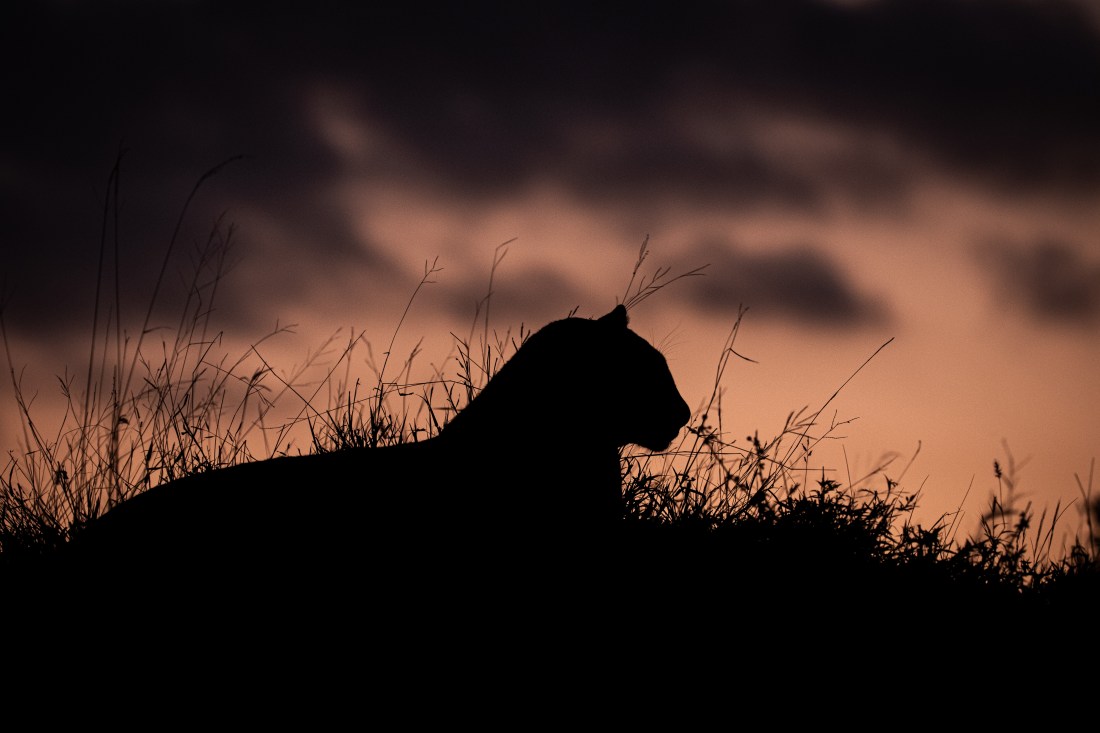
The creature had dozed lazily for some time in the sunlight. It had found a fallen tree that had become hollow, offering warm, dry shelter after it had fed, as well as a comfortable place to sleep. It licked its muzzle as it raised its head. It stood up, arching its back and stretching its stiff muscles as it spread its paws against the ground. It turned its attention to the log and left deep, long scratch marks in the damp, dead bark. As it exerted a little more pressure, part of it splintered and broke away. The creature swatted playfully at the log now, rolling it back and forth with its paws and smashing it carelessly with its own weight as it clambered on top. The soft shards of rotten bark would still make a comfortable bed. The creature rubbed the ground with the sides of its face. As it trotted forward, it lifted its tail and squatted, spraying the area with a potent blend of urine and a secretion from its scent glands.
Satisfied the new extension to its territory had been marked, it became aware of its thirst and disappeared into the bracken. Its tail flicked casually above the greenery as its head emerged through a hole in the brush to drink from the mountain stream. It drank steadily and enjoyed the rejuvenating taste of the fresh water. It suddenly lifted its head, completely alert. Its ears pricked forward and it scanned the ridge and tree line behind it. Strange sounds echoed through the woods, the same noises that had driven it to this side of the mountain earlier. As it picked up the barks of the dogs, it slunk back into the bracken. It bounded with silent ease out of the trees and foliage. It looked towards Glen Cannich, the loch and nearest of all, the village itself. It listened intently to the sounds floating up the hillside. Having slaked its thirst, it began to heed its body’s next need and padded forward, heading towards the farms and buildings below.
~
Meg was enjoying herself. She strained on the lead and was pulling Thomas along like a locomotive. Her occasional yelps of excitement were met with the same response from the army dogs behind. Thomas and the soldiers encouraged them further into bouts of barking, and he was glad they understood their role as both noise makers and trackers. He hoped to drive the cat from cover, especially if it was lying up, as most of its kind would during the day. They had left the pathways of the forest behind, and were now working their way up a steep ridgeline with a thick cover of bracken and overhanging trees that formed a narrow, natural track to the west. Meg stopped at the crest of the ridge and barked in triumph at the edge of the bracken. Thomas had suspected she’d had something on the nose as they steamed up the hill, and now he was certain of it. A dog searching for a scent would have zigzagged to find it.
Meg stared intently over the bracken. She stood, balancing precariously as she stretched her muzzle out over the brush. Her ears lifted and she let out a whine of unease. Thomas knew she couldn’t see over the bracken and was less sure of herself now. She flattened herself against the ground and looked up at him. He knew this meant that she wanted to be carried and was afraid of something. Slightly more alert, Thomas carefully peered down the mountainside. Nothing stirred or seemed out of place. He tugged at Meg’s lead gently and she took the hint, getting to her feet again. After a quick glance behind her to check the German shepherds were still close, she trotted forward, this time sticking to Thomas’s side on a slack lead as they headed down the ridge.
~
Louise blew hard on the whistle and slowly the sounds echoing around the playground began to soften and fade. Games drew to a halt and the children began to look in her direction.
“Okay children,” she shouted, “form three lines please.”
They separated into their three classes, some slowly packing away their things with exaggerated displeasure that playtime had ended so soon. Out of the corner of her eye, Louise could see Mrs. Jones and Mrs. Henderson making their way across the playground. Hurry up she thought, it’s cold.
~
The creature had edged its way down the mountain, drawing closer to the warm sounds coming from the village. It slunk along the verge and crept up to the stone river that separated Cannich from the mountainside. It paused, hesitating to enter the new environment. It watched and waited, making sure there was no danger here. Its unease lifting, the creature bounded effortlessly across the warm dry surface and over a wall on the other side. It found that the hard ground naturally silenced its footfalls, and it slipped from shadow to shadow as it followed a tree-lined hedgerow. It heard the two female animals chattering on the other side of the hedge and stalked closer. It could sense their frailty in their laboured breathing and padded nearer. They were sitting on a flat piece of dead wood, and had not heard the creature’s approach. Just as it began to flank them, its nostrils were stung by the strong opium scent that hung about them like a cloud. Its lips wrinkled in distaste and it changed course back along the hedgerow. As it rounded a bend, it picked up the sounds that had first roused its curiosity. It padded silently between two stone columns and froze as it saw movement ahead. It had found its prey.
~
Thomas worked his way down the ridge with the Army dog team close behind. As they dipped below the tree line, they found themselves on a gentle slope covered with bracken. Snowdrops and wood crocus had begun to break free from the earth but were not quite yet in flower. It was beautiful and silent, except for the babble of a stream farther down. Meg gave three short barks. Her attention was focused on the other side of the bracken and Thomas knew she had found something. He turned and signalled to the soldiers. They all raised their rifles in readiness and began to creep forward.
~
Aaron Meeks had taken his rucksack off and was putting his games machine into it, when a movement near the gate made him look up. He started to tremble as he watched the hulking creature strut into the playground. He began to shake with fear as he looked around to see if anyone else was watching. He went to call out but found his voice frozen in his throat. He glanced back again to the creature. It had stopped, and was looking straight at him. Its green eyes were fixed on his. As Aaron stared back, he realised the only thing it could be was a monster. He dropped his rucksack and began to stumble backwards towards the other children. The monster lurched forward with a terrible roar that almost knocked Aaron over. This time, the scream came freely as he ran in terror towards his teacher, Miss Walsh.
~
Thomas and the soldiers spread out over the area where they’d found the smashed trunk and flattened bracken. Thomas could see the clear outline of the bed the creature had used. It reminded him of the grass nests he had seen tigers make in the Sundarbans of India. Meg and the other dogs would not walk onto the bracken or approach the trunk shards, whining uneasily in the presence of the strong territory marking they all could smell. Meg pulled gently on the lead, her nose pointing down the slope.
“Let’s not waste any time,” Thomas declared, “call the helicopter and let them know where we are, and that it might be heading towards more open terrain to the west.”
Their position was relayed to the camp at the car park to pass on to the helicopter, and they began their descent. The village lay below them as the forest swept to the north over the mountainside and into Glen Cannich towards the loch. He paused for a second as he tried to anticipate the route the cat would take. The forest path seemed the most likely. He was about to tug Meg back that way, when what sounded like a scream floated thinly up the mountainside. As a second wail met them, the real route the cat had taken became painfully clear to him.
“Oh my God,” exclaimed Thomas in disbelief as the reality struck him.
He slipped Meg’s leash as did the soldiers with the German shepherds behind. They all began to run down the slope towards the screams.
~
The creature was startled by the sound and movement that suddenly erupted around it. It roared in angry warning as the young animals bolted back towards the older females and the stone dwelling behind them. It pounced instinctively towards the movement in front of it, cuffing the small thing with a swipe of its paw.
Louise watched in horror as something from a nightmare played out before her. She watched as the gruesome, rippling shape sent little Aaron Meeks flying across the playground. He landed in a heap and did not move once he had crumpled to the floor. Before she had time to think, she found herself running, screaming as she streaked towards the boy. Crying out in terror as tears formed in her eyes, she gasped for air and checked Aaron for signs of life. He was still breathing but looked incredibly pale. She turned his head carefully and as she went to pick him up, felt the blood under his clothes. She glanced towards the open doors of the hall, but instinct spun her back round. She stopped dead as she came face to face with something monstrous, and stared into the green flashing eyes of the creature as it stepped towards her, its face distorting into an angry snarl.
Louise and the creature stared at each other. She felt rooted to the spot, as if she couldn’t move. Instinct tried to pull her away from the hypnotic gaze of the monster. Somewhere in her subconscious, genetic memory of something sinister stirred. It triggered her body, resuscitating movement to her limbs as she took a step backwards and glanced again at the doors behind. Mrs. Henderson ushered in the last of the children, sobbing as they went. She looked desperately towards Louise, but she too was frozen in fear. Louise looked back to the creature. It snarled. The implied menace was clear and guttural this time. It had not come across an open challenge to a meal before, and the snarl was meant as a warning. Louise instinctively knew this, and could see the creature’s intent in its eyes. It wasn’t going to let them leave the playground alive.
Holding the boy tightly with one arm, she fumbled with the whistle that hung around her neck. Taking a deep intake of breath, she blew as hard as she could on it. It had the effect she was hoping for. The creature leapt back in surprise, roaring again at the unwelcome sound, but putting a little distance between them. She began to edge backwards, the whistle still in her mouth. The creature flattened its ears and lowered its body to the ground as it began to creep towards her. She blew the whistle again as hard as she could. The beast shook its shaggy head in displeasure, spitting a roar at her as she edged back farther. Its anger seemed to seep from it and threatened to root her to the spot again. She felt nauseous and dizzy, but fought her fear as she continued to step back. She blew on the whistle again, but this time the creature closed the distance between them, coming within several feet. It now knew the sound wasn’t going to hurt it. Shaking with fear, she almost tripped when her heel hit the concrete step of the entrance. She blew the whistle one more time, the sound lost to the answering roar of the creature as she turned and fell through the door. Mrs. Henderson slammed it shut instantly from inside.
“Take him!” Louise screamed as the older teacher scooped up the unconscious boy in her arms.
She picked herself up and flattened herself against the full width of the double doors. The hall was now empty, and she was sure that Mrs. Jones and Mrs. Henderson had closed the outer doors on the other side of the hall. She hoped they had made it to the classrooms. She wanted as many doors closed between them and the thing in the playground. Even now, she couldn’t quite place what it was. All she could think of was the deep green eyes, and the intelligence and emotion she had read in them. Only then did she notice the sudden silence. She had time for one sharp intake of breath before she was knocked to the floor in a violent explosion of wood and metal, as the creature forced its way through the doors.
The wood beneath the creature broke into shards just like the log had done, and it raked its claws down and through. Louise screamed in agony as if red hot pokers had been steadily drawn across her back. The creature yowled with pleasure as it discovered the soft, wriggling flesh beneath it. It nosed through the shards and bit down. Louise felt the hot breath of the thing and cried out as teeth sliced through her ribs and the top of her shoulder. She sobbed, paralysed and helpless as it dragged her out from beneath what remained of the door. It paused momentarily as it bit down again for better purchase. She choked as blood flooded into her throat from her punctured liver and lung. She used the last of her strength to kick out with her arms and legs, her hands scraping against the right eye and nose of the beast. The creature ignored the mild scratch and calmly lifted its head, carrying her forward in its jaws. It stepped proudly through the smashed doorframe and walked the length of the playground with deliberate caution, never taking its eyes from the far wall as it ignored the screams and cries that met is macabre parade past the windows of the classrooms. When it reached the wall, it hesitated only for a second before leaping. Louise never felt the impact as they hit the ground on the other side.
Now within the darkness of the forest trees again, the creature dropped Louise to the floor. It towered over her. She knew all her strength was gone and that life was leaving her. A last breath moved to her lips. The creature bit down into her skull, killing her momentarily before her body gave up naturally. Satisfied that its kill would resist no more, the creature picked up Louise’s corpse in its jaws and began making its way through the thick cover of the trees.
~
Less than a minute passed before Thomas and Meg entered the playground. He had been pointed in the direction of the school by two terrified old women at a bus stop on the edge of the village. Thomas looked over the empty playground. He saw the fearful and tear stained faces looking out at him from the windows. But it was the blood trail leading away from the smashed remains of the heavy oak double doors that he couldn’t take his eyes away from. He read the scene like a map, from the bashed and broken doorframe, to the shredded door parts, twisted bolts and battered hinges littered over the ground. Finally, his eyes were drawn to the trail of crimson dotted blobs that led to the wall, where they stopped. He had no doubt they would continue the other side and on into the dark shade of the forest. He heard the buzz of the Army lynx helicopter as it rumbled into view and began to circle overhead. He looked up and saw the faces of the soldiers as they returned his gaze, the barrel of the 7.62mm general purpose machine gun silhouetted in outline against the sky. But Thomas already knew they were all too late.
~
You can get your copy of Shadow Beast on Kindle, Amazon, Audible, and iTunes. Find it here: https://a.co/d/7WUVP0j
Fear stalked the land, searching out its prey with a single working eye. A scarred beast that prowled the maize fields of southern Tanzania, its remaining eye glowing in the firelight like an ember from the underworld. Wherever it appeared, someone vanished.
By the time the terror ended in the mid-1940s, villagers whispered that as many as 1,500 people had been taken. Some dismissed the figure as impossible; others swore it was true, pointing to empty huts, abandoned farms, and the silence that hung over Njombe for more than a decade.
This is the story of the Njombe man-eaters: a pride of lions whose reign of fear has no equal in recorded history.
A land in crisis
The Njombe District in the 1930s was an isolated plateau of rolling grasslands and scattered farms in what was then Tanganyika. For centuries, lions and people had co-existed uneasily there: lions taking cattle now and then, villagers spearing lions in retaliation. But the balance was about to tip.
At the turn of the 20th century, rinderpest, a cattle plague introduced by imported livestock, tore through East Africa. It killed not only cows but also wild ungulates including buffalo, wildebeest, eland, and kudu. In short, the very animals lions depended on. At the same time, colonial authorities, desperate to protect settler farms and commercial livestock, sanctioned widespread shooting of wildlife herds.
By the early 1930s, the great prey herds had vanished from much of Njombe. For a pride of lions, starvation loomed.
And then the killings began.
The first attacks
Accounts vary on who the first victims were. Some say it was a group of women cutting grass at the edge of the bush. Others tell of a child herding goats. What is certain is that the attacks were relentless.
Unlike the famous Tsavo man-eaters of 1898, which were just two lions, the Njombe killers operated as a full pride, one perhaps 15 strong. They hunted both day and night, stalking footpaths, raiding fields, and dragging victims from huts in the dark. Witnesses described their tactics as disturbingly coordinated: one lion would chase a fleeing villager toward others lying in ambush, while still more lions waited to carry the body off into the bush.
The result was psychological as well as physical devastation. Farmers abandoned their crops. Markets emptied. Whole families refused to travel. A rural economy, already fragile, teetered on collapse.
Folklore takes hold
As the death toll mounted, explanations turned supernatural.
Villagers spoke of Matamula Mangera, a witch doctor said to have cursed the land, sending spirit lions to punish those who had wronged him. Some claimed they saw lions melt into the shape of men; others swore that no ordinary rifle could kill the beasts.
Central to the lore was the pride’s supposed leader: a huge, one-eyed male called Kipanga. Was he real? Many hunters, including those who later fought the lions, believed so. Others argue Kipanga was more myth than flesh. Either way, the stories gave form to a terror that felt inhuman.
Even colonial officers recorded the atmosphere of dread. In their reports, villagers were described as “so paralysed by fear that they would not leave their huts even to tend their cattle.”
The scale of the slaughter
Could the lions truly have killed 1,500 people?
The figure comes up repeatedly, cited by hunters, missionaries, and later by storytellers such as Peter Hathaway Capstick. But hard evidence is scarce. Colonial records were patchy, and many deaths occurred deep in the bush, where no official ever ventured.
Sceptical historians suggest the real toll may have been in the hundreds, easily still enough to mark Njombe as the worst man-eater outbreak on record. But even if exaggerated, the number reflects the lived truth of the time: that whole communities were emptied, and that people felt they were at war with an enemy that could not be seen until it was too late.
Enter George Rushby
In 1947, after years of unchecked slaughter, the colonial government sent in a man who had made a career of battling Africa’s deadliest creatures: George Gilman Rushby.
Rushby was a former ivory hunter turned game ranger, a wiry, hard-driving man used to solitude and risk. He was already known for his encounters with elephants, leopards, and rogue buffalo. But the lions of Njombe would be his greatest test.
When Rushby arrived, he found villages half-deserted, fields lying fallow, and families so terrified they refused to leave their huts even by day. “The district had come to a standstill,” he later wrote. “The people were simply too frightened to live.”
The hunt
Rushby knew killing one or two lions would not be enough. The whole pride had to be vanquished. He organised local scouts, set baited traps, and began a grim campaign through thorn thickets and tangled river valleys.
The lions proved cunning. They avoided obvious bait, circled ambush sites, and sometimes attacked in the middle of Rushby’s own camp. Several times he narrowly escaped, his rifle raised only moments before a lion charged.
But slowly, methodically, the pride was whittled down. Rushby shot some himself, his trackers accounted for others, and poisoned bait claimed a few more. The turning point, Rushby believed, came when he killed the one-eyed male said to be Kipanga. Without their leader, the pride’s coordination faltered.
By the end of his campaign, Rushby claimed to have destroyed the entire man-eating pride. And just as suddenly as they had begun, the killings stopped.
Myth, memory, and reality
The story of Njombe sits at the uneasy intersection of fact and folklore.
Fact: A pride of lions really did terrorise the region, killing an unknown but horrifying number of people.
Folklore: A one-eyed demon lion, spirit beasts conjured by witchcraft, an exact death toll of 1,500.
Reality: Ecological collapse drove predators into desperate behaviour, and human fear magnified their legend until they became almost supernatural.
In this way, the Njombe lions became more than animals. They became symbols of a world out of balance.
Echoes today
Such mass outbreaks of man-eating lions are virtually unheard of now. Conservation measures, better livestock protection, and changing landscapes mean lions rarely, if ever, target humans in large numbers. But the underlying lesson remains: when ecosystems are broken, predators adapt in ways dangerous to us.
Human-wildlife conflict still exists across Africa, from elephants raiding crops to leopards taking goats. The Njombe lions are simply the most extreme and unforgettable example of what can happen when that balance tips too far.
A legacy of fear and fascination
Today, the hills of Njombe are quiet. Farmers tend their maize, children herd goats, and lions are seldom seen. But the memory lingers. Around campfires, elders still tell of the years when lions ruled the night, when entire villages hid indoors, and when the roar of a one-eyed beast froze the blood in men’s veins.
Were they spirit lions? A cursed pride? Or simply predators pushed beyond the edge of hunger? Perhaps all of these at once.
What is certain is that for more than a decade, fear itself had teeth and claws in Njombe. And its story remains one of the most chilling chapters in the long, tangled history between people and lions.
If you’d like to read a fictional story which shares the same elements, then check out The Daughters of the Darkness on Amazon, Kindle, and Audible.
In the early 20th century, deep in the rugged terrain of the Kumaon region in northern India, a man-eating tigress was terrorising local communities. By the time she was finally brought down in 1907, she had claimed an estimated 436 human lives — a staggering toll that remains the highest attributed to a single big cat. Her name would become infamous: the Champawat Tigress.
Her story, however, is also inextricably linked to one of conservation’s most complex and legendary figures: Jim Corbett. While today he is remembered as a pioneer of wildlife protection — and the namesake of India’s first national park, Corbett began his journey into the wild not as a saviour, but as a hunter. The Champawat tigress was his first true pursuit of a confirmed man-eater. And it was a pursuit that would change the course of his life.
A Killing Machine Created by Human Wounds
We now know the Champawat tigress turned to humans after sustaining severe injuries likely inflicted by poachers or after a confrontation with hunters. Broken canines and damage to her jaw made her unable to bring down natural prey. In desperation, she turned to easier quarry: people.
Her killing spree spanned the border of Nepal and India. After the Nepalese army failed to stop her, she crossed into British India’s Kumaon region. Panic and grief followed in her wake. Villages emptied. Daily life ceased. Entire communities were paralysed by fear.
Enter Jim Corbett
In 1907, Jim Corbett, then a railway man and experienced shikari (hunter), was called upon to stop her. He was young, only in his early 30s, and this marked his first major hunt for a man-eating big cat, a fact made clear in both Corbett’s own writing and subsequent historical biographies. After several failed attempts and tense tracking, he eventually shot the tigress near the village of Champawat. The hunt earned him widespread recognition, but more importantly, it ignited a lifelong mission to understand why big cats turn man-eater, and how to prevent it. He later even became a keen early, wildlife photographer and observer.
Corbett’s later life saw a complete transformation. He would become one of India’s earliest and most passionate voices for tiger conservation, often risking his reputation to defend the species he had once been called to destroy.
The Book: No Beast So Fierce
For those intrigued by the history behind the hunt, Dane Huckelbridge’s No Beast So Fierce (2019) offers a gripping, well-researched account of the Champawat tigress and Corbett’s involvement. It not only explores the hunt itself but also examines the colonial, ecological, and human factors that gave rise to such a tragic chapter. Huckelbridge places the tigress’s killings in the wider context of deforestation, conflict, and human encroachment — themes that still resonate today, when tiger populations have been decimated by a shocking 96% since Corbett’s time.
Setting the Record Straight: A Note on Recent Misinformation
Recently, television host and adventurer Forrest Galante released a YouTube video discussing the Champawat tigress. While his enthusiasm for wildlife storytelling is commendable, the video unfortunately contained some mild inaccuracies. Chief among them was the claim that this was not Jim Corbett’s first hunt for a man-eater.
Corbett himself, in his 1944 book Man-Eaters of Kumaon, makes it clear that the Champawat tigress was his first real confrontation with a man-eating big cat — a life-and-death pursuit that shaped his entire philosophy on wildlife. Galante’s failure to reflect this not only disrespects the historical record but also distorts the narrative of a pivotal moment in conservation history.
As wildlife communicators, we owe it to the truth, and to the animals whose stories we tell to get the facts right. In the name of entertainment and click-bait, this isn’t always the case. We would do well to remember that the Champawat tigress was more than just a man-eater; she was a tragic byproduct of human impact, and her story catalysed the transformation of one of conservation’s most influential figures.
Remembering the Legacy
Today, as tiger numbers teeter and human-wildlife conflict continues, the tale of the Champawat tigress remains deeply relevant. It is a cautionary tale. Not of a monster in the jungle, but of what happens when humans and nature fall fatally out of balance.
Corbett’s journey from hunter to conservationist reminds us that change is possible. And that understanding, compassion, and respect must guide our relationship with the wild.
The party of men and women walked quietly along the edge of ‘the gallops’ – thin, undulating corridors of grass bordering thicker patches of mixed woodland that stretched for some three or four miles around the estate, close to the edge of the strictly manged moorland. The landscape resembled, and indeed would have made for, a decent golf course. Yet, that was not their purpose. The grass was kept naturally short by the grazing deer – and a few centuries before, these were the hunting grounds of the lord of the manor and his guests. Today, the mixed herd was made up of both fallow and sika deer – and although they were no longer hunted with hounds as Lord Croftman would have liked, they were still managed and butchered to supply top-end restaurants and butchers across the North and Borders region. His opposition to the banning of hunting with dogs had not been successful, but a more recent endeavour had been. He had led a last-minute derailment of legislation to ban hunting trophies being imported into the UK, organising enough peers within the House of Lords to suggest amendments to the bill. In America, his attempts would have been described as ‘fillibustering’ – although not quite correctly. However, the end result was the same; the bill had all but been killed. After successfully being voted on in parliament, and even being included in his party’s manifesto – who were still in government, it was a small group within the unelected House of Lords who had been able to veto the much-wanted legislation being called for by the British public.
Lord Croftman liked to shoot. In his native Britain, he was restricted to his private deer herd and other managed game, such as the pheasants, grouse, and perhaps woodcock they sought this morning. Yet, rooms of his mansion were adorned with more exotic exploits. At the banquets, parties, and public events he attended, he argued – and argued well, how hunting played a significant role in conservation. That fees mustered from safaris and hunting licenses supported local communities living alongside wildlife and protected habitats. As a politician, he was the first to admit that the truth rarely played a part in a good story. His argument ignored both that photographic safaris brought in around ten times that of hunting outfits, and the corruption endemic to both the politicians and private businesses profiting from the latter.
The success had put him in a good mood. He was looking forward to his next trip to South Africa, where he planned to stay on a luxurious ranch that offered him the opportunity to hunt not only what was known as the big five, but also, almost amusingly, a tiger. Although not native to the African continent and only being found in Asia, private hunting operations had stumbled upon a loophole that offered hunters a legitimate way to claim the endangered big cat – with no way to legally do so in their Asian homelands, unless through more illegal means. But with numbers of tigers in captivity outnumbering wild tigers by nearly three to one, “farmed” tigers could be bred under license and raised to be killed, on a continent they were never meant to set foot on in the first place. He would have to wait a few weeks before he could enjoy that sport, but today, he was quietly celebrating his victory with other interested parties who’d helped him stall and kill off the new legislation. After the shoot, both a banquet and a cocktail party would reward those that had remained resolute, even against the overwhelming will of the British public.
But what do they know, Croftman thought with a smile.
He smiled as the little Land Rover 90 pick-up pulled up beside his guests. The larger, more luxurious SUVs that had dropped them off were parked behind them, on the edge of the trees. Croftman pushed open the passenger door and stepped out, greeting his friends yet ignoring the driver who’d ferried him across the estate, prepared his gun, packed his bag, and supplied his coat.
This was just fine with the driver, Dominic Grey, who trundled the vehicle over to the others and parked up. Dominic had served the estate since leaving school. It didn’t pay much, but it came with accommodation, and Lord Croftman had suggested he might be able to get him into the army if he ‘kept his nose clean’. That, as with many of the Lord’s promises, had never come to fruition. But it didn’t matter now. He took a small, military looking radio from his pocket and switched it on. He checked the channel with a glance and pressed the signal button twice, before switching it off again. Opening the driver’s door, Dominic slipped from the Land Rover and silently made his way towards the trees, moving away from the party as fast as he could without drawing attention.
From where they stood, they could see the mist was beginning to clear from the moor – and in the distance, they could now hear the beaters. Lord Croftman nodded to his companions and the murmurs of conversation came to a stop. The breaches of shotgun barrels were snapped open and charged with cartridges. Then, they waited. The first covey of birds flew over them so fast and so low, only a few of the shooters even had time to raise their guns to the sky, before realising it was hopeless. The natural dip in the land created by the gallops meant that the hunting party were out of sight, even from the air, until the very last minute – and the birds would naturally flee towards the woodland, where they were equally at home. And now, the guns were ready.
Specks appeared in the sky, rising, and falling in quick, darting, and panicked flight. They lurched back and forth as one, as if being pulled by unseen wires against their will. But in truth the birds were desperate and tired, discombobulated after being forced into flight so early during the day. The guns too moved as one, tracking their targets. Then, just as they appeared overhead and began to wheel about, seeing the danger below, a raucous eruption of simultaneous thunder belched from the barrels. Excited spaniels and Labradors rushed forwards, trimmed tails wagging as they went about their work.
Lord Croftman smiled broadly, his revelry showing in the twitch in his moustache. He turned to congratulate his nearest shooting partner, a young member of his political party who was blue right down to the blood, when a movement caught his eye. It wasn’t unusual for the mist to cling to the trees the longest, especially along the gallops, where the uneven ground rose and fell more obviously. Beyond a few feet in, unformed shadows hung in the air ominously – their lack of definition inviting speculation and suspicion what might lurk there. But today, the shadows moved – and moved towards them. In a few seconds, a line of men – and several women, Croftman noticed, stepped into the open. They were all dressed in dark, high-end, military-style clothing made of wool and some other material he couldn’t identify. The mottled conifer greens, midnight blues, and dark chocolate browns made for perfect camouflage among the trees. He noticed their lack of body armour and he knew their attire had been chosen for stealth. But it was the modern-looking submachine guns they carried that none of them could take their eyes off.
The line split into two as they approached the shooting party, with an advancing line training their guns directly at them, whilst a rear line formed in their wake, filling the gaps between the others, and maintaining a clear line of sight. Croftman saw one of his gamekeepers, on the far left of his party, swing his shotgun round to face the strangers. The three short bursts of fire came without hesitation before he was even halfway through his turn. He crumpled to the ground, his shotgun spilling from his hands. That’s when the screaming started.
“Drop your weapons,” ordered a man at the head of the line of armed strangers.
Croftman noticed how they automatically slowly spread out and flanked the shooting party in a wide semi-circle. These people were military, or ex-military. They had waited until the shotguns had been emptied on the birds before they commenced their assault, striking quickly and effectively before they could have reloaded. And, as they had shown, they were willing to kill. Perhaps, even, were looking for the slightest excuse to do so. Croftman decided not to give them one and threw his shotgun to the ground. He studied the man who had given the order. Tall and lithe, but well built, the man had dark features and hair with thick stubble across his cheeks, chin, and top lip. With him at least, there was no doubt about being military. There was something familiar about him. The man looked at the world though a slight, semi-permanent squint that hid a hawk-like ability to see everything. Croftman knew the man was sizing up most of the party using his peripheral vision and was paying close attention to the hands of those nearest to him. Only an elite and highly trained soldier did that on instinct.
“Listen up,” the man commanded. “Each and every one of you is guilty of two crimes. The first was against democracy, and the second, against the natural world. You ignored the will of the people so you could have a little sport,” he smirked. “The penalty, I’m afraid to tell you, is death.”
A few gasps and stifled scries rose from the shooting party. Croftman felt a swell of anger in his gut. He despised the swagger of this stranger, but he was sickened too by the cowardice his comrades showed so quickly and easily. They were weak. But then, he knew that didn’t he. Wasn’t that how he had been able to bend them to his will in the first place?
“However,” the man continued, “we’re not against a little sport ourselves. Just over half a mile through these woods is the border of the estate. If you get there before we catch you, you’re free to go.”
“And if we don’t?” Croftman growled at the man, glowering.
“Then you’ll be the one hanging from my wall, Lord Croftman,” the man replied, meeting his stare with indifference. “You have a three-minute head start, starting in five… four… three…”
Croftman looked dismayed as his guests leapt towards the trees like greyhounds released from their traps on race day. He went to follow them, but the man who, for now, controlled his destiny, raised his gun a fraction, indicating he should stop.
“I’m afraid I may have misled you,” the man said. “You and I shall be taking a walk together Lord Croftman – if you’d be good enough to head along the gallops just ahead of me.”
A scream echoed out of the woods and Croftman’s head whipped around in the direction the sound had come from. Confused, he looked at the line of armed men, all still in place. None had moved. The man smiled knowingly, and indicated with one hand that he should keep walking.
“Your woods are a dangerous place for predators, Lord Croftman,” the man sighed. “They are unwelcome. We’ve just evened the odds a little. Your friends are learning exactly how your kind of conservation treats anything other than humans that might prey on your precious birds.”
~
Julian Gough ran swiftly, weaving through the trees with ease and tenacity. He knew that his youth and fitness were on his side – and maybe, just maybe, he didn’t have to be first to the road – he just had to be faster than the majority of the party behind him. To that measure, he glanced behind him. Following his path, but a good distance away and already bright red with the exertion, was Lord Altmann and Baroness Chadlington. Perhaps they thought he knew where he was going and had decided to follow. Out of the two of them, Julian’s money was on the Baroness. Although in her 60s, she was in good shape and seemed active enough. The same could not be said for Lord Altmann, who enjoyed the pleasures of the members dining room in the House of Lords far too often. In fact, he seemed determined to eat his way through the taxpayers’ £3 million subsidiary that covered everything from chargrilled ribeye to duck leg terrine, single handed. He remembered Altmann leeringly jibing about what the members paid for the exquisite version of fish and chips the members restaurant served – coming in at under £8, when the public paid often twice that and more on any High Street. Julian felt little pity that the big man was likely to make it.
Julian returned his attention to the path ahead and left the trees behind him as he entered a small meadow. He fought the cry of relief that lodged in his throat as he saw the grey bluntness of the high stone wall that marked the estate boundary. Then panic began to set in as he realised it was too high to climb. His feet kept moving though, clinging to the hope that there would be handholds or a way of scrambling up and over. His eyes widened in joy as he saw two round, smooth wooden columns that rose from the ground – some kind of sculpture he guessed. One was shorter than the other, and he was sure he could clamber on top of the shortest and jump to the next, or at least get a handhold on its top, before levering himself up. He sprinted towards them, his desperation fuelling the momentum. The ground seemed to favour him, with the ferns and moss underfoot adding a natural bounce to his run. Julian closed the distance to the sculpture with a few lightning quick strides, then leapt, confident of his footing. His left boot connected well with the shorter stump, and he let the natural momentum and trajectory propel him upwards. His hands reached out for the top of the second pole, his legs spread to grip the smooth wood as his boot heels kicked in further down for full purchase. Then his fingers crept over the top of the pole.
From the sound of the soft, metallic ping to the snap of the bone in his wrists was a matter of milliseconds. Julian screamed. The agony was unbearable and relentless. Panicked by not being able to see what was causing him such unstoppable torment, he thrashed back and forth and bashed his skull against the smooth wood of the pole he was now trapped on. The pressure against his wrists was not just constant but increasing. As his eyes rolled into the back of his head, he was only dimly aware of the arterial blood that began to spill over from the top where the invisible force continued to clamp down on his limbs, denied of fulfilling its purpose to close completely. Phlegm flew from his throat as he convulsed against the pain. One sporadic, desperate, mournful moan escaped his lips before his body, which had felt like it had been on fire for the entire sixty-three seconds he had managed to stay conscious, shut down. Julian Gough slumped against the pole, hanging from his wrists at the full extent of his arms. He died a few moments later.
The sight was enough to stop Baroness Chadlington in her tracks. She turned up her mouth in disgust as she realised what she was looking at. The anti-hunt mob turned terrorists had constructed a giant pole trap. Used by gamekeepers, they were baited and used to kill birds of prey on estates such as this – often illegally. Of course, that was only if you get caught. And Julian Gough had well and truly been caught. She shuddered. The whole thing was a trap. None of them were meant to get out alive. She could only wonder what else lay in wait for them between here and the wall. Seemingly keen to find out, Lord Altmann dashed past her without a glance back, or up at the unfortunate Gough. For the first time in her life, she froze and did not know what to do. Altmann dashed on, ducking under the bough of a large field elm, and disappeared from sight. Deciding there was nothing to do but follow him, the Baroness tried to calm her nerves – but a short, sharp, miserable cry that could only be Altmann, stopped her in her tracks again.
Somewhere behind her, she heard the movement of foliage, and it spurred her into movement. Taking care, she moved the obscuring branches of the elm out of the way. She let out a little gasp, as she saw Altmann’s sagging body caught fast by the simplest of traps – a snare around his neck. It was only as she stepped closer that she realised the snare was made from razor wire, and Altmann had near decapitated himself by sheer momentum. Still partially wrapped in the thin, stripped branch strands that had disguised it, the Baroness noticed how the singular path was boxed in on both sides by dense patches of thorn and bracken. It was then she saw that there was also a grim view of Julian Gough, hanging lifelessly from the pole trap. Altmann would have only had to glance away for a second to have become ensnared – and she was in no doubt about what had distracted him. Worried she was now making the same mistake, she moved carefully on along the path, until she came to the estate’s boundary wall.
The path ran along the bottom of the wall in both directions, but she was in no doubt where she needed to head. Dangling from the lofty top of the wall was a thick, green-coloured rope. It looked like it could be military – as the terrorists attacking the hunt clearly were. Both fearing and suspecting a trap, she considered all possibilities. The terrorists hadn’t come through the main gate or along the drive in vehicles, as they would have been heard and stopped. Even if they had forced their way through, the commotion would have caught their attention, and the main house would have called the police, or come to their aid. Neither the police, nor aid, had arrived. The group had approached through the woods – from this direction. There was a chance, perhaps even a good one, that this was how they had entered the estate.
She could hear the bushes moving around her in more than one place. Her pursuers were no more than 30-50 yards away. Cornered, she realised she had only one chance, and it was right in front of her. Gingerly, she clasped the rope in one hand and pulled gently on it. She felt it become taut – but nothing else happened. Hope sprung in her chest and she leapt upwards, pulling on the rope with haste and bracing her feet against the wall as she began to clamber up. There was a metallic scraping sound, and the rope gave by about half a foot. Instinctively, she looked up as a black, pipe-like object dropped from the top of the wall, held by a counterweight. As it straightened, she found herself looking directly up through its opening. As soon as it clicked into place, there was a flash of light and an explosion of sound.
It was a good few seconds after she had hit the ground that the agonising pain registered. She rolled on the ground, clawing at her face and crying out. She was blind, but her fingers found the raw flesh of her face. Her throat burned as if scalded by acid, yet she gurgled blood that was filling her mouth. It was only then, as her heartbeat hammered in her chest, only to pause erratically and start again slow and unsure, that she realised she couldn’t breathe. As she began to convulse, her arms fell to her side against the ground and her mind became clear and calm. She knew what had killed her. Her own gamekeepers used them on her own land. A pipe gun, filled with a single shot of cyanide crystals. Bait was put on a line, and when pulled hard enough, the trigger depressed – delivering a fatal charge of poison, usually into the unsuspecting creature’s mouth. It was almost ironic. Or perhaps, simple justice. Death came and she thought no more.
~
As Lord Croftman walked slowly along the gallops, back towards the manor, he glanced over his shoulder at his captor. More screams and the sounds of shots had echoed out of the woodland. His guests were being hunted down and murdered. But by who, and for why? At first, the shock of the events had scrambled his mind – but now, his thoughts were becoming linear again. He realised he knew the man.
“Payne… you’re Montgomery Payne’s boy… goddammit, you’re a soldier,” Croftman realised aghast. “Your father would be ashamed.”
“Not nearly as ashamed as I am of my father,” the man shrugged nonchalantly. “His opinion matters as much to me as mine does his. The only difference is, I can make my grievances felt, as well as heard. That’s far enough.”
Croftman stopped, puffing slightly from working their way up hill, back towards the house. He caught movement to his right and saw two more men crossing a path to reach them. They were carrying a barrel with them. Croftman frowned, not understanding. As they neared, they placed the barrel down, still upright.
“Lord Croftman,” Payne addressed him, perfectly politely and respectfully as he had before. “You instruct your gamekeepers to trap and kill almost any predator that dares to step foot onto your estate. Our recon missions and intelligence revealed some ingenious, if not original devices. Pole traps for birds of prey, pit falls for badgers and foxes, and a variation of this for the stoats and weasels. Do you recognise it?”
Croftman shook his head. “If you intend to have me drink myself to death, I can imagine worse,” he growled.
“No… this is one of the simplest but most effective traps we found. We just had to make it a little larger, to account for a slightly more… shall we say robust target,” Payne smiled, looking over Croftman’s ample figure with a somewhat judgemental glance.
Still not understanding, Croftman took a step towards the barrel and craned his neck, not wanting to get too close but curious to see what it contained. What he saw made him freeze in his tracks and he grew visibly pale.
“Just imagine,” Payne explained. “A polecat – protected under the Wildlife and Countryside Act – yet legal for your gamekeepers to shoot, visits your estate. There, they come across a pipe with an inviting scent too tempting to resist. The put their head in and their whiskers tell them there’s room to pass. So, they squeeze in further. On the way in, the indented spikes pointing down at an inward angle brush harmlessly against their fur. It is only when they retreat that they realise, all too late, that it is a trap – as they impale themselves viciously and tear themselves to pieces in their futile attempt to escape.”
Croftman couldn’t keep his composure. The very thought of what Payne was suggesting had him doubling over and he vomited over the grass, splashing his own boots as he did so. Before he could stand up straight again, he was lifted upwards by both arms. His head still spinning from nausea, he looked confusedly as the two men dragged him towards the barrel. Just as Payne had described, the inside of the barrel was rammed with 12-inch nails on all sides. They all pointed downwards at a sharp angle. Croftman tried to clear his throat, but nothing happened. In pleading terror, he looked at Payne. He was sure he saw pity there, as Payne gave the nod to the two men holding him.
Croftman fought desperately, trying to yank his arms from their grasp, but it was to no avail. Before he had time to react, he was being hoisted into the air as they manhandled him. Each held him under the arm, interlocking with their own as they used their other hand to grab at the seat of his pants. He screamed as he was upended and lowered into the barrel headfirst. He felt the press of the sharp metal against his skin, scratching and pressing persistently at his flesh. He opened his eyes, gasping for air. A blaze of pain ripped across his left cheek, shoulder, and neck, as the barrel was upended again and he found himself on his feet. With the confines of the barrel tightest against his midriff, Croftman stood still as a statue, not wanting to risk further injury. He could feel the blood running down his face. His arms were pinned to his sides and the slightest movement resulted in stabbing pain.
“Think of it this way, Lord Croftman,” he heard Payne say – the voice slightly muffled by the barrel. “You will be remembered for generations for what you did. As it should be.”
Croftman felt the kick that took out his knee, causing him to stumble and then fall. The agony of hundreds of footlong iron spikes ripping into his skull, chest, arms, and back all came at once. Instinctively, he jerked his head back, not realising he was already held fast by the nails, and one found his right eye and sliced through, cutting off his scream as more nails were rammed into his mouth with the force of his fall.
Payne watched the barrel roll gently back down the gallops, Lord Croftman’s legs flailing wildly as only that of a corpse could. By the time they dug in like anchors and brought the peer’s makeshift coffin to a stop, he was sure they were broken – and he was even more sure Croftman was dead. Payne sighed and shrugged, then made his way down the gallops with the two men to collect the other trophies of their hunt.
Ape Canyon is a gorge near Mount Saint Helens, Washington, USA. And if you’re wondering how it got such an intriguing name, on a continent with a distinct lack of apes (at least officially), then you’re in the right place.
This blog marks the 99th anniversary of the Ape Canyon attack, which either took place on 16th July 1924, or was reported on that date via an issue of The Oregonian, depending on the source.
Either way, in July 1924, a group of five miners were taking overnight shelter in their hand-built cabin deep within the canyon. As they settled down for a meal and coffee, and perhaps something stronger, the cabin began to be pelted by sizeable stones and rocks. The miners described their attackers as ‘mountain devils’, and it didn’t take long for the band of men to realise they were surrounded.
Image Credit: Unknown – please contact, as various sources found.
Being hardy folk, and well used to the everyday threats they faced working in the wilderness, the men were armed – and they returned the rock showers with volleys of rifle fire. Each time they did, the sasquatch-like creatures would slink away into the treeline, only to resume their attacks minutes later. They also must have been very close to the makeshift cabin, as it is detailed one of the creatures reached through a hole in the wall and tried to steal an axe, only to be stymied before it could retrieve the weapon fully.
The attacks continued relentlessly until daybreak when the men finally felt able to leave the cabin. Fred Beck, one of the prospectors taking shelter, described seeing one of the creatures in the distance, at the edge of what is now Ape Canyon, and fired at it. His aim is apparently true, as he describes watching it tumble back into the gorge.
Sceptics, including William Halliday, Director of the Western Speleological Survey, claim that the assailants were in fact local youths. A fireside story, shared by generations of counsellors at the nearby YMCA Camp Meehan on Spirit Lake, was that it was young campers absentmindedly throwing pumice stones into the canyon, not realising there were miners camped in its bottom. He suggests that looking up, the miners would have only seen moonlit figures throwing stones at them, and the narrow walls of the canyon (as little as 8 feet/2.5m at one point) would have distorted voices into something unrecognisable and frightening.
Mount St. Helens Today.
However, this does not take into consideration the eyewitness accounts, including the shooting of a creature, and that hairy hand coming into the cabin.
Perhaps the more sinister alleged encounter involves the disappearance of Jim Carter in 1950. An accomplished skier and mountaineer, Carter was part of a group of 20. The story appeared in an August 1963 issue of the Longview Times by Marge Davenport, titled ‘Ape Canyon Holds Unsolved Mystery’. It was then also included in Roger Patterson’s (yes, that Roger Patterson) 1966 book ‘Do Abominable Snowmen of America Really Exist?’.
An abridged version of the story is below.
‘Carter’s complete disappearance is an unsolved mystery to this day,’ declared Bob Lee, a well-known Portland mountaineer… ‘Dr. Otto Trott, Lee Stark, and I finally came to the conclusion that the apes got him,’ said Lee seriously… On the way down the mountain, he [Carter] left the other climbers at a landmark called Dog’s Head, at the 8000-foot (2400 m) level. He told them he would ski around to the left and take a picture of the group as they skied down to timberline. That was the last anyone saw of Carter. The next morning searchers found a discarded film box at the point where he had taken a picture. From here, Carter evidently took off down the mountain a wild, death-defying dash, ‘taking chances that no skier of his calibre would take unless something was terribly wrong, or he was being pursued… He jumped over two or three large crevasses and evidently was going like the devil.’ When Carter’s tracks reached the precipitous sides of Ape Canyon, the searchers were amazed to see that Carter had been in such a hurry that he went right down the steep canyon walls. But they did not find him at the bottom… ‘We combed the canyon, one end to the other, for five days. Sometimes there were as many as 75 people in the search party ….’ After two weeks the search was called off.
However, again, there is some debate over the exact facts. The Madera Tribune edition of 23rd May 1950, features a small column, announcing a search for a Joe Carter, aged 18. Whereas the 25th May edition of the San Bernardino Sun of the same year (see below), seems to confirm both that Carter’s first name is Joe and ages him at 32. It is in this article Carter is described as an experienced mountaineer, but also suggests he is diabetic. It’s also where we find the link to the original Ape Canyon legend.
The San Bernardino Sun, May 25th 1950 describes the search for Joe Carter.
You can see there are discrepancies in the details and even the location reported some 13 years after the event.
It is well known that an employee based in a ranger station enjoyed leaving fake tracks along the shore of the aforementioned Spirit Lake. Patterson too has also been long-suspected of pulling off perhaps the best executed hoax in bigfoot lore – and at the very least, I don’t think it’s unfair to suggest he wouldn’t let the facts get in the way of a good story, as here with Carter.
Therefore, it’s difficult to lift the facts from the legendary lore of Ape Canyon. I cannot find any reliable reference as to what Ape Canyon was known as before, or when exactly it took that name – but it joins countless others across the USA associated with bigfoot legends. Today, ever changed since the eruption of Mount St. Helens in 1980, there is a popular hiking and mountain bike trail making the area much more accessible, and a local scout brigade use the Ape Caves as a hangout. But maybe, just maybe, a more sinister troop of unknown creatures still lurks down in the canyon that takes their name.