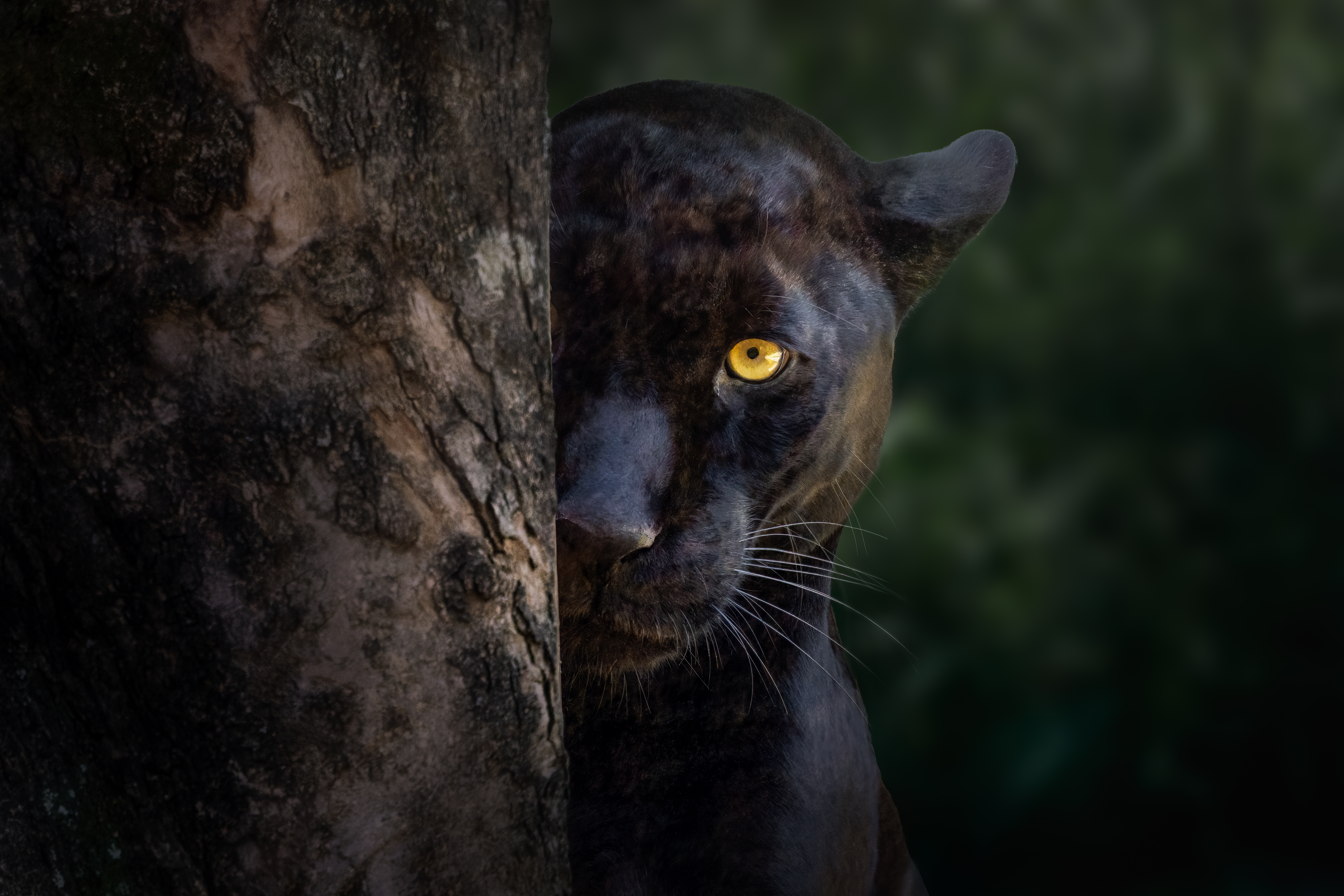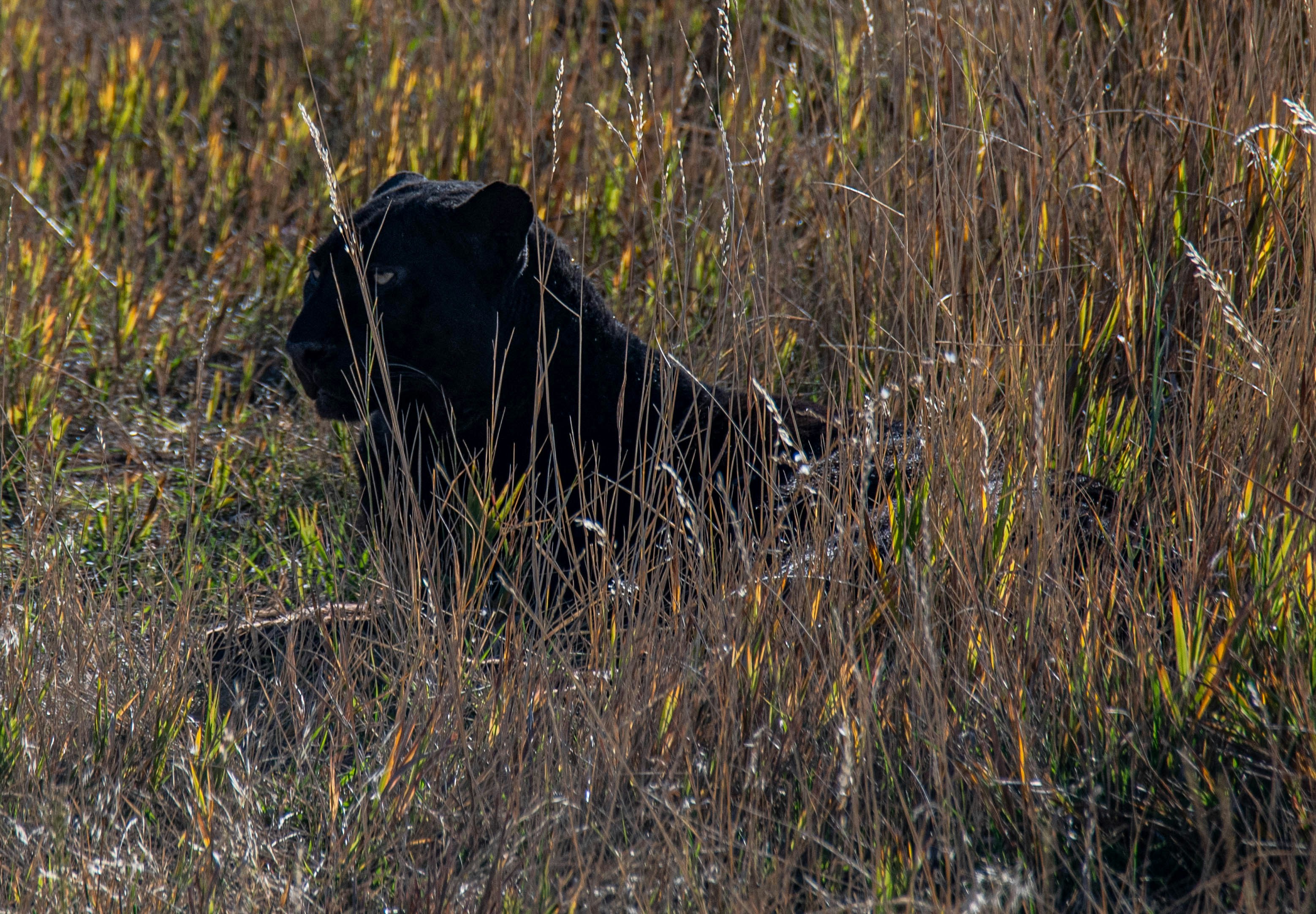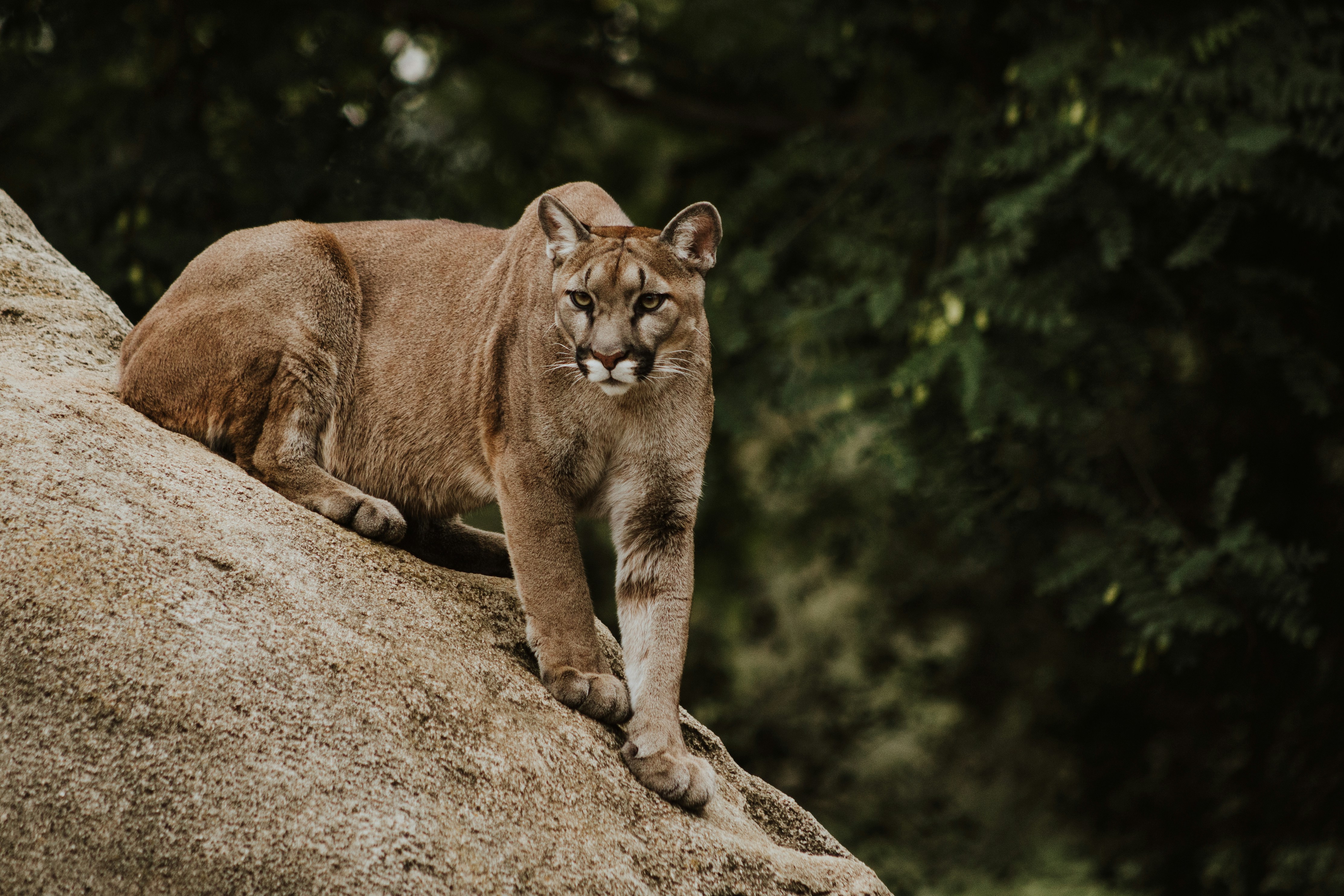
Unseen Shadows: Big-Cat Sightings in Britain – Autumn 2025 Round-Up

From Suffolk harvest fields to moorland mist in North Wales, a fresh wave of “panthers,” pumas and dark-coated felids stirred Britain’s rural imagination through October and November.

As dusk creeps ever earlier, as hedgerows thin and fields lie fallow, the old hush seems to awaken once more. Reports of something alien abroad: black silhouettes crossing lanes, long tails vanishing between trees, sheep spooked under moonlight, and “pointed-ear” shapes in the gloom. Over the last few months, places like Anglesey, the Llŷn Peninsula, Suffolk and more felt alight with the possibility of something wild and unaccounted for.

Below is a deeper dive into British big cat sightings from the last two months: what was claimed, where and when, what evidence (if any) supports it, and what it tells us about why, in 2025, the British big-cat mystery refuses to go away.

Autumn’s Quiet Fields and the Whisper of Something Else

There’s something about late autumn in rural Britain: the harvest is over, fields lie bare, evenings draw in, and the countryside takes on a soft, half-remembered quality.

For decades, that seasonal quiet has offered fertile ground for whispers of something aloof in the landscape. Could it be wind in the trees, a deer moving in shadow, or something else? For many rural dwellers and folklore-hunters, it has always been the right time for mystery big cats to wander across a lane, disappear into a copse, or vanish beyond the hedge.

In October and November 2025, those whispers, as always seems to be the case in Autumn, became a little louder.

October 2025: When the Reports Began to Coalesce

Scattered reports: South-East and West-Midlands chatter

Throughout October, a series of smaller, loosely connected reports emerged, from “panther-like” silhouettes glimpsed in the treeline, to late-evening growls heard by dog walkers, and paw prints in soft, damp ground after rain. Most came from local Facebook groups, community forums or specialist blogs, with genuine sparks of intent (some people setting up trail-cameras), but little follow-up.

The background: police logs and a five-year string of reports

Behind the anecdotal noise, there’s an institutional record: between 2021 and 2025, based on keyword searches for “big cat,” “puma,” “panther” and “lynx,” official incident-record logs from parts of southern England (notably Devon & Cornwall Police) list more than a dozen reports of large cats, described variously as “black panther,” “puma-like,” or “lion-sized.” LBC

Many of these reports describe animals jumping hedges, stalking rural tracks, or vanishing after being glimpsed in a vehicle’s headlights. In a few cases, officers attended the scene; in others the sightings remain unverified.

These official records, which are commonplace across the UK, add weight to public claims.

November 2025: A New Wave in North Wales, Anglesey, and the Llŷn Peninsula

Just as October’s reports began to settle, November brought a fresh uptick, this time centred on North Wales, Anglesey, and the Llŷn Peninsula. A different landscape, a different weather-tone, and for many, a compelling shift in pattern.

Anglesey: Fields, sheep, and pointy-eared cats (10 November onward)

A report on 12 November 2025 from a well known UK cryptozoology site, detailed multiple sightings across Anglesey including black cats with “long thick tails” and “pointy ears,” which were spotted roaming fields, skulking near sheep, or seen slipping along woodland margins at dusk. The Centre for Fortean Zoology

A post shared on social media described a “large black cat” near Newborough, walking through open land near the coast, with prominent pointed ears, a low slung tail and a long body. Locals, spooked, spoke quietly of sheep losses and nervous dogs. Facebook

The repeated descriptions (sometimes by more than one witness) helped give these reports weight. That said: “pointy ears” is a common reason sceptics dismiss big-cat claims, because in many big cats ear shapes differ, and “pointy” can be misleading in poor light or low resolution, and for many, suggests a dog and mistaken identity.

Pwllheli, Llŷn Peninsula: “Puma spotted at caravan site” (28 November)

On 28 November 2025, a local watchdog group for big-cat sightings, Puma Watch North Wales, published a report of a “large dark-coloured” animal, believed by a holiday-maker to be a puma, seen within a caravan-park perimeter near the town of Pwllheli, on the Llŷn Peninsula. Puma Watch North Wales

According to the witness, the animal was large, low-slung, and moved in a smooth, stealthy manner between caravans and hedgerows, so unlike a typical stray dog or cat. Given the rural coastline, sheep fields nearby, and limited light at dusk, the report sparked concern for local farmers and dog-walkers.

Further sightings in Wales were reported earlier in the month by the same site.

Where the wild things might be… or might not be

What stands out from both months isn’t a shift in geography so much as the familiar randomness that has always characterised Britain’s big-cat reports. Sightings scatter across counties and coastlines without forming any obvious pattern, a point often used by sceptics to argue against the idea of established or breeding populations. Yet for mystery-hunters, that same unpredictability is part of the allure – the sense of roaming predators that refuse to be pinned down, drifting through valleys, farmland and forest edges, appearing where least expected.

If nothing else, November’s reports show one thing clearly: the conversation lives on and people are still looking, watching, and waiting for a confirmation.

Patterns of Evidence: What We Know, What We Don’t

📌 What counts as good evidence

  • Clear video or photo, ideally with scale, timestamp, and context.
  • Multiple independent eyewitnesses describing similar features (size, tail, coat, gait, ears, behaviour).
  • Physical traces like hair, scat, paw-prints, kills… submitted for professional forensic analysis.
  • Consistent follow-up through camera traps, field-investigations, naturalist or police presence.

📉 Where the 2025 autumn wave falls short

  • Most reports (even the ones above) are from single witnesses, uncorroborated by photos or prints (I know how hard it it is to think about taking a photo in the moment, or how difficult it is to actually photograph and film genuine wild animals on a phone).
  • Descriptions vary (black panther, puma, “pointy-eared black cat”) which may reflect different species, or more likely, different interpretations of light, distance, stress or fear.
  • No public forensic confirmations this month: no DNA swabs, no carcasses, no verified predator-kill evidence.

That isn’t a rejection of the sightings by any means, but it does mean: as of November 2025, there is still no conclusive scientific proof of a sustainable non-native big-cat population roaming the British countryside, despite the very strong likelihood they are here.

Why the Autumn Spike Happens: Season, Psychology, and Landscape

Autumn has always been a season of shifting boundaries in the British countryside. As the days shorten and dusk arrives earlier, everything seems to take on a different shape. Shadows stretch longer than expected, hedgerows thin, and once-dense foliage gives way to bare branches and open visibility. This simple change in light and landscape can transform the most ordinary movement, be it a fox slipping between field margins, a dog cresting a hill, even a cat prowling along a fence line, into something uncanny.

The conclusion of the harvest season amplifies this effect. With crops cut back and fields lying open, the countryside becomes a stage with fewer props; anything crossing the land becomes more noticeable against the bare ground. At the same time, human presence in these spaces increases. Dog walkers, cyclists, farmers, hikers, and foragers tend to be out more in the late afternoon or early evening, right when the light begins to fail. Encounters therefore become more likely at a time when visibility is often at its best due to a lack of blooming foliage and leaves.

There’s also a psychological undercurrent to this seasonal shift. Autumn signals the approach of winter, a time when the countryside feels both more exposed and more remote. Folklore thrives in such in-between spaces. As mists gather and the temperature drops, we become more attuned to the uncanny possibilities at the edge of vision. For those already primed to wonder, whether through experience, curiosity, or the stories that circulate online, a shape in the half-light can ignite the imagination.

Together, these elements create the conditions in which big-cat sightings often cluster: a landscape laid bare, a watchful public moving through it, and just enough atmospheric tension to make the ordinary feel extraordinary.

Why These Stories Still Matter: Myth, Mystery and Wild Britain

art of the enduring appeal of Britain’s big-cat sightings lies in the country’s deep-rooted relationship with wildlife folklore. This is, after all, a landscape shaped by centuries of myths — from black dogs on moors to spectral deer in forests — and the idea of a hidden predator wandering the countryside resonates strongly with that cultural inheritance. Big cats, whether truly present or not, feel like a modern iteration of the same ancient impulse: to believe that something wild still moves out there, beyond the reach of fences and footpaths.

There is also a historical foundation to the fascination. The Dangerous Wild Animals Act of 1976, which curtailed the private ownership of exotic predators, triggered a generation of rumours that owners had secretly released pumas, leopards or lynx into the wild rather than surrender them. This legacy, more than any single sighting, fuels the belief in escapees or small, scattered populations that might have survived in remote pockets. It’s not proof — but it’s plausible enough to keep the theory alive.

For rural communities, the possibility of having such an animal nearby carries a mix of fear, irritation and reluctant awe. Livestock losses, nervous dogs, or strange prints in soft ground can lend weight to speculation. And for those who walk the land at dawn or dusk, the idea of sharing space with a creature that shouldn’t be here adds a quiet thrill.

But beyond the practical and historical, these stories matter because they remind us that mystery still exists in a world that often feels over-mapped, over-explained and over-connected. The silhouette on a hillside, the rustle in a hedge, the long tail disappearing into the dark — they hint at a Britain where the wild isn’t yet gone, only hidden. And whether or not big cats truly roam our countryside, the belief in them offers something rare: a reminder that the world still holds room for wonder.

How This Round-Up Was Compiled

  • I surveyed specialist websites, community-watch blogs (notably Puma Watch North Wales), and cryptozoology-oriented platforms. Puma Watch North Wales and The Centre for Fortean Zoology
  • I checked police-disclosure logs from forces who publish big-cat incident records (e.g. Devon & Cornwall). Devon and Cornwall Police
  • I referenced background research and historical context on British big-cat folklore, escapee theory, and prior documented sightings/escapes based on my own knowledge.

Caveat: I have no access to private camera-trap data, forensic lab results, or police log details beyond publicly disclosed summaries. The piece remains a synthesis of publicly available reports and claims, filtered for interest and plausibility.

The Mystery Lives On — For Now

As November 2025 draws to a close, the tally of big-cat reports has grown. From Suffolk to Anglesey, from fields to caravan parks, from hushed farm corners to public Facebook groups.

We are left with a mosaic made up of handfuls of sightings forming patterns, trending northwards, clustering in rural and coastal zones, surfacing at dusk.

For those who love the wild-edge of the British countryside and for readers of eco-thrillers, wildlife-watchers, or just the curious, those patterns matter. They remind us that beneath the tame green fields lies uncertainty. That despite fences and lights and human ink and paperwork, nature, or at least the idea of the wild, is still slipping through.

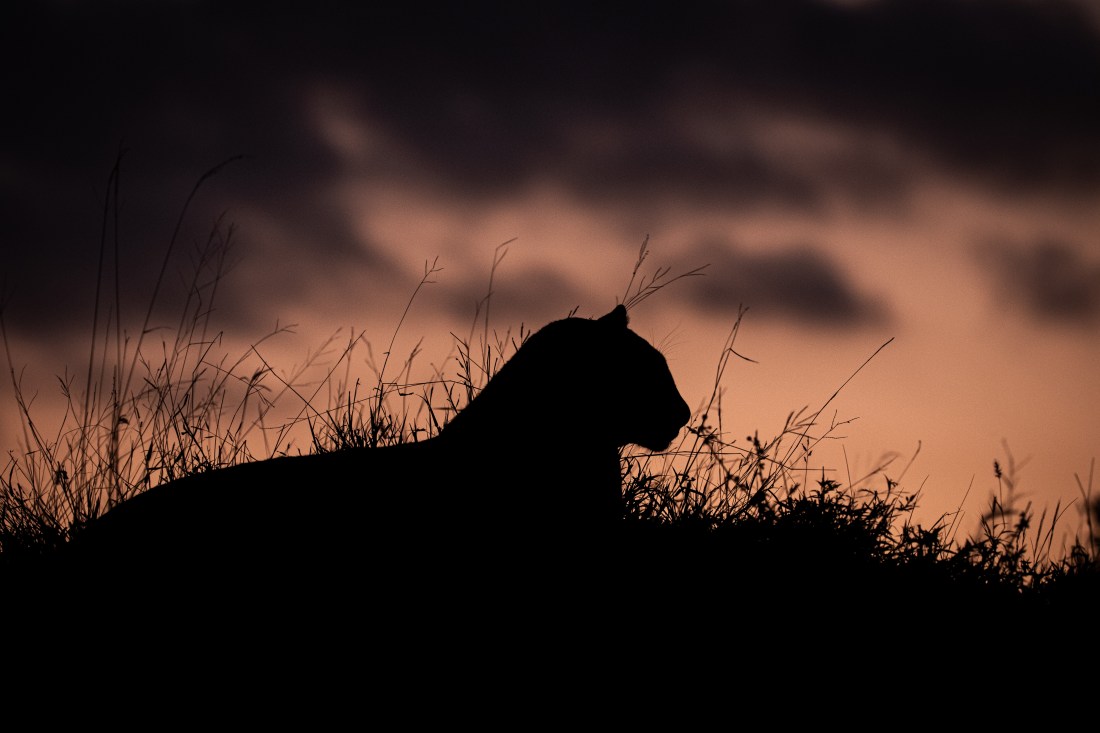
Walk the hedgerows at twilight. Keep a torch handy. A sharp eye. A steady hand on a camera. Because sometimes, the most compelling truths hide in plain sight, as a silhouette on a November road, or a long tail slinking behind a hedge, might just prove to you.

If nothing else, the mystery remains alive and hopefully well, and left alone.

Luke Phillips is the author of the eco-thriller Shadow Beastwhich explores the myth and mystery of Britain’s big cats.

What Might Come Next — For Readers, Watchers, The Curious

If you see something:

  • Use a phone or camera to get photos, video if you can (and safely).
  • Try to note scale; are there hedges, gates, known objects in frame that can help judge size?
  • Record time, date, weather, location (village, nearest road/farm), direction of movement, behaviour (walking, stalking, fleeing).
  • Share with groups like Puma Watch North Wales (if in Wales), Rick Minter at Big Cat Conversations or local wildlife / community pages. Even if nothing comes of it, each data point adds to the bigger picture.
  • Stay safe, especially if livestock are nearby. But also aware: many “big cats” reported in the UK probably remain domestic or feral cats mis-measured in light and distance.

Meet the Sabretooths

Warning – potential book spoilers ahead

I like to keep a lot of visual references and trinkets of inspiration around me when I write. Dotted around my workspace are various Schleich dinosaurs – Carnotaurus and T. Rex have prominent places (what can I say, I like predators!); and a selection of plush toys including a sabretooth, Nessie, and a black jaguar cub. Then, there are black jaguar and black leopard models, slightly overshadowed by the huge ‘stray cat’ Smilodon from Rebor.

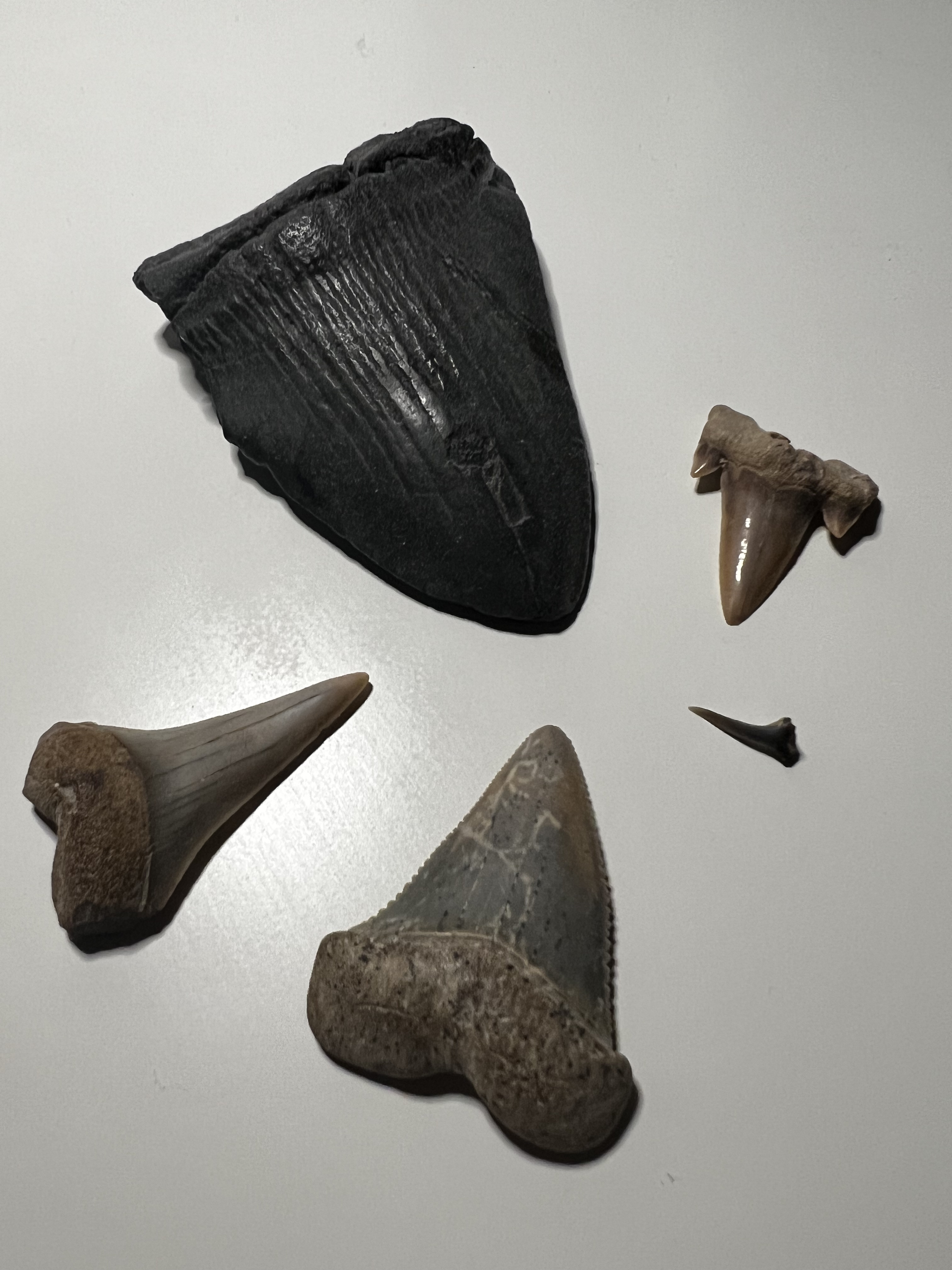
On my desk is a selection of teeth and claws. Some are real, whilst others are museum replicas. I have megalodon, great white, and mako teeth that are all the genuine article, as well as two other fossil shark teeth I’ve never been able to identify 100% (found on a beach on the Isle of Sheppey). Incidentally, the great white tooth was found on a beach in La Jolla, California.

My desk collection of modern and prehistoric shark teeth.

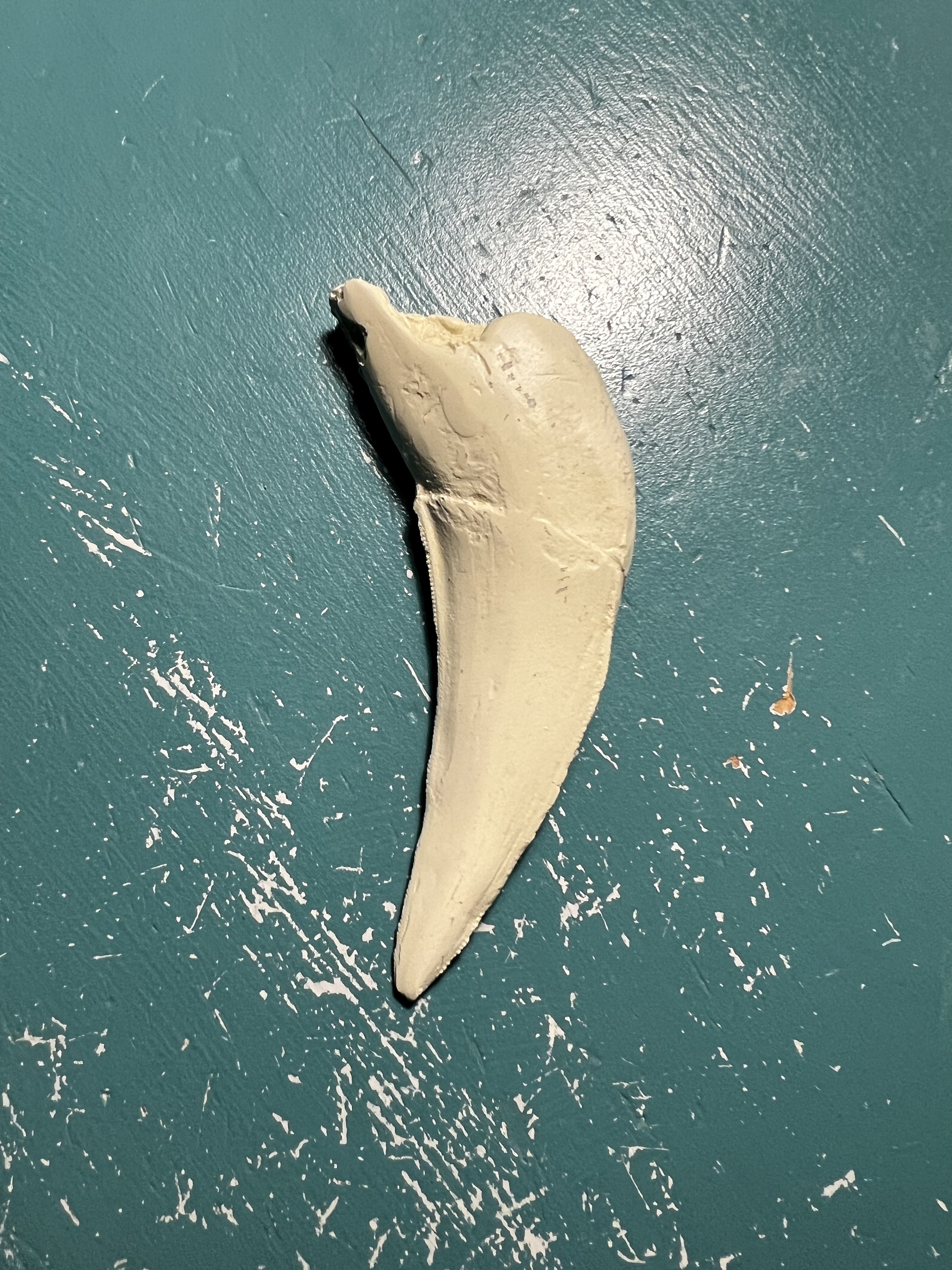
Among the replicas is the tooth you see in the picture below. It’s a cast of a canine from Homotherium. Also known as the scimitar-toothed cat, this was one of the most widely distributed sabre-toothed predators to have existed, having roamed North and South America, Eurasia, and Africa. 

Sabretooths are featured in my books, and I’m often asked why I didn’t choose Homotherium as the species that ultimately plays a major role in the ongoing storyline. There’s a couple of reasons, but first, did you know how many different sabretooths there are to (hypothetically) choose from?

Homotherium belonged to the Machairodontinae (meaning daggertooth) sub-family within the Felidae (true cat) family of mammalian carnivores. Like all in this sub-family, they are most known for their enlarged maxillary canines. In almost all cases, these protruded from the mouth on either side of the jaw and were visible even when the mouth was closed. But, in the case of Homotherium, it’s likely that despite having relatively large canines, they would have been hidden by the upper lips and lower gum tissues, just like in modern big cats. This was just one reason Homotherium didn’t make the cut. I needed a sabretooth that could be recognised for what it is – despite Homotherium’s convenient European fossil record.

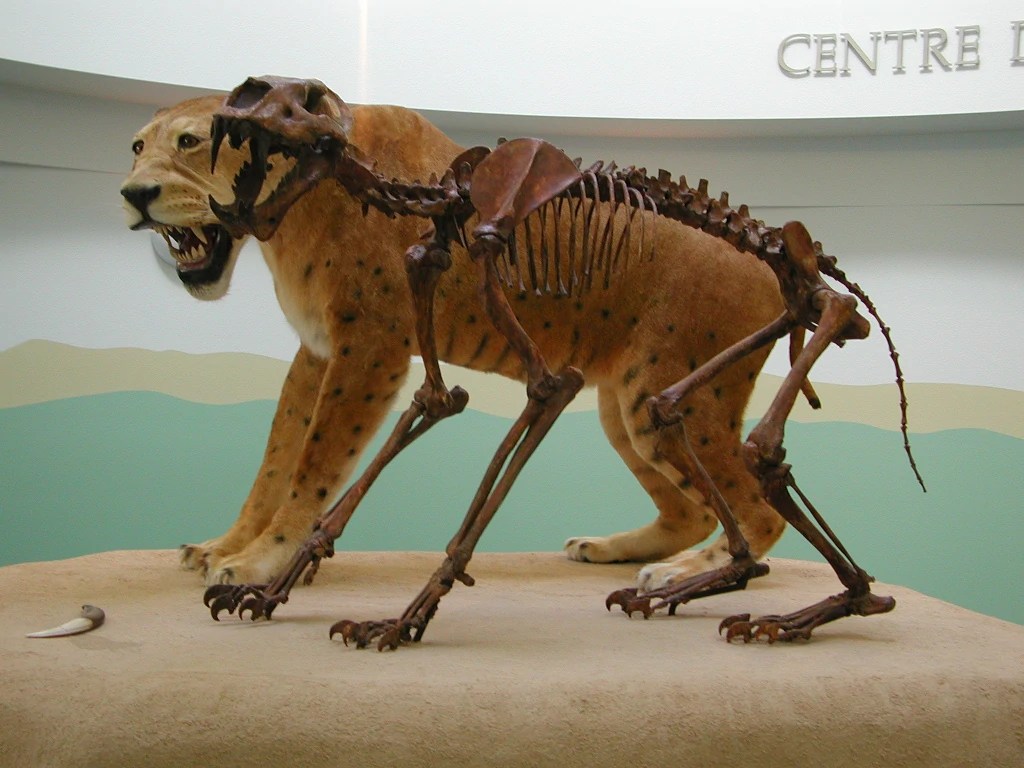
A museum replica of Homotherium, alongside a skeletal reconstruction.

Don’t be fooled into thinking Homotherium didn’t pack a punch though. They were about the size of a male African lion. And not only were its teeth designed for slashing, but also a powerful gripping bite capable of delivering deep puncture wounds.

Joining Homotherium in the Machairodontinae is also Amphimachairodus (thought to be some of the earliest sabretooths to inhabit Europe); Lokotunjailurus (think a long-legged, more gracile lioness) was known from the Miocene epoch across Kenya and Chad; Nimravides – a tiger-sized sabretooth that appeared in the late Miocene and has been found exclusively in North America; and Xenosmilus. 

If you’ve read my books, you’ll know why I’ve paused there. Xenosmilus was big, even for a sabretooth. In fact, only Smilodon (who’ll we’ll come to later) was noticeably larger in terms of mass. Yet it stands out among others in the sub-family for other reasons.

Before Xenosmilus was discovered, sabretooths fell relatively neatly into two categories. Scimitar-toothed cats, like Homotherium, had mildly elongated canines and long legs. Dirk toothed cats, like Smilodon, had long upper canines and stout legs. Xenosmilus broke the mould. It had short, muscular legs and a robust body – yet its canines weren’t as pronounced. And those teeth were different in other ways too. All of Xenosmilus’ teeth were serrated, and its top teeth aligned with the bottom in a way that enabled it to concentrate its bite force on two teeth at a time. This is where Xenosmilus gets its name – which means ‘strange smile’. The unique way that its canines and incisors operated together in biting, also led to the moniker, ‘the cookie-cutter cat’. 

The skull of Xenosmilus also features a pronounced and significant sagittal crest compared to others in the family. This meant it had phenomenal jaw strength and bite force, thanks to the muscles that would have been attached here. Together, these features have led to the theory that Xenosmilus adopted a bite and retreat hunting strategy. It would use its formidable teeth to inflict a deep wound, then wait until the prey was incapacitated. The peccary bones found close to the two type specimens indicate not only a liking for pork, but also that the species may have hunted collaboratively. 

It was these unique features that led to Xenosmilus playing the role it does in my stories. But we’re only halfway through the very top layers of the sabretooth family tree.

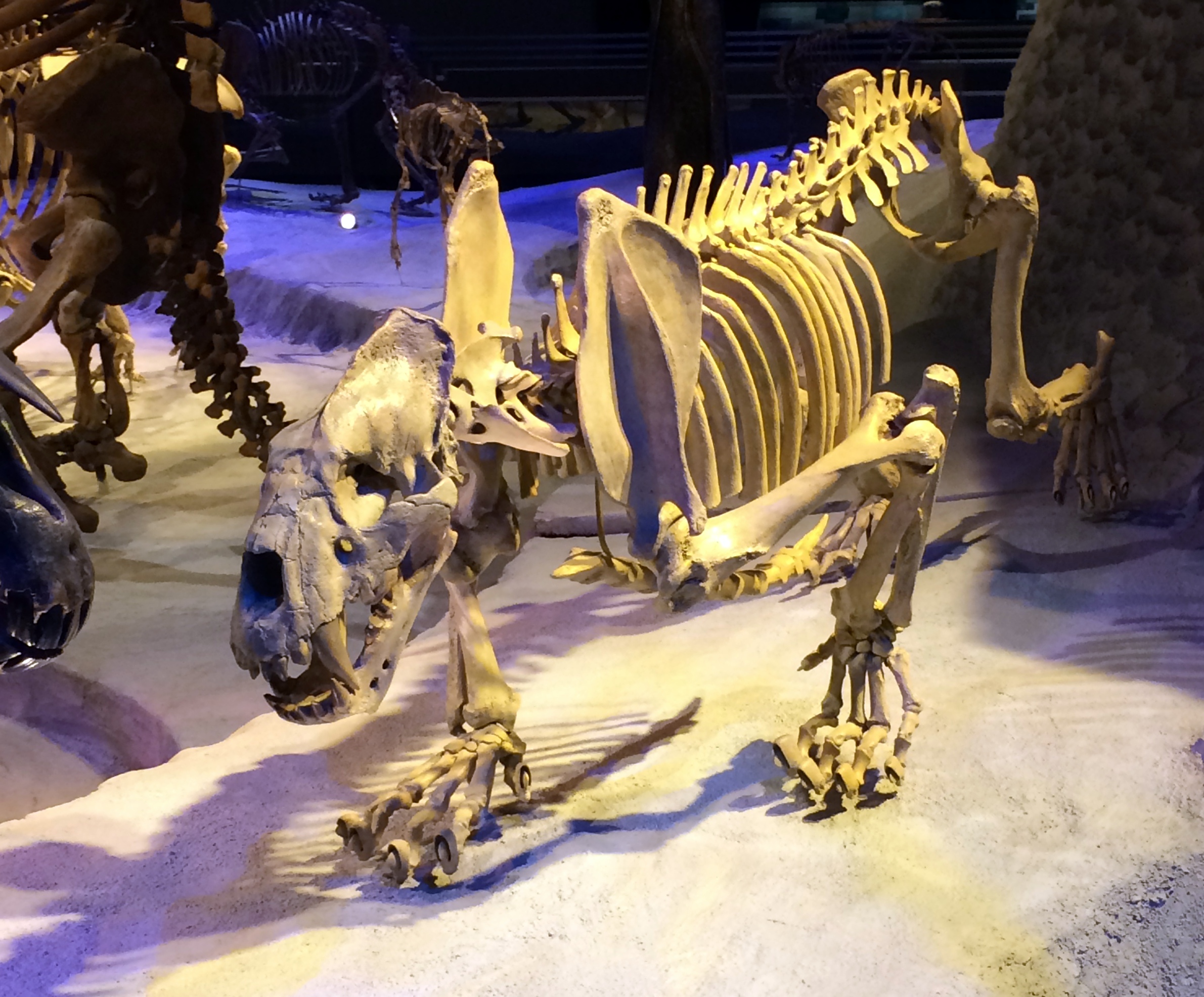
Xenosmilus skeletal reconstruction on display at the Florida Museum of Natural History.

A smaller, sub-group are the Machairodontini, made up of; Machairodus – meaning ‘knife tooth’ and who gives this little clan their name; Hemimachairodus – known from finds in Java and Indonesia; and Miomachairodus, known from finds in China and Turkey. They were large cats, similar in size to the smaller subspecies of modern-day tigers.

The Metailurini include Metailurus – a cat we know from only partial remains, but its elongated rear legs mean that it was probably an accomplished jumper. Others in the group include Adelphailurus, Stenailurus, and Yoshi – a species proposed to be quite cheetah like in behaviour. Because these species have only been identified from small finds, what we know about them is limited, but new details are being published regularly with study. 

The exception in this group is one of my favourites – Dinofelis, whose name means ‘terrible cat’. There’s some argument that Dinofelis belongs to the Smilodon sub-family, but for now, they lie here. These jaguar-sized cats were powerfully built with prominent sabres and extremely robust front limbs. They were also widespread, with fossils found across the North America, Europe, Asia, and Africa, from between 5 and 1.2 million years ago. It has also been proposed that Dinofelis preferred forest habitat and may have had a spotted or striped coat – like the modern day clouded leopard and ocelot. 

Finally, we come to the best known of the sabretooths – the Smilodontini. These include the three sub-species of Smilodon, but also the family groups of Rhizosmilodon, Promegantereon, Paramachairodus, and another favourite – Megantereon. The latter may have been a direct ancestor of Smilodon and was jaguar-sized, but even heavier set with lion-like forelimbs. Despite this, they are thought to have been able to climb relatively well and take down prey as large as a horse. And unlike its relative Smilodon, who was limited to North America, Megantereon was found in Eurasia and Africa too.

Homotherium skull

Smilodon is not only one of the most well-known sabretooths, but also one of the most easily recognised prehistoric mammals ever discovered, thanks in part to hundreds of fossils retrieved from the La Brea tar pits. Its name means scalpel, or ‘two-edged knife tooth’. Its teeth are easily the most impressive of all sabres in terms of size and were tools used for precision kills. However, these formidable upper canines were relatively weak and fragile. They had stocky, bear-like bodies and are thought to have been ambush predators that preferred thick forest and vegetation as habitat. Again, we’re not sure if they were co-operative hunters – but it is thought likely that they lived in small family groups. 

All the above sabretooths are part of the Felidae family – making them true cats. But they weren’t the only sabretooths out there. There are others, most of which fall under what are known as false sabre-toothed cats – including the nimravidae and barbourfelidae. These animals are part of the Feliformia sub-order. Again, if you’ve read my books, you’ll be familiar with that name in terms of hyenas and their fossil relatives. But it also includes animals like the Madagascan fossa, the binturong of Asia, as well as civets, mongoose, and meerkats. Cats too are part of this sub-order, and the false sabre-toothed cats are obviously more closely related than these others – but are still different from true cats.

As for sabretooths and their modern-day cat relatives, it’s thought that they shared a common ancestor from about 18 million years ago. But the family ties between the sabretooths themselves are quite strained too. For instance, Homotherium and Smilodon are probably more distantly related from each other than your typical house cat is to a tiger. But genetically, we can still forge that connection to modern day big cats like lions and tigers from studies carried out on fossil mitochondrial DNA. It’s more direct in species related to Homotherium, which is another reason Xenosmilus was a good fit on paper. It had the strength and size of Smilodon but benefited from being part of the larger sabretooth family, with more of a genetic tie (however slight) to modern big cats.

Xenosmilus skull – its name means “strange smile”.

As for would a modern-day big cat, like a jaguar, be able to breed with a sabretooth like Xenosmilus… we obviously don’t know. My conjecture is that as true cats, it’s technically possible and viable. There would no doubt be many unknown evolutionary and biological barriers to overcome, but, as a favourite fictional character facing similar concerns famously once said… “life finds a way”. 

And whereas we’ll never be able to bring back a dinosaur from its DNA to find out what it might conveniently splice with, don’t be so sure when it comes to prehistoric cats. Their DNA – from cave lions to Smilodon, has been found and identified, and in some cases, even mapped. Maybe in the near future, just like in my books, we’ll be able to visit something akin to a Pleistocene Park!

If you can’t wait until then, you can discover how these cats and others play a role in my books here.

The Best (And Worst) of 2022

As a writer, I consume a lot of material – either in the name of research, as a way of switching off, or whilst working. I’ve compiled a list of some of the best things that I’ve read, seen, and listened to, over the last twelve months. I thought it may be of interest to you, dear reader, where I’ve found some of my inspiration and what stirs my interest outside of monsters. I also know the podcasts I listen to have sparked genuine interest when I’ve mentioned them, or in the case of a few here, have been lucky enough to appear on.

Unlike what I’ve caught at the cinema, the books I’ve read aren’t necessarily specific to 2022 releases. As tends to be the case with books, I have discovered them as and when, often by spending too long in bookshops – second-hand or otherwise. 

So, without further ado, here’s my favourites of the year. With books and podcasts, you won’t find any ‘worst’ picks, as I genuinely didn’t read any books I didn’t enjoy, and my podcast choices are all personal favourites. But there were a few stinkers on the big screen that I wanted to mention from a story-telling perspective. 

Books

Beast: Werewolves, Serial Killers, and Man-Eaters – Gustav Sanchez Romero.

This is a book that explores the history and legends surrounding the ‘Beast of Gevaudan’, a seemingly unstoppable killer wolf, (or wolf-like creature), that plagued a province of rural, pre-revolutionary France. I have always wanted to visit the region and investigate this real-life monster story, but Gustav Sanchez Romero has done a very comprehensive job, saving me the trouble, or spoiling my fun depending on your point of view.

In the foothills and plains of the Margeride mountains, France, between 1764 and 1767, it is estimated between 130 to over 200 men, women, and especially children – were killed by a marauding animal. Its identity has never been known for sure, but its rampage is a matter of record. Its story has seeped into novels, movies, and folklore. This book tries to uncover the facts shrouded by fiction, and sets out the case in a logical, linear series of investigation and explanations.

A Richness of Martens – Polly Pullar

This is one of the books I discovered by accident, taking my purchases to the counter in a bookshop, and seeing this being put aside for another customer. They say never judge a book by its cover, but that’s exactly what I did. Pine martens are one of my favourite animals and I was smitten at first sight.

It didn’t take long to feel whisked away to the Ardnamurchen peninsula with author Polly Pullar, whose descriptive language and wildlife-filled stories enchanted me from the very go. The book reveals how citizen science helped provide new insights into marten behaviour and the complex relationships they form – shooting down many preconceptions more so-called established naturalists had presumed for decades. 

The Living Mountain – Nan Shepherd

This short memoir is simple, beautiful, romantic writing that paints a stunning picture of the Cairngorms, their people, and its wildlife. It simply made me want to disappear into the hills and breathe in what I’d been reading. You can probably pick up on my draw to Scotland in some of these choices! 

Honourable Mention – Jack Carr’s James Reece novels, State Monsters series – David Weatherly

Sometimes, you need fast-paced fiction to help escape work or just the real-world in general. Look no further than Jack Carr’s James Reece novels – the first of which (The Terminal List) is now also a series on Prime Video, starring Chris Pratt. Somewhat in the mould of Jack Reacher, these books follow a Navy Seal commander who is betrayed by the government, and then sets out on a mission of revenge. What I really like about the books is that there is a genuine character arc, including redemption, challenge, and growth.

David Weatherly is a workaholic author. He is nothing but prolific. I think I’ve read three of his books that have hit the shelves this year, making it impossible to single out just one. If, like me, you have an interest in monsters and folklore, these books will satiate your appetite. Weatherly has dedicated each volume to a single state – and I have torn my way through Utah, Indiana, and North Carolina in recent memory, and I’m sure there were a few others. Weatherly’s journalistic approach and dedicated research is clear on every page, delivering the facts and letting you draw your own conclusions. 

Films

Best

Top Gun: Maverick

There simply isn’t another choice. I saw Top Gun: Maverick more than once at the cinema, and a lot more once it became part of my film collection. This movie aced its storytelling, simply by not trying to be anything else. It didn’t try to ‘buy’ itself into an audience, end with a third-act CGI slugfest, or divert from its narrative to impose an opinion. It stuck to character-driven story, with a clear layout of the perils, the promise, and the payoffs we would get. As this YouTube video explains, it’s a masterpiece of storytelling. 

One liners, slick action, clearly defined stakes, and a character we root for because we understand his flaws, all turned a sequel we didn’t think we needed into the blockbuster of the year.

Honourable Mentions: Jaws, Star Trek II: The Wrath of Khan

It says a lot about the state of cinema, when two of the surprise hits (and certainly my favourites), were films between 40 and 50 years old, released either in a new format (IMAX and 3D in the case of Jaws), or celebrating its 40th anniversary (Wrath of Khan). However, the chance of seeing them on the big screen was incredibly welcome, not to say special. 

Jaws has always had me wanting to write a UK-based story in the same ilk, which may be coming sooner than you think. This is the film that established the summer blockbuster and Spielberg’s status as a Hollywood heavyweight, not to mention a universal fear of the water. 

Khan could be seen as a little hammy, but it’s a film that saved a franchise, and watching a brilliant stage actor like Ricardo Montalban savagely chew the scenery with Shatner is a delight to this day.  

Documentaries

Small Town Monsters has delivered another incredible year of investigations into the unexplained. All of their documentary films can be purchased directly from the website, or can be found on Prime Video and Vimeo. American Werewolves was a standout for me, alongside the addictively good Bigfoot: Beyond the Trail series on YouTube.

Panthera Britannia has shot to the top of the list of documentaries covering big cats in Britain. With compelling footage, stoic investigation, startling evidence, and expert commentary, a better case for the ongoing presence of big cats in the UK is yet to be presented. It is also now available on Prime Video.

Worst

Thor: Love and Thunder

Marvel has certainly been less than marvellous since the end of the Infinity saga, but Thor: Love and Thunder was an insulting mess that lacked story, respect, and appeal (for me). In the character of Thor, we’ve explored complex storylines and issues, like mental health, betrayal, revenge, and love. And whereas I felt the balance between comedy and story was right in Ragnarök, Love and Thunder played only for laughs – and cheap ones at that. Thor became a clown that played second fiddle to other characters like Korg, Valkyrie, and Jane Foster. And somebody, please tell Russel Crowe that he cannot do accents. Ever. 

Where the Crawdads Sing

Loved the book. Loved David Strathrain’s performance. Didn’t care for much else. It left huge parts of the story out, including essential scenes that would have showed us the character of Kya and who she was. The book delivers in so many ways that the film fell short of. I’d still like to live in Kya’s cabin though.

TV

Yellowstone

I don’t binge watch much, but let’s just say I discovered Yellowstone late in the year, and I’m completely up to date. I am hooked and practically addicted. What I love about the storytelling is, primarily, these are not nice people. You’re not rooting for heroes. Almost all the characters have done horrible, unforgiveable things. Yet, they abide by personal codes of right and wrong that we understand and completely buy into.

Kevin Costner, Kelly Reilley, and Cole Hauser play standout characters in John Dutton, Beth, and Rip respectively. Together, they defend their ranch, family, and way of life through murder, savagery, and brutal payback to any slur. Yet, they’ll defend the weak, stand up to bullies, stop to help you change a tyre, and won’t break their word. But they’ll gun you down without hesitation if they need to. It makes for compelling viewing.

I’m yet to catch the prequel series’ of 1883 and 1923, but with the likes of Sam Elliott, Harrison Ford, and Helen Mirren starring, I’m sure they’ll be just as good.

Podcasts

All of the podcasts should be available on your podcatcher of choice but are definitely available on iOS Podcasts and Spotify.

Big Cat Conversations

Big Cat Conversations is hosted by Rick Minter, an author and researcher based in Gloucestershire – one of the UK’s hotspots for big cat sightings and activity. The podcast acknowledges that sightings of big cats have been recorded across the UK for decades and gives witnesses and the topic a much-needed voice. From exploring the implications of living alongside apex predators for the first time in millennia, to sharing incredible encounters, the podcast is a steadfast and grounded approach to the phenomena.

Honey + the Hex

Honey + the Hex is a podcast hosted by sister-duo Tatum Karmen Swithenbank and Tansie Swithenbank. Their fascination for folklore and spirituality oozes out of every episode as they discuss magick, traditions, myths, rituals, and realms less travelled today. 

Monsters & Mysteries

Monsters & Mysteries brings you weekly interviews from across the Fortean field, from authors and researchers to fellow podcasters and devotees. I am always impressed with host Paul Bestall’s dedicated research and genuine interest that always comes across. 

Into the Fray

Into the Fray is a riveting ride into the world of cryptids and strange phenomena. Each week sees eyewitnesses to UFOs, bigfoot, the paranormal, and more, discuss their encounters with host Shannon LeGro. A staple of my working week is tuning in to Into the Fray.

A Black Beast and a Bigfoot

I don’t usually do local sightings, unless they happen to be on my doorstep such as last year’s Knole Park panther. There are some dedicated researchers out there such as Neil Arnold who have been doing it for longer, and do it far better than I. What I usually try to tap into is what draws us to such stories in the first place, preferring to fictionalise the fun rather than poke it, which seems to be how the vast majority of news outlets treat them.

But in a week that has seen both a black cat and a bigfoot reported through the Kent and now wider press, it would seem almost negligent of a blog named black beasts and boogeymen to ignore completely. So with that in mind, I dusted off the old investigator kit, strapped on the walking boots and made my way…to the phone.

On Wednesday 11th November, Paul Turk was making his rounds as a delivery driver in the small village of Ryarsh in Kent when he came across a large black cat, apparently crossing the road. The animal stopped and watched him approach. Mr Turk was able to pull up and observe the cat until it moved away and disappeared into the brush. Before continuing to his next stop, Mr Turk spoke to another driver at the scene about what he had just witnessed. When he did arrive at his next delivery, Offham County Primary School, he spoke to members of staff and contacted Kent Police whilst they reached out to the other nearby schools of Ryarsh Primary and Trottiscliffe Primary. Both chose to text parents to report the sighting.

I have deliberately chosen not to quote Mr Turk, police or school representatives as it is hard to gauge if the witnesses have been misquoted or misrepresented, which is all too often the norm. I have reached out to all parties and may update this post if I am able to. But these are essentially the facts of the case. No looming of the beast, no panic stricken witness. No picture of a yawning melanistic leopard or jaguar, essentially baring its fangs. I have to say it brought back memories of the panic that gripped Penge when another alleged big cat hit the streets of Sydenham, my home back then, in 2005.

When I was writing the blurb to my book Shadow Beast, I deliberately set the scene with a similar encounter of a lorry driver on a remote road. There is something classic about it that echoes what we expect from an urban myth, which is possibly why the story has been picked up with such glee in true tabloid style.

What is unfortunate about such treatment is that despite there being some 2,000 such reported sightings a year, it has the potential to not only dismiss them completely but to also discourage witnesses coming forward. This may seem strange coming from a novelist, but why not embrace the excitement we feel when drawn to these stories and explore the truth. Imagine what we might discover. I have spoken to many conservative, professional people who have experienced something they cannot explain, or even scared and unsettled them. In some cases, a little education goes a long way. In the absence of physical evidence, we often only have witness testimony. And whilst it isn’t wrong to question and query, unless it is obvious it is a hoax or publicity stunt, I think it’s best to offer appropriate forum and analysis rather than judgement. Even in cases of mistaken identity, people often need to talk about what they have experienced and to investigate what they have seen. Discovering they are not alone can be a great source of comfort and affirmation.

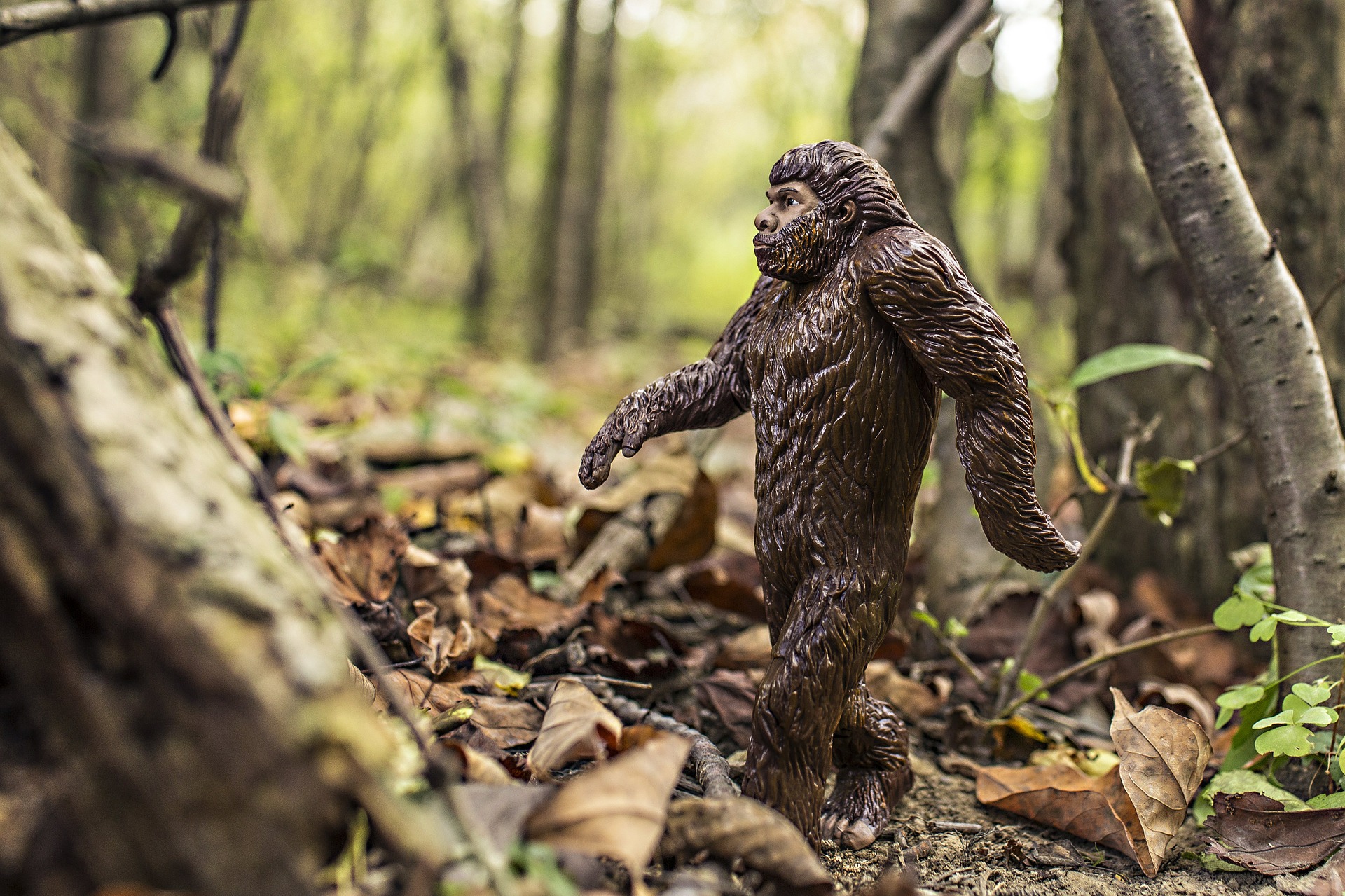
At the same time, some stories do need to be treated with a shovel full of salt. Take the other creature to hit the news this week, a bigfoot supposedly spotted in the Angmering Park Estate near Arundel in West Sussex. Whereas undoubtedly the witness did see something large, hunched over and generally black in the undergrowth that scared her dog, it has been quickly dismissed as a father playing hide and seek with his daughter. The picture taken by the witness is typically ‘blobsquatch’ and unidentifiable. At first glance, I thought I saw traits of what is a widely available fancy dress gorilla suit, but I’m just as happy to accept the parental explanation. What’s worse is that I suspect that it wasn’t the witness who approached news outlets, but the local interest group who she reported it to, who no doubt saw an opportunity for some publicity to mention their own spate of recent big cat sightings.

It may be hard to say with certainty what we expect from our press and authorities when people do report such sightings. If it takes the BBC Natural History unit two years to find snow leopards, then Kent Police have little chance by turning up on a whim for instance. And before we suggest launching helicopters and thermal image cams, bear in mind that they have to share a chopper with their neighbour Essex, and running costs are around £2 million a year.

bigfoot-542546_1920

And I don’t say this to ridicule the witness. Only a few weeks ago whilst walking round Groombridge, I decided to entertain my friend and her sons with some Bigfoot calls. The one thing we weren’t expecting was a response. Now it was without a doubt another human being larking about like I was, but it still made us look over our shoulders whilst we made a sharp exit. Sometimes the monster in the woods is more about perspective and the person in front of it!

*UPDATE*

It has now been revealed that the Sussex Bigfoot sighting was in fact a PR stunt, carried out by Bigfoot Communications, a PR firm based in Rustington, and was indeed a man in a widely available fancy dress gorilla suit!