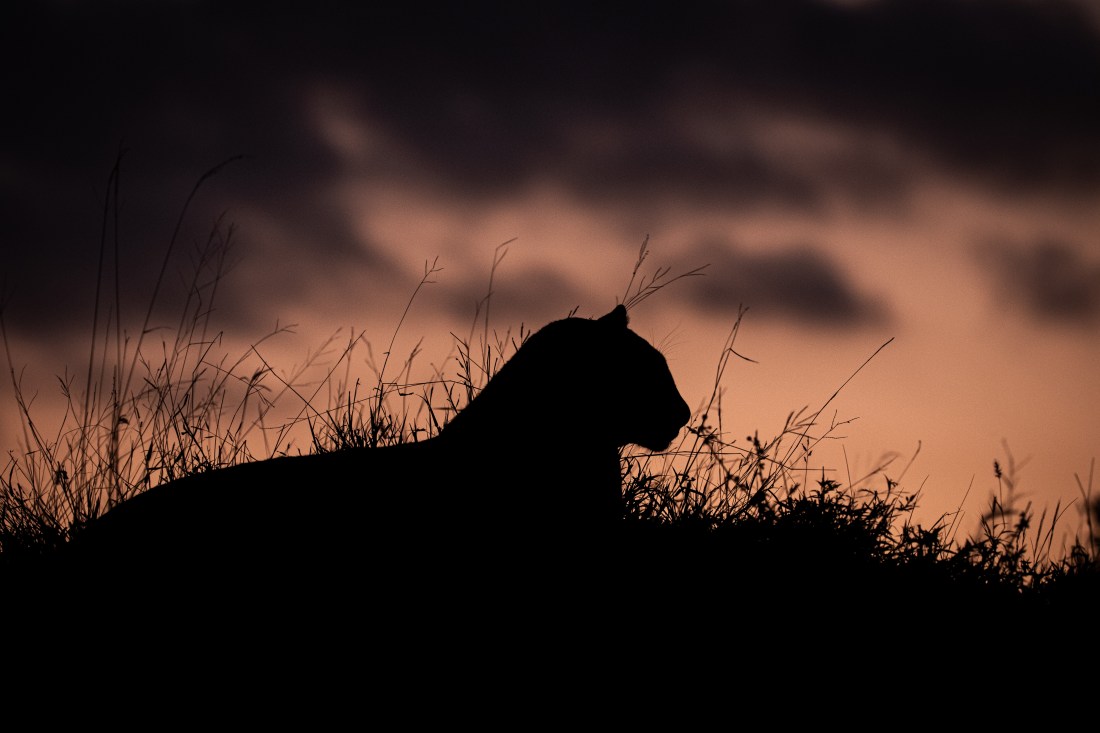
Unseen Shadows: Big-Cat Sightings in Britain – Autumn 2025 Round-Up

From Suffolk harvest fields to moorland mist in North Wales, a fresh wave of “panthers,” pumas and dark-coated felids stirred Britain’s rural imagination through October and November.

As dusk creeps ever earlier, as hedgerows thin and fields lie fallow, the old hush seems to awaken once more. Reports of something alien abroad: black silhouettes crossing lanes, long tails vanishing between trees, sheep spooked under moonlight, and “pointed-ear” shapes in the gloom. Over the last few months, places like Anglesey, the Llŷn Peninsula, Suffolk and more felt alight with the possibility of something wild and unaccounted for.

Below is a deeper dive into British big cat sightings from the last two months: what was claimed, where and when, what evidence (if any) supports it, and what it tells us about why, in 2025, the British big-cat mystery refuses to go away.

Autumn’s Quiet Fields and the Whisper of Something Else

There’s something about late autumn in rural Britain: the harvest is over, fields lie bare, evenings draw in, and the countryside takes on a soft, half-remembered quality.

For decades, that seasonal quiet has offered fertile ground for whispers of something aloof in the landscape. Could it be wind in the trees, a deer moving in shadow, or something else? For many rural dwellers and folklore-hunters, it has always been the right time for mystery big cats to wander across a lane, disappear into a copse, or vanish beyond the hedge.

In October and November 2025, those whispers, as always seems to be the case in Autumn, became a little louder.

October 2025: When the Reports Began to Coalesce

Scattered reports: South-East and West-Midlands chatter

Throughout October, a series of smaller, loosely connected reports emerged, from “panther-like” silhouettes glimpsed in the treeline, to late-evening growls heard by dog walkers, and paw prints in soft, damp ground after rain. Most came from local Facebook groups, community forums or specialist blogs, with genuine sparks of intent (some people setting up trail-cameras), but little follow-up.

The background: police logs and a five-year string of reports

Behind the anecdotal noise, there’s an institutional record: between 2021 and 2025, based on keyword searches for “big cat,” “puma,” “panther” and “lynx,” official incident-record logs from parts of southern England (notably Devon & Cornwall Police) list more than a dozen reports of large cats, described variously as “black panther,” “puma-like,” or “lion-sized.” LBC

Many of these reports describe animals jumping hedges, stalking rural tracks, or vanishing after being glimpsed in a vehicle’s headlights. In a few cases, officers attended the scene; in others the sightings remain unverified.

These official records, which are commonplace across the UK, add weight to public claims.

November 2025: A New Wave in North Wales, Anglesey, and the Llŷn Peninsula

Just as October’s reports began to settle, November brought a fresh uptick, this time centred on North Wales, Anglesey, and the Llŷn Peninsula. A different landscape, a different weather-tone, and for many, a compelling shift in pattern.

Anglesey: Fields, sheep, and pointy-eared cats (10 November onward)

A report on 12 November 2025 from a well known UK cryptozoology site, detailed multiple sightings across Anglesey including black cats with “long thick tails” and “pointy ears,” which were spotted roaming fields, skulking near sheep, or seen slipping along woodland margins at dusk. The Centre for Fortean Zoology

A post shared on social media described a “large black cat” near Newborough, walking through open land near the coast, with prominent pointed ears, a low slung tail and a long body. Locals, spooked, spoke quietly of sheep losses and nervous dogs. Facebook

The repeated descriptions (sometimes by more than one witness) helped give these reports weight. That said: “pointy ears” is a common reason sceptics dismiss big-cat claims, because in many big cats ear shapes differ, and “pointy” can be misleading in poor light or low resolution, and for many, suggests a dog and mistaken identity.

Pwllheli, Llŷn Peninsula: “Puma spotted at caravan site” (28 November)

On 28 November 2025, a local watchdog group for big-cat sightings, Puma Watch North Wales, published a report of a “large dark-coloured” animal, believed by a holiday-maker to be a puma, seen within a caravan-park perimeter near the town of Pwllheli, on the Llŷn Peninsula. Puma Watch North Wales

According to the witness, the animal was large, low-slung, and moved in a smooth, stealthy manner between caravans and hedgerows, so unlike a typical stray dog or cat. Given the rural coastline, sheep fields nearby, and limited light at dusk, the report sparked concern for local farmers and dog-walkers.

Further sightings in Wales were reported earlier in the month by the same site.

Where the wild things might be… or might not be

What stands out from both months isn’t a shift in geography so much as the familiar randomness that has always characterised Britain’s big-cat reports. Sightings scatter across counties and coastlines without forming any obvious pattern, a point often used by sceptics to argue against the idea of established or breeding populations. Yet for mystery-hunters, that same unpredictability is part of the allure – the sense of roaming predators that refuse to be pinned down, drifting through valleys, farmland and forest edges, appearing where least expected.

If nothing else, November’s reports show one thing clearly: the conversation lives on and people are still looking, watching, and waiting for a confirmation.

Patterns of Evidence: What We Know, What We Don’t

📌 What counts as good evidence

  • Clear video or photo, ideally with scale, timestamp, and context.
  • Multiple independent eyewitnesses describing similar features (size, tail, coat, gait, ears, behaviour).
  • Physical traces like hair, scat, paw-prints, kills… submitted for professional forensic analysis.
  • Consistent follow-up through camera traps, field-investigations, naturalist or police presence.

📉 Where the 2025 autumn wave falls short

  • Most reports (even the ones above) are from single witnesses, uncorroborated by photos or prints (I know how hard it it is to think about taking a photo in the moment, or how difficult it is to actually photograph and film genuine wild animals on a phone).
  • Descriptions vary (black panther, puma, “pointy-eared black cat”) which may reflect different species, or more likely, different interpretations of light, distance, stress or fear.
  • No public forensic confirmations this month: no DNA swabs, no carcasses, no verified predator-kill evidence.

That isn’t a rejection of the sightings by any means, but it does mean: as of November 2025, there is still no conclusive scientific proof of a sustainable non-native big-cat population roaming the British countryside, despite the very strong likelihood they are here.

Why the Autumn Spike Happens: Season, Psychology, and Landscape

Autumn has always been a season of shifting boundaries in the British countryside. As the days shorten and dusk arrives earlier, everything seems to take on a different shape. Shadows stretch longer than expected, hedgerows thin, and once-dense foliage gives way to bare branches and open visibility. This simple change in light and landscape can transform the most ordinary movement, be it a fox slipping between field margins, a dog cresting a hill, even a cat prowling along a fence line, into something uncanny.

The conclusion of the harvest season amplifies this effect. With crops cut back and fields lying open, the countryside becomes a stage with fewer props; anything crossing the land becomes more noticeable against the bare ground. At the same time, human presence in these spaces increases. Dog walkers, cyclists, farmers, hikers, and foragers tend to be out more in the late afternoon or early evening, right when the light begins to fail. Encounters therefore become more likely at a time when visibility is often at its best due to a lack of blooming foliage and leaves.

There’s also a psychological undercurrent to this seasonal shift. Autumn signals the approach of winter, a time when the countryside feels both more exposed and more remote. Folklore thrives in such in-between spaces. As mists gather and the temperature drops, we become more attuned to the uncanny possibilities at the edge of vision. For those already primed to wonder, whether through experience, curiosity, or the stories that circulate online, a shape in the half-light can ignite the imagination.

Together, these elements create the conditions in which big-cat sightings often cluster: a landscape laid bare, a watchful public moving through it, and just enough atmospheric tension to make the ordinary feel extraordinary.

Why These Stories Still Matter: Myth, Mystery and Wild Britain

art of the enduring appeal of Britain’s big-cat sightings lies in the country’s deep-rooted relationship with wildlife folklore. This is, after all, a landscape shaped by centuries of myths — from black dogs on moors to spectral deer in forests — and the idea of a hidden predator wandering the countryside resonates strongly with that cultural inheritance. Big cats, whether truly present or not, feel like a modern iteration of the same ancient impulse: to believe that something wild still moves out there, beyond the reach of fences and footpaths.

There is also a historical foundation to the fascination. The Dangerous Wild Animals Act of 1976, which curtailed the private ownership of exotic predators, triggered a generation of rumours that owners had secretly released pumas, leopards or lynx into the wild rather than surrender them. This legacy, more than any single sighting, fuels the belief in escapees or small, scattered populations that might have survived in remote pockets. It’s not proof — but it’s plausible enough to keep the theory alive.

For rural communities, the possibility of having such an animal nearby carries a mix of fear, irritation and reluctant awe. Livestock losses, nervous dogs, or strange prints in soft ground can lend weight to speculation. And for those who walk the land at dawn or dusk, the idea of sharing space with a creature that shouldn’t be here adds a quiet thrill.

But beyond the practical and historical, these stories matter because they remind us that mystery still exists in a world that often feels over-mapped, over-explained and over-connected. The silhouette on a hillside, the rustle in a hedge, the long tail disappearing into the dark — they hint at a Britain where the wild isn’t yet gone, only hidden. And whether or not big cats truly roam our countryside, the belief in them offers something rare: a reminder that the world still holds room for wonder.

How This Round-Up Was Compiled

  • I surveyed specialist websites, community-watch blogs (notably Puma Watch North Wales), and cryptozoology-oriented platforms. Puma Watch North Wales and The Centre for Fortean Zoology
  • I checked police-disclosure logs from forces who publish big-cat incident records (e.g. Devon & Cornwall). Devon and Cornwall Police
  • I referenced background research and historical context on British big-cat folklore, escapee theory, and prior documented sightings/escapes based on my own knowledge.

Caveat: I have no access to private camera-trap data, forensic lab results, or police log details beyond publicly disclosed summaries. The piece remains a synthesis of publicly available reports and claims, filtered for interest and plausibility.

The Mystery Lives On — For Now

As November 2025 draws to a close, the tally of big-cat reports has grown. From Suffolk to Anglesey, from fields to caravan parks, from hushed farm corners to public Facebook groups.

We are left with a mosaic made up of handfuls of sightings forming patterns, trending northwards, clustering in rural and coastal zones, surfacing at dusk.

For those who love the wild-edge of the British countryside and for readers of eco-thrillers, wildlife-watchers, or just the curious, those patterns matter. They remind us that beneath the tame green fields lies uncertainty. That despite fences and lights and human ink and paperwork, nature, or at least the idea of the wild, is still slipping through.

Walk the hedgerows at twilight. Keep a torch handy. A sharp eye. A steady hand on a camera. Because sometimes, the most compelling truths hide in plain sight, as a silhouette on a November road, or a long tail slinking behind a hedge, might just prove to you.

If nothing else, the mystery remains alive and hopefully well, and left alone.

Luke Phillips is the author of the eco-thriller Shadow Beastwhich explores the myth and mystery of Britain’s big cats.

What Might Come Next — For Readers, Watchers, The Curious

If you see something:

  • Use a phone or camera to get photos, video if you can (and safely).
  • Try to note scale; are there hedges, gates, known objects in frame that can help judge size?
  • Record time, date, weather, location (village, nearest road/farm), direction of movement, behaviour (walking, stalking, fleeing).
  • Share with groups like Puma Watch North Wales (if in Wales), Rick Minter at Big Cat Conversations or local wildlife / community pages. Even if nothing comes of it, each data point adds to the bigger picture.
  • Stay safe, especially if livestock are nearby. But also aware: many “big cats” reported in the UK probably remain domestic or feral cats mis-measured in light and distance.

Meet the Sabretooths

Warning – potential book spoilers ahead

I like to keep a lot of visual references and trinkets of inspiration around me when I write. Dotted around my workspace are various Schleich dinosaurs – Carnotaurus and T. Rex have prominent places (what can I say, I like predators!); and a selection of plush toys including a sabretooth, Nessie, and a black jaguar cub. Then, there are black jaguar and black leopard models, slightly overshadowed by the huge ‘stray cat’ Smilodon from Rebor.

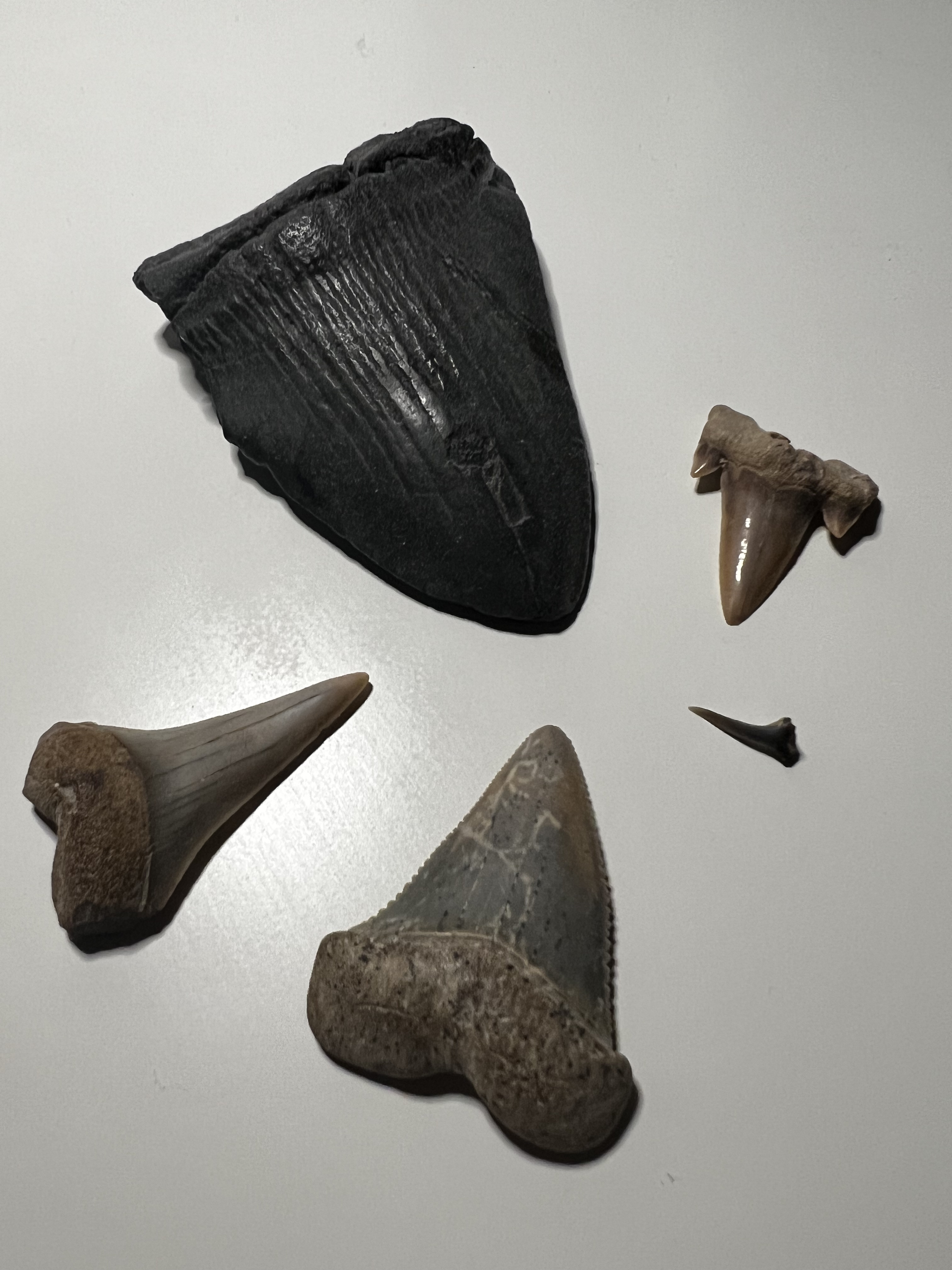
On my desk is a selection of teeth and claws. Some are real, whilst others are museum replicas. I have megalodon, great white, and mako teeth that are all the genuine article, as well as two other fossil shark teeth I’ve never been able to identify 100% (found on a beach on the Isle of Sheppey). Incidentally, the great white tooth was found on a beach in La Jolla, California.

My desk collection of modern and prehistoric shark teeth.

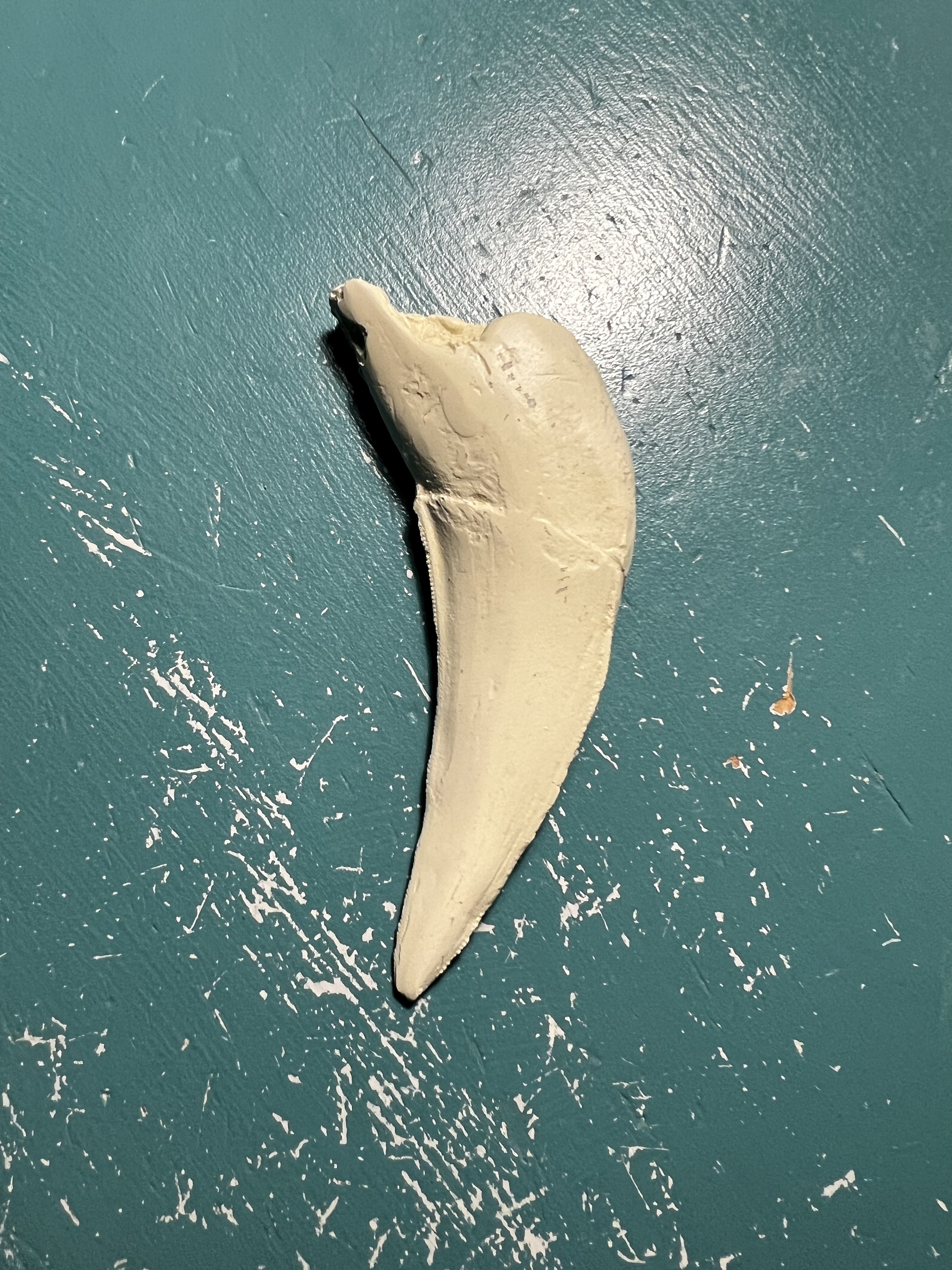
Among the replicas is the tooth you see in the picture below. It’s a cast of a canine from Homotherium. Also known as the scimitar-toothed cat, this was one of the most widely distributed sabre-toothed predators to have existed, having roamed North and South America, Eurasia, and Africa. 

Sabretooths are featured in my books, and I’m often asked why I didn’t choose Homotherium as the species that ultimately plays a major role in the ongoing storyline. There’s a couple of reasons, but first, did you know how many different sabretooths there are to (hypothetically) choose from?

Homotherium belonged to the Machairodontinae (meaning daggertooth) sub-family within the Felidae (true cat) family of mammalian carnivores. Like all in this sub-family, they are most known for their enlarged maxillary canines. In almost all cases, these protruded from the mouth on either side of the jaw and were visible even when the mouth was closed. But, in the case of Homotherium, it’s likely that despite having relatively large canines, they would have been hidden by the upper lips and lower gum tissues, just like in modern big cats. This was just one reason Homotherium didn’t make the cut. I needed a sabretooth that could be recognised for what it is – despite Homotherium’s convenient European fossil record.

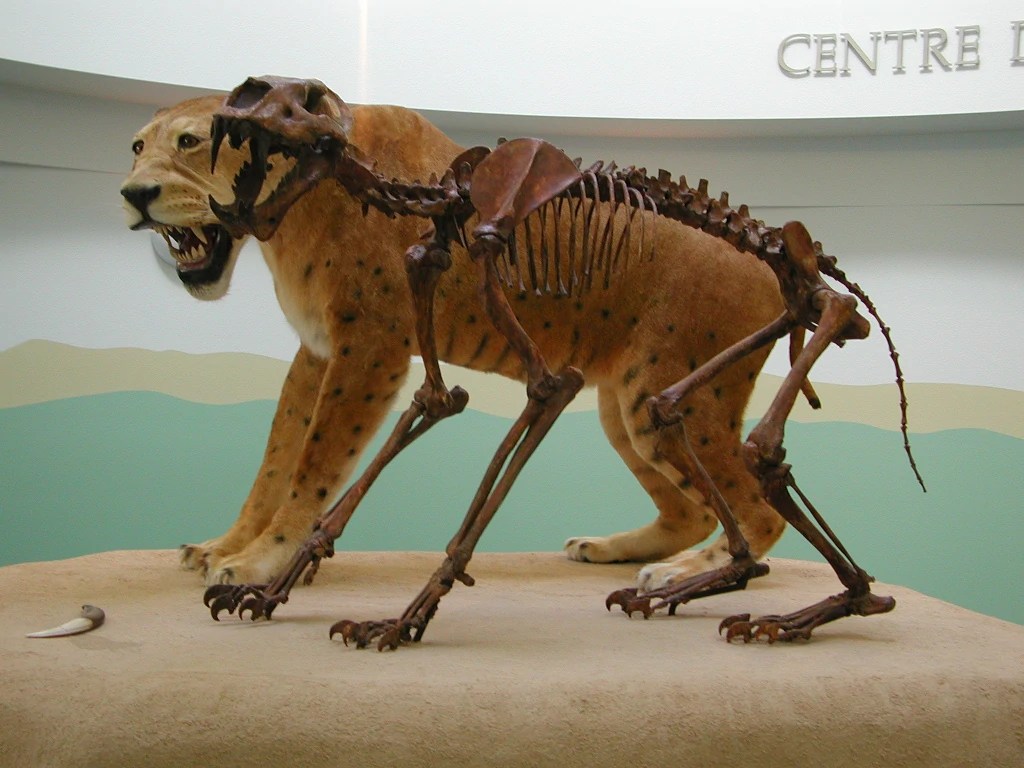
A museum replica of Homotherium, alongside a skeletal reconstruction.

Don’t be fooled into thinking Homotherium didn’t pack a punch though. They were about the size of a male African lion. And not only were its teeth designed for slashing, but also a powerful gripping bite capable of delivering deep puncture wounds.

Joining Homotherium in the Machairodontinae is also Amphimachairodus (thought to be some of the earliest sabretooths to inhabit Europe); Lokotunjailurus (think a long-legged, more gracile lioness) was known from the Miocene epoch across Kenya and Chad; Nimravides – a tiger-sized sabretooth that appeared in the late Miocene and has been found exclusively in North America; and Xenosmilus. 

If you’ve read my books, you’ll know why I’ve paused there. Xenosmilus was big, even for a sabretooth. In fact, only Smilodon (who’ll we’ll come to later) was noticeably larger in terms of mass. Yet it stands out among others in the sub-family for other reasons.

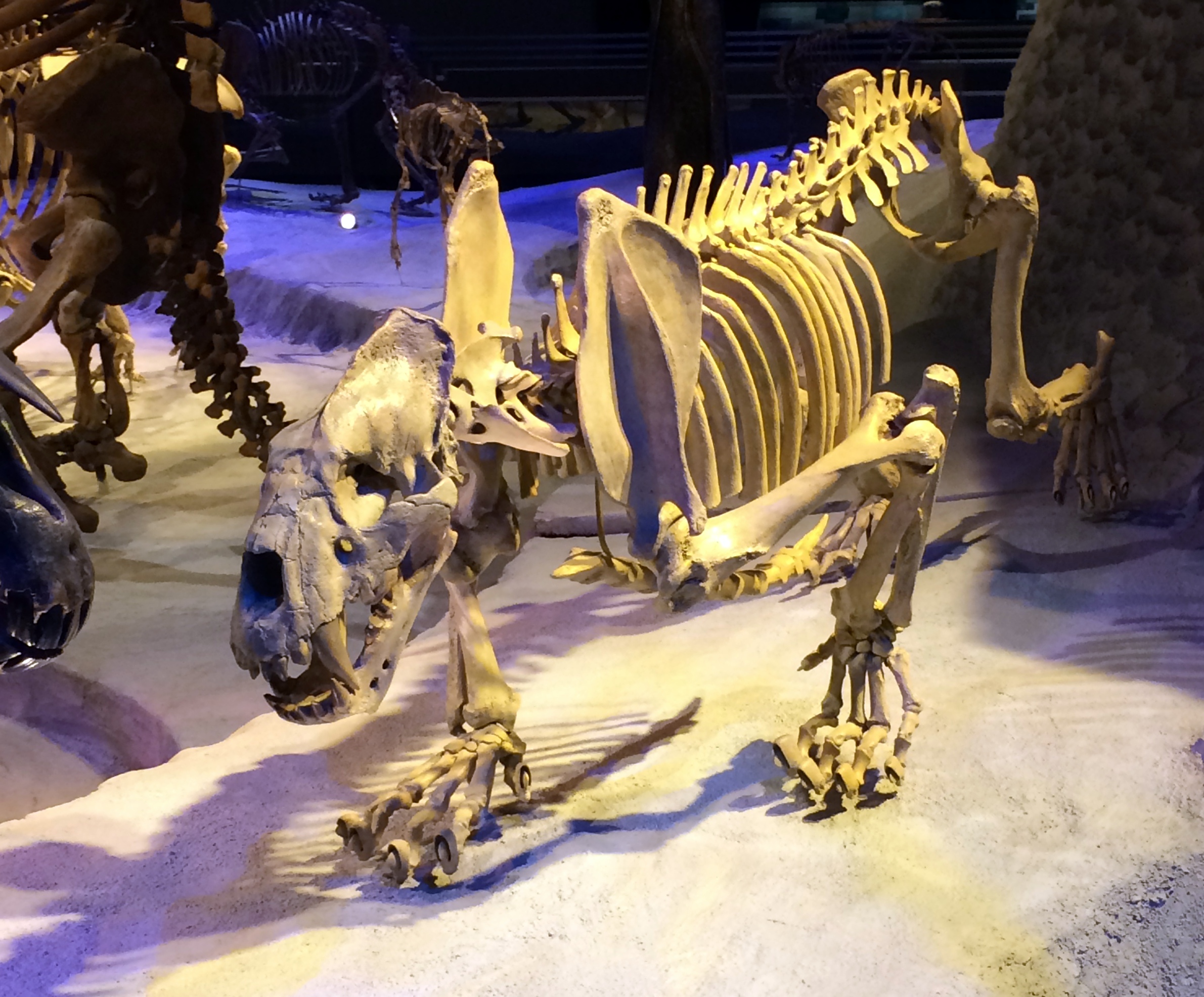
Before Xenosmilus was discovered, sabretooths fell relatively neatly into two categories. Scimitar-toothed cats, like Homotherium, had mildly elongated canines and long legs. Dirk toothed cats, like Smilodon, had long upper canines and stout legs. Xenosmilus broke the mould. It had short, muscular legs and a robust body – yet its canines weren’t as pronounced. And those teeth were different in other ways too. All of Xenosmilus’ teeth were serrated, and its top teeth aligned with the bottom in a way that enabled it to concentrate its bite force on two teeth at a time. This is where Xenosmilus gets its name – which means ‘strange smile’. The unique way that its canines and incisors operated together in biting, also led to the moniker, ‘the cookie-cutter cat’. 

The skull of Xenosmilus also features a pronounced and significant sagittal crest compared to others in the family. This meant it had phenomenal jaw strength and bite force, thanks to the muscles that would have been attached here. Together, these features have led to the theory that Xenosmilus adopted a bite and retreat hunting strategy. It would use its formidable teeth to inflict a deep wound, then wait until the prey was incapacitated. The peccary bones found close to the two type specimens indicate not only a liking for pork, but also that the species may have hunted collaboratively. 

It was these unique features that led to Xenosmilus playing the role it does in my stories. But we’re only halfway through the very top layers of the sabretooth family tree.

Xenosmilus skeletal reconstruction on display at the Florida Museum of Natural History.

A smaller, sub-group are the Machairodontini, made up of; Machairodus – meaning ‘knife tooth’ and who gives this little clan their name; Hemimachairodus – known from finds in Java and Indonesia; and Miomachairodus, known from finds in China and Turkey. They were large cats, similar in size to the smaller subspecies of modern-day tigers.

The Metailurini include Metailurus – a cat we know from only partial remains, but its elongated rear legs mean that it was probably an accomplished jumper. Others in the group include Adelphailurus, Stenailurus, and Yoshi – a species proposed to be quite cheetah like in behaviour. Because these species have only been identified from small finds, what we know about them is limited, but new details are being published regularly with study. 

The exception in this group is one of my favourites – Dinofelis, whose name means ‘terrible cat’. There’s some argument that Dinofelis belongs to the Smilodon sub-family, but for now, they lie here. These jaguar-sized cats were powerfully built with prominent sabres and extremely robust front limbs. They were also widespread, with fossils found across the North America, Europe, Asia, and Africa, from between 5 and 1.2 million years ago. It has also been proposed that Dinofelis preferred forest habitat and may have had a spotted or striped coat – like the modern day clouded leopard and ocelot. 

Finally, we come to the best known of the sabretooths – the Smilodontini. These include the three sub-species of Smilodon, but also the family groups of Rhizosmilodon, Promegantereon, Paramachairodus, and another favourite – Megantereon. The latter may have been a direct ancestor of Smilodon and was jaguar-sized, but even heavier set with lion-like forelimbs. Despite this, they are thought to have been able to climb relatively well and take down prey as large as a horse. And unlike its relative Smilodon, who was limited to North America, Megantereon was found in Eurasia and Africa too.

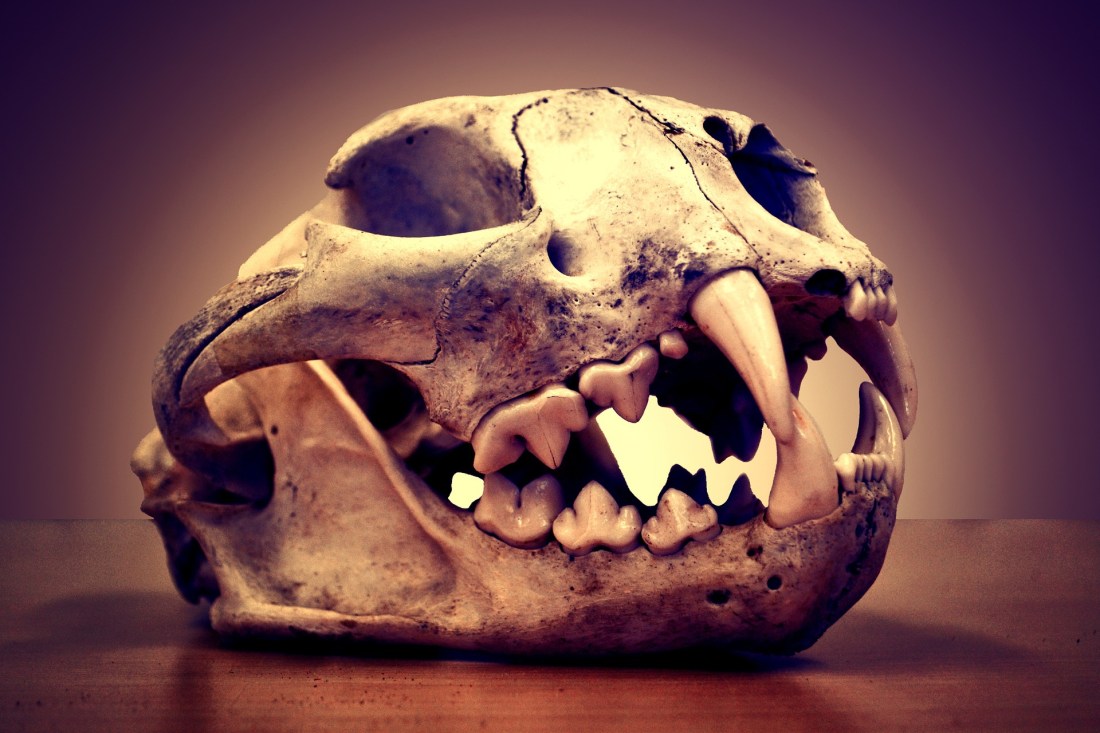
Homotherium skull

Smilodon is not only one of the most well-known sabretooths, but also one of the most easily recognised prehistoric mammals ever discovered, thanks in part to hundreds of fossils retrieved from the La Brea tar pits. Its name means scalpel, or ‘two-edged knife tooth’. Its teeth are easily the most impressive of all sabres in terms of size and were tools used for precision kills. However, these formidable upper canines were relatively weak and fragile. They had stocky, bear-like bodies and are thought to have been ambush predators that preferred thick forest and vegetation as habitat. Again, we’re not sure if they were co-operative hunters – but it is thought likely that they lived in small family groups. 

All the above sabretooths are part of the Felidae family – making them true cats. But they weren’t the only sabretooths out there. There are others, most of which fall under what are known as false sabre-toothed cats – including the nimravidae and barbourfelidae. These animals are part of the Feliformia sub-order. Again, if you’ve read my books, you’ll be familiar with that name in terms of hyenas and their fossil relatives. But it also includes animals like the Madagascan fossa, the binturong of Asia, as well as civets, mongoose, and meerkats. Cats too are part of this sub-order, and the false sabre-toothed cats are obviously more closely related than these others – but are still different from true cats.

As for sabretooths and their modern-day cat relatives, it’s thought that they shared a common ancestor from about 18 million years ago. But the family ties between the sabretooths themselves are quite strained too. For instance, Homotherium and Smilodon are probably more distantly related from each other than your typical house cat is to a tiger. But genetically, we can still forge that connection to modern day big cats like lions and tigers from studies carried out on fossil mitochondrial DNA. It’s more direct in species related to Homotherium, which is another reason Xenosmilus was a good fit on paper. It had the strength and size of Smilodon but benefited from being part of the larger sabretooth family, with more of a genetic tie (however slight) to modern big cats.

Xenosmilus skull – its name means “strange smile”.

As for would a modern-day big cat, like a jaguar, be able to breed with a sabretooth like Xenosmilus… we obviously don’t know. My conjecture is that as true cats, it’s technically possible and viable. There would no doubt be many unknown evolutionary and biological barriers to overcome, but, as a favourite fictional character facing similar concerns famously once said… “life finds a way”. 

And whereas we’ll never be able to bring back a dinosaur from its DNA to find out what it might conveniently splice with, don’t be so sure when it comes to prehistoric cats. Their DNA – from cave lions to Smilodon, has been found and identified, and in some cases, even mapped. Maybe in the near future, just like in my books, we’ll be able to visit something akin to a Pleistocene Park!

If you can’t wait until then, you can discover how these cats and others play a role in my books here.

The Modern Day Man-Eaters

When you get to pick up The Daughters of the Darkness, (hopefully sometime in the next few months), and begin to weave your way through the story, you may be surprised to find the theme of active man-eaters a little surprising and out of place in a modern age. However, the truth is that predators haven’t stopped doing what they have always been capable of when the opportunity and right circumstances present themselves.

The statistics show that man is still very much on the menu. In sub-Saharan Africa, approximately 3,000 people are taken every year by crocodiles. 1,500 Tibetans are killed by bears. 600 Indians are preyed on by leopards whilst another 85 are taken by tigers. The king of beasts naturally tallies the most kills, with lions taking 700 people on average annually.

Some of them become revered and infamous. The Tsavo Man-eaters who feature in the legacy of the fictional lions of the book, were very real, as is the tigress in Nepal known as the claw. A lion given the name of Osama killed more than 50 people in Tanzania between 2002 and 2004. He was less than four years old and suspected to be part of a local pride that deliberately targeted humans. The story you will read is not as far-fetched as you think.

Another Osama, this one a crocodile, ate its way through 83 villagers in the waters of Lake Victoria before being captured in 2005. After sixty years of snatching victims from the banks, capsizing boats and even boarding the wooden vessels to find his prey, he now lives out his days as breeding stock for Uganda Crocs Ltd, makers of fine leather handbags.

Human-predator conflict isn’t restricted to the more far flung places of the world either. Hans Kruuk, a carnivore zoologist for the University of Aberdeen concluded that wolf predation on humans is still a factor of life for Eastern Europeans after a lengthy study of death records.

In the U.S, although rare, predator related death is a possibility too. Mountain lions take an average of one person every four years. Bears (polar, brown and black species combined) take to man meat about twice a year. Wolves barely register, with one human fatality every five years in the last twenty. Only a total of three fatal coyote attacks ever have been recorded.

The risk is minimal, and I do mean minimal. You are eleven times more likely to win your state lottery than fall victim to an American predator taken to a palate based on people. Death by dog is fifteen times more likely, and death by cow or horse 32 more times likely.

But there is one killer that just can’t even begin to be compared to – us. Americans kill over 3,000 mountain lions every year. In the last two decades, over 100,000 black bears have been killed in the eastern United States alone. About 1,750 wolves are culled or simply hunted across North America annually.

The story you will read is fiction. The facts are very different. I hope you enjoy the book and find a new respect for our predators in equal measure.

In the meantime, if you need your fill of man-eating before the arrival of The Daughters of The Darkness, why not catch up with Shadow Beast first?!

wolf-1352242_1920

The Legend of One-Eye

When Peter Benchley wrote Jaws, he had no idea that he had literally created a monster. Not only did it become one of the biggest selling novels of all time, but it was made into a movie that became the first ever summer blockbuster, setting the trend ever since. What is interesting is that later on, Benchley became a committed advocate for shark conservancy, and stated that he would not be able to write Jaws based on what he had discovered about them since he first put pen to paper.

It’s important to realise that fiction is exactly that, fiction! Benchley also stated that he was no more responsible for people’s attitudes to sharks than Mario Puzo was for the mafia. Sharks do after all eat people, as do other things, whether we like it or not! In the real world man is the real monster, responsible for far more bloodshed and cruelty. But in our imaginations at least, nature has always been queen when it comes to our most primal of nightmares.

In Shadow Beast, another monstrous animal is at the heart of the story, as is my love of the Highlands and its amazing wildlife, including the endemic and endangered Scottish wildcat.

In the book you’ll find themes of conservation and re-wilding, but I wanted to do more than simply put these topics out there. I wanted to get behind them too. So with that in mind, I’ll be donating 15% of my February book sale profits to Wildcat Haven and the Save the Scottish Wildcat campaign. More details about their work can be found at http://www.scottishwildcats.co.uk

At the same time, I wanted to celebrate their work with some of my own, and I thought it would be a great opportunity to explore the origins of a character who makes a legendary entrance in the book. One-Eyed Tom, the wildcat.

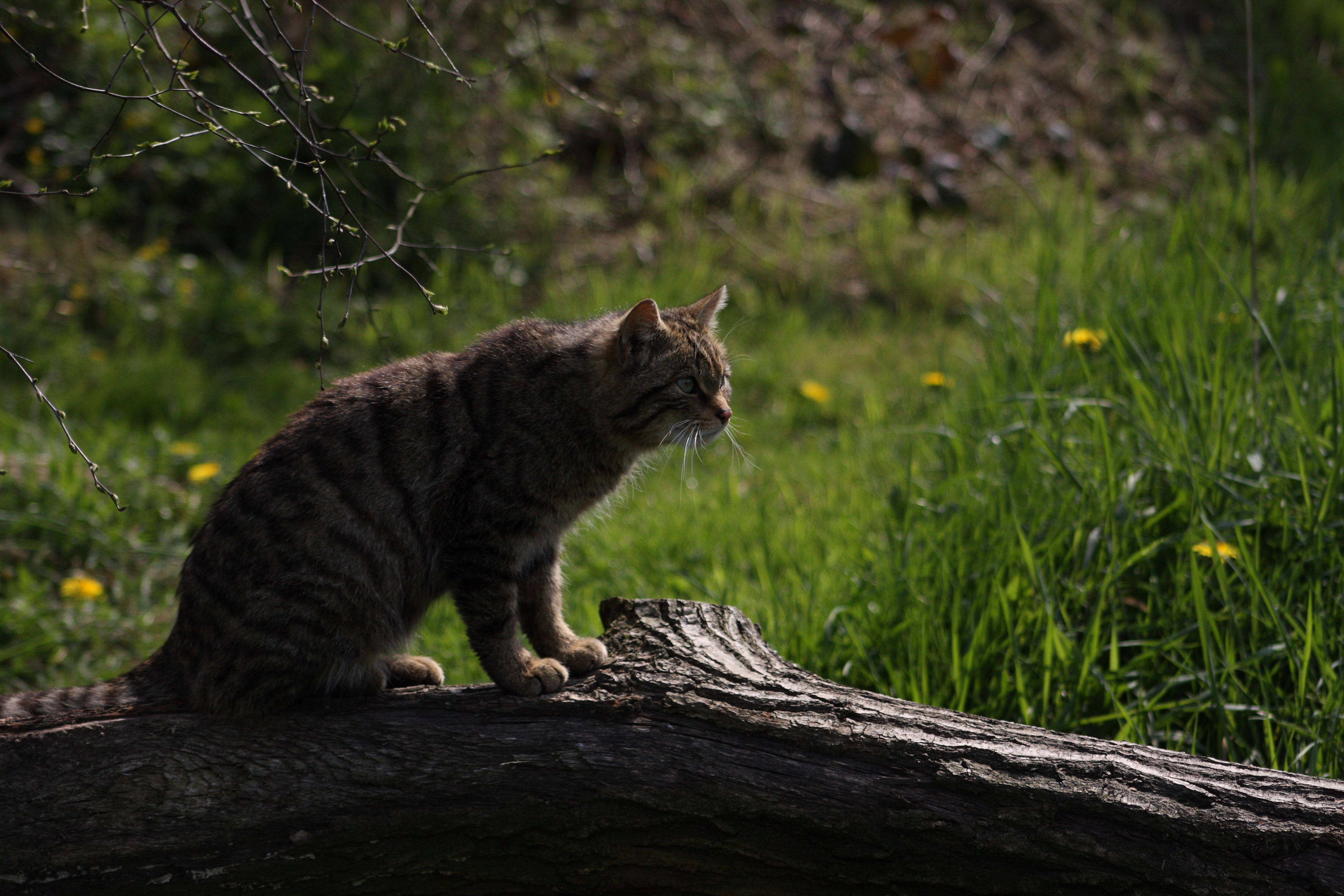
Wild Cat, BWC0005

The Legend of One-Eye

The world around him was bathed in the sepia glow of a night-long twilight only his eyes could see. Two silent bounds took him to the edge of the stream, where a flick of his paw fished the unsuspecting frog from the water. There was no pause to play or pounce tonight, and he crunched and gobbled down the still wriggling amphibian in quick, successive bites. Every sense was on heightened alert. Even as he ate, he glanced with furious purpose in the direction of every sound his pricked ears caught.

He moved off, checking his path and surroundings every few steps. He stopped at a favoured mound of brown, dead heather to scent mark the border of his territory that ran along the stream. His face crumpled into a silent snarl. An intruder had crossed the path and left their own musk lacing the crumbly soil. The big tom sprayed the area liberally with urine, then meticulously rubbed the heather and ground with the scent glands in his cheeks. He scraped the damp ground into a mush with his back feet and continued on his path.

The piercing, single scream made him stop in his tracks. His head snapped to a path to the left, heading deeper into his territory. He knew the rabbit warren that the path led to, and he now realised the purpose behind the intruder’s insurrection. Such blatant disregard to his presence and home could not be tolerated. He turned onto the path, hunkering down as he made his way along it with silent, shadowy focus.

The sandy soil veiled his approach by absorbing his footfalls in noiseless padding. He approached the ridgeline and paused at its top. This was where he normally watched and waited for the rabbits to emerge into the dust-bowl clearing in front of him. The slight elevation and cover of the heather-lined ridgeline was the perfect ambush site. He could see where the intruder had launched from the same spot, and his eyes searched him out, knowing he was close.

His hardened stare came to rest on a crouched silhouette on the far side of the clearing. As the hairs in his ears fluffed and expanded to elevate his hearing even further, he picked up the sound of crunching, crushing teeth. Then the wind changed direction, and a cool breeze brought the scent of death and the younger cat to him.

He yowled his intent, unable to contain his rage any longer. He barrelled forward, growling and hissing as he covered the ground in rapid, rippling steps. His snarl was answered by a quivering, spitting growl of savagery. His adversary stepped out into the moonlight, boldly meeting his gaze. But the big tom could sense the hesitancy, reflected in the curve of the newcomer’s back and by the way he half-sat on his rear haunches.

The big tom growled, flicking his tail back and forth in a maddened fury against the ground. The yowl in his throat built to a scream. The younger, smaller male answered with his own caterwaul of threat. The two wildcats stood almost nose to nose, their fur bristling on end and their muscles taught and ready for combat. Each stared into the mirrored savagery before them. The time had come.

In a sudden moment of doubt, the young cat tried to dash past his adversary, but the big tom was too quick. He rammed the off-balance intruder with his shoulder and a butt of his head, his rear paws lifting off the ground as he rippled into a pounce that sent four sets of extended claws and his flashing fangs through the fur and flesh of his screaming opponent.

The younger cat didn’t hesitate to answer the assault, clasping the tom’s head in the vice-like embrace of its front claws. As the big tom punched and pawed repeatedly at the intruder’s back and stomach, his adversary twisted round and clamped his jaws over his muzzle, now in a position to also slash away at the exposed flank of the big tom with his hind paws.

They clung to each other, growling, hissing and snarling through a pain that only fuelled their fury. But a lucky scrape of the young cat’s hind leg sent the big tom spinning backwards, releasing the intruder from his fangs. The young male raced to the ridge and sank into its shadow, pausing at the top to glance and glower at the one whose territory it had invaded. The older cat had already turned his back, knowing he had won the fight. He now nosed at the dead rabbit, ready to claim his prize as victor. The intruder was overcome with renewed fury, and launched into the air, his front claws reaching out for a deadly embrace. The big tom whipped round in a fearsome frenzy, saw his opportunity, and leapt too. His fangs found the throat of the young cat and he used his bulk and might to bring him to the ground. The intruder writhed in silent revolt as the pressure on his larynx strangled the life from him. His forepaws and claws rained flailing blows on his killer’s head, but it was to no avail. A last, limp cuff slashed across the big tom’s left eye as the young cat’s world went black.

The wildcat grimaced and spat, rolling in the dirt with the pain. He screamed in fury, searching out the path by feel as he howled his way back to the stream, blinded by his blood and rage. The big tom slapped and sucked at the water, ducking his head under as he occasionally did to fish. After some time, the pain began to ebb, and he wandered away towards a favoured hollow to rest.

The creature slunk into the clearing and nosed the dead rabbit, before slumping down onto the sandy soil beside it. It casually skinned its meal with a few gentle tugs of its jaws, and it swallowed the meagre mouthfuls of meat it provided. It rose again and padded over to the dead wild cat, a distrustful growl rumbling in its throat. It had come across the smaller cats before as a youngling and knew their savagery and flickering charge all too well. It knew better than to tolerate their presence. It picked up the dead wildcat in its jaws and disappeared back into the shadow of the waiting forest.

~

If you haven’t bought a copy of Shadow Beast on Kindle or in paperback, now you can get a great book and help what is very likely the most endangered cat in the world at the same time! Click on the link below to get your copy today!

http://hyperurl.co/fuuugp