For a while now I’ve been keeping two houses and doing neither of them justice. That ends today.
From here on, my writing lives at Field Notes by Luke on Substack. The nature essays, the conservation arguments, the pieces on craft and independent publishing, and yes — the cryptids and the folklore and the things people swear they saw on a back road at dusk. All of it, in one place, arriving in your inbox the moment it’s finished.
This blog isn’t being deleted. The archive stays exactly where it is, and I’ll still post here when something genuinely suits the format. But if you want the work — the real work, as it appears — Substack is where to find me.
Why
Partly it’s the reason any writer eventually chooses one desk over two. Split your output across platforms and you don’t get twice the readership; you get half the writing.
But mostly it’s this: readers have been telling me for months that emails they signed up for never arrived, that comments disappeared, that they’d assumed I’d stopped writing altogether. That’s a poor arrangement for everybody, and no amount of tinkering has fixed it. Substack does one thing and does it plainly. I write, and it lands with you. There is no feed deciding whether you’ve earned it this week.
What’s waiting
Most of it is free. Sign up, pay nothing, and you’ll get the essays and field pieces as they publish — more of them than you’ve been getting here, and more ambitious. Substack is where I’ve decided to stop playing safe. The research goes deeper, the arguments have edges, and I’m rather less interested in being agreeable than I used to be.
There’s also a paid side, and it’s worth explaining what it actually is, because it isn’t a tip jar.
The Reyes Files is a monthly serialised novel-in-episodes. Marcus “Red” Reyes is a former Army combat tracker who works the cases nobody files properly — the animal that shouldn’t be in that county, the death that got written up as an accident because the alternative was unwriteable. There is nothing supernatural in it. Everything is treated as a biological problem, tracked and solved with real fieldcraft, because that’s the only version of this I have any interest in writing.
The pilot episode is free to read in full. Go and see whether it’s for you before you spend a penny.
Paid subscribers get every episode, the full back catalogue, and the run of the archive. Founding members also get the year’s episodes as a printed paperback, which I post out myself.
What I’m asking
Just this: come with me.
If you’ve been reading here for years, you’re the reason any of this works, and I’d rather not lose you to a platform’s bad plumbing. It takes about fifteen seconds and costs nothing.
Two weeks ago I sat in the front row of the BFI IMAX and watched a palaeontologist go weak at the knees over a brachiosaur. The film was Jurassic Park, screened for London Climate Week by The Wildlife Trusts, and before the lights dropped, Craig Bennett – Chief Executive of The Wildlife Trusts – made the point that we perhaps could never have imagined at its inception: the film is thirty-three years old, and its science fiction has quietly become science. De-extinction is no longer a plot device. It is a funding round.
I did not expect, a fortnight later, to be writing about the man who played that palaeontologist because he had gone.
Sam Neill died on Monday in Sydney, aged 78. His family called it sudden and unexpected, and were careful to say he remained cancer free — he had beaten the rare blood cancer he was diagnosed with in 2022, and announced as much only that spring. That is the cruelty of it. Many of us had let ourselves believe we would be seeing a great deal more of him.
I’d like to pay my respects the way this blog knows how: by noting that Sam Neill spent an extraordinary amount of his career standing next to monsters, and that almost nobody did it better.
Dr Alan Grant, and the wonder that curdles
Let’s start where most of us did. Every kid who grew up in the eighties had a dinosaur phase; Alan Grant showed up and quietly extended ours by another thirty-odd years. He was Indiana Jones with a rock hammer — a palaeontologist who would rather be knee-deep in a Montana dig than anywhere near people, least of all children. One can sympathise. What Neill understood about the part was that the wonder and the wariness are the same muscle. Watch the sauropod scene: the open-mouthed awe of a man who has spent his life with the dead and is suddenly handed the living. He recaptures this beautifully, despite all the danger via dinosaurs his character has been exposed to by then, when he spots the dreadnoughtus in Jurassic World: Dominion. But also watch how quickly that awe learns to be afraid. By the end he will not endorse the park, and he has become, almost against his will, the fierce protector of two frightened children.
The film’s explicit sermon on hubris belongs to Ian Malcolm — the line about scientists being so preoccupied with whether they could that they never stopped to ask whether they should, which I have leaned on myself when writing about resurrected wolves. But Grant is its conscience in a quieter register: the scientist who looks at the miracle and says, gently, that some things are not ours to command. Neill played that not as a lecture but as a kind of grief.
It’s been a while since I drew anything, but this image has been in my head all morning. Farewell Dr. Alan Grant.
When the fiction walked out of the cinema
Which brings us back to that IMAX introduction. In 2025 a Texas company, Colossal Biosciences, announced it had “brought back” the dire wolf — a claim I picked apart at length elsewhere, because what they had actually made was a gene-edited grey wolf in a very good marketing coat. The dodo, the thylacine and the mammoth are all on their stated to-do list. Grant’s fictional dilemma has become a real one, and we are all extras in it now.
The Hunter, and a guide you cannot trust
Here is where I had meant to cast Neill as the wise voice steering a hunter towards mercy — and where the film politely refuses to let me.
In The Hunter (2011), Willem Dafoe plays a mercenary sent to Tasmania by a biotech firm to find the last thylacine and take its DNA, killing any others so that no rival can have them. Neill plays Jack Mindy, the local who meets him off the plane and shows him the country — and who turns out to be a man with rather too many secrets and divided loyalties, closer to the fire that guts the film’s grieving family than to its conscience. It is Dafoe’s hunter, not Neill’s guide, who finds the moral centre, and he finds it the hard way.
I think that is the better note anyway. Mindy is a wonderfully compromised piece of work — friendly, helpful, and quietly on the wrong side — and the film’s real argument is that when the last of a kind is at stake, nobody’s hands stay clean. The thylacine Dafoe hunts was formally declared extinct in 1986; it is now, uncannily, a resurrection candidate. The monster and the man have swapped places, and Neill is right there in the middle of it.
The wider bestiary
Grant may be the headline, but Neill kept unlikely company for decades. He was the grown Antichrist in Omen III: The Final Conflict. He lost his mind aboard a very haunted spaceship in Event Horizon and inside a Lovecraftian small town in In the Mouth of Madness. He shared the sea with a killer in Dead Calm and something far worse in Possession. Time and again he was cast as the sane, civilised man at the threshold of the unspeakable — and he lent those films a gravity they had no right to expect, never once looking down his nose at the genre paying his wages.
The man himself
Neill was born in Northern Ireland in 1947 and raised in New Zealand from the age of seven, and for all the Hollywood years he never really left the land. He kept a Central Otago vineyard and a farm full of ducks, pigs and cattle that he introduced to the internet, by name, during lockdown, to the delight of several million strangers. Offered a knighthood, he waved the title away as far too grand, though he quietly accepted the honour in 2022.
And he was, by every account, a deeply kind man. In 2024 he appeared on the ABC series The Assembly, interviewed by a room of autistic journalism students, and a young woman named Abby asked him the best lesson his parents had taught him. He stopped. He teared up, admitting he could not quite say why the question had floored him, before landing on his mother’s very undramatic wisdom: that sometimes you simply have to pull yourself together. It went round the world because it was so plainly unperformed.
He spoke about his illness the same way — without self-pity, and with a line I keep coming back to. He was not frightened of dying, he said; he would just find it “very irritating”, because there were things he still wanted to do.
There were. There would have been more. Thirty-three years on from that first sauropod, the beautiful, terrible animals he stood beside are climbing out of the past and into our laboratories — and it feels right that the man who taught a generation to look at them with equal parts hunger and caution should get the last, quiet word.
Sometime in early 1888, a small government steamer was making four miles an hour up the Congo River when she ran aground. There’s nothing remarkable in that — Africa’s second longest river and the world’s deepest is a maze of shifting sandbanks, and any pilot expects to feel his hull kiss the bottom now and again. What was remarkable was that this sandbank began to heave. The water around the bow churned in a way no sandbank has any business doing, and the steamer’s engineer, leaning over to find the cause, watched the bank itself detach from the riverbed and bolt. It was a crocodile. One longer, he was certain, than his forty-two-foot boat, and it crossed the bar and tumbled into deep water before he could reach for a rifle. They had run the steamer clean into a living animal at speed, jammed it into the sand, and it had shrugged them off and left without a mark on it.
The engineer was John Reinhardt Werner, and the animal, if the Congo’s rivermen were to be believed, was the Mahamba.
A witness in the wrong century
Werner is an unusually good witness for a monster, which is precisely what makes him a problem. He was not a folklorist collecting tales around a fire, nor a Victorian showman selling a story. He was a working engineer keeping the boilers running on a colonial waterway, and he wrote his account up plainly in A Visit to Stanley’s Rear-Guard (Blackwood, 1889) as one observation among many practical ones. His steamer, the A.I.A., took her name from the Association Internationale Africaine — the “philanthropic” society, dedicated on paper to lighting the darkness of Africa and ending the slave trade, that served as Leopold II’s cover story while he assembled the private empire that would become one of the most murderous colonial regimes in history. I wanted to make that clear, because the romance of the Victorian riverboat curdles the moment you remember what the riverboat was for. Werner was part of the apparatus. His crocodile sightings come to us stamped with the flag of a project built on forced labour and mass death.
That grim provenance aside, Werner’s testimony is specific. He described these giant crocodiles as almost common on the river, and he did not hedge on size. On a low sand-spit beyond the grasses, he wrote, one might see a monster of perhaps fifty feet; he claimed to have seen several considerably longer than the A.I.A. On one occasion, stalking ducks across a sandbank with only a shotgun, he found the largest crocodile he had ever seen lying between him and his supper. Measuring it by eye against the steamer moored three hundred yards off, he reckoned it a full fifty feet long, with the ridged crest of its back standing four feet clear of the sand. He sent a boy for his rifle, thought better of the whole enterprise, and in retreating spooked the ducks — whereupon he took a shot at them, missed, and startled the crocodile into the water. It is a very funny, very human anecdote, and it has the ring of a man reporting exactly what he saw rather than embroidering a legend.
The scale problem
The Nile crocodile, the largest predator these waters officially hold, is a genuinely formidable animal that tops out at roughly twenty feet. A big saltwater crocodile — the largest living reptile on Earth — reaches perhaps twenty-one. Werner was describing something more than twice that length: a creature outside the entire range of any crocodile known to science, living or dead.
And that last phrase is where the Mahamba does something most cryptids cannot. It out-measures the fossil record.
The usual yardstick reached for here is Sarcosuchus imperator, the Cretaceous giant nicknamed the “SuperCroc.” When Paul Sereno’s team described it for a rapt public in 2001, the headline figure was around forty feet — a crocodile-shaped monster that shared the rivers of what is now Niger with dinosaurs and, on the strength of a five-and-a-half-foot skull, may occasionally have eaten them. Forty feet. Even by that generous early estimate, Werner’s fifty-foot animal is the larger beast.
But the comparison has sharpened since. A 2019 reassessment pulled Sarcosuchus back to a more conservative maximum of about thirty-one feet — and the other contenders for largest-ever crocodilian, Deinosuchus and the giant caiman Purussaurus, cluster in the same thirty-three-to-forty-foot bracket, all of them reconstructed from fragmentary bone. In other words, the best-supported estimate for the largest crocodyliforms that ever lived now sits comfortably below what Werner claimed to have watched sunbathing on a sandbar. The Mahamba is not merely bigger than any living crocodile. It is bigger than the biggest crocodile the earth has ever produced a fossil of.
That should give even a sympathetic and optimistic reader pause.
The second stream
The easy move would be to file Werner under Victorian exaggeration and close the book. What complicates that is a second, entirely independent line of testimony arriving nearly a century later.
In the 1980s the biologist Roy Mackal travelled the Congo basin chasing Mokele-mbembe, the region’s more famous “living dinosaur.” Along the way he collected the vocabulary the Bobangi people used for the animals of their river, and it was more precise than an outsider might expect. There was the ordinary crocodile. There was the Nguma-monene, a long, ridge-backed thing that was something else again. And then there was the Mahamba: not a separate kind of animal but a crocodile in every way that matters — same shape, same habits — only monstrously, impossibly large, forty to fifty feet and more, said to lie up in long tunnels dug into the riverbanks. The people describing it were not confusing it with anything. They were insisting, from direct familiarity with the real crocodiles all around them, that this was one of those and simply far too big.
So we have two witnesses who never met, separated by a hundred years and by every difference of language, purpose and worldview, describing the same specific impossibility in the same specific water. That is a genuinely uncomfortable coincidence, and it is the strongest thing the Mahamba has going for it.
What could it be?
The serious hypothesis is a relic: a surviving or simply undescribed giant crocodilian, a lineage that kept the old Cretaceous dimensions going in the vastness of the Congo swamps where no one has ever managed a proper survey. It is not absurd on its face — the region is enormous, poorly mapped, and has surrendered new large vertebrates within living memory.
The less serious end of the shelf holds the idea, which surfaces now and then in the cryptid literature, that the Mahamba is no crocodile at all but some freshwater relative of the mosasaurs. A 1954 sighting in the Maika marshes is sometimes pressed into service here — a large reptile that reportedly lifted an abnormally long neck from the water before diving. But that long neck pulls in the opposite direction from everything else on record; it describes a different animal from Werner’s flat-backed, short-legged, unmistakably crocodilian giant, and folding the two together muddies rather than strengthens the case.
Then there is the explanation that requires nothing new at all. A single, genuinely enormous Nile crocodile — an old, exceptional individual pushing the upper limit of its kind — glimpsed across open water, with no fixed reference for scale and a rifle conspicuously absent, is exactly the raw material from which fifty-foot estimates are honestly made. Water flatters length. Distance deceives. Fear does the rest. Werner measured his monster against a steamer three hundred yards away, and even a careful man measuring by eye across that gap can be handsomely wrong.
I remember being on the banks of the Chobe River in Botswana, and just happening to look up. At some distance – my estimation was not dissimilar to Werner’s three hundred yard steamer – I saw what I thought was a large tree floating in the centre of the river. It took me a few moments to realised it was of course, a huge crocodile. The size really threw me off and at that distance, I almost certainly over estimated it. But I did think it was every inch of twenty feet, if not more. And I made the comparison to what was in front of me – a tour boat.
So, I have some sympathy for anyone matching boat sizes to unusually large crocodilians. But I think we can accept it’s not an exact science.
Where are the bones?
Sarcosuchus skull at the Museum d’Histoire Naturelle. No children were harmed in the taking of this photo 🙂
Which brings us to the question that closes the file on the Mahamba, as it closes the file on most of its kind.
We know Sarcosuchus was real because it left us a skull the length of a man and enough skeleton to argue over. We know the outer limits of crocodilian size because the fossil record, patchy as it is, has physically produced the animals. The Mahamba has produced witnesses — good ones, independent ones, a century apart — and not one confirmed bone. No skull, no skeleton, no shed tooth the size of a hand, nothing hauled from a bank or found bleaching on a sandbar. For an animal supposedly common enough that a working engineer saw several in the course of doing his job, that absence is very loud.
Sarcosuchus outgrew the living world and left us its remains. The Mahamba outgrew even Sarcosuchus, and left us only the water it disappeared into.
From the hills of Wales to the heathlands of Dorset, reports of large, unidentified cats continue to surface across the British countryside.
Most are brief encounters. A shape crossing a field. A dark animal slipping through woodland. A dog walker forced to stop mid-stride as something far larger than a domestic cat disappears into the hedgerow.
These reports are rarely treated seriously in the national press. Often they appear in the odd-news columns or alongside stories about mythical creatures and folklore.
Yet they refuse to disappear into the shadows alongside their subjects. And over the past few months, several new sightings have once again brought Britain’s big cats back into the open.
Do big cats stalk Britain’s Bodmin Moor?
A Panther Prowl’s Ed Sheeran’s Estate.
One of the most widely circulated reports recently came from Suffolk, where a large black cat was seen near the £37 million country estate of musician Ed Sheeran.
Witnesses described a large dark animal moving across farmland close to the property. The sighting prompted speculation that a so-called “panther” might be roaming the countryside and the story travelled quickly through national and international media, largely because of the celebrity connection.
But aside from the location, the details themselves were familiar to anyone who has followed the phenomenon for long. A large, dark cat moving with fluid, purposeful motion, low to the ground. Exactly the sort of description that appears again and again in regional sightings.
Cats Across the Countryside
All over Britain, similar reports continue to surface.
In Dorset, a sighting on Canford Heath near Poole described what a witness believed to be a black panther moving through open heathland.
In Wiltshire, a dog walker near Chippenham reported encountering a large cat on a popular countryside footpath. The witness described an animal significantly larger than a domestic cat, with a long tail and dark colouring.
Further west, a report from Newquay in Cornwall described a large cat seen at distance moving across farmland. Cornwall has long been one of the regions most frequently associated with Britain’s “phantom cats”, often linked with the legend of the Beast of Bodmin Moor.
In North Wales, motorists and walkers have also reported large feline shapes crossing rural roads or moving along field margins. One witness claimed the animal they saw was nearly the height of a car bonnet as it passed through the roadside vegetation.
These accounts vary in detail, but the core descriptions tend to be remarkably consistent.
A powerful, long-tailed cat – often dark in colour, but tan and other hued cats are also reported, seen briefly before disappearing into woodland, scrub, or across farmland.
Britain offers significant habitat that could harbour unseen predators.
A Long History of Sightings
Reports of large cats in Britain are of course, nothing new.
Newspaper archives contain sightings dating back decades, particularly from the late twentieth century when stories of “phantom panthers” became a recurring feature of rural folklore.
Many researchers have suggested these reports may trace back to the Dangerous Wild Animals Act of 1976, which introduced licensing requirements for keeping exotic animals. The persistent theory is that a number of privately owned big cats may have been released into the countryside when the law came into force. Since then, further releases and escapes have contributed to more recent sightings.
We might not have direct hard proof or evidence. But, given the scale of the exotic animal trade – both legal and illegal, and the lack of funding to check on many privately-owned animals and licensing both back then and even more so today, it’s not without merit.
And sightings have never stopped.
From Exmoor and Dartmoor to the Surrey Hills, the Welsh countryside, and parts of Scotland – reports of large cats have popped up year in, year out, and continue.
Missed by the Media
Despite the number of sightings over the years and the many reliable witnesses, which include respected journalists and presenters like Clare Balding, the subject is rarely treated with much seriousness in mainstream media.
Often it appears in the same category as folklore creatures or mythical monsters.
The BBC’s Countryfile, for example, recently included Britain’s phantom cats in a list of “mythical beasts”, placing them alongside legendary creatures rather than unexplained wildlife reports. This framing shapes how the subject is perceived.
Instead of examining witness testimony, ecological plausibility, or historical context, the discussion often becomes a curiosity piece – something to be lightly dismissed rather than investigated.
Yet eyewitness testimony remains one of the primary ways wildlife is documented in many parts of the world.
The same observational accounts that guide conservation surveys in remote landscapes are often treated very differently when they occur in the British countryside.
Panther or Puma?
Another recurring problem is species confusion.
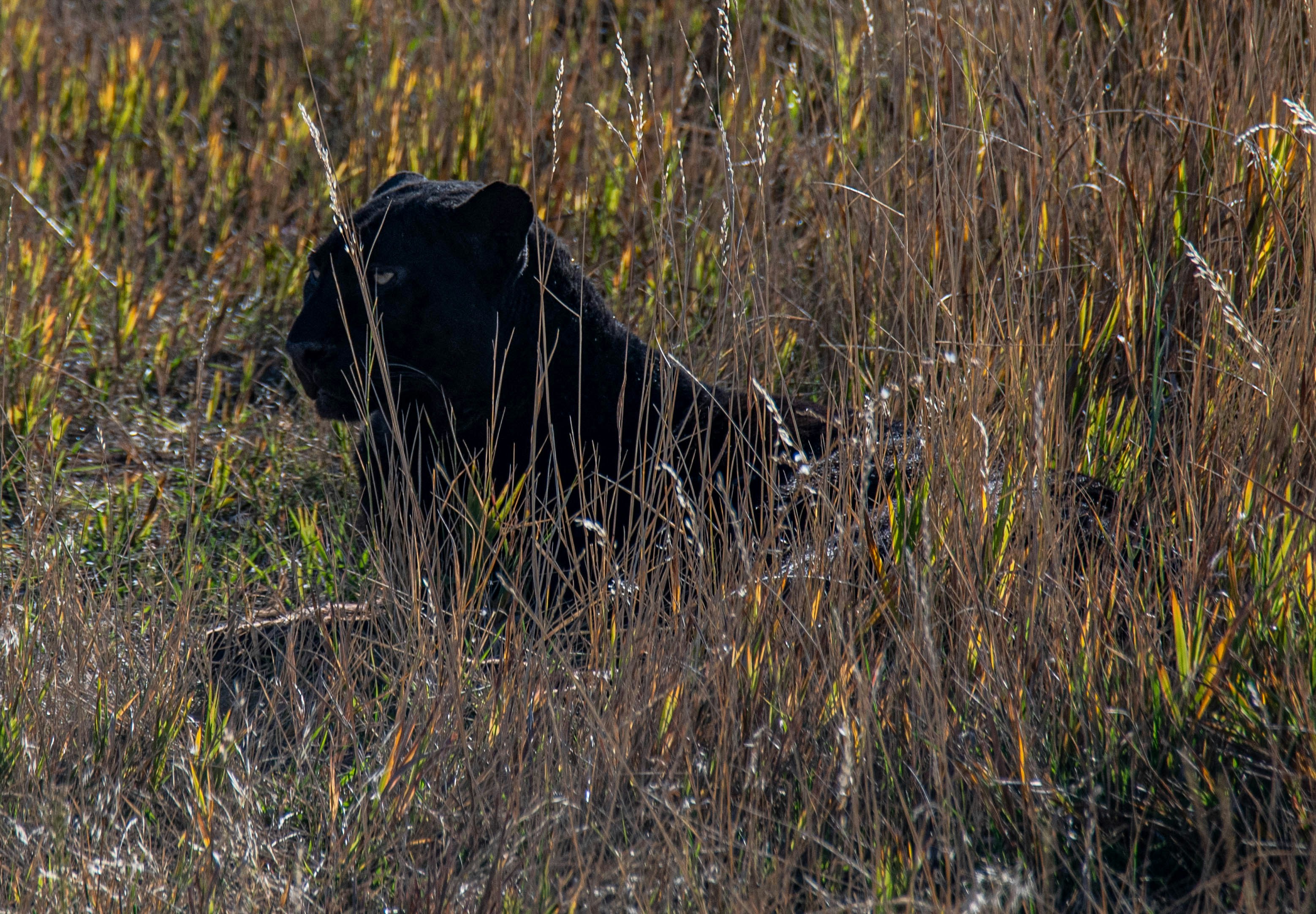
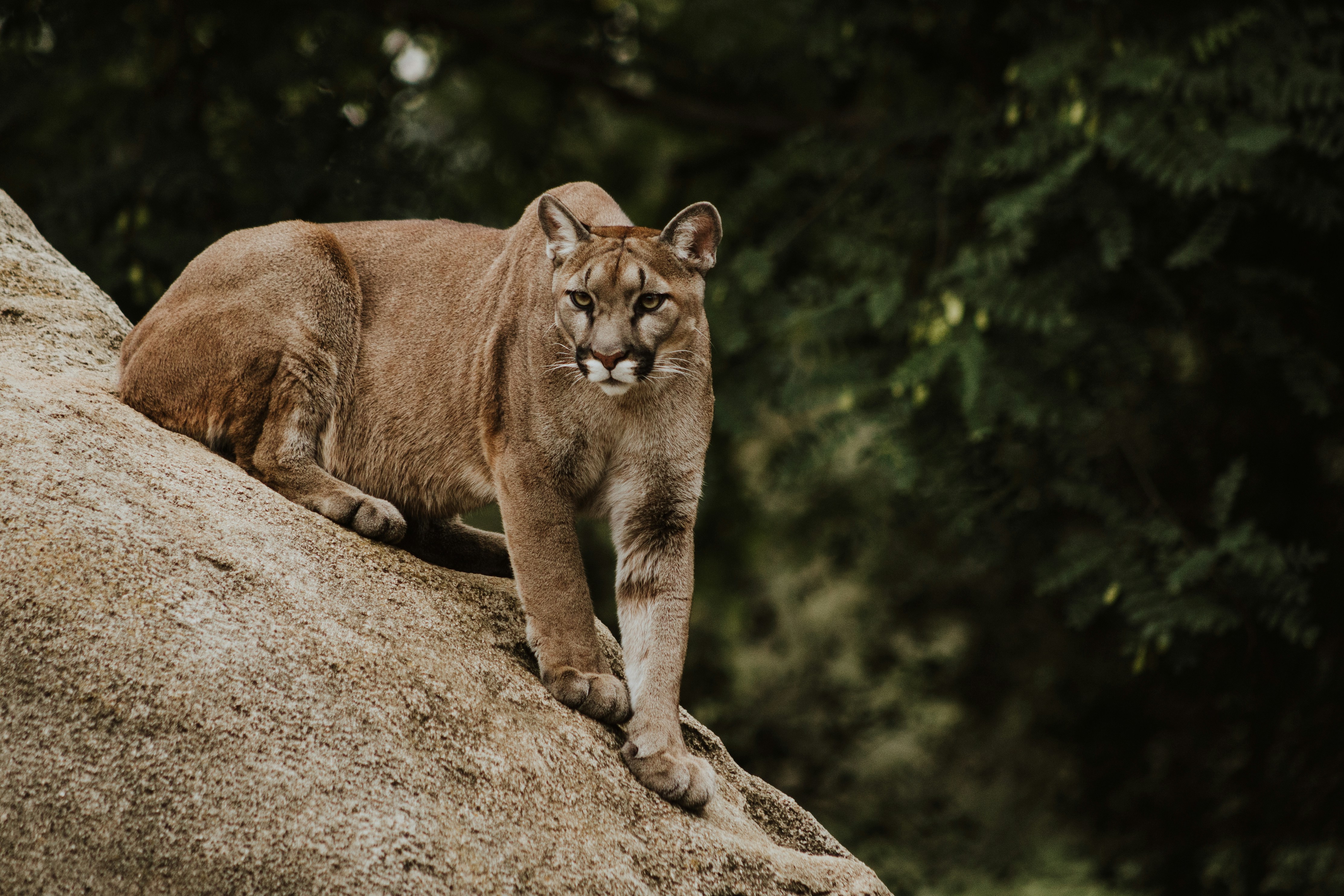
Many reports describe a black big cat. But media coverage frequently labels these animals as pumas. The issue with that identification is simple: pumas do not occur in black form. There are no verified melanistic pumas anywhere in the world.
Black big cats, commonly called “black panthers” – are usually one of two animals: leopards or jaguars. In Britain, the most plausible identification would be melanistic leopards.
Leopards are adaptable animals capable of surviving in a wide range of habitats, from rainforest to semi-arid environments and mountainous regions. They are also far more likely than most big cats to survive undetected in fragmented landscapes.
Pumas too, also known as mountain lions and a myriad of other names, are some of the most adaptable cat species, found from the Florida everglades to the high plains of Chile and the deserts of Arizona.
Why Some Researchers Look to Malaysia
If Britain does host a small surviving population of melanistic leopards, one intriguing possibility involves the Malayan leopard.
In the rainforests of the Malay Peninsula, south of the Isthmus of Kra, melanism is extremely common. In fact, the majority of leopards in this region are black.
Interestingly, this detail surfaced while researching my current novel Predatory Nature, where the history of exotic big cats imported into Europe during the twentieth century led me down a rabbit hole into the unusual genetics of Malayan leopards.
These cats are also smaller than many other leopard subspecies, which historically made them attractive to exotic animal collectors and the trade supplying them.
During the mid-twentieth century, when keeping exotic animals became fashionable in parts of Europe and especially the United Kingdom, animals described as “black panthers” were imported from Southeast Asia, to the point that the population was significantly impacted. And today, the population is dominated by those sporting the melanism gene.
The smaller size of the Malaysian sub-species helped fuel the mistaken belief they would be easier to manage. In reality, of course, a leopard is never a domestic animal.
But if any such cats were released or escaped decades ago, their melanistic coats would have offered a natural advantage in Britain’s woodland landscapes, particularly in low light, where their rosette markings are almost invisible – which is a factor that should be taken into account when witnesses describe cats as “jet black”.
Mystery in the Hedgerows
None of this proves definitively that Britain currently hosts a breeding population of large cats.
Most sightings could still have more mundane explanations: misidentified dogs, escaped exotic pets, or fleeting glimpses of ordinary wildlife seen in poor conditions.
Everyday domestic cats are also likely culprits. The recent Devon sighting is a possible example. Despite gaining significant coverage in the press, and comparisons to the Beast of Bodmin in neighbouring Cornwall – the animal in this video moves like a domestic cat, and has the head shape and movement in line with this. However, the published video quality is very poor and it is very difficult to make any kind of certain identification. A feral cat, which can grow to larger sizes, is also a likely possibility.
But the persistence of the reports and the consistency of many descriptions keeps the question alive and shouldn’t be dismissed or derided.
There’s a good chance the truth lies somewhere between folklore and biology. It’s not just possible, but likely, that there are a small number of big cats of more than one species surviving quietly in remote pockets of the British countryside.
Combined with the enduring human instinct to see shadows move at the edge of the woods and wonder what might be watching back, it’s unlikely reports are going to disappear.
Either way, Britain’s phantom cats remain one of the country’s most enduring wildlife mysteries. And every now and then, someone sees something crossing a field that refuses to fit neatly into the explanations we already have.
For this week’s Man-eater Monday, we’re deviating slightly into a more niche area – that of individual animals that have killed people, seemingly deliberately and consistently, but not with the intent of consuming them nor necessarily even being a predatory species. Enter a name known around the world, given to an animal usually internationally adored.
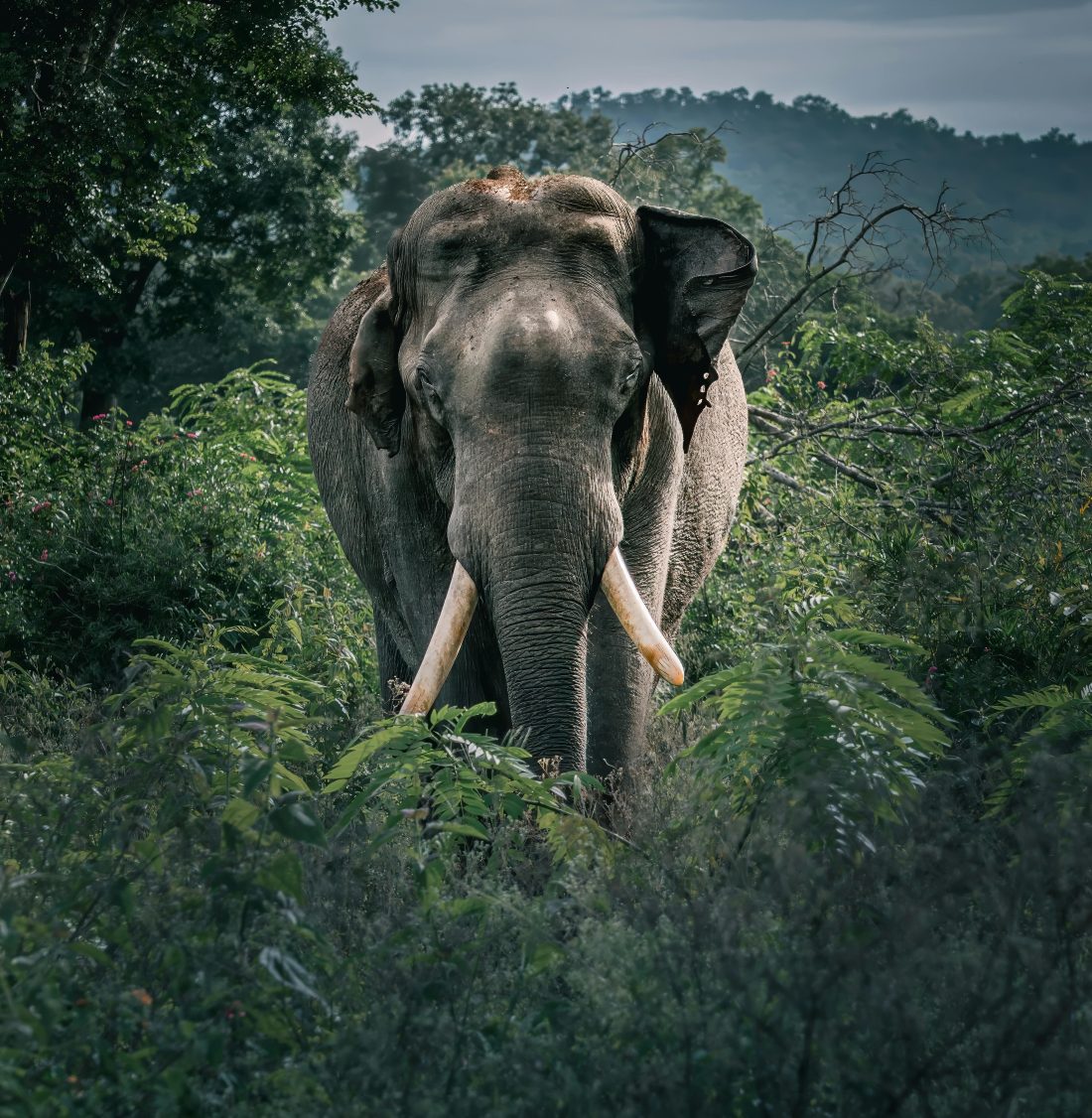
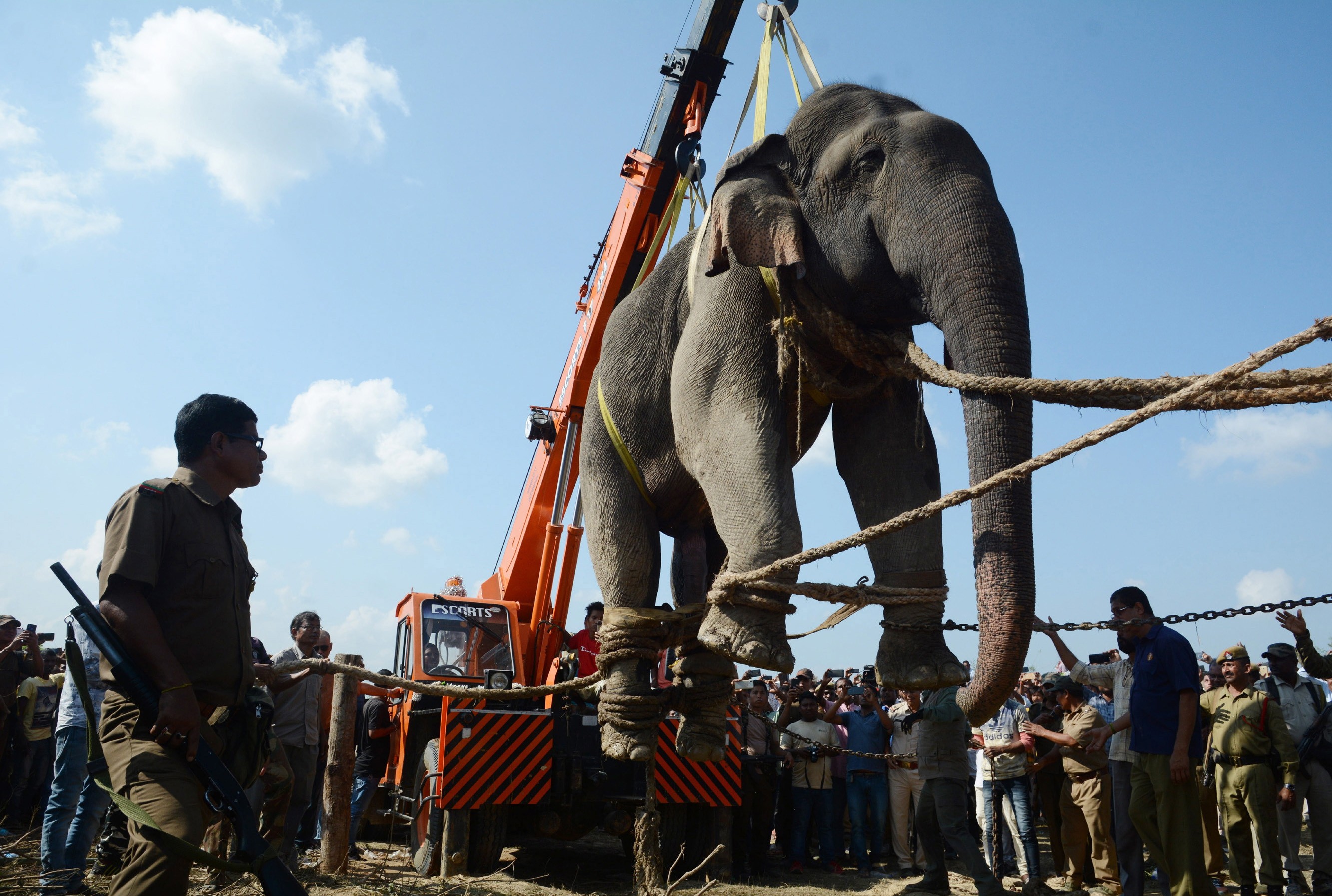
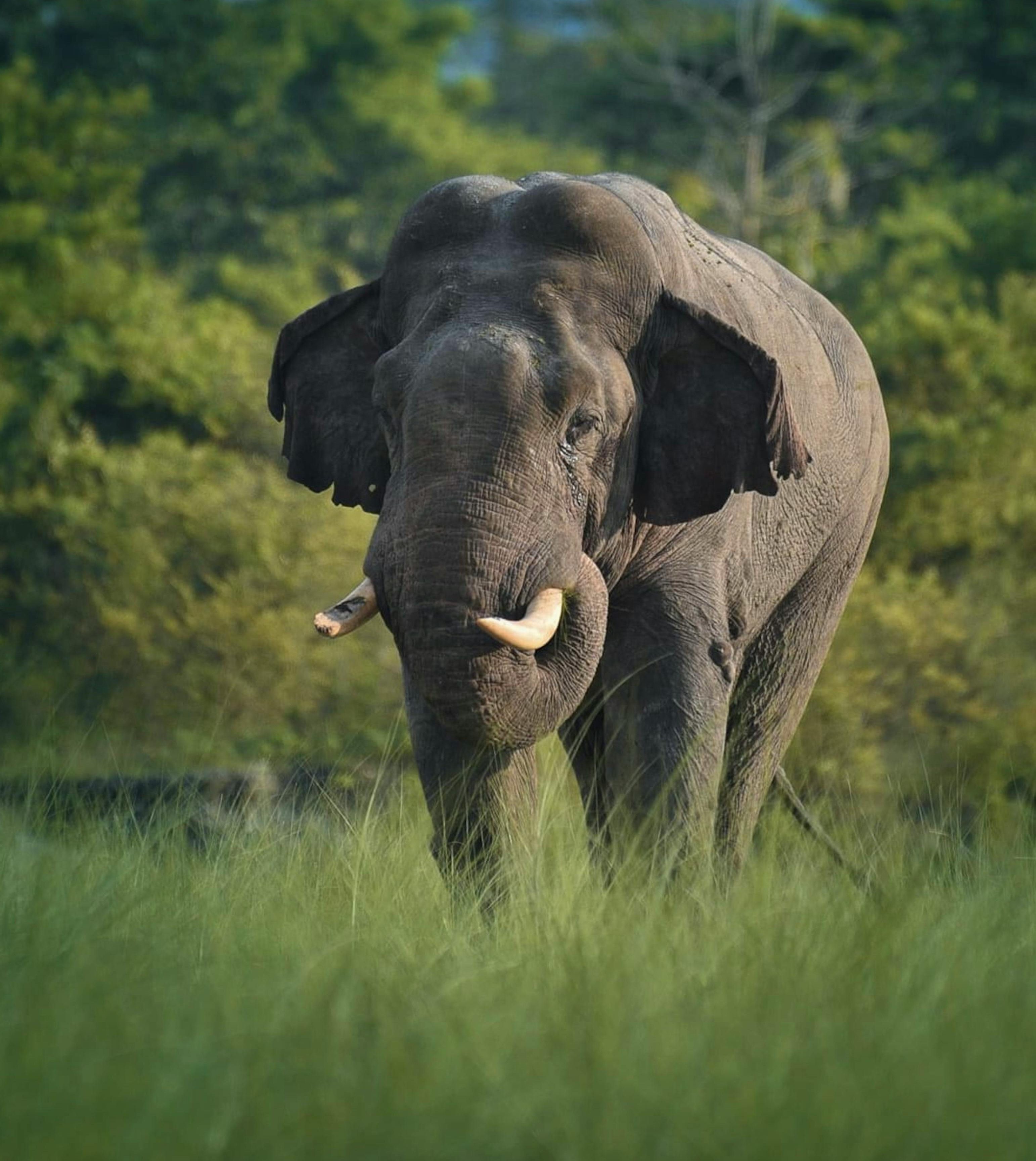
Between 2004 and 2006, in the Sonitpur district of Assam, a lone bull elephant was blamed for the deaths of at least twenty-seven people.
He did not start out as a named villain. But his unprecedented reign of terror did begin with unmitigated attacks akin to those of a terrorist.
A labourer killed near a tea garden. A villager trampled close to the forest edge. Someone walking home at dusk who did not return. At first, these were tragedies folded into a region long accustomed to uneasy co-existence with elephants. But the deaths did not remain isolated. They accumulated.
By the time officials concluded that a single tusker was responsible, the pattern was impossible to ignore.
It was then that the elephant was given a name heavy with the politics of the time.
They called him Osama Bin Laden.
The Landscape of Conflict
Sonitpur is not wilderness in the romantic sense. It is a mosaic of tea estates, villages, secondary forest and fractured corridors. The boundary between cultivation and jungle is not a line on a map; it is a living seam where elephants and people move within metres of one another.
Elephants have used these routes for generations. Long before rail lines and plantation grids, herds moved seasonally through what is now farmland. As forest has thinned and been divided, those routes have narrowed but not disappeared.
A solitary bull navigating this terrain does not simply wander into conflict. He encounters it repeatedly.
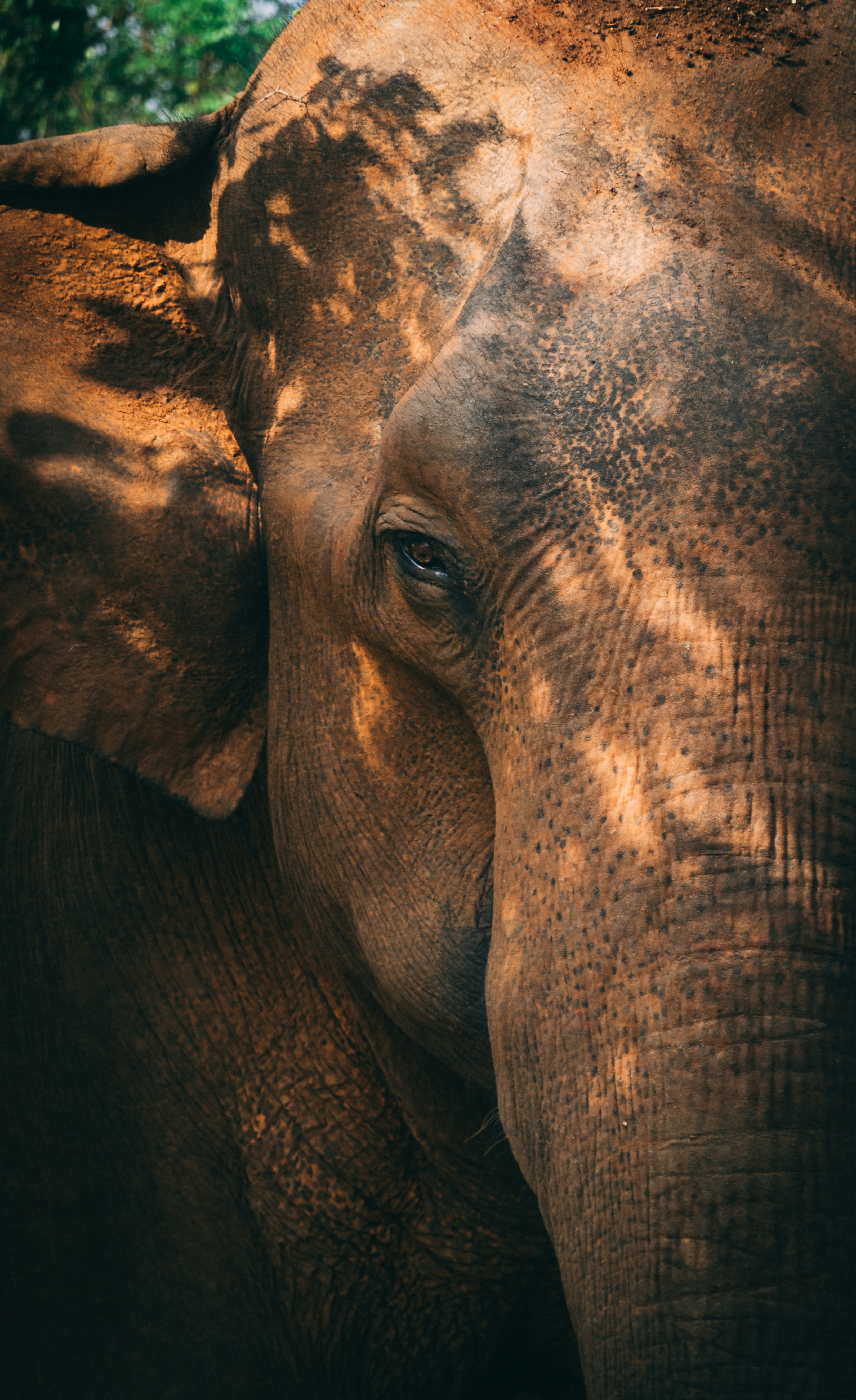
Adult male elephants are more prone to risk than matriarch-led family groups. They move alone. They raid crops. They approach settlements under cover of darkness. During musth, a periodic hormonal state marked by surging testosterone and heightened aggression, a bull can become more volatile, less tolerant of disturbance, and more forceful in asserting space.
In a compressed landscape, force carries consequences. In this setting, a solitary adult bull can become highly dangerous.
Twenty-Seven Deaths
At least twenty-seven people were killed over roughly two years. That figure appears consistently across regional reporting and official statements from the period.
These were not predatory killings. Elephants obviously do not consume human flesh. The deaths occurred during close-range encounters – trampling, crushing, and sudden aggression in shared ground.
But repetition changes perception.
A single fatal encounter is tragedy. Repeated fatal encounters become something else. Fear shifts from circumstantial to anticipatory. Villages alter routines. Workers hesitate at dusk. Forest paths grow tense.
The elephant was described as large, solitary, and unusually aggressive. Witnesses spoke of sudden appearances and little warning. In rural districts where livelihoods are already precarious, such unpredictability erodes more than confidence. It erodes normality.
By 2006, pressure mounted on authorities to act decisively.
The Hunt
Forest officials identified a specific bull believed responsible and launched operations to track and eliminate him. Public assurances were made that the threat would be addressed. There were reports that the elephant had been located and shot. Other accounts suggested he had retreated into deeper forest.
What is clear is that after 2006, the killings attributed to this individual ceased.
What is less clearly documented in accessible public archives is a definitive, widely cited confirmation of his death. That absence does not negate the official efforts made, nor the likelihood that a targeted animal was killed. It simply reflects the uneven nature of record-keeping in regional conflict cases. If the elephant killed was the animal responsible, he had, for some reason, wandered over fifty miles from where he’d last been encountered.
For the communities of Sonitpur, however, the outcome was measured less in paperwork and more in silence. The attacks stopped. And that distinction matters.
Naming the Enemy
The name “Osama Bin Laden” did more than identify a problem animal. It framed him within a global narrative of terror.
The early 2000s were shaped by anxiety and the language of unpredictable threat. To attach that name to a wild elephant was to translate ecological conflict into something deliberate and ideological. It suggested planning. Malice. Intent.
But elephants do not operate within ideology. They respond to pressure, proximity, memory, and stress. A bull in musth does not wage war. He asserts space in the only language available to him… size and strength.
The name belonged to human fear, not elephant cognition.
Man-Killer
The elephant of Sonitpur sits uneasily within the category of killer animals. He did not shift diet. He did not stalk as a predator does. Yet twenty-seven deaths over two years place him alongside other animals whose repeated fatal encounters alter public memory.
The comparison reveals something important.
In classic predator cases such as the Champawat tiger and the Tsavo lions, it is injury, age or prey scarcity can drive a carnivore toward habitual human predation. With elephants, the mechanism is different. The deaths arise from collision rather than consumption.
But the emotional result for communities is similar. Repetition breeds myth. And myth simplifies cause.
Compression
Human–elephant conflict in Assam did not begin in 2004, and it did not end in 2006. Railway strikes, retaliatory killings, electrocutions and crop destruction continue to shape the region’s uneasy coexistence.
The Sonitpur elephant did not emerge from wilderness untouched by human systems. He moved through a landscape already compressed by agriculture, infrastructure and settlement. Every tea garden and railway line narrowed the margin for avoidance.
Twenty-seven deaths are not a rumour. They are recorded loss. But beneath the number lies a structural tension: one of the largest land mammals on Earth navigating corridors increasingly designed without him in mind.
When that negotiation fails, it fails violently. The elephant known as Osama Bin Laden was not a terrorist. And he was not a monster in the way folklore demands.
He was a bull in a fractured landscape.
And in Sonitpur, between 2004 and 2006, that fracture cost twenty-seven lives.
The well-behaved monster and the boundaries of respectability.
Awards season is upon us and traditionally, has always had its preferences. Historical epics. Biographical drama. Social realism. Stories that feel weighty before they even begin.
Horror, by contrast, has often been treated as something unruly — too visceral, too commercial, too unserious to sit comfortably among prestige cinema. And yet, every so often, a monster slips past the velvet rope.
This year, with Sinners dominating Oscar nominations and walking away with major wins at the BAFTAs, that old boundary feels more porous than it once did. Creature cinema is no longer automatically dismissed. It can be celebrated. It can be honoured.
But when monsters win, it is rarely on their own terms.
They are welcomed, carefully, once they have been translated.
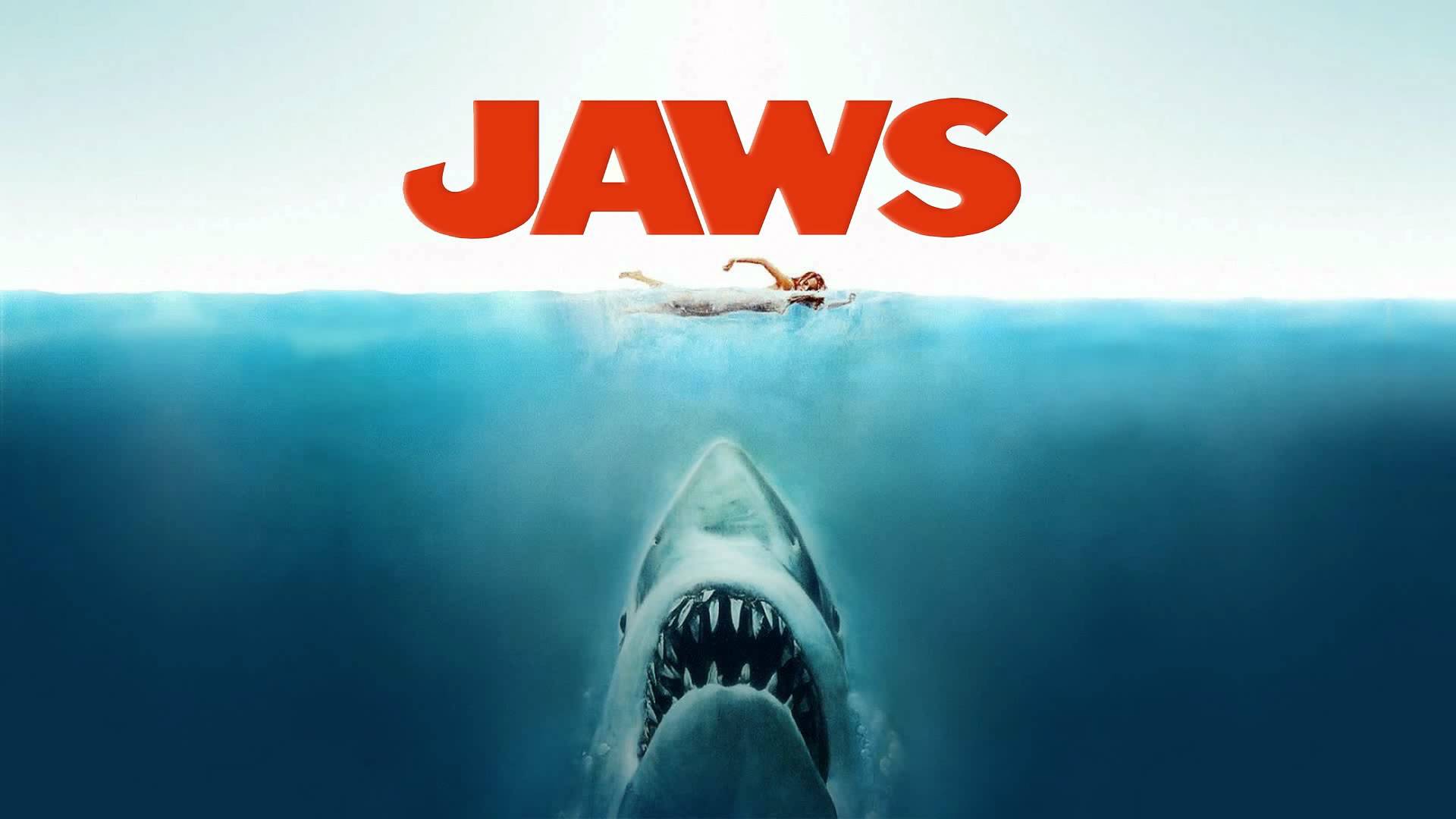
Jaws – The Shark That Wasn’t Just a Shark
When Jaws arrived in 1975, it was a creature feature. A film about a shark hunting swimmers off the coast of a small American town.
It went on to win three Academy Awards — for editing, sound, and John Williams’ now-immortal score.
Not for the shark. The mechanical animal at the centre of the film was never what the Academy formally recognised. Instead, it was the craft that elevated the material: the restraint of the camera, the discipline of the cut, the tension built through absence rather than spectacle.
The shark became something larger than itself. It became:
Fear of the unseen.
Bureaucratic denial in the face of danger.
Economic pressure overriding safety.
In other words, it became metaphor. But beneath that metaphor, the shark remained something more unsettling. It wasn’t malicious. It wasn’t political. It wasn’t traumatised. And it was not misunderstood.
It was simply an animal behaving as animals sometimes do (or in this case, how we thought and imagined they did).
That indifference — that refusal to moralise — is part of what makes Jaws endure. Yet the recognition it received was framed around artistry, not animality. The Academy rewarded how the story was told, not the wildness at its heart.
The creature was tolerated. The craftsmanship was honoured.
The Shape of Water – The Monster Who Became a Mirror
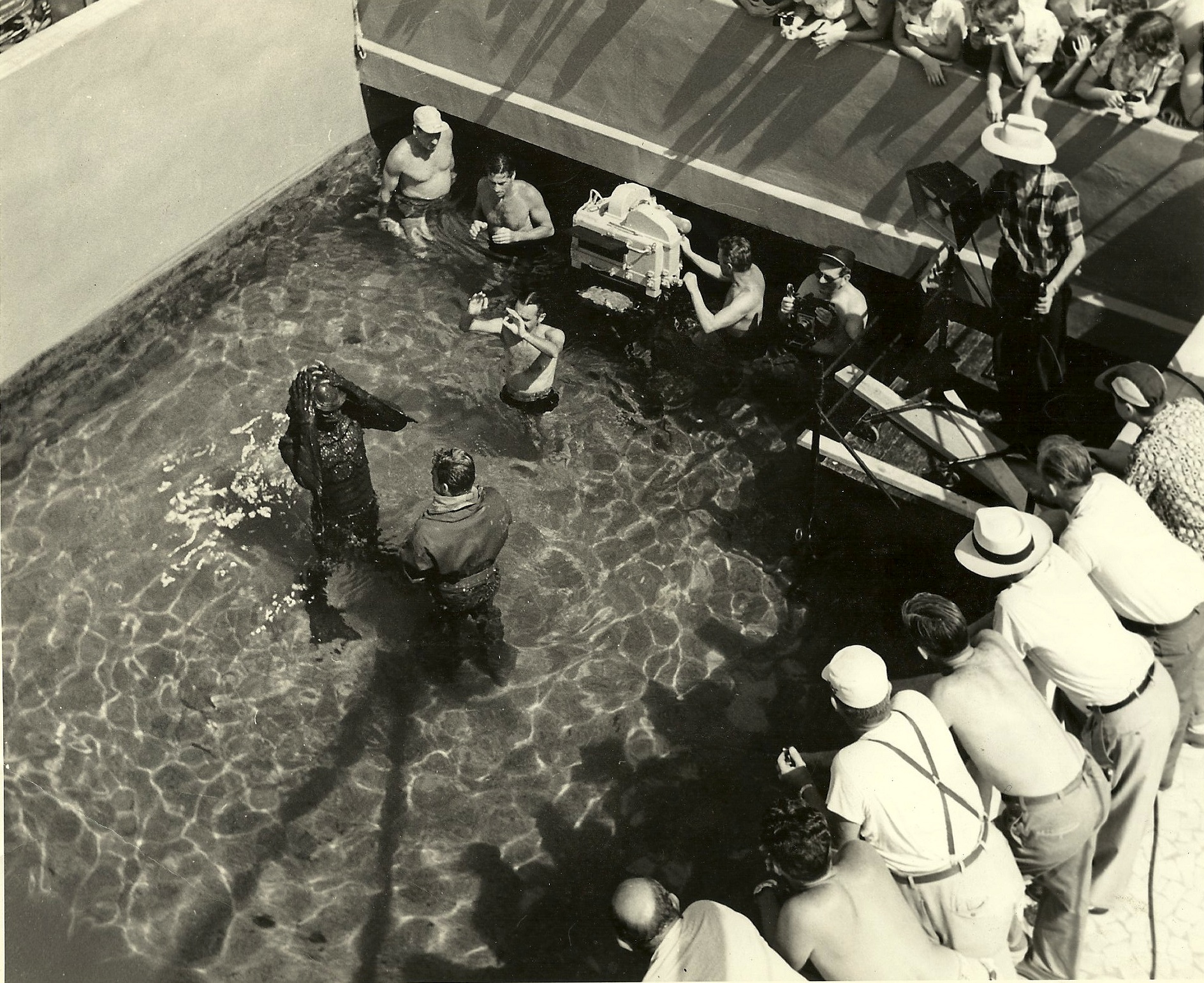
Guillermo del Toro’s The Shape of Water went further. It did not merely win technical awards. It won Best Picture. At its centre is an amphibian creature — clearly inspired by mid-century monster cinema — imprisoned, studied, and ultimately loved.
But this monster does not function as predator. He is not unknowable. He is not ecologically threatening. He is gentle, curious, and capable of tenderness.
He becomes a symbol of otherness — of marginalisation, disability, Cold War paranoia, loneliness. The film invites us not to fear him, but to recognise ourselves in him.
The creature wins because he reflects something human. His monstrosity is aesthetic, not existential. Prestige culture is comfortable with this kind of monster. It can be framed as allegory. It can be moralised. And it can be absorbed into the language of empathy.
The wild edges are softened and the teeth are metaphorical.
When the Creature Becomes Backdrop
A pattern begins to emerge. Horror tends to be embraced by institutions when it performs a certain translation. When the monster is:
A political symbol.
A social commentary.
A psychological metaphor.
A vehicle for historical reflection.
In these cases, the creature is not truly the subject. It is a lens through which something recognisably human is examined.
The awards are rarely about the animal itself. They are about what the animal represents. And it’s important to clarify this does not diminish the artistry of these films. Many of them are extraordinary. But it does reveal a preference.
Prestige culture prefers its monsters legible and interpretable. In short, it prefers them to behave.
Horror’s Rehabilitation
In recent years, horror has enjoyed something of a rehabilitation. The line between “genre” and “serious cinema” has blurred. Audiences have matured. Filmmakers have pushed boundaries of tone and form.
Part of this shift is cultural. We live in anxious times. Horror provides a language for uncertainty and a release for it — for systems that feel unstable, for threats that feel diffuse.
But institutions still have conditions.
When horror arrives in formal dress — lyrically shot, carefully scored, layered with symbolism — it is easier to recognise as art. When it aligns with contemporary conversations, it feels urgent rather than lurid.
In other words, horror is welcomed when it demonstrates that it understands the rules of the room. It can be frightening. It can be strange. But it must also be respectable. And the vampires in Sinners are polite, well-spoken, and at the very least, wear respectability as a well-practiced facade as a means to an end.
The Uncomfortable Creature
What remains more difficult to absorb is the creature that resists interpretation. The shark that is simply a shark. The predator that is not secretly a metaphor for capitalism, trauma, or xenophobia. The animal that does not apologise for being non-human.
Ecological horror, the stories that centre real animals behaving according to instinct rather than narrative morality — sits uneasily in prestige culture. There is no catharsis in a force of nature. No redemptive speech. No symbolic resolution.
There is only indifference. And indifference is hard to award. It offers no moral comfort. It does not flatter us by suggesting that even our monsters are secretly about us.
Why This Matters
How we reward monster stories tells us something about how we process fear. We are drawn to creatures, but we often feel compelled to domesticate them. To explain them. To soften them into symbols we can decode.
When a monster film wins, it often does so because it reassures us that the monstrous can be translated into something familiar. But some of the most powerful creature stories resist that translation. They leave the animal wild. They refuse to moralise the teeth.
Those films may not always collect statues. Yet they linger. Because they remind us that not everything in the natural world exists to be understood through human frameworks.
Some things are simply other – the literal force of nature. And perhaps that is what true monster cinema has always been about — not metaphor, not allegory, but the fragile boundary between ourselves and the wild.
Awards season may continue to evolve. Horror may continue to gain recognition. But the monsters that win will likely remain the ones that know how to behave.
The rest — the indifferent, the ecological, the untamed, will likely continue to circle just beyond the light. Popular, but not recognised. Always in the shadows of recognised greatness. And there is something fitting about that.
My novels explore similar boundaries between folklore, wildlife, and fear. The monsters are rarely simple. Find them on Amazon, Kindle, Audible, and iTunes.
In the winter of 1915, the settlement of Sankebetsu, in northern Japan, was already under strain.
Snow lay deep across Hokkaido. Food stores were thin. Travel was difficult, sometimes impossible. For the people living at the margins of cultivated land, winter was not simply a season — it was a test of endurance.
What went largely unconsidered was that the same conditions applied to everything beyond the settlement’s boundaries.
The forests were locked in ice. Natural forage was scarce. Prey animals were weakened, dispersed, or absent altogether. The winter that pressed hardest on human communities was doing the same to the wildlife around them. But at the time, this was not a connection people were trained to make.
Ecology, as a way of thinking, had not yet entered the conversation. Hardship was viewed as a human problem, unfolding against a largely static natural backdrop. The idea that animals might also be responding — adapting, learning, and changing behaviour under pressure, was rarely entertained.
It was in this context that the Sankebetsu incident began.
A first encounter and a dangerous assumption
The bear’s first appearance was not dramatic in scale, but it was decisive in consequence. In December 1915, a large brown bear entered the settlement and attacked a woman working near her home. The encounter was sudden and close-quarters. She was killed before any effective intervention could be made.
The bear did not linger. After the attack, it retreated back into the surrounding forest.
That withdrawal shaped how the incident was understood.
Within the settlement, the prevailing belief was that the animal had been startled — that the violence was reactive, not intentional, and that the danger had passed with the bear’s departure. The incident was treated as an isolated tragedy rather than the opening stage of a larger threat.
No co-ordinated hunt followed. No sustained effort was made to track the animal’s movements or assess whether it might return.
This response was not careless so much as culturally conditioned. At the time, apex predators were often viewed as opportunistic but fundamentally avoidant of humans. An animal that fled was assumed to have learned fear.
But this assumption rested on a misunderstanding of how predators learn.
An animal that kills and escapes unharmed has not seen that behaviour punished. It has been reinforced. The boundary between human and prey does not harden, it weakens.
In retrospect, the bear’s retreat was not a conclusion. It was a pause.
Escalation isn’t chaos, it’s pattern
When the bear returned, it did not behave erratically.
It came back into the settlement repeatedly, moving with increasing confidence through spaces that had already been shaped by human presence. Homes were entered. People were taken from places that should have been safe.
One of the most disturbing moments came shortly after the initial attack, when the bear returned during a funeral held for the first victim. Drawn by human activity and the presence of food, it entered the area and killed mourners gathered there.
The violence was no longer confined to a single encounter. Over the course of one night, multiple people were killed in separate attacks. By the time the bear was finally stopped, five lives had been lost, several of them within hours of one another.
What is striking, in retrospect, is not the scale of the violence, but its consistency.
The bear did not flee after these encounters. It did not act randomly. It returned to the same settlement, exploited moments of vulnerability, and withdrew only when challenged. Each successful attack reinforced the same lesson: humans were accessible, and resistance was minimal.
This is the point at which many retellings introduce the language of madness or bloodlust. But escalation, in cases like this, is rarely chaotic. It is patterned.
Under conditions of prolonged scarcity, the bear’s behaviour reflected learning rather than frenzy. What appeared to the community as senseless violence followed a grim internal logic shaped by hunger, opportunity, and success.
Human hesitation, and a belated resolution
As fear spread through the settlement, so did uncertainty.
There was disagreement over whether the same bear was responsible for each attack. Some believed the animal would eventually move on. Others feared that a co-ordinated response might provoke further violence. Time was lost to debate, hesitation, and the difficulty of acting decisively in extreme winter conditions.
When a concerted effort was finally made to track the bear, it revealed just how unprepared the community was for such a task. Weather obscured trails. Knowledge of bear behaviour was inconsistent, drawn from folklore, fragments of experience, and assumption rather than strategy.
Eventually, a group of hunters succeeded in locating and killing the animal. The bear was identified as a large male brown bear, in poor physical condition. Its body showed signs consistent with prolonged scarcity. With its death, the attacks stopped.
The immediate danger to Sankebetsu was over.
But the resolution came only after multiple lives had been lost, and only once the cost of inaction had become undeniable. The bear’s death did not mark the defeat of a monster, but the delayed recognition of a threat that had been misunderstood from the outset.
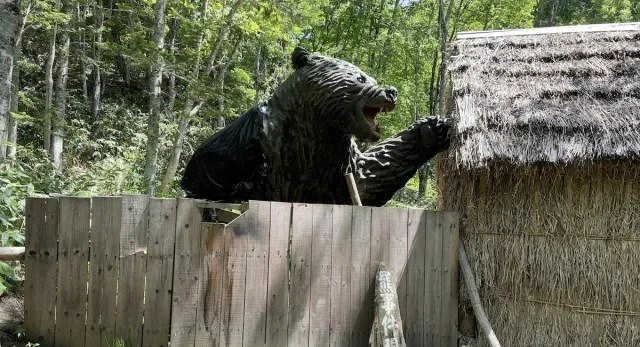
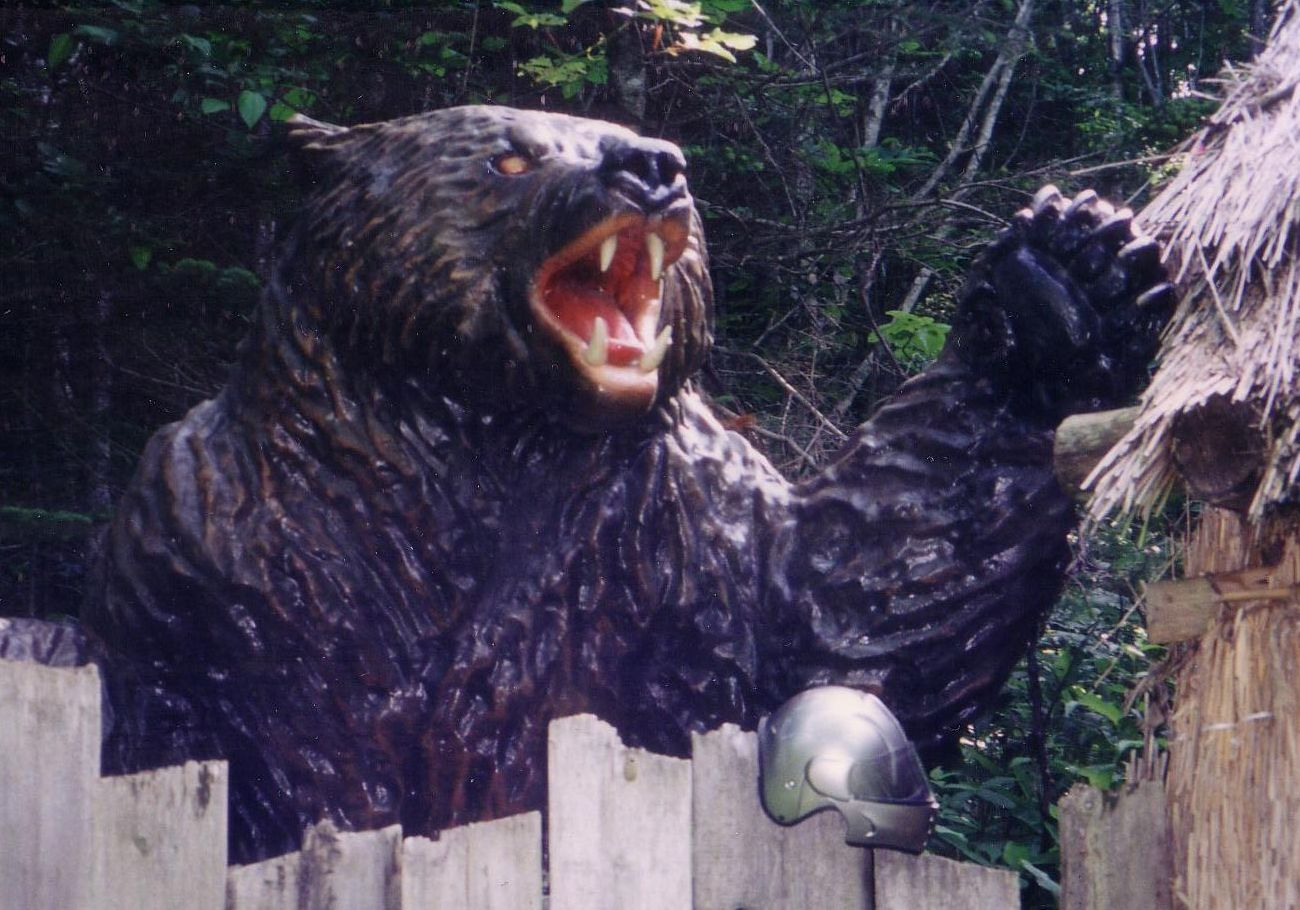
The Sankebetsu statue and tourist site.
Then, and now
More than a century after the Sankebetsu incident, it is tempting to look for repetition — to imagine the same landscape quietly replaying its past.
That is not what the evidence suggests.
Brown bears still inhabit Hokkaido today. The species persists across much of the island’s forests and mountain ranges, and in some areas populations are thought to be stable or recovering after decades of decline. The region where Sankebetsu once stood is no longer a permanent settlement, and there is no indication that it has become a modern centre for serious bear attacks.
History, in this sense, is not repeating itself geographically.
What has changed is the broader context in which people and bears now coexist.
In 2025, Japan recorded 13 human fatalities and more than 100 injuries resulting from bear encounters, involving both Asiatic brown bears and Asiatic black bears. These incidents were spread across multiple prefectures and environments — from rural settlements to the edges of towns — rather than concentrated in any single location.
The pressures behind them are familiar: reduced natural food availability, changing land use, and expanding human presence in areas once less frequently occupied. Bears range more widely when resources are scarce, and humans now occupy landscapes that were once seasonal or marginal.
The relevance of Sankebetsu, then, is not that it is happening again in the same place. It is that the same ecological forces – scarcity, overlap, and hesitation, all continue to shape encounters between people and large predators, wherever clear boundaries erode.
The quieter truth of man-eater stories
The Sankebetsu bear was not a creature of myth, nor a symbol of evil. It was an animal responding to scarcity, learning from success, and moving through a landscape that no longer offered clear separation between forest and home.
Man-eater stories endure not because they reveal something monstrous about animals, but because they expose a recurring human blind spot: the tendency to see nature as static, until it reacts.
When prey disappears, boundaries blur. When boundaries blur, conflict follows.
The question is not whether such stories will happen again, but whether we recognise the conditions early enough to change the outcome.
For much of cinema’s history, the monster served a simple narrative function. It arrived from the margins, disrupted order, embodied fear, and was ultimately removed so that normality could be restored. Whether giant ape, prehistoric reptile, or nameless creature lurking in the dark, the monster existed primarily as an obstacle. It did not need interiority. It did not need explanation. Its presence alone was justification enough.
That simplicity made monsters effective. Fear thrives on clarity, and early cinema rarely asked audiences to question where the creature came from or why it behaved as it did. The monster was the problem.
But in recent years, that framing has begun to feel increasingly inadequate.
Modern monster films still deliver spectacle and danger, but they are far less comfortable presenting creatures as purely evil forces. Behaviour is contextualised. Motivation is explored. In some cases, the monster is no longer even positioned as the antagonist.
It remains frightening, but it is no longer disposable.
The Classic Monster: Threat Without Context
Early cinematic monsters were designed to simplify fear rather than interrogate it.
In King Kong, Kong is awe-inspiring and tragic, but he is never truly allowed to exist beyond symbolism. He represents the unknown, the primitive, the uncontrollable. His capture and eventual death restore order, and the film closes without seriously questioning whether that outcome was inevitable or just.
This structure repeats across decades of monster cinema. The creature is framed as abnormal, its presence an intrusion into civilisation. Little attention is paid to ecology, displacement, or cause. The monster’s destruction functions as narrative closure.
That approach worked for its time. Monsters were metaphors first and beings second. Fear was externalised and contained.
The Modern Shift: Behaviour Over Villainy
Contemporary monster narratives are far less willing to accept that kind of moral shorthand.
In the MonsterVerse, Kong is no longer portrayed as a rampaging aberration. He is territorial, reactive, and increasingly isolated — a powerful animal responding to confinement, intrusion, and displacement. The destruction he causes is not denied, but it is contextualised. The question is no longer simply how to stop him, but why he is there at all.
A similar approach appears in Damsel, where the creature’s violence is rooted in history and betrayal rather than innate malice. The monster is not softened or turned into a companion figure. It remains a dangerous, direct threat. What changes is the framing. Its behaviour is shown to be a response rather than a pathology.
This distinction matters. Explanation does not neutralise threat. It replaces laziness with honesty.
Monsters, Instinct, and the Conservation Lens
This narrative evolution mirrors a broader shift in how we understand real animals.
In conservation and human–wildlife conflict, the language of “rogue” animals and “evil” predators has largely been abandoned. Serious discussion now centres on habitat loss, injury, food scarcity, and human expansion into contested spaces. When a tiger or lion attacks, the focus is not on moral failure but on circumstance and pressure.
The animal is not absolved of danger — but it is removed from moral judgement.
Modern monster cinema increasingly reflects this ecological thinking. These creatures are frightening not because they are wicked, but because they are powerful, stressed, territorial, or reacting exactly as their biology dictates. Instinct replaces intention. Context replaces caricature.
Importantly, this approach does not anthropomorphise the monster. It does the opposite. By stripping away human moral projection, the creature is allowed to exist as something fundamentally other — governed by its own rules, indifferent to ours.
That indifference is often more unsettling than evil ever was.It strips away human moral projection and allows the creature to exist on its own terms.
Why This Change Matters Now
This shift in monster storytelling is not happening in isolation.
We live in an era defined by systems rather than single causes. Climate change, ecological collapse, geopolitical instability — none of these can be explained through simple villains. Audiences have become increasingly attuned to complexity, and stories built on clear moral binaries often feel dishonest.
What unsettles us now is not the presence of danger, but the recognition that harm can be understandable. That violence can emerge from pressure rather than cruelty. That systems, not monsters, are often the true antagonists.
Modern monster films reflect this discomfort. They resist easy answers. They allow fear to coexist with recognition.
The Monster as Witness, Not Enemy
In many contemporary narratives, the monster has become something closer to a witness than an enemy.
Not a punishment sent to restore balance. Not a curse to be eradicated. But a presence shaped by what has been taken, altered, or ignored.
The creature remains dangerous. The threat is real. Yet the story no longer ends with its removal as moral necessity. Instead, the monster exposes the fragility of human systems and the consequences of interference.
The monster has not disappeared. It has become more truthful.
Closing Reflection
We still call them monsters, but we have quietly stopped treating them as villains.
That change does not make these stories gentler. If anything, it makes them more unsettling. A monster driven by instinct and circumstance cannot be reasoned with or redeemed in simple terms. It can only be understood — and sometimes endured.
Perhaps this shift says less about cinema than it does about us. About a growing awareness that fear does not require evil, and that the most frightening stories are often the ones that refuse to offer clean resolutions.
If you enjoy this kind of storytelling, my fiction explores similar territory — where monsters and animals are shaped by instinct, history, and human pressure rather than simple evil.
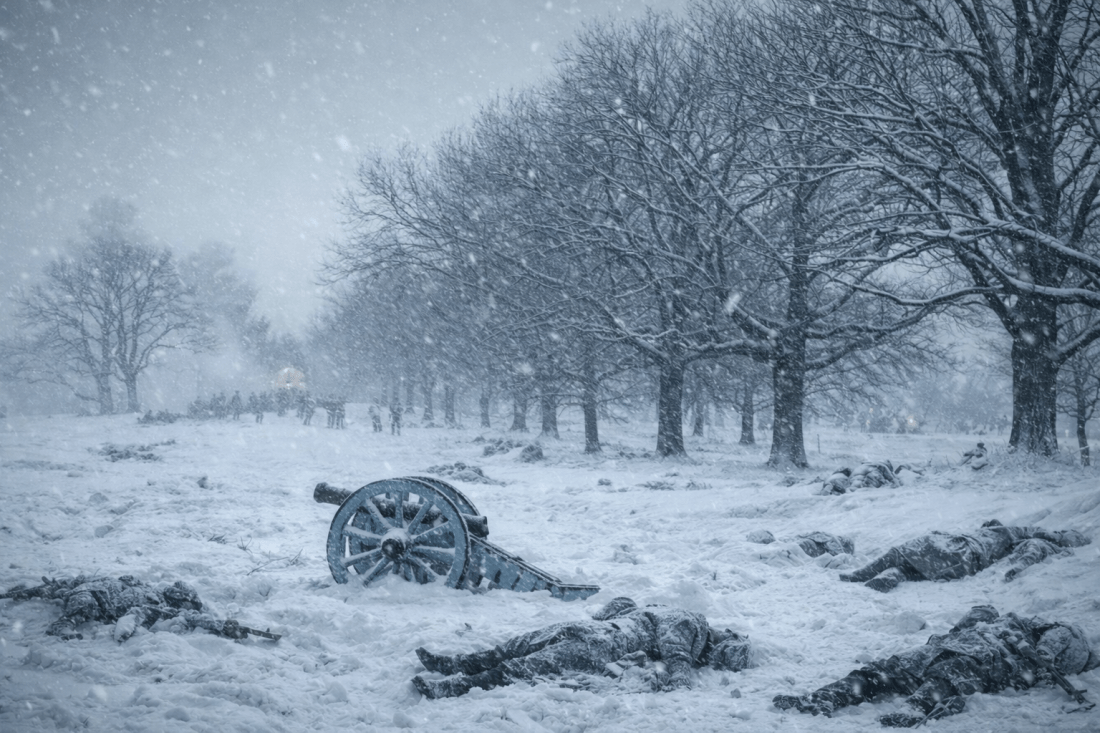
In the winter of 1916, on the frozen Eastern Front, German and Russian soldiers discovered that the greatest danger they faced was no longer each other.
The Howling in No Man’s Land
The snow fell thick and soundless over the forests of Eastern Europe. It swallowed roads, softened the edges of trenches, and buried the dead where they lay.
Along the front lines separating German and Russian forces, sentries stood in rigid silence, rifles stiff with ice, breath frosting the air in pale clouds. The wind carried the smell of rot from the fields beyond the wire — thousands of bodies left unburied after weeks of fighting, locked in the ground by frost.
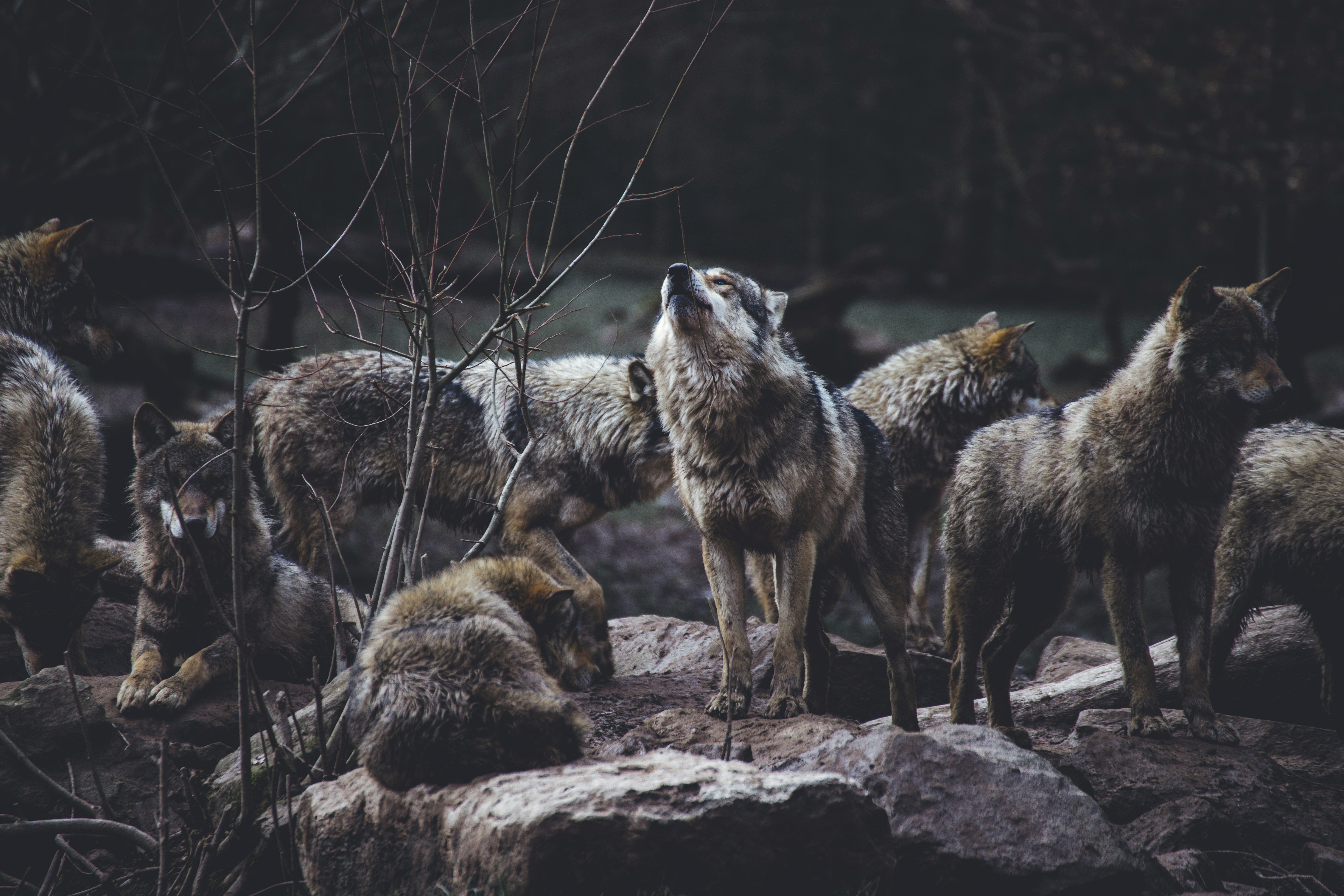
And then, at night, came the howling.
At first it was distant. Mournful. Easy to dismiss as imagination or exhaustion. But as the weeks passed, it grew closer.
Men began to vanish from the edges of camps. Lone runners failed to return. Wounded soldiers, dragged away from shell holes and shallow graves, left only streaks of dark red in the snow.
The Eastern Front had acquired a new predator.
A Perfect Storm for Wolves
The First World War created conditions unlike anything Europe had seen.
The Eastern Front, stretching across Poland, Belarus, and the Baltic regions, became a landscape of mass death and logistical collapse. Entire villages were abandoned. Supply lines broke down. Corpses lay uncollected for weeks or months at a time.
For wolves, already struggling under centuries of persecution and habitat loss, this was catastrophe and opportunity combined.
Winter drove them out of the deep forests. Starvation pushed them closer to human settlements. And war provided something unprecedented: endless carrion.
Thousands of human bodies lay exposed in fields and forests, frozen solid in the snow. For scavengers, it was a banquet that never ended.
At first, the wolves fed on the dead.
Then they began testing the living.
When the Dead Were No Longer Enough
Contemporary reports and later memoirs describe a shift in behaviour as the winter deepened.
Wolves began approaching camps at night, circling trenches, and following patrols at a distance.
Isolated soldiers were attacked while collecting firewood or running messages between positions. Sentries disappeared from their posts. Wounded men, unable to move, were taken from the margins of the battlefield.
The attacks were not frenzied. They were methodical.
These were not mythical monsters or supernatural beasts. They were animals responding to an extreme ecological shock, losing their fear as hunger and opportunity rewired their instincts.
For soldiers already broken by cold, starvation, and artillery, the effect was devastating. The war had stripped them of shelter, warmth, and food. Now it was stripping them of the illusion that humans were still in control.
The Truth of the “Wolf Truce”
As the attacks increased, something extraordinary happened.
According to multiple historical accounts, both German and Russian units found themselves under such sustained pressure from wolves that hostilities between the two sides were temporarily suspended.
Joint patrols were formed. Coordinated hunts were organised. Weapons that had been aimed at enemy soldiers were turned outward, into the forests.
For a brief moment, the front line dissolved. The enemy was no longer the man in the opposite trench. It was the unseen presence moving through the trees.
The episode became known later, and somewhat romantically, as the “wolf truce.”
As with many stories that sit at the boundary of history and horror, the details are tangled.
There is credible evidence that wolf attacks did occur on the Eastern Front during the winters of 1916–1917. Military records and memoirs reference problems with wolves and describe organised culls.
There is also evidence of temporary cooperation between opposing forces to deal with shared threats. Not just wolves, but disease, flooding, and other environmental hazards.
But the scale of the attacks has almost certainly been exaggerated in later retellings. The idea of thousands of wolves overwhelming entire regiments is almost certainly folklore.
What remains clear is this:
The wolves were real. The attacks were real. And for a brief winter, nature forced a pause in a human war.
Why This Story Endures
The wolves of World War I were not evil. They were not monsters. They were opportunists in a broken ecosystem.
War dismantled the structures that kept humans safe; shelter, food, burial, borders, order. In that vacuum, predators did what predators have always done. They filled the gap.
What terrified soldiers was not just the physical danger. It was what the wolves represented. They were proof that civilisation had collapsed far enough for humans to become prey again.
Fear is rarely about death alone. It is about the loss of control.
When Humans Stop Being the Apex Predator
The label “maneater” has always said more about us than about the animal.
Wolves have hunted people before. So have tigers, lions, leopards, bears, and sharks.
But they only become legends when they cross an invisible line, when they stop behaving like background wildlife and start behaving like participants in human history.
On the Eastern Front, the wolves did exactly that. They stepped into a war zone and claimed their share of it.
After the Snow Melted
Eventually, the wolves were driven back. Hundreds were shot, trapped, or poisoned.
As spring came, the snow thawed, and the bodies were buried. The carrion vanished. The front stabilised.
The wolves retreated into the forests. And the armies resumed killing each other. The moment passed, almost forgotten.
But for a brief winter, the war remembered something it had tried to deny: It was not the only deadly force shaping that front.
Closing Reflection
The wolves of World War I were not supernatural. They were not sent by fate or divine punishment. They were simply animals responding to human catastrophe.
And in doing so, they exposed a truth that sits beneath every maneater story: When the structures of civilisation collapse, the food chain rearranges itself.
Fear stalked the land, searching out its prey with a single working eye. A scarred beast that prowled the maize fields of southern Tanzania, its remaining eye glowing in the firelight like an ember from the underworld. Wherever it appeared, someone vanished.
By the time the terror ended in the mid-1940s, villagers whispered that as many as 1,500 people had been taken. Some dismissed the figure as impossible; others swore it was true, pointing to empty huts, abandoned farms, and the silence that hung over Njombe for more than a decade.
This is the story of the Njombe man-eaters: a pride of lions whose reign of fear has no equal in recorded history.
A land in crisis
The Njombe District in the 1930s was an isolated plateau of rolling grasslands and scattered farms in what was then Tanganyika. For centuries, lions and people had co-existed uneasily there: lions taking cattle now and then, villagers spearing lions in retaliation. But the balance was about to tip.
At the turn of the 20th century, rinderpest, a cattle plague introduced by imported livestock, tore through East Africa. It killed not only cows but also wild ungulates including buffalo, wildebeest, eland, and kudu. In short, the very animals lions depended on. At the same time, colonial authorities, desperate to protect settler farms and commercial livestock, sanctioned widespread shooting of wildlife herds.
By the early 1930s, the great prey herds had vanished from much of Njombe. For a pride of lions, starvation loomed.
And then the killings began.
The first attacks
Accounts vary on who the first victims were. Some say it was a group of women cutting grass at the edge of the bush. Others tell of a child herding goats. What is certain is that the attacks were relentless.
Unlike the famous Tsavo man-eaters of 1898, which were just two lions, the Njombe killers operated as a full pride, one perhaps 15 strong. They hunted both day and night, stalking footpaths, raiding fields, and dragging victims from huts in the dark. Witnesses described their tactics as disturbingly coordinated: one lion would chase a fleeing villager toward others lying in ambush, while still more lions waited to carry the body off into the bush.
The result was psychological as well as physical devastation. Farmers abandoned their crops. Markets emptied. Whole families refused to travel. A rural economy, already fragile, teetered on collapse.
Folklore takes hold
As the death toll mounted, explanations turned supernatural.
Villagers spoke of Matamula Mangera, a witch doctor said to have cursed the land, sending spirit lions to punish those who had wronged him. Some claimed they saw lions melt into the shape of men; others swore that no ordinary rifle could kill the beasts.
Central to the lore was the pride’s supposed leader: a huge, one-eyed male called Kipanga. Was he real? Many hunters, including those who later fought the lions, believed so. Others argue Kipanga was more myth than flesh. Either way, the stories gave form to a terror that felt inhuman.
Even colonial officers recorded the atmosphere of dread. In their reports, villagers were described as “so paralysed by fear that they would not leave their huts even to tend their cattle.”
The scale of the slaughter
Could the lions truly have killed 1,500 people?
The figure comes up repeatedly, cited by hunters, missionaries, and later by storytellers such as Peter Hathaway Capstick. But hard evidence is scarce. Colonial records were patchy, and many deaths occurred deep in the bush, where no official ever ventured.
Sceptical historians suggest the real toll may have been in the hundreds, easily still enough to mark Njombe as the worst man-eater outbreak on record. But even if exaggerated, the number reflects the lived truth of the time: that whole communities were emptied, and that people felt they were at war with an enemy that could not be seen until it was too late.
Enter George Rushby
In 1947, after years of unchecked slaughter, the colonial government sent in a man who had made a career of battling Africa’s deadliest creatures: George Gilman Rushby.
Rushby was a former ivory hunter turned game ranger, a wiry, hard-driving man used to solitude and risk. He was already known for his encounters with elephants, leopards, and rogue buffalo. But the lions of Njombe would be his greatest test.
When Rushby arrived, he found villages half-deserted, fields lying fallow, and families so terrified they refused to leave their huts even by day. “The district had come to a standstill,” he later wrote. “The people were simply too frightened to live.”
The hunt
Rushby knew killing one or two lions would not be enough. The whole pride had to be vanquished. He organised local scouts, set baited traps, and began a grim campaign through thorn thickets and tangled river valleys.
The lions proved cunning. They avoided obvious bait, circled ambush sites, and sometimes attacked in the middle of Rushby’s own camp. Several times he narrowly escaped, his rifle raised only moments before a lion charged.
But slowly, methodically, the pride was whittled down. Rushby shot some himself, his trackers accounted for others, and poisoned bait claimed a few more. The turning point, Rushby believed, came when he killed the one-eyed male said to be Kipanga. Without their leader, the pride’s coordination faltered.
By the end of his campaign, Rushby claimed to have destroyed the entire man-eating pride. And just as suddenly as they had begun, the killings stopped.
Myth, memory, and reality
The story of Njombe sits at the uneasy intersection of fact and folklore.
Fact: A pride of lions really did terrorise the region, killing an unknown but horrifying number of people.
Folklore: A one-eyed demon lion, spirit beasts conjured by witchcraft, an exact death toll of 1,500.
Reality: Ecological collapse drove predators into desperate behaviour, and human fear magnified their legend until they became almost supernatural.
In this way, the Njombe lions became more than animals. They became symbols of a world out of balance.
Echoes today
Such mass outbreaks of man-eating lions are virtually unheard of now. Conservation measures, better livestock protection, and changing landscapes mean lions rarely, if ever, target humans in large numbers. But the underlying lesson remains: when ecosystems are broken, predators adapt in ways dangerous to us.
Human-wildlife conflict still exists across Africa, from elephants raiding crops to leopards taking goats. The Njombe lions are simply the most extreme and unforgettable example of what can happen when that balance tips too far.
A legacy of fear and fascination
Today, the hills of Njombe are quiet. Farmers tend their maize, children herd goats, and lions are seldom seen. But the memory lingers. Around campfires, elders still tell of the years when lions ruled the night, when entire villages hid indoors, and when the roar of a one-eyed beast froze the blood in men’s veins.
Were they spirit lions? A cursed pride? Or simply predators pushed beyond the edge of hunger? Perhaps all of these at once.
What is certain is that for more than a decade, fear itself had teeth and claws in Njombe. And its story remains one of the most chilling chapters in the long, tangled history between people and lions.
If you’d like to read a fictional story which shares the same elements, then check out The Daughters of the Darkness on Amazon, Kindle, and Audible.